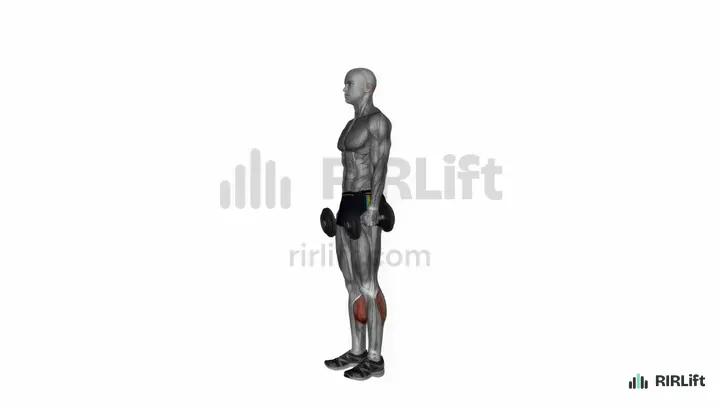
Leg exercises with dumbbells: quads, hamstrings, glutes and calves

The best leg exercises with dumbbells are the Goblet Squat or Dumbbell Front Squat for your quads, the Dumbbell Romanian Deadlift for your hamstrings, the Dumbbell Hip Thrust for your glutes, the Bulgarian Split Squat for one leg at a time, and the Dumbbell Standing Calf Raise. Pick one squat, one hinge, one single-leg move and one calf raise per session, do 3 hard sets of each 0 to 2 reps short of failure, and train legs twice a week. When the pair gets light, move to the single-leg version before you add reps past about 30.

  1. Goblet Squat Quads, Glutes
  2. Dumbbell Romanian Deadlift Hamstrings, Glutes
  3. Bulgarian Split Squat Quads, Glutes
  4. Dumbbell Hip Thrust Glutes
  5. Dumbbell Front Squat Quads, Glutes
  6. Walking Lunge Quads, Glutes
  7. Step-Up Quads, Glutes
  8. Single-Leg RDL Hamstrings, Glutes
  9. Dumbbell Standing Calf Raise Calves

Dumbbell exercises for quads

Your quads grow from deep knee bends under load, and with dumbbells the limit is how much weight you can hold, not how much your legs can push. Hold the weight high (goblet or front rack) so your torso stays upright and your knees travel forward, and squat as deep as your heels allow. When one bell at your chest stops being hard past 15 reps, switch to two dumbbells in the front rack or raise your heels.

Quads, two-leg squat

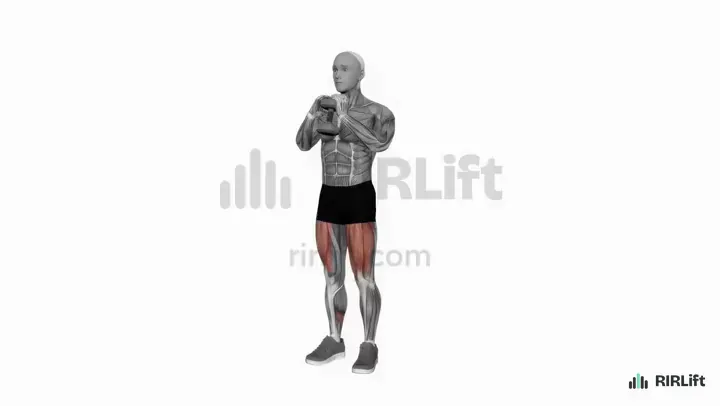
Goblet Squat

Quads, Glutes

One dumbbell held at your chest pulls you into an upright, deep squat almost automatically, which is why it is the first leg exercise to learn with dumbbells. It runs out of load first, so once you can do 15 clean reps with your heaviest bell, move on to the front squat.

How to do it

  1. Cup the top head of one dumbbell in both hands and hold it against your chest, elbows pointing down.
  2. Stand with feet a little wider than your hips, toes turned out slightly.
  3. Sit straight down between your legs, letting your knees travel forward over your toes, until your elbows are inside your knees.
  4. Drive the floor away and stand tall, keeping the dumbbell glued to your chest.

Cues

  • Elbows between your knees at the bottom
  • Chest up, bell on your chest
  • Knees out over your toes

Common mistakes

  • Stopping at parallel because the weight feels heavy: lighten it and squat deep, because the bottom half is where the quads grow.
  • Letting the dumbbell drift away from your chest: it tips you forward and turns the squat into a back exercise.

Swap for: Dumbbell Front Squat, Heels-Elevated Goblet Squat, Dumbbell Squat

Quads, heaviest two-leg squat

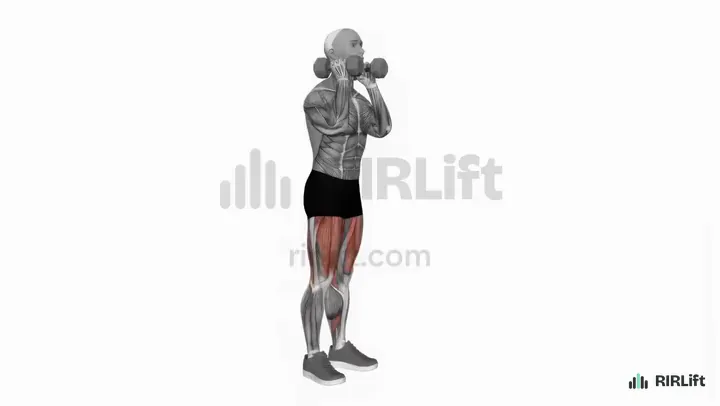
Dumbbell Front Squat

Quads, Glutes

Two dumbbells racked on your shoulders double the load you can put through a squat compared with a goblet hold, so this is where a heavy pair keeps your quads growing. The front rack keeps your torso upright, which keeps the work on your quads and off your lower back.

How to do it

  1. Clean two dumbbells to your shoulders so one end of each rests on the front of your shoulder, elbows pointing forward.
  2. Set your feet shoulder-width apart, toes slightly out, and brace your trunk.
  3. Squat down with your elbows high until your thighs pass parallel.
  4. Stand up by pushing the floor away, keeping the dumbbells on your shoulders until the set is done.

Cues

  • Elbows up, bells on your shoulders
  • Sit down, not back
  • Full depth every rep

Common mistakes

  • Letting your elbows drop so the dumbbells slide down your chest: the weight pulls you forward and ends the set early. Rack them higher and keep your elbows up.
  • Picking a pair you can only hold for a few reps: the rack, not your legs, becomes the limit. Use the heaviest pair you can rack comfortably for 6 reps.

Swap for: Goblet Squat, Front Squat, Barbell Back Squat

Quads, knee-forward squat

Heels-Elevated Goblet Squat

Quads

Raising your heels lets your knees travel further forward, which puts more of the squat on your quads and lets you squat deeper without your heels lifting. It is the goblet squat for people whose ankles stop them short, and a better quad builder than the flat version with the same weight.

How to do it

  1. Set your heels on a pair of small plates or a wedge, toes on the floor, feet about hip-width apart.
  2. Hold one dumbbell against your chest with both hands.
  3. Squat straight down, letting your knees push forward past your toes, until your hamstrings touch your calves.
  4. Stand up by pushing through the whole foot, keeping your chest tall.

Cues

  • Knees forward, chest tall
  • Hamstrings to calves
  • Slow on the way down

Common mistakes

  • Leaning forward and turning it into a hinge: the raised heel is there to keep you upright, so keep the dumbbell high on your chest.
  • Bouncing out of the bottom: control the last few inches, because the bottom is where the quads are most stretched.

Swap for: Goblet Squat, Hack Squat, Leg Press

Dumbbell exercises for hamstrings and glutes

Hamstrings and glutes are trained by hinging at the hip, not by squatting deeper. One two-legged hinge for load, one single-leg hinge for the side that lags, and one thrust or bridge that loads the squeeze at the top covers both muscles. Every session should have at least one hinge and one thrust or bridge.

Hamstrings and glutes, two-leg hinge

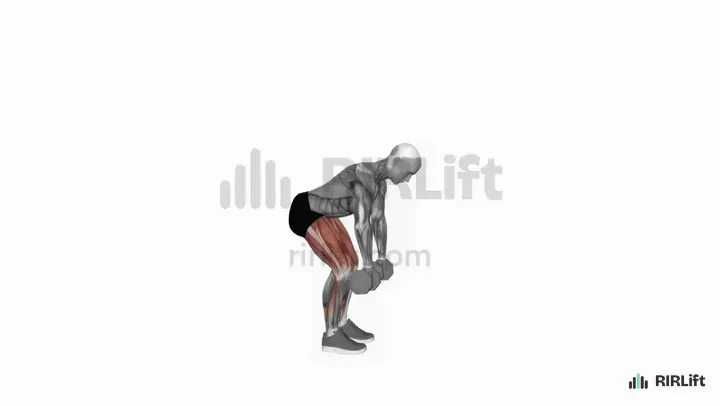
Dumbbell Romanian Deadlift

Hamstrings, Glutes

The Dumbbell Romanian Deadlift loads your hamstrings in the stretched position, which grows them better than any dumbbell exercise that bends the knee. It is also the dumbbell leg exercise that handles the heaviest load, so it is the first pick for a heavy pair.

How to do it

  1. Hold two dumbbells against the front of your thighs, feet under your hips.
  2. Unlock your knees slightly and keep them there for the whole set.
  3. Push your hips straight back and let the dumbbells slide down your legs until you feel a strong stretch in your hamstrings, usually just below the knee.
  4. Drive your hips forward to stand tall, squeezing your glutes at the top.

Cues

  • Hips back, not down
  • Dumbbells touch your legs all the way
  • Stop at the stretch, not the floor

Common mistakes

  • Bending your knees more as the weight goes down: it turns the hinge into a squat and takes the stretch off your hamstrings. Knees stay slightly bent and still.
  • Rounding your upper back to reach lower: the rep ends where your hamstrings stop you, and that depth increases over weeks.

Swap for: Romanian Deadlift, Dumbbell B-Stance RDL, Stiff-Leg Deadlift

Hamstrings and glutes, one-leg hinge

Single-Leg RDL

Hamstrings, Glutes

Standing on one leg puts the whole dumbbell on one hamstring, so a pair that is light for the two-leg version is heavy again here. It also shows you which side is weaker, which the two-leg hinge hides.

How to do it

  1. Hold one dumbbell in the hand opposite your standing leg and put a slight bend in that knee.
  2. Hinge forward from the hip, sending your free leg straight back as a counterweight, keeping your hips level.
  3. Lower until your torso and back leg are roughly parallel to the floor, or until your hamstring stops you.
  4. Push the floor away with your standing heel to return upright, then finish the set before switching legs.

Cues

  • Hips square to the floor
  • Back leg is a counterweight
  • Reach the bell toward your standing foot

Common mistakes

  • Letting the hip of your free leg open toward the ceiling: keep both hip bones facing the floor so the hamstring, not your lower back, does the work.
  • Rushing to stay balanced: a 2-second lowering gives you more balance and more hamstring than fast reps.

Swap for: Dumbbell B-Stance RDL, Dumbbell Romanian Deadlift

Hamstrings and glutes, kickstand hinge

Dumbbell B-Stance RDL

Hamstrings, Glutes

The Dumbbell B-Stance RDL puts most of the load on your front leg while the back foot rests on its toes for balance, so you get the single-leg loading without the balancing act. It is the single-leg hinge to use with your heaviest pair.

How to do it

  1. Hold a dumbbell in each hand and stand with one foot flat and the other foot a half step back, resting on its toes beside your front heel.
  2. Keep a slight bend in your front knee and push your hips back.
  3. Lower the dumbbells down the front of your working leg until you feel a strong stretch in that hamstring.
  4. Stand up through your front heel, then finish the set and switch sides.

Cues

  • Back foot is a kickstand, not a leg
  • Hips back
  • Weight on the front heel

Common mistakes

  • Pushing through the back foot on the way up: it halves the load on the working leg. Keep only your toes down and your weight on the front foot.
  • Letting the dumbbells drift forward: keep them against your leg so your lower back stays out of it.

Swap for: Single-Leg RDL, Dumbbell Romanian Deadlift

Glutes, loaded squeeze

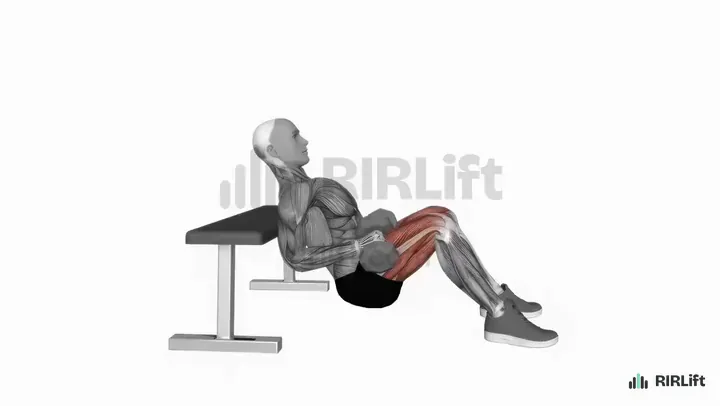
Dumbbell Hip Thrust

Glutes

The Dumbbell Hip Thrust loads your glutes hardest at the top, where squats and hinges load them least, so it fills the gap they leave. With a bench or couch and one heavy dumbbell it is the most glute per set you can get with dumbbells.

How to do it

  1. Set your shoulder blades against the edge of a bench or couch seat, knees bent, feet flat about hip-width apart.
  2. Lay one dumbbell across the crease of your hips, hands on it so it cannot roll.
  3. Drive through your heels to lift your hips until your thighs and torso make a straight line, chin tucked.
  4. Squeeze for a second at the top, then lower your hips most of the way and go again.

Cues

  • Chin tucked, ribs down
  • Shins vertical at the top
  • Squeeze, don't arch

Common mistakes

  • Arching your lower back to go higher: stop when your hips are fully open, with your ribs down.
  • Feet too far out so it becomes a hamstring exercise: at the top, your shins should be straight up and down.

Swap for: Hip Thrust, Dumbbell Glute Bridge, Single-Leg Hip Thrust

Glutes, floor-based

Dumbbell Glute Bridge

Glutes

The Dumbbell Glute Bridge is the hip thrust with no bench, so it is the glute exercise for a floor-only setup. The range is shorter, so take it to higher reps and pause every rep at the top.

How to do it

  1. Lie face up, knees bent, feet planted hip-width apart and close enough that your fingertips brush your heels.
  2. Lay one dumbbell across the crease of your hips; your hands only keep it from rolling.
  3. Drive your heels into the floor and raise your hips until shoulders, hips and knees line up.
  4. Hold the top for a second, then lower until your hips hover just above the floor.

Cues

  • Heels down, toes light
  • Ribs down at the top
  • One-second squeeze

Common mistakes

  • Lifting with your lower back instead of your glutes: tuck your tailbone under before you lift, and only go as high as your hips open.
  • Letting the dumbbell roll toward your stomach: keep it on the crease of your hips with your hands on it the whole set.

Swap for: Single-Leg Glute Bridge, Dumbbell Hip Thrust, Band Hip Thrust

Single-leg dumbbell exercises

Working one leg at a time is how a light pair of dumbbells turns into a heavy leg exercise: the same weight now sits on one leg. These are the knee-bending single-leg moves (lunges, split squats, step-ups); the single-leg hinges are listed with the hamstrings. Count reps per leg and start every set on your weaker side.

Quads and glutes, hardest single-leg move

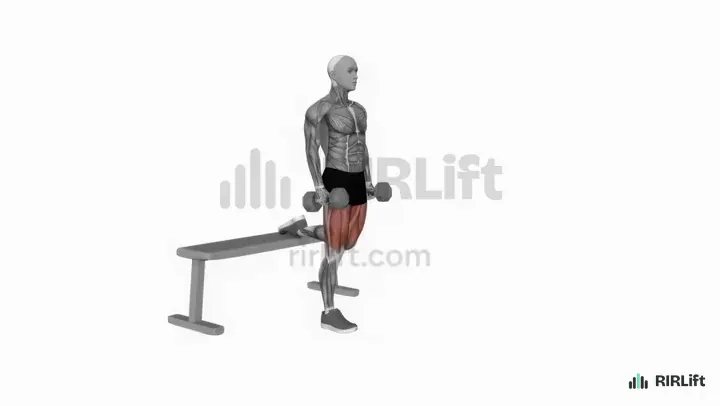
Bulgarian Split Squat

Quads, Glutes

With your back foot up on a bench or couch, almost all of your bodyweight plus the dumbbells lands on one leg, so even a light pair makes this hard. It trains quads and glutes in one move and is the exercise that lets dumbbell-only lifters keep growing when the squat runs out of load.

How to do it

  1. Stand facing away from a bench or couch, about one long step in front of it, and put the top of your back foot on it.
  2. Let a dumbbell hang from each hand, or hug one bell to your chest if the pair is light.
  3. Drop straight down, aiming the back knee at the floor, and stop when the front thigh passes parallel.
  4. Push through your front foot to stand, and keep your front knee tracking over your toes.

Cues

  • Back knee toward the floor
  • Front foot flat the whole rep
  • Torso slightly forward for glutes, upright for quads

Common mistakes

  • Standing too close to the bench so your front knee shoots forward and your back foot cramps: take a longer step out.
  • Pushing off the back foot: it is a balance point, not a second leg. If it takes over, lower the bench or use a lower couch.

Swap for: Dumbbell Split Squat, Dumbbell Goblet Split Squat, Step-Up

Quads and glutes, moving lunge

Walking Lunge

Quads, Glutes

Walking lunges hit both legs in alternation and tire you faster than any stationary lunge, which makes them the add-on that finishes a leg session when you still have room in the gym. Each step is a full single-leg rep with a deep stretch at the bottom.

How to do it

  1. Stand with your feet together, one dumbbell hanging from each hand.
  2. Step forward far enough that both knees reach about 90 degrees as you lower.
  3. Drop your back knee to just above the floor, then push through your front foot and bring your back leg through into the next step.
  4. Keep walking, alternating legs, until you have done the reps for each leg.

Cues

  • Long step, straight down
  • Front heel stays down
  • Tall torso, eyes forward

Common mistakes

  • Taking short steps so the front knee carries everything: lengthen the step until your back knee lands under your hip.
  • Letting the dumbbells swing: keep your arms still and let your legs do the moving.

Swap for: Dumbbell Reverse Lunge, Dumbbell Forward Lunge

Quads and glutes, knee-friendly lunge

Dumbbell Reverse Lunge

Quads, Glutes

Stepping back instead of forward keeps your front shin more vertical and lets you control the depth, so this is the lunge most people can load hard without knee complaints. It also needs no bench, which makes it the single-leg move for a no-furniture setup.

How to do it

  1. Start upright with a bell hanging from each hand and your feet under your hips.
  2. Step one foot back and sink until the back knee hovers an inch off the floor and the front thigh is near parallel.
  3. Push through your front foot to bring the back leg forward and stand tall.
  4. Do all the reps on one leg, then switch, so each leg gets a full hard set.

Cues

  • Front shin stays vertical
  • Back knee kisses the floor
  • Push the front foot through the floor

Common mistakes

  • Alternating legs when the pair is light: alternating halves the work per leg. Do all reps on one side to keep each set hard.
  • Leaning your torso way back: a slight forward lean keeps the load on your front leg and off your lower back.

Swap for: Dumbbell Split Squat, Walking Lunge, Dumbbell Curtsy Lunge

Quads and glutes, bench or step

Step-Up

Quads, Glutes

The Step-Up loads one leg from a dead stop at the bottom, with no bounce to help, and a bench high enough that your thigh starts near parallel makes it a full quad and glute exercise. Use it when you have a bench and want single-leg work that is easier on your knees than a lunge.

How to do it

  1. Face a bench or step high enough that your thigh sits about parallel with your foot on it, holding one dumbbell per hand.
  2. Put one whole foot on the bench and lean slightly toward it.
  3. Drive through that foot to stand up on the bench, bringing the other foot up to tap beside it.
  4. Lower slowly on the same leg back to the floor, and do all the reps before switching sides.

Cues

  • Whole foot on the bench
  • Don't push off the floor foot
  • Lower under control

Common mistakes

  • Bouncing off the bottom foot to start each rep: keep the floor foot relaxed and let the working leg lift you.
  • A step so low that it feels easy: raise it until the top of your thigh starts level with your hip, then add weight.

Swap for: Bulgarian Split Squat, Dumbbell Reverse Lunge

Build a session with Step-Up

Adductors, glutes and quads, sideways

Dumbbell Lateral Lunge

Quads, Glutes, Adductors

Every other move on this page works your legs front to back; the Dumbbell Lateral Lunge is the one that loads your inner thighs and the side of your hips. It is the right finisher when your adductors are the lagging part of your thighs.

How to do it

  1. Start with your feet together, a dumbbell hanging from each hand.
  2. Take a wide step to one side and sit your hips back and down over that foot, keeping the other leg straight with its foot flat.
  3. Lower until the thigh of your bent leg is close to parallel, dumbbells hanging on either side of that leg.
  4. Push off that foot to come back to standing, and alternate sides.

Cues

  • Hips back, chest up
  • Straight leg stays flat-footed
  • Knee tracks over the toes of the bent leg

Common mistakes

  • Letting the bent knee cave inward: push it out over your little toe as you lower.
  • Stepping too short so you never get deep: take a wider step and let the straight leg stretch.

Swap for: Cossack Squat, Sumo Squat, Dumbbell Curtsy Lunge

Dumbbell exercises for calves

A standing raise with straight knees trains the whole calf and a seated raise with bent knees trains the soleus underneath it, so do both across the week. Stand on a step or a thick book so your heel can drop below your toes, pause in the stretch, and rise all the way up.

Calves, straight-knee

Dumbbell Standing Calf Raise

Calves

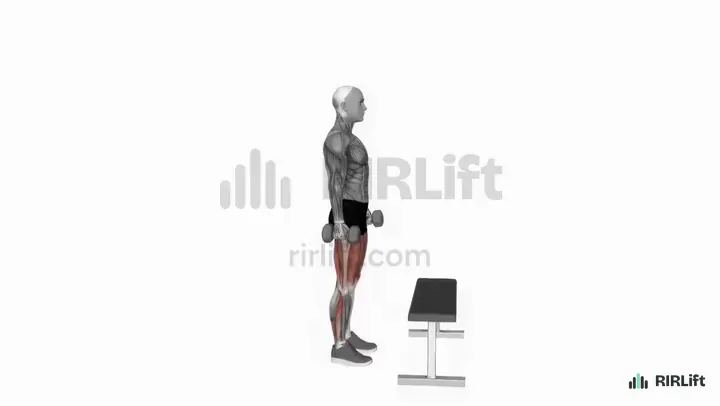
The straight-knee raise trains the whole calf, and standing on a step with dumbbells is as much load as most home setups allow. Pausing in the bottom stretch each rep is what makes a light pair enough.

How to do it

  1. Stand with the balls of your feet on a step, heels hanging off, a dumbbell in each hand or one hand on a wall for balance.
  2. Lower your heels as far as they go and hold the stretch for a second.
  3. Rise onto your toes as high as you can.
  4. Pause at the top, then lower slowly over two seconds.

Cues

  • Heels below the step
  • Pause at both ends
  • Knees straight

Common mistakes

  • Bouncing out of the bottom: the pause takes away the rebound that lets you cheat.
  • Short, fast reps from a flat floor: without a step your calves never reach the stretch that grows them.

Swap for: Single-Leg Calf Raise, Standing Calf Raise

Calves, bent-knee

Dumbbell Seated Calf Raise

Calves

With your knees bent, the big upper calf muscle is slack and the soleus underneath does the work, so the Dumbbell Seated Calf Raise trains the part the standing raise misses. Two dumbbells on your knees is plenty for 12 to 20 slow reps.

How to do it

  1. Sit on a bench or chair with the balls of your feet on a plate or step and your knees bent at about 90 degrees.
  2. Park a dumbbell on top of each knee.
  3. Lift your heels as high as they go, pressing through the balls of your feet.
  4. Lower until your heels are below your toes and pause in the stretch before the next rep.

Cues

  • Hands hold, legs lift
  • Heels drop below your toes
  • Slow and even

Common mistakes

  • Rocking the dumbbells with your hands to help: your arms only hold them in place.
  • Skipping the stretch at the bottom: let your heels drop below your toes every rep.

Swap for: Seated Calf Raise, Dumbbell Standing Calf Raise

Put them together: example sessions

Each session below picks from the exercises above for one situation, with the sets, reps, rest and RIR filled in. Open one in the session builder to change a pick, price it from a recent set, and add it to RIRLift.

Session 1

One pair of light dumbbells at home, no bench

Open in the session builder
  • Workouts2× a week
  • Working sets30 a week
  • Per workout~35 min
  • EquipmentDumbbells

You have one fixed pair of dumbbells that a goblet squat barely notices, a couch or chair, and no bench.

A light pair stops being light the moment one leg carries it, so this session is built from single-leg squats and hinges plus a bridge and a calf raise that you take to 0 or 1 reps short of failure. Every block needs only the floor and a couch: the Bulgarian Split Squat uses the couch for your back foot, and the Dumbbell Glute Bridge replaces the hip thrust so nothing needs a bench. It is 15 hard sets a session, 30 a week, spread over quads, hamstrings, glutes and calves.

Dumbbell Legs
ExerciseSets × repsRIRRest
Bulgarian Split Squat1 warm-up set firstBack foot on the couch. Sets are per leg 3 × 10–15 1 90 s
Single-Leg RDLOne bell, opposite hand. Sets are per leg 3 × 10–15 1 1 min
Dumbbell Reverse LungeAll reps on one leg, then switch 3 × 12–20 0 90 s
Dumbbell Glute BridgeHold the top for 1 s 3 × 15–25 0 1 min
Dumbbell Standing Calf RaiseOn a step. One leg at a time if easy 3 × 15–25 0 45 s
How to run it
Run it twice a week with at least two days between sessions. Start every exercise on your weaker leg and match that rep count on the stronger side.
How to progress
When you hit the top of the rep range on every set, slow the lowering to 3 seconds; when that gets easy, pause 1 second in the bottom; when you pass 20 reps on the split squat and reverse lunge anyway, it is time for a heavier or adjustable pair.

Session 2

Heavy or adjustable dumbbells and a bench

Open in the session builder
  • Workouts2× a week
  • Working sets26 a week
  • Per workout~35 min
  • EquipmentDumbbells, Flat Bench

You have adjustable dumbbells or a rack of pairs that go heavy enough to make 6 reps hard, plus a flat bench or a sturdy step.

With real load available, the two-leg squat and hinge come back as the main lifts and the bench adds the Step-Up and a proper Dumbbell Hip Thrust. The two sessions split the work: Legs A is squat-first and hinge-second, Legs B is thrust-first with the Bulgarian Split Squat and the Heels-Elevated Goblet Squat behind it, so each pattern gets one fresh start a week. Each session is 13 hard sets, 26 a week across quads, hamstrings, glutes and calves, with the straight-knee calf raise on one day and the bent-knee raise on the other.

Legs A: Squat + Hinge
ExerciseSets × repsRIRRest
Dumbbell Front Squat2 warm-up sets firstElbows up. Full depth 4 × 6–10 2 2:30 min
Dumbbell Romanian Deadlift1 warm-up set firstBells on your legs. Stop at the stretch 3 × 8–12 2 2 min
Step-UpThigh parallel at the start. Per leg 3 × 8–12 1 90 s
Dumbbell Standing Calf RaiseOn a step. Pause at both ends 3 × 10–15 1 1 min

Open Legs A: Squat + Hinge in the session builder

Legs B: Thrust + Split Squat
ExerciseSets × repsRIRRest
Dumbbell Hip Thrust1 warm-up set firstBack on the bench. Squeeze 1 s 4 × 8–12 1 2 min
Bulgarian Split SquatBack foot on the bench. Per leg 3 × 8–12 1 2 min
Heels-Elevated Goblet SquatKnees forward, hamstrings to calves 3 × 10–15 1 90 s
Dumbbell Seated Calf RaiseBells on knees. Full stretch 3 × 12–20 1 1 min

Open Legs B: Thrust + Split Squat in the session builder

How to run it
Do Legs A and Legs B on two days a week with at least two days between them. Pair them with your upper-body days however you like; the order of A and B doesn't matter.
How to progress
Double progression: when every set reaches the top of its rep range at the target RIR, go up one dumbbell step next session. On the front squat, keep the pair you can rack cleanly and add reps up to 10 before you add weight.

Session 3

Gym dumbbells as a leg-day add-on

Open in the session builder
  • Workouts1× a week
  • Working sets8 a week
  • Per workout~25 min
  • EquipmentDumbbells

You already squat, leg press or deadlift on leg day and want 8 dumbbell sets after the big lifts that cover what they skip.

Barbell and machine lifts load both legs together, so what they leave out is single-leg work and a side-to-side move. This add-on fills exactly that: the Walking Lunge for a long single-leg burn, the Dumbbell B-Stance RDL for one hamstring at a time with a heavy pair, and the Dumbbell Lateral Lunge for your inner thighs. It is 8 hard sets, once a week, on top of the sets your main lifts already give your legs.

Dumbbell Leg Add-On
ExerciseSets × repsRIRRest
Walking LungeReps are steps per leg 3 × 10–15 1 90 s
Dumbbell B-Stance RDLBack foot on its toes. Sets are per leg 3 × 8–12 1 90 s
Dumbbell Lateral LungeReps are per side. Wide step 2 × 10–12 1 1 min
How to run it
Do it at the end of one leg day a week, right after your barbell squat, leg press or deadlift, before calves. Keep the rest short; the heavy work is done.
How to progress
Add reps to the top of each range first, then go up one dumbbell pair. If the lunges are still easy at 15 steps per leg, go heavier rather than longer.

Make it fit you

Questions

Can you build legs with dumbbells only?

Yes. Muscle grows from hard sets, not from the equipment, and light loads build as much muscle as heavy ones when the set ends close to failure. The limit with dumbbells is load on two-leg lifts, and single-leg moves like the Bulgarian Split Squat and Single-Leg RDL solve it by putting the whole weight on one leg.

What is the most effective dumbbell leg exercise?

The Bulgarian Split Squat, because it trains your quads and glutes hard with any pair of dumbbells and keeps getting harder as you add weight. If you can only add one more, make it the Dumbbell Romanian Deadlift so your hamstrings get a hinge.

What are the top 5 dumbbell leg exercises?

Goblet Squat or Dumbbell Front Squat for quads, Dumbbell Romanian Deadlift for hamstrings, Dumbbell Hip Thrust for glutes, Bulgarian Split Squat for single-leg work, and Dumbbell Standing Calf Raise. Those five cover every leg muscle, and each session on this page is built from them.

What are the big 3 leg exercises?

A squat, a hip hinge and a single-leg move. With dumbbells that is the Dumbbell Front Squat, the Dumbbell Romanian Deadlift and the Bulgarian Split Squat. Add a calf raise and you have a complete leg session.

What leg exercises can I do with dumbbells and a bench?

The bench adds the Dumbbell Hip Thrust, the Step-Up, the Bulgarian Split Squat with your back foot on it, and the Dumbbell Seated Calf Raise. The adjustable-dumbbell session above uses all four.

How heavy should dumbbells be for leg exercises?

Heavy enough that each set ends within 0 to 2 reps of failure somewhere between 6 and 20 reps. For two-leg squats and hinges that usually means the heaviest pair you own; for lunges and split squats, start with half that and work up.

How many times a week should I do leg exercises with dumbbells?

Twice. With the same weekly sets, training legs twice a week grows them at least as well as once, and two sessions keep each one short enough that your last sets are still hard. The home and bench sessions on this page are built for two days a week.