Barbell exercises: the 18 lifts worth learning, and how to put them together

The barbell exercises worth learning are one lift per movement pattern: a squat (back or front squat), a hinge (Romanian deadlift, sumo deadlift or rack pull), a horizontal press (bench press, or floor press without a bench), an overhead press, a row (barbell or Pendlay row), and a curl or shrug for the arms and traps. Pick one from each group, run them for 5 to 12 reps stopping 1 to 3 reps short of failure, and add weight when you reach the top of the rep range. The three sessions below are that rule applied to a bar with no rack, a rack and a bench, and a full gym.

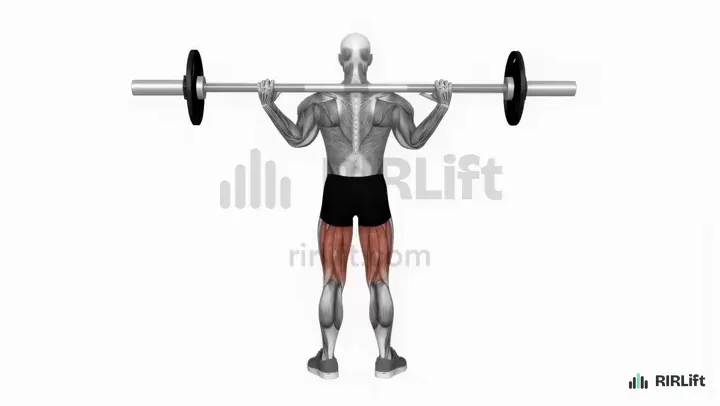
  1. Barbell Back Squat Quads, Glutes, Adductors
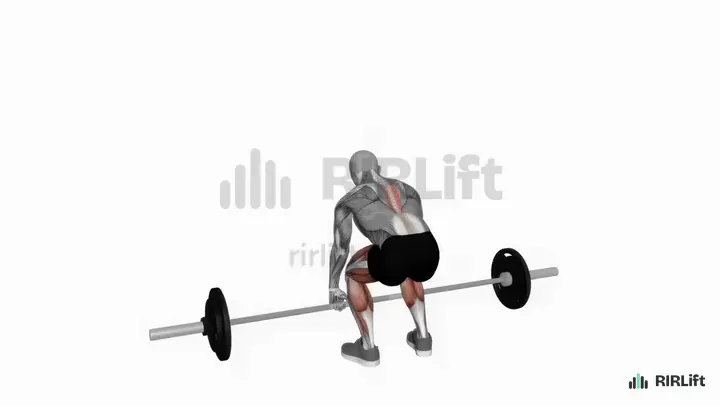
  2. Romanian Deadlift Hamstrings, Glutes
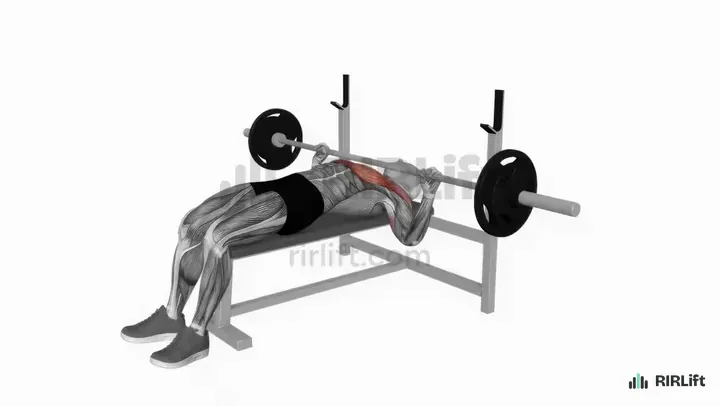
  3. Barbell Bench Press Chest
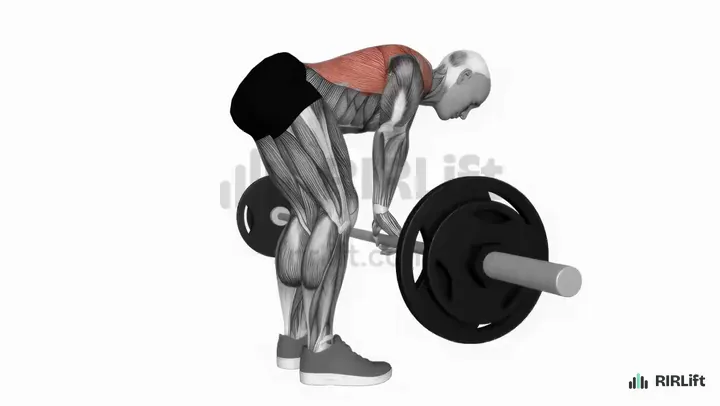
  4. Barbell Row Upper Back, Lats
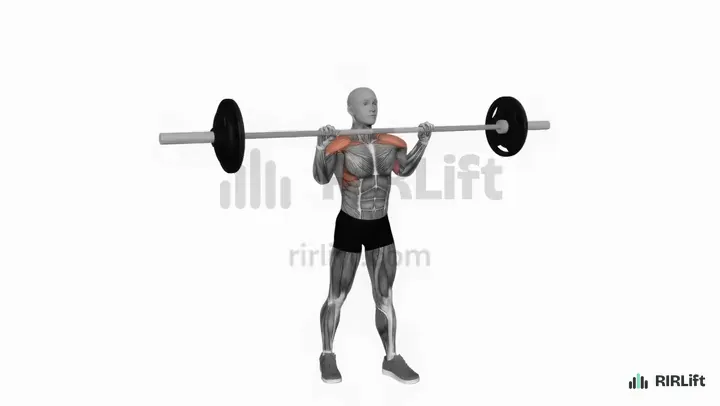
  5. Barbell Overhead Press Shoulders
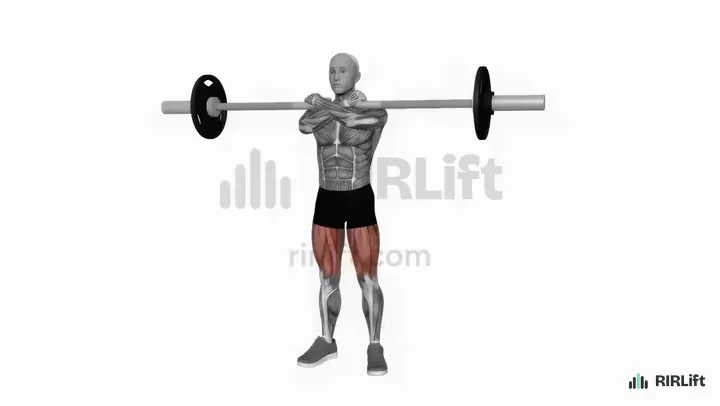
  6. Front Squat Quads, Glutes, Adductors
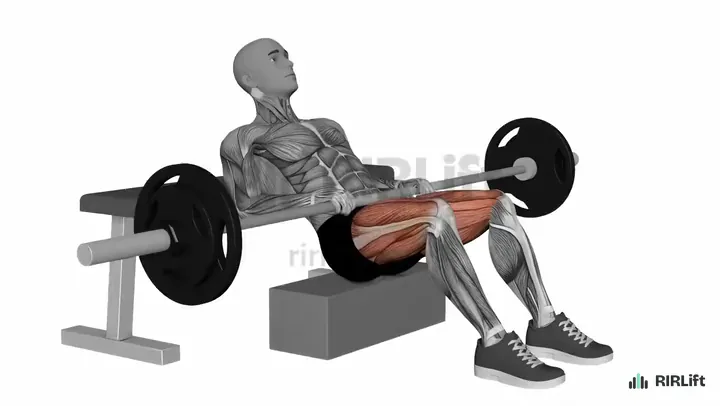
  7. Hip Thrust Glutes
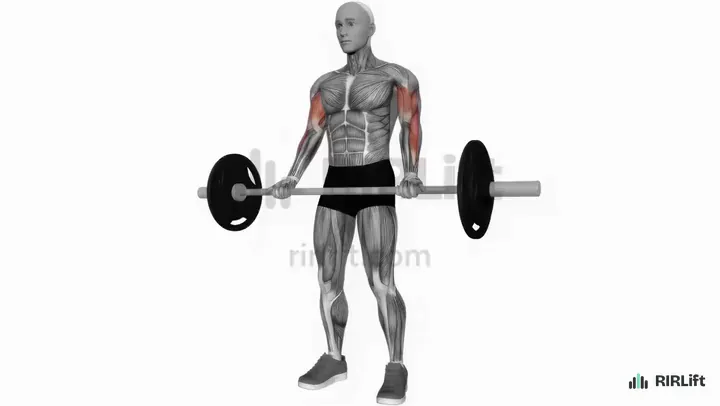
  8. Barbell Curl Biceps

Barbell squat exercises

The squat is the lift that makes a barbell worth owning: no dumbbell lets you load your quads and glutes this heavily. The back squat is the default when you have a rack. Without one, the Zercher squat is the easiest to get into position from the floor, and the front squat follows once you can clean the bar to your shoulders. The Bulgarian split squat is the one to add when one leg is weaker or your lower back needs a lighter bar.

Quads and glutes, main squat

Barbell Back Squat

Quads, Glutes, Adductors

The back squat lets you load your whole lower body heavier than any other lift on this page, and the rack means you never have to get the bar into position yourself. It is the first exercise to learn when you have a rack.

How to do it

  1. Set the rack hooks at mid-chest height and duck under the bar so it sits on your upper back, hands just outside your shoulders.
  2. Stand up, take two steps back and set your feet about shoulder width with your toes turned out a little.
  3. Take a breath, brace, and sit down between your knees until your thighs are at least parallel to the floor.
  4. Drive your whole foot into the floor and stand back up, then re-brace before the next rep.

Cues

  • Big breath, brace, then descend
  • Knees track over your toes
  • Whole foot flat on the floor

Common mistakes

  • Cutting depth as the weight goes up: film a set from the side and only count reps where your hip crease reaches your knee.
  • Letting your knees cave on the way up: push them out toward your pinky toes and drop the weight until they stay there.

Swap for: Front Squat, Barbell Low-Bar Squat, Box Squat

Quads, upright squat

Front Squat

Quads, Glutes, Adductors

Holding the bar on the front of your shoulders keeps your torso upright, so your quads do more of the work and your lower back does less. It also pairs with the clean, so it is the squat that needs no rack once you can get the bar to your shoulders.

How to do it

  1. Rest the bar on the front of your shoulders with your fingertips under it and your elbows pointed forward, or take it from a rack at chest height.
  2. Stand with your feet shoulder width apart and your chest tall.
  3. Sit straight down, keeping your elbows high so the bar stays on your shoulders.
  4. Push the floor away to stand, driving your elbows up as you rise.

Cues

  • Elbows high the whole rep
  • Sit straight down, not back
  • Chest tall

Common mistakes

  • Dropping your elbows at the bottom, which rolls the bar forward: lighten the load and keep your upper arms level with the floor.
  • Rising with your hips first: lead with your chest and elbows so the bar path stays vertical.

Swap for: Barbell Back Squat, Zercher Squat, Goblet Squat

Quads, upper back, no rack needed

Zercher Squat

Quads, Glutes

The bar rests inside your bent elbows, so you can deadlift it from the floor to your knees, sit the bar on your thighs and hook your arms under it. That makes it the heaviest squat you can set up with nothing but a bar and plates.

How to do it

  1. Deadlift the bar to just above your knees, sit your hips back until it rests on your thighs, and slide your arms under it so it rests inside your bent elbows.
  2. Stand up with the bar held tight against your body, hands clasped in front of your chest.
  3. Squat down until your elbows reach the inside of your knees, keeping your chest up.
  4. Drive back up to standing, then reverse the setup to put the bar down.

Cues

  • Bar tight to your body
  • Chest up, elbows in
  • Elbows to the inside of your knees

Common mistakes

  • Letting the bar drift away from your chest, which rounds your upper back: squeeze your hands together and keep it touching your body.
  • Skipping the thigh rest on the setup and curling the bar up: always pick it up from your thighs or the rack, never from the floor with your arms.

Swap for: Front Squat, Goblet Squat, Barbell Back Squat

Quads and glutes, one leg at a time

Barbell Bulgarian Split Squat

Quads, Glutes

One leg does the work with the bar on your back, so each leg gets a full set with a much lighter bar than a squat, and the weaker leg cannot hide. It is the leg exercise to run on a full gym day after your main squat.

How to do it

  1. Set the bar on your upper back and stand about one long step in front of a bench, facing away.
  2. Put the top of one foot on the bench behind you and square your hips.
  3. Lower straight down until your back knee is just above the floor.
  4. Push through your front foot to stand, finish all reps, then switch legs.

Cues

  • Front foot far enough forward to stay flat
  • Straight down, not forward
  • Sets are per leg

Common mistakes

  • Standing too close to the bench, which pushes your front knee far past your toes: step out until your front shin stays near vertical at the bottom.
  • Rushing the setup and losing balance: get the bar settled and your foot placed before the first rep, and keep the weight light enough to balance.

Swap for: Bulgarian Split Squat, Barbell Split Squat, Barbell Reverse Lunge

Barbell hinge and deadlift exercises

A hinge trains your hamstrings, glutes and lower back by pushing your hips back with the bar close to your legs. The Romanian deadlift is the one to learn first because it loads the hamstrings through a long stretch and never touches the floor. The sumo deadlift pulls from the floor with a more upright back, the rack pull lets you go heavy on the lockout, and the hip thrust is the glute lift that a bench unlocks.

Hamstrings and glutes, main hinge

Romanian Deadlift

Hamstrings, Glutes

The Romanian deadlift loads your hamstrings through a long stretch every rep, and because it starts from standing and never touches the floor, it needs no rack and teaches the hinge better than any pull from the floor.

How to do it

  1. Stand holding the bar at your thighs with an overhand grip just outside your legs, feet hip width apart.
  2. Unlock your knees slightly and push your hips straight back, letting the bar slide down your thighs.
  3. Lower until the bar passes your knees and you feel a strong stretch in your hamstrings, with your back flat.
  4. Drive your hips forward to stand tall, keeping the bar against your legs the whole way.

Cues

  • Hips back, not down
  • Bar brushes your legs
  • Stop where the stretch stops

Common mistakes

  • Bending your knees into a squat as the bar lowers: keep the same slight knee bend from start to finish so the hamstrings stay loaded.
  • Chasing the floor by rounding your lower back: the rep ends where your back wants to round, usually just below the knee.

Swap for: Stiff-Leg Deadlift, Dumbbell Romanian Deadlift, Sumo Romanian Deadlift

Glutes, hamstrings and quads, pull from the floor

Sumo Deadlift

Glutes, Hamstrings, Quads

A wide stance shortens the pull and keeps your torso more upright than a narrow-stance deadlift, so your quads and glutes share the load with your lower back. It is the pull from the floor that most people can keep strict without a rack or a coach.

How to do it

  1. Stand with your feet well outside shoulder width, toes turned out, shins close to the bar.
  2. Push your knees out, sit your hips down and grip the bar with both hands inside your legs.
  3. Pull the slack out of the bar, then drive your feet into the floor and stand up, pushing your knees out the whole way.
  4. Squeeze your glutes at the top, then lower the bar back to the floor by pushing your hips back and bending your knees.

Cues

  • Knees out over your toes
  • Pull the slack out before you lift
  • Hips and chest rise together

Common mistakes

  • Letting your hips shoot up first, which turns it into a stiff-leg pull: start with your hips lower and keep your chest up as you break the floor.
  • Bouncing the plates off the floor between reps: let the bar settle, re-brace and pull each rep from a dead stop.

Swap for: Trap Bar Deadlift, Romanian Deadlift, Rack Pull

Glutes, lower back and traps, heavy partial pull

Rack Pull

Glutes, Lower Back, Traps

Pulling from pins set just below your knees skips the hardest part of the deadlift, so you can load more weight than you could pull from the floor and train the lockout, your upper back and your grip at the same time.

How to do it

  1. Set the safety pins or spotter arms in the rack so the bar sits just below your knees.
  2. Stand with your shins against the bar, feet hip width apart, and grip it just outside your legs.
  3. Brace, then drive your hips forward and stand tall, keeping the bar against your legs.
  4. Lower the bar back to the pins under control and let it settle before the next rep.

Cues

  • Bar stays on your legs
  • Squeeze your glutes at the top
  • Let the bar settle on the pins

Common mistakes

  • Leaning back and shrugging at the top: finish with your hips under you and your shoulders down.
  • Setting the pins above your knees and pulling huge weights for a few inches: keep them just below the knee so the glutes and hamstrings still work.

Swap for: Sumo Deadlift, Romanian Deadlift, Trap Bar Deadlift

Build a session with Rack Pull

Glutes, loaded at the top

Hip Thrust

Glutes

The hip thrust loads your glutes hardest in the fully extended position, where squats and hinges go light. With a flat bench and a pad on the bar it is the heaviest glute exercise you can do.

How to do it

  1. Sit with your shoulder blades against the long side of a flat bench, feet flat, and roll a padded bar over your hips.
  2. Plant your feet flat about hip width apart, close enough that your shins are vertical at the top.
  3. Drive through your heels and lift your hips until your torso and thighs form a straight line.
  4. Hold the top for a second with your chin tucked, then lower your hips most of the way down and repeat.

Cues

  • Chin tucked, ribs down
  • Shins vertical at the top
  • One-second squeeze

Common mistakes

  • Arching your lower back to get higher: stop when your hips are level with your knees and squeeze your glutes there.
  • Placing your feet too far out, which turns it into a hamstring exercise: bring them in until your shins are vertical at lockout.

Swap for: Glute Bridge, Dumbbell Hip Thrust, Single-Leg Hip Thrust

Barbell press exercises

The bench press is the heaviest chest exercise there is, and the incline and close-grip versions shift the work to your upper chest and triceps. The floor press is the same lift without a bench, and it is safe to fail without a spotter because the bar comes down to your elbows on the floor. The overhead press is the only one here that needs nothing but the bar, so it is the press to learn first wherever there is no bench.

Chest, main horizontal press

Barbell Bench Press

Chest

The bench press is the lift you can load the most for your chest, and the rack lets you start each set with a straight bar path. It belongs in any session where you have a flat bench and a rack or stand.

How to do it

  1. Lie on the bench with your eyes under the bar, feet flat on the floor and shoulder blades pulled back and down.
  2. Grip the bar a little wider than shoulder width and unrack it over your shoulders with straight arms.
  3. Lower the bar to your lower chest with your elbows tucked about 45 degrees from your sides.
  4. Press it back up and slightly toward your face until your arms are straight.

Cues

  • Shoulder blades pinned to the bench
  • Elbows at 45 degrees, not flared
  • Touch, then press

Common mistakes

  • Flaring your elbows straight out so the bar lands at your collarbones: tuck them and bring the bar to your lower chest.
  • Bouncing the bar off your chest: touch lightly and press, or pause for a count when the load gets heavy.

Swap for: Floor Press, Incline Dumbbell Press, Machine Chest Press

Upper chest and front delts

Incline Barbell Bench Press

Chest

Raising the bench to about 30 degrees shifts more of the press to your upper chest and front delts. It is the second press on a full gym day, run after the flat bench or in its place when your upper chest lags.

How to do it

  1. Set the bench to around 30 degrees and lie back with your feet flat and your shoulder blades pulled together.
  2. Grip the bar a little wider than shoulder width and unrack it over your upper chest.
  3. Lower the bar to just below your collarbones, elbows about 45 degrees from your sides.
  4. Press back up until your arms are straight above your shoulders.

Cues

  • Bar to your upper chest
  • Shoulder blades together
  • Keep the bench near 30 degrees

Common mistakes

  • Setting the bench too steep, which turns the lift into a shoulder press: stay around 30 degrees and lower the bar below your collarbones.
  • Lifting your hips off the bench to press more weight: keep them down and take the weight off the bar.

Swap for: Incline Dumbbell Press, Barbell Bench Press, Landmine Press

Triceps and chest

Close-Grip Bench Press

Triceps, Chest

A shoulder-width grip keeps your elbows tucked and gives your triceps most of the work, with a lot more weight than any extension allows. It is the triceps exercise for a barbell-only lifter.

How to do it

  1. Lie on a flat bench and grip the bar at about shoulder width, no narrower.
  2. Unrack it over your shoulders and set your shoulder blades back.
  3. Lower the bar to your lower chest with your elbows tucked close to your sides.
  4. Press back up and lock your elbows out fully at the top.

Cues

  • Elbows close to your ribs
  • Full lockout at the top
  • Shoulder width, not hands touching

Common mistakes

  • Taking the grip so narrow your wrists bend back: keep your hands about shoulder width so your forearms stay vertical.
  • Stopping just short of lockout: finish each rep with your elbows straight to get the triceps work you came for.

Swap for: JM Press, Close-Grip Push-Up, Barbell Bench Press

Chest and triceps, no bench needed

Floor Press

Chest, Triceps

Lying on the floor stops the bar at your elbows, so you press through the top half with no bench, no rack and no spotter. If a set fails, the bar just rests on the floor, which makes it the safest heavy press you can do alone.

How to do it

  1. Sit on the floor with the bar over your thighs, lie back and roll it up to your lower chest, then grip it a little wider than shoulder width.
  2. Bend your knees or keep your legs straight, pull your shoulder blades together and get the bar over your chest.
  3. Lower the bar until the backs of your upper arms touch the floor, pause for a second.
  4. Press the bar back up until your arms are straight.

Cues

  • Pause when your arms touch the floor
  • Elbows at 45 degrees
  • Shoulder blades pulled together

Common mistakes

  • Bouncing your elbows off the floor to start the press: pause for a count so your chest and triceps start the rep.
  • Setting up with the bar over your face: set it over your lower chest before you start, and roll it to your hips before sitting up to finish.

Swap for: Dumbbell Floor Press, Barbell Bench Press, Push-Up

Shoulders and triceps, overhead press

Barbell Overhead Press

Shoulders

The standing press trains your front and side delts and your triceps, and works with nothing but a bar because you can clean it to your shoulders. It is the one upper-body lift in every session on this page.

How to do it

  1. Take the bar from a rack at chest height, or clean it to your shoulders, with your hands just outside shoulder width.
  2. Stand with your feet about hip width apart, glutes and abs tight, bar resting on your upper chest.
  3. Press the bar straight up, moving your head back out of the way, until your arms are locked out overhead.
  4. Push your head through at the top so the bar is over the middle of your foot, then lower it to your chest.

Cues

  • Squeeze your glutes before you press
  • Bar path straight up, head moves back
  • Head through at the top

Common mistakes

  • Leaning back and turning it into an incline press: squeeze your glutes and brace your abs so your ribs stay down.
  • Pressing the bar around your face in a curve: pull your chin back so the bar can travel in a straight line.

Swap for: Seated Barbell Overhead Press, Dumbbell Shoulder Press, Landmine Press

Barbell row and pull exercises

A barbell row is the heaviest row you can do and it trains your lats, mid-back and rear delts together. The bent-over row keeps tension on through the whole set, the Pendlay row resets on the floor every rep so you can pull harder with a strict torso, and the inverted row under a bar in the rack is the one to use when your lower back has already done a hinge that day.

Lats and mid-back, heavy row

Barbell Row

Upper Back, Lats

The bent-over row loads your whole back at once, and it is the row that lets you use the most weight. It keeps your lower back working too, so put it on a day away from your heaviest hinge.

How to do it

  1. Stand with your feet hip width apart holding the bar with an overhand grip just outside your legs.
  2. Hinge forward until your torso is about 45 degrees to the floor with a flat back and the bar below your knees.
  3. Pull the bar to your lower ribs, driving your elbows back and up and squeezing your shoulder blades together.
  4. Lower the bar under control until your arms are straight, keeping the same torso angle.

Cues

  • Torso angle stays fixed
  • Elbows back, bar to your ribs
  • Flat back from hips to head

Common mistakes

  • Standing taller every rep so the row gets shorter: set your torso angle before the set and keep it there.
  • Heaving the bar with your hips: if your torso rises with the bar, take weight off.

Swap for: Pendlay Row, Underhand Barbell Row, Chest-Supported Row

Mid-back and lats, dead-stop row

Pendlay Row

Upper Back, Lats

Each rep starts from the floor, so there is no momentum to borrow and no slow fatigue in your lower back from holding the bar. That lets you pull harder and keep your torso strict, which makes it the heavier of the two barbell rows for most lifters.

How to do it

  1. Set the bar on the floor and stand over it with your feet hip width apart.
  2. Hinge until your torso is parallel to the floor and grip the bar a little wider than shoulder width.
  3. Pull the bar explosively to your lower chest, driving your elbows up and back.
  4. Lower it all the way to the floor, let it settle and repeat.

Cues

  • Torso parallel to the floor
  • Bar from floor to lower chest
  • Dead stop every rep

Common mistakes

  • Letting your torso rise as you pull: keep your chest parallel to the floor, even if the bar does not reach your chest at first.
  • Bouncing the plates off the floor: let the bar stop completely before the next rep.

Swap for: Barbell Row, T-Bar Row, Chest-Supported Row

Upper back and lats, bodyweight row under the bar

Inverted Row

Upper Back, Lats

Set the bar in the rack at hip height and row your bodyweight under it, so your lower back carries nothing. It is the row to do on a day your hinge was heavy, and it scales from easy to hard by moving your feet.

How to do it

  1. Set the bar in the rack at about hip height and lie under it with your heels on the floor.
  2. Grip the bar a little wider than shoulder width and hang with straight arms, body in a straight line.
  3. Pull your chest to the bar, squeezing your shoulder blades together.
  4. Lower under control until your arms are straight.

Cues

  • Body straight from heels to head
  • Chest to the bar
  • Shoulder blades squeeze at the top

Common mistakes

  • Letting your hips sag: squeeze your glutes and brace so your body stays straight.
  • Stopping short of the bar: raise the bar or bend your knees until you can touch it on every rep.

Swap for: TRX Row, Chest-Supported Row, One-Arm Dumbbell Row

Barbell exercises for arms and traps

Two direct lifts cover what the compounds leave behind. The barbell curl is the biceps exercise you can load the most, and the shrug is the only way a barbell reaches your upper traps directly. Run both at 8 to 15 reps after the big lifts, and give them 2 to 3 sets a session.

Biceps, heavy curl

Barbell Curl

Biceps

Both hands on one bar let you curl more weight than any dumbbell curl, and the straight bar keeps your palms fully turned up where the biceps are strongest. It is the direct arm work a barbell-only lifter needs.

How to do it

  1. Stand with your feet hip width apart holding the bar with an underhand grip at about shoulder width.
  2. Keep your elbows at your sides and your upper arms still.
  3. Curl the bar up until your forearms are just past vertical, squeezing at the top.
  4. Lower over two seconds until your arms are fully straight.

Cues

  • Elbows pinned to your sides
  • Slow on the way down
  • All the way straight at the bottom

Common mistakes

  • Swinging your torso to start the rep: stand against a wall or post for a set and keep the weight where that works.
  • Lifting your elbows forward at the top, which hands the work to your front delts: keep your upper arms still.

Swap for: EZ-Bar Curl, Dumbbell Curl, Incline Dumbbell Curl

Upper traps

Barbell Shrug

Traps

Rows and deadlifts load your upper traps without taking them through their full range. The shrug does, and the barbell lets you use enough weight to make 8 to 12 reps hard.

How to do it

  1. Stand holding the bar at your thighs with an overhand grip just outside your hips.
  2. Keep your arms straight and your chest up.
  3. Lift your shoulders straight up toward your ears as high as they go and hold for a second.
  4. Lower until you feel your traps stretch, then repeat.

Cues

  • Shoulders straight up
  • One-second hold
  • Arms stay long

Common mistakes

  • Rolling your shoulders in a circle: go straight up and straight down.
  • Loading so much that reps turn into half-inch bounces: use a weight you can hold at the top.

Swap for: Dumbbell Shrug, Trap Bar Shrug, Rack Pull

Put them together: example sessions

Each session below picks from the exercises above for one situation, with the sets, reps, rest and RIR filled in. Open one in the session builder to change a pick, price it from a recent set, and add it to RIRLift.

Session 1

A bar and plates, no rack, no bench

Open in the session builder
  • Workouts2× a week
  • Working sets22 a week
  • Per workout~30 min
  • EquipmentBarbells

You have a barbell and plates at home or in a garage, nothing to rack it on and nothing to lie on.

Every lift here starts from the floor or from standing, so nothing needs a rack: the Zercher squat is picked up off your thighs, the floor press stops at your elbows, the overhead press is cleaned to your shoulders, and the hinges and rows never leave the ground. Each session is 11 hard sets, so the two together give your legs, chest, back and shoulders 22 sets a week. The squat and the Romanian deadlift sit on different days so your lower back only carries one heavy lift per session.

Bar A
ExerciseSets × repsRIRRest
Zercher Squat1 warm-up set firstPick the bar up off your thighs, not the floor 3 × 8–12 2 2:30 min
Floor Press1 warm-up set firstPause 1 s with your elbows on the floor 3 × 8–12 2 2 min
Barbell RowTorso angle fixed. Bar to your ribs 3 × 8–12 2 2 min
Barbell CurlElbows pinned, 2 s lowering 2 × 10–15 1 1 min

Open Bar A in the session builder

Bar B
ExerciseSets × repsRIRRest
Romanian Deadlift1 warm-up set firstHips back; stop where the stretch stops 3 × 8–12 2 2:30 min
Barbell Overhead Press1 warm-up set firstClean it to your shoulders. Glutes tight 3 × 6–10 2 2 min
Pendlay RowDead stop on the floor every rep 3 × 6–10 2 2 min
Barbell ShrugHold 1 s at the top 2 × 10–15 1 1 min

Open Bar B in the session builder

How to run it
Run Bar A and Bar B on two non-consecutive days a week. When that feels easy, add a third day and alternate A, B, A one week and B, A, B the next.
How to progress
Add reps until every set reaches the top of its range at the target RIR, then add the smallest plates you own. Lifts you have to clean to position, like the overhead press, are capped by what you can clean, so push the floor press and the rows hardest.

Session 2

A rack and a flat bench: the classic lifts

Open in the session builder
  • Workouts2× a week
  • Working sets23 a week
  • Per workout~40 min
  • EquipmentBarbells, Flat Bench

You have a squat rack or stands and a flat bench, at home or in a gym, and want the lifts a barbell is famous for.

A rack unlocks the back squat and the bench press, and a bench adds the hip thrust, so this is the classic barbell session: squat, bench, row on one day, pull from the floor, press overhead and row on the other. Each day is 11 to 12 hard sets, 23 a week in total. The inverted row sits on the deadlift day on purpose, because your lower back has already worked and a bodyweight row under the bar gives it nothing more to carry.

Rack A
ExerciseSets × repsRIRRest
Barbell Back Squat2 warm-up sets firstHip crease to knee height every rep 3 × 5–8 2 3 min
Barbell Bench Press2 warm-up sets firstElbows at 45 degrees, touch and press 3 × 6–10 2 2:30 min
Barbell RowTorso angle fixed. Bar to your ribs 3 × 6–10 2 2 min
Barbell CurlElbows pinned, 2 s lowering 2 × 10–15 1 1 min

Open Rack A in the session builder

Rack B
ExerciseSets × repsRIRRest
Sumo Deadlift2 warm-up sets firstKnees out. Dead stop every rep 3 × 5–8 2 3 min
Barbell Overhead Press1 warm-up set firstGlutes tight. Head through at the top 3 × 6–10 2 2:30 min
Inverted RowBar at hip height in the rack. Chest to bar 3 × 8–15 1 90 s
Hip ThrustPad on the bar. Hold 1 s at the top 3 × 8–12 1 90 s

Open Rack B in the session builder

How to run it
Run Rack A and Rack B once each per week with at least two days between them. On the squat and the sumo deadlift, do the two warm-up sets with lighter plates before the first working set.
How to progress
On the squat, bench, sumo deadlift and overhead press, add the smallest plate pair once all sets hit the top of the range at the target RIR. On the rows and the hip thrust, add reps first and load second.

Session 3

Full gym, intermediate: the variations

Open in the session builder
  • Workouts2× a week
  • Working sets29 a week
  • Per workout~50 min
  • EquipmentBarbells, Flat Bench, Incline Bench

You have been training a year or more, the classic lifts are already in your week, and you want a lower and an upper barbell day built from their variations.

After a year of squatting and benching, the variations are where the next progress comes from: the front squat keeps your torso upright and your quads busy, the rack pull lets you go heavier than a floor pull on the lockout, the incline bench moves the press to your upper chest, and the close-grip bench gives your triceps a heavy lift. Lower is 13 hard sets and Upper is 16, 29 a week in total. Rows stay strict on this plan because the Pendlay row resets on the floor every rep.

Lower
ExerciseSets × repsRIRRest
Front Squat2 warm-up sets firstPause 1 s at the bottom. Elbows high 4 × 5–8 2 3 min
Rack Pull2 warm-up sets firstPins just below the knee 3 × 5–8 2 3 min
Barbell Bulgarian Split SquatSets are per leg. Straight down 3 × 8–12 2 2 min
Hip ThrustChin tucked. Hold 1 s at the top 3 × 8–12 1 90 s

Open Lower in the session builder

Upper
ExerciseSets × repsRIRRest
Incline Barbell Bench Press2 warm-up sets firstBench at 30 degrees. Pause on your chest 4 × 6–10 2 2:30 min
Pendlay Row1 warm-up set firstDead stop. Torso stays parallel 4 × 6–8 2 2:30 min
Close-Grip Bench PressShoulder-width grip. Full lockout 3 × 8–12 1 2 min
Barbell ShrugHold 1 s at the top 3 × 8–12 1 90 s
Barbell CurlElbows pinned, 2 s lowering 2 × 10–15 1 1 min

Open Upper in the session builder

How to run it
Run Lower and Upper once each per week on their own days, or use them as the barbell halves of an upper/lower split alongside your existing sessions. Keep at least a day between the rack pull and your next heavy squat.
How to progress
Hold a one-second pause at the bottom of the front squat and on the chest of the incline press; it keeps the bar honest and makes small jumps count. Add load when every set reaches the top of the range at the target RIR, and on the Bulgarian split squat add reps before weight.

Make it fit you

Questions

What are the top 5 barbell exercises?

The back squat, a deadlift variation such as the Romanian or sumo deadlift, the bench press, the overhead press and the barbell row. Together they cover your legs, hips, chest, shoulders and back, and every session on this page is built from one lift per pattern.

What are the big 4 barbell exercises?

The squat, the deadlift, the bench press and the overhead press, with the barbell row often added as a fifth. If you only have a bar and no rack, the Zercher squat, the Romanian deadlift, the floor press and the overhead press cleaned from the floor cover the same four patterns.

Can you build muscle with barbell only?

Yes. A barbell loads every major pattern, squat, hinge, press, row and overhead press, heavier than any other free weight, and muscle grows from hard sets regardless of the tool. The gaps are side delts and calves, which a bar reaches less directly, so add lateral raises or calf raises with whatever else you have.

What are good barbell exercises for beginners?

Start with the Romanian deadlift, the floor press or bench press, the barbell row, the overhead press and, once you have a rack, the back squat. Learn each with the empty bar, add weight only when every rep looks the same, and keep sets 2 to 3 reps short of failure for the first month.

What barbell exercises can I do at home without a rack?

The Romanian deadlift, sumo deadlift, barbell row, Pendlay row, floor press, barbell curl and shrug all start from the floor or standing. For a squat, use the Zercher squat picked up off your thighs, and clean the bar to your shoulders for the overhead press or front squat. The first session on this page uses only those lifts.

What is a good barbell training routine?

Two sessions a week, each with a squat or hinge, a press, a row and one arm or trap exercise, for 3 sets of 5 to 12 reps stopping 1 to 2 reps short of failure. The three sessions on this page are that structure for a bar with no rack, a rack and a bench, and a full gym.

How many barbell exercises should I do per workout?

Four to five is enough: one big lower-body lift, one press, one row, and one or two smaller lifts. Each session above has four or five exercises and 11 to 16 hard sets, which is plenty when every set is close to failure.

Is the barbell better than dumbbells?

A barbell lets you load more weight and progress in small, fixed jumps, which is why it wins for squats, deadlifts and presses. Dumbbells let each arm move on its own path and are easier to set up at home. Most lifters do best with the barbell for the main lifts and dumbbells for the rest.