Dumbbell exercises for every muscle, and how to put them together

The dumbbell exercises worth building around are the goblet squat, Romanian deadlift, Bulgarian split squat, flat dumbbell press, one-arm row, shoulder press, lateral raise, curl and overhead triceps extension. Pick one squat or lunge, one hinge, one press, one row and one overhead press first, then add one or two isolation moves for the muscles you care about most. Each set should end 1 to 3 reps short of failure somewhere between 6 and 30 reps, and the moves below each cover one of those slots.

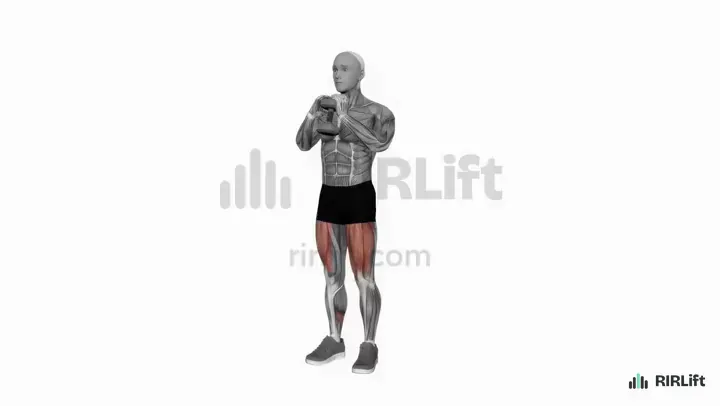
  1. Goblet Squat Quads, Glutes
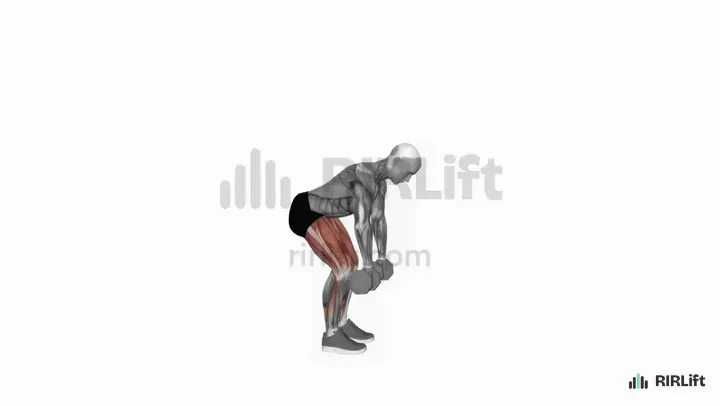
  2. Dumbbell Romanian Deadlift Hamstrings, Glutes
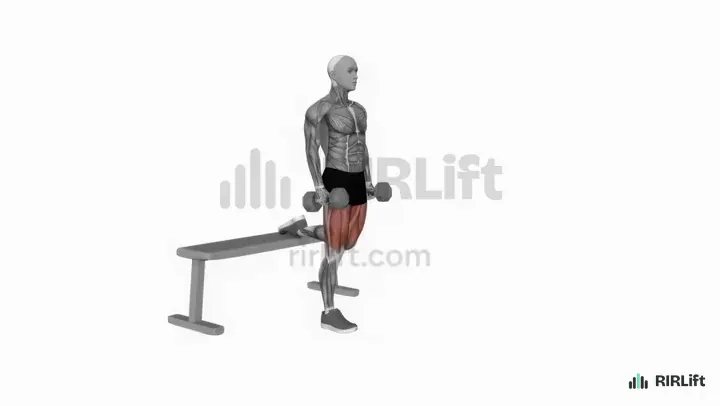
  3. Bulgarian Split Squat Quads, Glutes
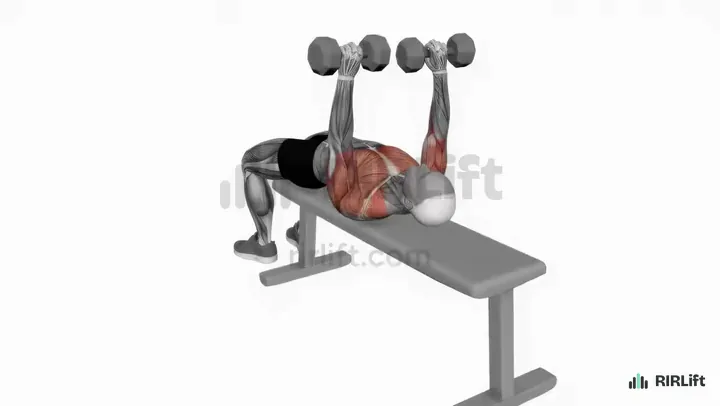
  4. Flat Dumbbell Press Chest
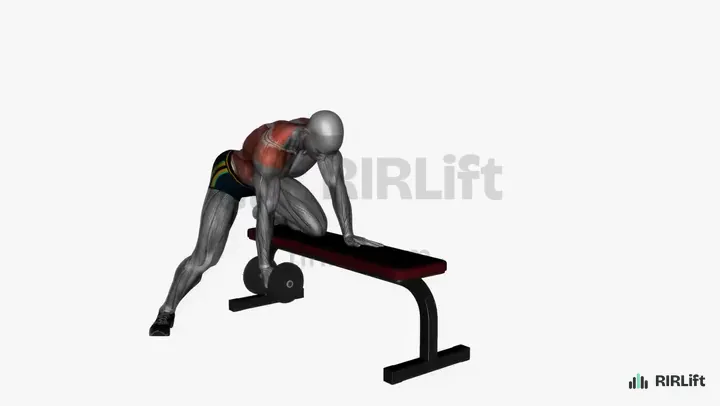
  5. One-Arm Dumbbell Row Lats, Upper Back
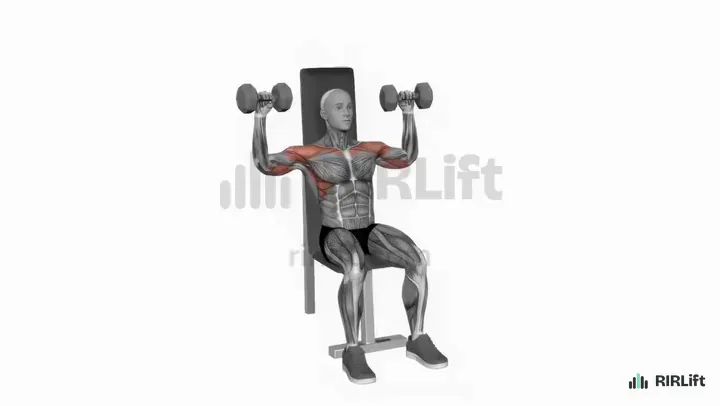
  6. Dumbbell Shoulder Press Shoulders
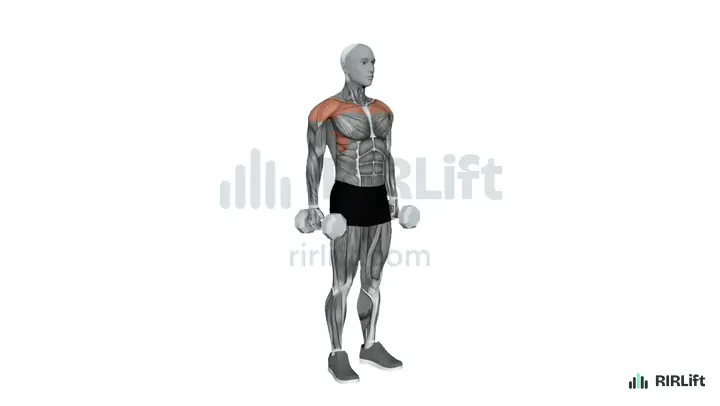
  7. Dumbbell Lateral Raise Shoulders
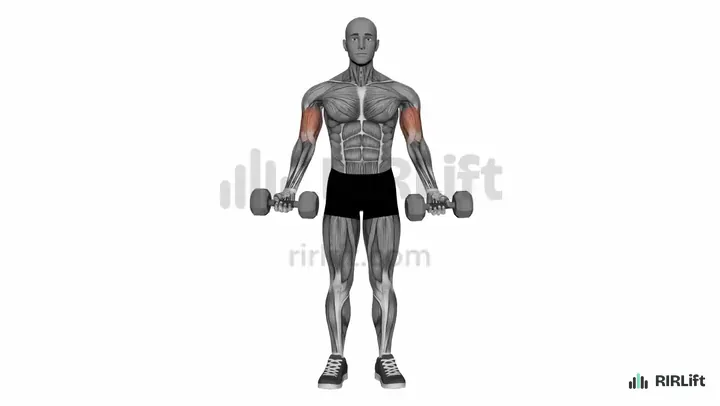
  8. Dumbbell Curl Biceps
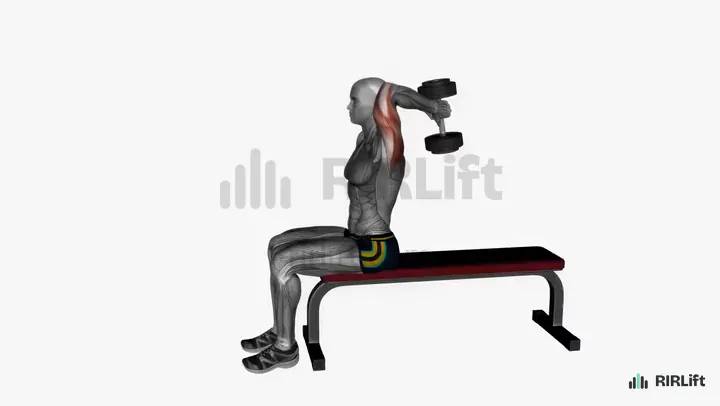
  9. Seated Dumbbell Overhead Triceps Extension Triceps

Dumbbell exercises for chest

Your chest grows from pressing and from the stretch at the bottom of a fly, and dumbbells give both a deeper stretch than a bar because your hands can drop below chest level. Start with one press: flat if you have a bench, incline to bias the upper chest, floor press if you train on the floor.

Chest, horizontal press

Flat Dumbbell Press

Chest

The flat dumbbell press is the heaviest chest move you can do with dumbbells, and each arm has to balance its own weight, so a weaker side can't hide. It takes the first and heaviest sets of any dumbbell upper-body day.

How to do it

  1. Sit on the end of a flat bench with the dumbbells on your thighs, then lie back and kick them up to arm's length over your chest.
  2. Plant your feet, pull your shoulder blades together and down, and keep a small arch in your lower back.
  3. Lower the dumbbells until they are level with your chest, elbows about 45 degrees from your sides.
  4. Press back up and slightly inward until your arms are straight, then start the next rep.

Cues

  • Shoulder blades pinned to the bench
  • Elbows under the wrists all the way
  • Press up and in, not straight up

Common mistakes

  • Stopping the lowering phase high because the weight feels unstable: pick a dumbbell you can take to chest level for every rep.
  • Letting the elbows flare straight out from the shoulders, which stresses the joint and takes work off the chest. Tuck them to about 45 degrees.

Swap for: Incline Dumbbell Press, Dumbbell Floor Press, Push-Up

Upper chest, incline press

Incline Dumbbell Press

Chest

Pressing from a 30 to 45 degree incline shifts more of the work to the upper chest and front delts. If your chest looks flat at the collarbone, this is the press to run first.

How to do it

  1. Set the bench to about 30 to 45 degrees and sit with the dumbbells on your thighs.
  2. Lean back and bring the dumbbells to shoulder level, palms facing forward, feet planted.
  3. Lower until the dumbbells sit just outside your upper chest, keeping your elbows under your wrists.
  4. Press up and slightly together until your arms are straight, then lower under control.

Cues

  • Chest up, ribs down
  • Dumbbells over the upper chest, not the face
  • Two seconds down

Common mistakes

  • Setting the bench too steep: past 45 degrees the move becomes a shoulder press. Drop it a notch.
  • Lifting your hips off the bench to press more weight; keep your glutes down and take a lighter pair.

Swap for: Flat Dumbbell Press, Alternating Incline Dumbbell Press, Single-Arm Incline Dumbbell Press

Chest and triceps, no bench

Dumbbell Floor Press

Chest, Triceps

Lying on the floor stops your upper arms at the bottom, so you lose the deepest stretch but gain a press you can do anywhere, including a packed gym where every bench is taken. It also hits the triceps harder than a bench press.

How to do it

  1. Lie on your back with your knees bent and feet flat, holding a dumbbell in each hand at arm's length over your chest.
  2. Lower both dumbbells until the backs of your upper arms touch the floor, palms facing each other or forward.
  3. Pause for a beat on the floor without relaxing your arms.
  4. Press back up until your arms are straight over your chest.

Cues

  • Pause on the floor every rep
  • Elbows at 45 degrees from your sides
  • Squeeze the dumbbells together at the top

Common mistakes

  • Bouncing your elbows off the floor to start the press: the pause is the point.
  • Flaring your elbows straight out, which puts your shoulders in a weak spot. Keep them tucked.

Swap for: Flat Dumbbell Press, Single-Arm Dumbbell Floor Press, Push-Up

Dumbbell exercises for back

A row trains the whole back, so one hard row is the first thing in any dumbbell session. Use the one-arm row when you have something to brace on, the two-arm bent-over row when you don't, and the pullover to hit your lats through a stretch that no row reaches.

Lats and upper back, supported row

One-Arm Dumbbell Row

Lats, Upper Back

Bracing one hand on a bench takes your lower back out of the lift and lets you reach a longer stretch at the bottom than any two-arm row. It is the one back exercise that belongs in every dumbbell session.

How to do it

  1. Put your left knee and left hand on a bench, right foot planted wide on the floor, back flat.
  2. Let the dumbbell hang from your right shoulder with your arm straight.
  3. Pull your elbow back and up toward your hip until the dumbbell reaches your side.
  4. Lower until your arm is straight and your shoulder blade slides forward, then repeat. Switch sides.

Cues

  • Elbow to your hip pocket
  • Reach long at the bottom
  • Chest square to the floor

Common mistakes

  • Twisting your torso open to heave the dumbbell up: if your chest turns toward the ceiling, the weight is too heavy.
  • Rowing to your armpit with a flared elbow, which turns it into a rear delt move. Tuck the elbow and aim for your hip.

Swap for: Dumbbell Bent-Over Row, Dumbbell Lawnmower Row, Incline Dumbbell Row

Whole back, two-arm row

Dumbbell Bent-Over Row

Upper Back, Lats

The bent-over row trains both sides at once with nothing to brace on, so it fits a home setup with no bench. It also works your lower back and hamstrings to hold the hinge.

How to do it

  1. Pick up a dumbbell in each hand, palms turned in, and set your feet under your hips.
  2. Push your hips back and lean forward until your torso is about 45 degrees to the floor, back flat.
  3. Pull both dumbbells toward your hips, elbows close to your sides, until they reach your ribs.
  4. Lower until your arms are straight, keeping the same torso angle every rep.

Cues

  • Same torso angle every rep
  • Elbows to the ribs
  • Pinch the shoulder blades at the top

Common mistakes

  • Standing up a little more each rep to make the pull easier: set the angle and hold it.
  • Rounding your back as you tire; end the set when you can't keep it flat.

Swap for: One-Arm Dumbbell Row, Dumbbell Pendlay Row, Incline Dumbbell Row

Lats, stretch-position pull

Dumbbell Lat Pullover

Lats

The pullover loads your lats with your arms overhead, the stretched position no row reaches, and keeps your biceps out of it. Two sets after your rows give your lats a different angle of work.

How to do it

  1. Lie across a flat bench with your upper back on it, feet planted, hips a little below the bench.
  2. Cup the top plate of one dumbbell in both hands and push it to arm's length over your chest.
  3. Keep your elbows softly bent and let the dumbbell travel behind you in a wide arc; stop when your upper arms reach the line of your body and your lats feel stretched.
  4. Pull it back over your chest along the same arc, driving with your lats, not your arms.

Cues

  • Ribs down, hips low
  • Elbows soft, not bent
  • Pull with your armpits

Common mistakes

  • Bending the elbows a lot as the weight goes back, which turns it into a triceps extension. Fix the elbow angle and keep it.
  • Letting the ribs flare and the lower back arch at the bottom: brace your abs so the stretch lands in your lats.

Swap for: Dumbbell Chest Pullover, Straight-Arm Pulldown, Kettlebell Pullover

Dumbbell exercises for shoulders

Pressing builds the front of your shoulders, raises build the sides, and rear delt flies build the back, so a full shoulder needs all three. The press takes the heavy sets; raises and flies work best light, for 12 to 20 reps.

Shoulders, overhead press

Dumbbell Shoulder Press

Shoulders

The dumbbell shoulder press is the heaviest move you have for the front and side delts and it trains the triceps too. Seated with back support you can press the most; standing you get more core work.

How to do it

  1. Sit on a bench with the back set upright, or stand with your feet hip-width apart, and bring the dumbbells to shoulder height, palms facing forward.
  2. Brace your abs so your ribs stay down.
  3. Drive both dumbbells overhead on a slight inward path until they nearly meet with your arms locked out.
  4. Lower until the dumbbells are level with your ears, then press again.

Cues

  • Ribs down, abs tight
  • Dumbbells to ear level
  • Press to a full lockout

Common mistakes

  • Arching your lower back to get the weight up, which turns it into a standing incline press. Lighten the load and brace.
  • Stopping each rep with the dumbbells above your head: lower them all the way to ear level.

Swap for: Arnold Press, Neutral-Grip Dumbbell Shoulder Press, Single-Arm Dumbbell Shoulder Press

Side delts, isolation

Dumbbell Lateral Raise

Shoulders

Nothing else on this page trains the side delts directly, and they are what make shoulders look wide. The weights stay light, so two sets of 12 to 20 reps go in almost any session.

How to do it

  1. Let a dumbbell hang from each hand beside your thighs, elbows unlocked, standing tall.
  2. Sweep both arms out to the sides, elbows leading, until your hands are level with your shoulders.
  3. Pause for a beat with your arms parallel to the floor.
  4. Lower over about two seconds back to your sides.

Cues

  • Lead with the elbows
  • Pinkies a touch higher than thumbs
  • Slow on the way down

Common mistakes

  • Swinging the dumbbells up with a hip bounce: if the first reps need momentum, go lighter.
  • Shrugging as the arms rise, which hands the work to your traps. Keep your shoulders down.

Swap for: Seated Dumbbell Lateral Raise, Leaning Dumbbell Lateral Raise, Cable Lateral Raise

Rear delts and upper back, isolation

Dumbbell Rear Delt Fly

Shoulders

Rear delts barely get touched by presses and only partly by rows, and they are what keep your shoulders pulled back. The weight is light, the reps are high and the payoff is posture and balanced shoulders.

How to do it

  1. Hold a dumbbell in each hand and hinge forward until your torso is near parallel to the floor, back flat.
  2. Let the dumbbells hang under your shoulders, palms facing each other, elbows slightly bent.
  3. Raise both arms out to the sides until they are level with your torso, elbows leading.
  4. Lower under control back under your shoulders.

Cues

  • Chest toward the floor all set
  • Elbows lead, hands follow
  • Light weight, full range

Common mistakes

  • Standing up as the set goes on so the move becomes a shrug: keep the torso near parallel.
  • Picking a weight that forces a swing on rep one. Rear delts are small; take the lighter pair.

Swap for: Incline Dumbbell Rear Delt Raise, Dumbbell Rear Delt Row, Face Pull

Dumbbell exercises for arms

Rows and presses already give your arms plenty of work, so two or three direct sets per session is enough to start. Curl with palms up for the biceps, hammer grip for the forearm side of the elbow, and extend overhead for the long head of the triceps, which only gets a full stretch with your arm up.

Biceps, supinated curl

Dumbbell Curl

Biceps

The plain dumbbell curl with palms up trains the biceps through their full job of bending the elbow and turning the palm. It is the first arm move to learn, and it progresses cleanly in reps.

How to do it

  1. Stand with a dumbbell in each hand at your sides, palms facing forward, elbows close to your ribs.
  2. Curl both dumbbells up toward your shoulders without moving your upper arms.
  3. Squeeze at the top for a beat.
  4. Lower until your arms are fully straight before the next rep.

Cues

  • Elbows glued to your ribs
  • Fully straight at the bottom
  • Slow lowering

Common mistakes

  • Leaning back and swinging the dumbbells up: if your torso moves, the weight is too heavy.
  • Stopping a few degrees short of straight at the bottom, which skips the hardest and most useful part of the rep.

Swap for: Incline Dumbbell Curl, Alternating Hammer Curl, Concentration Curl

Biceps and forearms, neutral-grip curl

Hammer Curl

Biceps, Forearms

Turning your palms in shifts work to the brachialis and the forearm muscles that thicken the elbow, and lets you use a heavier dumbbell than a palms-up curl. Pair it with the regular curl and your arms get both.

How to do it

  1. Stand with a dumbbell in each hand, palms facing your thighs, elbows at your sides.
  2. Curl one dumbbell up toward your shoulder, keeping the palm facing in the whole way.
  3. Squeeze at the top, then lower until your arm is straight.
  4. Repeat with the other arm and alternate for the set.

Cues

  • Thumbs up the whole rep
  • Upper arm stays still
  • Straight arm at the bottom

Common mistakes

  • Driving the elbow forward to lift the weight higher: the upper arm should not move.
  • Rushing the lowering phase; take two seconds down to get the forearm work.

Swap for: Dumbbell Curl, Seated Dumbbell Hammer Curl, Zottman Curl

Triceps, overhead extension

Seated Dumbbell Overhead Triceps Extension

Triceps

With your arms overhead the long head of the triceps is stretched, which is where it grows best, and one dumbbell held in both hands lets you load it well. It is the triceps move that needs no bench or cable.

How to do it

  1. Sit on a bench or chair, hold one dumbbell with both hands under the top plate, and press it to arm's length overhead.
  2. Keep your elbows pointing forward and close to your head.
  3. Drop the dumbbell behind your head by bending only at the elbows, going as deep as your shoulders allow.
  4. Straighten your arms to lift it back overhead without moving your upper arms.

Cues

  • Elbows forward, not out
  • Deep stretch behind the head
  • Upper arms stay vertical

Common mistakes

  • Letting the elbows drift out to the sides as you tire, which shortens the range. Narrow them and lower the weight if needed.
  • Cutting the bottom of the rep short: the stretch is the reason the move works.

Swap for: Dumbbell Skullcrusher, Triceps Kickback, Overhead Cable Triceps Extension

Dumbbell exercises for legs

Two dumbbells run out of weight on two-legged squats before your legs run out of strength, so the list leans on a hinge and single-leg work: the Romanian deadlift for hamstrings and glutes, the Bulgarian split squat and reverse lunge for quads and glutes, and the goblet squat as the first squat to learn.

Quads and glutes, squat

Goblet Squat

Quads, Glutes

Holding one dumbbell at your chest keeps you upright and your heels down, so the goblet squat teaches the squat pattern faster than anything else. It is the squat to learn first and the one you fall back on when the dumbbells are light.

How to do it

  1. Cup the top plate of one dumbbell in both hands and hold it tight to your sternum, feet a little wider than your hips, toes slightly out.
  2. Sit down between your heels, chest tall, keeping the dumbbell in contact with your sternum the whole way.
  3. Lower until your elbows pass the insides of your knees or as deep as you can with flat heels.
  4. Drive through your whole foot to stand, finishing with your hips fully straight.

Cues

  • Elbows inside the knees
  • Heels glued to the floor
  • Chest up, dumbbell touching

Common mistakes

  • Letting the knees cave inward on the way up: push them out over your toes.
  • Stopping above parallel because the weight feels heavy at the chest. Pick a lighter dumbbell and go deep.

Swap for: Dumbbell Front Squat, Heels-Elevated Goblet Squat, Dumbbell Squat

Hamstrings and glutes, hinge

Dumbbell Romanian Deadlift

Hamstrings, Glutes

The Romanian deadlift is the one dumbbell move that loads your hamstrings in a stretch, and it trains your glutes and lower back to hold a hinge. It is the hinge in every session on this page.

How to do it

  1. Start standing tall with a dumbbell against the front of each thigh, feet under your hips, knees unlocked.
  2. Push your hips straight back, letting the dumbbells slide down the front of your legs, back flat.
  3. Lower until you feel a strong stretch in your hamstrings, usually just below the knees.
  4. Drive your hips forward to stand, squeezing your glutes at the top.

Cues

  • Hips back, not down
  • Dumbbells brush the legs
  • Stop where the hamstrings pull

Common mistakes

  • Bending the knees more as the weight goes down, which turns it into a squat: the knees stay softly bent and the hips do the moving.
  • Rounding the lower back to reach the floor. The dumbbells don't have to touch the floor, the hamstrings have to stretch.

Swap for: Single-Leg RDL, Dumbbell B-Stance RDL, Dumbbell Good Morning

Quads and glutes, single-leg squat

Bulgarian Split Squat

Quads, Glutes

Putting your back foot on a bench loads one leg at a time, so a pair of dumbbells that is light for a squat becomes heavy here. It is the move that lets a home dumbbell set keep building legs for years.

How to do it

  1. Stand a long step in front of a bench or couch, holding a dumbbell in each hand, and rest the top of your back foot on it.
  2. Sink straight down through the front leg until the back knee hovers an inch off the floor.
  3. Keep your torso upright or leaning slightly forward, front heel flat.
  4. Push through your front foot to stand, finish the reps, then switch legs.

Cues

  • Front foot far enough that the heel stays down
  • Straight down, not forward
  • Front leg does the work

Common mistakes

  • Standing too close to the bench so the front knee shoots far past the toes and the heel lifts: take a longer step.
  • Pushing off the back foot to help on hard reps. Keep the back foot light and finish the set with the front leg.

Swap for: Dumbbell Split Squat, Dumbbell Reverse Lunge, Step-Up

Quads and glutes, lunge

Dumbbell Reverse Lunge

Quads, Glutes

Stepping back instead of forward keeps your front shin vertical and your knee happy, so the reverse lunge is the lunge most people can load hardest. It needs no bench, which makes it the single-leg move for a bare-floor setup.

How to do it

  1. Start tall with a dumbbell hanging from each hand and your feet under your hips.
  2. Step one foot back and lower until your back knee is just above the floor and your front thigh is near parallel.
  3. Keep your front heel flat and your chest tall.
  4. Push through your front foot to bring the back foot forward to the start, then alternate or finish all reps on one side.

Cues

  • Front shin stays vertical
  • Back knee kisses the floor
  • Drive through the front heel

Common mistakes

  • Taking a short step so the front knee shoots forward and the heel lifts: step farther back.
  • Letting the torso twist or lean to the side as you tire; keep both dumbbells hanging straight down.

Swap for: Dumbbell Forward Lunge, Walking Lunge, Dumbbell Front Rack Lunge

Dumbbell exercises for core

Your abs and obliques work hardest when they resist something: a weight pulling you sideways on a carry, or twisting against a load. Both moves below use one dumbbell and no floor space beyond a few steps.

Obliques and grip, loaded carry

Dumbbell Suitcase Carry

Abs, Quads

Carrying one heavy dumbbell at your side makes your obliques fight to keep you upright for the whole walk, which trains them harder than most crunches. It also builds grip, and it takes one dumbbell and a hallway.

How to do it

  1. Pick up one heavy dumbbell in one hand and stand tall with your shoulders level.
  2. Brace your abs as if someone is about to push you sideways.
  3. Walk with short, even steps for the set distance, keeping the dumbbell off your leg.
  4. Set it down, switch hands and walk back.

Cues

  • Shoulders level, no lean
  • Ribs down, abs braced
  • Short quick steps

Common mistakes

  • Leaning away from the dumbbell to balance it, which takes the work off your obliques. Stay dead upright even if the walk gets shorter.
  • Going too light to feel anything: this is one of the few core moves that wants your heaviest dumbbell.

Swap for: Farmer's Walk, Dumbbell Single-Arm Overhead Carry, Dumbbell Side Plank

Obliques, rotation

Dumbbell Woodchop

Abs

The kneeling woodchop trains your obliques to rotate and to resist rotation under load, the job they do in every sport and every heavy one-arm lift. Kneeling takes your legs out of it so the twist comes from your trunk.

How to do it

  1. Kneel on one knee with the other foot forward, holding one dumbbell with both hands by your back-knee-side hip.
  2. Pull the dumbbell up and across your body in a diagonal until it is above your opposite shoulder, arms nearly straight.
  3. Let your torso rotate, keeping your hips square to the front.
  4. Lower back along the same diagonal under control, finish the set, then switch sides.

Cues

  • Hips square, torso turns
  • Arms long, dumbbell far from you
  • Slow on the way back

Common mistakes

  • Swinging the dumbbell with your arms while the trunk stays still. The arms are a lever; the twist comes from your ribs.
  • Letting the hips turn with the dumbbell, which hides the oblique work. Keep the front knee pointing forward.

Swap for: Cable Woodchop, Russian Twist, Dumbbell Side Plank Hip Dip

Put them together: example sessions

Each session below picks from the exercises above for one situation, with the sets, reps, rest and RIR filled in. Open one in the session builder to change a pick, price it from a recent set, and add it to RIRLift.

Session 1

One light pair of dumbbells, no bench

Open in the session builder
  • Workouts3× a week
  • Working sets60 a week
  • Per workout~45 min
  • EquipmentDumbbells

You train at home with a single fixed pair of dumbbells, a chair or couch, and floor space.

A light pair makes two-legged squats easy long before your legs are tired, so the session leans on single-leg lunges, higher reps, a slow lowering phase and sets taken to 1 rep in reserve. Every move here works from the floor, standing, or with a chair: no bench, no rack. It is 20 sets of full body in one session, so you can run it three times a week.

Light Pair Full Body
ExerciseSets × repsRIRRest
Dumbbell Reverse Lunge1 warm-up set firstReps are per leg. Back knee to the floor 3 × 10–15 1 90 s
Dumbbell Floor PressPause your upper arms on the floor 3 × 12–20 1 90 s
Dumbbell Bent-Over RowSame torso angle every rep 3 × 12–20 1 90 s
Dumbbell Shoulder PressStanding. Ribs down, no back arch 3 × 10–15 1 90 s
Dumbbell Rear Delt FlyChest to the floor, elbows lead 2 × 15–20 1 1 min
A1 Dumbbell Curl3 s lowering once 20 reps is easy 2 × 12–20 1 1 min
A2 Seated Dumbbell Overhead Triceps ExtensionOn a chair. Deep stretch behind the head 2 × 12–20 1 1 min
Dumbbell Suitcase CarryReps are steps per hand. Stay upright 2 × 30–40 1 1 min
How to run it
Do this session three days a week with a day off between. Brace the bent-over row at a 45 degree lean, do the overhead extension seated on a chair, and use a hallway for the carry.
How to progress
When you hit the top of the rep range on every set, add one of these at a time: a 3-second lowering, a 1-second pause in the stretch, or one arm or leg at a time. Once a move needs more than about 30 reps to get close to failure, swap in the harder variation listed under it.

Session 2

Adjustable dumbbells and a bench

Open in the session builder
  • Workouts4× a week
  • Working sets60 a week
  • Per workout~40 min
  • EquipmentDumbbells, Incline Bench

You have adjustable dumbbells that go heavy enough for rows and presses, and a bench that inclines.

With a bench and real load, you can split upper and lower so each session starts fresh on its heaviest lift, and the reps come down to 8 to 12 where the heavier dumbbells earn their keep. Upper is 17 sets and Lower is 13, so running each twice a week gives 34 upper-body and 26 lower-body sets. The bench unlocks the incline press and the seated press, and gives the one-arm row and the pullover a stable base that a chair or the floor only approximates.

Upper
ExerciseSets × repsRIRRest
Incline Dumbbell Press2 warm-up sets firstBench at 30 degrees. Two seconds down 3 × 8–12 2 2 min
One-Arm Dumbbell RowSets are per arm. Elbow to hip 3 × 8–12 1 90 s
Dumbbell Shoulder Press1 warm-up set firstSeated, bench upright 3 × 8–12 2 2 min
Dumbbell Lat PulloverRibs down; stop at the torso line 2 × 10–15 1 90 s
Dumbbell Rear Delt FlyChest to the floor, elbows lead 2 × 12–20 1 1 min
A1 Dumbbell CurlFully straight at the bottom 2 × 10–15 1 1 min
A2 Seated Dumbbell Overhead Triceps ExtensionElbows forward, deep stretch 2 × 10–15 1 1 min

Open Upper in the session builder

Lower
ExerciseSets × repsRIRRest
Goblet Squat1 warm-up set firstElbows inside the knees at the bottom 3 × 8–12 2 2 min
Dumbbell Romanian Deadlift1 warm-up set firstHips back; stop where the hamstrings pull 3 × 8–12 2 2 min
Dumbbell Reverse LungeSets are per leg. Front shin vertical 3 × 8–12 1 90 s
Dumbbell WoodchopSets are per side, hips stay square 2 × 10–15 2 1 min
Dumbbell Suitcase CarryReps are steps per hand. Heaviest dumbbell 2 × 30–40 1 1 min

Open Lower in the session builder

How to run it
Run Upper, Lower, rest, Upper, Lower, then two days off. Set the bench to about 30 degrees for the incline press, flat for the row and pullover, and upright for the shoulder press. When a pair gets heavy enough that reverse lunges are hard to balance, swap them for Bulgarian split squats with your back foot on the bench.
How to progress
Double progression: when every set reaches the top of the rep range at the target RIR, go up one dumbbell step next session and start again at the bottom of the range. If a step is too big a jump, add a rep per set beyond the range first.

Session 3

A packed gym, one pair, no bench

Open in the session builder
  • Workouts3× a week
  • Working sets54 a week
  • Per workout~25 min
  • EquipmentDumbbells

You have one pair of dumbbells from the rack, a patch of floor, and every bench is taken.

One pair and one spot means no waiting and no changing weights, so the session pairs a leg move with an upper-body move and rests only between pairs. Three supersets of 3 sets each is 18 hard sets covering quads, hamstrings, chest, shoulders, back and core without a bench. Pick the pair you can press overhead for 8 to 12 reps; the lunge, floor press, hinge and row then run at higher reps on the same weight, and the carry uses one of the two.

20-Minute Supersets
ExerciseSets × repsRIRRest
A1 Dumbbell Reverse Lunge1 warm-up set firstReps are per leg. Straight into the press 3 × 10–15 1 45 s
A2 Dumbbell Floor PressPause on the floor. Rest 45 s after 3 × 10–15 1 45 s
B1 Dumbbell Romanian DeadliftDumbbells brush the legs 3 × 10–15 1 45 s
B2 Dumbbell Shoulder PressStanding. Rest 45 s after 3 × 8–12 1 45 s
C1 Dumbbell Bent-Over RowSame torso angle every rep 3 × 12–20 1 45 s
C2 Dumbbell Suitcase CarryReps are steps per hand. One dumbbell 3 × 30–40 1 45 s
How to run it
Do the two moves of each superset back to back, rest 45 seconds, repeat for 3 rounds, then move to the next pair. Run it three days a week, or drop it into any day the gym is too full for your usual session.
How to progress
Add reps until every set hits the top of the range, then take the next pair up from the rack the following session. If the lunges and rows get easy before the press does, slow their lowering to 3 seconds instead of changing the pair.

Make it fit you

Questions

What are the best dumbbell exercises I can do at home?

Goblet squat, Romanian deadlift, reverse lunge, floor press, bent-over row, shoulder press, lateral raise, curl and overhead triceps extension. None of them needs a bench, and together they cover every major muscle. The light-pair session above puts them in order.

Which dumbbell exercises build the most muscle?

The ones that move the most muscle through the longest range: Bulgarian split squats and goblet squats for legs, Romanian deadlifts for hamstrings and glutes, flat or incline presses for chest, one-arm rows for back and the shoulder press for delts. Build the session around those and add isolation work after.

Can I build a full body with just dumbbells?

Yes. Muscle grows from sets taken close to failure, not from the type of equipment, and dumbbells cover every pattern: squat, hinge, press, row, overhead press and isolation. The one limit is heavy leg loading, which single-leg moves like the Bulgarian split squat and reverse lunge solve.

Are 20 lb dumbbells enough to build muscle?

For most upper-body isolation work and for single-leg lower-body work, yes, as long as each set ends within 0 to 2 reps of failure. Presses and rows outgrow 20 lb within a few months; once a set passes 30 reps, you need a heavier pair or a harder variation.

How many dumbbell exercises should I do in a workout?

Five to eight. One squat or lunge, one hinge, one press, one row and one overhead press is a complete session; add up to three isolation moves for the muscles you care about. More exercises than that usually means fewer hard sets on each.

How heavy should my dumbbells be?

Heavy enough that a set ends within 1 to 3 reps of failure somewhere between 6 and 30 reps. For a first pair, one you can row and press for 12 to 15 hard reps works; for lateral raises and rear delt flies you want a much lighter pair.

Can I lose belly fat with dumbbell exercises?

Dumbbell training builds muscle and burns some energy, but fat comes off from a calorie deficit over weeks, and it comes off everywhere, not from the spot you train. Lift two to four times a week to keep muscle while you lose weight; the carry and woodchop above build the abs that show once the fat is gone.