Chest exercises with dumbbells, with or without a bench

The best chest exercises with dumbbells are the incline dumbbell press for the upper chest, the flat dumbbell press for the middle, and a fly or pullover to load the chest in its stretched position. Without a bench, the dumbbell floor press and floor fly do the same jobs from the floor. Pick one press and one stretch move per session, take each set to within 0 to 2 reps of failure, and aim for 10 to 20 hard chest sets a week.

  1. Incline Dumbbell Press Chest
  2. Flat Dumbbell Press Chest
  3. Dumbbell Chest Fly Chest
  4. Dumbbell Floor Press Chest, Triceps
  5. Incline Dumbbell Fly Chest
  6. Dumbbell Hex Press Chest
  7. Dumbbell Chest Pullover Chest
  8. Single-Arm Dumbbell Floor Press Chest

Dumbbell exercises for the upper chest

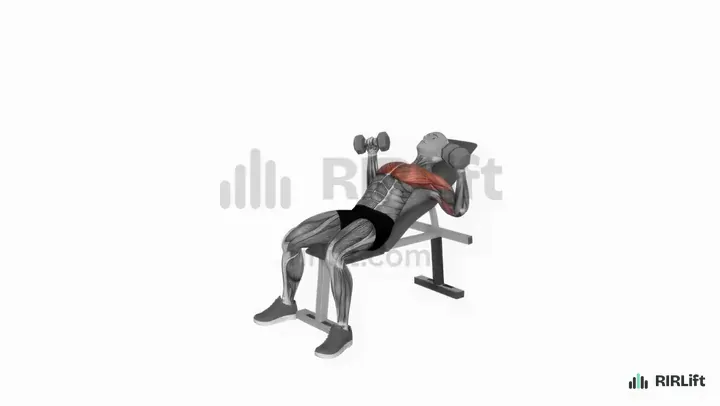
Set an adjustable bench to about 30 degrees and the press lines up with the fibers that run from your collarbone. Lead your session with one of these presses while you are fresh, then add the incline fly if the upper chest is the part that lags.

Upper chest, main press

Incline Dumbbell Press

Chest

At 30 degrees the press follows the upper chest fibers, and each dumbbell can travel lower than a bar, so the stretch under the collarbone is deeper. If you only do one incline move, this is it.

How to do it

  1. Set the bench to about 30 degrees, usually one or two notches above flat.
  2. Sit with a dumbbell on each thigh, then kick them up one at a time as you lie back.
  3. Pull your shoulder blades into the bench and hold the dumbbells over your upper chest.
  4. Lower until the handles are level with your upper chest and you feel the stretch below your collarbones.
  5. Press up and slightly in, stopping just before the dumbbells touch.

Cues

  • Forearms vertical at the bottom
  • Shoulder blades stay pinned
  • Two seconds down

Common mistakes

  • Bench at 45 degrees or steeper: the front delts take over. Drop it to 30.
  • Bouncing out of the bottom: pause for a beat in the stretch, then press.

Swap for: Incline Barbell Bench Press, Single-Arm Incline Dumbbell Press, Incline Dumbbell Squeeze Press

Upper chest, stretch under load

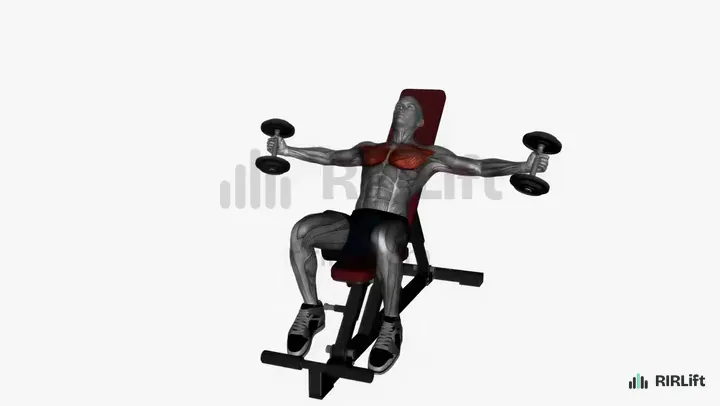
Incline Dumbbell Fly

Chest

The incline fly loads the upper chest at the bottom of the arc, where the incline press is already past its hardest point. Two sets after your incline press cover the upper chest from both ends.

How to do it

  1. Lie back on the same 30-degree bench with the dumbbells pressed over your upper chest, palms facing each other.
  2. Unlock your elbows into a slight bend and keep that angle for the whole set.
  3. Open your arms in a wide arc until your upper arms reach about bench level.
  4. Squeeze the dumbbells back up along the same arc and stop when they are a hand's width apart.

Cues

  • Hug a barrel
  • Elbow bend fixed
  • Stop at bench level

Common mistakes

  • Bending the elbows more on the way down: that turns it into a press. Go lighter.
  • Touching the dumbbells at the top: the chest goes slack there. Stop a hand's width apart.

Swap for: Dumbbell Chest Fly, Incline Cable Fly, Low-to-High Cable Fly

Upper chest, one arm at a time

Single-Arm Incline Dumbbell Press

Chest

Pressing one dumbbell makes your trunk resist the twist, and it lets a weaker side get its own sets. It is the incline press for when your heaviest pair is light: one arm at a time, the same dumbbell is a harder set.

How to do it

  1. Set the bench to 30 degrees and lie back with one dumbbell at shoulder height, palm forward, free hand holding the bench.
  2. Brace your stomach so your hips stay square on the bench.
  3. Press the dumbbell up over your upper chest until your arm is straight.
  4. Lower under control to the start, then do all reps before switching arms.

Cues

  • Hips square, no twisting
  • Free hand grips the bench
  • Same reps on both arms

Common mistakes

  • Letting the loaded side roll off the bench: brace harder or use a lighter dumbbell.
  • Doing more reps on the strong arm: match the weaker side and log that number.

Swap for: Incline Dumbbell Press, Alternating Incline Dumbbell Press, Single-Arm Dumbbell Floor Press

Upper and inner chest, squeeze press

Incline Dumbbell Squeeze Press

Chest

Pushing the dumbbells into each other keeps your chest contracted for the whole rep, which makes a light pair feel heavy. Use it as a second incline press when you have run out of weight.

How to do it

  1. On a 30-degree bench, hold two dumbbells together over your chest with your palms facing each other.
  2. Press them into each other hard enough that they cannot separate.
  3. Lower the pair to your chest with your elbows close to your sides, still squeezing.
  4. Drive them back up to straight arms without letting the squeeze go.

Cues

  • Dumbbells never separate
  • Elbows tucked
  • Squeeze harder at the top

Common mistakes

  • Going heavy and losing the squeeze: the point is the squeeze, so pick a pair you can crush together.
  • Rushing the reps: three seconds down keeps the chest working the whole way.

Swap for: Dumbbell Hex Press, Incline Dumbbell Press, Svend Press

Upper chest, underhand press

Reverse-Grip Incline Dumbbell Press

Chest

Turning your palms toward your face tucks your elbows and shifts the press onto the upper chest and triceps. It is a useful swap when the standard incline press irritates the front of your shoulder.

How to do it

  1. Sit back on a 30-degree bench holding the dumbbells at shoulder height with your palms facing you.
  2. Keep your elbows pointed at the floor and close to your ribs.
  3. Press the dumbbells up over your upper chest until your arms are straight.
  4. Lower to shoulder height under control, keeping the underhand grip the whole way.

Cues

  • Palms face you
  • Elbows close to the ribs
  • Wrists stacked over elbows

Common mistakes

  • Letting the wrists bend back: lighten the pair and keep the knuckles pointing up.
  • Flaring the elbows out: the grip only helps if the elbows stay tucked.

Swap for: Incline Dumbbell Press, Reverse-Grip Bench Press, Incline Dumbbell Squeeze Press

Dumbbell presses for the middle and lower chest

Flat and decline presses carry the most weight of anything on this page, so they are where you build pressing strength. Use one per session and progress it with double progression; the hex press and alternating press are the lighter variations for a second press.

Mid chest, heaviest press

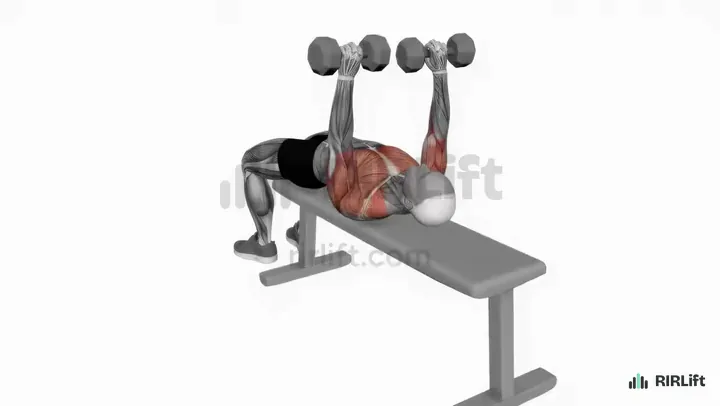
Flat Dumbbell Press

Chest

The flat press trains the large middle and lower part of your chest and lets you use the most weight of anything here. Dumbbells sink lower than a barbell, so the stretch at the bottom is deeper, and you need no rack or spotter.

How to do it

  1. Sit on the end of a flat bench with a dumbbell on each thigh, then lie back and bring them up over your chest.
  2. Pull your shoulder blades back and down into the bench and plant your feet.
  3. Lower the dumbbells to the sides of your chest with your elbows about 45 degrees from your torso.
  4. Stop when the stretch across your chest is strong, then press up and slightly in.

Cues

  • Elbows at 45, not 90
  • Chest stays tall
  • Press the dumbbells up, not out

Common mistakes

  • Elbows flared straight out to the sides: tuck them toward 45 degrees.
  • Dropping the dumbbells to the floor from straight arms after the set: bring them to your chest and sit up with them on your thighs.

Swap for: Barbell Bench Press, Dumbbell Floor Press, Machine Chest Press

Mid chest, squeeze press on a flat bench

Dumbbell Hex Press

Chest

The hex press is the flat version of the squeeze press: pressing the dumbbells together keeps the chest contracted from the bottom to the top. It is a strong second press on a flat bench when your pair is too light for a regular press.

How to do it

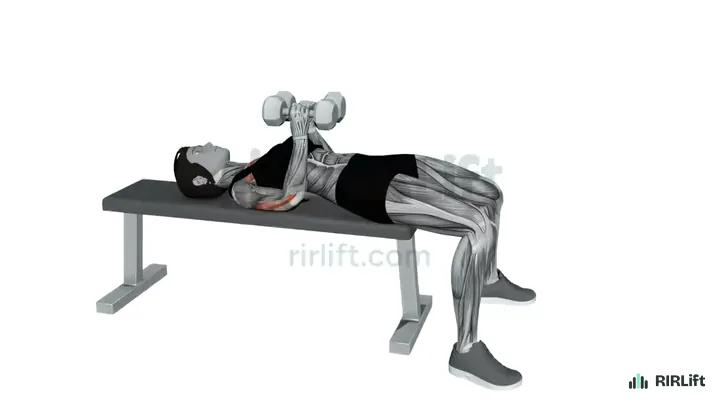
  1. Lie on a flat bench holding two dumbbells pressed together over your chest, palms facing each other.
  2. Squeeze the dumbbells into each other so hard they stay in contact for every rep.
  3. Lower the pair to the middle of your chest with your elbows tucked.
  4. Press back to straight arms while keeping the squeeze.

Cues

  • Crush the dumbbells together
  • Elbows along the ribs
  • Slow down, drive up

Common mistakes

  • Letting the dumbbells drift apart at the bottom: that is the moment the chest stops working. Go lighter.
  • Lowering to your neck instead of your chest: the handles belong at the middle of your sternum.

Swap for: Incline Dumbbell Squeeze Press, Flat Dumbbell Press, Svend Press

Mid chest, one side works while the other holds

Alternating Dumbbell Bench Press

Chest

One arm presses while the other holds the top, so every rep includes a loaded hold and the set lasts twice as long. That makes a modest pair of dumbbells a hard set, which is the job of a second press.

How to do it

  1. Lie on a flat bench and press both dumbbells to straight arms over your chest, palms forward.
  2. Lower one dumbbell to the side of your chest while the other stays locked out.
  3. Press it back up, then lower the other side.
  4. Keep alternating until both arms have done the set's reps.

Cues

  • Holding arm stays straight
  • Lower slower than you press
  • Hips stay on the bench

Common mistakes

  • Letting the holding arm drift sideways: keep it over your shoulder so it stays a hold, not a rest.
  • Rolling toward the pressing side: brace your stomach and keep both shoulder blades on the bench.

Swap for: Flat Dumbbell Press, Single-Arm Incline Dumbbell Press, Single-Arm Dumbbell Floor Press

Lower chest, decline press

Decline Dumbbell Press

Chest

On a decline the press shortens its range and shifts toward the lower chest, so most people press more here than flat. Use it on gym chest days when a decline bench is free; at home the flat press covers the same fibers.

How to do it

  1. Hook your feet under the pads of a decline bench and bring the dumbbells to your shoulders as you lie back.
  2. Set your shoulder blades back and hold the dumbbells over your lower chest.
  3. Lower until your elbows are at about 90 degrees, with your upper arms about 45 degrees from your torso.
  4. Press up and slightly together until your arms are straight.

Cues

  • Feet locked in
  • Press straight up over your lower chest
  • Elbows at 45

Common mistakes

  • Starting with straight arms at the top from a lying position: have the dumbbells handed to you or sit up with them first.
  • Going heavy because the range is short: it is still a press, so keep the same effort target as your flat press.

Swap for: Flat Dumbbell Press, Decline Barbell Bench Press, Chest Dip

Dumbbell flies and stretch work

A fly or pullover is hardest where the chest is longest, which presses never are. Do one of these after your pressing, with a pair light enough that the elbow angle never changes during the set.

Mid chest, stretch under load

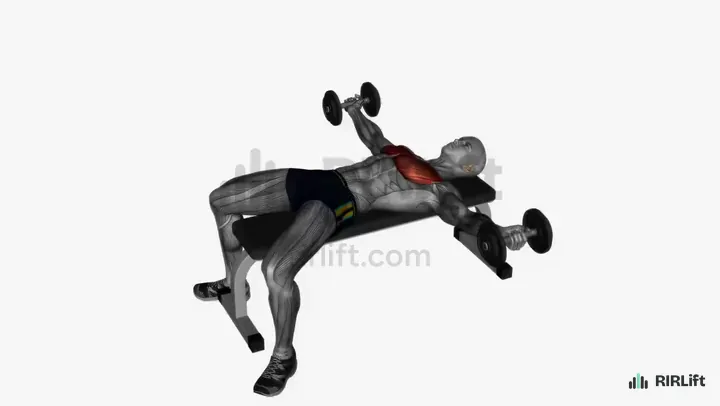
Dumbbell Chest Fly

Chest

The fly loads your chest at long length, where presses are already past their hardest point. It needs a light pair and gives a lot of chest work per set, so it earns a spot after your pressing on bench days.

How to do it

  1. Lie on a flat bench and press the dumbbells over your chest, palms facing each other.
  2. Unlock your elbows into a slight bend and keep that angle for the whole set.
  3. Open your arms in a wide arc until your upper arms reach about bench level.
  4. Squeeze the dumbbells back up along the same arc and stop when they are a hand's width apart.

Cues

  • Hug a barrel
  • Elbow bend fixed
  • Stop at bench level

Common mistakes

  • Bending the elbows more on the way down: that turns it into a press. Pick a lighter pair.
  • Lowering past bench level with heavy dumbbells: stop where the stretch is strong and the shoulder stays quiet.

Swap for: Dumbbell Floor Fly, Pec Deck Fly, Cable Fly

Chest and lats, overhead stretch

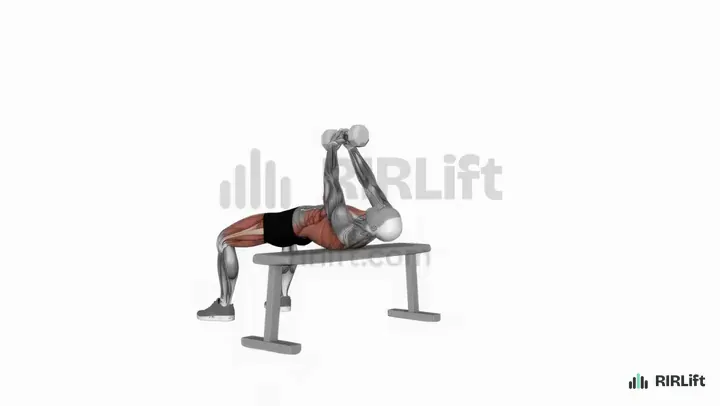
Dumbbell Chest Pullover

Chest

The pullover stretches the chest from a different direction than a fly, with the arms overhead instead of out to the sides. One dumbbell is all it needs, which makes it the easiest stretch move to load when your pairs are light.

How to do it

  1. Lie across a flat bench with your upper back on it, feet flat and hips slightly below the bench.
  2. Hold one dumbbell with both hands under the top plates, arms straight over your chest.
  3. Keep a slight elbow bend and lower it in an arc behind your head, stopping when your upper arms line up with your body.
  4. Pull it back over your chest along the same arc, squeezing your chest as it comes up.

Cues

  • Slight elbow bend, fixed
  • Hips low, ribs down
  • Stop when upper arms line up with your torso

Common mistakes

  • Dropping the dumbbell far behind your head: stop where you feel the stretch, not where the shoulder complains.
  • Bending the elbows to help it back up: that makes it a triceps extension. Go lighter.

Swap for: Dumbbell Lat Pullover, Dumbbell Chest Fly, Straight-Arm Pulldown

Dumbbell chest exercises without a bench

The floor replaces the bench: it stops your upper arms at a shoulder-friendly depth and gives you a dead stop to press from. Run a two-arm press, a one-arm press and a floor fly, and add push-ups once your heaviest pair stops being hard.

Chest press without a bench

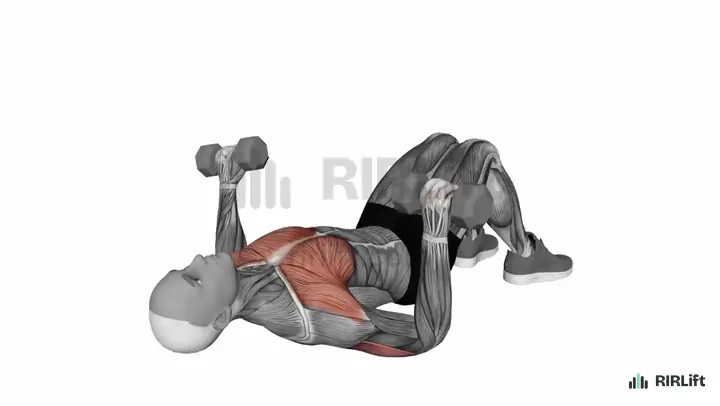
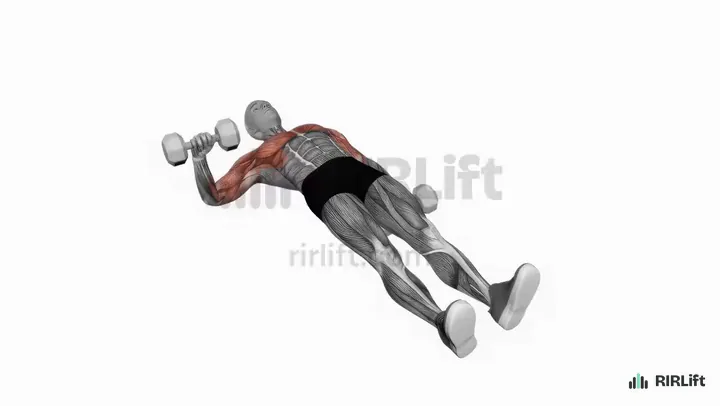
Dumbbell Floor Press

Chest, Triceps

The floor replaces the bench and stops your upper arms at a depth that stays easy on the shoulder, so you can press with nothing but the dumbbells. The dead stop on each rep also kills momentum, which is why it is the main press of the floor plan.

How to do it

  1. Lie on your back with your knees bent and a dumbbell in each hand, upper arms on the floor.
  2. Press the dumbbells up over your chest until your arms are straight.
  3. Lower until your upper arms touch the floor, with your elbows about 45 degrees from your body.
  4. Pause with your arms resting on the floor, then press again.

Cues

  • Dead stop on the floor
  • Squeeze the handles
  • Press up and slightly in

Common mistakes

  • Bouncing your elbows off the floor: pause one full second.
  • Elbows flared to 90 degrees: tuck them a bit closer to your body.

Swap for: Flat Dumbbell Press, Push-Up, Floor Press

Chest press without a bench, one arm

Single-Arm Dumbbell Floor Press

Chest

One dumbbell is enough, and the same dumbbell that got easy with two hands is a hard set with one. Your trunk has to stop you rolling toward the loaded side, which is extra work you get for free.

How to do it

  1. Lie on your back with your knees bent, one dumbbell pressed to a straight arm over your chest, free arm flat on the floor.
  2. Press your lower back toward the floor and brace your stomach.
  3. Lower the dumbbell until your upper arm touches the floor, elbow about 45 degrees from your body.
  4. Press it back up, then finish all reps before switching sides.

Cues

  • Lower back stays down
  • Free arm pushes into the floor
  • Same reps both arms

Common mistakes

  • Letting your hips roll toward the dumbbell: brace harder and keep your free arm pressing into the floor.
  • Arching off the floor to press a heavy dumbbell: that is a rep you cannot repeat. Go lighter and log the honest number.

Swap for: Dumbbell Floor Press, Single-Arm Incline Dumbbell Press, Push-Up

Chest stretch without a bench

Dumbbell Floor Fly

Chest

The floor fly keeps the stretch part of a fly without a bench, and the floor stops the arc exactly where most lifters should stop anyway. It is the one way to load your chest at long length when all you have is a pair of dumbbells.

How to do it

  1. Lie on your back with your legs straight and the dumbbells pressed over your chest, palms facing each other.
  2. Unlock your elbows into a slight bend and keep that angle fixed.
  3. Open your arms in a wide arc until your upper arms lightly touch the floor.
  4. Squeeze the dumbbells back up along the same arc and stop a hand's width apart.

Cues

  • Elbow bend fixed
  • Upper arms kiss the floor, no rest
  • Stop before the dumbbells touch

Common mistakes

  • Resting your arms on the floor between reps: touch and go, so the chest never gets slack.
  • Turning it into a press on the way up by bending the elbows: pick a lighter pair.

Swap for: Dumbbell Chest Fly, Single-Arm Band Chest Fly, Push-Up

Put them together: example sessions

Each session below picks from the exercises above for one situation, with the sets, reps, rest and RIR filled in. Open one in the session builder to change a pick, price it from a recent set, and add it to RIRLift.

Session 1

Dumbbells on the floor, no bench

Open in the session builder
  • Workouts2× a week
  • Working sets18 a week
  • Per workout~25 min
  • EquipmentDumbbells

You have one pair of dumbbells, or an adjustable set, and nowhere to lie down but the floor.

Every move here works from the floor, so nothing depends on a bench you do not have. The two-arm floor press carries the load, the one-arm press makes the same dumbbell a harder set, and the floor fly is the only stretch move the floor allows. Nine sets a session, twice a week, is about 18 hard chest sets a week.

Chest: Floor Only
ExerciseSets × repsRIRRest
Dumbbell Floor Press1 warm-up set firstPause 1 s with upper arms on the floor 4 × 8–15 1 2 min
Single-Arm Dumbbell Floor PressSets are per arm. Lower back stays down 3 × 10–15 1 90 s
Dumbbell Floor FlyTouch the floor, no rest between reps 2 × 12–20 1 1 min
How to run it
Run the session twice a week with at least a day between. Do it on its own or open a full-body dumbbell day with it, before shoulders and arms.
How to progress
Add reps until every set hits the top of the range at the target RIR, then move to the next pair. Already on your heaviest pair? Lower over three to four seconds, pause a full second on the floor, and add push-ups to failure after the last press set.

Session 2

Adjustable dumbbells and a bench

Open in the session builder
  • Workouts2× a week
  • Working sets18 a week
  • Per workout~30 min
  • EquipmentDumbbells, Incline Bench, Flat Bench

You train at home with an adjustable set and a bench that inclines, and chest gets two sessions a week.

A bench that inclines opens the upper chest, so day A starts with the incline press and day B starts flat, and each day finishes with a stretch move the other day lacks. The hex press and the one-arm incline press are the second presses because they stay hard when an adjustable set tops out. Nine sets a day, twice a week, is about 18 hard chest sets.

Chest A: Incline First
ExerciseSets × repsRIRRest
Incline Dumbbell Press2 warm-up sets firstBench at 30 degrees, 2 s down 4 × 6–10 2 2:30 min
Dumbbell Hex PressCrush the dumbbells together all set 3 × 8–12 1 2 min
Incline Dumbbell FlyStop when upper arms reach bench level 2 × 12–15 1 90 s

Open Chest A: Incline First in the session builder

Chest B: Flat + Stretch
ExerciseSets × repsRIRRest
Flat Dumbbell Press1 warm-up set firstElbows at 45, deep stretch 4 × 8–12 1 2:30 min
Single-Arm Incline Dumbbell PressSets are per arm. Hips stay square 3 × 10–15 1 90 s
Dumbbell Chest PulloverOne dumbbell, slight elbow bend 2 × 10–15 1 90 s

Open Chest B: Flat + Stretch in the session builder

How to run it
Two sessions a week, at least 48 hours apart. On an upper/lower split put one on each upper day; on push/pull/legs they are the chest work of your two push days.
How to progress
Climb to the top of the rep range on every set, then add the smallest step your set allows. When the incline press stalls, keep the weight and add a one-second pause in the stretch for two weeks before adding reps again.

Session 3

Gym dumbbells as a chest-day add-on

Open in the session builder
  • Workouts1× a week
  • Working sets8 a week
  • Per workout~20 min
  • EquipmentDumbbells, Incline Bench, Decline Bench, Flat Bench

You already open chest day with a barbell bench press or a machine press and want the dumbbell work that fits after it.

Your barbell or machine press has done the heavy flat work, so the dumbbells cover what it missed: the upper chest at 30 degrees, the lower chest on the decline bench a gym has and a home does not, and a fly at long length to finish. Eight sets after your main press, once a week.

Chest: After the Bench Press
ExerciseSets × repsRIRRest
Incline Dumbbell Press1 warm-up set firstBench at 30 degrees 3 × 8–12 1 2 min
Decline Dumbbell PressFeet locked in. Press straight up 3 × 8–12 1 2 min
Dumbbell Chest FlyLight pair, elbow bend fixed 2 × 12–15 0 1 min
How to run it
Run it straight after your main press on chest day, once a week. If you train chest twice, do the incline press and the fly in the second session too and skip the decline press.
How to progress
Double progression on the two presses: top of the range on every set at the target RIR, then the next pair up. Keep the fly weight fixed and progress it by reps only.

Make it fit you

Questions

Are 3 exercises for chest enough?

Yes, if they are a press, a second press and a stretch move, and every set ends within 0 to 2 reps of failure. Weekly hard sets matter more than exercise count; 10 to 20 a week covers most lifters, and each session on this page does it with three exercises.

What are the four best chest exercises with dumbbells?

The incline dumbbell press for the upper chest, the flat dumbbell press for the middle, the dumbbell fly for the stretch, and the dumbbell floor press for when there is no bench. A session needs only two or three of them; the fourth is the one your equipment allows.

What is the number one chest exercise with dumbbells?

The incline dumbbell press at about 30 degrees. It trains the upper chest, which most programs undertrain, and it still loads the middle of the chest hard. With no bench, the dumbbell floor press takes its place.

What are the only two chest exercises you need?

A press and a fly. The press, flat or incline, lets you use heavy weight and progress it; the fly or pullover loads the chest where it is stretched, which the press cannot. Everything else on this page is a variation of one of those two.

How do you do push-ups with dumbbells?

Set two hex dumbbells on the floor shoulder-width apart, grip the handles, and do push-ups with your chest sinking below your hands. The handles add a few inches of depth and keep your wrists straight. Use them to failure after your last floor press set when your dumbbells feel light.

Can you train chest with dumbbells and no bench?

Yes. The dumbbell floor press, single-arm floor press and floor fly cover a press, a one-arm press and a stretch move from the floor, and the floor plan on this page runs them twice a week for about 18 sets. Push-ups fill in once your dumbbells stop being heavy enough.

Can you work your chest standing with dumbbells?

Not well. Standing, the dumbbells pull straight down, so a standing press or fly loads your shoulders and arms far more than your chest. Lie on the floor instead: the floor press and floor fly load the chest the way a bench does, with no bench.