
Hammer curl: how to do it, what it works, and what to swap it for
Published October 17, 2026
A hammer curl is a dumbbell curl with your palms facing each other from the bottom of the rep to the top. That thumbs-up grip puts more of the load on the brachialis and the brachioradialis, the muscles that make the upper arm and forearm look thick from the side, while your biceps still work. It works when your elbows stay pinned at your sides and the dumbbells travel up by bending the elbow alone, with no swing from the hips.
- WorksBiceps, Forearms
- EquipmentDumbbells
- Start with3 × 10–15, 2 in reserve, 90 s rest
How to do the hammer curl
Turning your palms in lets you handle more weight than a palms-up curl and shifts the work toward the brachialis and the brachioradialis. It needs nothing but a pair of dumbbells, so it fits any arm day, at home or in the gym, right after your main biceps curl.
Steps
- Stand tall with the dumbbells hanging by your thighs, thumbs pointing forward and palms facing your thighs.
- Pin your upper arms against your ribs and let your arms hang fully straight.
- Bend both elbows and bring the dumbbells up until the top ends sit just in front of your shoulders, keeping your thumbs up the whole way.
- Hold the top for a beat with your forearms vertical, then lower for about two seconds until your arms are straight again.
- Start the next rep from that straight arm, with no rest at the bottom.
Cues
- Thumbs to the ceiling
- Elbows glued to your ribs
- Straight arm at the bottom of every rep
Common mistakes
- Leaning back and swinging the hips to get the dumbbells moving: stand with your back against a wall or drop the weight until the first inch of each rep comes from your elbows.
- Letting the elbows drift forward near the top: once they leave your sides your shoulders take over, so stop the rep where your forearms are vertical.
- Cutting the bottom short and bouncing out of a half-bent arm: lower all the way until your elbows are straight, then curl.
Swap for: Alternating Hammer Curl, Seated Dumbbell Hammer Curl, Reverse Curl
Muscles the hammer curl works
The hammer curl trains the elbow flexors: the brachialis, which sits under your biceps and pushes it outward, the brachioradialis along the top of your forearm, and the biceps itself. The neutral grip loads the brachialis and brachioradialis harder than a palms-up curl does, and the load peaks when your forearms are level with the floor, halfway up.
Sets, reps and reps in reserve for the hammer curl
| Goal | Sets × reps | RIR | Rest |
|---|---|---|---|
| Build muscle | 3 × 10–15 | 2 | 90 s |
| This matches what the session builder prescribes for the hammer curl. | |||
| Heavier arm work | 3–4 × 6–10 | 1–2 | 2 min |
| Use this range when you want to push the weight on the dumbbells and keep the swing out. | |||
| Last exercise of an arm day | 2–3 × 12–20 | 0–1 | 60–90 s |
| Go close to failure here, since nothing heavy follows it in the session. | |||
Hammer curl variations
-
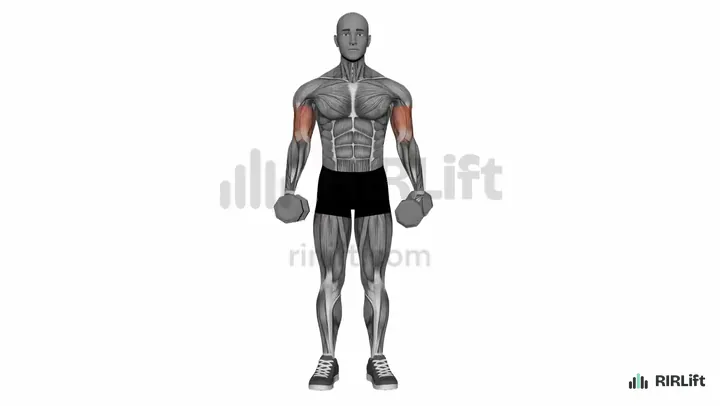
Alternating Hammer Curl
Pick this when one arm keeps cheating: curling one side at a time lets you watch each elbow and stop each rep at the same height.
Build a session with it -
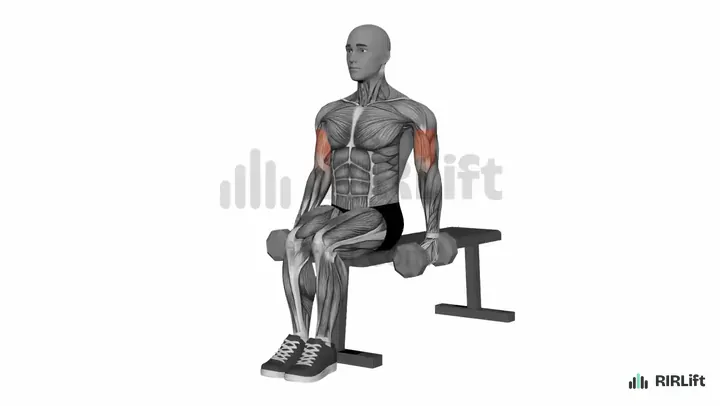
Seated Dumbbell Hammer Curl
Pick this when you keep swinging the weight up, because sitting on a bench takes your hips out of the lift.
Build a session with it -
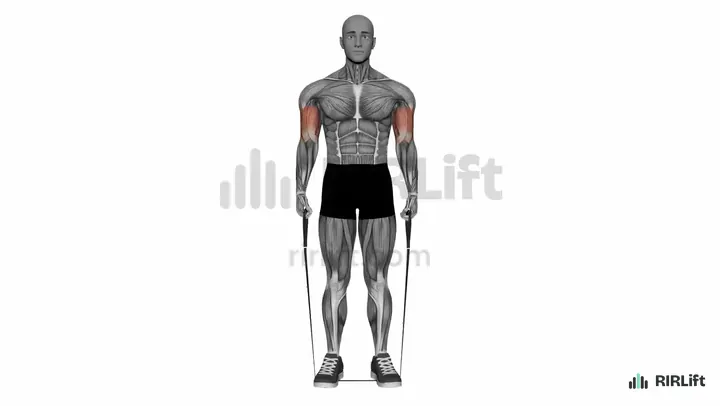
Band Hammer Curl
Pick this at home or while travelling when you have a band but no dumbbells, and expect the band to get hardest near the top.
Build a session with it
Hammer curl alternatives
Same muscles, different grip
-
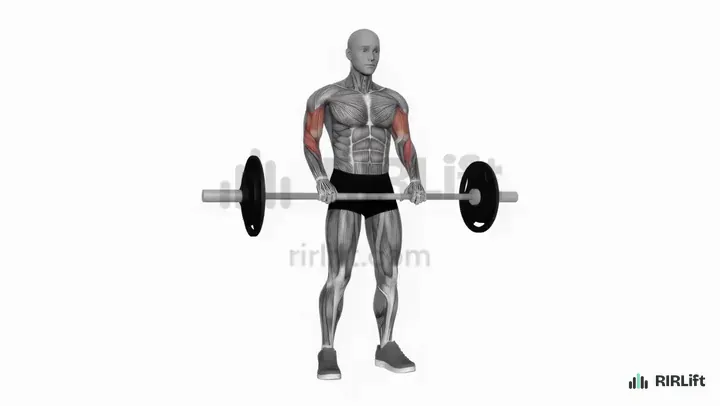
Reverse Curl
Curl a barbell with your palms facing down when you want even more brachioradialis work than the hammer curl gives.
Build a session with it -
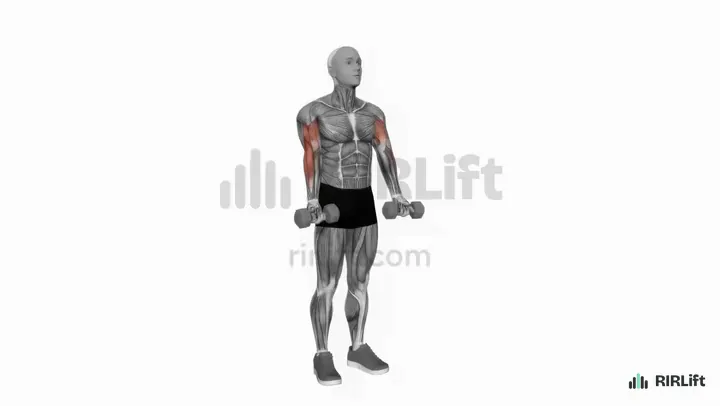
Zottman Curl
Curl up palms up and lower palms down when you want the biceps on the way up and the forearms on a slow way down.
Build a session with it
No dumbbells
-
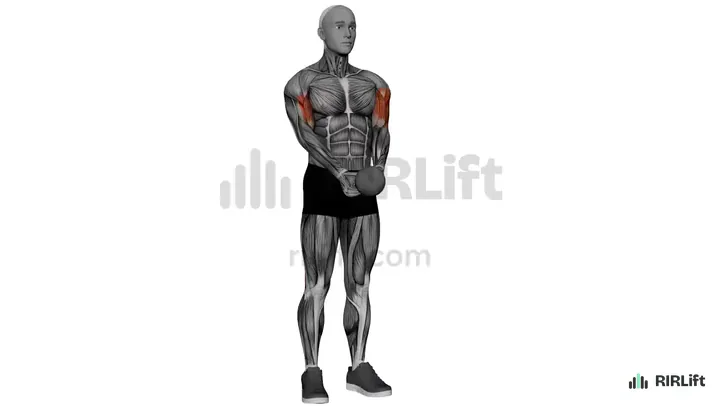
Kettlebell Curl
Use a kettlebell by the horns when that is the only weight you have; your grip stays close to neutral.
Build a session with it -
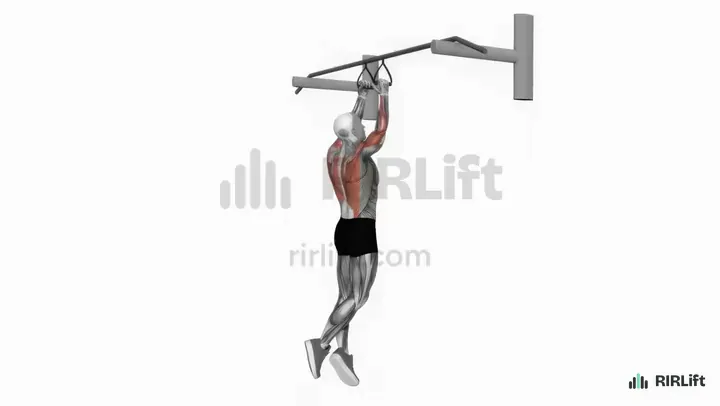
Neutral-Grip Pull-Up
Use parallel handles on a pull-up station when you would rather train your elbow flexors with your back in a pull you already do.
Build a session with it
More biceps, less forearm
-
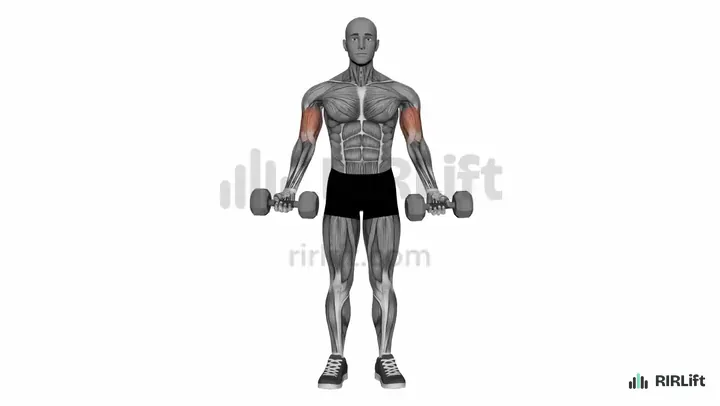
Dumbbell Curl
Turn your palms up when your biceps, not your forearms, are the muscle you want to grow.
Build a session with it -
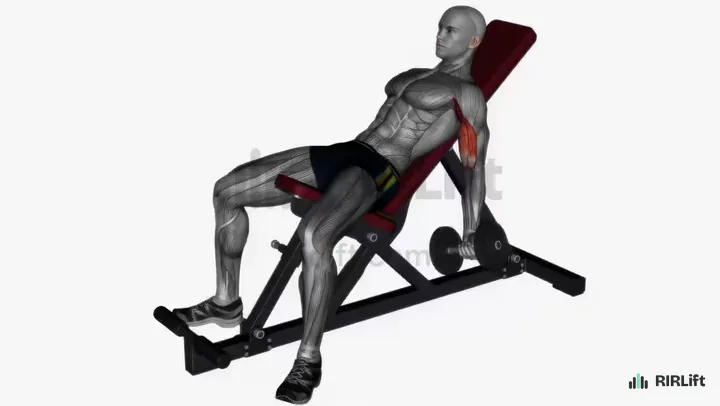
Incline Dumbbell Curl
Lie back on an incline bench when you want your biceps loaded hardest with the arm stretched behind you.
Build a session with it -
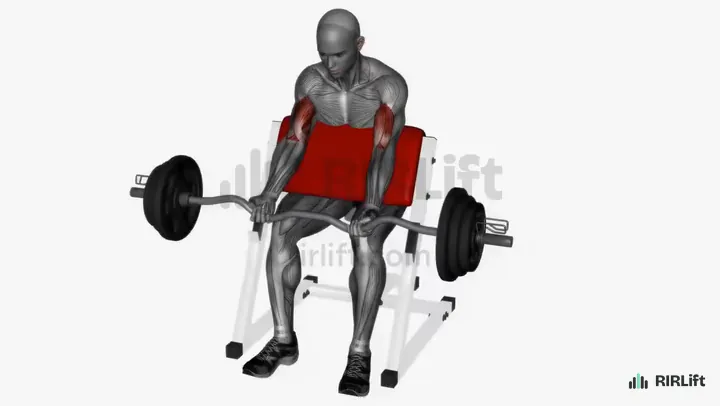
Preacher Curl
Brace your arms on the pad when you cannot stop swinging and want every rep to start from a fully straight arm.
Build a session with it
Hammer curl vs bicep curl
Both are curls and both train the biceps, brachialis and brachioradialis. The grip decides the split: palms up gives the biceps the bigger share, thumbs up hands more of the work to the brachialis and forearm. Most people lift a little more weight on the hammer curl because the forearm muscles join in.
You do not need to choose. Put a palms-up curl first in your arm work and a hammer curl second, and count both toward the 10–20 hard sets a week you give your biceps. If you only have time for one, pick the curl that targets the part of your arm you most want to grow.
How heavy should your hammer curl be?
Heavy enough that you finish each set with two reps left in the tank and your elbows never left your sides. If you hit the top of the rep range on every set with that form, go up to the next pair of dumbbells next session. The right weight is the one you can lower under control for every rep you planned.
Questions
What muscles do hammer curls work?
Hammer curls work the brachialis under your biceps, the brachioradialis on top of your forearm, and the biceps itself. The thumbs-up grip shifts more of the load onto the brachialis and brachioradialis than a palms-up curl does.
Are hammer curls better than bicep curls?
Neither is better overall. Bicep curls with palms up put more work on the biceps; hammer curls put more on the brachialis and forearm. Doing both in the same week trains the whole front of your arm.
How many reps of hammer curls should I do?
For muscle growth, do 3 sets of 10–15 reps and stop each set with about 2 reps left. When you can finish every set at the top of that range with your elbows pinned, move to heavier dumbbells.
Will my biceps grow if I only do hammer curls?
Yes, hammer curls train the biceps too, so they will grow. If bigger biceps are your main goal, add a palms-up curl, because it loads the biceps harder than the neutral grip does.
Is a 40 lb hammer curl good?
Curling 40 lb dumbbells for clean reps with your elbows at your sides is a strong lift for most people. If you only reach it by swinging, drop to a weight you can control and build back up.
What is the best hammer curl alternative?
With dumbbells, the alternating or seated hammer curl keeps the same grip and stops the swing. Without dumbbells, a kettlebell curl or a band hammer curl does the same job, and a barbell reverse curl trains the forearm even harder.
What's the difference between preacher curls and hammer curls?
A preacher curl braces your upper arms on a pad and usually uses a palms-up grip, which isolates the biceps. A hammer curl is done standing with a thumbs-up grip and spreads the work toward the brachialis and forearm.
Related templates
-
The best workout for biceps, matched to your setup
A full biceps session that puts the hammer curl next to the palms-up curls.
-
The best workout for forearms, for your situation
Where to go when the hammer curl made you want thicker forearms.
-
Dumbbell exercises for every muscle, and how to put them together
More exercises you can do with the same pair of dumbbells.
-
How to use RIR
How to judge the two reps you leave in reserve on every set.