
Inverted row: how to do it, make it harder, and what to swap it for
Published October 17, 2026
The inverted row is a bodyweight row: you hang under a bar set in a rack or Smith machine and pull your chest up to it. It trains your upper back and lats, with your biceps helping. It works when your body stays rigid from heels to head and every rep touches the bar, and you make it harder by lowering the bar or raising your feet, not by cutting the range.
- WorksUpper Back, Lats
- AlsoBiceps
- EquipmentBarbells
- Start with3 × 8–15, 2 in reserve, 2 min rest
How to do the inverted row
Set the bar in the rack at hip height and row your bodyweight under it, so your lower back carries nothing. It is the row to do on a day your hinge was heavy, and it scales from easy to hard by moving your feet.
Steps
- Set a bar in a rack or Smith machine at about hip height and lock it in place.
- Sit under it, take an overhand grip a little wider than your shoulders, and hang with straight arms.
- Walk your feet out until your heels rest on the floor, then squeeze your glutes so your body forms one straight line.
- Pull your shoulder blades back, then drive your elbows past your ribs until your lower chest touches the bar.
- Lower under control until your arms are fully straight, keeping your hips level the whole way.
Cues
- Body straight from heels to head
- Chest to the bar
- Shoulder blades squeeze at the top
Common mistakes
- Letting your hips sag: squeeze your glutes and brace so your body stays straight.
- Stopping short of the bar: raise the bar or bend your knees until you can touch it on every rep.
- Reaching your chin toward the bar: keep your neck long and lead with your chest, or the last inches come from your head instead of your back.
- Dropping out of the bottom: lower yourself slowly to straight arms, since a bounce takes the stretch out of your upper back.
Swap for: TRX Row, Chest-Supported Row, One-Arm Dumbbell Row
Muscles the inverted row works
The inverted row works your upper back first, the traps, rhomboids and rear delts, with your lats pulling hard as your elbows pass your ribs and your biceps helping throughout. It is hardest at the top, with your chest at the bar, so pause for a moment with your chest at the bar before you lower.
Sets, reps and reps in reserve for the inverted row
| Goal | Sets × reps | RIR | Rest |
|---|---|---|---|
| Build muscle | 3 × 8–15 | 2 | 2 min |
| This matches the session builder: add reps until all three sets reach 15, then lower the bar a notch or raise your feet. | |||
| Working toward a pull-up | 3–4 × 6–10 | 1–2 | 2 min |
| Use the hardest angle you can hold for 6 clean reps, with your body close to level and feet on a bench. | |||
| Second back exercise in a session | 2–3 × 12–20 | 0–1 | 90 s |
| After heavier rows or pulldowns, push sets close to failure at an angle that lets you reach 12. | |||
| Beginners | 2–3 × 8–12 | 2–3 | 2 min |
| Start with the bar at chest height and your knees bent, and lower it once 12 reps feel easy. | |||
Inverted row variations
-
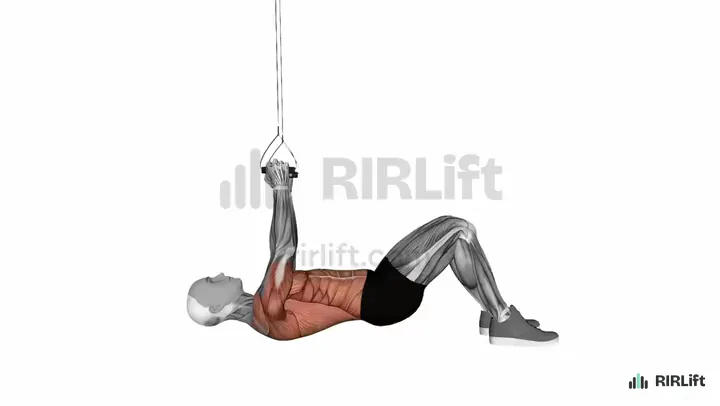
TRX Row
Pick it when there is no free rack: suspension handles at waist height give the same row, and the neutral grip lets your wrists turn as you pull.
Build a session with it -
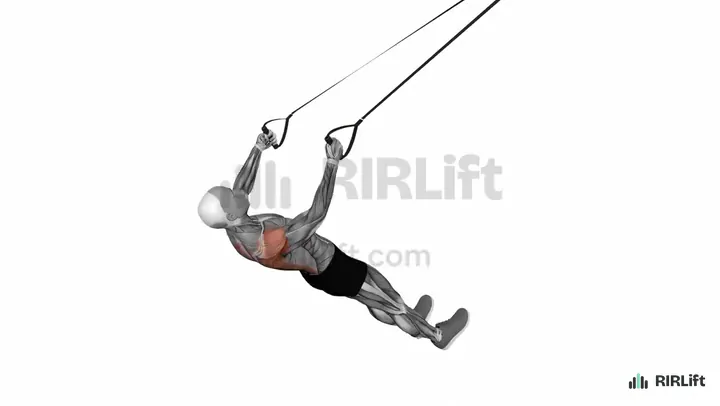
TRX Rear Delt Row
Pick it to shift the work to your rear delts by standing more upright and driving your elbows out wide.
Build a session with it -
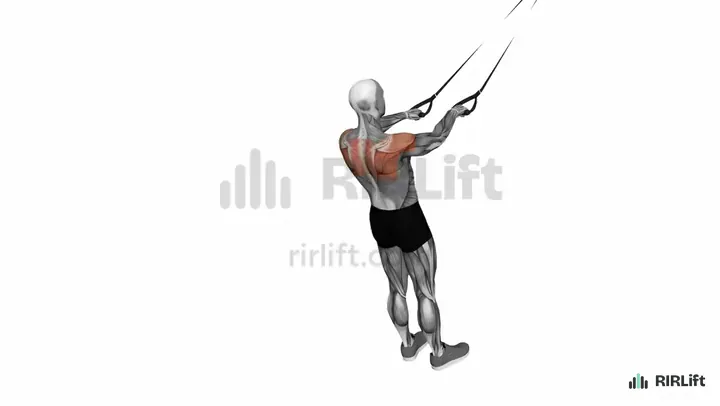
TRX Face Pull
Pick it as a lighter upper-back finisher, pulling the handles toward your face with your elbows high.
Build a session with it
Inverted row alternatives
With a pull-up bar
-
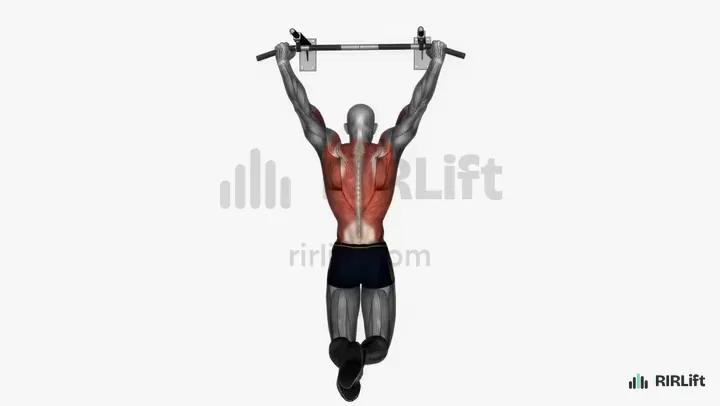
Pull-Up
The next step up once you can row 15 reps with your feet raised: same bodyweight, a vertical pull that loads your lats harder.
Build a session with it -
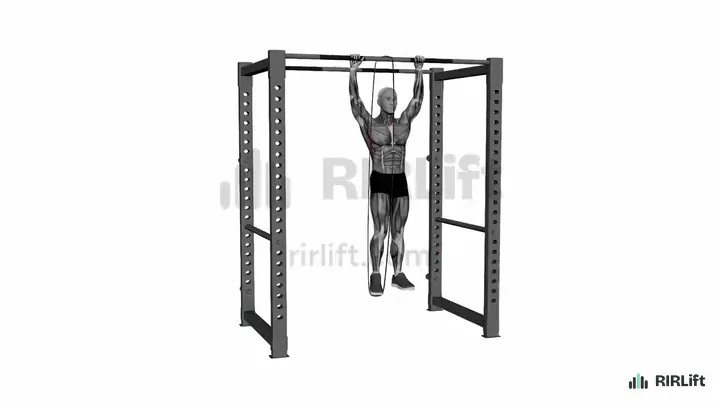
Band-Assisted Pull-Up
Loop a band over the bar and stand in it when you want vertical pulling but cannot yet do a full pull-up.
Build a session with it
With dumbbells
-
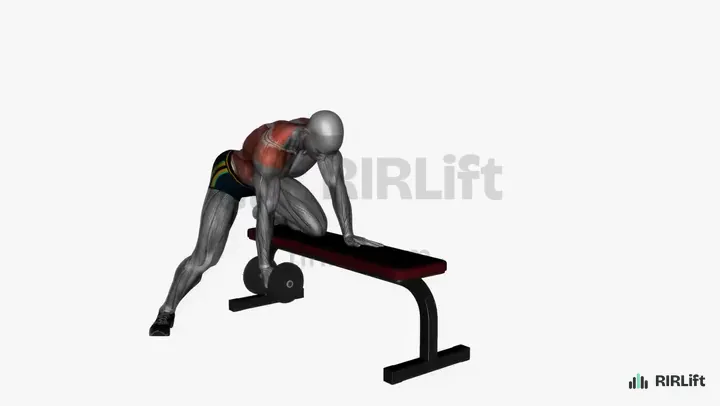
One-Arm Dumbbell Row
Brace one hand on a bench and row toward your hip, adding weight in small steps instead of changing your angle.
Build a session with it -
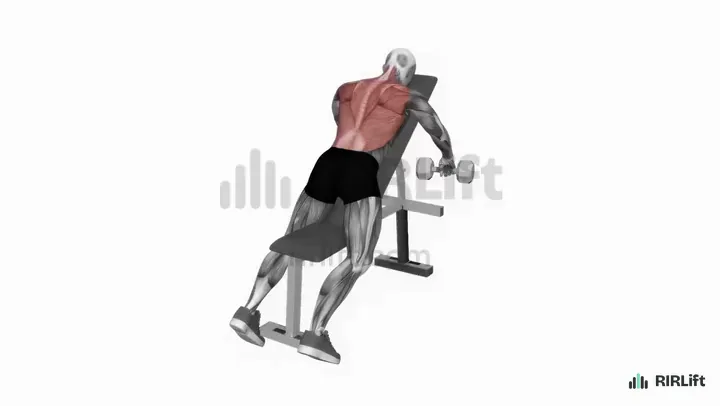
Incline Dumbbell Row
Lie chest-down on an incline bench and row both dumbbells for the same upper-back work with your lower back out of it.
Build a session with it
At the gym
-
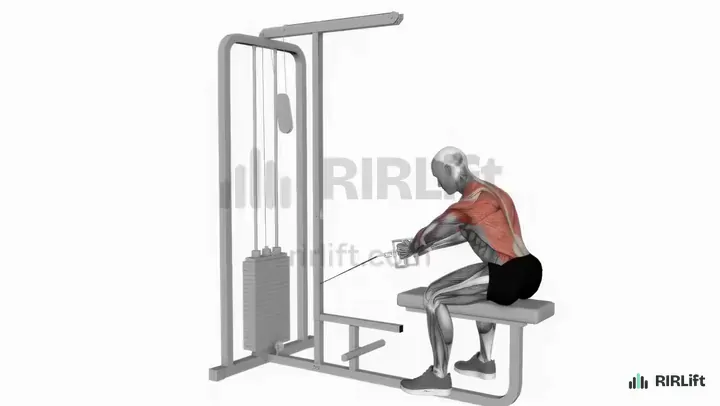
Seated Cable Row
Use it when the racks are taken; the stack lets you pick an exact load for any rep target.
Build a session with it -
Chest-Supported Row
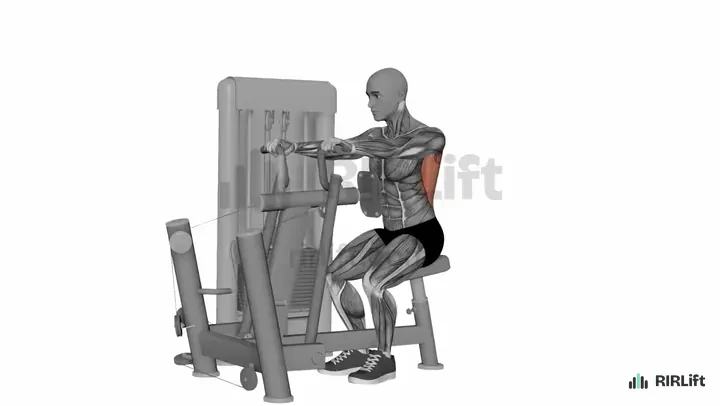
Lean into the pad and row when you want to push your upper back to failure without your grip or core giving out first.
Build a session with it -
Lat Pulldown
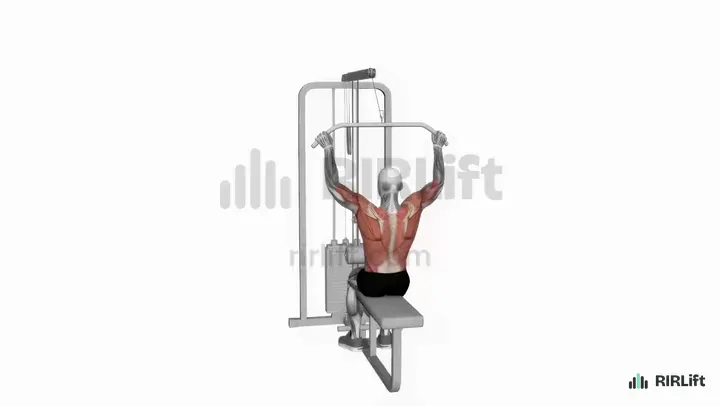
Choose it when your goal is the pull-up, since it trains the vertical path at whatever load you need.
Build a session with it
With a band
-
Band Bent-Over Row
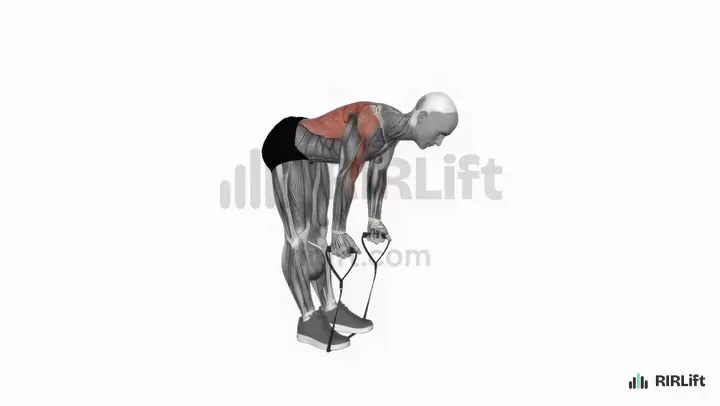
Stand on a band and row toward your hips when there is nothing to hang from.
Build a session with it
How to make the inverted row harder or easier
Your body angle is the load. The more upright you are, the less of your weight you pull; the closer to level, the more. To make it easier, raise the bar to chest height or bend your knees and plant your feet. To make it harder, lower the bar, straighten your legs, then put your heels on a bench.
Change one notch at a time and keep it for a few weeks. Add reps at that angle until every set reaches 15, then move on. Log the bar height and foot position with each session in a workout log, or you will not know which reps to beat next time.
Inverted row vs pull-up
Both are bodyweight pulls, but they hit different directions. The inverted row is a horizontal pull that leans on your upper back; the pull-up is vertical and loads your lats more. A good week has both.
If you cannot do a pull-up yet, the inverted row is where to start: build to sets of 10 or more with your body close to level, then add band-assisted pull-ups or lat pulldowns for the vertical half. Once you have pull-ups, keep the inverted row as your bodyweight row.
Questions
What muscles does the inverted row work?
It works your upper back, the traps, rhomboids and rear delts, along with your lats. Your biceps and forearms help on every rep, and your glutes and abs hold your body straight.
Can I do inverted rows instead of pull-ups?
They train overlapping muscles, but the inverted row is a horizontal pull and the pull-up is vertical, so one does not fully replace the other. If pull-ups are out of reach, do inverted rows plus band-assisted pull-ups or lat pulldowns, and test your pull-up every few weeks.
What is a good alternative to the inverted row?
A TRX row is the closest swap, since it is the same bodyweight row on handles. With weights, a chest-supported row or an incline dumbbell row trains the same upper back; at a cable station, use a seated cable row.
How do you do inverted rows at home with no equipment?
Lie under a sturdy table, grip its edge with both hands, and pull your chest up to it with your heels on the floor. Check that the table cannot tip before your first rep; if it can, row with a band instead.
How do you make inverted rows harder?
Lower the bar, straighten your legs, then raise your feet on a bench so your body ends up level. Once that is easy for 15 reps, add a weight vest or a plate on your hips, or pause for two seconds with your chest on the bar.
How high should the bar be for inverted rows?
Start at about hip height. Raise it toward chest height if you cannot touch the bar on every rep, and lower it once you get 15 clean reps on every set.
How many sets and reps of inverted rows should I do?
Three sets of 8–15 reps, stopping about 2 reps short of failure, is a good default. Count them toward the 10–20 hard sets per week your back needs.
Related templates
-
Lat pulldown: form, grip width and the best alternatives
The vertical pull to pair with inverted rows, and the gym route to your first pull-up.
-
The best workout for back: width, thickness and traps
Puts a row like this one in a full back session with vertical pulls and rear-delt work.
-
Barbell exercises: the 18 lifts worth learning, and how to put them together
Every lift you can do with the same rack and bar, including the heavier barbell rows.
-
The best workout for home, with little or no equipment
A full session for when a table and a band are all you have to row with.
-
How to use RIR
How to judge the 2 reps in reserve the programming above asks for.