Kettlebell exercises, grouped by what they train, with sessions for the bells you own

The kettlebell exercises worth learning first are the swing, the deadlift, a squat with the bell held at your side or chest, the overhead press and the row: one hinge, one squat, one press, one pull. Add the clean and press, split squat and Turkish get-up once those feel steady. Pick by what you own: one bell runs everything one side at a time, a heavier bell turns the swing and deadlift into real strength work, and two bells or a gym rack let you load split squats, rows and presses like any other lift.

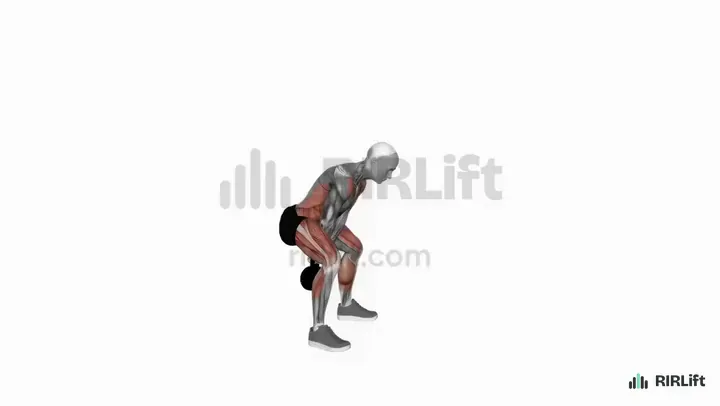
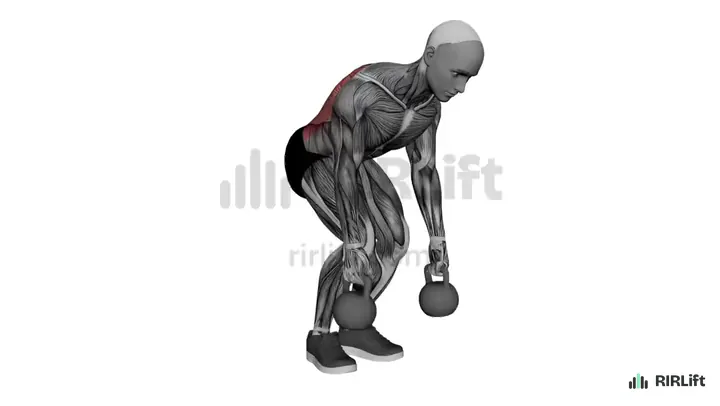
  1. Kettlebell Swing Glutes, Hamstrings
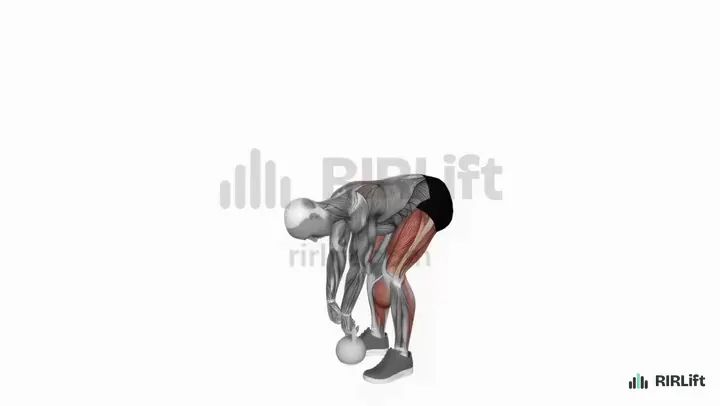
  2. Kettlebell Deadlift Glutes, Hamstrings, Lower Back
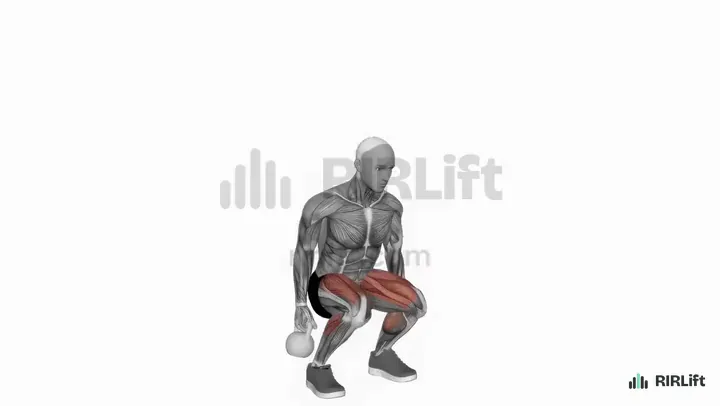
  3. Kettlebell Suitcase Squat Quads
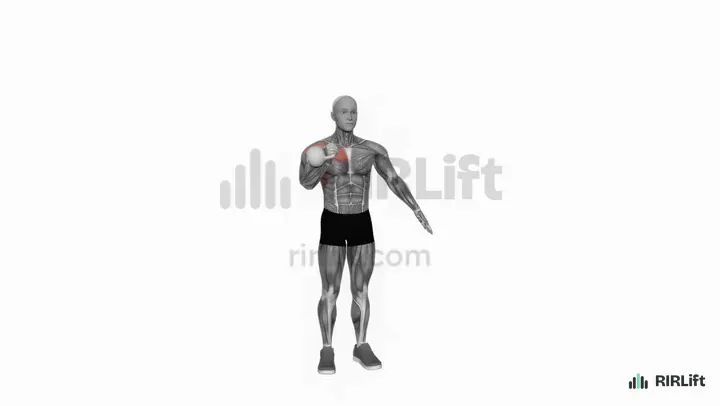
  4. Kettlebell Overhead Press Shoulders
  5. Kettlebell Row Lats, Upper Back
  6. Kettlebell Clean & Press Shoulders, Quads
  7. Kettlebell Split Squat Quads, Glutes
  8. Kettlebell Turkish Get-Up Shoulders, Abs

Kettlebell hinge exercises: swing, deadlift and snatch

The hip hinge is what a kettlebell does better than a dumbbell: the handle sits high, so the bell can swing between your legs and load your glutes and hamstrings with speed. Learn the deadlift first, then the swing, and only then the snatch. The good morning and glute bridge are slower hinges for days when you want sets you can count to a rep range.

Glutes and hamstrings, fast hinge

Kettlebell Swing

Glutes, Hamstrings

The swing is the one exercise where the kettlebell has no equal: the bell floats to chest height on hip drive alone, so every rep is a maximal glute contraction without a bar to load. It is also the fastest way to get 10 to 20 hard reps of hinge work into a short session.

How to do it

  1. Set the bell a foot in front of you, feet a little wider than your hips, toes slightly out.
  2. Hinge back, grab the handle with both hands and tilt the bell toward you so your lats are tight before it moves.
  3. Hike the bell back between your thighs, high toward your hips, forearms touching your inner thighs.
  4. Snap your hips forward and stand tall; the bell floats to chest height with straight arms.
  5. Let it fall, hinge again as the bell passes your knees, and repeat without pausing at the top.

Cues

  • Hips back, not down
  • Arms are ropes, hips are the engine
  • Stand up hard, squeeze your glutes at the top

Common mistakes

  • Squatting the bell: your knees barely bend. If your shins move forward, you are squatting, not hinging.
  • Lifting with your arms to get the bell higher: chest height is plenty. If it floats higher, the hips did it, not you.

Swap for: Kettlebell Deadlift, Kettlebell Sumo Deadlift High Pull, Kettlebell Snatch

Glutes, hamstrings and lower back, slow hinge

Kettlebell Deadlift

Glutes, Hamstrings, Lower Back

The deadlift teaches the hinge the swing depends on, at a pace you can check every rep. With one bell held in front of you it loads the glutes and hamstrings hard enough to count as a strength set once the bell is heavy.

How to do it

  1. Stand with the bell on the floor between your feet, feet hip to shoulder width.
  2. Push your hips back and bend your knees enough to reach the handle, back flat, chest over the bell.
  3. Grip, pull the slack out of your arms, then drive the floor away and stand up in one piece.
  4. Lock out by squeezing your glutes, then hinge back down and set the bell on the floor between reps.

Cues

  • Shins vertical, hips loaded
  • Chest up before the bell leaves the floor
  • Push the floor, don't pull the bell

Common mistakes

  • Rounding your lower back to reach: if the bell is low, stand on a step or use a taller bell.
  • Bouncing the bell off the floor: reset your grip and position every rep so each one starts tight.

Swap for: Kettlebell Sumo Deadlift, Kettlebell Good Morning, Dumbbell Romanian Deadlift

Whole posterior chain and shoulders, one-arm ballistic

Kettlebell Snatch

Shoulders, Glutes, Hamstrings

The snatch takes the swing one step further: one arm, and the bell finishes overhead. It is the most demanding one-bell exercise in this list, and the one that turns a modest bell into a conditioning tool once your swing is clean.

How to do it

  1. Stand over the bell as for a swing, one hand on the handle, free hand out to the side.
  2. Hike the bell back, then drive your hips forward as hard as you would on a swing.
  3. As the bell passes chest height, pull your elbow back and punch your hand up through the handle so the bell lands softly on the back of your forearm overhead.
  4. Lock out with your bicep by your ear, then let the bell tip forward, guide it down past your hip and back into the next hike.

Cues

  • Swing first, snatch second
  • Punch through the handle, don't flip the bell
  • Lockout quiet, no clang on the wrist

Common mistakes

  • Letting the bell flip over and bang your forearm: punch your hand up and through earlier, before the bell has arced over.
  • Muscling the bell up with your shoulder: if the bell stalls at chest height, the hip drive was too soft. Go back to swings for a set.

Swap for: Kettlebell Swing, Kettlebell Clean & Press, Kettlebell Sumo Deadlift High Pull

Hamstrings and lower back, slow hinge

Kettlebell Good Morning

Hamstrings, Lower Back

Holding the bell at your chest and hinging forward loads your hamstrings through their longest range without a heavy bell. It fits on a one-bell day when the deadlift is already too easy and you want a hinge you can slow down.

How to do it

  1. Hold the bell by the horns against your chest, elbows down, feet hip width.
  2. Soften your knees and push your hips straight back, torso folding forward as one unit.
  3. Stop when your hamstrings feel stretched, usually with your torso a little above parallel.
  4. Drive your hips forward to stand, squeezing your glutes at the top.

Cues

  • Hips back to the wall behind you
  • Flat back from head to tailbone
  • Three seconds down

Common mistakes

  • Bending through the spine instead of the hips: if the bell drifts away from your chest, you are rounding.
  • Going deeper than your hamstrings allow: the depth where your back stays flat is the depth.

Swap for: Kettlebell Deadlift, Dumbbell Romanian Deadlift, Single-Leg RDL

Glutes, hip extension

Kettlebell Glute Bridge

Glutes

A bell on your hips turns the floor bridge into a glute exercise you can take to the rep limit with any weight you own. It needs no bench, pairs well after swings, and lets your lower back rest while your glutes keep working.

How to do it

  1. Lie on your back, knees bent, feet flat about hip width and close enough that your fingertips brush your heels.
  2. Rest the bell on your hips, holding the handle with both hands so it cannot roll.
  3. Push through your heels and lift your hips until your body is straight from shoulders to knees.
  4. Hold for a second, then lower until your hips touch the floor.

Cues

  • Ribs down, chin tucked
  • Squeeze at the top for a full second
  • Heels heavy, toes light

Common mistakes

  • Arching your lower back to get higher: the top is where your glutes finish, not where your back arches.
  • Rushing the lowering: control it or you lose half the set.

Swap for: Kettlebell Hip Thrust, Single-Leg Glute Bridge, Single-Leg Hip Thrust

Kettlebell squat and lunge exercises

One bell is rarely heavy enough to make a two-legged squat hard for long, so most kettlebell leg work is one leg at a time or one bell held off-centre. Pick the suitcase squat with one bell, the split squat or step-up when you want more load per leg, and the lateral lunge for the inner thigh and hips.

Quads, squat with the bell at your side

Kettlebell Suitcase Squat

Quads

Holding the bell by your side like a suitcase loads a squat without a rack and makes your trunk fight the lean the whole set. It is the one-bell squat that still works when the bell is light, because the offset load is harder than it looks.

How to do it

  1. Stand with the bell beside one foot, feet a little wider than your hips, toes slightly out.
  2. Hinge down, grab the handle with the near hand, and stand up tall with the bell hanging by your thigh.
  3. Sit your hips back and down until your thighs are at least level with the floor, keeping your shoulders level.
  4. Drive the floor away and stand, then finish all reps before switching hands.

Cues

  • Shoulders level, don't lean toward the bell
  • Knees track over your toes
  • Pause a second in the bottom

Common mistakes

  • Tipping toward the loaded side: brace your free side as if a second bell were there.
  • Cutting depth as the set gets heavy: if your hips stop at knee height, the rep does not count.

Swap for: Goblet Squat, Kettlebell Split Squat, Kettlebell Lateral Lunge

Quads and glutes, one leg at a time

Kettlebell Split Squat

Quads, Glutes

One leg does the work, so a bell that is easy to squat with becomes a hard split squat. Hold one bell in the goblet position if you have one, or a bell in each hand at your sides when you have a pair.

How to do it

  1. Take a long step forward so your back heel is up and your front shin stays close to vertical when you drop down.
  2. Hold a bell in each hand at your sides, or one bell at your chest.
  3. Lower your back knee straight toward the floor until your front thigh is about parallel.
  4. Push through your whole front foot to stand, finish every rep on one leg, then switch.

Cues

  • Back knee straight down, not forward
  • Front heel stays heavy
  • Lean slightly forward for more glutes

Common mistakes

  • Standing too narrow: if your front heel lifts, step your feet further apart.
  • Pushing off the back foot: it is there for balance only.

Swap for: Bulgarian Split Squat, Kettlebell Step-Up, Dumbbell Reverse Lunge

Quads and glutes, one leg

Kettlebell Step-Up

Quads, Glutes

The step-up loads one leg from a dead stop, with no stretch to bounce out of, so the quads do all the work. A bench, a sturdy box or the bottom stair all work.

How to do it

  1. Stand facing a bench or box about knee height, a bell in each hand at your sides.
  2. Put your whole foot on the bench and drive through it until that leg is straight.
  3. Bring your other foot up to tap the bench, then lower it back to the floor slowly.
  4. Keep the working foot on the bench for all reps, then switch legs.

Cues

  • Plant the full foot before you push
  • Push with the top leg, don't jump off the bottom one
  • Three seconds down

Common mistakes

  • Bouncing off the floor foot: lower the toes to the floor and start the next rep from the top leg only.
  • Picking a box so high your front knee caves: knee height is enough.

Swap for: Kettlebell Split Squat, Bulgarian Split Squat, Walking Lunge

Quads, glutes and inner thigh, side-to-side

Kettlebell Lateral Lunge

Quads, Glutes

Most kettlebell work moves forward and back; the lateral lunge is the one exercise here that loads your adductors and hips sideways. One bell held at your chest is plenty.

How to do it

  1. Hold the bell by the horns at your chest, feet together.
  2. Step wide to one side and sit your hips back over that foot, keeping the other leg straight and both feet flat.
  3. Go as deep as your hips allow with a flat back, then push off the bent leg to return to standing.
  4. Finish all reps on one side, then switch.

Cues

  • Hips back, chest up
  • Both feet flat, toes forward
  • Push the floor away with the bent leg

Common mistakes

  • Letting the straight-leg foot roll onto its edge: shorten the step until it stays flat.
  • Leaning forward over the bell: keep it at your chest and your torso upright.

Swap for: Cossack Squat, Dumbbell Lateral Lunge, Kettlebell Split Squat

Kettlebell press and overhead exercises

The rack position (bell resting on the back of your forearm, elbow tucked) is the start of every press here. The strict press is the strength builder, the clean and press adds the hinge in front of it, the thruster adds a squat, and the seesaw press is the two-bell version that keeps your trunk working while one arm rests.

Shoulders and triceps, strict press

Kettlebell Overhead Press

Shoulders

One bell in the rack, pressed strictly, is the shoulder builder in this list. The bell sits behind your wrist, so it pulls your arm into a natural path and lets you press a weight you could not dumbbell-press cleanly.

How to do it

  1. Clean the bell to the rack: bell resting on the back of your forearm, elbow tucked to your ribs, wrist straight.
  2. Brace your trunk and squeeze the free fist to stay tight.
  3. Press straight up, rotating your palm to face forward as the bell passes your head, until your arm locks out beside your ear.
  4. Lower under control back to the rack. Finish all reps, then switch arms.

Cues

  • Wrist straight, knuckles to the ceiling
  • Ribs down, don't lean back
  • Lock out beside your ear, not in front of it

Common mistakes

  • Bending the wrist back under the bell: grip the handle deep in the palm, not in the fingers.
  • Dipping your legs to start the press: that is a push press. Keep your knees locked and count only strict reps.

Swap for: Kettlebell Bottoms-Up Press, Kettlebell Seesaw Press, Dumbbell Shoulder Press

Shoulders, glutes and quads, hinge into a press

Kettlebell Clean & Press

Shoulders, Quads

The clean and press is the exercise most people mean when they say kettlebell training: a hinge to bring the bell to the rack, then a press. One bell, one arm, and the whole body works for every rep.

How to do it

  1. Stand over the bell as for a swing, a foot in front of you, one hand on the handle.
  2. Hike the bell back, then drive your hips and pull your elbow back so the bell stays close to your body instead of swinging out.
  3. As the bell reaches chest height, loosen your grip and let it roll around your wrist into the rack, elbow tucked.
  4. Press to lockout, lower to the rack, then drop the bell back into the next hike.

Cues

  • Keep the bell close, elbow back
  • Catch it soft, no bang on the forearm
  • Strict press every rep

Common mistakes

  • Swinging the bell out and letting it crash onto your wrist: the bell should travel up your body, not around it.
  • Pressing before the rack is settled: pause for a beat in the rack, then press.

Swap for: Kettlebell Overhead Press, Kettlebell Snatch, Kettlebell Thruster

Quads and shoulders, squat into a press

Kettlebell Thruster

Quads, Shoulders

The thruster is a front squat that finishes as a press, so a pair of bells trains your legs and shoulders in one set. Use it when you want a hard full-body set from one exercise.

How to do it

  1. Clean a bell into each rack, elbows tucked, feet a little wider than your hips.
  2. Squat until your thighs are at least level with the floor, keeping your elbows up.
  3. Drive up out of the squat and let the momentum carry straight into a press to lockout.
  4. Lower the bells to the rack as you drop into the next squat.

Cues

  • Elbows up through the squat
  • Legs start the press, arms finish it
  • Lock out before the next squat

Common mistakes

  • Cutting the squat short to make the press easier: full depth, then press.
  • Pausing at the top and losing the rhythm: the bells go up and come straight down into the next rep.

Swap for: Kettlebell Clean & Press, Kettlebell Overhead Press, Goblet Squat

Shoulders and triceps, alternating two-bell press

Kettlebell Seesaw Press

Shoulders

With a bell in each rack, pressing one while the other rests keeps your trunk braced the whole set and doubles the reps you get from a pair. It is the two-bell press for a strength day.

How to do it

  1. Clean a bell into each rack, elbows tucked, wrists straight.
  2. Press the right bell to lockout while the left stays racked.
  3. As the right comes down, press the left; one bell is always moving.
  4. Count one rep as both arms pressed once.

Cues

  • Ribs down, don't side-bend under the bell
  • Lock out beside your ear
  • Steady rhythm, no pause at the rack

Common mistakes

  • Leaning hard to the side to finish a press: a little tilt is fine, a fold is not.
  • Letting the racked bell drift forward: keep that elbow tucked while the other arm works.

Swap for: Kettlebell Overhead Press, Kettlebell Bottoms-Up Press, Dumbbell Shoulder Press

Kettlebell row and pull exercises

Rows are where kettlebells behave most like dumbbells, so program them the same way: 8 to 15 reps, a full stretch at the bottom, a pause at the top. The gorilla row is the two-bell version, and the rear delt fly covers the back of your shoulders that pressing leaves behind.

Lats and upper back, one-arm row

Kettlebell Row

Lats, Upper Back

One bell, hinged over with your free hand on a knee, bench or chair, is the simplest kettlebell pull and the one you will keep for years. The handle lets you row with a neutral grip and a long stretch at the bottom.

How to do it

  1. Stand with the bell beside one foot, hinge forward and brace your free hand on a bench, chair or your knee.
  2. Let the bell hang with a straight arm and your shoulder blade reaching toward the floor.
  3. Pull your elbow back and up until the bell reaches your hip, keeping your torso still.
  4. Lower slowly to the full stretch. Finish all reps, then switch sides.

Cues

  • Elbow to your hip, not your shoulder
  • Full stretch at the bottom
  • Hips and shoulders stay square

Common mistakes

  • Twisting your torso to lift the bell: the only thing that moves is your arm and shoulder blade.
  • Stopping short of a straight arm at the bottom: you lose the stretched half of the rep.

Swap for: Kettlebell Gorilla Row, One-Arm Dumbbell Row, Kettlebell Rear Delt Row

Lats and upper back, two-bell row from the floor

Kettlebell Gorilla Row

Lats, Upper Back

Two bells on the floor, a wide hinge, and you row one while the other stays grounded: the gorilla row lets you use a heavy pair, and the grounded bell keeps you from twisting. It is the strength-day row.

How to do it

  1. Set two bells between your feet, stance a little wider than your hips, and hinge until you can grip both handles with a flat back.
  2. Keep one bell on the floor as an anchor and row the other to your hip.
  3. Lower it to the floor, then row the other bell.
  4. Alternate until both sides have done the set.

Cues

  • Hinge deep, back flat
  • Push down on the anchor bell
  • Elbow back, not out

Common mistakes

  • Standing up a little each rep: your hips stay back and your torso stays near parallel for the whole set.
  • Rowing both bells at once: the anchor is what lets you go heavy.

Swap for: Kettlebell Row, Dumbbell Bent-Over Row, One-Arm Dumbbell Row

Rear shoulders and upper back

Kettlebell Rear Delt Fly

Shoulders

Presses and swings leave the back of your shoulders undertrained; one light bell, hinged over, fixes that in two or three sets. Keep it at the end of a session.

How to do it

  1. Hinge forward with a flat back, free hand braced on a bench or your knee, bell hanging below your shoulder.
  2. With a slight bend in your elbow, raise the bell out to the side until your arm is level with your back.
  3. Pause for a second with your shoulder blade pulled back.
  4. Lower slowly. Finish all reps, then switch sides.

Cues

  • Lead with the elbow, not the hand
  • Pinky slightly up at the top
  • Light bell, slow lowering

Common mistakes

  • Swinging the bell up with your torso: if your back moves, the bell is too heavy.
  • Shrugging as you lift: keep your shoulder away from your ear.

Swap for: Kettlebell Rear Delt Row, Dumbbell Rear Delt Fly, Kettlebell Lateral Raise

Kettlebell get-up and core exercises

The Turkish get-up and the windmill are slow, low-rep movements that train your shoulders to hold a bell overhead while your trunk moves under it. Keep them light, keep reps at 3 to 5 per side, and put them first in a session or on their own day; they are not finishers.

Shoulders and trunk, floor to standing under a bell

Kettlebell Turkish Get-Up

Shoulders, Abs

The get-up moves you from lying on the floor to standing with the bell locked out overhead the whole way, so your shoulder learns to stay stable through every position. It belongs at the start of a session, light, for 3 to 5 reps a side.

How to do it

  1. Lie on your back, bell pressed to lockout in your right hand, right knee bent and foot flat, left arm and leg out at 45 degrees.
  2. Roll onto your left elbow, then your left hand, keeping your eyes on the bell.
  3. Lift your hips, sweep your left leg back under you to a kneeling position, then bring your torso upright.
  4. Stand up, then reverse every step back to the floor. Switch sides.

Cues

  • Eyes on the bell until you are kneeling
  • Arm locked and vertical the whole way
  • Slow is the point

Common mistakes

  • Rushing the sweep and losing the vertical arm: if the bell tips, stop, reset the arm, then continue.
  • Going heavy before the pattern is clean: practice with no bell or a shoe balanced on your fist first.

Swap for: Kettlebell Windmill, Kettlebell Overhead Press, Dumbbell Single-Arm Overhead Carry

Obliques, hips and shoulders, hinge under a locked-out bell

Kettlebell Windmill

Abs, Shoulders

The windmill holds a bell overhead while you hinge sideways toward the floor, so your obliques, hamstrings and shoulder stabilisers work at the same time. It is the kettlebell core exercise that also opens your hips.

How to do it

  1. Press the bell overhead in your right hand, feet a little wider than your hips, both toes turned slightly to the left.
  2. Shift your hips to the right and hinge sideways, sliding your left hand down the inside of your left leg.
  3. Keep your eyes on the bell and your right arm vertical as you go as low as your hamstrings allow.
  4. Drive your hips back to centre to stand. Finish all reps, then switch sides.

Cues

  • Hips push out to the bell side
  • Arm vertical, eyes on the bell
  • Both legs straight or nearly straight

Common mistakes

  • Bending forward instead of sideways: your chest should open toward the bell, not face the floor.
  • Letting the overhead arm drift: if it leaves vertical, the bell is too heavy.

Swap for: Kettlebell Turkish Get-Up, Kettlebell Overhead Press, Dumbbell Single-Arm Overhead Carry

Put them together: example sessions

Each session below picks from the exercises above for one situation, with the sets, reps, rest and RIR filled in. Open one in the session builder to change a pick, price it from a recent set, and add it to RIRLift.

Session 1

One bell, learning the basics

Open in the session builder
  • Workouts3× a week
  • Working sets51 a week
  • Per workout~45 min
  • EquipmentKettlebells

You own one kettlebell, light enough to press overhead for about 10 reps, and you have not trained with it much yet.

Everything here runs one side at a time or with the bell held in front, so one moderate bell is enough for a full body. The deadlift is slow and counted, the swing is hard and stops at the top of its rep range, the squat is the suitcase squat, and the press and row are strict so you learn the rack and the hinge before adding the clean and snatch.

Full Body
ExerciseSets × repsRIRRest
Kettlebell Deadlift1 warm-up set firstSet the bell down between reps. 3 × 8–12 2 90 s
Kettlebell SwingChest height. Hips do all the work. 3 × 10–15 2 90 s
Kettlebell Suitcase SquatPer side. Shoulders level. 3 × 8–12 2 90 s
Kettlebell Overhead PressPer side. Strict, no leg dip. 3 × 6–10 2 90 s
Kettlebell RowPer side. Hand on a chair. 3 × 8–12 1 1 min
Kettlebell Glute BridgeHold the top for a second. 2 × 12–20 1 1 min
How to run it
Run the session three days a week with a day off between. Do the deadlift before the swing until the swing feels like the hips doing all the work. You need one kettlebell, a chair or bench to brace your hand on for rows, and floor space.
How to progress
Add a rep per set each session until every set hits the top of the range, then slow the lowering to three seconds or add a pause before buying a heavier bell. Once the swing is clean at 15 reps, move to the heavier-bell plan or swap the deadlift for the clean and press.

Session 2

One heavier bell, short full-body sessions

Open in the session builder
  • Workouts3× a week
  • Working sets53 a week
  • Per workout~40 min
  • EquipmentKettlebells

You have one kettlebell you can swing hard for 15 reps but press for only 5 to 8, and you want full-body sessions that stay short.

A heavier bell makes the hinge and ballistic lifts the main event: cleans, swings and snatches get real load, while squats stay one-legged because one bell is still light for two legs. Supersets pair a lower and an upper lift so you spend rest time working. Two routines rotate so each one stays short and nothing is repeated three days in a row.

Full Body A
ExerciseSets × repsRIRRest
Kettlebell Clean & Press1 warm-up set firstPer side. Pause in the rack, then press. 3 × 5–8 2 90 s
Kettlebell SwingHard hips, chest height. 4 × 10–15 2 1 min
A1 Kettlebell Split SquatPer leg. One bell at your chest. 3 × 8–12 1 30 s
A2 Kettlebell RowPer side. Pause at the hip. 3 × 8–12 1 90 s
B1 Kettlebell Good MorningThree seconds down. 3 × 8–12 1 30 s
B2 Kettlebell Glute BridgeBell on your hips, hold the top. 2 × 10–15 1 1 min

Open Full Body A in the session builder

Full Body B
ExerciseSets × repsRIRRest
Kettlebell Turkish Get-UpPer side. Slow, eyes on the bell. 2 × 3–5 3 90 s
Kettlebell SnatchPer side. Punch through, quiet lockout. 4 × 6–10 2 90 s
A1 Kettlebell DeadliftReset the bell on the floor each rep. 3 × 6–10 2 30 s
A2 Kettlebell Overhead PressPer side. Strict. 3 × 5–8 2 90 s
B1 Kettlebell Lateral LungePer side. Both feet flat. 3 × 8–12 1 30 s
B2 Kettlebell WindmillPer side. Arm vertical, eyes on the bell. 2 × 4–6 3 1 min

Open Full Body B in the session builder

How to run it
Alternate A and B three days a week (A, B, A, then B, A, B). Sets with the same superset letter are done back to back, then you rest. You need one kettlebell and floor space; the get-up and windmill need room to lie down.
How to progress
Add a rep per set until you hit the top of every range, then add a set to the swing and clean and press before adding a bell. When the strict press passes 10 clean reps per side, the bell is light for you and it is time for the two-bell plan.

Session 3

Two bells or a gym rack, strength days

Open in the session builder
  • Workouts2× a week
  • Working sets33 a week
  • Per workout~50 min
  • EquipmentKettlebells

You have a matched pair, or a gym rack of kettlebells, plus a bench or box for step-ups and rows, and you want kettlebells to be real strength work rather than conditioning.

A pair doubles the load on every lift, so the two-bell versions take over: gorilla rows, seesaw presses, thrusters, split squats and step-ups with a bell in each hand. The session splits into a lower day and an upper day so each lift gets heavy sets with long rests, and a rack lets you pick a heavier pair for swings and deadlifts than for presses.

Lower
ExerciseSets × repsRIRRest
Kettlebell Swing1 warm-up set firstHeaviest bell. Two hands. 4 × 8–12 2 2 min
Kettlebell Split Squat1 warm-up set firstPer leg. A bell in each hand. 4 × 6–10 2 2 min
Kettlebell Step-UpPer leg. Knee-height box. 3 × 8–10 2 90 s
Kettlebell Good MorningThree seconds down. 3 × 8–12 2 90 s
Kettlebell Glute BridgeHeaviest bell on your hips. 3 × 10–15 1 1 min

Open Lower in the session builder

Upper
ExerciseSets × repsRIRRest
Kettlebell Turkish Get-UpPer side. Slow, eyes on the bell. 2 × 3–5 3 90 s
Kettlebell Seesaw Press1 warm-up set firstOne rep = both arms. 4 × 6–10 2 2 min
Kettlebell Gorilla RowPer side. Push down on the anchor bell. 4 × 8–10 2 2 min
Kettlebell ThrusterFull depth, then press. 3 × 8–12 2 90 s
Kettlebell Rear Delt FlyPer side. Light bell. 3 × 12–15 1 1 min

Open Upper in the session builder

How to run it
Run Lower and Upper once each per week, two or three days apart, or alternate them across three days if you want more. Take the long rests: these sets are meant to be heavy. You need two kettlebells (or a rack to choose from) and a bench or box for step-ups and rows.
How to progress
When you hit the top of the range on every set of a lift for two sessions in a row, go to the next bell size and start at the bottom of the range. For swings, add a set before you add weight.

Make it fit you

Questions

What are the best kettlebell exercises for beginners?

The deadlift, the swing, a squat with the bell held at your side or chest, the one-arm overhead press and the one-arm row. They cover hinge, squat, press and pull with one bell, and each one teaches a position (the hinge, the rack) that the clean, snatch and get-up build on later.

What are the big 6 kettlebell exercises?

The swing, the clean, the press, the snatch, the squat and the Turkish get-up. On this page they are the kettlebell swing, clean and press, overhead press, snatch, suitcase squat and Turkish get-up, the one-heavier-bell session runs five of them across its two days, and the suitcase squat lives in the one-bell session.

Can you get a full-body workout with just one kettlebell?

Yes. One bell covers a hinge (swing or deadlift), a squat (suitcase or split squat), a press, a row and the get-up. Run the lifts one side at a time so the bell stays hard, and take sets within 1 to 2 reps of failure. The one-bell sessions above are full-body sessions built this way.

What is a good full-body kettlebell circuit?

Swing, suitcase squat, overhead press, row and glute bridge, 8 to 15 reps each, rested only between rounds. The one-bell plan is the same five lifts plus the deadlift, run as sets instead of rounds so you can log reps and reps in reserve per set and see when to move up a bell.

What weight kettlebell should I start with?

One you can press overhead strictly for about 8 to 10 reps per arm. That bell will be heavy enough for swings, deadlifts and squats to count and light enough to learn the press, row and get-up. For most people that is 12 kg or 16 kg (26 lb or 35 lb), and the second bell you buy should be one or two sizes heavier for swings and deadlifts.

What happens if I do 100 kettlebell swings every day?

Your glutes, hamstrings and grip get a lot of volume and your swing gets very clean, but your quads, chest and shoulders get almost nothing, and the sets stop being hard once 100 is easy. Swings three times a week inside a full session, with a squat, a press and a row around them, give you the same hinge work plus the rest of the body.

Are kettlebells as good as dumbbells for building muscle?

For rows, presses, lunges and most isolation work, they are equal: muscle responds to hard sets, not the handle. Kettlebells win on the swing, clean and snatch, where the handle lets the bell move fast through the hinge. Dumbbells win on fine weight jumps and on lifts that want the load centred over the hand, like the lateral raise.

How many days a week should I do kettlebell exercises?

Two or three full-body sessions a week, with a day between them, is enough for most muscles to reach 10 to 20 hard sets. With two bells you can split into a lower and an upper day instead. Total hard sets per week matter more than how you spread them, so the same sets over two or three days work at least as well.