
Resistance band exercises for every muscle, with the bands you own
Published October 15, 2026
The best resistance band exercises cover the same six patterns as a gym session: a squat or lunge standing on the band, a hinge, a row, an overhead press, a chest fly or push-up, and side-step or bridge work for the hips. Bands get harder the further you stretch them, so pick the band and the foot position that make each set end 0 to 3 reps short of failure somewhere between 6 and 30 reps. A door anchor adds the chest fly, face pull, pull-through and Spanish split squat; a pull-up bar adds the band-assisted pull-up.
-
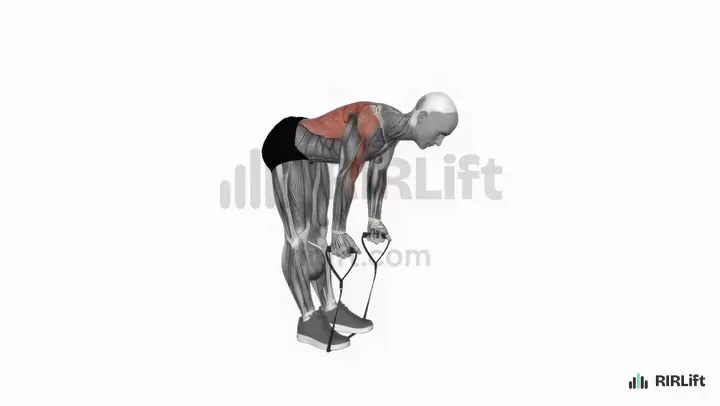 Band Bent-Over Row
Lats, Upper Back
Band Bent-Over Row
Lats, Upper Back
-
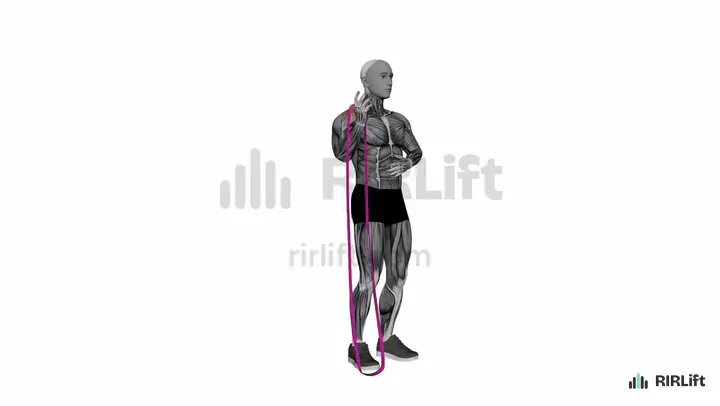 Band Overhead Press
Shoulders
Band Overhead Press
Shoulders
-
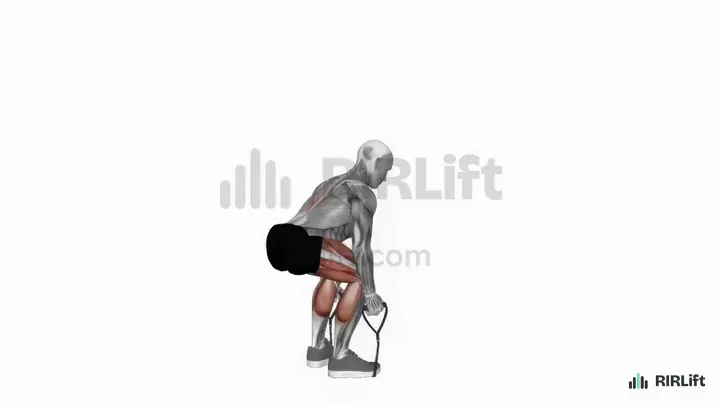 Band Deadlift
Glutes, Hamstrings, Lower Back
Band Deadlift
Glutes, Hamstrings, Lower Back
-
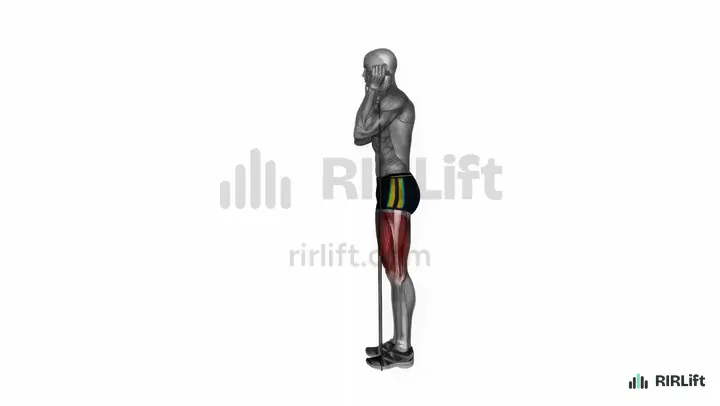 Band Reverse Lunge
Quads, Glutes
Band Reverse Lunge
Quads, Glutes
-
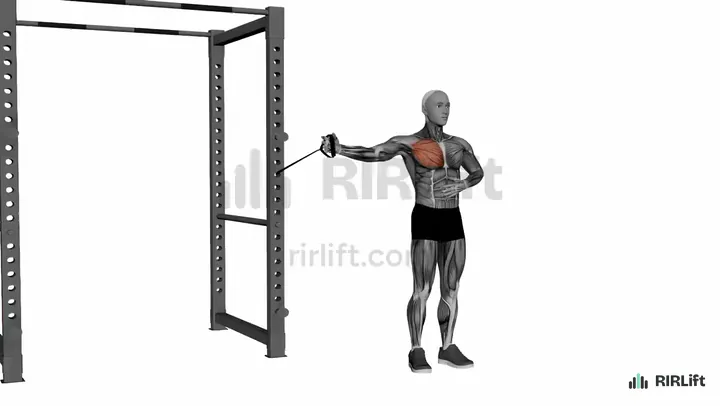 Single-Arm Band Chest Fly
Chest
Single-Arm Band Chest Fly
Chest
-
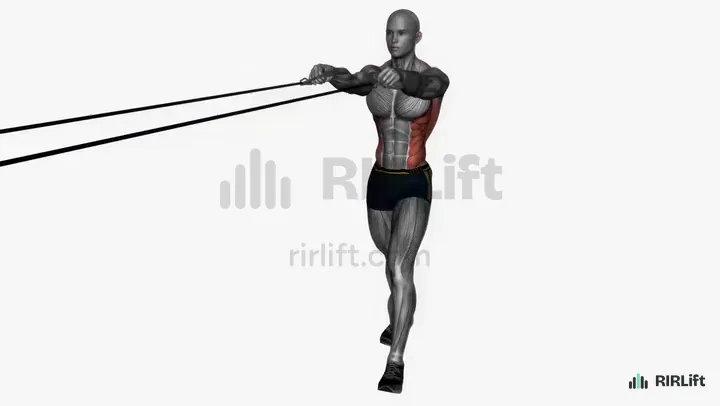 Band Face Pull
Shoulders, Upper Back
Band Face Pull
Shoulders, Upper Back
-
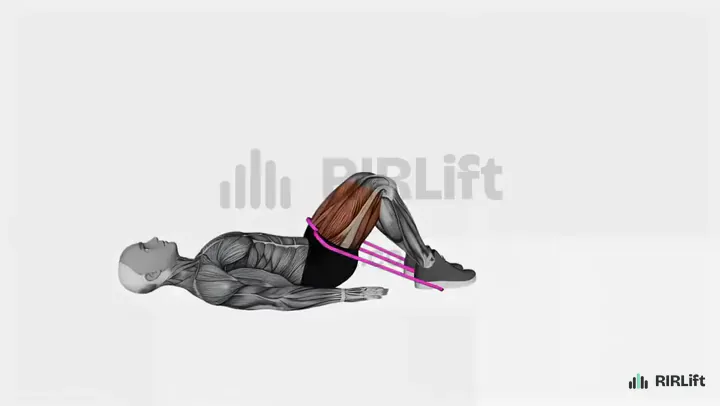 Band Hip Thrust
Glutes
Band Hip Thrust
Glutes
-
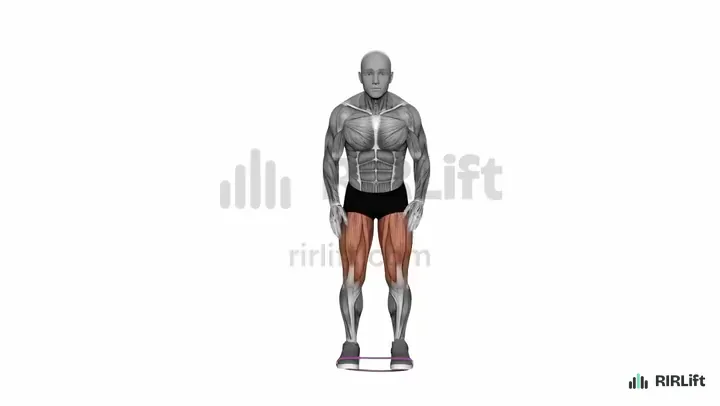 Lateral Band Walk
Abductors
Lateral Band Walk
Abductors
Put them together: example sessions
Each session below picks from the exercises above for one situation, with the sets, reps, rest and RIR filled in. Open one in the session builder to change a pick, price it from a recent set, and add it to RIRLift.
-
Session 1
One loop band set, no anchor
You have a long loop band and a mini loop band, no door anchor, no bar, and you train at home or in a hotel room.
3× a week · 51 sets a week · ~40 min
-
Session 2
Handled bands with a door anchor
You have a set of tube bands with handles and a door anchor, and you want bands to be your main training, not a stopgap.
4× a week · 62 sets a week · ~40 min
-
Session 3
Bands as a gym add-on
You lift in a gym with barbells, dumbbells and a pull-up bar, and you want bands for the jobs they do better: warming up the shoulders and hips, and building your first strict pull-ups.
2× a week · 18 sets a week · ~15 min
Session 1
One loop band set, no anchor
- Workouts3× a week
- Working sets51 a week
- Per workout~40 min
- EquipmentResistance Bands
You have a long loop band and a mini loop band, no door anchor, no bar, and you train at home or in a hotel room.
Everything here is done standing on the long band or with the mini band around your knees or ankles, so it packs into a bag. Each session hits every pattern: a lunge or squat, a hinge, a row, a press and a hip or shoulder finisher. Sets run to 1 or 2 reps in reserve and rep ranges go high, because the way to make a band heavier is more stretch and more reps, not a bigger number.
| Exercise | Sets × reps | RIR | Rest |
|---|---|---|---|
| Band Reverse LungePer leg. Front foot on the band, ends at shoulders | 3 × 10–20 | 2 | 90 s |
| Band Bent-Over RowHold the hinge. Widen stance for load | 3 × 10–20 | 1 | 90 s |
| Band Overhead PressPer arm. Ribs down at lockout | 3 × 8–15 | 1 | 90 s |
| Band Leg CurlPer leg. Mini band at the ankles | 3 × 15–30 | 1 | 1 min |
| Band Pull-ApartBand to the chest, arms straight | 3 × 15–30 | 1 | 1 min |
| Band Hammer CurlAlternate arms. Slow lowering | 2 × 10–20 | 1 | 1 min |
Open Band Full Body A in the session builder
| Exercise | Sets × reps | RIR | Rest |
|---|---|---|---|
| Band DeadliftHips back first. Double the band when easy | 3 × 10–20 | 2 | 90 s |
| Band SquatMini band above knees. Push knees out | 3 × 15–30 | 1 | 90 s |
| Band Overhead PressPer arm. Choke up for load | 3 × 8–15 | 1 | 90 s |
| Band Bent-Over RowFull stretch at the bottom | 3 × 10–20 | 1 | 90 s |
| Band Hip ThrustMini band under heels, over hips. 1 s hold | 3 × 12–25 | 1 | 1 min |
| Band Lateral RaiseLead with the elbows | 2 × 12–25 | 1 | 1 min |
Open Band Full Body B in the session builder
- How to run it
- Alternate A and B three days a week with a day between (A-B-A, then B-A-B). To make any set harder, widen your stance, choke up on the band, or double it; to make it easier, bring your feet together. For a fuller home program around these moves, see the best home workout.
- How to progress
- Add reps each session until every set reaches the top of its range at the target RIR, then make the exercise harder: widen your stance on the band, add a one-second pause at the tightest point, slow the lowering to three seconds, or move to the next band up.
Session 2
Handled bands with a door anchor
- Workouts4× a week
- Working sets62 a week
- Per workout~40 min
- EquipmentResistance Bands
You have a set of tube bands with handles and a door anchor, and you want bands to be your main training, not a stopgap.
The anchor opens the four exercises a loop band cannot do well: the chest fly, the face pull, the pull-through and the Spanish split squat. That is enough to split training into an upper day and a lower day, so each session is short and every muscle gets a full-stretch exercise and a squeeze exercise. Stacking two bands on the handles is how you add weight.
| Exercise | Sets × reps | RIR | Rest |
|---|---|---|---|
| Band Bent-Over Row1 warm-up set firstStack bands for load. Elbows past ribs | 3 × 8–15 | 1 | 90 s |
| Single-Arm Band Chest FlyPer arm. Anchor at chest height | 3 × 10–20 | 1 | 90 s |
| Band Overhead PressPer arm. Stand on the band | 3 × 8–15 | 1 | 90 s |
| Band Face PullAnchor at face height. Elbows high | 3 × 12–20 | 1 | 1 min |
| Band Lateral RaiseLast set: half reps at the top | 3 × 12–25 | 0 | 1 min |
| Band Hammer CurlAlternate arms | 3 × 10–20 | 1 | 1 min |
Open Band Upper in the session builder
| Exercise | Sets × reps | RIR | Rest |
|---|---|---|---|
| Band Spanish Split Squat1 warm-up set firstPer leg. Anchor low, band behind the knee | 4 × 10–20 | 1 | 90 s |
| Band Pull-ThroughAnchor low behind you. Squeeze at the top | 3 × 12–20 | 1 | 90 s |
| Band DeadliftStand on two bands when one is easy | 3 × 10–20 | 2 | 90 s |
| Band Reverse LungePer leg. Handles at the shoulders | 3 × 10–20 | 1 | 90 s |
Open Band Lower in the session builder
- How to run it
- Run Upper and Lower on alternating training days, four days a week (Upper, Lower, rest, Upper, Lower, rest, rest). Set the anchor at chest height for the fly, face height for the face pull, and low, about knee height, for the pull-through and the split squat.
- How to progress
- Double progression: when every set of an exercise reaches the top of the rep range at the target RIR, step further from the anchor or stack the next band next session. When stepping back no longer adds enough, move the whole exercise up one band and drop back to the bottom of the rep range.
Session 3
Bands as a gym add-on
- Workouts2× a week
- Working sets18 a week
- Per workout~15 min
- EquipmentResistance Bands, Pull-Up Bar
You lift in a gym with barbells, dumbbells and a pull-up bar, and you want bands for the jobs they do better: warming up the shoulders and hips, and building your first strict pull-ups.
Two light sets of pull-aparts and lateral walks prepare the exact muscles that presses and squats lean on. The band-assisted pull-up gives you a loadable path to a strict pull-up that the assisted machine does not, because the help fades as you rise. Face pulls at the end of a session add rear-delt volume that most gym programs lack.
| Exercise | Sets × reps | RIR | Rest |
|---|---|---|---|
| Band Pull-ApartBefore your first heavy set. Light band | 2 × 15–25 | 3 | 45 s |
| Band-Assisted Pull-UpThinner band after 4x10. Full hang | 4 × 6–10 | 1 | 2 min |
| Band Face PullAfter your main lifts. Elbows high | 3 × 12–20 | 1 | 1 min |
Open Pull Day Add-On in the session builder
| Exercise | Sets × reps | RIR | Rest |
|---|---|---|---|
| Band Pull-ApartBefore pressing. Light band | 2 × 15–25 | 3 | 45 s |
| Lateral Band WalkSteps per direction. Before squats | 2 × 10–15 | 3 | 45 s |
| Band Lateral RaiseAfter pressing. Lead with the elbows | 3 × 12–25 | 1 | 1 min |
| Band Face PullEnd of session | 2 × 12–20 | 1 | 1 min |
Open Push or Leg Day Add-On in the session builder
- How to run it
- Add the pull-day routine to the start and end of your back or pull day, and the push or leg-day routine to your other sessions, running each once a week. Do the pull-aparts and lateral walks before your first heavy set and the rest after your main lifts.
- How to progress
- On the assisted pull-up, go to a thinner band once you hit 4 sets of 10 and drop back to 6 reps. Warm-up sets stay light: add reps, not band thickness. On face pulls and lateral raises, add reps to the top of the range, then step further from the anchor or stand wider on the band.
Make it fit you
-
Make a band heavier without buying one
In order: widen your stance on the band, choke up by wrapping it once around your hands, add a one-second pause at the tightest point, slow the lowering to three seconds, then double the band or stack two. Each step is a small jump, so climb one rung only when every set reaches the top of its rep range.
-
Only a mini loop band
Run the squat, leg curl, hip thrust and lateral walk from the list, and swap the long-band upper-body work for push-ups and inverted rows under a sturdy table.
-
Pick rep ranges by where the band is tight
Exercises that are hardest at the top (lateral raise, deadlift, hip thrust, curl) work best for 12 to 30 reps with a pause at the top. Anchored exercises where the band pulls you into a stretch (chest fly, pull-through, Spanish split squat) can run 8 to 15 reps because they load the whole range.
-
Bring a lagging muscle up
Add one band exercise for it to the start of every session, two sets, for four weeks. Rear delts get face pulls or pull-aparts, side glutes get lateral walks, side delts get lateral raises. Small muscles recover fast, so daily light sets add up.
-
Log reps in reserve, not band colour
Band tension changes with your stance and the exact point you grip, so weight is a poor record of progress. Log the reps and the reps in reserve on every set in RIRLift; when the same band and stance give you more reps at the same RIR, you got stronger.
-
Less time
Pair a push with a pull or a leg exercise with an upper-body one as supersets, and keep the rest between pairs. Drop the last exercise of a routine before you cut sets from the first two.
Questions
How do you use loop resistance bands?
A long loop band goes under your feet for rows, presses, deadlifts, lunges and curls, or over a bar for assisted pull-ups. A mini loop band goes above your knees for squats, lateral walks and hip thrusts, or around your ankles for leg curls. In both cases, the band should have some tension at the start of the rep, so stand wider or step further from the anchor until it does.
Can you build muscle with resistance band workouts?
Yes. Muscle grows from hard sets, not from the tool, and a band set taken to 0 to 3 reps in reserve builds muscle about as well as a dumbbell set in the same rep range. The catch is load: as you get stronger, you need more stretch, more reps, doubled bands or anchored exercises to keep each set hard.
How many times a week should you do resistance band training?
Two to four sessions a week. Three full-body sessions on alternating days is what most people run with bands. Weekly sets matter more than the number of days, so two sessions that each hit every muscle work at least as well as four short ones with the same total.
Are resistance band workouts good for weight loss?
Bands do what any strength training does during fat loss: keep your muscle while you eat in a calorie deficit, which is what makes the weight you lose come from fat. No exercise burns fat from one spot, so band work for your abs will not shrink your waist on its own; the deficit does that, and band training keeps you firm under it.
Which resistance band should I buy first?
One long loop band in a medium tension and one mini loop band cover every exercise on this page except the anchored ones. If you want bands as your main training, buy a set of tube bands with handles and a door anchor, which adds the chest fly, face pull, pull-through and Spanish split squat and lets you stack bands as you get stronger.
Can you mix resistance bands with weights?
Yes, and the gym add-on plan on this page is built for it. Bands are best used for warm-ups (pull-aparts, lateral walks), for assistance on pull-ups, and for rear delts and side delts at the end of a session. Keep your heavy squats, presses and rows on the bar and use bands for the jobs that benefit from tension at the top.
What are the best resistance band exercises for legs and glutes?
Reverse lunges standing on a long band for quads, the band deadlift for hamstrings and glutes, the hip thrust with a mini band for glutes, and lateral walks for the side glutes. With a door anchor, add the Spanish split squat for quads and the pull-through for glutes.
Related templates
-
The best workout for home, with little or no equipment
Full home programs that put bands, a pull-up bar and bodyweight together.
-
The best workout for your glutes and butt
Glute programs for the gym and for home with dumbbells and a band.
-
Bodyweight exercises: the 18 that build muscle, by muscle group
The no-equipment moves that fill the gaps a mini band leaves.
-
How to use reps in reserve (RIR) in your workouts
How to judge 0 to 3 reps in reserve when the load is a band, not a number.
-
Double progression: how to run it and where it breaks
The progression rule behind every plan on this page.