Track and field workout: the weight room sessions behind the track

A track and field gym workout takes 45 to 60 minutes and follows the same order every time: jumps or a medicine ball throw first, while you are fresh; then a power lift such as the hang clean; then one main leg lift, a back squat or Bulgarian split squat; then hamstring work such as the Romanian deadlift or Nordic curl; and finally calves and trunk. Sprinters, jumpers and hurdlers lift two to three times a week off-season and twice in season, and distance runners do well on two shorter sessions that favor single-leg strength, hamstrings and calves.

  1. Hang Clean Traps, Glutes, Hamstrings
  2. Box Jump Quads, Glutes, Hamstrings
  3. Barbell Back Squat Quads, Glutes, Adductors
  4. Bulgarian Split Squat Quads, Glutes
  5. Romanian Deadlift Hamstrings, Glutes
  6. Nordic Hamstring Curl Hamstrings
  7. Single-Leg Calf Raise Calves
  8. Sled Push Quads, Glutes

Power: jumps, throws and cleans

Sprinting, jumping and throwing all come down to how much force you put into the ground in very little time. Jumps and medicine ball throws train that directly and should start the session; the hang clean adds load to the same fast hip extension.

Explosive hip extension

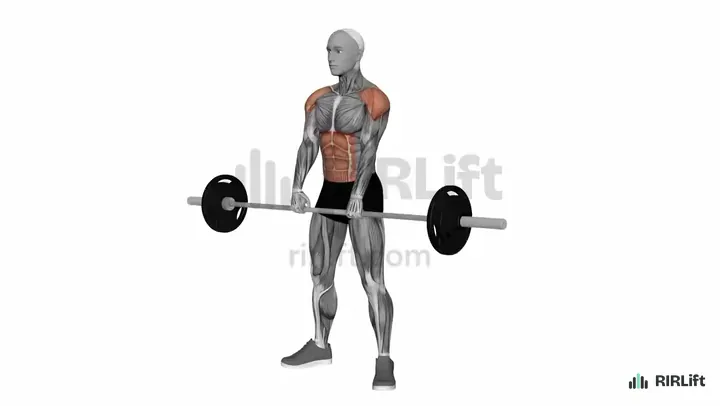
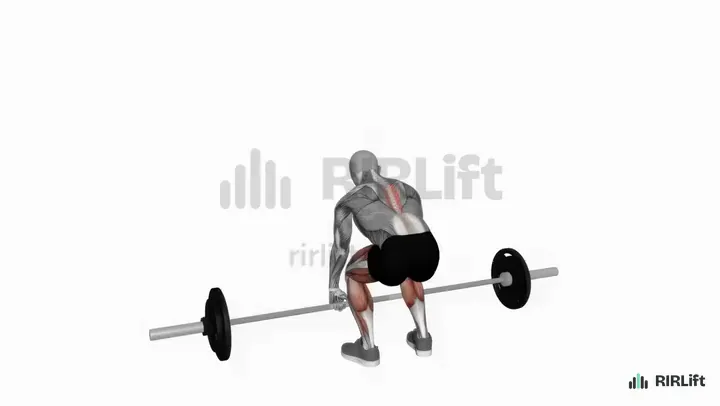
Hang Clean

Traps, Glutes, Hamstrings

Starting from the hang skips the slow pull off the floor and keeps the clean about the fast part: an aggressive hip and knee extension, which mirrors the push of a sprint stride or a takeoff. It is easier to learn than a full clean and gives track athletes most of the benefit.

How to do it

  1. Stand tall holding the bar at your thighs with a grip just outside your legs.
  2. Hinge slightly so the bar slides to just above your knees, shoulders over the bar.
  3. Jump hard through the hips and knees, shrugging as the bar rises along your body.
  4. Pull under, rotate your elbows forward, and catch the bar on your shoulders in a quarter squat, then stand.

Cues

  • Short hinge, big jump
  • Bar stays close
  • Elbows whip through

Common mistakes

  • Swinging the bar out in front: keep it brushing your thighs.
  • Turning it into a reverse curl with the arms: the hips do the lifting.

Swap for: Power Clean, Muscle Clean, Kettlebell Swing

Vertical power with a soft landing

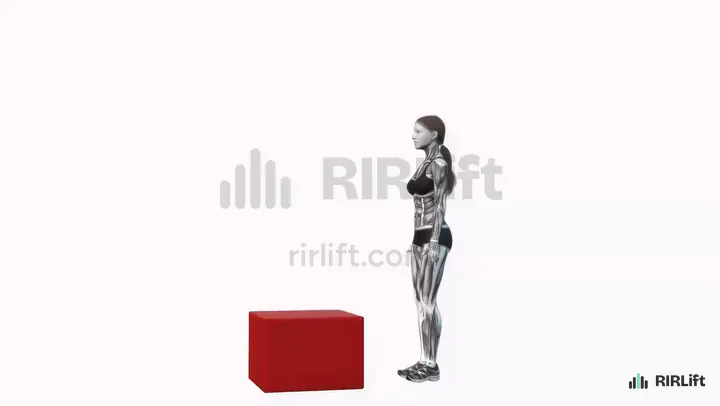
Box Jump

Quads, Glutes, Hamstrings

Box jumps train a maximal upward push with very little landing stress, because you land high on the box. That makes them the safest way to add jump training to weeks full of track work.

How to do it

  1. Face a stable box, feet under your hips, close enough to land on it comfortably.
  2. Swing your arms back and dip quickly.
  3. Explode upward with a big arm drive and land with both feet flat on the box.
  4. Stand up tall, step back down, and pause before the next jump.

Cues

  • Fast dip
  • Arms drive up
  • Land like a cat

Common mistakes

  • Choosing the highest box you can scramble onto: land in a quarter squat, not a deep one.
  • Rebounding straight into the next rep off the step-down: reset each time.

Swap for: Jump Squat, Frog Jump, Lateral Box Jump

Build a session with Box Jump

One-leg takeoff and landing

Single-Leg Jump

Quads, Glutes, Calves

Every stride and every jump takeoff happens on one leg. Side-to-side single-leg bounds train that push and the stiffness to land and go again, and they reveal side-to-side differences quickly.

How to do it

  1. Stand on one foot with your knee slightly bent and arms ready.
  2. Dip and push off sideways, driving your arms, to land on the other foot.
  3. Land with a soft knee and control it, then push straight back the other way.
  4. Keep alternating for the set.

Cues

  • Push the ground away
  • Control each landing
  • Knee tracks over toes

Common mistakes

  • Letting the knee cave in on landing: make the bounds smaller until it stays straight.
  • Doing too many contacts: a few crisp bounds beat a long sloppy set.

Swap for: Skater Hop, Single-Leg Box Jump, Box Jump

Full-body power and release

Medicine Ball Overhead Throw

Shoulders, Abs

A backward overhead throw makes you extend ankles, knees and hips together and fast, and because you release the ball there is no slowing down at the top. Sprinters use it for starts and jumpers for takeoff power; throwers use it for everything.

How to do it

  1. Hold a medicine ball at your waist, feet shoulder-width apart.
  2. Squat quickly to bring the ball down between your knees.
  3. Explode up onto your toes and swing the ball over your head.
  4. Let go as your arms pass your head so it flies up and behind you.

Cues

  • Hips launch it
  • Release overhead
  • Finish on your toes

Common mistakes

  • Muscling it with the arms and a bent back: power comes from the legs.
  • Too heavy a ball: the throw should be fast and high.

Swap for: Medicine Ball Slam, Kettlebell Swing, Med Ball Jump

Leg strength, both legs and one

A stronger squat raises the ceiling on how much force your legs can produce, and the split squat trains it on one leg, which is how you actually run and take off. Most track programs use one of each through the week.

Main bilateral leg strength

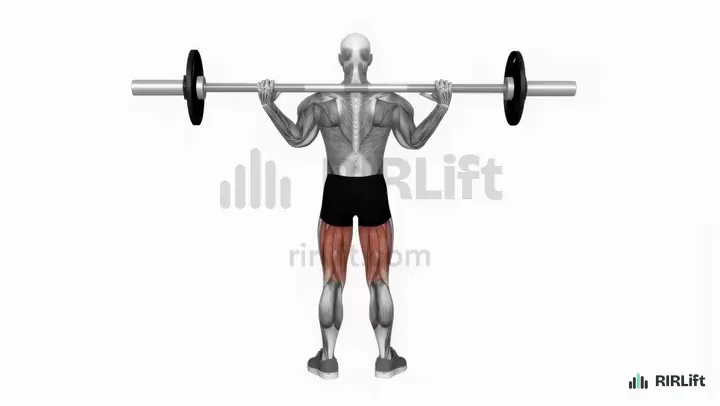
Barbell Back Squat

Quads, Glutes, Adductors

The back squat is the most loadable leg exercise there is, so it builds raw leg strength fastest. Sprinters and jumpers use it in the off-season and keep it heavy but brief in season.

How to do it

  1. Set the bar across your upper back, below the bony top of your shoulders, and grip it firmly.
  2. Step out of the rack and set your feet about shoulder-width with toes slightly turned out.
  3. Brace and sit down and back until your thighs reach at least parallel, knees following your toes.
  4. Drive up through your whole foot to standing.

Cues

  • Brace before every rep
  • Knees track your toes
  • Drive the floor away

Common mistakes

  • Coming up hips first and folding over: drive your back into the bar as you rise.
  • Losing depth as the weight climbs: keep the same depth or lower the load.

Swap for: Front Squat, Box Squat, Goblet Squat

Single-leg strength

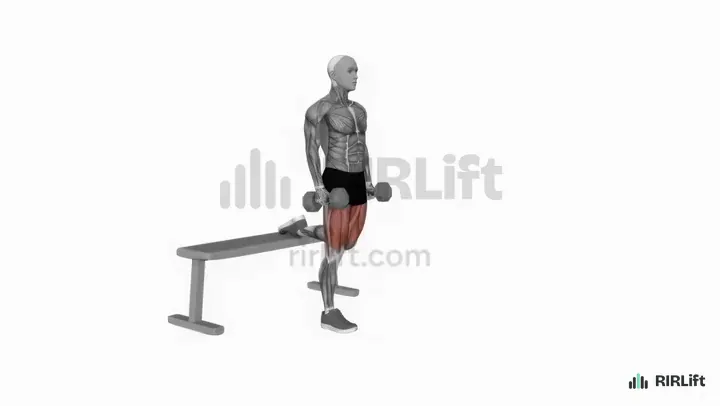
Bulgarian Split Squat

Quads, Glutes

With your back foot elevated, almost all the work falls on the front leg, so this builds single-leg strength without the heavy spinal load of a squat. It is a favorite in season and for distance runners for that reason.

How to do it

  1. Put the top of your back foot on a bench and step the other foot far enough forward that you can lower without the knee shooting ahead. Hold a dumbbell at each side.
  2. Sink down until your back knee is just above the floor.
  3. Keep most of your weight on the front heel and midfoot.
  4. Stand by pressing through the front foot. Do every rep, then switch legs.

Cues

  • Front foot does the work
  • Drop the back knee
  • Stay tall or lean slightly

Common mistakes

  • Bouncing off the bottom: control the descent and pause briefly.
  • Front heel lifting: move the front foot further out.

Swap for: Dumbbell Split Squat, Barbell Step-Up, Reverse Lunge

Hamstrings and glutes

At top speed your hamstrings work hardest as they brake the swinging leg before the foot lands, and your glutes drive the hip through. The Romanian deadlift and Nordic curl load the hamstrings in a long position, and the hip thrust builds glute strength without loading your back.

Hamstrings in a long position

Romanian Deadlift

Hamstrings, Glutes

The Romanian deadlift loads the hamstrings and glutes through a long range with a heavy bar, building the strength that holds up at top speed. It is one of the most common lifts in sprint programs.

How to do it

  1. Hold the bar at your hips with an overhand grip, knees soft.
  2. Send your hips back while the bar slides along your thighs, spine long.
  3. Stop when the hamstring stretch peaks, usually below the knee.
  4. Squeeze the glutes and return to tall.

Cues

  • Hips go back
  • Long spine
  • Bar on the legs

Common mistakes

  • Rounding the back to reach lower: stop where your hips stop.
  • Squatting the bar down: keep the knee bend constant.

Swap for: Dumbbell Romanian Deadlift, Single-Leg RDL, Good Morning

Eccentric hamstring strength

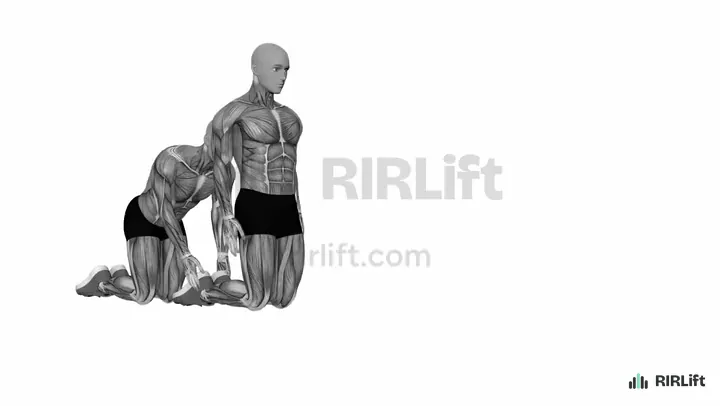
Nordic Hamstring Curl

Hamstrings

The Nordic curl trains the hamstrings while they lengthen under heavy load, which is the job they do as your leg swings forward before each foot strike. It needs only a partner or a fixed anchor for your ankles.

How to do it

  1. Kneel on a pad with a partner holding your ankles firmly down.
  2. Keep your body straight from knees to head and your hips extended.
  3. Lean forward slowly, resisting with your hamstrings for as long as you can.
  4. Catch yourself with your hands near the bottom and push back up to the start.

Cues

  • Straight line from knee to head
  • Lower as slowly as you can
  • Push off only at the end

Common mistakes

  • Bending at the hips to make it easier: keep the hips pushed forward.
  • Dropping fast after the first few inches: aim for a slow, steady lower.

Swap for: Glute Ham Raise, Lying Leg Curl, Stability Ball Leg Curl

Glute strength without back load

Hip Thrust

Glutes

The hip thrust loads the glutes hardest right at full hip extension, the position you push through at the end of each stride. It adds glute strength without more stress on the spine, which matters when you are already squatting and deadlifting.

How to do it

  1. Sit with your upper back against a bench and roll a padded bar over your hips.
  2. Plant your feet flat about hip-width, with your knees bent.
  3. Press your heels down and raise your hips until shoulders, hips and knees line up flat.
  4. Pause and squeeze, then lower your hips toward the floor.

Cues

  • Chin tucked
  • Shins vertical at the top
  • Squeeze, don't arch

Common mistakes

  • Arching the lower back to finish: tuck your pelvis instead.
  • Feet too far out so the hamstrings take over: bring them in.

Swap for: Dumbbell Hip Thrust, Glute Bridge, Single-Leg Hip Thrust

Calves and acceleration

Your foot and calf take every stride, and a stiff, strong ankle returns energy instead of soaking it up. Single-leg calf raises build that strength, and the sled push trains the forward lean and long ground contact of the first steps out of the blocks.

Calf and ankle strength

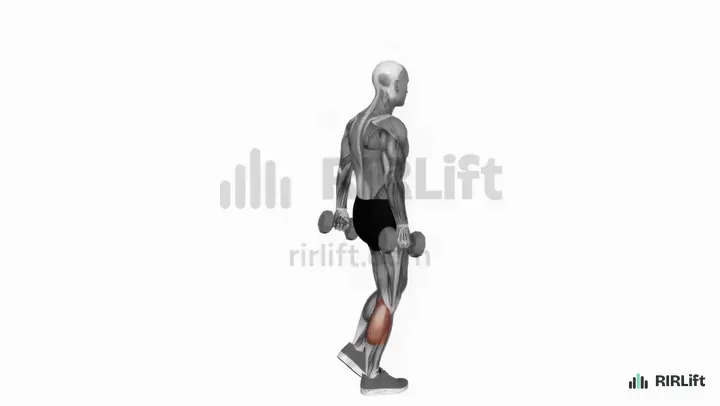
Single-Leg Calf Raise

Calves

Calves absorb and return force on every ground contact, and training them one leg at a time through a full range builds the ankle strength that holds up over a race or a season. Hold a dumbbell once bodyweight is easy.

How to do it

  1. Stand on one foot on the edge of a step, holding a dumbbell on that side and a rail with the other hand.
  2. Lower your heel slowly below the step until your calf stretches.
  3. Rise as high as you can onto the ball of your foot.
  4. Hold for a second at the top, then lower slowly.

Cues

  • Full stretch at the bottom
  • Pause at the top
  • Slow on the way down

Common mistakes

  • Bouncing out of the bottom: pause briefly in the stretch.
  • Rolling onto the little toe: keep weight through the big toe.

Swap for: Standing Calf Raise, Seated Calf Raise, Dumbbell Standing Calf Raise

Acceleration and forward lean

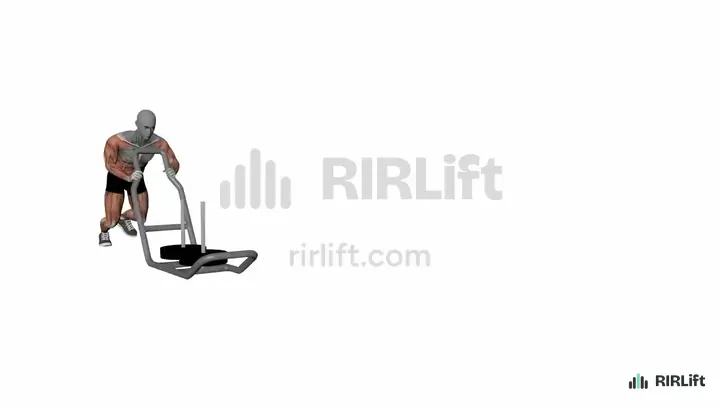
Sled Push

Quads, Glutes

Pushing a sled reinforces the forward lean and long, hard pushes of the first steps out of the blocks, without the pounding of extra sprints. Keep the load moderate so your stride stays like running.

How to do it

  1. Hold the sled's handles with your arms extended and lean forward so ankle, hip and shoulder line up.
  2. Drive one knee forward and push the ground back hard with the other foot.
  3. Take powerful, quick steps over the distance without your hips dropping.
  4. Rest fully before the next push.

Cues

  • Lean from the ankles
  • Push the ground behind you
  • Hips stay high

Common mistakes

  • Loading so heavy you shuffle: you should still be driving each knee.
  • Bending at the hips with the back rounded: keep one straight line.

Swap for: Sled Pull, Lateral Sled Drag, Box Jump

Build a session with Sled Push

Trunk and upper body

A trunk that stays still lets leg force move you forward instead of twisting you, and a strong upper back keeps your arm action powerful late in a race. Two trunk exercises and the pull-up are enough.

Anti-rotation

Pallof Press

Abs

Each stride tries to twist your torso, and the Pallof press trains your trunk to resist that. A quiet trunk turns more of your leg drive into forward speed.

How to do it

  1. Stand side-on to a cable set at chest height, handle held at your chest.
  2. Step out until there is tension and set a stable stance.
  3. Press your hands straight out in front of your chest and hold, staying square.
  4. Return to your chest slowly and repeat, then switch sides.

Cues

  • Stay square
  • Ribs down
  • Breathe out on the press

Common mistakes

  • Turning toward the cable: step closer or lighten it.
  • Leaning away to fight the load: stand tall.

Swap for: Dead Bug, Side Plank, Cable Woodchop

Trunk control with moving limbs

Dead Bug

Abs

The dead bug trains you to keep the trunk still while the arms and legs move, which is exactly what running asks of it. It is easy to recover from, so it fits any day.

How to do it

  1. Lie face up, arms reaching toward the ceiling and your hips and knees at 90 degrees.
  2. Press your lower back gently into the floor.
  3. Reach one arm overhead while you straighten the opposite leg toward the floor.
  4. Return and repeat on the other side, keeping your back flat throughout.

Cues

  • Back stays flat
  • Slow and controlled
  • Exhale as you reach

Common mistakes

  • Arching the back as the leg lowers: shorten the reach.
  • Rushing reps: the slower, the harder.

Swap for: Pallof Press, Plank, Alternating Leg Raise

Build a session with Dead Bug

Upper back and arm drive

Pull-Up

Lats

The pull-up builds the lats and upper back that support a strong arm swing late in a sprint, and it keeps your upper body balanced with the pressing many athletes add.

How to do it

  1. Hang from a bar with an overhand grip slightly wider than your shoulders.
  2. Pull your shoulder blades down and lead with your chest.
  3. Pull until your chin passes the bar.
  4. Lower to straight arms under control.

Cues

  • Chest to the bar
  • No kipping
  • Straight arms at the bottom

Common mistakes

  • Half reps at the bottom: start every rep from a full hang.
  • Swinging the legs: keep them still and controlled.

Swap for: Chin-Up, Lat Pulldown, Assisted Pull-Up

Build a session with Pull-Up

Put them together: example sessions

Each session below picks from the exercises above for one situation, with the sets, reps, rest and RIR filled in. Open one in the session builder to change a pick, price it from a recent set, and add it to RIRLift.

Session 1

Sprinters, jumpers and hurdlers, off-season

Open in the session builder
  • Workouts3× a week
  • Working sets51 a week
  • Per workout~50 min
  • EquipmentPlyo Box, Barbells, Adjustable Cable, Dumbbells +4

You run sprints, hurdles or jumps, it is the general preparation phase, and you can lift three times a week next to track sessions.

The off-season is the time to build strength, so each session pairs a power exercise with a heavy leg lift and a hamstring lift, at 1 to 2 reps in reserve on the big lifts. Jumps and throws come first and stay well short of fatigue, since slow jumps teach nothing. Lift on the same day as hard speed work, after it, so your easy days stay easy.

Day 1: Squat
ExerciseSets × repsRIRRest
Box Jump 4 × 3 4 1 min
Hang Clean2 warm-up sets first 4 × 3 2 2:30 min
Barbell Back Squat2 warm-up sets first 4 × 4–6 2 3 min
Nordic Hamstring Curl 3 × 4–6 2 2 min
Pallof PressPer side. 3 × 8–10 2 1 min

Open Day 1: Squat in the session builder

Day 2: Single leg
ExerciseSets × repsRIRRest
Single-Leg JumpReps per side. 3 × 4–5 4 1 min
Bulgarian Split SquatPer leg. 3 × 6–8 2 2 min
Hip Thrust 3 × 6–8 1 2 min
Single-Leg Calf RaisePer leg. 3 × 8–12 1 1 min
Pull-Up 3 × 5–8 1 2 min

Open Day 2: Single leg in the session builder

Day 3: Hinge
ExerciseSets × repsRIRRest
Medicine Ball Overhead Throw 4 × 3 4 1 min
Hang Clean 3 × 2–3 2 2:30 min
Romanian Deadlift 4 × 5–8 2 2:30 min
Sled PushOne 15-20 m push per set. 4 × 1 3 2 min
Dead BugPer side. 3 × 8–10 2 45 s

Open Day 3: Hinge in the session builder

How to run it
Lift after your speed or jump sessions on three days a week, keeping one easy track day before your next speed session.
How to progress
Add weight to squats, cleans and Romanian deadlifts when every set reaches the top of the range at the target reps in reserve. For Nordic curls, lower more slowly before adding reps.

Session 2

Competition season, two short sessions

Open in the session builder
  • Workouts2× a week
  • Working sets19 a week
  • Per workout~30 min
  • EquipmentBarbells, Plyo Box, Dumbbells, Adjustable Cable

You compete most weekends and the track work is getting faster and more intense.

When meets and fast sessions take priority, lifting only needs to hold the strength you built. These sessions halve the volume, keep the loads heavy, and stop at 2 to 3 reps in reserve so you leave the gym fresher than you came in. Plyometrics drop because the track already supplies plenty of fast contacts.

Heavy
ExerciseSets × repsRIRRest
Hang Clean2 warm-up sets first 3 × 2 3 2:30 min
Barbell Back Squat2 warm-up sets first 3 × 3–4 2 3 min
Romanian Deadlift 2 × 5 3 2:30 min
Single-Leg Calf RaisePer leg. 2 × 8–10 2 1 min

Open Heavy in the session builder

Light
ExerciseSets × repsRIRRest
Box Jump 3 × 2 4 1 min
Bulgarian Split SquatPer leg. 2 × 5–6 3 2 min
Nordic Hamstring Curl 2 × 3–4 3 2 min
Pallof PressPer side. 2 × 8 3 45 s

Open Light in the session builder

How to run it
Do the heavy session early in the week, after a speed session, and the lighter one at least three days before your meet. In a week with a Tuesday or Wednesday race, skip the second session.
How to progress
Keep the loads steady. If everything feels quick and the reps in reserve are higher than written, add a little weight; if you feel flat at practice, drop a set.

Session 3

Middle and long distance

Open in the session builder
  • Workouts2× a week
  • Working sets24 a week
  • Per workout~30 min
  • EquipmentDumbbells, Barbells, Plyo Box, Flat Bench +1

You run 800 m and up, put in high weekly mileage, and want strength work that supports your running instead of tiring it.

Distance runners get the most from single-leg strength, hamstrings and calves done heavy enough to matter and short enough not to cost runs. Sets stay at 2 reps in reserve and there are no maximal jumps, since your running already provides thousands of ground contacts. Two sessions of about 40 minutes fit after easy runs.

Session A
ExerciseSets × repsRIRRest
Bulgarian Split SquatPer leg. 3 × 6–10 2 90 s
Romanian Deadlift 3 × 6–8 2 2 min
Single-Leg Calf RaisePer leg. 3 × 10–15 2 1 min
Dead BugPer side. 3 × 8–10 2 45 s

Open Session A in the session builder

Session B
ExerciseSets × repsRIRRest
Box Jump 3 × 3 4 1 min
Hip Thrust 3 × 8–10 2 90 s
Nordic Hamstring Curl 3 × 3–5 2 2 min
Pull-Up 3 × 5–8 2 90 s

Open Session B in the session builder

How to run it
Lift after an easy run or on a day off, never the day before a workout or race. Keep both sessions in the same week at least two days apart.
How to progress
Add weight when all sets reach the top of the range at 2 reps in reserve. Leave the program alone in race weeks except to drop a set from each lift.

Make it fit you

Questions

Should track athletes lift weights?

Yes. Lifting raises the force your legs can produce, which helps acceleration, top speed and jumping, and strong hamstrings and calves handle the load of fast running better. Most programs lift two or three times a week depending on the season.

What is a good gym workout for sprinters?

Jumps or medicine ball throws first, then a hang clean, a back squat or split squat, a Romanian deadlift or Nordic curl, and calf and trunk work. The off-season plan on this page lays out three of those sessions.

How many days a week should track athletes lift?

Two to three in the off-season and two in season is the most common pattern. Distance runners usually do two shorter sessions year-round.

Do distance runners need strength training?

It helps. Two short sessions of single-leg, hamstring and calf work make each stride more economical and help the legs hold up to mileage, without adding the bulk runners worry about.

Should you lift before or after track practice?

After, on the same days as hard speed or jump work, so your speed is trained fresh and your easy days remain easy. Lifting before speed work leaves your legs too tired to run fast.