
How to warm up for bench press: drills, then ramp-up sets
Published October 24, 2026
To warm up for bench press, row easy for 3 minutes, do 15 band pull-aparts, 12 cable face pulls and 10 push-up pluses, then ramp up on the bench itself: the empty bar for 10, then about 50 percent for 5, 70 percent for 3 and 85 percent for 1 or 2, resting a minute or so between. The drills take 5 minutes; the ramp-up sets do the real warming.
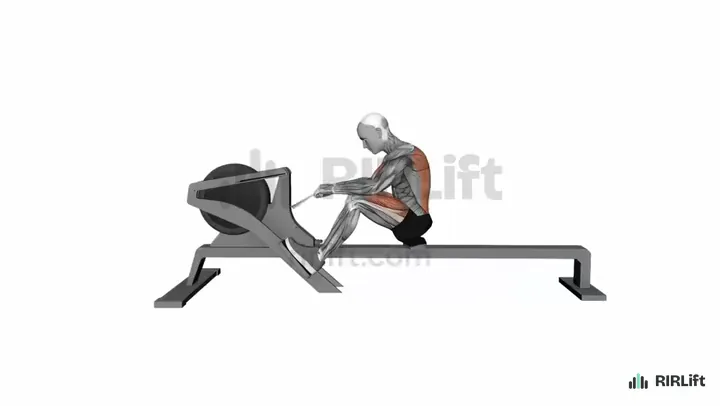
- Rowing Machine Quads, Hamstrings, Glutes, Lats
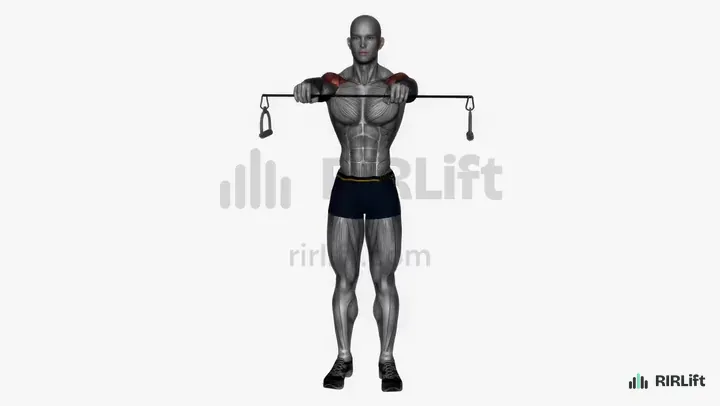
- Band Pull-Apart Shoulders, Upper Back
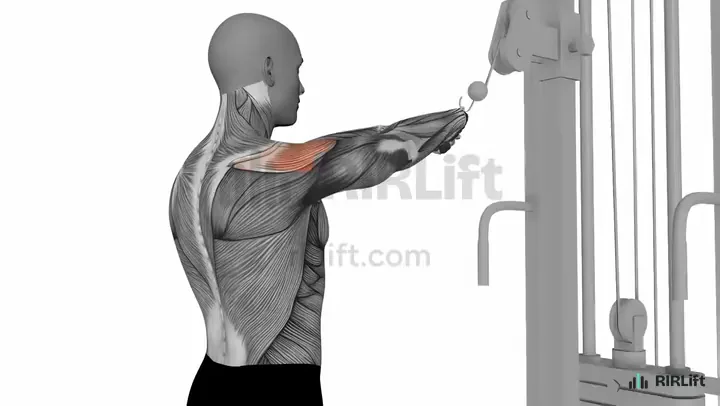
- Face Pull Shoulders, Upper Back
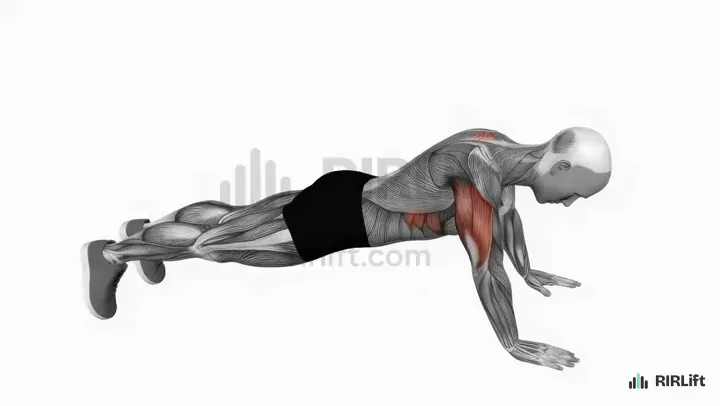
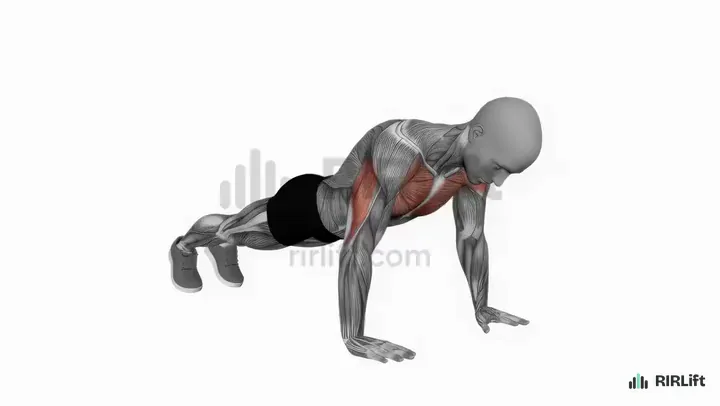
- Push-Up Plus Chest
- Explosive Push-Up Chest
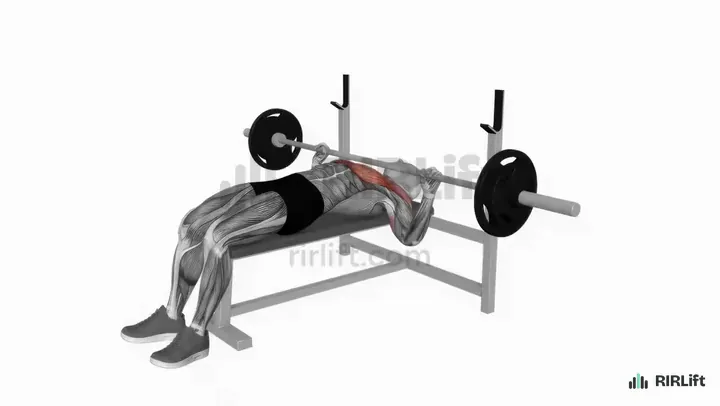
- Barbell Bench Press Chest
Put them together: example sessions
Each session below picks from the exercises above for one situation, with the sets, reps, rest and RIR filled in. Open one in the session builder to change a pick, price it from a recent set, and add it to RIRLift.
-
Session 1
Heavy bench day: sets of 3 to 5
Your main bench sets are heavy triples to fives and you want every one to feel sharp.
2× a week · 20 sets a week · ~25 min
-
Session 2
Volume bench day: sets of 8 to 12
Your bench sets are moderate weights for more reps.
2× a week · 14 sets a week · ~15 min
-
Session 3
Testing a one-rep max
You are testing your heaviest single or a new rep record.
1× a week · 7 sets a week · ~25 min
Session 1
Heavy bench day: sets of 3 to 5
- Workouts2× a week
- Working sets20 a week
- Per workout~25 min
- EquipmentRowing Machine, Resistance Bands, Adjustable Cable, Barbells +1
Your main bench sets are heavy triples to fives and you want every one to feel sharp.
Heavy sets need more ramp-up steps so the jump to the working weight is small, so this plan uses 4 warm-up sets of the bench after the drills and three fast push-ups to prime speed. Working sets stop 2 reps short of failure, which keeps bar speed high across all of them.
| Exercise | Sets × reps | RIR | Rest |
|---|---|---|---|
| Rowing MachineSeconds. Easy. 2 rounds back to back. | 2 × 45 | 4 | 0 s |
| Band Pull-Apart | 1 × 15 | 4 | 15 s |
| Face PullLight stack. | 1 × 12 | 4 | 15 s |
| Push-Up Plus | 1 × 10 | 4 | 15 s |
| Explosive Push-UpFast. Stop if they slow. | 1 × 3 | 4 | 30 s |
| Barbell Bench Press4 warm-up sets firstRamp: bar x10, ~50% x5, ~70% x3, ~85% x1-2. | 4 × 3–5 | 2 | 3 min |
- How to run it
- Run the drill blocks straight through, then take the four ramp-up sets resting 60 to 90 seconds, and 3 minutes before the first working set.
- How to progress
- Add 5 pounds when all sets reach 5 reps with 2 in reserve. The ramp percentages rise with it.
Session 2
Volume bench day: sets of 8 to 12
- Workouts2× a week
- Working sets14 a week
- Per workout~15 min
- EquipmentRowing Machine, Resistance Bands, Dumbbells, Barbells +1
Your bench sets are moderate weights for more reps.
Lighter working weights need fewer steps, so two ramp-up sets do the job and the drills carry more of the warm-up. The rotator cuff set stays in because high-rep sets ask the shoulder to steady the bar for longer.
| Exercise | Sets × reps | RIR | Rest |
|---|---|---|---|
| Rowing MachineSeconds. Easy. | 1 × 60 | 4 | 0 s |
| Band Pull-Apart | 1 × 15–20 | 4 | 15 s |
| Dumbbell External RotationPer arm. | 1 × 10 | 4 | 15 s |
| Push-Up Plus | 1 × 10 | 4 | 15 s |
| Barbell Bench Press2 warm-up sets firstRamp: bar x10, ~60% x6. | 3 × 8–12 | 2 | 2 min |
- How to run it
- Take the drills, then the bar for 10 and about 60 percent for 6, then start working sets.
- How to progress
- Add reps until all sets hit 12 with 2 in reserve, then add 5 to 10 pounds and go back to 8.
Session 3
Testing a one-rep max
- Workouts1× a week
- Working sets7 a week
- Per workout~25 min
- EquipmentRowing Machine, Resistance Bands, Adjustable Cable, Medicine Ball +2
You are testing your heaviest single or a new rep record.
On a test day the ramp-up is longer, five steps, so the last warm-up single sits close to the target, and the speed primer moves to the chest throw. Every warm-up set stays far from failure so all your strength is left for the attempt.
| Exercise | Sets × reps | RIR | Rest |
|---|---|---|---|
| Rowing MachineSeconds. Easy. 2 rounds back to back. | 2 × 45 | 4 | 0 s |
| Band Pull-Apart | 1 × 15 | 4 | 15 s |
| Face Pull | 1 × 12 | 4 | 15 s |
| Med Ball Chest ThrowFast. | 1 × 4 | 4 | 30 s |
| Barbell Bench Press5 warm-up sets firstRamp: bar x10, 50% x5, 65% x3, 80% x1, 90% x1. | 2 × 1 | 0 | 5 min |
- How to run it
- Follow the ramp, then take 3 to 5 minutes before the attempt. One or two attempts are enough.
- How to progress
- Use the result to set the weights of your next training block; the warm-up itself does not change.
Make it fit you
-
Dumbbell bench instead
Keep the drills and ramp on the dumbbells: a light pair for 10, a medium pair for 5, then the working pair. Kicking light dumbbells into place also rehearses the setup.
-
Shoulder feels cranky on the bench
Double the face pulls and external rotations, and bench with a slightly narrower grip on the ramp-up sets to find a path that feels smooth.
-
Short on time
Skip the rower and do the pull-aparts and push-up pluses only, then ramp up. Ramp-up sets are the part you should not cut.
-
Pull-ups before bench
A light set of pull-ups or rows can replace the face pulls. Keep it easy, several reps short of failure, so it does not tire your upper back.
-
Log the working sets in RIR
Note how many reps were left on each working set. RIRLift picks the next session's bench weight from those numbers, so the ramp-up sets can stay light and unlogged.
Questions
What is the best way to warm up for bench press?
A few minutes of easy cardio, one light set each of band pull-aparts, face pulls and push-up pluses, then ramp-up sets of the bench: the empty bar, then roughly 50, 70 and 85 percent of your working weight with fewer reps each step.
How many warm-up sets should I do before bench press?
Two for sets of 8 or more, three or four for heavy sets of 3 to 5, and five before a one-rep max test. Keep every warm-up set well short of failure.
Should I do push-ups before bench press?
A few, yes: push-up pluses or 3 fast push-ups are good primers. A hard set of push-ups to failure will cost you bench reps, so keep them easy.
Do pull-ups go before or after bench press?
Either works. A light set before benching warms the upper back; hard sets are better after, so they do not tire the muscles that hold your shoulder blades in place.
How long should I rest between bench warm-up sets?
About 60 seconds between the light ones and 90 seconds before the heavier ones, then 2 to 3 minutes before your first working set.
Do I need to stretch before benching?
No long holds are needed. The moving drills and ramp-up sets give your shoulders the range the bench uses.
Related templates
-
Warm-up sets
The full method for building ramp-up sets before any lift.
-
The best workout for chest, matched to your setup
Chest sessions built around the bench press.
-
How to warm up for chest day
A warm-up for chest days that open with dumbbells or machines.
-
Push day warm-up: get chest, shoulders and triceps ready in 7 minutes
For days that combine bench, overhead pressing and triceps.
-
How to use reps in reserve (RIR)
How to judge 2 reps in reserve on the working sets.