
Ab exercises at the gym: machines, cables and stations
Published October 19, 2026
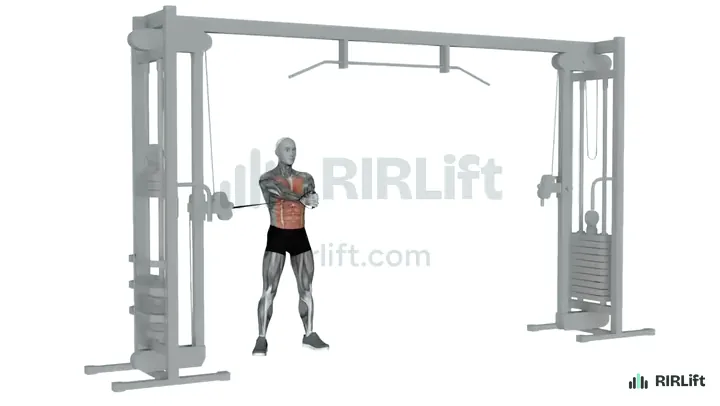
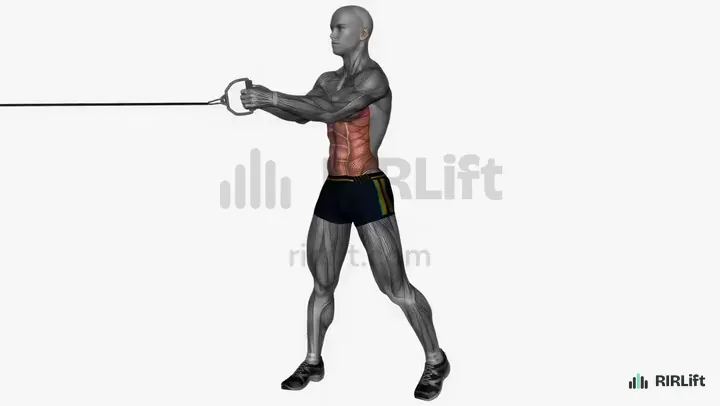
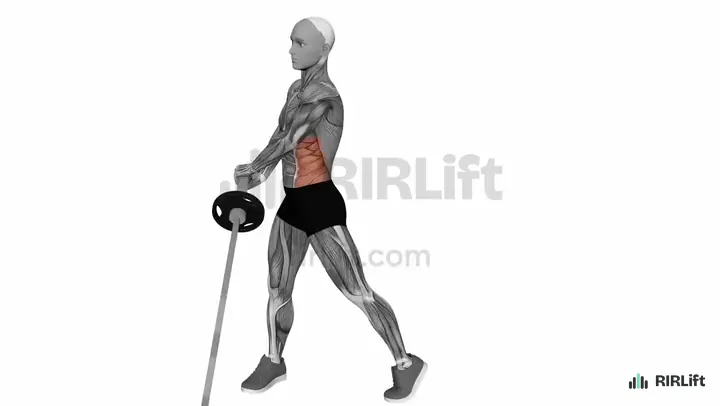
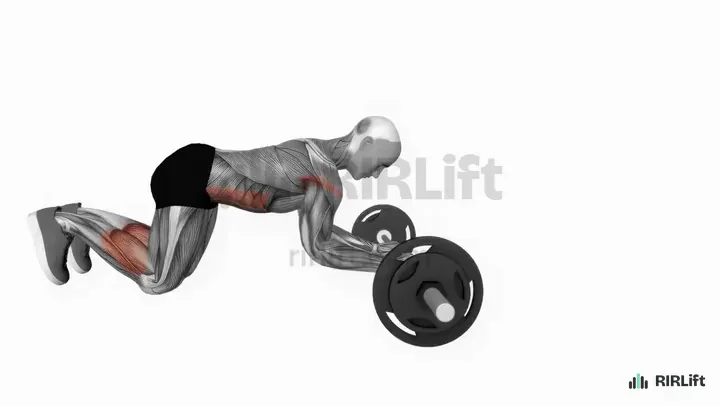
The best ab exercises at the gym use what home lacks: the cable crunch and ab crunch machine to load the six-pack with real weight, the captain's chair and hanging leg raise for the lower abs, the Pallof press, cable woodchop and landmine twist for the obliques, and the barbell rollout for bracing. Because these can be loaded and progressed like any lift, train abs in the 8 to 15 rep range, 2 to 4 sets per move and 6 to 10 hard sets per session, ending 1 to 2 reps short of failure, two or three times a week.
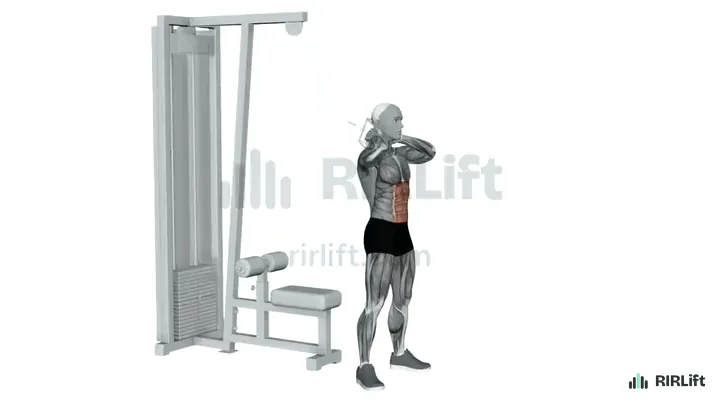
- Cable Crunch Abs
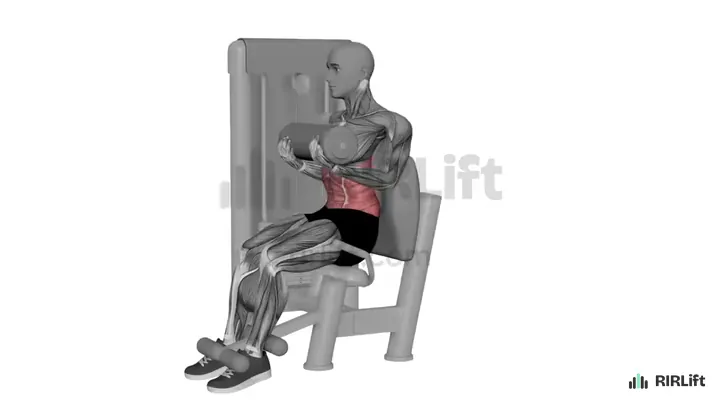
- Machine Crunch Abs
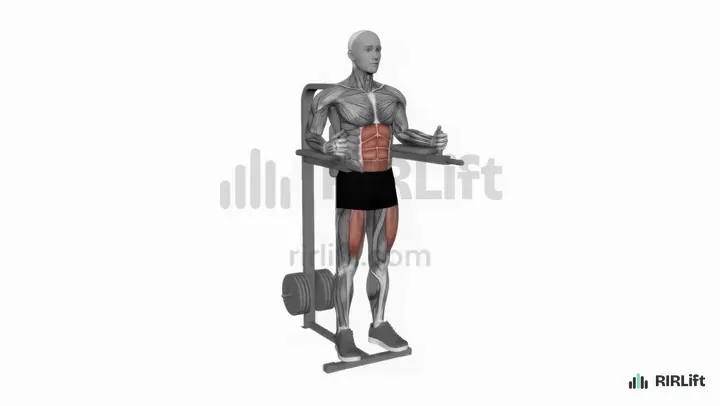
- Captain's Chair Knee Raise Abs
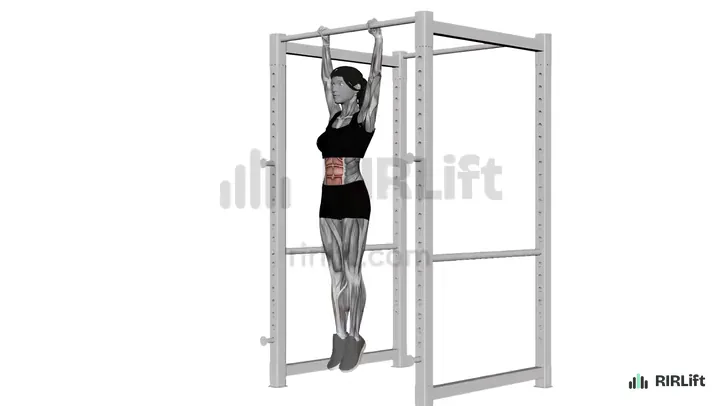
- Hanging Leg Raise Abs
- Pallof Press Abs
- Cable Woodchop Abs
- Landmine Twist Abs
- Barbell Rollout Abs
Put them together: example sessions
Each session below picks from the exercises above for one situation, with the sets, reps, rest and RIR filled in. Open one in the session builder to change a pick, price it from a recent set, and add it to RIRLift.
-
Session 1
One cable station, busy gym, 15 minutes
Your gym is crowded and you can claim one cable tower for a quarter hour after your workout.
2× a week · 18 sets a week · ~20 min
-
Session 2
A dedicated ab day, full gym
You want a separate weekly ab session and have time to move between stations.
1× a week · 14 sets a week · ~30 min
-
Session 3
New to the gym, machines first
You have just joined a gym and want ab exercises you can set up without help.
2× a week · 16 sets a week · ~15 min
Session 1
One cable station, busy gym, 15 minutes
- Workouts2× a week
- Working sets18 a week
- Per workout~20 min
- EquipmentAdjustable Cable
Your gym is crowded and you can claim one cable tower for a quarter hour after your workout.
One cable stack covers all three things the abs do: the crunch with the rope up high, the woodchop from the same pulley, and the hip flexion with an ankle strap at the bottom. You never have to give up the station. Each move is loaded like a lift in the 8 to 15 range at 1 RIR, and 9 sets twice a week is plenty on top of lifting.
| Exercise | Sets × reps | RIR | Rest |
|---|---|---|---|
| Cable CrunchPause at the bottom. | 3 × 10–15 | 1 | 1 min |
| Cable WoodchopPer side. | 3 × 8–12 | 1 | 45 s |
| Standing Cable Hip FlexionPer leg. | 3 × 10–15 | 1 | 45 s |
- How to run it
- Do it after two of your regular workouts. Set the pulley high for the crunch and chop, then lower it for the hip flexion.
- How to progress
- Add reps until all sets reach 15, then move the pin one plate down.
Session 2
A dedicated ab day, full gym
- Workouts1× a week
- Working sets14 a week
- Per workout~30 min
- EquipmentPull-Up Bar, Ab Crunch Machine, Landmine, Barbells +1
You want a separate weekly ab session and have time to move between stations.
A full ab day uses the strongest version of each move: the hanging leg raise for the lower abs, the ab crunch machine for heavy curling, the landmine twist for rotation and the barbell rollout and heavy suitcase carry for bracing. With a whole session to spend, it gets 14 sets, more than any finisher. Most sets end at 1 RIR; the rollout stays at 2 so the back never sags.
| Exercise | Sets × reps | RIR | Rest |
|---|---|---|---|
| Hanging Leg Raise | 3 × 6–12 | 1 | 90 s |
| Machine Crunch1 warm-up set first | 3 × 8–12 | 1 | 75 s |
| Landmine TwistPer side. | 3 × 8–12 | 1 | 1 min |
| Barbell Rollout | 3 × 6–10 | 2 | 90 s |
| Dumbbell Suitcase CarrySteps per hand. | 2 × 20–30 | 1 | 1 min |
- How to run it
- Do it once a week on a day without heavy squats or deadlifts. Add a short finisher from the cable plan on a second day if you want more.
- How to progress
- Each week, add a rep or a plate to the crunch and twist and a few seconds' control to the rollout. Swap the leg raise for strict knee raises if your form breaks.
Session 3
New to the gym, machines first
- Workouts2× a week
- Working sets16 a week
- Per workout~15 min
- EquipmentAb Crunch Machine, Dip Bar, Adjustable Cable, Decline Bench
You have just joined a gym and want ab exercises you can set up without help.
Machines and the captain's chair are the easiest stations to learn: the ab crunch machine sets the path, the captain's chair supports your back, and the Pallof press only asks you to hold still. A decline crunch gives you one free move to learn. Two sets of each at 2 RIR keeps soreness low while you learn the stations.
| Exercise | Sets × reps | RIR | Rest |
|---|---|---|---|
| Machine Crunch | 2 × 10–15 | 2 | 1 min |
| Captain's Chair Knee Raise | 2 × 8–15 | 2 | 1 min |
| Pallof PressPer side, 2 s hold. | 2 × 8–12 | 2 | 45 s |
| Decline Crunch | 2 × 10–15 | 2 | 1 min |
- How to run it
- Do it twice a week after your main workout. Start each move with the lightest weight and work up in the first set.
- How to progress
- When a move hits the top of its range at 2 RIR, add weight or switch to its next step: captain's chair to hanging raises, Pallof press to the cable woodchop.
Make it fit you
-
Ab machine is always taken
Use the cable crunch or a plate sit-up instead; both load the same curl. The cable plan is built so you never need a second station.
-
Hanging raises make you swing
Move to the captain's chair, where the pad stops the swing, and go back to the bar once you can do 15 strict reps.
-
Abs train after legs
Put the heavy rollout and carry on upper-body days, and keep the crunch and Pallof press after squats and deadlifts, when your lower back has done enough.
-
You want a visible six-pack
Loaded ab training makes the muscle thicker, which helps it show, but body fat decides when you see it. Keep the sets hard and manage your diet; there is no fat-burning ab exercise.
-
Lower back sore on rollouts
Roll a shorter distance or swap it for the Pallof press for a few weeks. Both train the abs to stop your back from moving.
-
Log the RIR, not just the weight
Write down how many reps you had left on each set. In RIRLift you log RIR next to the weight and reps, and it suggests the next load from it, so you know when the cable or crunch machine is ready for another plate.
Questions
Which machines at the gym are for abs?
The seated ab crunch machine, the cable stack with a rope, the decline bench and the captain's chair. A pull-up bar and a landmine also give you strong ab moves even though they are not ab machines.
What is a good ab workout to do at the gym?
A cable crunch, a captain's chair knee raise and a Pallof press, 3 sets each at 1 to 2 reps short of failure. That covers curling, the lower abs and anti-rotation in about 15 minutes.
What are good exercises for the lower abs at the gym?
The captain's chair knee raise, the hanging leg raise and the standing cable hip flexion. All of them pull the legs and pelvis up toward the ribs, which works the lower part of the abs harder.
Should I do an ab day at the gym?
Either works. A weekly ab day with 10 to 15 sets or a short block after two other workouts gives about the same weekly volume. Pick the one you will actually do.
Can I get a six-pack in 2 weeks?
Only if you are already lean. Two weeks of gym ab work makes your abs stronger, but most people need months of fat loss to see the outline.
How heavy should I go on ab machines?
Pick a weight you can curl for 8 to 15 controlled reps with 1 to 2 left in reserve. If you can do 25, it is too light to build much muscle.
Related templates
-
Core exercises at the gym: machines, cables, bars and free weights
Gym core work, including the lower back and carries.
-
Ab crunch machine: how to use it and get your abs to do the work
Setup, form and sets for the seated crunch machine.
-
Ab exercises at home, with or without equipment
Ab moves for floor, bar and ab wheel at home.
-
The best workout for abs, for your situation
Complete ab programs with weekly structure.