
Ab exercises at home, with or without equipment
Published October 19, 2026
The best ab exercises at home are the crunch and reverse crunch for the six-pack muscle, the dead bug, plank and ab wheel rollout for bracing, the side plank and woodchop for the obliques, and the hanging knee raise if you own a pull-up bar. You need no equipment to start: pick three or four moves, do 2 to 4 sets of each two or three times a week, and stop each set 1 to 2 reps short of failure. Make it harder by adding reps, slowing down or moving to a harder version.
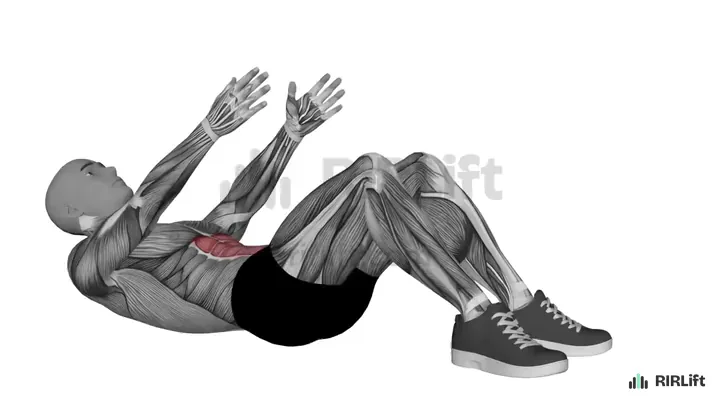
- Crunch Abs
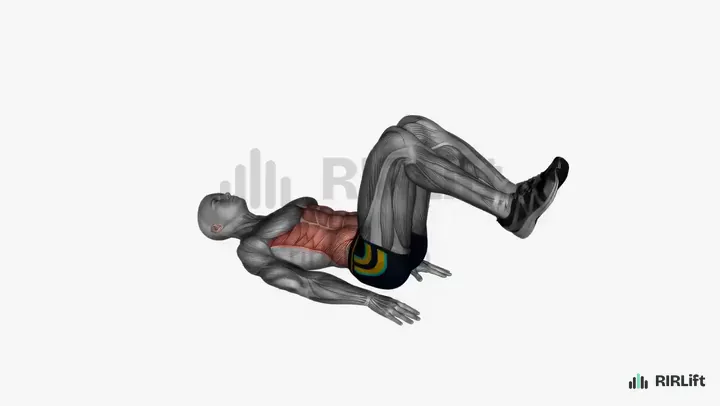
- Reverse Crunch Abs
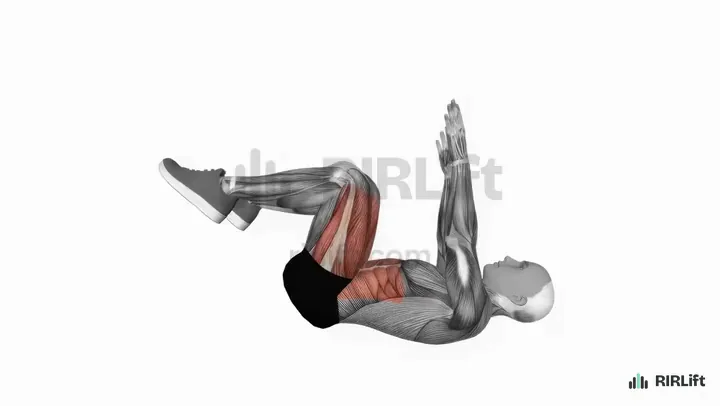
- Dead Bug Abs
- Plank Abs
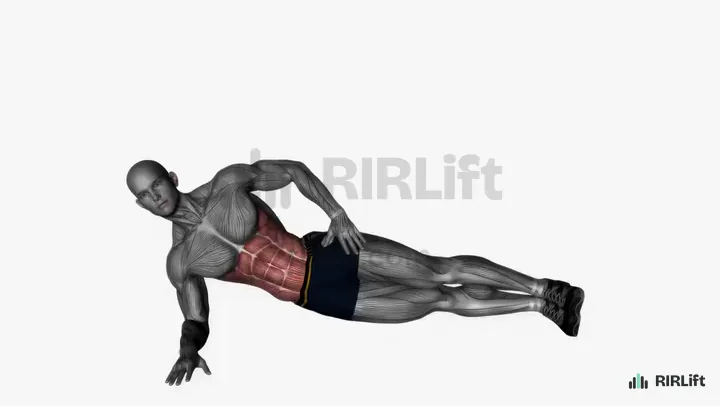
- Side Plank Abs
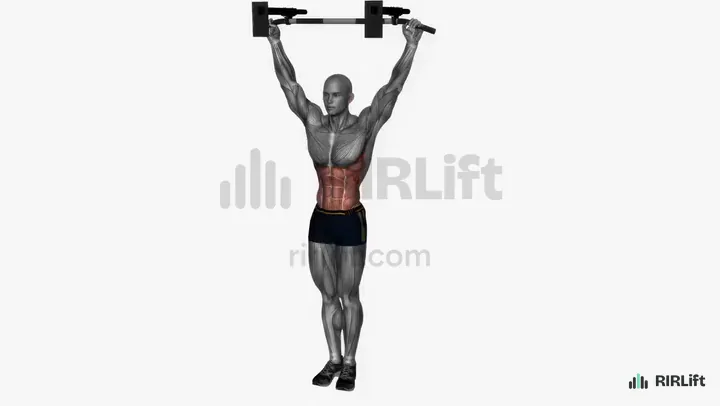
- Hanging Knee Raise Abs
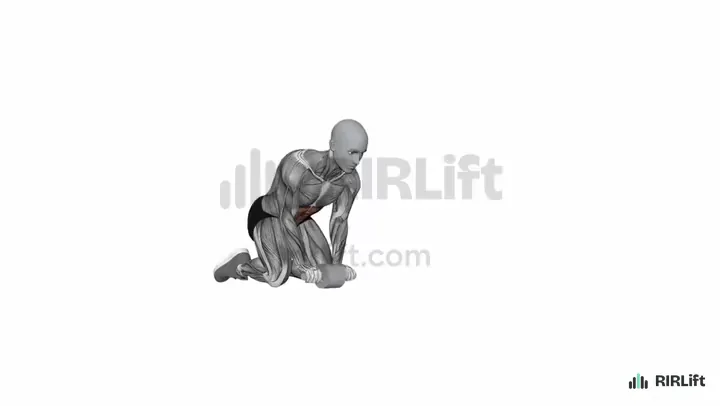
- Ab Wheel Rollout Abs
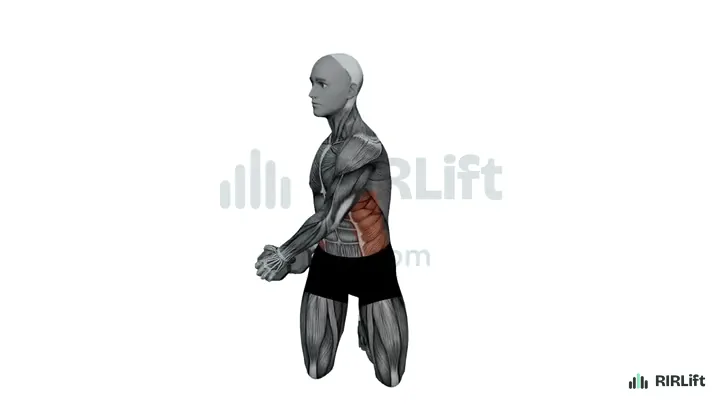
- Dumbbell Woodchop Abs
Put them together: example sessions
Each session below picks from the exercises above for one situation, with the sets, reps, rest and RIR filled in. Open one in the session builder to change a pick, price it from a recent set, and add it to RIRLift.
-
Session 1
No equipment, a mat and 20 minutes
You train in a living room with no gear and want a short ab session you can repeat.
3× a week · 36 sets a week · ~20 min
-
Session 2
A doorway pull-up bar and an ab wheel
You own a pull-up bar and an ab wheel and want your abs stronger, not just tired.
2× a week · 16 sets a week · ~15 min
-
Session 3
One dumbbell, abs after full-body training
You already lift at home with dumbbells and want a 12-minute ab block at the end of your sessions.
2× a week · 20 sets a week · ~20 min
Session 1
No equipment, a mat and 20 minutes
- Workouts3× a week
- Working sets36 a week
- Per workout~20 min
- EquipmentBodyweight
You train in a living room with no gear and want a short ab session you can repeat.
Without weights, the crunch, reverse crunch, dead bug and twist give you every direction the abs work in, and none needs anything but a mat. Bodyweight sets are cheap to recover from, so you can do this three times a week, 12 hard sets each time. Reps run high because there is no load to add: stop each set with 1 rep left, and keep the dead bug at 2 RIR so its form stays clean.
| Exercise | Sets × reps | RIR | Rest |
|---|---|---|---|
| A1 CrunchPause at the top. | 3 × 12–25 | 1 | 30 s |
| A2 Reverse CrunchHips off the floor. | 3 × 10–20 | 1 | 1 min |
| Dead BugPer side. | 3 × 8–12 | 2 | 45 s |
| Russian TwistPer side, slow. | 3 × 10–20 | 1 | 45 s |
- How to run it
- Do the session three times a week on non-consecutive days. Pair the crunch with the reverse crunch and rest after both.
- How to progress
- Add reps until every set hits the top of the range, then slow the lowering to three seconds or pause at the top.
Session 2
A doorway pull-up bar and an ab wheel
- Workouts2× a week
- Working sets16 a week
- Per workout~15 min
- EquipmentPull-Up Bar, Ab Wheel
You own a pull-up bar and an ab wheel and want your abs stronger, not just tired.
The bar and wheel add load bodyweight floor work cannot: hanging raises lift the full weight of your legs and rollouts stretch the abs at long range. Because they are harder, sets drop to 8 to 15 reps and you do two sessions a week instead of three. Keep the rollout at 2 RIR, since its last reps are when the back sags; the raises go to 1 RIR.
| Exercise | Sets × reps | RIR | Rest |
|---|---|---|---|
| Hanging Knee RaiseDead stop at the bottom. | 3 × 8–15 | 1 | 75 s |
| Ab Wheel RolloutFrom the knees. | 3 × 6–12 | 2 | 90 s |
| Crunch | 2 × 12–20 | 1 | 45 s |
Open Abs A in the session builder
| Exercise | Sets × reps | RIR | Rest |
|---|---|---|---|
| Hanging Leg Raise | 3 × 6–12 | 1 | 90 s |
| Ab Wheel RolloutA little farther than A. | 3 × 6–12 | 2 | 90 s |
| Side PlankSeconds per side. | 2 × 20–45 | 1 | 45 s |
Open Abs B in the session builder
- How to run it
- Alternate Abs A and Abs B, two sessions a week. Do them after upper-body training or on their own.
- How to progress
- Raise the reps to 15 on each move, then go to the harder version: knee raise to leg raise, kneeling rollout to a longer roll.
Session 3
One dumbbell, abs after full-body training
- Workouts2× a week
- Working sets20 a week
- Per workout~20 min
- EquipmentDumbbells
You already lift at home with dumbbells and want a 12-minute ab block at the end of your sessions.
Lifting already braces your trunk, so this block adds what lifting leaves out: rotation with the woodchop, side bending resisted by the carry, and the curling motion of the reverse crunch. A single dumbbell is enough for all of it. Three moves at 2 to 3 sets keep it short enough to do twice a week after training, with the carries at 1 RIR on grip and the chops at 2 RIR so the trunk does the work.
| Exercise | Sets × reps | RIR | Rest |
|---|---|---|---|
| Dumbbell WoodchopPer side. | 3 × 8–12 | 2 | 45 s |
| Dumbbell Suitcase CarrySteps per hand. | 3 × 20–40 | 1 | 1 min |
| Reverse Crunch | 2 × 10–20 | 1 | 45 s |
| Dead BugPer side. | 2 × 8–12 | 2 | 45 s |
- How to run it
- Add it to the end of two lifting sessions a week. Rest only as long as needed to switch sides.
- How to progress
- Use a heavier dumbbell for the carry first; add reps to the chop and crunch until the top of the range, then go heavier.
Make it fit you
-
Brand new to ab training
Start with the dead bug, the reverse crunch and a knee-down side plank, two sets each. Move to full side planks and the ab wheel once those feel controlled.
-
You want visible abs
Training builds the muscle, but whether you see it depends on body fat, which comes down with your diet across the whole body. Keep the sets hard and stay patient; extra daily reps do not burn belly fat.
-
Neck hurts on crunches
Rest your tongue on the roof of your mouth and keep a fist of space under the chin, or swap the crunch for the reverse crunch and dead bug, which leave your head on the floor.
-
Lower back aches on leg raises
Bend the knees and shorten the range until your back stays on the mat. The lying knee raise and dead bug load the same muscles with less leverage.
-
Everything has become easy
Make one change at a time: slow the lowering, add a pause, or move to the next version of the move. Hold a light dumbbell for crunches if you have one.
-
Log the RIR, not just the reps
Note how many reps you could still have done on each set. RIRLift logs the RIR with every set and uses it to tell you when a move is ready for more reps, a weight or a harder version.
Questions
What are the best ab exercises to do at home?
The reverse crunch, the dead bug, the side plank and the ab wheel rollout. Together they train the abs to curl the trunk, keep the back from arching and keep the body from tipping sideways. Add hanging knee raises if you have a pull-up bar.
Can I get abs at home without equipment?
You can build your abs with bodyweight moves taken close to failure; crunches, reverse crunches, leg raises and planks all work without gear. Whether they show depends on how lean you are, which comes from your diet more than from ab training.
Can I get a six-pack in 2 weeks?
Only if you are already lean enough that the outline is nearly there. For most people it takes months of steady fat loss. Two weeks of ab training will make your abs stronger, but it will not change much what you see.
Is a 30 minute ab workout enough?
It is more than enough. Ten to twenty minutes of hard sets two or three times a week trains the abs fully; past about 10 hard sets in one session, extra work adds fatigue more than results.
What are the top 3 core exercises?
A crunch or reverse crunch, a plank or rollout, and a side plank. One curls the spine, one stops it from arching and one stops it from bending sideways, which covers the main jobs of the abs.
How often should I do ab exercises at home?
Two or three times a week with a day off between sessions. Abs recover like any other muscle, so daily sessions only make sense if each one is short and easy.
Related templates
-
Bodyweight ab exercises: crunches, obliques, planks and bar work
Ab moves that use nothing but your body, from beginner to advanced.
-
Lower ab exercises at home: floor, pull-up bar and ab wheel
More knee and leg raises for the bottom of the six-pack.
-
Ab and core exercises with dumbbells
Weighted chops, crunches and carries for when bodyweight gets easy.
-
Core exercises at home for the front, sides and back
The whole trunk, including the lower back, with home gear.
-
The best workout for abs, for your situation
Ab programs that also use gym machines and cables.