
Core exercises at the gym: machines, cables, bars and free weights
Published October 19, 2026
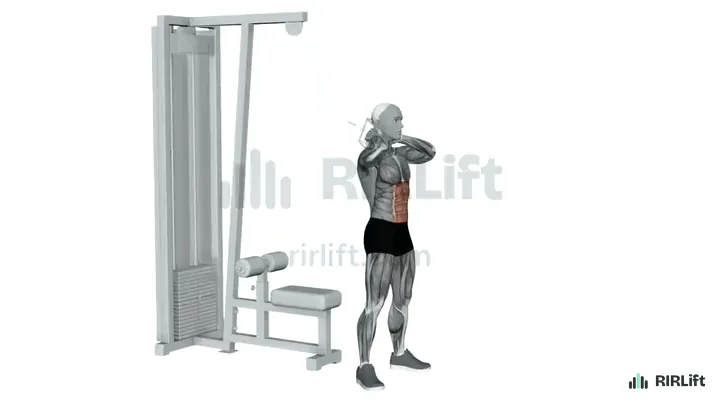
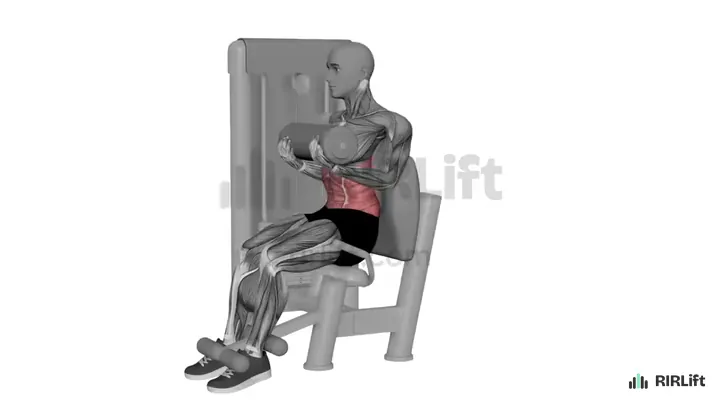
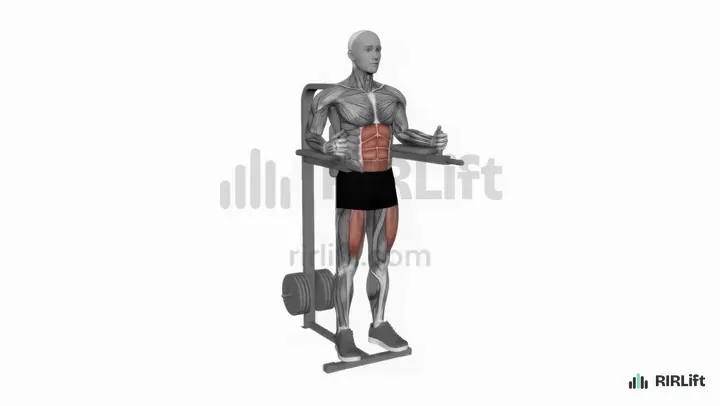
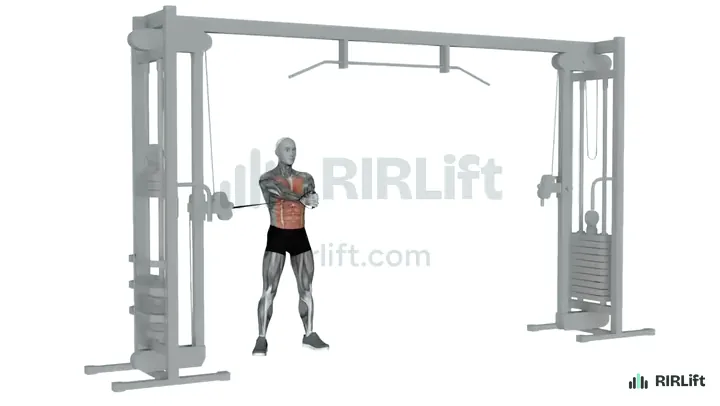
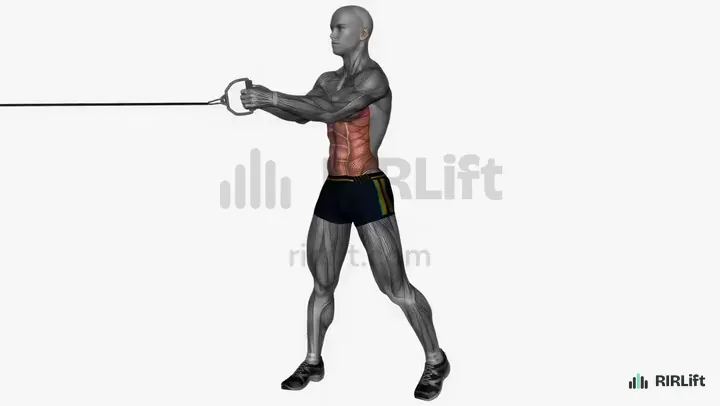
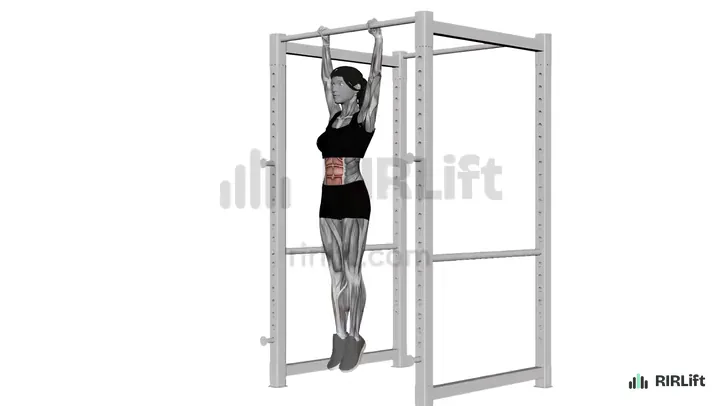
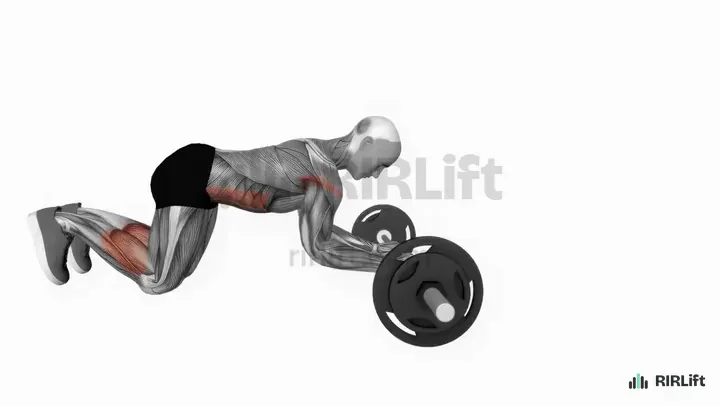
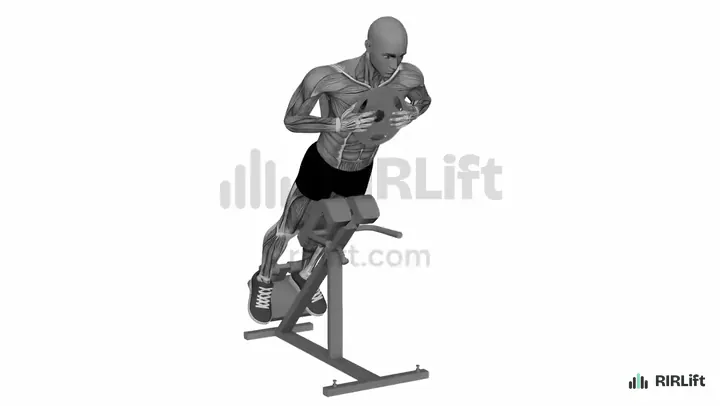
The best core exercises at the gym are the ones that use what a home doesn't have: the cable crunch and ab crunch machine for loaded crunching, the captain's chair and hanging leg raise for your lower abs, the Pallof press, cable woodchop and landmine rotational press for your obliques, the barbell rollout and decline crunch for the front, and the weighted back extension and heavy farmer's walk for the rest of your trunk. Pick three or four, 2 to 4 sets each, 8 to 15 reps ending 0 to 2 reps short of failure, and add weight as you would on any lift.
- Cable Crunch Abs
- Machine Crunch Abs
- Captain's Chair Knee Raise Abs
- Pallof Press Abs
- Cable Woodchop Abs
- Hanging Leg Raise Abs
- Barbell Rollout Abs
- Weighted Back Extension Lower Back
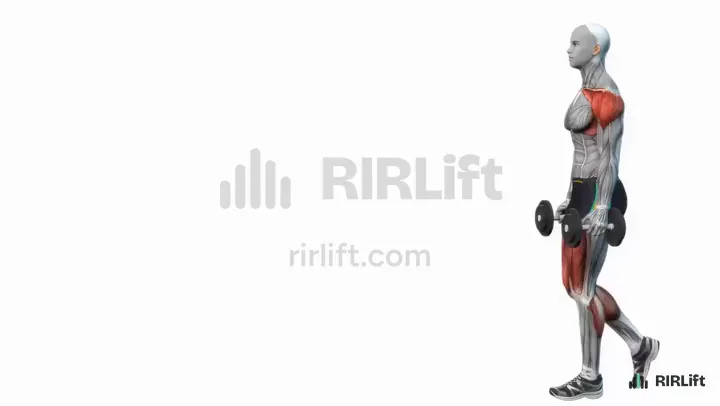
- Farmer's Walk Forearms, Traps, Shoulders
Put them together: example sessions
Each session below picks from the exercises above for one situation, with the sets, reps, rest and RIR filled in. Open one in the session builder to change a pick, price it from a recent set, and add it to RIRLift.
-
Session 1
15 minutes after your main workout
You lift three or four days a week and want a short core block at the end that actually progresses.
2× a week · 16 sets a week · ~15 min
-
Session 2
A dedicated core day, 40 minutes
You want core training to be a session of its own, maybe on a lighter day between your main lifts.
2× a week · 24 sets a week · ~25 min
-
Session 3
Busy gym, cables all taken
Your gym is packed at peak hours and the cable stations always have a queue.
2× a week · 22 sets a week · ~25 min
Session 1
15 minutes after your main workout
- Workouts2× a week
- Working sets16 a week
- Per workout~15 min
- EquipmentAdjustable Cable, Dip Bar
You lift three or four days a week and want a short core block at the end that actually progresses.
Three exercises, one per job: the cable crunch to build the abs, the captain's chair for the lower abs, the Pallof press for the obliques. All three use machines that are rarely busy at the end of a session. Your core already worked on squats and deadlifts, so 2 to 3 sets each at 1 RIR is enough.
| Exercise | Sets × reps | RIR | Rest |
|---|---|---|---|
| Cable Crunch | 3 × 10–15 | 1 | 1 min |
| A1 Captain's Chair Knee Raise | 3 × 10–15 | 1 | 30 s |
| A2 Pallof PressPer side. | 2 × 8–12 | 1 | 1 min |
- How to run it
- Add it after two of your weekly sessions. Superset the captain's chair with the Pallof press to finish in 15 minutes.
- How to progress
- Add weight to the cable crunch whenever you reach 15 reps at 1 RIR; move to the hanging leg raise when 15 clean reps on the chair feel easy.
Session 2
A dedicated core day, 40 minutes
- Workouts2× a week
- Working sets24 a week
- Per workout~25 min
- EquipmentAb Crunch Machine, Pull-Up Bar, Adjustable Cable, Hyperextension +4
You want core training to be a session of its own, maybe on a lighter day between your main lifts.
With a full session you can train every job of the core with load: the machine crunch and decline crunch for the abs, the hanging leg raise for the lower abs, the woodchop for rotation, the back extension for your spine, and the farmer's walk to tie it together. The heavier work sits at 1 to 2 RIR and the carries go near-max because they are the easiest to recover from.
| Exercise | Sets × reps | RIR | Rest |
|---|---|---|---|
| Machine Crunch1 warm-up set first | 3 × 8–15 | 1 | 75 s |
| Hanging Leg Raise | 3 × 6–12 | 1 | 75 s |
| Cable WoodchopPer side. | 3 × 10–15 | 1 | 1 min |
| Weighted Back Extension | 3 × 10–15 | 2 | 75 s |
Open Core Day A in the session builder
| Exercise | Sets × reps | RIR | Rest |
|---|---|---|---|
| Decline CrunchPlate on chest. | 3 × 8–15 | 1 | 75 s |
| Barbell Rollout | 3 × 6–10 | 2 | 90 s |
| Landmine Rotational PressPer side. | 3 × 6–10 | 2 | 75 s |
| Farmer's WalkSteps. Heavy. | 3 × 20–40 | 1 | 90 s |
Open Core Day B in the session builder
- How to run it
- Do Core Day A and B on separate days, or alternate them once a week.
- How to progress
- Add reps to the top of each range, then load: a heavier pin, a steeper bench, a bigger plate, heavier dumbbells.
Session 3
Busy gym, cables all taken
- Workouts2× a week
- Working sets22 a week
- Per workout~25 min
- EquipmentMedicine Ball, Barbells, Landmine, Dumbbells
Your gym is packed at peak hours and the cable stations always have a queue.
Every exercise here needs only a corner of floor, a bar or a ball: the slam to start, the barbell rollout and the landmine press for the front and sides, the farmer's walk to finish. None of them needs a machine, so you can train your core without waiting. Fewer, harder sets at 1 to 2 RIR keep it to 20 minutes.
| Exercise | Sets × reps | RIR | Rest |
|---|---|---|---|
| Medicine Ball SlamHard and fast. | 3 × 8–12 | 2 | 1 min |
| Barbell Rollout | 3 × 6–10 | 2 | 90 s |
| Landmine Rotational PressPer side. | 3 × 6–10 | 1 | 75 s |
| Farmer's WalkSteps. Heavy. | 2 × 20–40 | 1 | 90 s |
- How to run it
- Do this on two days a week in place of the cable work. Grab a slam ball and a barbell and stay in one spot.
- How to progress
- Add reps or load each week; on the rollout, go farther before adding a heavier bar.
Make it fit you
-
Back pain on core days
Keep to the Pallof press, captain's chair and farmer's walk, where your spine stays still and you control the load. Leave out the decline crunch and rollout until those feel easy.
-
Already deadlifting and squatting
Your lower back and bracing get plenty of work there. Drop the back extension and carries and spend the sets on the cable crunch and woodchop.
-
Want visible abs
Use the machine and cable crunches as your main ab lifts, loaded and close to failure. Seeing them depends on body fat, which comes down with diet.
-
Grip gives out first
Use the captain's chair instead of the hanging leg raise, and straps for the farmer's walk. Your core, not your forearms, should end the set.
-
New to the gym
Start with the machine crunch, captain's chair and Pallof press. They have a fixed path and a pin, so you learn the effort before the technique gets tricky.
-
Log the RIR on every core set
Core sets are easy to stop early. In RIRLift you log the RIR with each set and it picks the next weight from it, so a cable crunch or back extension keeps getting heavier instead of stalling at the same pin.
Questions
What machines can I use for core at the gym?
The ab crunch machine, the cable stack (crunches, woodchops and Pallof presses), the captain's chair, the decline bench and the hyperextension bench. A landmine and a pull-up bar add two more options.
What's a good core exercise routine at the gym?
One loaded crunch, one leg raise, one rotation or anti-rotation exercise and one carry or back extension, 3 sets each at 8 to 15 reps, twice a week. The core day plan above is that routine.
Are core workouts good for back pain?
Many people with a sore back feel better after training exercises that keep the spine still, like the Pallof press, carries and side planks. If an exercise makes your pain worse, drop it and pick another.
What are 8 core exercises?
The cable crunch, machine crunch, captain's chair knee raise, hanging leg raise, Pallof press, cable woodchop, barbell rollout and farmer's walk. Together they cover crunching, leg raising, rotating, resisting rotation and carrying.
Should I do core before or after weights?
After. Your core braces during squats, deadlifts and presses, so tiring it first makes those lifts harder and less safe. Short core blocks fit best at the end.
How many core exercises should I do at the gym?
Three or four per session is plenty, 2 to 4 sets each. More than that is usually more of the same.
Related templates
-
Ab exercises at the gym: machines, cables and stations
More crunch and leg raise options focused on the six-pack.
-
Ab crunch machine: how to use it and get your abs to do the work
How to set up and load the ab machine.
-
Core exercises at home for the front, sides and back
The same core training with no gym equipment.
-
Cable crunch: how to do it standing or kneeling, and how heavy to go
The best loaded ab exercise, step by step.