Ab wheel alternatives: rollouts without the wheel, and swaps when they hurt

The best ab wheel alternative is a barbell rollout: a barbell loaded with round plates rolls just like the wheel, so the exercise doesn't change. With an exercise ball, do the body saw; with no equipment, the long lever plank holds you in the same stretched position. If rollouts hurt your lower back, start with the dead bug.

What a ab wheel rollout alternative has to replace

Abs that stop your back from arching

Ab Wheel Rollout

Abs

As the wheel rolls out, your body gets longer and your abs have to stop your lower back from sagging, then pull you back in. Every swap below keeps some of that: a long body your abs must hold straight.

How to do it

  1. Kneel on a pad with the wheel under your shoulders and arms straight.
  2. Tuck your pelvis so your lower back rounds slightly, then roll the wheel forward as your hips follow.
  3. Go as far as you can while keeping that tuck, ideally until your arms are near overhead.
  4. Pull the wheel back to your knees by squeezing your abs, not by sitting your hips back.

Cues

  • Tuck first, then roll
  • Hips move with the wheel
  • Stop before the back arches

Common mistakes

  • Letting the lower back sag at the far end: roll toward a wall so it stops you at a range you control.
  • Pulling back by bending at the hips: drag the wheel back with your abs and keep the hips forward.

Swap for: Barbell Rollout, Stability Ball Body Saw, Long Lever Plank

The ab wheel rollout trains your abs to stop your lower back from arching as your body gets longer, then to pull you back in. It is hardest at the far end, when your arms are out in front and your hips are furthest from your hands. Your lats help hold your arms in place.

A swap has to make your abs hold a long, straight body. The closest ones roll something; the rest hold the stretched position or use a long lever.

Rollouts without a wheel

Anything round that rolls under your hands does the job. Kneel, tuck your pelvis, and roll only as far as you can without your back sagging.

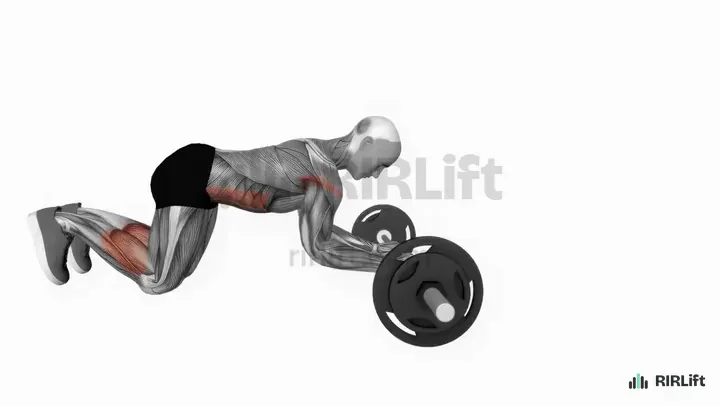
Closest swap: a barbell instead of a wheel

Barbell Rollout

Abs

A barbell with round plates rolls like a giant ab wheel, so the movement is the same. Your hands sit farther apart than on a wheel and the bar is heavier, so it wobbles less.

How to do it

  1. Load the bar with round plates of the same size, and kneel behind it on a pad with your hands on the bar, shoulder-width apart.
  2. Tuck your pelvis slightly so your lower back is flat, not arched.
  3. Roll the bar forward slowly, letting your hips and arms extend together, stopping before your back sags.
  4. Pull the bar back toward your knees using your abs, not by sitting your hips back first.

Cues

  • Ribs down, back flat
  • Roll only to where you can hold it
  • Hips and arms move together

Common mistakes

  • Letting the lower back arch at the far end: shorten the roll until you can keep it flat.
  • Starting the return by pushing the hips back: lead with the stomach.

Rollout on an exercise ball

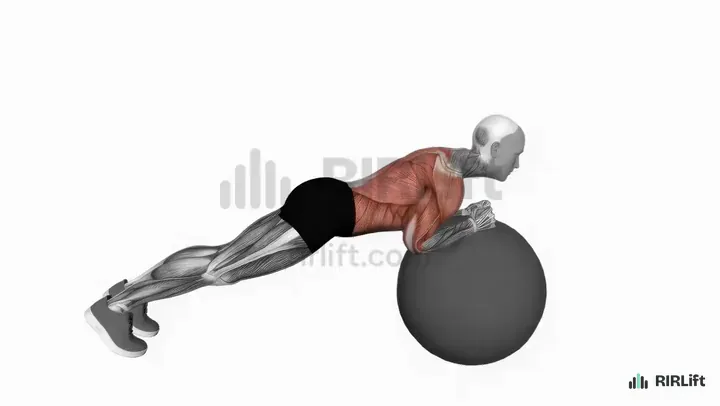
Stability Ball Body Saw

Abs

Your forearms on a ball and a short roll forward and back give the same arching load with a shorter lever. It is the best way to work up to a full rollout.

How to do it

  1. Kneel behind an exercise ball, put your forearms on it and step back into a plank with straight legs.
  2. Push the ball slightly forward with your forearms, letting your body lengthen.
  3. Pull it back under your shoulders using your abs.
  4. Keep sawing back and forth for the set without letting your hips drop.

Cues

  • Small rolls, flat back
  • Abs pull the ball back
  • Feet wide for balance

Common mistakes

  • Rolling too far and arching: keep the range short until the back stays flat.
  • Pushing the hips up into a pike to bring the ball back: the hips stay in line.

Holds on the floor

No equipment: hold the stretched position instead of rolling into it. Keep holds short and hard.

Best swap with no equipment

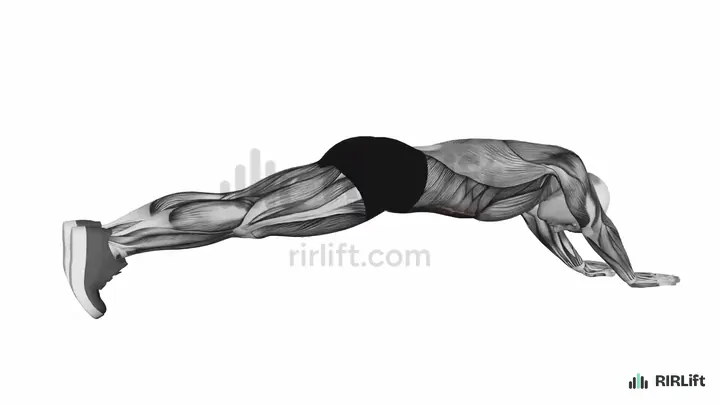
Long Lever Plank

Abs

Moving your elbows out past your head holds you in the stretched position of a rollout without rolling. Keep holds short and hard.

How to do it

  1. Get into a forearm plank, then shift your elbows forward until they sit a few inches in front of your eyes.
  2. Squeeze your glutes and tuck your tailbone slightly so your lower back flattens.
  3. Hold your body in a single line, head to heels.
  4. End the hold when your hips begin to sag, rest, and go again.

Cues

  • Glutes tight, ribs down
  • Elbows forward, not wide
  • Short, hard holds

Common mistakes

  • Raising your hips to take the strain off: keep the line and hold for less time.
  • Holding your breath: breathe short and steady through the hold.

The rollout position, on your back

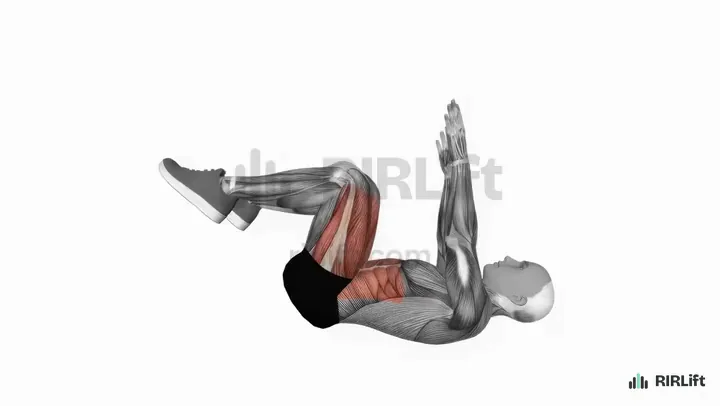
Plate Hollow Hold

Abs

Lying face up with your legs long and shoulders off the floor, your abs keep your lower back down, the same job flipped over. Holding a light plate up at arm's length makes it harder.

How to do it

  1. Lie face up holding a light weight plate in both hands and press your lower back into the floor.
  2. Lift your shoulders and straight legs off the floor and push the plate up over your chest with straight arms.
  3. Hold with your legs raised and your lower back flat, lowering your legs only as far as your back allows.
  4. Lower your legs and arms to rest before your back starts to arch, then repeat.

Cues

  • Lower back stays on the floor
  • Legs lower only if the back allows
  • Breathe in short, shallow breaths

Common mistakes

  • Holding a plate too heavy for your back to stay flat: start with no plate and raise the legs higher.
  • Tucking the chin hard to your chest: look at your toes and keep the neck long.

Easiest on your lower back

Dead Bug

Abs

One arm and the opposite leg reach out while your lower back stays flat. Start here if rollouts make your back ache.

How to do it

  1. Lie face up on a mat, arms straight up over your shoulders and knees bent 90 degrees directly above your hips.
  2. Breathe out fully and tilt your pelvis slightly so your lower back presses flat into the floor; keep it there for the whole set.
  3. Reach your right arm back toward the floor behind your head and straighten your left leg out toward the floor at the same time.
  4. Stop when your arm and leg hover just above the floor, or sooner if your lower back starts to lift.
  5. Bring both back to the start, then repeat on the opposite pair. One rep is one side.

Cues

  • Lower back glued to the floor
  • Exhale as you reach
  • Slow is the exercise

Common mistakes

  • Letting the lower back arch as the leg goes out: shorten the reach, keep the knee bent more, or lower only the leg until you can hold the position.
  • Rushing through the reps: take two or three seconds to reach out and the same to come back; speed lets momentum do the work your abs should do.
  • Holding your breath: breathe out as you reach and in as you return, so you learn to brace while breathing.
Build a session with Dead Bug

Hardest without equipment

Long levers that move, for when the floor holds are easy.

Hardest bodyweight swap

Dragon Flag

Abs

Lowering your straight body while you grip a post or bench behind your head is a rollout turned upside down: your abs hold a long line as the lever gets longer. Start with slow lowering only.

How to do it

  1. Lie face up on the floor or a bench and grip a sturdy post, rack upright or the bench behind your head with both hands.
  2. Roll your hips and legs up until your body points toward the ceiling, resting on your upper back.
  3. Lower your straight body slowly toward the floor, keeping your hips in line with your shoulders.
  4. Stop just above the floor and raise back to vertical, or lower only and roll back up with bent knees.

Cues

  • Straight line from shoulders to toes
  • Lower as slowly as you can
  • Hips never bend

Common mistakes

  • Bending at the hips as you lower: tuck your knees until you can stay straight.
  • Letting your lower back arch: stop the set there.

Floor swap that moves

Jackknife

Abs

Arms and legs fold up together into a V, so your abs work from both ends. Use it when you want reps rather than a hold and have no gear.

How to do it

  1. Lie face up on a mat, legs long and arms resting straight beside you.
  2. Brace and lift your shoulders and your straight legs off the floor at the same time.
  3. Reach your hands toward your feet as your body folds into a V over your hips.
  4. Lower both ends back to a light touch on the floor over two seconds, then repeat.

Cues

  • Fold, then unfold slowly
  • Hands meet feet over the hips
  • No bounce at the bottom

Common mistakes

  • Swinging your arms to throw yourself up: lift your shoulders and legs with your abs, then reach.
  • Crashing back to the floor: lowering is half the rep, so take two seconds.
Build a session with Jackknife

Bar and cable

On a pull-up bar, your lats hold you while your abs move your legs, like the wheel. In the gym, a cable adds load.

Pull-up bar swap

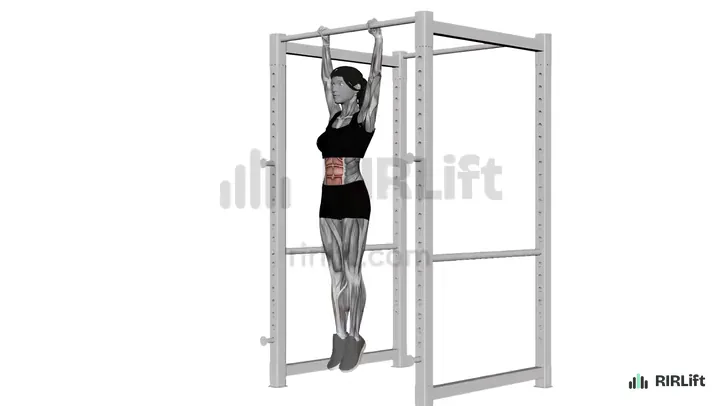
Hanging Leg Raise

Abs

Straight legs raised from a hang give your abs a long lever to control, and your lats work to hold you, as they do on the wheel. Curl your pelvis up at the top.

How to do it

  1. Take an overhand grip on the bar and hang with straight arms and your feet together.
  2. Pull your shoulders down slightly and stop any swing.
  3. Raise your legs with soft knees until they are at least level with your hips, letting your pelvis tilt up at the top.
  4. Lower them slowly to a still hang and repeat.

Cues

  • Still hang before every rep
  • Pelvis tilts up at the top
  • Bend the knees to scale

Common mistakes

  • Swinging the legs up with momentum: pause at the bottom of every rep.
  • Lifting only to hip height with an arched back: if the pelvis never tilts, bend the knees more.

Loaded swap in the gym

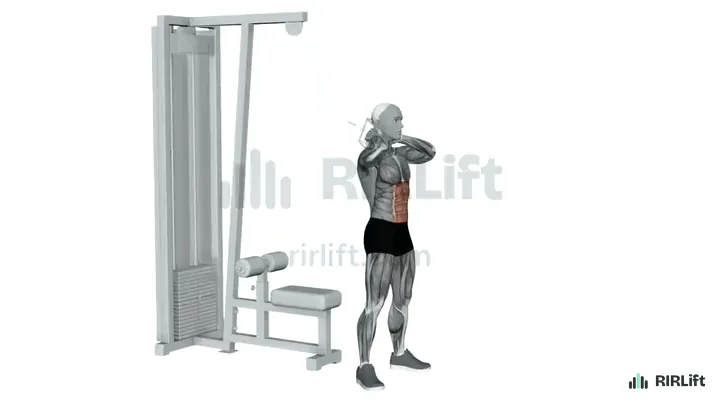
Cable Crunch

Abs

A different job, curling instead of resisting, but the same six-pack muscle, and you add weight in small steps. Pair it with any hold here.

How to do it

  1. Attach a rope to a high pulley, pick a moderate weight, and hold one end of the rope in each hand beside your head.
  2. Turn your back to the stack, take a step forward so the weight lifts, and set your feet hip-width apart with soft knees.
  3. Keep your hands fixed next to your head and breathe out as you curl your ribs down toward your hips, rounding your upper and middle back.
  4. Squeeze at the bottom for a second, with your elbows heading toward your thighs and your hips still in the same place.
  5. Uncurl slowly back to tall, letting the cable stretch your abs, then start the next rep without resting the stack.

Cues

  • Ribs to hips
  • Hips stay put
  • Round down, not bow forward

Common mistakes

  • Hinging at the hips: if your butt moves back as you go down, your hip flexors and arms take over; lock your hips in place and only round your spine.
  • Pulling with the arms: keep your hands glued to your head so the rope moves only because your torso curls.
  • Going too heavy: if you cannot pause at the bottom, the weight is too much; the abs need control, not a yank.

Example sessions without the ab wheel rollout

Session 1

Gym, no ab wheel

Open in the session builder
  • Workouts2× a week
  • Working sets20 a week
  • Per workout~20 min
  • EquipmentBarbells, Adjustable Cable

You train in a gym with barbells and cables, but there is no ab wheel.

The barbell rollout takes the wheel's place exactly, the cable crunch adds a loaded curl, and the plate hollow hold finishes with the same long-body brace on your back. 10 working sets.

Abs
ExerciseSets × repsRIRRest
Barbell RolloutRound plates. Back never sags. 4 × 6–12 2 90 s
Cable CrunchRibs to pelvis, hips still. 3 × 10–15 1 75 s
Plate Hollow HoldSeconds. Lower back stays down. 3 × 20–40 1 1 min
How to run it
At the end of two training days a week, with a day between.
How to progress
On the rollout, roll a little further each week, then add reps. On the cable crunch, add the smallest weight jump when every set reaches 15. On the hollow hold, lower your legs a little before adding seconds.

Session 2

Home, no equipment

Open in the session builder
  • Workouts3× a week
  • Working sets30 a week
  • Per workout~20 min
  • EquipmentBodyweight

You train at home on a mat and have no wheel, ball or bar.

The long lever plank holds the rollout's stretched position, jackknives add a long lever that moves, and dead bugs finish with slow control. Bodyweight only, so sets go close to failure. 10 working sets.

Abs
ExerciseSets × repsRIRRest
Long Lever PlankSeconds. Elbows ahead of your head. 3 × 15–30 1 1 min
Jackknife 4 × 8–15 1 1 min
Dead BugReps per side. 3 × 8–12 2 45 s
How to run it
Two or three times a week; keep rests around a minute.
How to progress
Add seconds or reps to the top of each range, then move your elbows further forward on the plank and slow the jackknife's lowering to three seconds.

Session 3

Strong, want something harder

Open in the session builder
  • Workouts2× a week
  • Working sets20 a week
  • Per workout~25 min
  • EquipmentPull-Up Bar, Exercise Ball

Kneeling rollouts are easy for you and you have a bench or sturdy post, a pull-up bar and an exercise ball.

The dragon flag is a far longer lever than a kneeling rollout, hanging leg raises load your abs with your lats holding you, and the body saw adds a rolling set to finish. Reps are low and rests long. 10 working sets.

Abs
ExerciseSets × repsRIRRest
Dragon FlagLower only if you can't raise. 4 × 4–8 2 2 min
Hanging Leg RaiseStill hang before each rep. 3 × 6–12 2 90 s
Stability Ball Body Saw 3 × 8–15 2 75 s
How to run it
Twice a week, never on back-to-back days.
How to progress
Slow the dragon flag's lowering before adding reps. On hanging leg raises, add reps to 12, then pause at the top.

Make it fit you

Questions

What can I use instead of an ab wheel?

A barbell loaded with round plates rolls the same way. An exercise ball works for a shorter roll, and with nothing at all the long lever plank holds the same position.

Can you do ab rollouts with a barbell?

Yes. Load it with round plates, kneel, grip it shoulder-width and roll it forward exactly like a wheel; it wobbles less than a wheel because your hands are farther apart.

How many ab rollouts should I do?

Three or four sets of 6 to 12 controlled reps, stopping a rep or two before your back would sag. Roll further before you add reps.

Do ab rollers actually give you abs?

They train your abs hard, but visible abs also need low body fat. Pair rollouts with a curl like the cable crunch or reverse crunch.

Why do ab wheel rollouts hurt my lower back?

Usually your hips sag at the far end, so your back arches. Tuck your pelvis, roll less far, and build up with the body saw or dead bug.

What is harder than the ab wheel?

Dragon flags and hanging leg raises. Both make your abs control a long, straight lever with no support under your hips.