
Barbell core exercises: direct ab work and the big lifts that brace your trunk
Published October 19, 2026
The best barbell core exercises are the barbell rollout, the barbell sit-up and the landmine twist for direct ab and oblique work, plus the front squat, deadlift and good morning, which make your whole trunk brace hard against a heavy bar. Pair one direct ab exercise with the big lifts you already do: 2 to 4 sets of rollouts or twists at 1 to 2 reps in reserve, two or three times a week, covers it.
- Barbell Rollout Abs
- Landmine Twist Abs
- Barbell Sit-Up Abs
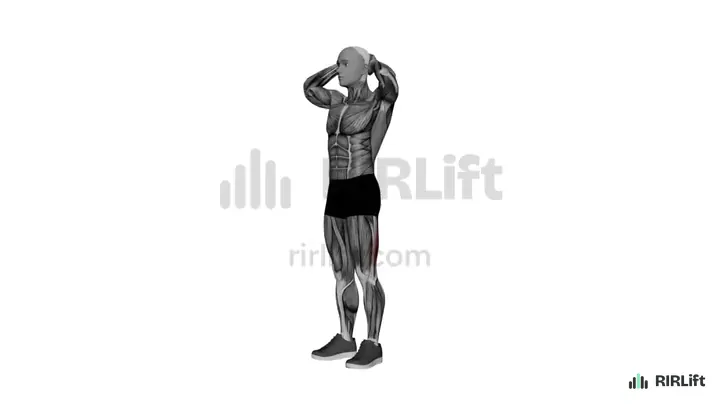
- Front Squat Quads, Glutes, Adductors
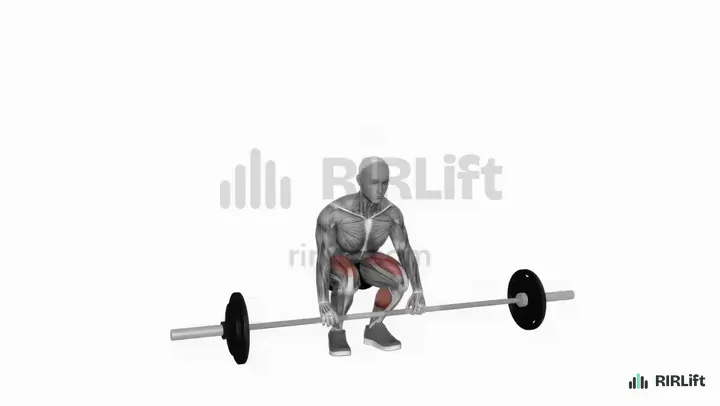
- Barbell Deadlift Glutes, Lower Back
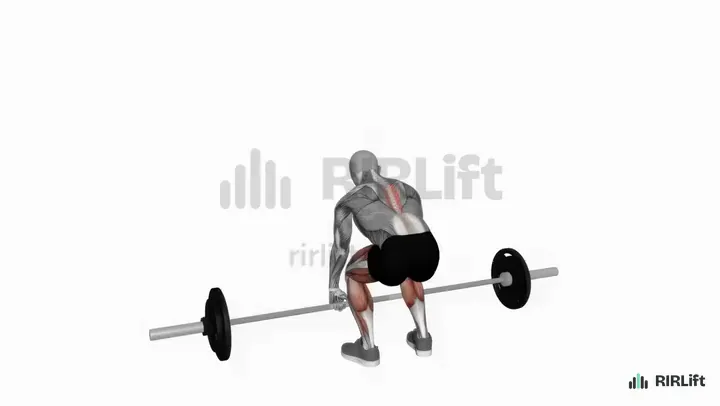
- Good Morning Hamstrings, Glutes
- Romanian Deadlift Hamstrings, Glutes
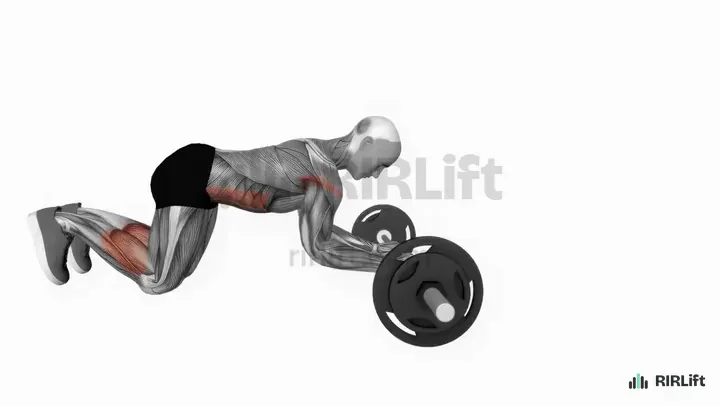
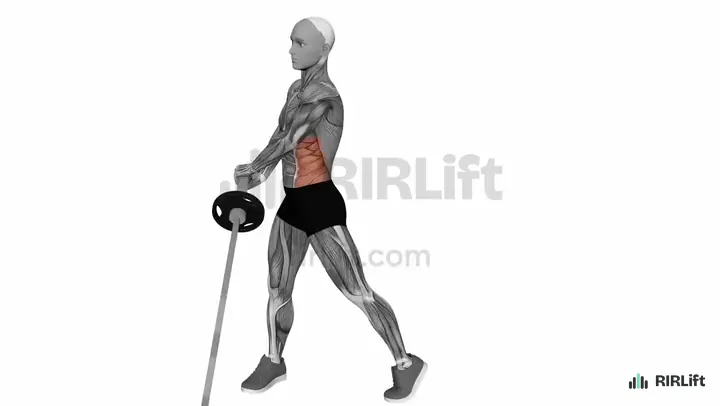
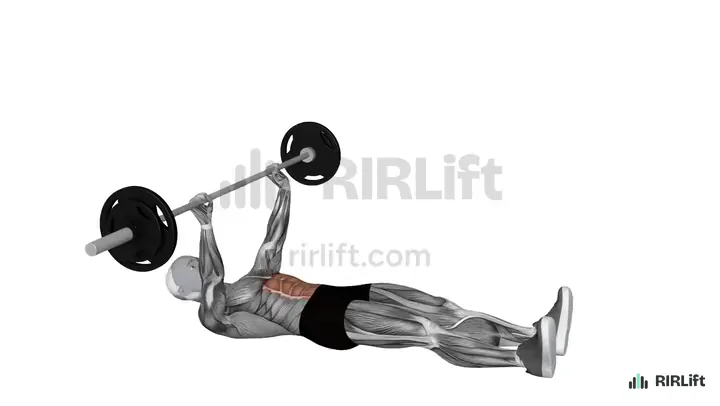
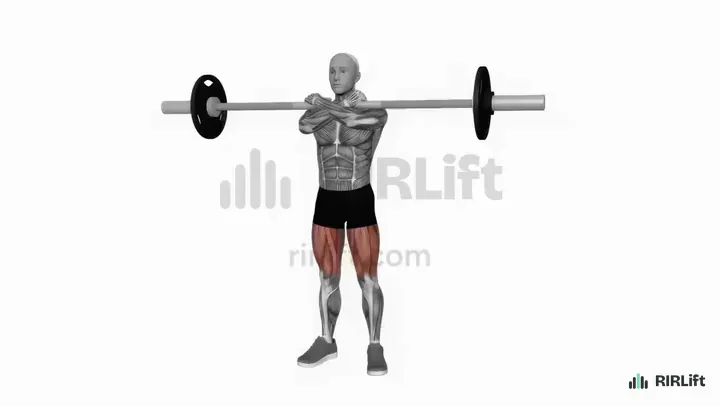
Put them together: example sessions
Each session below picks from the exercises above for one situation, with the sets, reps, rest and RIR filled in. Open one in the session builder to change a pick, price it from a recent set, and add it to RIRLift.
-
Session 1
A barbell and plates at home, no rack
You train in a garage with a bar and plates on the floor but no squat rack or landmine.
2× a week · 12 sets a week · ~20 min
-
Session 2
Full gym with a rack and landmine
You train at a gym with racks and a landmine and want core work that also builds strength.
2× a week · 22 sets a week · ~35 min
-
Session 3
Already squatting and deadlifting heavy
You follow a barbell strength program and your trunk already braces on every main lift. You want 15 minutes of direct core work twice a week.
2× a week · 16 sets a week · ~15 min
Session 1
A barbell and plates at home, no rack
- Workouts2× a week
- Working sets12 a week
- Per workout~20 min
- EquipmentBarbells
You train in a garage with a bar and plates on the floor but no squat rack or landmine.
Without a rack, the lifts that start from the floor are the core builders: the deadlift for the heavy brace, the Romanian deadlift for the lower back, and the rollout and sit-up for direct ab work. Deadlifts sit at 2 RIR so form holds; the RDL at 2; the ab exercises go to 1. Two routines of about 9 sets.
| Exercise | Sets × reps | RIR | Rest |
|---|---|---|---|
| Barbell Deadlift2 warm-up sets firstBrace before every rep. | 3 × 3–6 | 2 | 3 min |
| Barbell RolloutFrom your knees. Back flat. | 3 × 6–12 | 1 | 90 s |
Open Pull and Abs in the session builder
| Exercise | Sets × reps | RIR | Rest |
|---|---|---|---|
| Romanian Deadlift1 warm-up set firstBar slides down the thighs. | 3 × 8–12 | 2 | 2 min |
| Barbell Sit-UpLight bar, arms locked. | 3 × 8–15 | 1 | 75 s |
Open Hinge and Abs in the session builder
- How to run it
- Alternate Pull and Abs and Hinge and Abs, twice a week each or once each in a three-day week.
- How to progress
- Add 5 to 10 lb to the deadlift when all sets hit the top of the range at 2 RIR. Roll further on the rollout before adding plates; add 5 lb to the sit-up bar at 15 reps.
Session 2
Full gym with a rack and landmine
- Workouts2× a week
- Working sets22 a week
- Per workout~35 min
- EquipmentBarbells, Landmine
You train at a gym with racks and a landmine and want core work that also builds strength.
The front squat is the barbell lift that loads the abs most, so it leads, followed by the good morning for the lower back. The landmine twist adds the rotation the big lifts lack and the rollout covers anti-extension. Front squats and good mornings stop at 2 RIR; the twist and rollout at 1. Eleven sets, about 45 minutes.
| Exercise | Sets × reps | RIR | Rest |
|---|---|---|---|
| Front Squat2 warm-up sets firstElbows up. Big breath. | 3 × 5–8 | 2 | 2:30 min |
| Good MorningLight bar. | 3 × 8–12 | 2 | 2 min |
| Landmine TwistPer side. | 3 × 8–12 | 1 | 75 s |
| Barbell RolloutShort range is fine. | 2 × 6–10 | 1 | 90 s |
- How to run it
- Do it once or twice a week as a lower-body and core day.
- How to progress
- Add 5 lb to the front squat at 8 clean reps on every set. Add a small plate to the landmine when 10 controlled twists per side feel easy.
Session 3
Already squatting and deadlifting heavy
- Workouts2× a week
- Working sets16 a week
- Per workout~15 min
- EquipmentBarbells, Landmine
You follow a barbell strength program and your trunk already braces on every main lift. You want 15 minutes of direct core work twice a week.
Your main lifts cover the bracing and the lower back, so this plan skips hinges and squats and trains only what they miss: anti-extension with the rollout, rotation with the landmine twist, and trunk flexion with the barbell sit-up. All three go to 1 RIR, with the rollout and twist in a superset to save time. Eight sets.
| Exercise | Sets × reps | RIR | Rest |
|---|---|---|---|
| A1 Barbell RolloutFrom your knees. | 3 × 6–12 | 1 | 1 min |
| A2 Landmine TwistPer side. | 3 × 8–12 | 1 | 1 min |
| Barbell Sit-UpArms locked. | 2 × 10–15 | 1 | 1 min |
- How to run it
- Add it after your main lifts on two training days. Skip it on days you test a max.
- How to progress
- Add rollout range first, then plates. Add reps to the twist and sit-up before going heavier.
Make it fit you
-
Rollouts are too hard
Roll out only a third of the way and come back, or roll toward a wall that stops the bar at a set distance. Move the wall back a few inches every week or two.
-
Lower back gets sore
Drop the good morning and the sit-up for now and keep the rollout short. Hinge with a lighter Romanian deadlift and let the front squat do the bracing work.
-
No landmine attachment
Wedge the end of the bar into a corner, padded with a towel, so it cannot slide. The twist works the same way.
-
You want visible abs
Heavy lifts and rollouts build thick abdominal muscles, but seeing them depends on low body fat. Keep the training and handle that through your eating.
-
Breath gives out before your legs
Use fewer reps on squats and deadlifts and re-brace between each one. A set of 5 with a full breath every rep trains the core better than 10 rushed reps.
-
Log the RIR, not just the weight
Write down how many reps were left after each set, on the ab work as well as the big lifts. In RIRLift you log that RIR with every set, and it uses it to suggest your next weight, so heavy lifts move up only when the reps in reserve say they should.
Questions
What barbell exercises work the core?
Directly: the barbell rollout, the barbell sit-up and the landmine twist. Indirectly but heavily: front squats, back squats, deadlifts and good mornings, which make your trunk brace against a heavy load.
Do squats and deadlifts work your abs?
Yes, they train the abs and obliques to stay rigid under heavy load, and the front squat does so most. They do not train the abs through a range, so a rollout or sit-up still adds something.
Is the barbell rollout better than an ab wheel?
They train the same thing. A barbell with round plates rolls a little wider and lets you start with a shorter range by using bigger plates. Use whichever you have.
Are barbell core exercises safe for your lower back?
Done with a flat back and a sensible load, they build strength in the muscles that protect your spine. Start light, hold a flat back, and drop any exercise that leaves your back sore for days.
How often should I do barbell core exercises?
Direct ab work two or three times a week, 6 to 10 hard sets total. Heavy squats and deadlifts on top of that count as core training, so you rarely need more.
Do I need a belt for core training?
No. A belt helps you brace on very heavy squats and deadlifts, but your abs and obliques still work hard with one. Learn to brace without a belt before you use one.
Related templates
-
Core exercises with weights, grouped by how they train your trunk
Dumbbell, cable and plate core work to mix with the barbell lifts.
-
Core exercises at the gym: machines, cables, bars and free weights
Cable and machine core exercises for a full gym.
-
Deadlift: how to set up, pull and program the barbell deadlift
The heaviest core brace, explained step by step.
-
Box squat: how to do it, how high the box should be, and when to use it
How to set the box and keep your brace at the bottom.
-
The best workout for abs, for your situation
Complete ab programs with RIR targets.