Apple Watch heart rate zones and weight lifting

Apple Watch shows heart rate zones in cardio-focused workouts such as an outdoor run, with each zone a share of your maximum heart rate worked out from your Health details. A lifting session doesn't sit in one zone: heart rate climbs through a hard set and falls during the rest, so the reps you had left say more about a set than the zone it reached. In RIRLift the Watch shows your current heart rate during the workout and on the rest timer, and the iPhone shows the whole session's heart rate with its average.

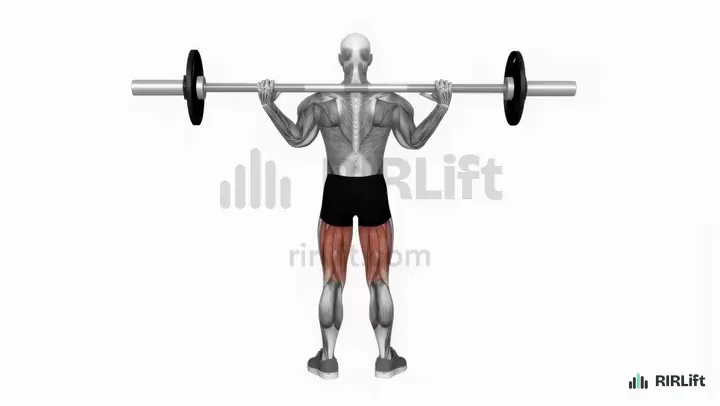
  1. Barbell Back Squat Quads, Glutes, Adductors
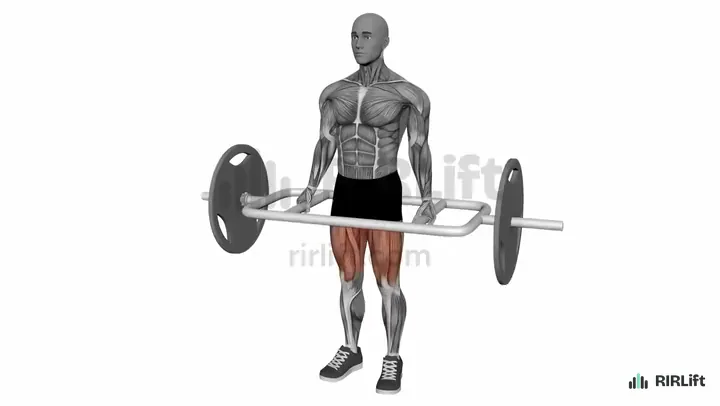
  2. Trap Bar Deadlift Quads, Glutes
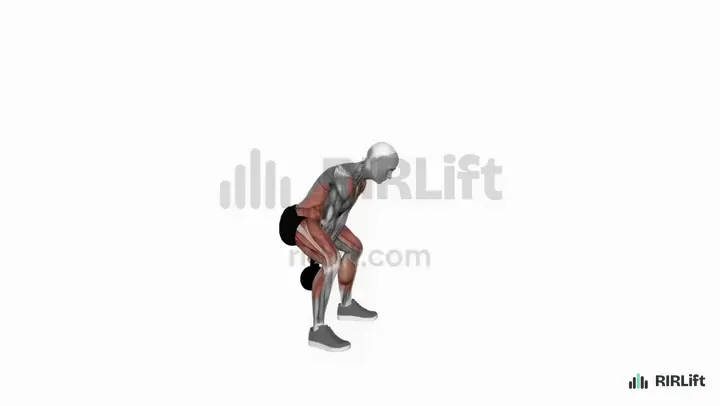
  3. Kettlebell Swing Glutes, Hamstrings
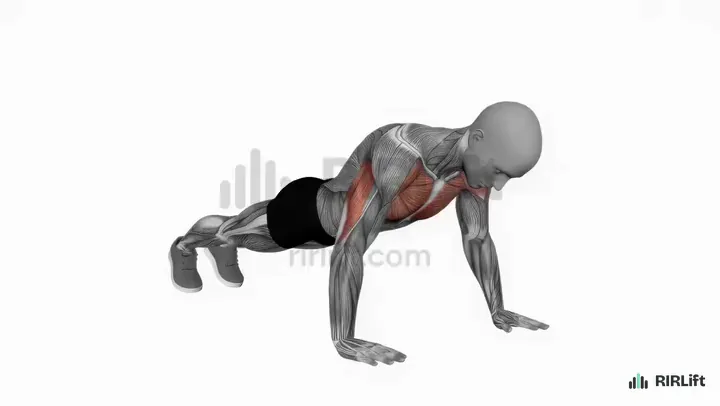
  4. Push-Up Chest
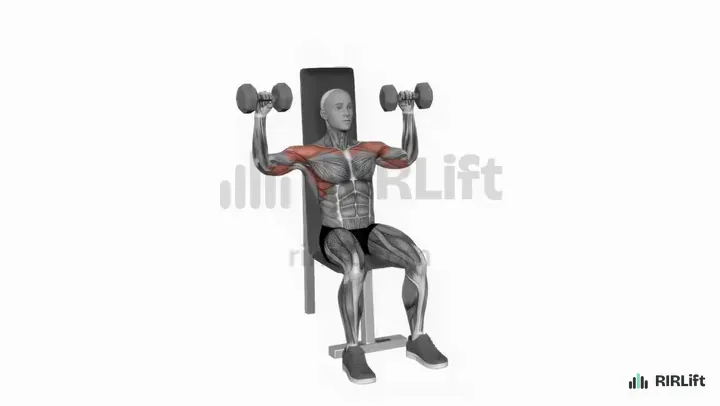
  5. Dumbbell Shoulder Press Shoulders
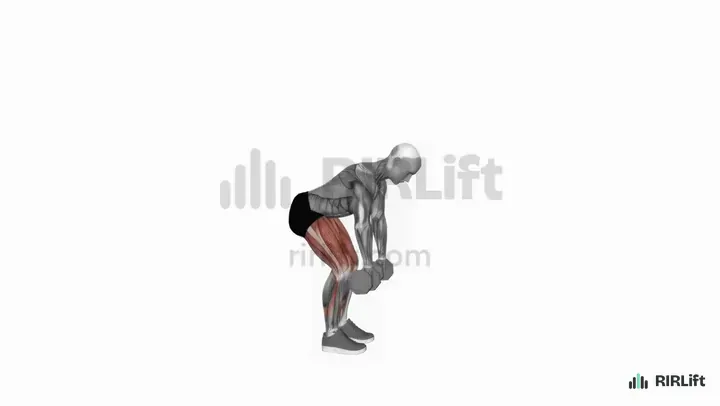
  6. Dumbbell Romanian Deadlift Hamstrings, Glutes
Heavy sets with long rests

Heart rate climbs through each set and comes down during a 2 to 3 minute rest. Start the next set when the timer ends, not when a number drops.

Quads and glutes, barbell squat

Barbell Back Squat

Quads, Glutes, Adductors

The lift that sends heart rate highest on the heavy day. Give it the full rest anyway; the next set needs it.

How to do it

  1. Set the bar across your upper back, grip it firmly, and step out with feet about shoulder-width apart.
  2. Take a big breath into your belly and brace.
  3. Sit down between your heels until your thighs are at least parallel to the floor.
  4. Drive up, keeping your chest and hips rising together.

Cues

  • Brace before every rep
  • Knees track over toes
  • Stand up fast

Common mistakes

  • Cutting depth as the weight rises: keep the same depth and load what you can hit there.
  • Folding forward out of the bottom: keep the chest up and drive your upper back into the bar.

Swap for: Front Squat, Goblet Squat

Chest, shoulders and triceps, barbell press

Barbell Bench Press

Chest

A heavy press with a long rest. Heart rate drops a long way between sets, and the set is still hard.

How to do it

  1. Lie on the bench with your eyes under the bar, feet planted, and squeeze your shoulder blades back and down into the pad.
  2. Grip the bar a little wider than shoulder width, unrack it, and hold it over your shoulders with locked elbows.
  3. Lower the bar to your lower chest, around nipple height, with your elbows angled roughly 45 to 70 degrees from your sides.
  4. Touch your chest without bouncing, then press the bar up and slightly back until it is over your shoulders again.

Cues

  • Shoulder blades stay pinned
  • Bar to the nipple line
  • Drive your feet into the floor

Common mistakes

  • Flaring the elbows straight out to the sides: let them sit a bit closer to your ribs so your shoulders stay comfortable.
  • Lifting your hips off the bench to finish a rep: keep your glutes down and count that rep as your last.

Swap for: Flat Dumbbell Press, Smith Machine Bench Press, Machine Chest Press

Quads, glutes and back, trap bar pull

Trap Bar Deadlift

Quads, Glutes

A heavy pull from the floor with a neutral grip. Five reps are short, and the effort shows in the reps you had left, not in a zone.

How to do it

  1. Step into the middle of the hex bar and grip the handles evenly.
  2. Sit the hips back with a flat back and long arms.
  3. Drive through the whole foot until hips and knees lock together.
  4. Lower with control along the same path.

Cues

  • Spread the floor with your feet
  • Flat back
  • Finish tall, don't lean back

Common mistakes

  • Rounding the back to reach the handles: use the raised handles or lower the hips.
  • Turning every set into a max: stop with 2 reps left.

Swap for: Kettlebell Deadlift, Barbell Deadlift, Dumbbell Romanian Deadlift

Lats and biceps, bodyweight pull

Pull-Up

Lats

Balances the bench. Bodyweight lifts progress by reps until you start adding weight.

How to do it

  1. Grab the bar overhand, hands a little wider than your shoulders, and hang from fully straight arms.
  2. Pull your shoulders down away from your ears before your elbows start to bend.
  3. Drive the elbows toward your ribs until your chin passes over the bar.
  4. Lower slowly to a dead hang and pull again.

Cues

  • Shoulders down, then pull
  • Legs still and together
  • Two seconds on the way down

Common mistakes

  • Swinging the legs to cheat reps: cross your ankles and brace the abs.
  • Half reps from a bent-arm start: finish each rep at a full hang.

Swap for: Chin-Up, Lat Pulldown, Band-Assisted Pull-Up

Circuit stations with one rest per round

Go from one station to the next and rest only after the round, and heart rate stays high the whole session. This is the lifting day that looks most like cardio on the trace.

Glutes and hamstrings, kettlebell hinge

Kettlebell Swing

Glutes, Hamstrings

The station that lifts heart rate fastest in the circuit. Fifteen hard swings, then straight to the squat.

How to do it

  1. Stand with your feet a little wider than your hips, the bell set about a foot in front of you.
  2. Hinge down, grip the handle with both hands, and hike the bell back between your thighs.
  3. Snap your hips forward to stand tall, letting the bell float up to about shoulder height on straight arms.
  4. Let it fall back between your legs as you hinge again, and go straight into the next rep.

Cues

  • Hips snap, arms just hold on
  • Stand tall at the top
  • Bell passes high between the thighs

Common mistakes

  • Squatting the swing by bending the knees deeply: push your hips back and keep the shins nearly vertical.
  • Lifting the bell with your shoulders: if your arms are working, the hips are not driving it.

Swap for: Dumbbell Romanian Deadlift, Kettlebell Deadlift, Superman

Quads and glutes, kettlebell or dumbbell squat

Goblet Squat

Quads, Glutes

Same bell as the swing, so the circuit runs without changing weights.

How to do it

  1. Hold a dumbbell or kettlebell vertically against your chest.
  2. Sit down between your knees, elbows inside them at the bottom.
  3. Stand up tall.

Cues

  • Elbows nudge the knees out at the bottom
  • Chest stays up behind the weight

Common mistakes

  • Letting the weight pull you forward: hold it tight to your chest and sit between your heels.

Swap for: Bodyweight Squat, Barbell Back Squat

Chest and triceps, bodyweight press

Push-Up

Chest

The press station. No equipment, so it slots between bell stations with no setup.

How to do it

  1. Set your hands slightly wider than your shoulders with your body straight from head to heels.
  2. Lower until your chest nearly touches the floor, elbows at about 45 degrees.
  3. Press back up to straight arms.

Cues

  • One straight line
  • Elbows angled back

Common mistakes

  • Flaring the elbows straight out: tuck them toward your ribs.

Swap for: Kneeling Push-Up, Incline Push-Up, Push-Up Plus

Upper back, bodyweight row

Inverted Row

Upper Back, Lats

The pull station, under a bar or a sturdy table. It balances the push-ups.

How to do it

  1. Set a bar at about hip height, lie under it, and grip it with your hands a little wider than your shoulders.
  2. Straighten your body from heels to head, or bend your knees with feet flat for an easier version.
  3. Pull your chest up to the bar, leading with your elbows, and keep your hips in line.
  4. Lower until your arms are straight, then pull again.

Cues

  • Body stays a straight plank
  • Chest touches the bar
  • Bend your knees to make it easier

Common mistakes

  • Letting your hips sag so only your chest rises: squeeze your glutes and move as one piece.
  • Pulling the bar to your neck: aim for the bottom of your chest.

Swap for: TRX Row, Lat Pulldown, Assisted Pull-Up

Quads and glutes, bodyweight lunge

Reverse Lunge

Quads, Glutes

The last station of the round. Step back, not forward, so the knee stays comfortable when you are breathing hard.

How to do it

  1. Start tall with feet hip-width apart, hands on your hips or holding a kettlebell at your chest or a weight in each hand.
  2. Shift your weight onto one foot and step the other foot straight back about two feet, landing on the ball of the foot.
  3. Lower your back knee toward the floor until it nearly touches, with your front shin close to vertical and your chest up.
  4. Keep most of your weight in the front foot and push through its whole sole to stand and bring the back foot forward.
  5. Finish standing tall on both feet, then repeat on the same side for all reps or alternate legs.

Cues

  • Weight stays in the front foot
  • Back knee straight down
  • Push the floor away to stand

Common mistakes

  • Stepping back too short: if your front knee shoots far past your toes and your heel lifts, take a longer step.
  • Pushing off the back foot: the back leg only balances you; drive up through the front heel and mid-foot.
  • Front knee caving in: keep it tracking over your middle toes; slow the descent or reduce the weight until it does.

Dumbbell lifts for a chest-strap day

Ordinary dumbbell lifts. If the wrist reading drops out on days like this, a chest strap gives the session a steady trace.

Shoulders and triceps, dumbbell press

Dumbbell Shoulder Press

Shoulders

A seated press for the strap day. Log the weight of one dumbbell.

How to do it

  1. Set a bench upright or one notch back from vertical, sit with your feet flat, and rest a dumbbell on each thigh.
  2. Kick one knee up at a time to bring the dumbbells to shoulder height, then set your back against the pad.
  3. Turn your elbows slightly forward so they sit a little in front of your torso, palms facing forward or angled in.
  4. Drive both weights overhead on a slight inward arc until your elbows are straight, keeping your ribs down and your back on the pad.
  5. Lower slowly until the dumbbells are around ear height or a bit below, then press again.

Cues

  • Ribs down, back on the pad
  • Elbows a little forward
  • Press up and slightly in

Common mistakes

  • Arching your lower back off the pad to finish reps: that turns it into an incline press, so lighten the weight and keep your ribs stacked over your hips.
  • Flaring the elbows straight out at shoulder height: bring them a little forward so the shoulder joint stays comfortable at the bottom.
  • Stopping each rep well above your ears: lower to around ear height so the delts work through a full range.

Swap for: Machine Shoulder Press, Arnold Press, Landmine Press

Lats and upper back, one-arm row

One-Arm Dumbbell Row

Lats, Upper Back

The row for the strap day. Do your weaker side first and match the reps on the other.

How to do it

  1. Brace one hand and knee on a bench with a flat back.
  2. Hold the dumbbell at arm's length under your shoulder.
  3. Row the elbow back to your hip.
  4. Lower to a full stretch.

Cues

  • Elbow to the hip
  • Shoulder blade moves
  • Torso still

Common mistakes

  • Twisting the torso: keep the shoulders square.
  • Shrugging: lead with the elbow.

Swap for: Seal Row, Single-Arm Cable Row, Inverted Row

Hamstrings and glutes, dumbbell hinge

Dumbbell Romanian Deadlift

Hamstrings, Glutes
The hinge for the strap day, with the dumbbells hanging in front of the legs.

How to do it

  1. Stand hip-width apart with a dumbbell in each hand resting against the front of your thighs, palms facing you.
  2. Push your hips straight back and let your torso fold forward, knees softly bent, the dumbbells brushing your legs.
  3. Lower until the dumbbells pass your knees and you feel a strong stretch in your hamstrings, with your back still flat.
  4. Drive your hips forward to stand back up, squeezing your glutes at the top, and repeat.

Cues

  • Hips back, not down
  • Dumbbells slide down your legs
  • Flat back, chin tucked

Common mistakes

  • Bending the knees into a squat so the dumbbells go lower: the depth comes from the hips, and most people stop just past the knees.
  • Rounding the lower back at the bottom: end the rep where your back stays flat, and lighten the load if that is high.

Swap for: Single-Leg RDL, Dumbbell Good Morning, Kettlebell Deadlift

Put them together: example sessions

Each session below picks from the exercises above for one situation, with the sets, reps, rest and RIR filled in.

Session 1

Heavy strength day, full rests

  • Workouts2× a week
  • Working sets24 a week
  • Per workout~45 min
  • EquipmentBarbells, Flat Bench, Trap Bar, Pull-Up Bar

You lift for strength, rest up to 3 minutes, and Apple's zone view never puts you in a high zone.

Squat, bench and trap bar deadlift for low reps, pull-ups to balance the bench: 12 working sets. Long rests let you keep every set heavy.

Heavy day
ExerciseSets × repsRIRRest
Barbell Back Squat2 warm-up sets first 3 × 3–5 2 3 min
Barbell Bench Press1 warm-up set first 3 × 3–5 2 3 min
Trap Bar Deadlift1 warm-up set first 3 × 3–5 2 3 min
Pull-Up 3 × 5–8 2 2 min
How to run it
Twice a week with two days between. Your heart rate shows on the rest screen; start the next set when the timer ends, and tap +15 s when a squat set needs longer.
How to progress
Squat at 225 lb for 5, 5, 5 tops the 3 to 5 range: next time 230 lb for 3. Pull-ups at bodyweight for 8, 7, 6 against a target of 6: the weakest set hit it, so the target goes to 7.

Session 2

Kettlebell circuit, heart rate up

  • Workouts2× a week
  • Working sets30 a week
  • Per workout~15 min
  • EquipmentKettlebells, Dumbbells, Barbells

You want a lifting session that keeps your heart rate up, with one kettlebell and your bodyweight.

Five stations, three rounds, one 90-second rest after each round: 15 working sets. Heart rate stays high, and every station still has reps you can add to.

Kettlebell circuit
ExerciseSets × repsRIRRest
A1 Kettlebell Swing 3 × 10–15 2 90 s
A2 Goblet Squat 3 × 10–15 2 90 s
A3 Push-Up 3 × 8–15 2 90 s
A4 Inverted Row 3 × 8–12 2 90 s
A5 Reverse Lunge 3 × 8–12 2 90 s
How to run it
Twice a week. Run it as a circuit on the Watch: log a station and it moves you to the next, and the rest timer starts after the lunges. Then the next round.
How to progress
Swings with a 35 lb bell for 15, 15, 15 top the 10 to 15 range, so the next session asks for 40 lb for 10; if your next bell is heavier, log that one and the weights after it follow. Push-ups for 12, 11, 10 against a target of 10: the weakest set hit it, so the target goes to 11.

Session 3

Patchy wrist reading: strap on

  • Workouts2× a week
  • Working sets24 a week
  • Per workout~30 min
  • EquipmentDumbbells

Ink on your wrist or a loose band makes the heart rate drop out, and you want a steady reading for the session.

Four dumbbell lifts for shoulders, back and legs, 12 working sets, with a chest strap doing the heart rate.

Dumbbell day
ExerciseSets × repsRIRRest
Dumbbell Shoulder Press 3 × 8–12 2 90 s
One-Arm Dumbbell Row 3 × 8–12 2 90 s
Dumbbell Romanian Deadlift 3 × 8–12 2 2 min
Goblet Squat 3 × 8–12 2 90 s
How to run it
Twice a week. Apple suggests pairing a Bluetooth chest strap with the Watch when wrist readings stay inconsistent. RIRLift's iPhone app pairs a strap directly, so on strap days you can log the session from the phone.
How to progress
Shoulder press with 40 lb dumbbells for 12, 12, 12 tops the 8 to 12 range: next time 45 lb for 8. Romanian deadlift with 50 lb dumbbells for 11, 10, 10 against a target of 10: the weakest set hit it, so the weight stays and the target goes to 11.

Make it fit you

Questions

Does Apple Watch show heart rate zones during strength training?

Apple describes the Heart Rate Zones view for cardio-focused workouts, with an outdoor run as its example, and doesn't list strength training. Your heart rate is still recorded during a strength workout.

How does Apple Watch set my heart rate zones?

As a percentage of your maximum heart rate, worked out from your Health data once your date of birth is in the Health app. You can set zones 2 to 4 by hand in Settings, Workout, Heart Rate Zones.

Is Apple Watch heart rate accurate when lifting?

Apple says rhythmic movement like running gives better readings than erratic movement, and that some tattoos can block the sensor. Wear it snug, tighten it for the workout, or pair a chest strap if readings stay inconsistent.

Where do I see my heart rate in RIRLift?

On the Watch, your current heart rate shows during the workout and on the rest timer. After the session, the iPhone shows the heart rate across the workout with its average.