Apple Watch training load for strength training

Training load on Apple Watch compares the intensity and duration of your workouts over the last 7 days with the 28 days before, and places it on a scale from well below to well above. Apple estimates an effort rating after cardio-focused workouts, and in its Workout app you can rate or change a workout's effort yourself once it ends. For strength, the set log tells you more: how many hard sets each muscle got this week, and whether the weights are still moving.

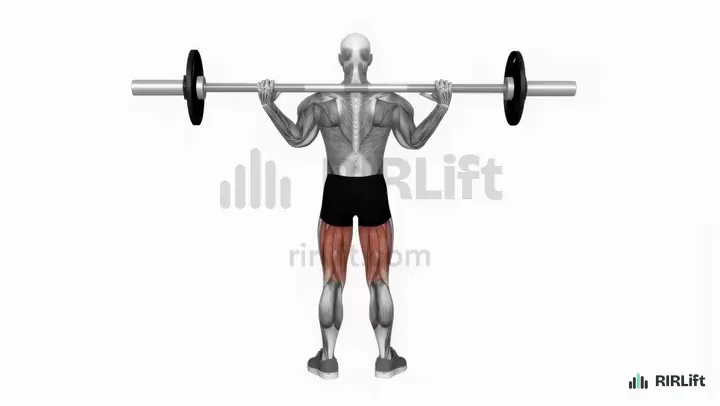
  1. Barbell Back Squat Quads, Glutes, Adductors
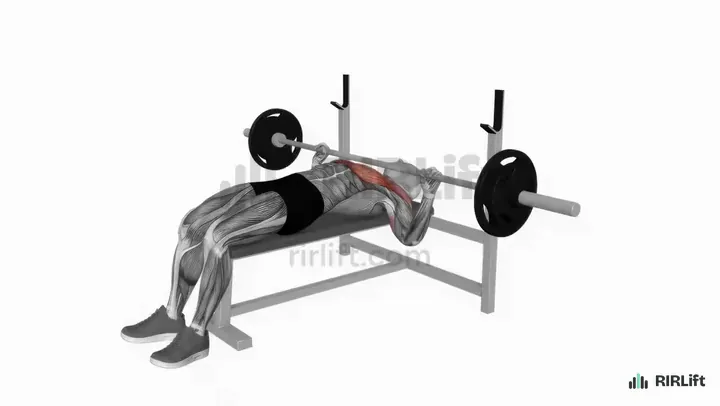
  2. Barbell Bench Press Chest
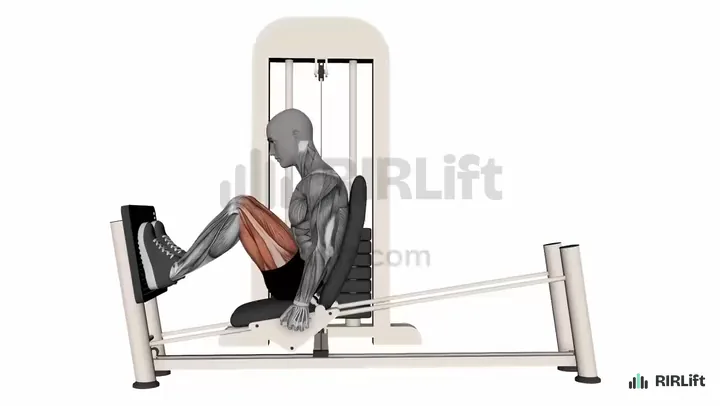
  3. Leg Press Quads, Glutes
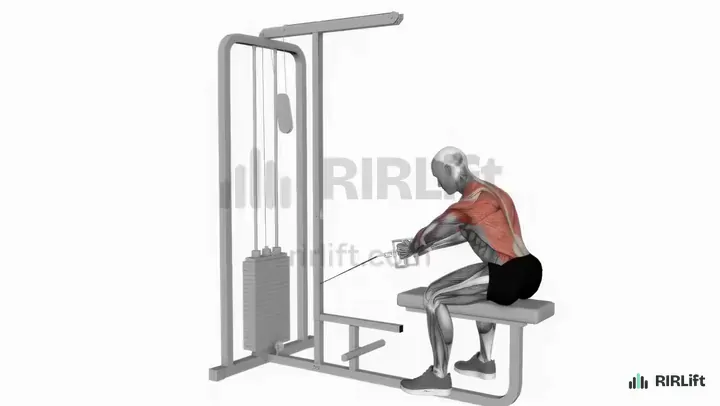
  4. Seated Cable Row Upper Back, Lats
  5. Bulgarian Split Squat Quads, Glutes
  6. Leg Extension Quads

The lifts that show a stall first

Heavy compound lifts are where a hard stretch shows. When one goes three sessions without a new rep, the recap offers a step back about 10% lighter.

Quads and glutes, barbell squat

Barbell Back Squat

Quads, Glutes, Adductors

The lift most likely to stall first in a hard week, and the one the recap's step-back offer usually starts with.

How to do it

  1. Set the bar across your upper back, grip it firmly, and step out with feet about shoulder-width apart.
  2. Take a big breath into your belly and brace.
  3. Sit down between your heels until your thighs are at least parallel to the floor.
  4. Drive up, keeping your chest and hips rising together.

Cues

  • Brace before every rep
  • Knees track over toes
  • Stand up fast

Common mistakes

  • Cutting depth as the weight rises: keep the same depth and load what you can hit there.
  • Folding forward out of the bottom: keep the chest up and drive your upper back into the bar.

Swap for: Front Squat, Goblet Squat

Chest, shoulders and triceps, barbell press

Barbell Bench Press

Chest

The upper day's main lift. A run of sessions with no new rep is the signal, whatever the training load says.

How to do it

  1. Lie on the bench with your eyes under the bar, feet planted, and squeeze your shoulder blades back and down into the pad.
  2. Grip the bar a little wider than shoulder width, unrack it, and hold it over your shoulders with locked elbows.
  3. Lower the bar to your lower chest, around nipple height, with your elbows angled roughly 45 to 70 degrees from your sides.
  4. Touch your chest without bouncing, then press the bar up and slightly back until it is over your shoulders again.

Cues

  • Shoulder blades stay pinned
  • Bar to the nipple line
  • Drive your feet into the floor

Common mistakes

  • Flaring the elbows straight out to the sides: let them sit a bit closer to your ribs so your shoulders stay comfortable.
  • Lifting your hips off the bench to finish a rep: keep your glutes down and count that rep as your last.

Swap for: Flat Dumbbell Press, Smith Machine Bench Press, Machine Chest Press

Lats and upper back, cable pull

Lat Pulldown

Lats

The upper day's pull, at 2 reps in reserve so it adds work without adding to the stall.

How to do it

  1. Set the thigh pad so your legs are locked under it, then stand up and take the bar a little wider than your shoulders, palms forward.
  2. Sit down with your arms fully stretched overhead and lean back only slightly.
  3. Pull the bar to your upper chest by driving your elbows down toward your hips.
  4. Let the bar rise until your arms are straight and your shoulders lift toward your ears, then pull again.

Cues

  • Elbows to your back pockets
  • Bar to the top of the chest
  • Let the stack lift you at the top

Common mistakes

  • Leaning far back and rowing the bar to your stomach: stay nearly upright so it remains a vertical pull.
  • Stopping with the arms still bent at the top: the stretch overhead is half of what makes the pulldown work.

Swap for: Pull-Up, Neutral-Grip Lat Pulldown, Single-Arm Lat Pulldown

Machines for a lighter week

Easy to load about 10% lighter while the movement stays the same.

Quads and glutes, machine press

Leg Press

Quads, Glutes

Easy to take 10% off for a lighter week: move the pin or drop a plate a side.

How to do it

  1. Sit in the machine with your whole back against the pad and your feet hip-width on the platform.
  2. Release the safety handles and bend your knees, bringing the platform toward you under control.
  3. Lower until your knees are bent to about 90 degrees or a little deeper, without your lower back curling off the pad.
  4. Press the platform away until your legs are nearly straight, and repeat.

Cues

  • Lower back stays on the pad
  • Whole foot pushes
  • Stop just short of locking out

Common mistakes

  • Going so deep that your hips roll up off the seat: stop where your back stays flat.
  • Snapping the knees straight at the top: keep a soft bend.

Swap for: 45-Degree Leg Press, Hack Squat, Barbell Back Squat

Mid back, cable row

Seated Cable Row

Upper Back, Lats

A back lift that keeps the movement in the lighter week at a weight you can move with reps to spare.

How to do it

  1. Sit at the cable row with your feet on the platform and knees slightly bent, holding a close-grip handle with your arms straight.
  2. Sit tall with your chest up and let the cable pull your shoulder blades forward a little.
  3. Row the handle to your lower ribs, driving your elbows back past your torso.
  4. Return it under control until your arms are straight and your shoulders reach forward, then repeat.

Cues

  • Sit tall, no rocking
  • Handle to the belly button
  • Shoulders reach at the front

Common mistakes

  • Rocking back and forth to move the stack: your torso should stay close to upright throughout.
  • Shrugging the handle up toward your neck: pull your shoulders down before the elbows bend.

Swap for: Chest-Supported Row, Single-Arm Cable Row, Barbell Row

Hamstrings, machine curl

Seated Leg Curl

Hamstrings

Hamstring work for the lighter week that leaves the lower back fresh.

How to do it

  1. Set the backrest so your knees line up with the machine's pivot, and lock the thigh pad down firmly.
  2. Rest the lower pad just above your heels with legs straight.
  3. Curl your heels down and back under the seat as far as they go.
  4. Let the pad rise slowly until your legs are straight again, and repeat.

Cues

  • Thigh pad snug
  • Pull heels under the seat
  • Two seconds on the way up

Common mistakes

  • Lifting your hips off the seat to finish the rep: tighten the thigh pad and lighten the stack.
  • Letting the stack crash between reps: control it all the way to straight legs.

Swap for: Lying Leg Curl, Romanian Deadlift, Nordic Hamstring Curl

Extra leg work

Adding sets raises the training load and a muscle's weekly hard sets at once. The second number tells you where the work went.

Quads and glutes, single-leg squat

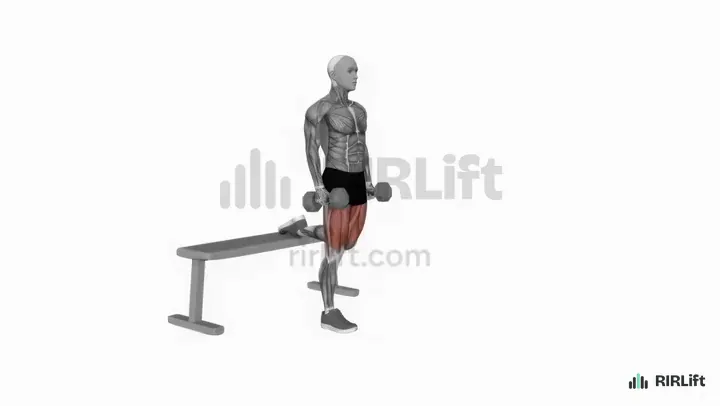
Bulgarian Split Squat

Quads, Glutes

The main lift of the extra leg day. One leg at a time adds quad work with lighter dumbbells than a squat needs.

How to do it

  1. Set the top of your back foot on a bench and place your front foot a long stride ahead.
  2. Hold a dumbbell in each hand at your sides, and keep your front foot flat.
  3. Drop your back knee straight toward the floor until the front thigh is close to level.
  4. Press through the front foot to rise, then finish all reps before switching legs.

Cues

  • Go deep for the inner thigh
  • Front foot flat
  • Rear foot is just a kickstand

Common mistakes

  • Pushing up with the back leg: let it relax and make the front leg do the work.
  • Front knee collapsing inward: keep it pointed the same way as your toes.

Swap for: Dumbbell Split Squat, Step-Up, Reverse Lunge

Quads, machine extension

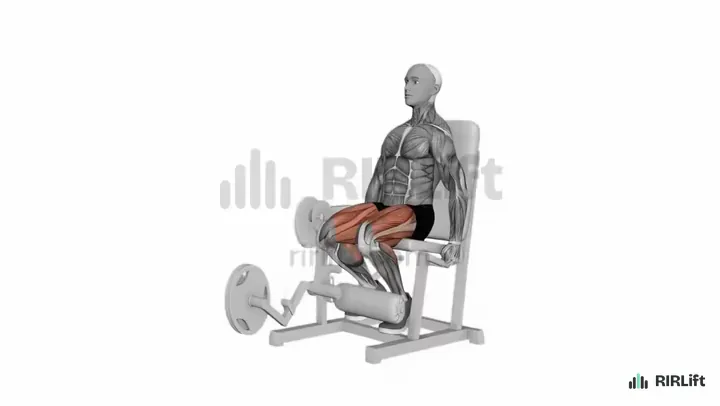
Leg Extension

Quads

Quad sets with little fatigue elsewhere, so the extra day doesn't eat into your main leg day.

How to do it

  1. Sit with your knees at the pivot and the pad on your lower shins.
  2. Straighten both knees until your legs are level.
  3. Lower slowly. Build up the weight over 2 lighter sets.

Cues

  • Squeeze at the top
  • Control the drop

Common mistakes

  • Letting the stack slam between reps: keep tension on.

Swap for: Single-Leg Leg Extension, Sissy Squat

Hamstrings, machine curl

Lying Leg Curl

Hamstrings

Balances the extra quad work.

How to do it

  1. Set the machine so your knees line up with the pivot point when you lie face down, and move the ankle pad to sit on your lower calves, just above your heels.
  2. Lie flat with your kneecaps hanging just past the end of the bench, hold the handles and press your hips into the pad.
  3. Bend your knees and pull the pad up in a smooth arc until your heels are as close to your glutes as the machine allows.
  4. Pause for a moment at the top without letting your hips lift off the bench.
  5. Lower the pad over about two seconds until your legs are almost straight, and start the next rep before the stack touches down.

Cues

  • Hips glued to the pad
  • Heels to glutes
  • Slow on the way down

Common mistakes

  • Lifting your hips as the weight gets heavy: your lower back takes over and the hamstrings do less. Drop the load until your hips stay down on every rep.
  • Stopping short at the bottom: that cuts out the part of the rep where your hamstrings are longest. Let your legs come back to almost straight before you curl again.
  • Swinging the pad up: a kick from the bottom hands the hardest part of the rep to momentum. Count two seconds down and start each rep from a dead stop.

Put them together: example sessions

Each session below picks from the exercises above for one situation, with the sets, reps, rest and RIR filled in.

Session 1

A hard week: training load reads above

  • Workouts4× a week
  • Working sets36 a week
  • Per workout~25 min
  • EquipmentBarbells, Leg Press, Lying Leg Curl, Flat Bench +2

Training load says above, your main lifts feel heavy, and you want to know whether to back off.

An upper and a lower day, each run twice, close to failure, 9 working sets each. The squat and bench are where a stall would show.

Lower
ExerciseSets × repsRIRRest
Barbell Back Squat2 warm-up sets first 3 × 4–6 1 3 min
Leg Press 3 × 8–12 2 2 min
Lying Leg Curl 3 × 10–15 1 90 s
Upper
ExerciseSets × repsRIRRest
Barbell Bench Press1 warm-up set first 3 × 4–6 1 2:30 min
Lat Pulldown 3 × 8–12 2 90 s
Seated Cable Row 3 × 8–12 2 90 s
How to run it
Upper, lower, rest, upper, lower. If you rate lifting workouts in Apple's Workout app, use one rule every time, for example: most sets ended 1 or 2 reps short of failure means hard. Let the lifts decide when to back off.
How to progress
Squat at 255 lb for 5, 4, 4 against a target of 5: the weakest set fell short, so 255 lb and the target both hold. If the squat goes three sessions without a new rep, the recap offers a step back about 10% lighter, rounded to your plates; you choose Deload or Not yet.

Session 2

The lighter week: training load drops

  • Workouts2× a week
  • Working sets24 a week
  • Per workout~35 min
  • EquipmentBarbells, Leg Press, Cable Row, Seated Leg Curl

You accepted the step back the recap offered, and training load now reads below.

The squat at the lighter weight the recap offered, with the leg press, row and leg curl kept 3 reps short of failure: 12 working sets, twice this week. A falling load is the point of the week.

Lighter full body
ExerciseSets × repsRIRRest
Barbell Back Squat2 warm-up sets first 3 × 4–6 3 3 min
Leg Press 3 × 8–12 3 2 min
Seated Cable Row 3 × 8–12 3 90 s
Seated Leg Curl 3 × 10–15 3 90 s
How to run it
Twice this week, then go back to your usual days. Nothing about the lighter week needs a date: it starts when you accept it, and the climb back starts from what you lift.
How to progress
Squat stepped back from 255 lb to 230 lb with the target at 4, the bottom of 4 to 6. Log 6, 6, 6 and every set tops the range, so the next session opens at 235 lb for 4. If the leg press stalled too, it goes from 400 lb to 360 lb for 8 and builds back the same way.

Session 3

Adding a third leg day

  • Workouts1× a week
  • Working sets9 a week
  • Per workout~15 min
  • EquipmentDumbbells, Leg Extension, Lying Leg Curl

Your legs are behind, you add a short session, and training load climbs.

Split squats, leg extensions and leg curls: 9 working sets, most of them for the quads, in about 20 minutes.

Extra leg day
ExerciseSets × repsRIRRest
Bulgarian Split Squat 3 × 8–10 2 90 s
Leg Extension 3 × 10–15 1 1 min
Lying Leg Curl 3 × 10–15 1 1 min
How to run it
Once a week, away from your main leg days. A working set logged with 4 or fewer reps in reserve counts as a hard set, and RIRLift's weekly count per muscle shows whether the extra day added what you meant it to.
How to progress
Split squats with 35 lb dumbbells for 10, 10, 10 top the 8 to 10 range: next time 40 lb for 8. Leg extension at 120 lb for 12, 12, 11 against a target of 11: the weakest set hit it, so the weight holds and the target goes to 12.

Make it fit you

Questions

What is training load on Apple Watch?

Apple's comparison of the intensity and duration of your last 7 days of workouts with the 28 days before, on a scale from well below to well above. Open the Activity app, tap the Workload button and turn the Digital Crown to see it.

Why doesn't my Apple Watch rate my strength workout?

Apple's guide describes estimated effort ratings for cardio-focused workouts, and DC Rainmaker's 2024 list of automatically rated workouts doesn't include strength training. For a workout recorded in Apple's Workout app, rate it yourself on the Watch after you end it, or in the Fitness app on iPhone under Sessions, then Effort.

How is training load calculated?

Apple says it compares workout intensity and duration over the last 7 days with the 28 days before. DC Rainmaker, after 30 days of testing in 2024, describes it as the effort rating times the workout's duration.