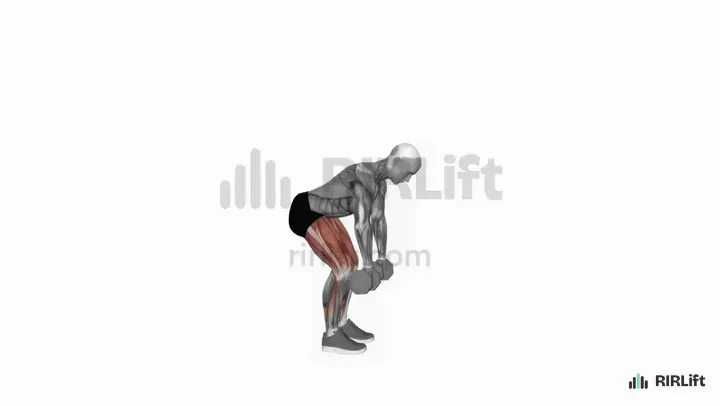
Back exercises with dumbbells: lats, upper back, traps and lower back

The best back exercises with dumbbells are the one-arm row and the bent-over row for your lats, the incline (chest-supported) row and Y raise for your upper back, the shrug and rear delt fly for your traps and rear delts, and the Romanian deadlift and good morning for your lower back. Pick one row where your elbow tucks to your hip, one where it flares wide, a shrug, and a hinge, and you have covered the whole back. A bench adds the chest-supported versions, which let you row hard without your lower back giving out first.

  1. One-Arm Dumbbell Row Lats, Upper Back
  2. Dumbbell Bent-Over Row Upper Back, Lats
  3. Incline Dumbbell Row Upper Back, Lats
  4. Dumbbell Lat Pullover Lats
  5. Dumbbell Pendlay Row Lats, Upper Back
  6. Dumbbell Chest-Supported Y Raise Shoulders
  7. Dumbbell Shrug Traps
  8. Dumbbell Rear Delt Fly Shoulders
  9. Dumbbell Romanian Deadlift Hamstrings, Glutes

Dumbbell exercises for lats

Your lats pull your upper arm down and back toward your hip, so every lat exercise here either rows with the elbow tucked close to your ribs or sweeps a straight arm from overhead to your chest. Pick one row and, if you have a second slot, the pullover, which loads the lats in their stretched position where rows run out of range.

Lats, one-arm horizontal pull

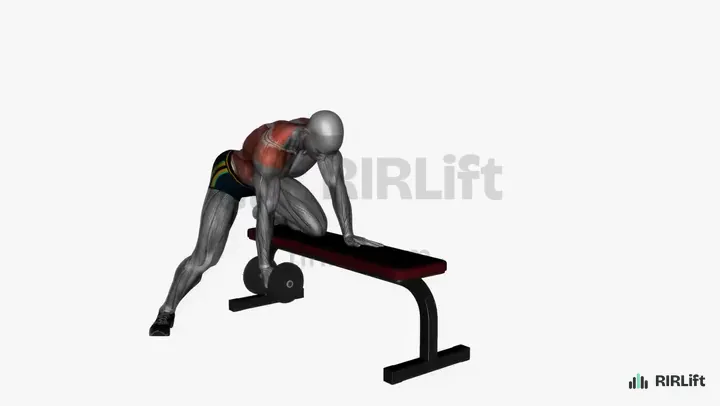
One-Arm Dumbbell Row

Lats, Upper Back

With your free hand braced on a bench or chair, your lower back is out of the picture, so you can row one dumbbell as hard as you like and reach a full stretch at the bottom. It is the first dumbbell back exercise to learn and the one that keeps earning a spot as you get stronger.

How to do it

  1. Put your left hand and left knee on a bench, or your left hand on a chair seat with both feet on the floor, so your torso is nearly flat.
  2. Let the dumbbell hang from your right hand with the arm straight and your shoulder blade dropping toward the floor.
  3. Drive your elbow back toward your hip until the dumbbell reaches your ribs, keeping the elbow close to your side.
  4. Lower under control until your arm is straight and your shoulder blade slides forward again, then repeat. Do all reps, then switch sides.

Cues

  • Elbow to your back pocket
  • Let the shoulder blade reach at the bottom
  • Hips square to the floor

Common mistakes

  • Twisting your torso to lift the dumbbell higher: keep both shoulders level and lighten the load.
  • Stopping with the arm half bent at the bottom: a rep only counts if it starts from a straight arm and a stretched lat.

Swap for: Dumbbell Lawnmower Row, Dumbbell Pendlay Row, Kettlebell Row

Lats and mid-back, two-arm horizontal pull

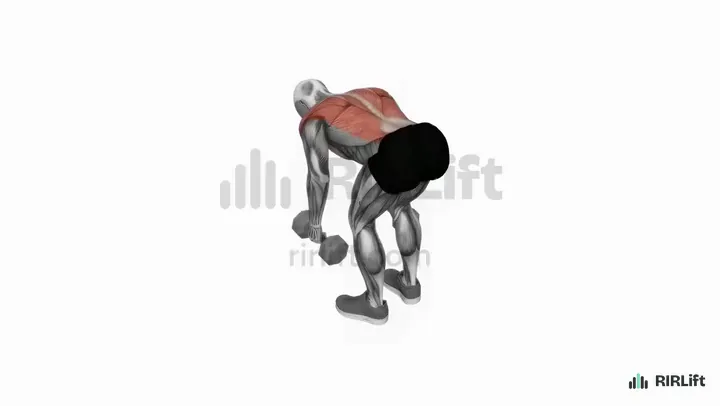
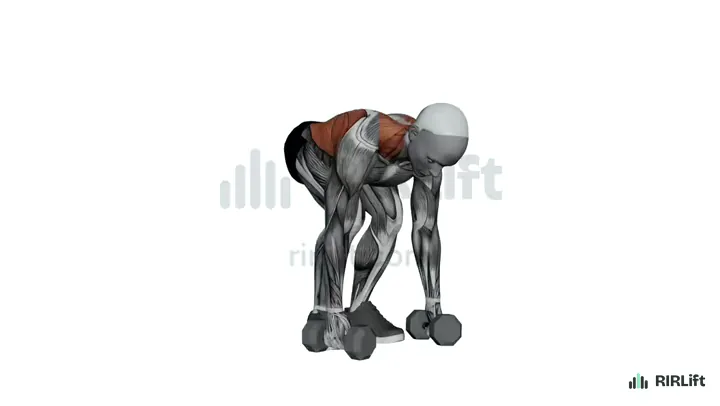
Dumbbell Bent-Over Row

Upper Back, Lats

Two dumbbells at once let you move more total weight and hit the lats and the middle of the back in the same set, with nothing but floor space. It costs your lower back some effort to hold the hinge, which is the price of rowing without a bench.

How to do it

  1. Stand hip-width apart, a dumbbell in each hand, palms turned toward each other.
  2. Send your hips back, soften your knees, and fold forward until your torso is close to parallel with the floor and your back is flat.
  3. Pull both dumbbells to your lower ribs with your elbows tucked, and pause for a second with your shoulder blades drawn together.
  4. Lower until your arms are straight and the dumbbells hang under your shoulders, then repeat without standing up.

Cues

  • Same torso angle every rep
  • Pause a second at the top
  • Pull with the elbows, not the hands

Common mistakes

  • Standing taller as the set gets hard, which turns the row into a shrug: stop the set when you can no longer hold the hinge.
  • Bouncing the dumbbells out of the bottom: take two seconds to lower every rep.

Swap for: Reverse-Grip Dumbbell Row, Dumbbell Pendlay Row, Barbell Row

Lats and mid-back, dead-stop row

Dumbbell Pendlay Row

Lats, Upper Back

Setting the dumbbells on the floor between reps removes the stretch reflex, so every rep starts from zero and you can tell exactly how strong you are. It suits heavier adjustable dumbbells better than a light pair, because each rep has to be earned from a dead stop.

How to do it

  1. Place two dumbbells on the floor just in front of your feet and hinge down until your torso is level with the floor, back flat.
  2. Grip both dumbbells, take the slack out of your arms, and brace your trunk.
  3. Row both dumbbells to your lower ribs in one strong pull, elbows close to your sides.
  4. Lower them all the way back to the floor, let them settle, and reset your back before the next rep.

Cues

  • Dead stop on the floor every rep
  • Flat back before you pull
  • Explode up, control down

Common mistakes

  • Tapping the dumbbells and bouncing them back up: let them come to rest, then pull again.
  • Raising your torso as you row: the chest stays at the same height from the first rep to the last.

Swap for: Dumbbell Bent-Over Row, Pendlay Row, One-Arm Dumbbell Row

Lower lats, underhand row

Reverse-Grip Dumbbell Row

Lats

Turning your palms forward keeps your elbows glued to your sides, which pulls the work down toward the lower lats and brings in more biceps. It makes a good second row in a session that already has a wide-elbow row.

How to do it

  1. Take a dumbbell in each hand, palms turned forward, and hinge at your hips until your torso is near parallel to the floor.
  2. Let the dumbbells hang under your shoulders with straight arms.
  3. Row them toward your hips, elbows close to your body, and finish each rep with a hard squeeze between the shoulder blades.
  4. Lower slowly to straight arms and repeat without standing up between reps.

Cues

  • Elbows brush your sides
  • Dumbbells travel to your hips, not your chest
  • Hold the hinge

Common mistakes

  • Curling the dumbbells instead of rowing them: keep your wrists straight and start the pull from the elbow.
  • Rounding your lower back as you tire: end the set when the hinge starts to fold.

Swap for: Dumbbell Bent-Over Row, One-Arm Dumbbell Row, Underhand Barbell Row

Lats, straight-arm stretch

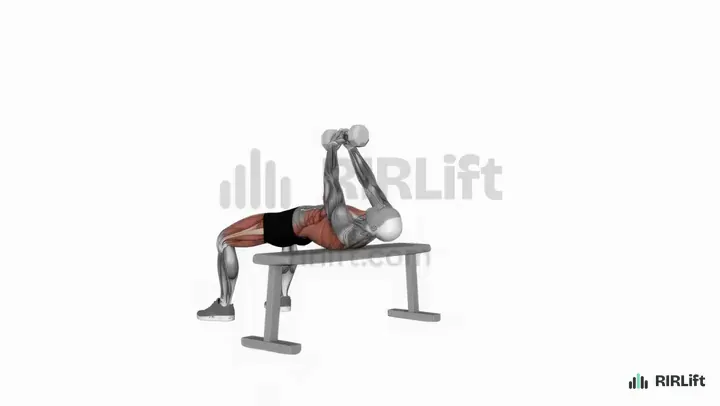
Dumbbell Lat Pullover

Lats

Lowering a dumbbell behind your head loads the lats at their longest length, which rows cannot do, and it keeps your biceps out of the lift. Across a bench you get the deepest stretch, but it works lying on the floor with a smaller range, which is why it appears in the no-bench session.

How to do it

  1. Lie on a bench with your upper back on it and your feet flat, or lie flat on the floor with your knees bent.
  2. Hold one dumbbell with both hands under the top plate, arms straight above your chest.
  3. Keep your elbows softly bent and fixed, and let the dumbbell travel back behind your head in an arc. Stop once your upper arms reach the line of your body, or once the dumbbell nears the floor if you are lying down.
  4. Pull it back over your chest along the same arc, feeling the pull come from your armpits, and repeat.

Cues

  • Ribs down, no arching
  • Pull with your armpits
  • Stop when upper arms line up with your torso

Common mistakes

  • Bending the elbows more as the dumbbell goes back, which turns it into a triceps extension: fix the elbow angle and lighten the load.
  • Letting your ribcage flare to go deeper: brace your abs and stop at the point where your back wants to arch.

Swap for: Kettlebell Pullover, Straight-Arm Pulldown, Dumbbell Chest Pullover

Dumbbell exercises for upper back and rhomboids

The muscles between your shoulder blades work hardest when you row with your elbows out wide and finish by pulling the blades together. A bench makes this group much better, because resting your chest on it removes the lower back from the lift and lets you take the set close to failure.

Upper back, chest-supported row

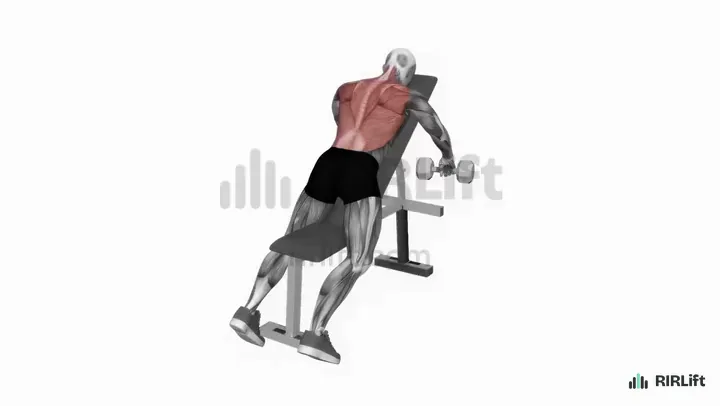
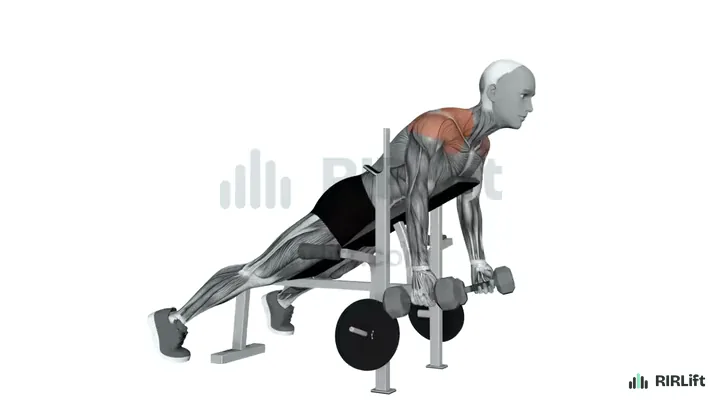
Incline Dumbbell Row

Upper Back, Lats

With your chest on an incline bench, your lower back does no work, so the only thing that can end the set is the muscle you are training. It is the row to take closest to failure, and the main reason a bench upgrades your dumbbell back training.

How to do it

  1. Set a bench to about 45 degrees and lie chest-down on it, a dumbbell in each hand, arms hanging straight toward the floor.
  2. Row the dumbbells up by driving your elbows back and slightly out, until your upper arms reach the line of your body.
  3. Squeeze your shoulder blades together for a second at the top with your chest still on the pad.
  4. Lower until your arms are straight and your shoulder blades slide forward, then repeat.

Cues

  • Chest glued to the pad
  • Elbows wide for upper back, tucked for lats
  • Full stretch between reps

Common mistakes

  • Lifting your chest off the pad to finish reps: that is your lower back joining in. Stop the set there.
  • Shrugging the dumbbells up instead of rowing them: pull the shoulder blades down and back before the elbows bend.

Swap for: Chest-Supported Row, One-Arm Dumbbell Row, Dumbbell Rear Delt Row

Upper back and lats, plank row

Renegade Row

Lats, Upper Back

Rowing from a plank trains your back while your trunk fights to stay square, so one pair of dumbbells covers your back and your abs in the same set. The load is limited by how still you can hold the plank, which makes it a high-rep move for a light pair rather than a heavy builder.

How to do it

  1. Set two dumbbells on the floor about shoulder-width apart and take a push-up position with a hand on each handle, feet a little wider than your hips.
  2. Brace your abs so your body is one straight line from head to heels.
  3. Row the right dumbbell to your hip, keeping the elbow close to your body and your hips level.
  4. Place it back down with control, then row the left. Keep alternating until the set is done.

Cues

  • Hips stay level, no rolling
  • Push the floor away with the planted hand
  • Elbow to hip

Common mistakes

  • Rotating your hips toward the ceiling to make room for the row: widen your feet and lower the weight until the hips stay flat.
  • Sagging through the lower back between reps: if the plank breaks, the set is over.

Swap for: One-Arm Dumbbell Row, Dumbbell Bent-Over Row, Kettlebell Row

Lower traps and rhomboids, chest-supported raise

Dumbbell Chest-Supported Y Raise

Shoulders

Raising light dumbbells into a Y shape with your chest on an incline bench trains the lower traps, the muscles that pull your shoulder blades down and keep them flat. They rarely get worked by rows, and training them makes every row and overhead press feel more stable.

How to do it

  1. Set a bench to about 45 degrees and lie chest-down on it with a very light dumbbell in each hand, arms hanging and thumbs pointing forward.
  2. Raise both arms up and out at about 30 degrees from your head, so your body makes a Y, until your arms reach the line of your body.
  3. Hold for a second at the top with your shoulder blades pulled down toward your back pockets.
  4. Lower slowly to a full hang and repeat.

Cues

  • Thumbs up the whole way
  • Shoulder blades down, not up
  • Lighter than you think

Common mistakes

  • Shrugging toward your ears as the arms rise: that moves the work to the upper traps. Lead with the shoulder blades sliding down.
  • Going heavy and swinging: this is a 5 to 10 pound exercise for most people, done for 12 to 20 reps.

Swap for: Incline Dumbbell Rear Delt Raise, Dumbbell Face Pull, Face Pull

Dumbbell exercises for traps and rear delts

Rows reach your middle traps, but the upper traps and rear delts need their own sets: shrugs that lift straight up with a hold, and flies that raise the dumbbells out to the side with a slight elbow bend. Both work fine with a light pair, because they respond to high reps and a hard squeeze more than to load.

Upper traps, standing shrug

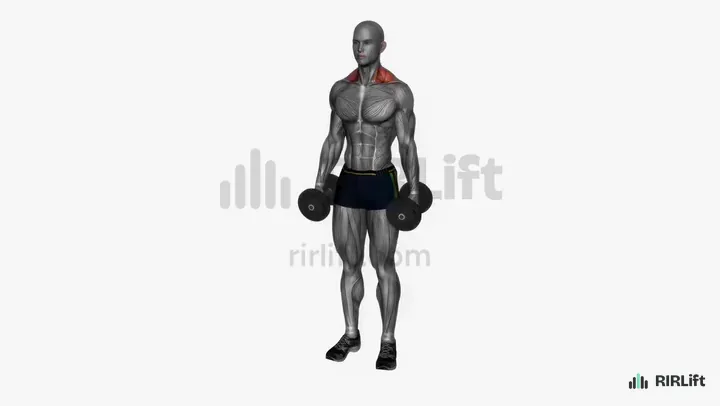
Dumbbell Shrug

Traps

Dumbbells at your sides let you shrug straight up without a bar in the way of your thighs, and the grip gives your forearms a free workout. Upper traps respond to heavy loads with a hold at the top, so use the heaviest dumbbells you have.

How to do it

  1. Stand tall holding a dumbbell at each side, palms facing in, arms straight.
  2. Lift your shoulders straight up toward your ears as high as they go.
  3. Hold the top for one full second.
  4. Lower slowly until your shoulders are fully dropped, then repeat.

Cues

  • Straight up, not rolled
  • One-second hold at the top
  • Arms stay straight

Common mistakes

  • Rolling the shoulders in a circle: it adds nothing for the traps and is hard on the joint. Up and down only.
  • Bending the elbows to lift the dumbbells higher: that is your biceps helping. Lighten the load and keep the arms long.

Swap for: Incline Dumbbell Shrug, Barbell Shrug, Farmer's Walk

Upper and middle traps, supported shrug

Incline Dumbbell Shrug

Traps

Leaning your back on an incline bench changes the angle of the shrug so your shoulder blades move up and back, reaching the middle traps as well as the top. The bench also stops you from using your legs to bounce the weight, so a lighter pair does more.

How to do it

  1. Set a bench to about 45 degrees and sit back against it, a dumbbell in each hand, arms hanging at your sides.
  2. Shrug your shoulders up and slightly back toward the bench, keeping your arms straight.
  3. Hold for a second at the top.
  4. Lower under control until your shoulders are fully stretched, then repeat.

Cues

  • Back stays on the pad
  • Up and back, toward the bench
  • Two seconds down

Common mistakes

  • Lifting your back off the pad to get the dumbbells higher: the range is short on purpose. Stay on the bench.
  • Letting the dumbbells drop at the bottom: control the lowering so the traps work on the way down too.

Swap for: Dumbbell Shrug, Barbell Shrug, Dumbbell Chest-Supported Y Raise

Rear delts and rhomboids, bent-over fly

Dumbbell Rear Delt Fly

Shoulders

Bending over and raising the dumbbells out to the sides hits the rear delts and the muscles between your shoulder blades, which rows only partly cover. It needs no bench and very little weight, so it fits into any session with one light pair.

How to do it

  1. Hold a light dumbbell in each hand and hinge forward until your torso is near parallel to the floor, standing or sitting on the edge of a bench.
  2. Let the dumbbells hang under your shoulders, elbows softly bent, palms facing each other.
  3. Raise both arms out wide until they reach shoulder level, finishing with a hard squeeze between the shoulder blades.
  4. Lower slowly to the start and repeat.

Cues

  • Lead with the elbows, not the hands
  • Slight elbow bend, fixed all set
  • Squeeze at the top

Common mistakes

  • Swinging your torso up to lift the dumbbells: if the chest rises, the weight is too heavy for the rear delts.
  • Pulling the elbows back into a row: the arms move out to the sides in a wide arc, not toward your hips.

Swap for: Incline Dumbbell Rear Delt Raise, Dumbbell Face Pull, Reverse Pec Deck

Rear delts, chest-supported fly

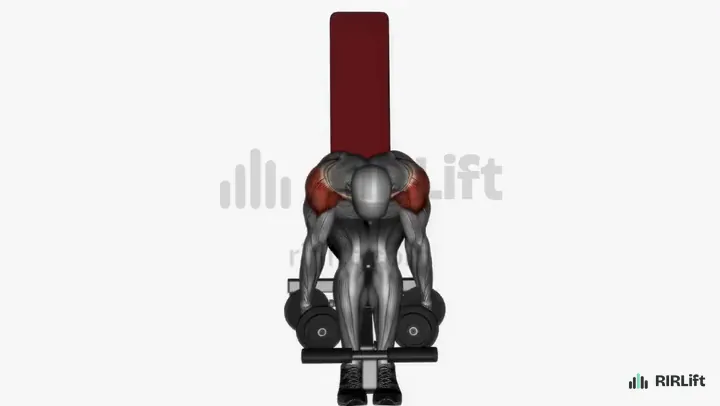
Incline Dumbbell Rear Delt Raise

Shoulders

Lying chest-down on an incline bench takes away every way to cheat the rear delt fly, so each rep comes from the rear delts and the upper back alone. It is the version to use when you have a bench and want to take rear delts to failure without your lower back limiting you.

How to do it

  1. Set a bench to about 45 degrees and lie chest-down with a light dumbbell in each hand, arms hanging and palms facing each other.
  2. Keep your elbows softly bent and sweep both arms out wide until they reach shoulder level.
  3. Pause for a second at the top with your shoulder blades pulled together.
  4. Lower under control to a full hang and repeat.

Cues

  • Chest stays on the pad
  • Arms out wide, not back
  • Pause at the top

Common mistakes

  • Bending the elbows more as you tire, which shortens the lever and cheats the rep: keep the angle fixed and lower the weight.
  • Using so much weight that the dumbbells stop short of shoulder height: full range with a light pair beats half range with a heavy one.

Swap for: Dumbbell Rear Delt Fly, Dumbbell Chest-Supported Y Raise, Face Pull

Dumbbell exercises for lower back

Your spinal erectors hold your spine still while your hips hinge, so the two lower-back moves here are both hinges: the Romanian deadlift with the dumbbells in your hands, and the good morning with them at your shoulders. Put one of them at the end of a back session, or skip them on weeks you already squat and deadlift heavy.

Lower back, hamstrings and glutes, hinge

Dumbbell Romanian Deadlift

Hamstrings, Glutes

Holding dumbbells in front of your thighs and hinging at the hips makes your spinal erectors hold your spine still against a load, which is exactly their job. Keeping the dumbbells in your hands lets you load the hinge heavier than the good morning, so this is the lower-back move to use once your pair goes past about 30 pounds.

How to do it

  1. Stand hip-width apart with a dumbbell in each hand resting against the front of your thighs, palms facing you.
  2. Push your hips straight back and let your torso fold forward, knees softly bent, the dumbbells brushing your legs.
  3. Lower until the dumbbells pass your knees and you feel a strong stretch in your hamstrings, with your back still flat.
  4. Drive your hips forward to stand back up, squeezing your glutes at the top, and repeat.

Cues

  • Hips back, not down
  • Dumbbells slide down your legs
  • Flat back, chin tucked

Common mistakes

  • Bending the knees into a squat so the dumbbells go lower: the depth comes from the hips, and most people stop just past the knees.
  • Rounding the lower back at the bottom: end the rep where your back stays flat, and lighten the load if that is high.

Swap for: Single-Leg RDL, Dumbbell Good Morning, Kettlebell Deadlift

Lower back and hamstrings, hinge

Dumbbell Good Morning

Hamstrings, Lower Back

Holding the dumbbells at your shoulders instead of in your hands moves the load up your body, so a light pair becomes a real challenge for your spinal erectors and hamstrings. It fills the deadlift slot in a session where your dumbbells are too light to make a Romanian deadlift hard.

How to do it

  1. Stand hip-width apart holding a dumbbell at each shoulder, elbows pointing forward.
  2. Push your hips back and hinge forward, knees softly bent, back flat.
  3. Lower until your torso is close to parallel to the floor or your hamstrings stop you.
  4. Drive your hips forward to stand up tall and repeat.

Cues

  • Hips back first
  • Dumbbells stay pinned to the shoulders
  • Stop where the back stays flat

Common mistakes

  • Bending at the waist instead of the hips, so the back rounds: imagine closing a door behind you with your hips.
  • Going heavier than you can hold at the shoulders: the lower back works plenty with a light pair for 10 to 15 reps.

Swap for: Dumbbell Romanian Deadlift, Superman, Band Good Morning

Put them together: example sessions

Each session below picks from the exercises above for one situation, with the sets, reps, rest and RIR filled in. Open one in the session builder to change a pick, price it from a recent set, and add it to RIRLift.

Session 1

One pair of dumbbells at home, no bench

Open in the session builder
  • Workouts2× a week
  • Working sets27 a week
  • Per workout~30 min
  • EquipmentDumbbells

You train at home with one fixed pair of dumbbells, a chair, and floor space, and no bench.

Without a bench, every row is done bent over or braced on a chair, so these sessions put the rows first while your lower back is fresh, the shrugs and flies in the middle, and one deliberate hinge last as the only exercise that trains the lower back on purpose. A fixed pair stops getting heavier, so the rep ranges run high and the rows, shrugs and flies end 0 to 1 reps short of failure and the two hinges stop at 2, which grows muscle about as well as heavier sets would. Session A has 14 working sets and session B has 13.

Back A
ExerciseSets × repsRIRRest
One-Arm Dumbbell RowPer arm. Free hand on a chair seat. 3 × 10–20 1 1 min
Dumbbell Bent-Over RowPause 1 s at the top. Hold the hinge. 3 × 10–20 1 90 s
Dumbbell Rear Delt FlyStanding, bent over. Lead with elbows. 3 × 12–25 0 1 min
Dumbbell ShrugHold 1 s at the top. 2 s down. 3 × 12–20 1 1 min
Dumbbell Good MorningDumbbells at the shoulders. Hips back. 2 × 10–15 2 90 s

Open Back A in the session builder

Back B
ExerciseSets × repsRIRRest
Reverse-Grip Dumbbell RowPalms forward. Dumbbells to the hips. 3 × 10–20 1 90 s
Renegade RowPer arm. Feet wide, hips level. 3 × 8–15 1 1 min
Dumbbell Lat PulloverOn the floor, knees bent. Ribs down. 3 × 10–20 1 1 min
Dumbbell ShrugLast set: hold the top 2 s each rep. 2 × 12–20 0 1 min
Dumbbell Romanian Deadlift3 s down. Stop just past the knees. 2 × 10–15 2 90 s

Open Back B in the session builder

How to run it
Do Back A and Back B once each per week with at least a day between them. The one-arm row uses a chair seat for your free hand, and the pullover is done lying on the floor with bent knees.
How to progress
Add reps each session until every set hits the top of its range at the target reps in reserve, then make the exercise harder instead of heavier: lower over three seconds, pause a second at the top of every row, or add half reps in the stretched bottom once full reps run out.

Session 2

Adjustable dumbbells and a bench

Open in the session builder
  • Workouts2× a week
  • Working sets32 a week
  • Per workout~40 min
  • EquipmentDumbbells, Incline Bench

You have adjustable dumbbells that go reasonably heavy and a bench that inclines, and back is one of your main training days.

A bench means chest-supported rows, Y raises and prone rear delt raises, which take your lower back out of most of the session and let you push rows to 1 rep in reserve safely. Heavier dumbbells make the dead-stop row and the Romanian deadlift worth loading, so those two open session B at lower reps and longer rests. Each session is 16 working sets, with a hinge in B only so your lower back has a lighter day in A.

Back A
ExerciseSets × repsRIRRest
Incline Dumbbell Row1 warm-up set firstChest on the pad. Elbows wide. 4 × 8–12 1 2 min
One-Arm Dumbbell RowPer arm. Knee on the bench. Elbow to hip. 3 × 8–12 1 90 s
Dumbbell Lat PulloverAcross the bench. Full stretch overhead. 3 × 10–15 1 90 s
Incline Dumbbell Rear Delt RaisePause 1 s at the top. 3 × 12–20 0 1 min
Incline Dumbbell ShrugBack on the pad. Hold 1 s at the top. 3 × 10–15 1 1 min

Open Back A in the session builder

Back B
ExerciseSets × repsRIRRest
Dumbbell Pendlay Row1 warm-up set firstDead stop on the floor every rep. 4 × 6–10 2 2:30 min
Dumbbell Romanian Deadlift1 warm-up set firstHips back. Dumbbells brush the legs. 3 × 8–12 2 2:30 min
Dumbbell Chest-Supported Y RaiseVery light. Thumbs up, blades down. 3 × 12–20 1 1 min
Dumbbell Rear Delt FlySeated on the bench edge. 3 × 12–20 0 1 min
Dumbbell ShrugHeaviest pair. Hold 1 s at the top. 3 × 10–15 1 90 s

Open Back B in the session builder

How to run it
Do Back A and Back B once each per week with two or three days between them. If you run a push/pull/legs split, these are your two pull days, with biceps added at the end.
How to progress
Double progression: when every set of an exercise reaches the top of its rep range at the target reps in reserve, go up one dumbbell step and work back up. Lower the bench angle on the incline row by one notch when you want more lats and less upper back.

Session 3

Gym dumbbells as a back-day add-on

Open in the session builder
  • Workouts1× a week
  • Working sets9 a week
  • Per workout~20 min
  • EquipmentDumbbells, Incline Bench

You already train back in a gym with pull-ups or pulldowns and a barbell or cable row, and you want the dumbbell block that finishes the day.

Your big pulls are covered, so this block fills the gaps they leave: a one-arm row for the full lat stretch that pulldowns miss, a pullover for the lats at length, a prone rear delt raise for the rear delts, and a supported shrug for the upper traps. It is 9 working sets, so added to a vertical pull and a row you land in the 15 to 20 set range for the day without running long.

Dumbbell Back Finisher
ExerciseSets × repsRIRRest
One-Arm Dumbbell Row1 warm-up set firstPer arm. Heavy. Full stretch at the bottom. 3 × 8–12 1 90 s
Dumbbell Lat PulloverAcross a flat bench. Ribs down. 2 × 10–15 1 90 s
Incline Dumbbell Rear Delt RaisePause 1 s at the top. 2 × 12–20 0 1 min
Incline Dumbbell ShrugHold 1 s at the top. 2 s down. 2 × 10–15 1 1 min
How to run it
Run it once a week after your main vertical pull and row, on your back or pull day. For the full day, including the pull-up, pulldown and barbell row that come before this block, use the best workout for back page.
How to progress
Add reps until every set hits the top of its range at the target reps in reserve, then move to the next dumbbell on the rack. Keep the rear delt raise and the shrug at the same weight for a month and chase reps instead.

Make it fit you

Questions

What are the 3 best dumbbell back exercises?

The one-arm row for your lats, the incline (chest-supported) row for your upper back, and the dumbbell shrug for your traps. Without a bench, swap the incline row for the bent-over row. Those three cover the whole back, and every session on this page is built from them; the two home sessions each end with one hinge for the lower back.

Can you build a big back with just dumbbells?

Yes. Muscle grows from hard sets taken close to failure, and dumbbells can give your lats and upper back 10 to 20 of those sets a week, plus a few direct sets for your traps and rear delts. The limit is load: when your heaviest pair stops being hard for 20 reps on a row, you need heavier dumbbells or a pull-up bar to keep progressing.

Are 20 pound dumbbells enough to build muscle?

For back, 20 pound dumbbells build muscle as long as the set ends 0 to 2 reps short of failure, which for most people means 12 to 25 reps on rows and flies. Use one arm at a time, slow the lowering to three seconds, and pause at the top to make the pair last longer. The Romanian deadlift and the two-arm bent-over row are the first lifts to outgrow 20 pounds.

How do you do a dumbbell deadlift?

The dumbbell version is the Romanian deadlift: hold a dumbbell in each hand against your thighs, push your hips straight back with a slight knee bend, and lower the dumbbells along your legs until they pass your knees and your hamstrings are stretched, keeping your back flat. Then drive your hips forward to stand up. Do 8 to 15 reps, and stop the set when your lower back starts to round.

Can I do dumbbell back exercises without a bench?

Yes. Use the one-arm row with your free hand on a chair, the bent-over row, the renegade row from a plank, the rear delt fly standing bent over, the shrug and the Romanian deadlift. Do the pullover lying on the floor with bent knees. A bench only adds the chest-supported versions, which spare your lower back.

Are 3 exercises enough for a back workout?

Three is enough if they are a row with the elbow tucked, a row or fly with the elbow wide, and a shrug, and you do 3 to 4 hard sets of each. Growth tracks the number of hard sets each muscle gets per week, not the number of exercises, so aim for 10 to 20 sets for your lats and upper back across one or two sessions, with traps and rear delts getting a share of those through the wide rows and flies plus a few direct sets.

What are the best lower back exercises with dumbbells?

The dumbbell Romanian deadlift and the dumbbell good morning. Both are hip hinges, so your spinal erectors work by holding your spine still against the load. Put one at the end of a back session for 2 to 3 sets of 8 to 15 reps, and skip it on weeks you already squat and deadlift heavy.