
Badminton warm up: an 8-minute routine for quick feet and a fast arm
Published October 24, 2026
Do 2 minutes of alternate-foot rope skipping, then 3 minutes of mobility: 10 ankle circles per foot, 10 leg swings each way per leg, 10 arm circles each direction and 5 cossack squats per side. Add 12 band face pulls and 10 lateral band steps each way, then 2 minutes of primers: skater hops, single-leg hops and a few jump squats, each set quicker than the last. Then start with soft clears and drops before you smash.
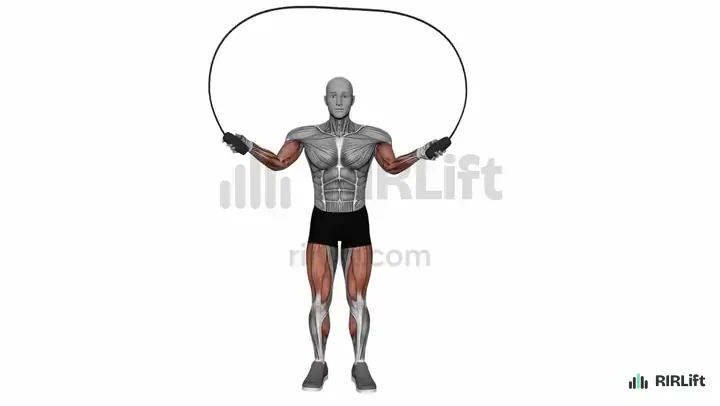
- Jump Rope Alternating Foot Calves, Quads
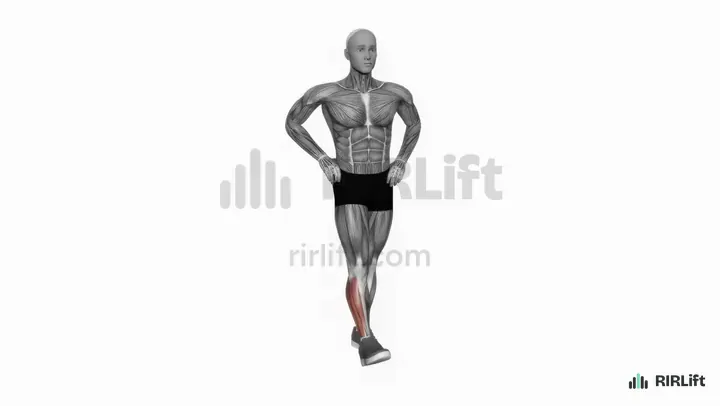
- Ankle Circles Calves
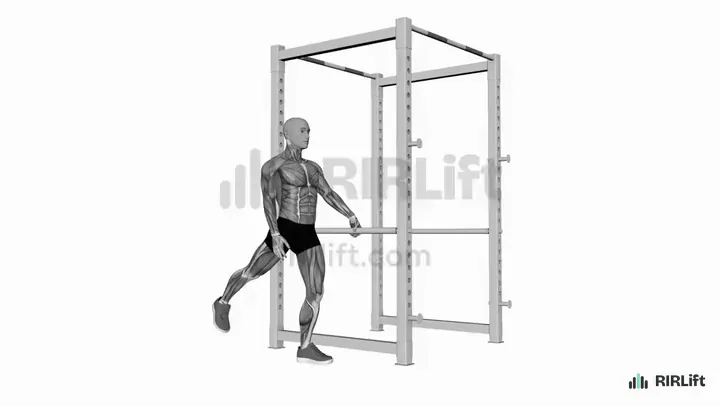
- Leg Swings Hamstrings, Glutes
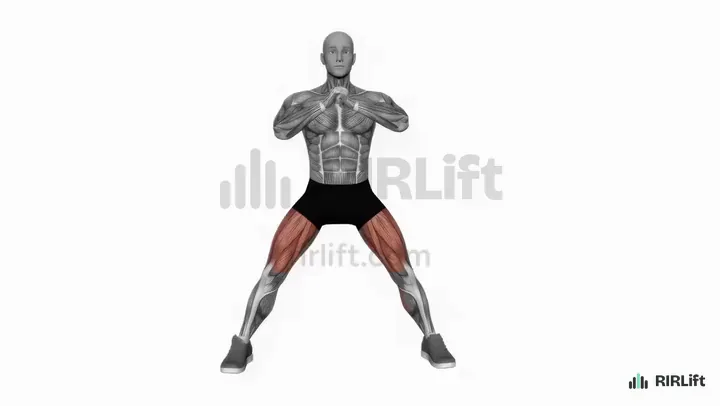
- Cossack Squat Quads, Adductors
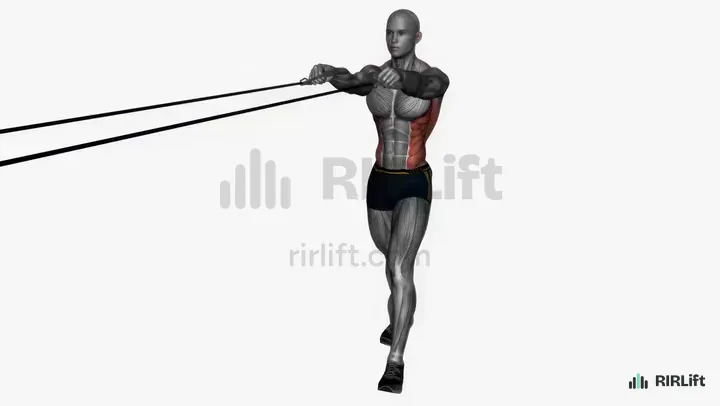
- Band Face Pull Shoulders, Upper Back
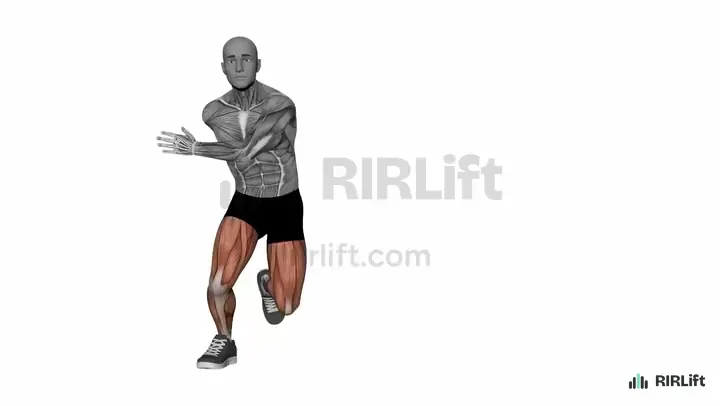
- Skater Hop Glutes, Quads, Abductors
- Single-Leg Jump Quads, Glutes, Calves

Put them together: example sessions
Each session below picks from the exercises above for one situation, with the sets, reps, rest and RIR filled in. Open one in the session builder to change a pick, price it from a recent set, and add it to RIRLift.
-
Session 1
Before club night
You play doubles socially once or twice a week.
2× a week · 18 sets a week · ~10 min
-
Session 2
Before a singles match or tournament
You play competitive singles and the first rallies are long and fast.
2× a week · 28 sets a week · ~20 min
-
Session 3
Stiff ankles or calves
Your first lunges feel stiff, often after a day sitting.
1× a week · 10 sets a week · ~10 min
Session 1
Before club night
- Workouts2× a week
- Working sets18 a week
- Per workout~10 min
- EquipmentJump Rope, Resistance Bands
You play doubles socially once or twice a week.
The full eight-minute routine with moderate primers, so you start warm without tiring before the games.
| Exercise | Sets × reps | RIR | Rest |
|---|---|---|---|
| Jump Rope Alternating FootSeconds. | 2 × 45–60 | 4 | 15 s |
| Ankle CirclesPer foot. | 1 × 10 | 4 | 0 s |
| Leg SwingsPer leg. | 1 × 10 | 4 | 0 s |
| Arm CirclesEach direction. | 1 × 10 | 4 | 0 s |
| Cossack SquatPer side. | 1 × 5 | 4 | 15 s |
| Band Face Pull | 1 × 12 | 3 | 15 s |
| Skater HopPer side. | 2 × 6 | 3 | 30 s |
- How to run it
- Do it on the side of the court before your first game.
- How to progress
- Speed up the primers once the routine feels easy.
Session 2
Before a singles match or tournament
- Workouts2× a week
- Working sets28 a week
- Per workout~20 min
- EquipmentJump Rope, Resistance Bands
You play competitive singles and the first rallies are long and fast.
Adds single-leg hops and jumps at the end, so your landings and jump smashes are ready from the first point.
| Exercise | Sets × reps | RIR | Rest |
|---|---|---|---|
| Jump Rope Alternating FootSeconds. | 3 × 45 | 4 | 15 s |
| Leg SwingsPer leg. | 1 × 12 | 4 | 0 s |
| Cossack SquatPer side. | 2 × 5 | 4 | 15 s |
| Lateral Band WalkSteps each way. | 1 × 10 | 3 | 15 s |
| Band Face Pull | 1 × 12 | 3 | 15 s |
| Skater HopPer side. | 2 × 6 | 3 | 30 s |
| Single-Leg JumpPer leg. | 2 × 5 | 3 | 30 s |
| Jump Squat | 2 × 3–4 | 3 | 30 s |
- How to run it
- Start 15 minutes before play, then hit clears and drops.
- How to progress
- Add a third set of skater hops at match speed when you feel ready.
Session 3
Stiff ankles or calves
- Workouts1× a week
- Working sets10 a week
- Per workout~10 min
- EquipmentJump Rope, Resistance Bands
Your first lunges feel stiff, often after a day sitting.
More ankle and hip work and gentler primers, so the lower legs loosen before anything fast.
| Exercise | Sets × reps | RIR | Rest |
|---|---|---|---|
| Jump Rope Alternating FootSeconds. Easy pace. | 3 × 30 | 4 | 15 s |
| Ankle CirclesPer foot. | 2 × 10 | 4 | 0 s |
| Leg SwingsPer leg. | 2 × 10 | 4 | 0 s |
| Cossack SquatPer side. | 2 × 4–5 | 4 | 15 s |
| Lateral Band WalkSteps each way. | 1 × 10 | 3 | 15 s |
- How to run it
- Use it on days when you feel stiff before play.
- How to progress
- Return to the club-night version once the stiffness is gone.
Make it fit you
-
No rope
Jog lightly around the court or shadow your footwork to the four corners at half speed.
-
No band
Swap band steps for clamshells and face pulls for extra arm circles.
-
Short on time
Keep the rope, leg swings, cossack squats and skater hops. Four minutes covers the lunge.
-
Start the shuttle slowly
Begin with soft clears and drops and build to smashes over a few minutes.
-
Off-court strength
If you lift for badminton, log each set's reps in reserve in RIRLift so the next session's weight is picked from it.
Questions
What are good warm-up exercises for badminton players?
Rope skipping, ankle circles, leg swings, arm circles, cossack squats, band face pulls and skater hops. Together they prepare the lunge, the jump and the smash.
How long should a badminton warm-up be?
About eight minutes before you pick up the shuttle, then a few minutes of easy rallying.
Should badminton players stretch before playing?
Use moving drills before you play and keep longer held stretches for after.
Why warm up the ankles for badminton?
Every lunge and push-off starts at the ankle, and stiff ankles make the first rallies feel slow.
Can I warm up with just rallying?
Easy rallies are the last stage. A few minutes of moving first lets you play at full speed sooner.
Related templates
-
Exercises for badminton: lunging, jumping, rotation and shoulders
The strength program to pair with this warm-up.
-
Warm up exercises for tennis: a 10-minute dynamic routine before you hit
A court warm-up with more rotation.
-
Jump rope warm-up: get ready for the rope, or use it to warm up
More rope drills for the raise stage.
-
Sports warm up: a 15-minute template for team and court sports
A general warm-up for any sport.