Warm up exercises for tennis: a 10-minute dynamic routine before you hit

Jump rope or skip for 2-3 minutes, then spend 3 minutes on moving mobility: 5 walkouts, 10 leg swings each way per leg and 10 arm circles each direction. Activate the serving shoulder and hips with 15 band pull-aparts, 12 band face pulls and 10 lateral band steps each way, then finish with 2 minutes of primers that build in speed: skater hops side to side, a few jump squats and rotational throws if you have a ball. About 10 minutes, then start your hitting from the service line.

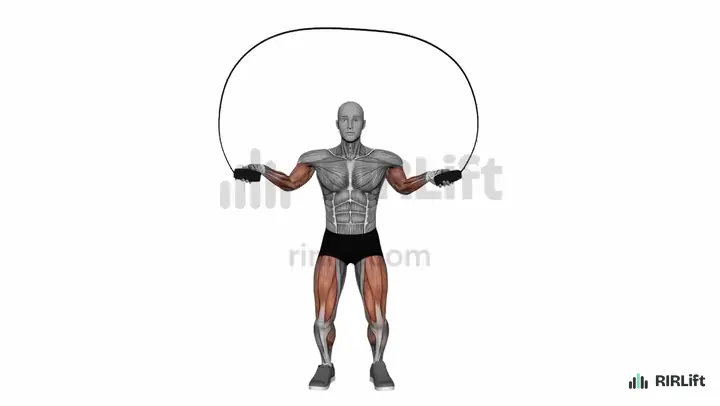
  1. Jump Rope Calves, Quads
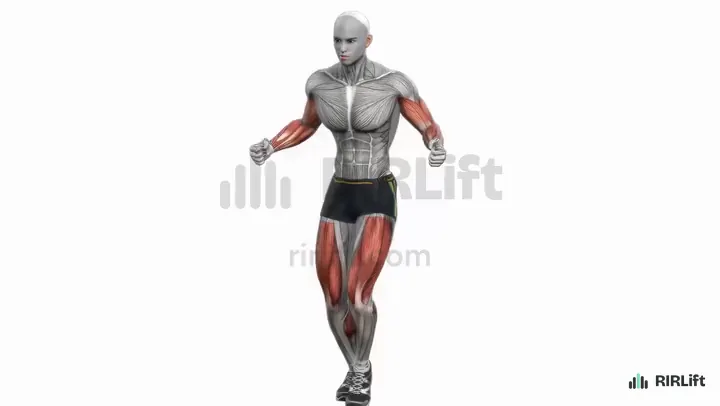
  2. Skipping in Place Calves, Quads, Hamstrings
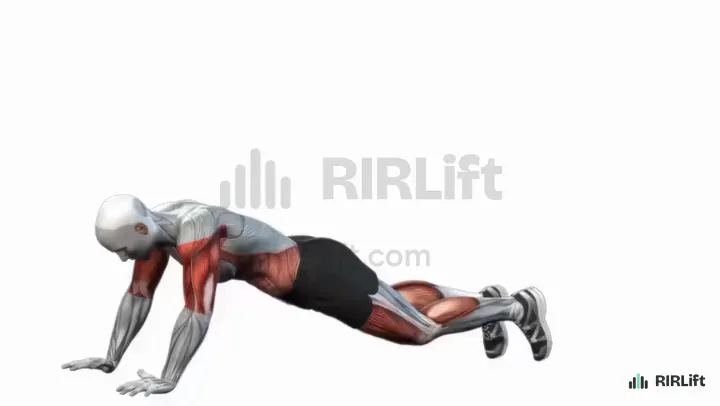
  3. Walkout Abs, Shoulders, Chest
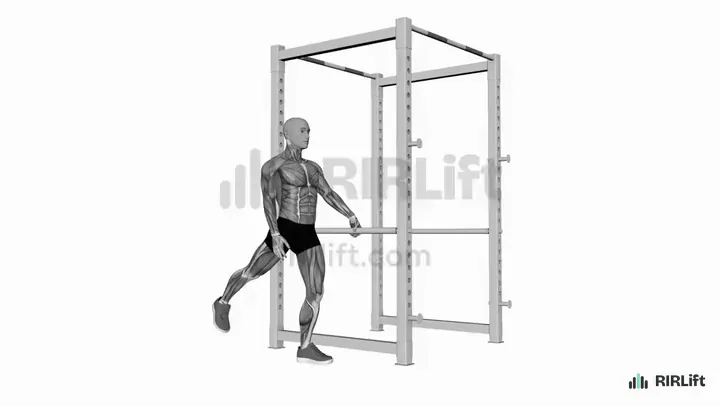
  4. Leg Swings Hamstrings, Glutes
  5. Band Face Pull Shoulders, Upper Back
  6. Lateral Band Walk Abductors
  7. Skater Hop Glutes, Quads, Abductors
  8. Med Ball Rotational Throw Abs

Get warm with the rope: 2-3 minutes

Tennis rewards light, bouncy feet, and the rope trains exactly that. Alternate 30 seconds of rope with 30 seconds of skipping until your calves feel warm.

Raise, calves and footwork

Jump Rope

Calves, Quads

The rope warms your whole body and gets you on the balls of your feet, the same stance as your split step.

How to do it

  1. Hold the handles at hip height with your elbows close to your ribs.
  2. Turn the rope with your wrists and hop just high enough to clear it.
  3. Keep the hops small and even, landing on the balls of your feet.

Cues

  • Wrists turn, not shoulders
  • Small, quiet hops

Common mistakes

  • Jumping high and tucking the knees: an inch of clearance is plenty.

Swap for: Jumping Jack, Skipping in Place

Build a session with Jump Rope

Raise, rhythm

Skipping in Place

Calves, Quads, Hamstrings

Rope-free skipping gets the feet bouncing and the heart rate up, a softer start than the rope for the first minute.

How to do it

  1. Stand tall with your fists beside your hips as if holding rope handles.
  2. Circle your hands and bounce lightly from one foot to the other, as if skipping over a turning rope.
  3. Keep the bounces low and springy for the whole interval.

Cues

  • Bounce off the balls of your feet
  • Hands circle, elbows close
  • Relaxed shoulders

Common mistakes

  • Stomping on the heels: stay on the front of your feet.
  • Hopping high: a small bounce clears an imaginary rope.

Swap for: High Knees, Jump Rope

Dynamic mobility: 3 minutes

Serves and open-stance forehands need the hips, hamstrings and shoulders to move through their full range. Keep each drill moving and let the range grow every rep.

Hamstrings, shoulders and core

Walkout

Abs, Shoulders, Chest

One drill reaches the hamstrings you stretch on wide balls and the shoulders you load on the serve.

How to do it

  1. Stand tall, hinge at your hips and put your palms on the floor, bending your knees as much as you need.
  2. Walk your hands forward until you reach a high plank.
  3. Walk your hands back toward your feet and roll up to standing.

Cues

  • Hands walk, feet stay
  • Hips level in the plank

Common mistakes

  • Letting the hips sag at the front: brace your belly before you walk back.

Swap for: Bear Crawl, Plank to Push-Up

Build a session with Walkout

Hip mobility

Leg Swings

Hamstrings, Glutes

Lunges and wide balls ask a lot of the hips. Front-to-back swings take the hamstrings and hip flexors through range first.

How to do it

  1. Stand side-on to a wall or post and rest one hand on it.
  2. Swing your outside leg forward and back like a pendulum, letting the range grow each rep.
  3. Do all reps on one leg, then turn around and switch.

Cues

  • Loose leg, still torso
  • Let the range grow

Common mistakes

  • Rounding your back to kick higher: only go as high as your torso can stay upright.

Swap for: Walkout, Cossack Squat

Shoulder mobility

Arm Circles

Shoulders

Big circles prepare the shoulder for the long overhead path of the serve before you add any speed.

How to do it

  1. Stand with your arms straight out to your sides at shoulder height.
  2. Draw small forward circles, then let them grow larger over the set.
  3. Reverse the direction for the second half.

Cues

  • Small to big
  • Ribs stay down

Common mistakes

  • Shrugging up into your ears: keep the shoulders low while the arms circle.

Swap for: Band Pull-Apart, Plate Halo

Wake up the serving shoulder and hips: 2 minutes

The muscles behind the shoulder slow the racket arm down after every serve, and the outer hips control your knees when you change direction. A band hits both.

Upper-back activation

Band Pull-Apart

Shoulders, Upper Back

It gets your shoulder blades working, which gives the racket arm a stable base.

How to do it

  1. Hold a light band in front of your chest with straight arms and hands shoulder width apart.
  2. Spread your hands outward until the band touches your chest, pinching your shoulder blades.
  3. Let the band pull your arms back in slowly.

Cues

  • Shoulder blades meet
  • Arms stay long

Common mistakes

  • Arching your lower back to finish the rep: use a lighter band and keep your ribs down.

Swap for: Band Face Pull, Band Rear Delt Fly, Band Scapular Retraction

Rotator cuff and rear shoulder

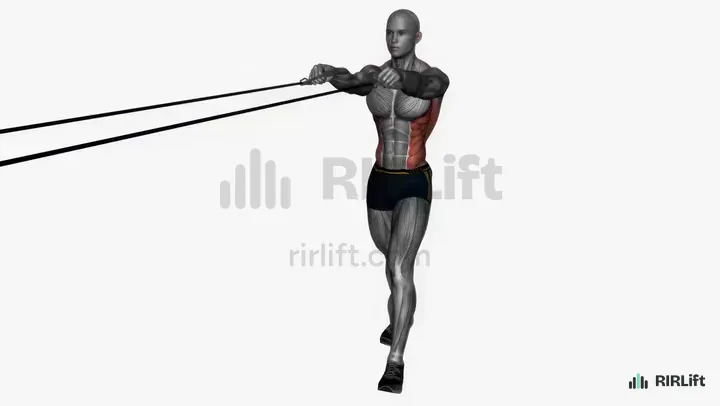
Band Face Pull

Shoulders, Upper Back

The face pull ends in external rotation, the same position your arm passes through in the serve's backswing.

How to do it

  1. Anchor a band at about head height and hold one end in each hand, palms down.
  2. Pull the band toward your forehead, with your elbows high and your hands finishing beside your ears.
  3. Return slowly until your arms are straight.

Cues

  • Elbows high
  • Hands end by the ears

Common mistakes

  • Leaning back to move the band: step closer to the anchor and keep your torso still.

Swap for: Face Pull, Band Pull-Apart

Hip activation

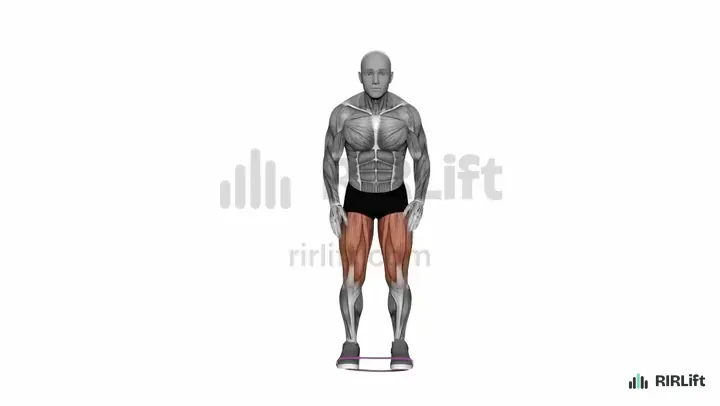
Lateral Band Walk

Abductors

Side steps against the band switch on the glutes that stop you when you change direction.

How to do it

  1. Place a mini band around your legs just above the knees or at the ankles.
  2. Sink into a quarter squat with your feet hip-distance apart.
  3. Step sideways with the lead foot, follow with the other without letting the feet touch, and keep tension in the band.

Cues

  • Stay low
  • Toes point forward

Common mistakes

  • Swaying the torso side to side: keep your shoulders level and take shorter steps.

Swap for: Clamshell, Band Standing Hip Abduction

Primers at rising intensity: 2 minutes

Finish with movements that match the game: side-to-side bounds, a few jumps, and rotational throws if a ball is around. Each set should be faster than the last.

Lateral primer

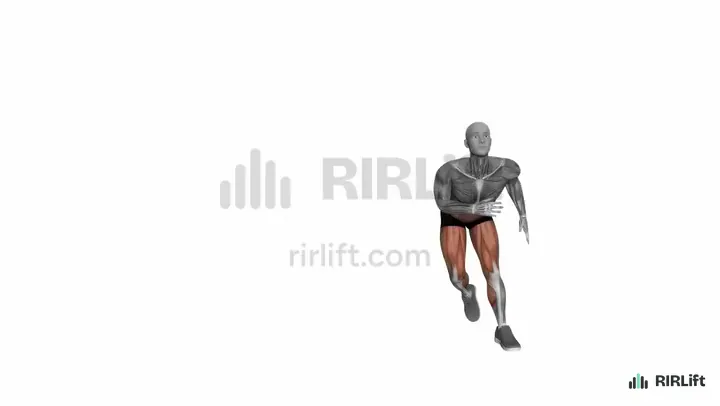
Skater Hop

Glutes, Quads, Abductors

It rehearses pushing off sideways and sticking the landing, like recovering after a wide ball.

How to do it

  1. Stand on your right leg with a slight bend in the knee.
  2. Push off sideways and land on your left foot, letting your right leg swing behind you.
  3. Stick the landing, then bound back to the right.

Cues

  • Stick each landing
  • Push sideways, not up

Common mistakes

  • Taking off before you are balanced: pause for a beat on each landing.

Swap for: Lateral Box Jump, Single-Leg Jump

Elastic primer

Jump Squat

Quads, Glutes

A few jumps at rising height get the legs springy for serves and first steps.

How to do it

  1. Stand with your feet about shoulder width and your arms ready.
  2. Dip into a quarter to half squat, then jump straight up, swinging your arms.
  3. Land softly with bent knees and reset before the next jump.

Cues

  • Soft, quiet landing
  • Reset between reps

Common mistakes

  • Landing stiff-legged: let the hips and knees bend to absorb the landing.

Swap for: Box Jump, Bodyweight Squat

Rotation primer

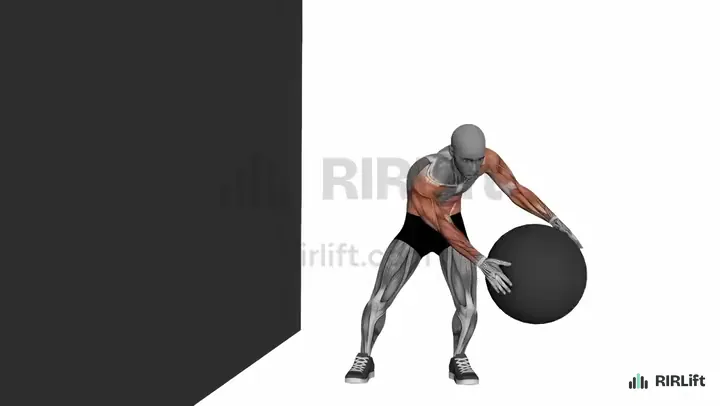
Med Ball Rotational Throw

Abs

Throws at growing effort prepare the hips and trunk for groundstroke rotation.

How to do it

  1. Stand side-on to a wall about an arm's length away, holding a medicine ball at your back hip.
  2. Load into your back hip, then turn your hips and chest toward the wall and throw the ball into it.
  3. Catch the rebound, reset, and finish all reps before switching sides.

Cues

  • Hips turn first
  • Throw through the wall

Common mistakes

  • Throwing with only the arms: the power comes from the back leg and hips turning.

Swap for: Cable Woodchop, Med Ball Woodchop

Put them together: example sessions

Each session below picks from the exercises above for one situation, with the sets, reps, rest and RIR filled in. Open one in the session builder to change a pick, price it from a recent set, and add it to RIRLift.

Session 1

Before a match

Open in the session builder
  • Workouts2× a week
  • Working sets24 a week
  • Per workout~15 min
  • EquipmentJump Rope, Resistance Bands

You play league or tournament matches and want to be sharp from the first point.

The full ten-minute routine, finishing with fast primers so your first games are at match speed.

Match Warm-Up
ExerciseSets × repsRIRRest
Jump RopeSeconds. 3 × 30 4 15 s
Walkout 1 × 5 4 15 s
Leg SwingsPer leg, both directions. 1 × 10 4 0 s
Arm CirclesEach direction. 1 × 10 4 0 s
Band Face Pull 1 × 12 3 15 s
Lateral Band WalkSteps each way. 1 × 10 3 15 s
Skater HopPer side. 2 × 6 3 30 s
Jump SquatHigher each set. 2 × 3–5 3 30 s
How to run it
Start 15 minutes before the match, then begin hitting from the service line.
How to progress
When it feels easy, speed up the primer sets rather than adding more.

Session 2

Before a practice or lesson

Open in the session builder
  • Workouts3× a week
  • Working sets24 a week
  • Per workout~10 min
  • EquipmentResistance Bands

You hit a few times a week and want a shorter routine that still covers the shoulder.

Skips the jumps and keeps the shoulder work, because practice ramps up more slowly than a match.

Practice Warm-Up
ExerciseSets × repsRIRRest
Skipping in PlaceSeconds. 2 × 30 4 15 s
Leg SwingsPer leg. 1 × 10 4 0 s
Arm CirclesEach direction. 1 × 10 4 0 s
Band Pull-Apart 2 × 15 3 15 s
Band Face Pull 1 × 12–15 3 15 s
Skater HopPer side. 1 × 6 3 30 s
How to run it
Do it before every practice or lesson.
How to progress
Add one more set of face pulls on serving days.

Session 3

Before a tennis gym session

Open in the session builder
  • Workouts2× a week
  • Working sets18 a week
  • Per workout~15 min
  • EquipmentJump Rope, Resistance Bands, Medicine Ball

You lift for tennis twice a week and want the session to start ready.

Adds the rotational throw as a logged power block after the warm-up, kept short of tired so every throw stays fast.

Tennis Gym Warm-Up
ExerciseSets × repsRIRRest
Jump RopeSeconds. 2 × 45–60 4 15 s
Walkout 1 × 6 4 15 s
Lateral Band WalkSteps each way. 2 × 10 3 15 s
Band Pull-Apart 1 × 15 3 15 s
Med Ball Rotational Throw1 warm-up set firstPer side. 3 × 5–6 3 45 s
How to run it
Do it at the start of each tennis strength session.
How to progress
Use a heavier ball once every throw is fast through the last set.

Make it fit you

Questions

What are good warm-up exercises for tennis?

Jump rope, walkouts, leg swings, arm circles, band face pulls, lateral band steps and skater hops cover everything a match asks of you.

How long should a tennis warm-up last?

About ten minutes off the ball, then a few minutes of easy hitting from the service line before you move back.

What is a dynamic warm-up for tennis?

A warm-up where you keep moving instead of holding stretches: skips, swings, walkouts and hops that get gradually faster.

Should I stretch before tennis?

Keep it dynamic before you play. Longer held stretches suit the end of the session.

Is hitting balls enough of a warm-up?

Easy hitting is the final stage. Moving first lets you hit at full pace sooner.