
Exercises for badminton: lunging, jumping, rotation and shoulders
Published October 24, 2026
The best exercises for badminton are the lateral lunge and Bulgarian split squat for lunging to the shuttle and pushing back, the single-leg RDL and calf raise for braking and landing, jump squats and skater hops for explosive court movement, the rotational medicine ball throw and cable woodchop for smash power, and face pulls and external rotations to keep the hitting shoulder strong. Most players need two strength sessions of about 45 minutes a week next to court time, with sets stopped 1 to 2 reps short of failure.
- Dumbbell Lateral Lunge Quads, Glutes, Adductors
- Bulgarian Split Squat Quads, Glutes
- Single-Leg RDL Hamstrings, Glutes
- Jump Squat Quads, Glutes
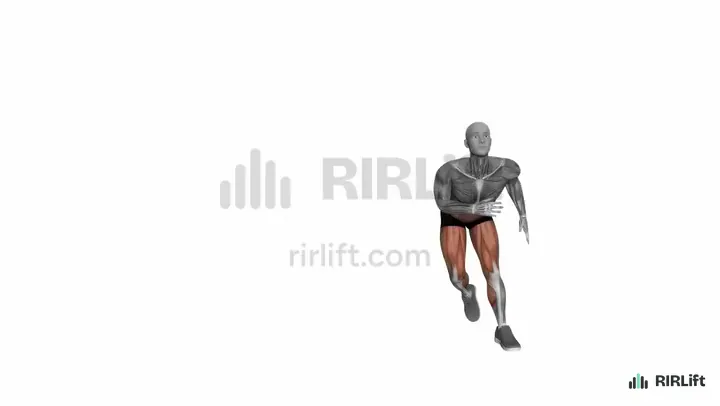
- Skater Hop Glutes, Quads, Abductors
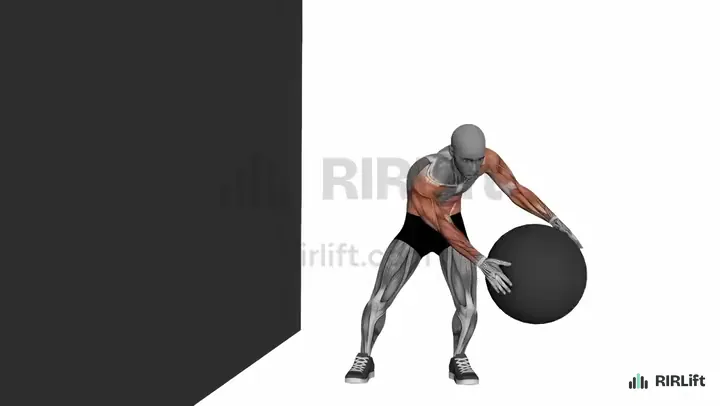
- Med Ball Rotational Throw Abs
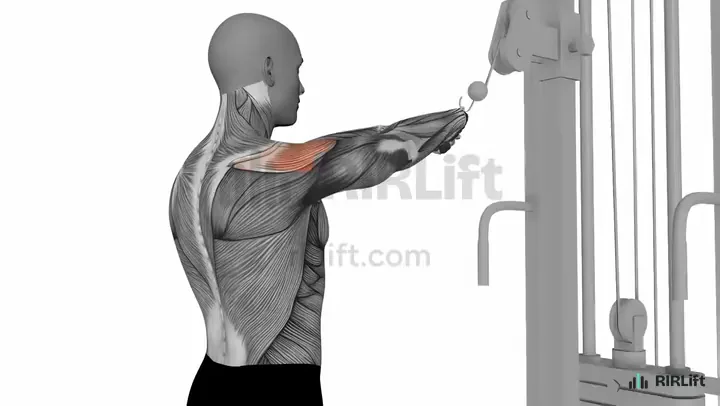
- Face Pull Shoulders, Upper Back
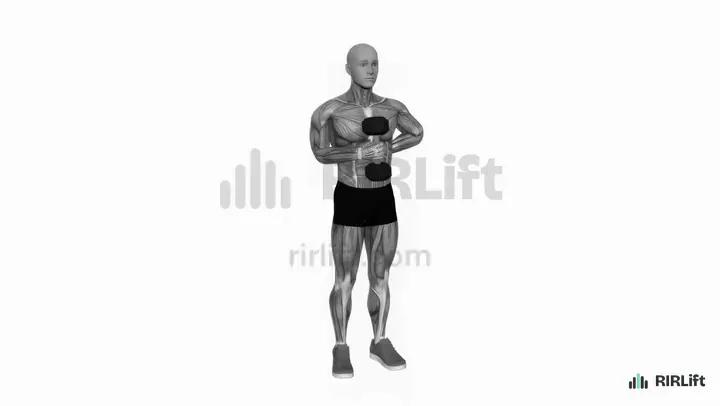
- Dumbbell External Rotation Shoulders
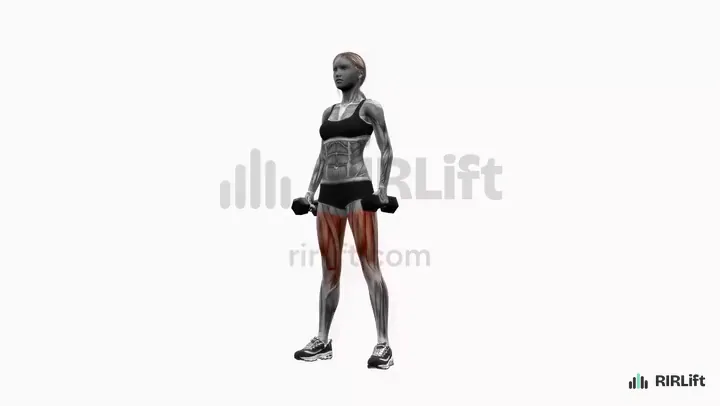
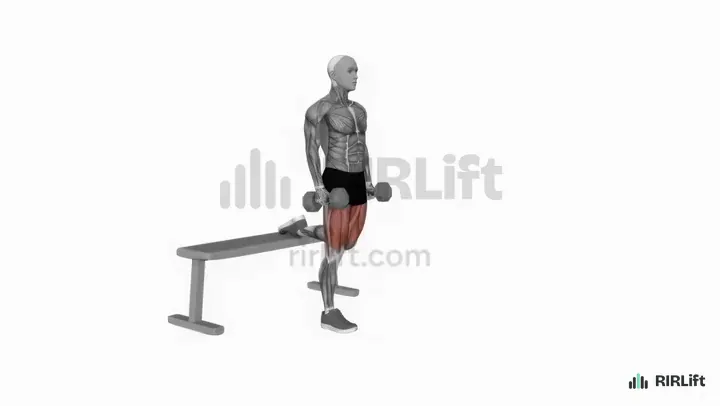
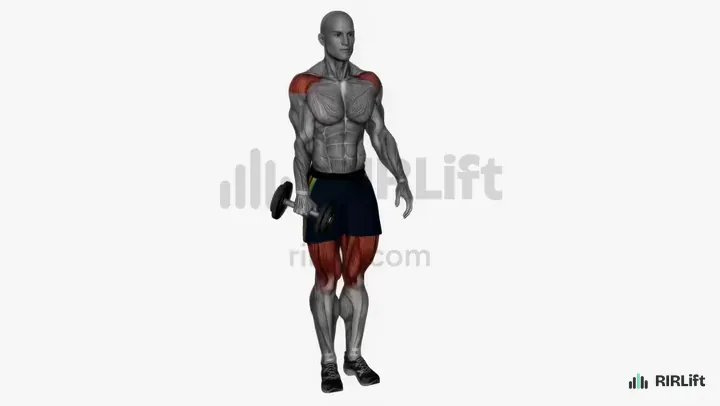
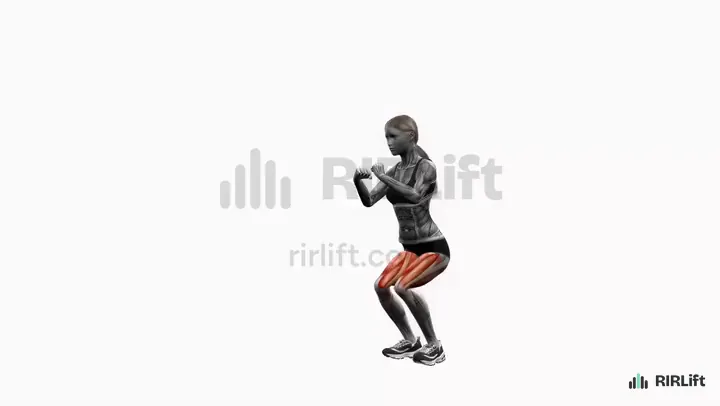
Put them together: example sessions
Each session below picks from the exercises above for one situation, with the sets, reps, rest and RIR filled in. Open one in the session builder to change a pick, price it from a recent set, and add it to RIRLift.
-
Session 1
Club player, two gym days
You play two or three times a week, have access to a gym, and want faster movement and a harder smash.
2× a week · 30 sets a week · ~40 min
-
Session 2
At home, one pair of dumbbells
You train at home with a pair of dumbbells, a jump rope and a chair or bench, between your sessions at the hall.
2× a week · 31 sets a week · ~35 min
-
Session 3
Heavy hitter, shoulder-first sessions
You play a lot of singles or hit hard from the back court, and your hitting shoulder takes most of the load of your week.
2× a week · 28 sets a week · ~35 min
Session 1
Club player, two gym days
- Workouts2× a week
- Working sets30 a week
- Per workout~40 min
- EquipmentDumbbells, Medicine Ball, Adjustable Cable
You play two or three times a week, have access to a gym, and want faster movement and a harder smash.
Two full-body sessions of about 15 working sets fit around court time without making you heavy-legged. Each day starts with jumps while you are fresh, has one main lunge pattern, one braking exercise, one rotation exercise and one shoulder exercise. Leg work stops at 2 reps in reserve so you can still move well on court the next day; shoulder and trunk accessories go to 1.
| Exercise | Sets × reps | RIR | Rest |
|---|---|---|---|
| Jump Squat | 3 × 5 | 4 | 1 min |
| Bulgarian Split SquatPer leg. | 3 × 6–8 | 2 | 2 min |
| Single-Leg RDLPer leg. | 3 × 6–8 | 2 | 90 s |
| Med Ball Rotational ThrowPer side. | 3 × 5 | 3 | 1 min |
| Face Pull | 3 × 12–15 | 1 | 1 min |
Open Day A in the session builder
| Exercise | Sets × reps | RIR | Rest |
|---|---|---|---|
| Skater HopPer side. | 3 × 6 | 4 | 1 min |
| Dumbbell Lateral LungePer side. | 3 × 6–8 | 2 | 2 min |
| Goblet Squat | 3 × 8–10 | 2 | 90 s |
| Cable WoodchopPer side. | 3 × 8–10 | 2 | 1 min |
| One-Arm Dumbbell RowPer arm. | 3 × 8–12 | 1 | 1 min |
Open Day B in the session builder
- How to run it
- Leave at least one day between the sessions and avoid heavy leg days the day before a match or tournament.
- How to progress
- Add weight to the lunges and split squats when every set reaches the top of the range at the target reps in reserve. Keep the jumps and throws at the same reps and try to move faster.
Session 2
At home, one pair of dumbbells
- Workouts2× a week
- Working sets31 a week
- Per workout~35 min
- EquipmentJump Rope, Dumbbells
You train at home with a pair of dumbbells, a jump rope and a chair or bench, between your sessions at the hall.
Without a cable or medicine ball, rotation comes from the side plank and power from jumps and rope, while single-leg exercises make light dumbbells hard. Higher reps taken to 1 rep in reserve keep the sets productive. Each session takes about 35 minutes.
| Exercise | Sets × reps | RIR | Rest |
|---|---|---|---|
| Jump RopeSeconds per round. | 4 × 60 | 3 | 45 s |
| Bulgarian Split SquatPer leg. | 3 × 10–15 | 1 | 75 s |
| Single-Leg Calf RaisePer leg. | 3 × 12–15 | 1 | 45 s |
| Dumbbell External RotationPer arm. | 3 × 12–15 | 2 | 45 s |
| Side PlankSeconds, per side. | 3 × 30–45 | 2 | 45 s |
Open Home A in the session builder
| Exercise | Sets × reps | RIR | Rest |
|---|---|---|---|
| Jump Squat | 3 × 6 | 4 | 1 min |
| Dumbbell Lateral LungePer side. | 3 × 10–12 | 1 | 75 s |
| Single-Leg RDLPer leg. | 3 × 10–12 | 1 | 1 min |
| One-Arm Dumbbell RowPer arm. | 3 × 10–15 | 1 | 1 min |
| Skater HopPer side. | 3 × 8 | 3 | 45 s |
Open Home B in the session builder
- How to run it
- Do Home A and Home B on non-playing days, two days apart. Use a chair seat for the split squat.
- How to progress
- Add reps until every set hits the top of its range at 1 rep in reserve, then slow the lowering to three seconds before you look for heavier dumbbells.
Session 3
Heavy hitter, shoulder-first sessions
- Workouts2× a week
- Working sets28 a week
- Per workout~35 min
- EquipmentDumbbells, Adjustable Cable, Landmine, Medicine Ball
You play a lot of singles or hit hard from the back court, and your hitting shoulder takes most of the load of your week.
These sessions give the hitting shoulder more direct work, with face pulls and external rotations on both days and the row and landmine press for overall upper-body strength, while legs get one main exercise each day. Shoulder accessories use high reps at 1 to 2 reps in reserve, which builds endurance without heavy loading on muscles that already work hard on court.
| Exercise | Sets × reps | RIR | Rest |
|---|---|---|---|
| Dumbbell External RotationPer arm. | 3 × 12–15 | 2 | 45 s |
| Face Pull | 3 × 15–20 | 1 | 1 min |
| One-Arm Dumbbell RowPer arm. | 3 × 8–12 | 1 | 75 s |
| Bulgarian Split SquatPer leg. | 3 × 6–8 | 2 | 2 min |
| Side PlankSeconds, per side. | 2 × 30–45 | 2 | 45 s |
Open Day A in the session builder
| Exercise | Sets × reps | RIR | Rest |
|---|---|---|---|
| Face Pull | 3 × 15–20 | 1 | 1 min |
| Landmine Press | 3 × 8–10 | 2 | 75 s |
| Dumbbell External RotationPer arm. | 2 × 12–15 | 2 | 45 s |
| Dumbbell Lateral LungePer side. | 3 × 6–8 | 2 | 2 min |
| Med Ball Rotational ThrowPer side. | 3 × 5 | 3 | 1 min |
Open Day B in the session builder
- How to run it
- Do Day A and Day B with at least a day between them. Start each session with the shoulder exercises while you are fresh.
- How to progress
- Add reps before weight on every shoulder exercise. Add weight to the split squat and lateral lunge when all sets reach the top of their range at 2 reps in reserve.
Make it fit you
-
Tournament this weekend
Do only Day A of the club plan, two sets per exercise, at least three days before the event, and skip the jumps. You want to arrive fresh, not stronger.
-
Doubles player
Doubles rewards quick front-court reactions and repeated smashes. Keep both jump exercises and the rotational throw, and swap the goblet squat for a second set of lateral lunges.
-
Junior player
Use the home plan with bodyweight only for the leg exercises and stop every set at 2 reps in reserve. Clean control of lunges and single-leg RDLs matters more than load at this stage.
-
Racket side much stronger
Start every single-leg and single-arm exercise on your weaker side and match its reps with the other. Add one extra set on the non-racket leg for the split squat and lateral lunge.
-
Let the next weight pick itself
Log your sets and reps in reserve in RIRLift, and it suggests the next weight from them. After a long session on court, rating reps in reserve honestly keeps the gym load in step with how your legs actually feel.
Questions
What type of exercise is playing badminton?
It is intermittent, high-intensity exercise: short, explosive rallies of lunging, jumping and changing direction, with brief rests between points. That makes it demanding on both your legs and your conditioning.
What exercises improve badminton footwork?
Lateral lunges, split squats, skater hops, jump squats and jump rope. They build the strength to lunge and push back and the springiness to move quickly; on-court footwork drills then turn that into movement patterns.
How can I smash harder in badminton?
Work on the whole chain: leg power with jump squats, rotation with medicine ball throws and woodchops, and a strong, well-controlled shoulder with face pulls and rows. Technique still matters most, but more strength gives it more to work with.
How often should badminton players lift?
Two sessions a week is enough for most players next to two to four court sessions. Keep the heavy leg session away from the day before a match.
Can I do badminton exercises at home?
Yes. The home plan on this page uses one pair of dumbbells, a jump rope and a chair, and covers lunging, braking, jumping, shoulder and trunk work.
Related templates
-
Tennis workout: strength training for footwork, rotation and a durable shoulder
A racket sport with similar lateral movement and rotation.
-
Exercises for pickleball: legs, lateral speed, rotation and arm care
Lighter court training for another fast racket sport.
-
Lateral lunge: how to do a side lunge with dumbbells or bodyweight
Form and variations for the side lunge.
-
Face pulls: how to do them, what they work, and what to do instead
Setup and form for the main shoulder exercise here.
-
How to use reps in reserve (RIR)
How to judge reps in reserve so the gym leaves your legs fresh for court.