Bench press alternatives: what to do when the bench is busy, missing or hurts

The best bench press alternative is the flat dumbbell press: it trains the same chest, shoulders and triceps, and each arm works on its own. If the bench is taken, the Smith machine bench press is the closest copy. If benching hurts your shoulders, a floor press or landmine chest press usually feels better, and at home with no weights, push-ups and dips do the job.

What a barbell bench press alternative has to replace

The bench press trains your chest, the front of your shoulders and your triceps, and lets you move more weight than any other upper-body press. It loads your chest hardest near the bottom, where the bar touches.

How to do the barbell bench press

Machines in the gym

When the bench is taken or you train alone, a guided bar or a press machine lets you push hard without a spotter.

Closest swap when the bench is taken

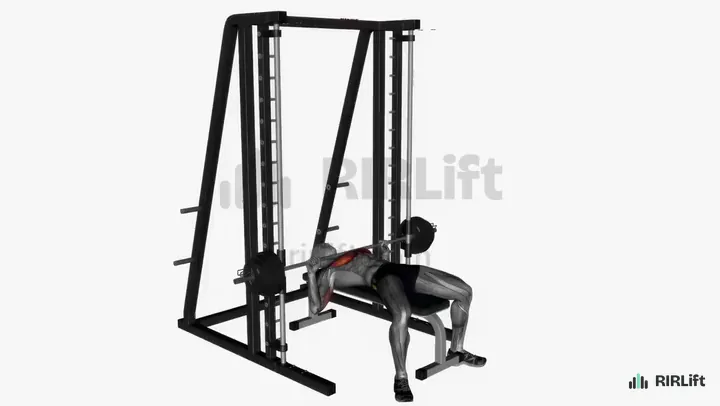
Smith Machine Bench Press

Chest

The same lying press with the bar on rails, so you only have to push and the safety stops catch a failed rep. Expect slightly different numbers from your free bench, then progress it the same way.

How to do it

  1. Roll a flat bench into the Smith machine so the bar lines up over your lower chest when you lie down.
  2. Set the safety stops a couple of inches below where the bar touches your chest.
  3. Lie back, grip a bit wider than your shoulders, pull your shoulder blades together and plant your feet.
  4. Twist the bar off the hooks and lower it under control to your lower chest.
  5. Press it straight up the rails until your elbows are just short of lockout.

Cues

  • Bar over your lower chest
  • Shoulder blades pinned
  • Elbows about 45 degrees out

Common mistakes

  • Bench placed so the bar lands near your neck: slide it until the bar touches just below your nipples.
  • Bouncing off the safeties: the stops are for a failed rep, so touch your chest lightly and press.

Machine swap for chest size

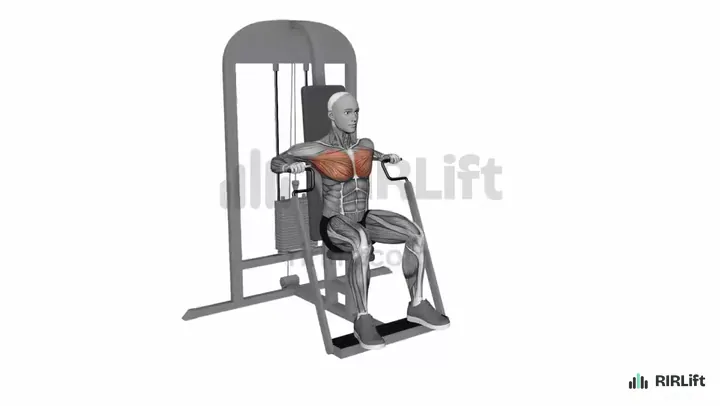
Machine Chest Press

Chest

A guided press lets you take your chest close to failure with no spotter and add weight in small steps. It builds the same muscles; it just doesn't practice the barbell lift.

How to do it

  1. Raise or lower the seat until the handles line up with the middle of your chest, then sit with your back on the pad.
  2. Take the handles with straight wrists and your shoulder blades pressed back.
  3. Push forward until your arms are nearly straight.
  4. Return slowly until your hands are level with your chest, then press again.

Cues

  • Handles at mid-chest
  • Back stays on the pad
  • Slow on the way back

Common mistakes

  • Seat too high, so your shoulders take over: lower it until the handles meet your mid-chest.
  • Stopping the handles short of your chest: let them come all the way back each rep.

Barbell, if the bench bothers your shoulders

These keep a bar in your hands but change the range or the angle, which is often enough to press without pain.

Barbell swap with more triceps

Close-Grip Bench Press

Triceps, Chest

A grip just inside shoulder width keeps your elbows tucked, which moves more of the work to your triceps and is easier on many lifters' shoulders. It carries over well to the regular bench press.

How to do it

  1. Lie on a flat bench under the racked bar and take a grip just inside shoulder width.
  2. Unrack the bar and hold it over your shoulders with straight arms.
  3. Lower it to your lower chest with your elbows tucked near your sides.
  4. Press it back up until your elbows are straight.

Cues

  • Elbows brush your sides
  • Bar to the lower chest
  • Press through to lockout

Common mistakes

  • Hands so close they nearly touch: that strains your wrists without adding triceps work, so stay near shoulder width.
  • Elbows flaring wide as you press: keep them tucked, or it turns back into a regular bench press.

Barbell swap for sore shoulders

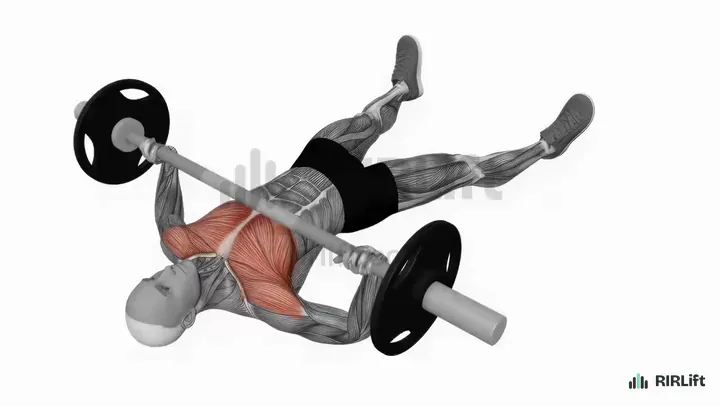
Floor Press

Chest, Triceps

Lying on the floor stops your elbows before the bottom of a bench press, the part that bothers most shoulders, and you can still load it heavy. It needs a rack set low or a partner to hand you the bar.

How to do it

  1. Lie on the floor under a bar set low in a rack, knees bent or legs straight.
  2. Take a grip a little outside your shoulders and unrack it over your chest.
  3. Lower it until the backs of your upper arms rest on the floor, and pause for a moment.
  4. Press it back up until your arms lock out.

Cues

  • Pause on the floor
  • Triceps drive the lockout
  • Shoulder blades pinned back

Common mistakes

  • Bouncing the elbows off the floor: a short pause keeps the press honest.
  • Setting up with no safety: use a rack or pins so you can roll out of a stuck rep.

Standing, shoulder-friendly press

Landmine Chest Press

Chest

Pressing a bar up and forward from a corner lets your shoulder blade move freely, so it often feels fine when benching doesn't. It works one arm at a time.

How to do it

  1. Wedge one end of a bar into a landmine or a padded corner and load the other end.
  2. Stand with your feet about shoulder width and hold the loaded end in one hand at your chest.
  3. Press it up and forward until your arm is straight, letting your shoulder blade reach forward at the top.
  4. Lower it back to your chest under control. Finish the set, then switch hands.

Cues

  • Press up and out
  • Ribs stay down
  • Reach at the top

Common mistakes

  • Leaning back to press: stay tall or slightly forward so your chest does the pushing.
  • Letting the bar crash into your chest: lower it slowly to the same start every rep.

Dumbbells

You will lift less in total than on a barbell. Judge each set by how close to failure it ends, not by the number on the dumbbell.

Best swap with dumbbells

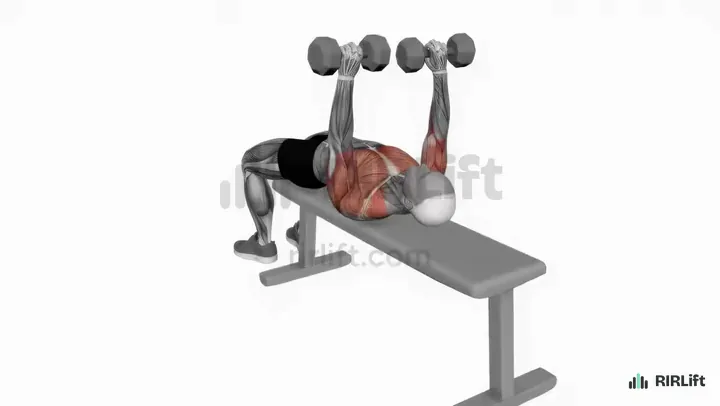
Flat Dumbbell Press

Chest

Each arm presses its own dumbbell, so your weaker side can't hide, and your hands can go a little deeper than a barbell allows. Expect to lift less in total than on the bar.

How to do it

  1. Sit on the end of a flat bench with the dumbbells standing on your thighs.
  2. Lie back and use your knees to help the weights up to straight arms over your chest.
  3. Pull your shoulder blades together and down, and plant your feet.
  4. Lower both dumbbells until they sit just outside your chest, elbows about 45 degrees from your sides.
  5. Press back up along a slight arc until the weights nearly touch over your chest.

Cues

  • Shoulder blades pinned
  • Forearms vertical at the bottom
  • Feet drive into the floor

Common mistakes

  • Flaring the elbows straight out: tuck them a little toward your ribs.
  • Dropping the dumbbells to the floor at the end of a set: bring them back to your chest and sit up with them on your thighs.

Flat dumbbell press that keeps your chest working

Alternating Dumbbell Bench Press

Chest

One arm stays locked out while the other presses, so your chest works for the whole set and moderate dumbbells feel heavy.

How to do it

  1. Lie on a flat bench and press both dumbbells to straight arms over your chest.
  2. Lower one dumbbell to the side of your chest while the other stays locked out.
  3. Press it back up, then lower the other side.
  4. Keep alternating until both arms have done the set's reps.

Cues

  • Holding arm stays straight
  • Lower slower than you press
  • Hips stay on the bench

Common mistakes

  • Letting the holding arm drift sideways: keep it over your shoulder so it keeps working.
  • Rolling toward the pressing side: brace your stomach and keep both shoulder blades on the bench.

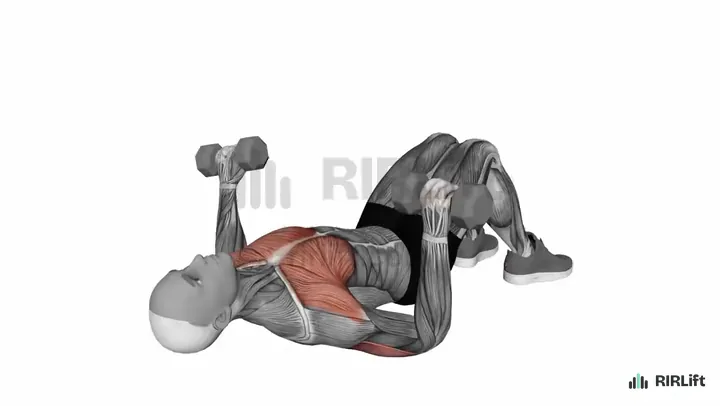
Dumbbell swap with no bench

Dumbbell Floor Press

Chest, Triceps

The floor sets your depth and spares your shoulders, and it needs only a pair of dumbbells. It is the best home swap if you have weights but no bench.

How to do it

  1. Sit on the floor with a dumbbell on each thigh, then lie back with your knees bent and pull the weights in to your chest.
  2. Press both dumbbells straight up over your chest until your arms are straight.
  3. Lower them until your upper arms touch the floor, elbows angled about 45 degrees from your sides.
  4. Let the arms rest for a moment on the floor, then press again.

Cues

  • Elbows touch down softly
  • Weights over your chest at the top
  • Knees bent, feet flat

Common mistakes

  • Dropping the elbows hard into the floor: lower slowly and land them gently.
  • Elbows flared straight out to the sides: point them toward your hips a little.

Bodyweight

With no weights, dips are the heavy option and push-ups the flexible one. Add a backpack or shift your weight to one arm as you get stronger.

Bodyweight swap you can load

Chest Dip

Chest, Triceps

Dips press your whole bodyweight and take a dip belt when they get easy, so they replace the bench for strength as well as size. Lean forward to keep your chest doing most of the work.

How to do it

  1. Grip parallel bars and step or jump up until your arms are straight and you are holding yourself above the bars.
  2. Lean your chest slightly forward with your legs under you or a little behind.
  3. Bend your elbows to sink down until your upper arms are about level with the bars.
  4. Press back up to straight arms and lock out.

Cues

  • Shoulders down, chest proud
  • Slight forward lean
  • Lock out every rep

Common mistakes

  • Sinking so deep your shoulders ache: stop when your upper arms reach the level of the bars.
  • Swinging your legs to get up: keep them still and end the set when you need momentum.
Build a session with Chest Dip

Swap with no equipment

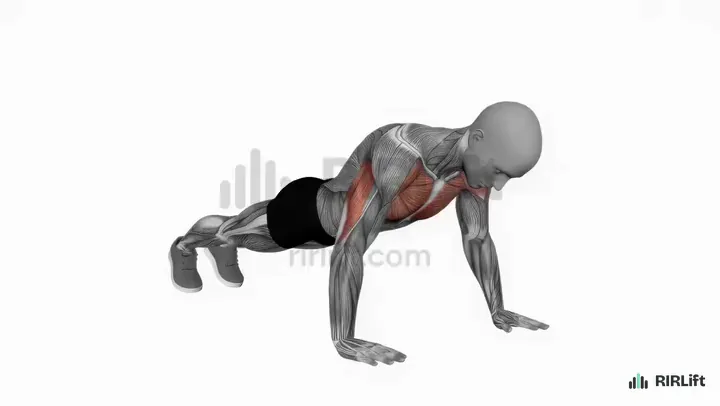
Push-Up

Chest

The push-up is the same press with your bodyweight, and it lets your shoulder blades move freely. Use it for higher reps or as a finisher.

How to do it

  1. Set your hands a little wider than your shoulders and step your feet back so your body is one straight line from head to heels.
  2. Squeeze your glutes and tuck your ribs so your hips don't sag.
  3. Lower until your chest is a fist's height from the floor, elbows angled about 45 degrees from your sides.
  4. Press the floor away until your arms are straight, then start the next rep.

Cues

  • Body one straight line
  • Elbows at 45 degrees
  • Chest to the floor, not chin

Common mistakes

  • Hips sagging or piking as the set gets hard: the set ends where the straight line breaks.
  • Half reps that stop well above the floor: lower until your chest nearly touches, or put your hands on a bench.
Build a session with Push-Up

Push-up loaded like a bench press

Weighted Push-Up

Chest

A plate or loaded backpack brings push-ups back into a strength rep range. Pick it at home once you can do 20 clean push-ups.

How to do it

  1. Get into the top of a push-up with your hands a bit outside your shoulders.
  2. Have a partner set a plate flat across your upper back, between your shoulder blades, or wear a loaded backpack.
  3. Lower your chest close to the floor without letting the load slide.
  4. Press up to straight arms with your body rigid.

Cues

  • Load between the shoulder blades
  • Same depth as unloaded reps
  • Brace before every rep

Common mistakes

  • Letting the plate slide toward your neck: keep your back flat and the plate centered.
  • Adding so much weight that depth gets shorter: lighten it until your chest reaches the floor again.

Hardest push-up with no equipment

Archer Push-Up

Chest

Shifting most of your weight onto one arm keeps the push-up hard with no gear at all.

How to do it

  1. Set your hands about twice shoulder width apart in a plank, fingers turned slightly out.
  2. Lower toward your right hand, bending the right elbow while the left arm stays straight.
  3. Bring your chest close to your right hand, then press back to the middle.
  4. Repeat to the left and keep alternating, or finish one side first.

Cues

  • Bent arm does the work
  • Straight arm only balances
  • Hips stay square

Common mistakes

  • Bending both arms equally, which makes it a wide push-up: keep the helping arm straight.
  • Twisting your hips toward the floor: hold the plank level as you shift.

Example sessions without the barbell bench press

Session 1

Gym, bench always taken

Open in the session builder
  • Workouts2× a week
  • Working sets20 a week
  • Per workout~30 min
  • EquipmentFlat Bench, Smith Machine, Dumbbells, Chest Press

You train in a busy gym where the bench press is always in use, but the Smith machine and dumbbells are free.

The Smith machine bench press takes the bench's place as the heavy lift, the flat dumbbell press adds free-weight work for each side, and the machine chest press finishes with higher reps. 10 working sets.

Chest
ExerciseSets × repsRIRRest
Smith Machine Bench Press2 warm-up sets first 4 × 5–8 2 3 min
Flat Dumbbell Press 3 × 8–12 2 2 min
Machine Chest Press 3 × 10–15 1 75 s
How to run it
Once or twice a week on your chest or upper-body day.
How to progress
When every set of a lift reaches the top of its range at the RIR shown, add the smallest weight jump next session and start again at the bottom of the range.

Session 2

Barbell, but benching hurts your shoulders

Open in the session builder
  • Workouts2× a week
  • Working sets20 a week
  • Per workout~35 min
  • EquipmentBarbells, Landmine, Flat Bench

You still want to press heavy with a bar, but the bottom of the bench press bothers your shoulders.

The floor press keeps the heavy barbell work and stops before the range that hurts, the landmine press lets your shoulder blade move freely, and the close-grip bench press keeps your elbows tucked. Reps stay low and rest stays long because the loads are heavy. 10 working sets.

Chest
ExerciseSets × repsRIRRest
Floor Press2 warm-up sets first 4 × 5–8 2 3 min
Landmine Chest PressSets are per arm. 3 × 8–12 2 90 s
Close-Grip Bench Press 3 × 6–10 2 2:30 min
How to run it
Twice a week, at least two days apart. If any lift hurts, use a lighter load or drop it for that day.
How to progress
Add 5 pounds to the floor press when every set reaches 8 reps. On the landmine press, add a small plate at 12 reps per arm.

Session 3

Home, dumbbells but no bench

Open in the session builder
  • Workouts2× a week
  • Working sets20 a week
  • Per workout~25 min
  • EquipmentDumbbells

You train at home with a pair of dumbbells, a backpack and the floor.

The dumbbell floor press replaces the bench press with real load, the weighted push-up adds pressing with your shoulder blades free, and archer push-ups finish one side at a time. 10 working sets.

Chest
ExerciseSets × repsRIRRest
Dumbbell Floor Press1 warm-up set first 4 × 8–12 2 2 min
Weighted Push-UpA loaded backpack works. 3 × 8–12 2 90 s
Archer Push-UpSets are per side. 3 × 5–8 1 75 s
How to run it
Twice a week on non-consecutive days. Take the push-up sets to about one rep short of failure.
How to progress
Move up a dumbbell on the floor press when every set reaches 12 reps. Add a book to the backpack at 12 weighted push-ups, and widen your hands on archers as they get easy.

Make it fit you

Questions

Is there a better alternative to bench press?

For building your chest, the flat dumbbell press and machine chest press work as well as the barbell bench. For a bigger barbell bench, nothing replaces practicing it, though the close-grip and floor press carry over well.

Can I do a chest press at home with dumbbells?

Yes. Do a flat dumbbell press on a bench, or a dumbbell floor press lying on the floor if you have no bench. Both train the same muscles as the bench press.

How do you do a chest press at home without equipment?

Do push-ups, raising your feet on a chair to make them harder, and dips between two sturdy chairs. Archer push-ups shift most of your weight to one arm once regular push-ups are easy.

What is a bench press alternative without a bench?

The floor press, with a barbell or dumbbells, is the closest: the same lying press with the floor setting your depth. Push-ups and dips also need no bench.

What is a good bench press alternative for shoulder pain?

Try the floor press or the landmine chest press. The floor press stops before the bottom position that bothers most shoulders, and the landmine lets your shoulder blade move as you press.

What are the top 3 chest exercises?

A flat press (barbell or dumbbell), an incline press and dips cover most of what your chest needs. Add a fly or machine press if you have time.