
Bench press: how to do it, and what to swap it for
Published October 17, 2026
The bench press is a horizontal press: you lie on a flat bench, lower a barbell to your lower chest and press it back to straight arms. It trains your chest, front delts and triceps, and it is the press you can load the heaviest. The one thing that makes it work is a fixed upper back: pull your shoulder blades together and down before you unrack, and keep them pinned for every rep.
- WorksChest
- AlsoShoulders, Triceps
- EquipmentBarbells, Flat Bench
- Start with3 × 6–10, 2 in reserve, 2:30 min rest
How to do the barbell bench press
The bench press lets you put more weight through your chest than any other press, and adding small plates week to week shows you plainly whether you are getting stronger. Make it the first press of your chest or upper-body day.
Steps
- Lie on the bench with your eyes just under the bar and plant your feet flat, a little wider than your hips.
- Pull your shoulder blades together and down into the bench, keeping a small arch in your lower back with your glutes still touching the pad.
- Grip the bar a little wider than shoulder width, wrists stacked over your forearms, and lift it out of the hooks so it sits over your shoulders.
- Lower the bar under control to your lower chest, elbows tucked about 45 degrees from your sides.
- Touch your chest without bouncing, then press up and slightly back toward the hooks until your arms are straight.
Cues
- Shoulder blades pinned to the bench
- Elbows at 45 degrees, not flared
- Touch, then press
Common mistakes
- Losing your upper back as you unrack: if your shoulders roll forward when you lift the bar out, set your shoulder blades again before the first rep, or have someone hand it to you.
- Elbows pointing straight out to the sides, which lands the bar up near your collarbones: bring them in toward 45 degrees and aim for your lower chest.
- Letting the bar sink and rebound off your ribs: lower it under control to a light touch, and add a one-count pause if heavy reps start to bounce.
- Feet floating or your hips lifting off the bench as you grind: keep your heels down and your glutes on the pad, and lower the weight if you can't.
Swap for: Flat Dumbbell Press, Machine Chest Press, Floor Press
Muscles the barbell bench press works
The bench press works your chest, front delts and triceps, with your upper back and legs holding you steady. Your chest works hardest near the bottom, where it is most stretched, and your triceps take over as you approach lockout, so a bench that stalls near lockout points to your triceps.
Sets, reps and reps in reserve for the barbell bench press
| Goal | Sets × reps | RIR | Rest |
|---|---|---|---|
| Build muscle | 3 × 6–10 | 2 | 2:30 min |
| This is what the session builder prescribes; add weight once every set reaches 10 clean reps. | |||
| Strength | 3–5 × 3–6 | 1–2 | 3–4 min |
| Use this when a heavier bench is the goal, and stop each set while the bar still moves at a steady speed. | |||
| Beginners | 2–3 × 8–10 | 3 | 2 min |
| Start light enough that every rep touches the same spot on your chest, then move to 2 reps in reserve. | |||
Barbell bench press variations
-
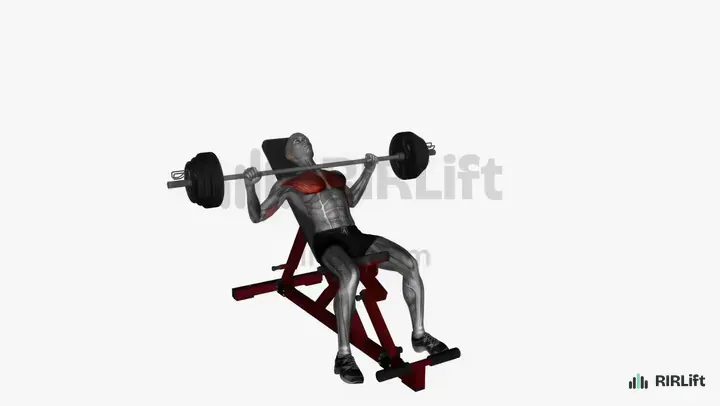
Incline Barbell Bench Press
Pick it when you want more of the work in your upper chest and front delts; the bench is set to a low incline.
Build a session with it -
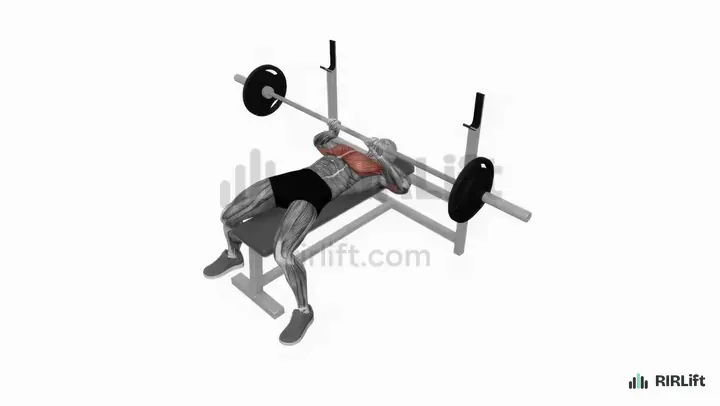
Close-Grip Bench Press
Pick it when your triceps are the goal or your bench stalls near lockout; a shoulder-width grip hands them most of the work.
Build a session with it -
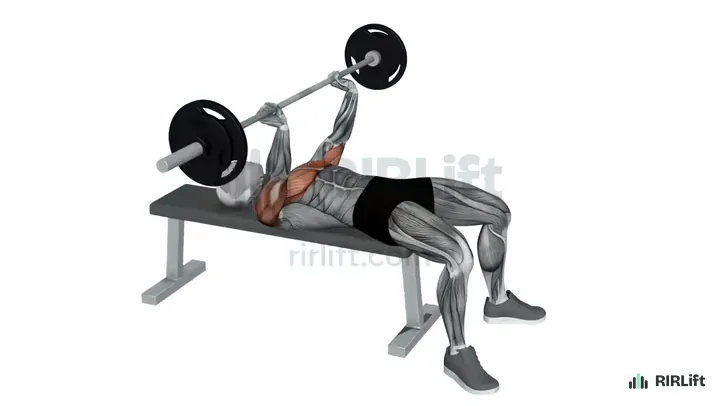
Spoto Press
Pick it when you lose tightness at the bottom: you stop the bar an inch above your chest and hold it before pressing.
Build a session with it -
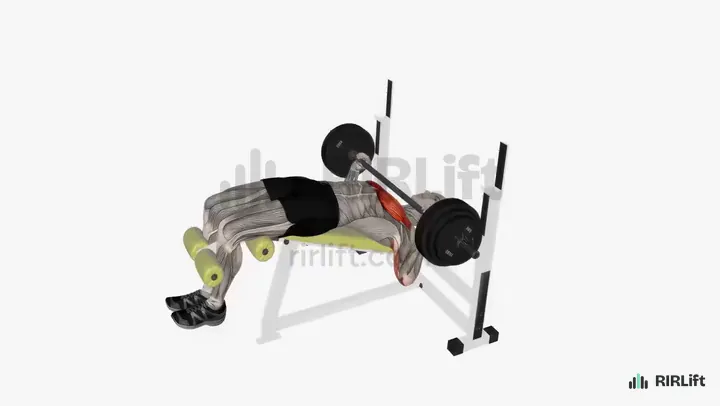
Decline Barbell Bench Press
Pick it when you want a shorter path and more lower chest, or the flat bench feels awkward on your shoulders.
Build a session with it -
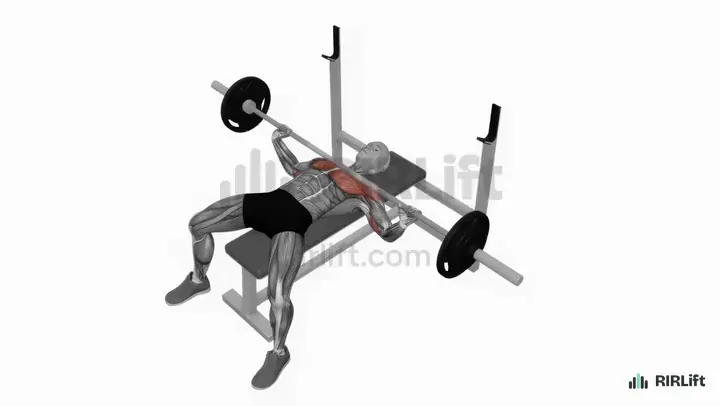
Barbell Wide-Grip Bench Press
Pick it when you want more chest and less triceps from the bar; the wider grip also shortens how far the bar travels.
Build a session with it
Barbell bench press alternatives
No barbell
-
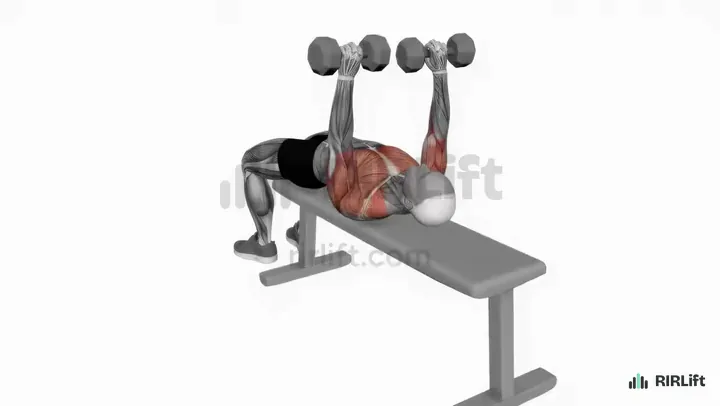
Flat Dumbbell Press
Use it when you have dumbbells and a bench: the dumbbells go lower than a bar and each arm carries its own weight.
Build a session with it -
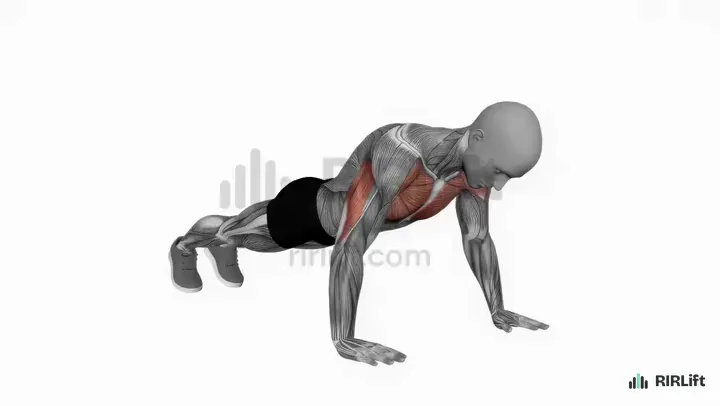
Push-Up
Use it with no equipment at all; elevate your feet or slow the lowering when 20 reps gets easy.
Build a session with it -
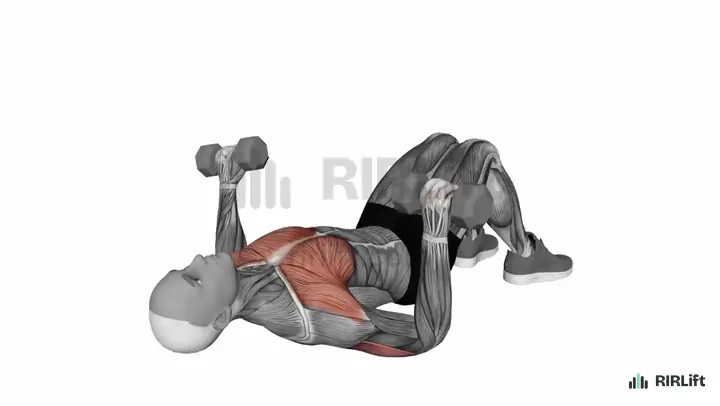
Dumbbell Floor Press
Use it when you have dumbbells but no bench; the floor stops your elbows and shortens the rep.
Build a session with it
No spotter
-
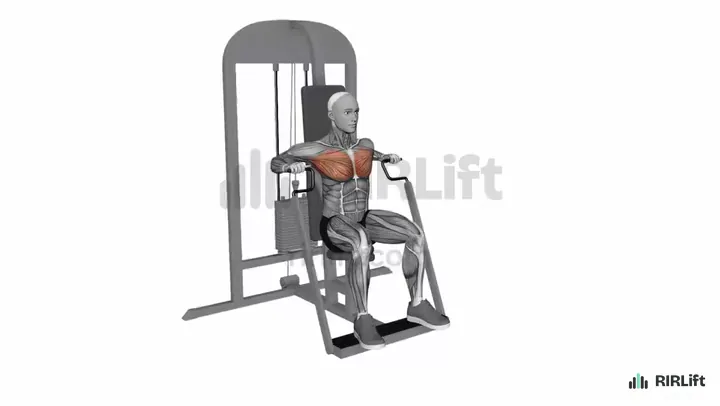
Machine Chest Press
Use it when you want to push a set close to failure with no bar over you.
Build a session with it -
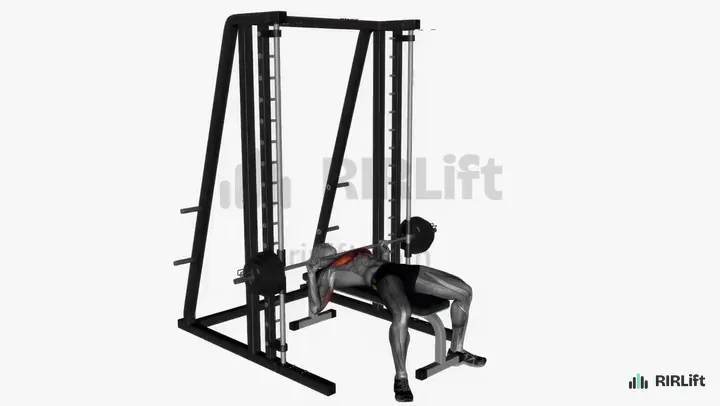
Smith Machine Bench Press
Use it when you want the bench press path with hooks you can rack on at any point in the rep.
Build a session with it
When the bottom of the rep feels awkward
-
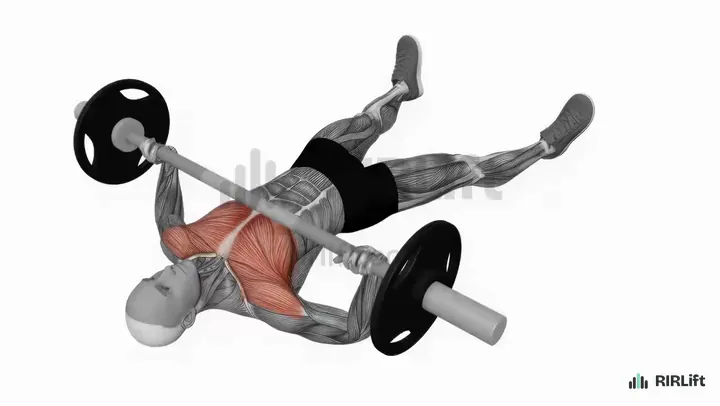
Floor Press
Use it to keep the barbell but end each rep where your upper arms reach the floor.
Build a session with it -
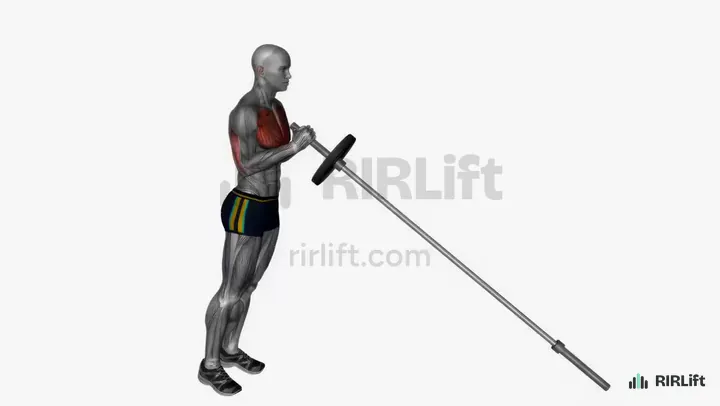
Landmine Chest Press
Use it when a straight bar feels awkward on your shoulders; the bar moves in an arc and you can press with a neutral grip.
Build a session with it
Bench press vs dumbbell press
The barbell bench press lets you lift more total weight and make smaller jumps, so it is the better choice when getting stronger at the bench is the goal. The dumbbell press lowers deeper, makes each arm do its own work and needs no rack.
For muscle, both work. Pick the one you can load hard and progress for months, and use the other as your second press of the week if you train chest twice.
How to increase your bench press
Keep the same rep range and add reps until you reach the top of it on every set, then add the smallest jump your gym allows. Log each set with its reps in reserve so you can tell a real stall from a bad day.
If the bar stops in the same spot for three sessions, fix the part that fails: stalls just off the chest call for paused reps or the Spoto press, stalls near lockout call for the close-grip bench press.
Questions
What muscles does the bench press work?
Your chest, front delts and triceps do the pressing. Your upper back, lats and legs keep you steady on the bench so the bar travels in the same path every rep.
Where should the bar touch your chest?
On your lower chest, around the bottom of your breastbone, with your elbows tucked about 45 degrees. If it lands at your collarbones, your elbows are flared too far.
Should you arch your back on the bench press?
Keep a small arch that comes from pulling your shoulder blades back and lifting your chest, with your glutes on the bench. A big powerlifting arch shortens the path, which helps a max lift but takes range away from your chest when you train for muscle.
How many sets and reps should you do for bench press?
For muscle, 3 sets of 6–10 reps stopping 2 reps short of failure, with 2:30 min of rest, is a good default. For strength, use 3–5 sets of 3–6 reps with longer rest.
Can you build your chest without the bench press?
Yes. Dumbbell presses, machine presses, push-ups and dips all train your chest through a long range; what matters is 10–20 hard sets a week and adding reps or weight over time.
What is the best bench press alternative?
The flat dumbbell press if you have dumbbells and a bench, the machine chest press if you train alone and want to push hard, and push-ups if you have nothing.
How often should you bench press?
Once or twice a week works. Spreading your weekly chest sets over two sessions works at least as well as doing them all in one day, and it gives you more chances to practise the lift.
Related templates
-
Barbell exercises: the 18 lifts worth learning, and how to put them together
Where the bench press sits among the other barbell lifts, with a session for each day.
-
Chest exercises with dumbbells, with or without a bench
Every dumbbell press and fly to pair with or replace the bench.
-
The best workout for chest, matched to your setup
A full chest session built around a heavy press.
-
How to use RIR
How to judge 2 reps in reserve on a heavy bench set.
-
Warm-up sets
How to ramp up to your working weight without tiring your chest.