
Barbell chest exercises: flat, incline, decline and no-bench options
Published October 19, 2026
The best barbell chest exercises are the flat bench press for overall size and strength, the incline bench press for the upper chest, and the decline bench press for the lower chest. The Spoto press, wide-grip and close-grip bench presses change where the bar is hardest, and the floor press and landmine press train your chest when there is no bench at all. Pick one flat press, one incline press and one variation for the weak spot you notice, and take most sets to 1 to 3 reps in reserve.
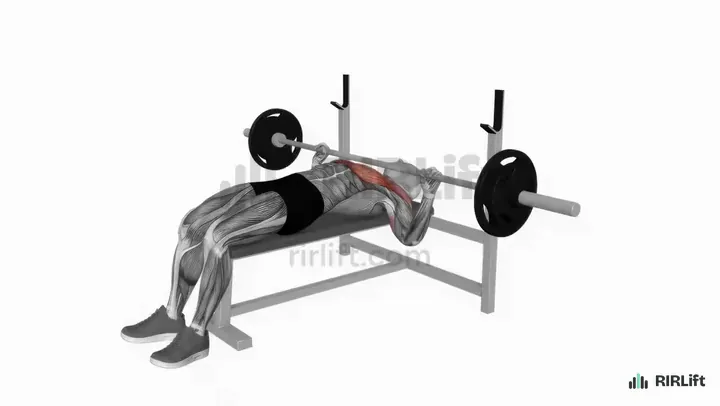
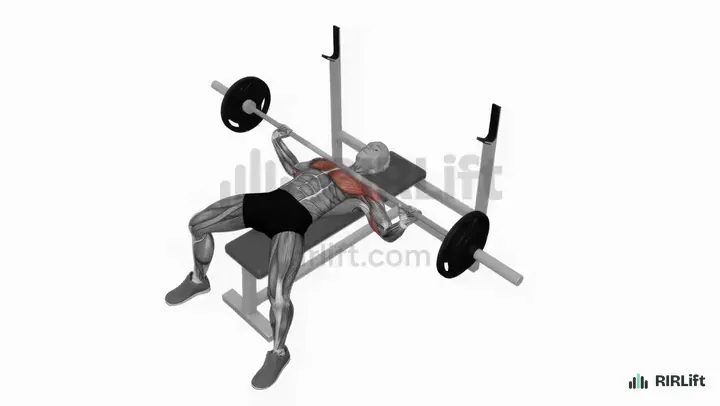
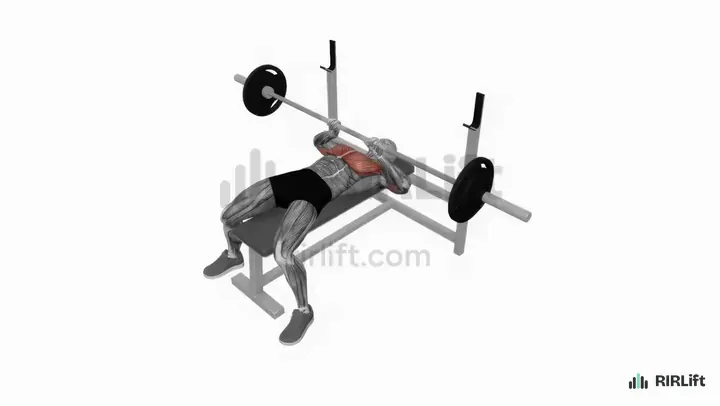
- Barbell Bench Press Chest
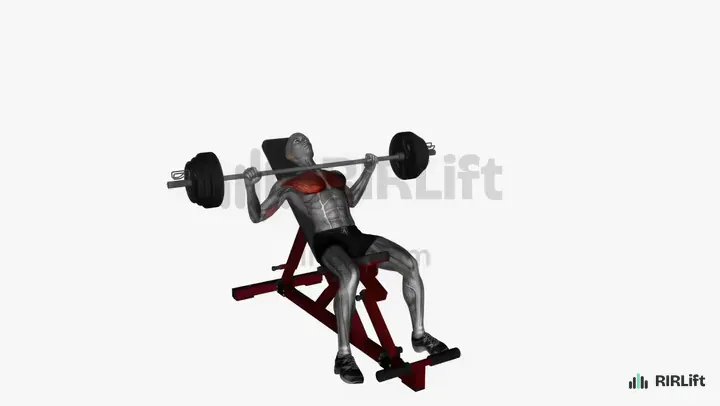
- Incline Barbell Bench Press Chest
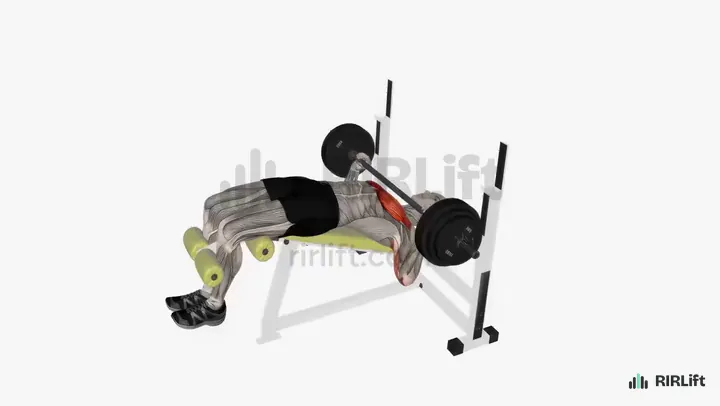
- Decline Barbell Bench Press Chest
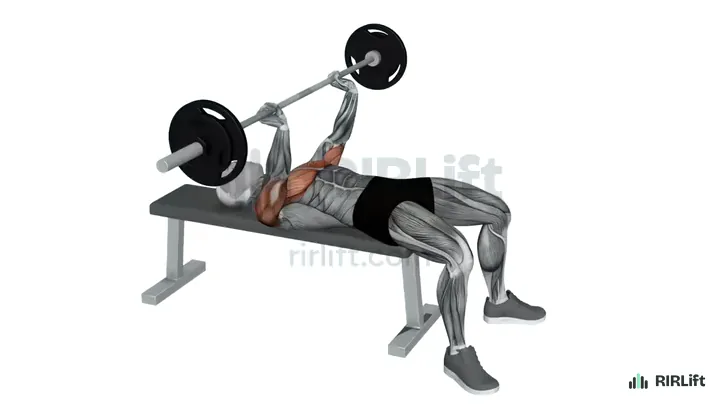
- Spoto Press Chest
- Barbell Wide-Grip Bench Press Chest
- Close-Grip Bench Press Triceps, Chest
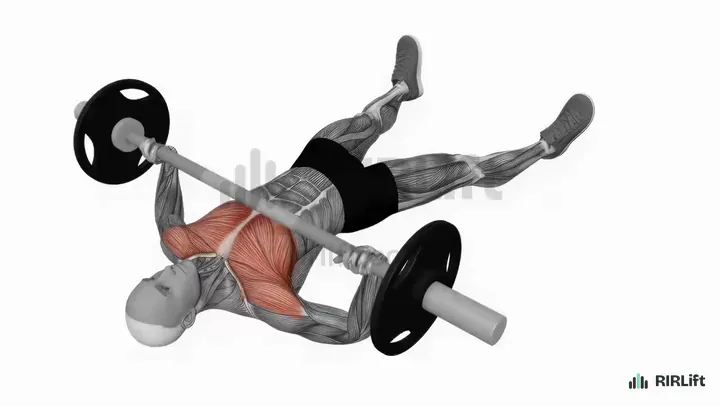
- Floor Press Chest, Triceps
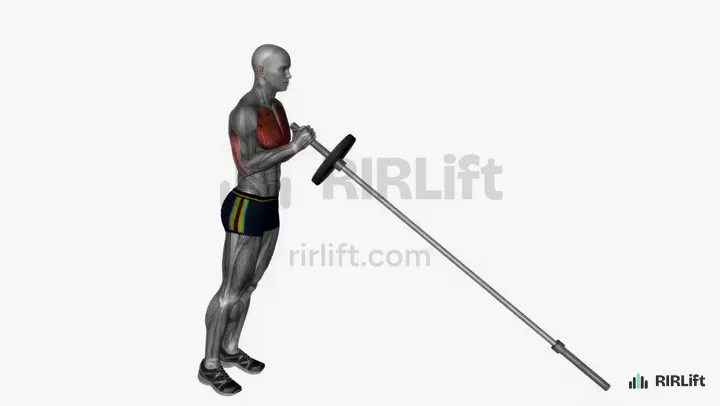
- Landmine Chest Press Chest
Put them together: example sessions
Each session below picks from the exercises above for one situation, with the sets, reps, rest and RIR filled in. Open one in the session builder to change a pick, price it from a recent set, and add it to RIRLift.
-
Session 1
Full rack with flat, incline and decline benches
You train in a gym or a full garage setup and can use every bench angle with a barbell.
2× a week · 20 sets a week · ~35 min
-
Session 2
A flat bench and a power rack, no incline
You have a flat bench in a power rack at home and no way to set an incline.
2× a week · 20 sets a week · ~35 min
-
Session 3
A barbell and plates, no bench
You have a bar, plates and a corner or landmine, but no bench.
2× a week · 14 sets a week · ~25 min
Session 1
Full rack with flat, incline and decline benches
- Workouts2× a week
- Working sets20 a week
- Per workout~35 min
- EquipmentBarbells, Flat Bench, Incline Bench, Decline Bench
You train in a gym or a full garage setup and can use every bench angle with a barbell.
With every angle available, each session opens with one heavy flat or incline press and follows with a different angle or grip, so each part of your chest gets a press it handles best. The main press stops at 2 reps in reserve because heavy barbell sets close to failure need a spotter; the second and third exercises go to 1. That gives 10 to 11 hard chest sets per session and about 21 per week.
| Exercise | Sets × reps | RIR | Rest |
|---|---|---|---|
| Barbell Bench Press2 warm-up sets firstTouch, no bounce. | 4 × 5–8 | 2 | 3 min |
| Incline Barbell Bench PressBench at 30 degrees. | 3 × 8–12 | 1 | 2:30 min |
| Close-Grip Bench PressHands shoulder width. | 3 × 8–12 | 1 | 2 min |
Open Chest A in the session builder
| Exercise | Sets × reps | RIR | Rest |
|---|---|---|---|
| Incline Barbell Bench Press2 warm-up sets firstBar to the collarbones. | 4 × 6–10 | 2 | 3 min |
| Decline Barbell Bench PressGet a hand-off. | 3 × 8–12 | 1 | 2:30 min |
| Barbell Wide-Grip Bench Press2 s down. | 3 × 10–15 | 1 | 2 min |
Open Chest B in the session builder
- How to run it
- Do Chest A and Chest B once each per week with at least two days between them. Use safety pins or a spotter on every press.
- How to progress
- When every set of an exercise reaches the top of its rep range at the target reps in reserve, add 2.5 to 5 pounds next time. If a lift stalls for three sessions, drop the weight by 10 percent and build back up.
Session 2
A flat bench and a power rack, no incline
- Workouts2× a week
- Working sets20 a week
- Per workout~35 min
- EquipmentBarbells, Flat Bench
You have a flat bench in a power rack at home and no way to set an incline.
Without an incline bench, the reverse-grip press stands in for the upper chest, and the Spoto press adds a different stimulus without new equipment. Bench press sets stop at 2 reps in reserve because you may be training alone with only safety pins; the variations stop at 1 to 2. Each session has 10 working sets.
| Exercise | Sets × reps | RIR | Rest |
|---|---|---|---|
| Barbell Bench Press2 warm-up sets firstPins set just below your chest. | 4 × 6–10 | 2 | 3 min |
| Reverse-Grip Bench PressThumbs wrapped. | 3 × 8–12 | 2 | 2:30 min |
| Floor PressInside the rack, pins low. | 3 × 8–12 | 1 | 2 min |
Open Flat A in the session builder
| Exercise | Sets × reps | RIR | Rest |
|---|---|---|---|
| Spoto Press2 warm-up sets first1 s hover above the chest. | 4 × 6–10 | 2 | 3 min |
| Barbell Wide-Grip Bench Press | 3 × 10–15 | 1 | 2 min |
| Close-Grip Bench Press | 3 × 8–12 | 1 | 2 min |
Open Flat B in the session builder
- How to run it
- Do the two sessions once each per week. Set the safety pins about an inch below your chest when lying on the bench.
- How to progress
- Add a rep per set until you reach the top of the range, then add 5 pounds and start again at the bottom. Keep the Spoto pause a full second even as the weight goes up.
Session 3
A barbell and plates, no bench
- Workouts2× a week
- Working sets14 a week
- Per workout~25 min
- EquipmentBarbells, Landmine
You have a bar, plates and a corner or landmine, but no bench.
Only two barbell chest exercises work without a bench, so this plan uses both and moves the volume around rep ranges instead of exercises. The floor press goes heavy with a short range, and the landmine press, done one arm at a time, fills in the upper chest. Floor press sets stop at 1 to 2 reps in reserve and landmine sets at 1, for 9 to 10 sets per session.
| Exercise | Sets × reps | RIR | Rest |
|---|---|---|---|
| Floor Press2 warm-up sets firstPause with arms on the floor. | 4 × 6–10 | 2 | 2:30 min |
| Landmine Chest PressPer arm, staggered stance. | 3 × 10–15 | 1 | 90 s |
Open Day 1 in the session builder
| Exercise | Sets × reps | RIR | Rest |
|---|---|---|---|
| Landmine Chest Press1 warm-up set firstPer arm. | 4 × 8–12 | 1 | 90 s |
| Floor PressSlightly narrower grip. | 3 × 10–15 | 1 | 2 min |
Open Day 2 in the session builder
- How to run it
- Alternate Day 1 and Day 2, twice each per week if you can recover, or once each if chest is part of a full-body plan.
- How to progress
- Add weight to the floor press when all sets hit the top of the range. On the landmine press add reps up to 15 per arm, then a small plate.
Make it fit you
-
Shoulders complain on the bench
Swap the flat bench press for the floor press or the landmine press for a few weeks, keep the grip slightly narrower, and stop every set at 2 reps in reserve. Both stop your upper arm before it travels behind your body.
-
Your bench stalls near the top
Put the close-grip bench press or the floor press in the second slot of every session. Both train the lockout, where your triceps take over from your chest.
-
Upper chest looks flat
Start Chest B with the incline press and add a third set to it. Without an incline bench, open with the reverse-grip press instead and keep the bar close to your lower ribs on the way down.
-
Training alone
Set the safety pins every time and keep the main press at 2 reps in reserve or more. Save the 0 to 1 reps in reserve sets for the floor press and landmine press, where a missed rep just ends on the floor.
-
Only an hour a week for chest
Do Chest A from the full rack plan once a week and add one set to each exercise. Ten to twelve hard sets a week is enough to keep making progress.
-
Log the RIR, not just the weight
Write down how many reps you had left on every set, not just the load. If you log in RIRLift, it uses that number to suggest your next bench weight, so a set at 3 reps in reserve gets a heavier bar next time and a grinder at 0 does not.
Questions
What is the number one barbell chest exercise?
The flat barbell bench press. It lets you move the most weight through a long range for your whole chest, front delts and triceps, and it is easy to load in small steps. Add an incline press if you want the upper chest to keep up.
Is it OK to work out chest every day?
Not with hard barbell sets. Your chest needs about two days to recover from a session taken close to failure. Two sessions a week with 10 to 20 hard sets in total gives you plenty of growth and room to recover.
What barbell chest exercises can I do without a bench?
The floor press and the landmine press. The floor press uses the floor to stop your elbows, and the landmine press is done standing with one end of the bar anchored in a corner. The no-bench plan above uses both.
Is the incline or flat bench better for chest?
Do both if you can. The flat press builds the most overall strength and the incline press does more for your upper chest. If you only have time for one, alternate them from session to session.
How many sets of barbell chest exercises should I do?
Ten to twenty hard sets a week, split over two sessions, works for most lifters. A hard set here means one that ends 0 to 3 reps short of failure.
Is the close-grip bench press a chest exercise?
It trains both. Your triceps work harder than on a regular bench press, but your chest still moves a lot of weight. Treat it as a chest press with a triceps bias, not as a replacement for the regular bench.
How do I know if a barbell set was hard enough?
Ask yourself how many more clean reps you could have done. If the answer is 1 to 3, the set counts. If it was 5 or more, add weight or reps next time.
Related templates
-
Bench press: how to do it, and what to swap it for
Full form guide and programming for the main barbell chest lift.
-
Incline bench press: how to do it, the right angle, and alternatives
Bench angle, grip and set targets for the upper chest press.
-
Chest exercises at the gym: barbells, machines, cables and dips
Cables and machines to add once barbell work stalls.
-
Barbell exercises: the 18 lifts worth learning, and how to put them together
Barbell picks for every other muscle group.
-
The best workout for chest, matched to your setup
Full chest programs that mix barbell, dumbbell and cable work.