
Cable arm exercises for biceps, triceps and forearms
Published October 19, 2026
The best cable arm exercises are the cable curl and overhead cable curl for your biceps, the triceps pressdown and overhead cable extension for your triceps, and the cable kickback for the triceps at lockout. A single pulley with a rope and a straight bar covers all of those except the overhead curl and the cross pushdown, which need a two-stack crossover. Pair one curl with one pushdown and one overhead extension, and a cable machine gives you a full arm day.
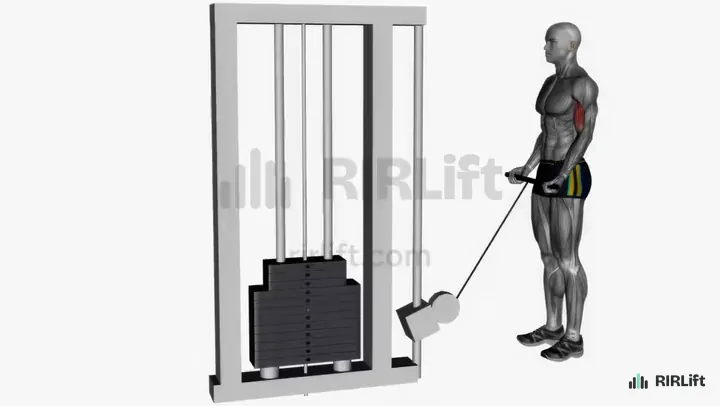
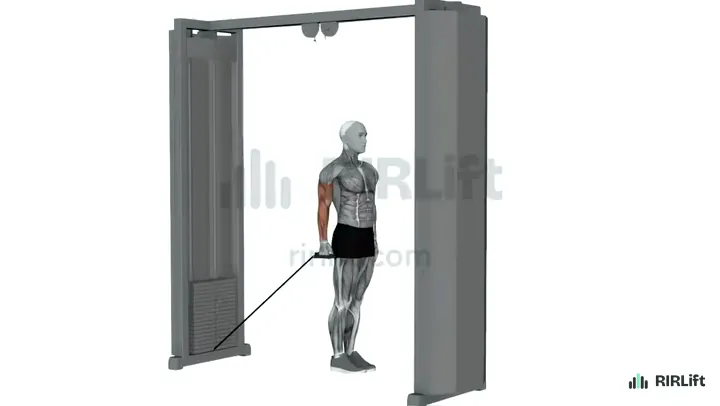
- Cable Curl Biceps
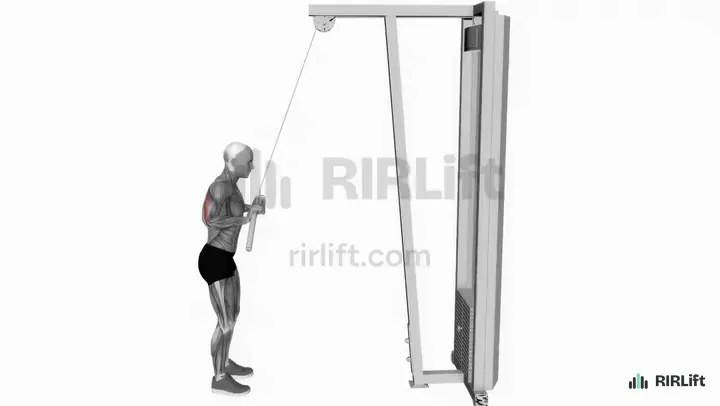
- Cable Triceps Pressdown Triceps
- Overhead Cable Triceps Extension Triceps
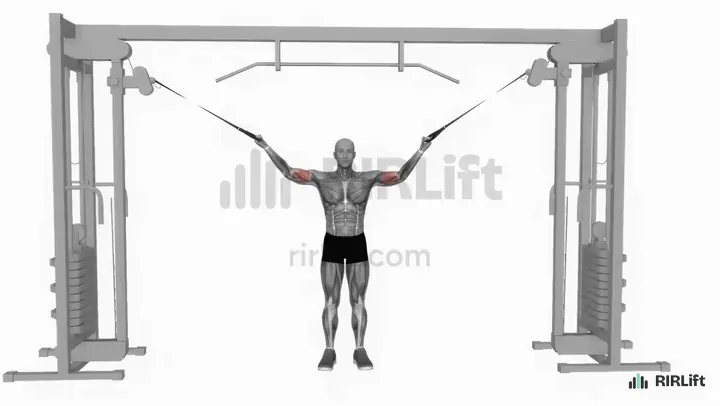
- Overhead Cable Curl Biceps
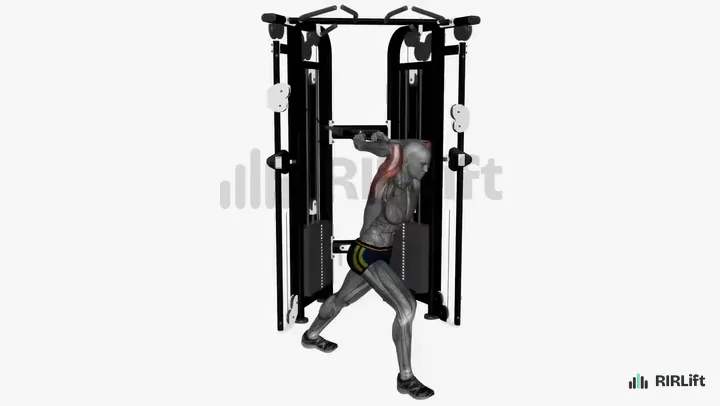
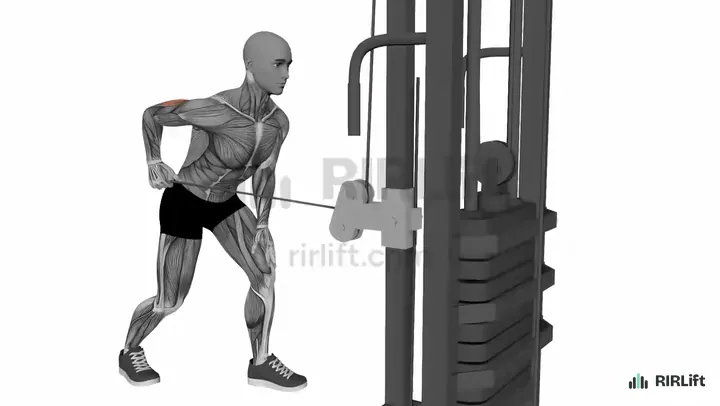
- Cable Triceps Kickback Triceps
- Cable Twisting Curl Biceps
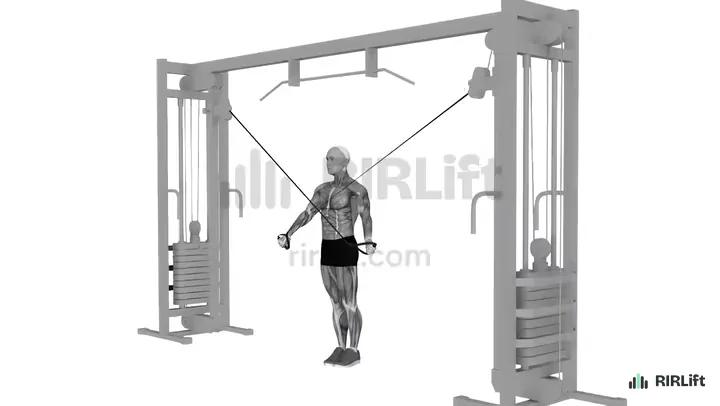
- Cable Cross Pushdown Triceps
Put them together: example sessions
Each session below picks from the exercises above for one situation, with the sets, reps, rest and RIR filled in. Open one in the session builder to change a pick, price it from a recent set, and add it to RIRLift.
-
Session 1
One adjustable pulley, no crossover
You have a single cable column, at a home gym or a functional trainer you share, with a straight bar, a rope and a single handle.
2× a week · 22 sets a week · ~20 min
-
Session 2
Crossover station, dedicated arm day
You train at a gym with a two-stack crossover, have a year or more of lifting behind you, and give arms their own day once a week.
1× a week · 15 sets a week · ~20 min
-
Session 3
Arms inside an upper-body day
You run an upper and lower split and only have 15 minutes for arms at the end of the upper session.
2× a week · 18 sets a week · ~20 min
Session 1
One adjustable pulley, no crossover
- Workouts2× a week
- Working sets22 a week
- Per workout~20 min
- EquipmentAdjustable Cable
You have a single cable column, at a home gym or a functional trainer you share, with a straight bar, a rope and a single handle.
One pulley rules out the overhead curl and the cross pushdown, so each session uses moves that need only one stack: a curl, a pushdown or overhead extension, a kickback or twisting curl, and the wrist extension. Swapping attachments costs a few seconds, so the plan alternates biceps and triceps to keep moving. Isolation sets end at 0 to 1 reps in reserve because cables are safe to push hard; each session is 11 working sets.
| Exercise | Sets × reps | RIR | Rest |
|---|---|---|---|
| Cable CurlStraight bar. | 3 × 8–12 | 1 | 75 s |
| Cable Triceps PressdownRope or V-bar. | 3 × 8–12 | 1 | 75 s |
| Cable Twisting CurlPer arm. | 3 × 10–15 | 0 | 1 min |
| Cable Wrist ExtensionForearms on a bench. | 2 × 15–20 | 1 | 45 s |
Open Arms A in the session builder
| Exercise | Sets × reps | RIR | Rest |
|---|---|---|---|
| Overhead Cable Triceps ExtensionRope. Deep stretch. | 3 × 10–15 | 1 | 75 s |
| Cable CurlEZ handle. | 3 × 10–15 | 0 | 1 min |
| Cable Triceps KickbackPer arm. Pause at lockout. | 3 × 12–15 | 0 | 45 s |
| Cable Wrist Extension | 2 × 15–20 | 1 | 45 s |
Open Arms B in the session builder
- How to run it
- Do Arms A and Arms B on separate days, twice a week each or once each with other training between.
- How to progress
- Move the pin down one plate when every set reaches the top of its rep range at the target reps in reserve. If your stack jumps in big steps, add reps or a slower lowering until the next plate is manageable.
Session 2
Crossover station, dedicated arm day
- Workouts1× a week
- Working sets15 a week
- Per workout~20 min
- EquipmentAdjustable Cable, Cable Crossover
You train at a gym with a two-stack crossover, have a year or more of lifting behind you, and give arms their own day once a week.
The crossover adds the overhead curl and cross pushdown, so each superset pairs a biceps and a triceps exercise that share one setup: one muscle rests while the other works. Heavier pairs come first at 1 rep in reserve, and the session closes on the kickback at 0. It is 15 working sets, enough for one big arm day a week.
| Exercise | Sets × reps | RIR | Rest |
|---|---|---|---|
| A1 Cable CurlLow pulley, straight bar. | 3 × 8–12 | 1 | 1 min |
| A2 Cable Triceps PressdownHigh pulley, same column. | 3 × 8–12 | 1 | 1 min |
| B1 Overhead Cable CurlBoth high pulleys. | 3 × 10–15 | 1 | 1 min |
| B2 Cable Cross PushdownSame pulleys, cables crossed. | 3 × 10–15 | 1 | 1 min |
| Cable Triceps KickbackPer arm. | 3 × 12–20 | 0 | 45 s |
- How to run it
- Do this once a week, at least two days from your heaviest chest or back session. Do each superset back to back, then rest.
- How to progress
- Add a rep per set each week. When the top of a range comes at the target reps in reserve, drop the pin one plate on that exercise only.
Session 3
Arms inside an upper-body day
- Workouts2× a week
- Working sets18 a week
- Per workout~20 min
- EquipmentLat Pulldown, Adjustable Cable
You run an upper and lower split and only have 15 minutes for arms at the end of the upper session.
The reverse-grip pulldown counts as both a back and a biceps exercise, so it replaces your regular pulldown and frees time. The overhead extension covers the triceps head that presses barely load, and the twisting curl finishes the biceps. Three exercises at 1 to 2 reps in reserve fit after heavy pressing and rowing without wrecking the next session.
| Exercise | Sets × reps | RIR | Rest |
|---|---|---|---|
| Reverse-Grip Lat PulldownReplaces your usual pulldown. | 3 × 8–12 | 2 | 2 min |
| A1 Overhead Cable Triceps ExtensionRope. | 3 × 10–15 | 1 | 1 min |
| A2 Cable Twisting CurlPer arm. | 3 × 10–15 | 1 | 1 min |
- How to run it
- Do this block at the end of each upper day, twice a week. Use the pulldown in place of your usual vertical pull.
- How to progress
- Progress the pulldown by adding weight when every set reaches 12 reps at 2 in reserve. On the two isolation moves, add reps first, then a plate.
Make it fit you
-
Elbows sore on pushdowns
Use a rope and let your hands spread apart at the bottom. If a straight bar bothers you, the cross pushdown follows a freer path. Keep the overhead extension lighter for two weeks.
-
The stack jumps too far
If your machine goes up in big steps, stay on a weight until you hit the top of the range at 0 reps in reserve, then add the next plate and drop to the bottom of the range. Some stacks take a small add-on weight.
-
Triceps grow but biceps don't
Start the session with the biceps pair and add a third curl: the twisting curl or the overhead curl. Take curls to 0 reps in reserve on the last set.
-
Want bigger forearms
Keep the wrist extension and add a set of reverse-grip curls on the low pulley using a straight bar with palms down. Two to four sets a week is enough.
-
Only a home cable machine with a low pulley
Do the curls, twisting curl and wrist extension from the low pulley, and replace pushdowns with kickbacks and a lying overhead extension facing away from the pulley on the floor.
-
Use reps in reserve to time the next plate
Cable stacks feel different machine to machine, so the pin number means little. If you log in RIRLift, record the reps you had left on each set, and it suggests when to move the pin based on that, not on the label.
Questions
What are good arm exercises using a cable machine?
The cable curl and triceps pressdown are the two staples. Add the overhead cable triceps extension for the long head of the triceps, and the overhead cable curl or twisting curl as a second biceps move. The kickback and wrist extension round it out.
Are cables good for building arms?
Yes. A cable keeps the load on through the whole rep, the weight changes in seconds, and the movements are easy on the joints. Arms grow well from cables alone if each set is taken close to failure.
Are 4 exercises enough for arm day?
Yes. Two for biceps and two for triceps, 3 or 4 hard sets each, is plenty. The crossover plan here uses five only because the supersets keep it short.
Should I do cable arms before or after free weights?
After. Do heavy barbell or dumbbell work first while you are fresh, then use cables to add volume with less fatigue. If you train arms only on cables, do the heaviest pair first.
Which cable attachment is best for triceps?
A rope lets your hands spread at the bottom and is easiest on the elbows. A straight bar or V-bar lets you lift more. Use the rope for overhead extensions and either one for pushdowns.
Can you build big arms with only cable exercises?
Yes. Arms respond to hard sets, not to the equipment. Cables cover every position the biceps and triceps work in; what limits most home cable machines is the top of the stack, not the exercises.
Related templates
-
Cable exercises by muscle, with sessions for the cables you have
Cable moves for the rest of the body to build full sessions around these.
-
Tricep pushdown: how to do it, which attachment to use, and what to do instead
Attachments, setup and programming for the pressdown.
-
The best workout for arms: biceps, triceps and forearms together
Full arm programs mixing cables, dumbbells and barbells.