Cable crunch alternatives: what to do when the cable is taken or you train at home

The best cable crunch alternative is the machine crunch, because it is the same loaded curl and you can still add weight in small steps. No machine? A decline crunch with a plate at your chest or a plate sit-up does the same job, and a hanging knee raise trains the same muscle from your hips up. At home, a dumbbell suitcase crunch or a reverse crunch gets there with one dumbbell or none.

What a cable crunch alternative has to replace

The cable crunch trains your rectus abdominis, the six-pack muscle, by curling your ribs down toward your pelvis against a weight. It works hardest when you are fully curled, and the stack lets you add load a little at a time.

So a good swap has to round your spine, not just bend at the hips, and give you a way to make it harder over time: more weight, more reps, or a longer lever.

How to do the cable crunch

In the gym, without the cable

These keep the cable crunch's best feature: a load you can raise in small steps, so the sets you log keep going up.

Closest swap in the gym

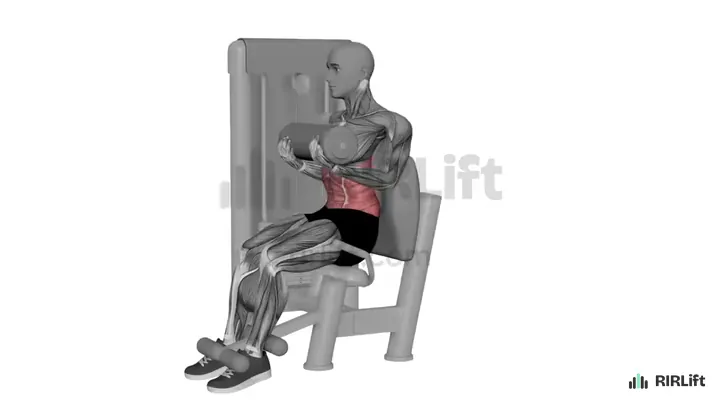
Machine Crunch

Abs

The same loaded curl with a seat and a weight stack, so you add load in small jumps the way you did on the cable. Use it when the cable station is taken, and keep your old sets and reps.

How to do it

  1. Set the seat height so the machine's pivot sits near your belly button and your feet hook under the pads or rest on the footplate.
  2. Hold the handles or place your arms on the pads with your elbows pointing forward, and sit tall with your back on the pad.
  3. Breathe out and curl your chest down toward your hips by rounding your spine, keeping your hips on the seat.
  4. Hold the squeeze for a second when your ribs are closest to your pelvis.
  5. Uncurl slowly back to upright and let the weight touch down lightly before the next rep.

Cues

  • Ribs to hips
  • Arms just hold on
  • Slow on the way back

Common mistakes

  • Pulling with your arms: if your shoulders and arms burn first, lower the weight and let your hands rest on the handles.
  • Hinging at the hips instead of curling: keep your lower back on the pad and think about shortening the distance from your ribs to your pelvis.
  • Bouncing the stack between reps: pause briefly at the top so the abs start every rep from a stop.

Bench swap you can load with a plate

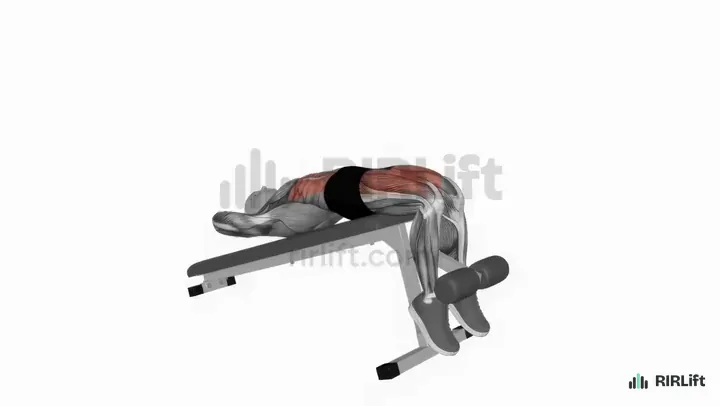
Decline Crunch

Abs

The decline angle makes your abs lift your whole trunk, and a plate at your chest adds load when bodyweight gets easy. Your hip flexors help more than on the cable, so curl up one segment at a time.

How to do it

  1. Set the bench to a decline and hook your feet under the pads, hips near the edge of the seat.
  2. Lie back with your fingertips lightly behind your head, or hug a plate to your chest once bodyweight is easy.
  3. Curl your torso up, rounding your spine one segment at a time.
  4. Stop when your torso is upright or just short of it.
  5. Lower slowly back to the bench.

Cues

  • Curl, do not hinge
  • Ribs to hips
  • Slow lowering

Common mistakes

  • Yanking on your head to get up: your hands only rest there, or hold a plate instead.
  • Swinging up with momentum: if you need a bounce at the bottom, lower the decline.

Weighted sit-up, plate held overhead

Plate Sit-Up

Abs

A flat-floor version of the loaded curl: hold a plate up at arm's length and you have a weight you can raise week to week. Pick it when there is no decline bench free.

How to do it

  1. Sit on the floor with your legs straight out in front of you, then lie back.
  2. Hold a weight plate in both hands with your arms straight, pointing up over your chest.
  3. Curl your head and shoulders up, then keep rolling until your torso is upright, arms still reaching up.
  4. Pause for a moment at the top.
  5. Roll back down slowly, one part of your spine after another, until your shoulders touch the floor.

Cues

  • Arms stay straight and pointing up
  • Roll up, roll down
  • Exhale on the way up

Common mistakes

  • Throwing the plate forward to get up: keep it over your shoulders and use a lighter one.
  • Dropping back to the floor fast: the lowering is half the work.
  • Legs lifting as you sit up: hook your feet under something heavy or take a lighter plate.

Gym swap that curls from the bottom up

Captain's Chair Knee Raise

Abs

Your back rests on the pad and your forearms hold you, so your abs curl your pelvis up without grip giving out first. It trains the same muscle from the other end, and you add reps or slow the lowering to progress.

How to do it

  1. Step onto the platform, set your forearms on the pads, grip the handles and press your back into the back pad.
  2. Step off so your legs hang straight below you.
  3. Raise your knees toward your chest and curl your hips forward off the back pad at the top.
  4. Lower your legs until they hang straight again without swinging, then repeat.

Cues

  • Shoulders down, away from your ears
  • Curl the hips at the top
  • Dead stop at the bottom

Common mistakes

  • Lifting your knees without curling your pelvis: at the top, tip your hips up off the back pad for a second.
  • Swinging the legs up and dropping them: lower over two seconds until they hang still.

Pull-up bar

Hanging raises curl your pelvis toward your ribs, the same muscle from the bottom end. Start bent-kneed and straighten your legs as you get stronger.

Pull-up bar, from the bottom up

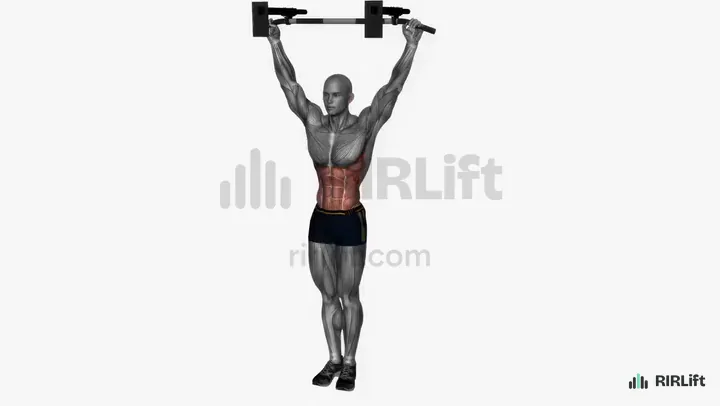
Hanging Knee Raise

Abs

Hanging and curling your pelvis toward your chest trains the same six-pack muscle as the cable crunch, from your hips instead of your ribs. It is the easiest bar exercise to start with.

How to do it

  1. Take hold of the bar with an overhand grip about shoulder-width apart and hang with your arms straight and your feet clear of the floor.
  2. Pull your shoulders slightly down away from your ears and let your body go still before the first rep.
  3. Bend your knees and bring them toward your chest, keeping your legs together.
  4. As your thighs pass parallel to the floor, tuck your tailbone and roll your hips up so your knees climb toward your chest.
  5. Lower your legs slowly until they hang straight below you again, and stop any swing before the next rep.

Cues

  • Roll the hips, don't just lift the knees
  • Lower slower than you lift
  • Start each rep from stillness

Common mistakes

  • Swinging back and forth to get the knees up: pause at the bottom of each rep, and if you can't stop the swing, shorten the set.
  • Stopping when the thighs reach parallel: that is mostly hip flexors; keep going and curl the pelvis up so the abs finish the rep.
  • Letting go of the shoulders and hanging loosely: keep a little tension pulling the shoulders down so you stay steady on the bar.

Hardest bar swap

Hanging Leg Raise

Abs

Straight legs make a much longer lever than bent knees, so every rep is far harder. Move up to it once hanging knee raises get easy at 15 clean reps.

How to do it

  1. Take an overhand grip on the bar and hang with straight arms and your feet together.
  2. Pull your shoulders down slightly and stop any swing.
  3. Raise your legs with soft knees until they are at least level with your hips, letting your pelvis tilt up at the top.
  4. Lower them slowly to a still hang and repeat.

Cues

  • Still hang before every rep
  • Pelvis tilts up at the top
  • Bend the knees to scale

Common mistakes

  • Swinging the legs up with momentum: pause at the bottom of every rep.
  • Lifting only to hip height with an arched back: if the pelvis never tilts, bend the knees more.

At home: one dumbbell, a wheel, or nothing

Without a stack, make each rep harder instead of heavier: slow the lowering, pause at the top, and take sets within a rep or two of failure.

Best with one dumbbell at home

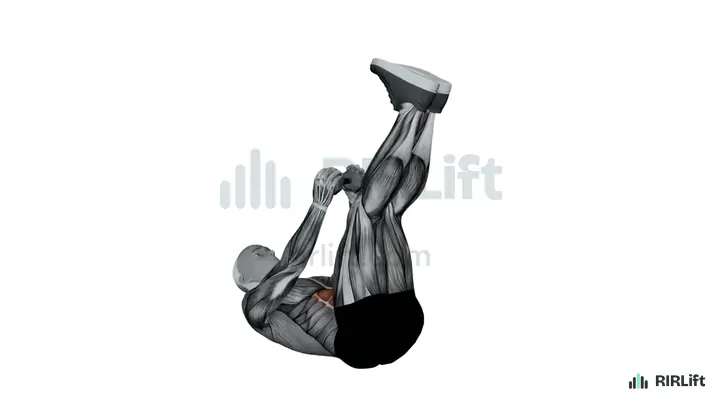
Dumbbell Suitcase Crunch

Abs

Legs up and a dumbbell reaching toward your feet: a crunch you can load at home. Move up a dumbbell size when every set reaches 20 reps.

How to do it

  1. Lie face up and raise both legs straight up so your feet point at the ceiling.
  2. Hold one dumbbell with both hands, arms straight above your chest.
  3. Breathe out and curl your head and shoulders off the floor, reaching the dumbbell up toward your feet.
  4. Pause for a second at the top with your ribs pulled toward your hips.
  5. Lower your shoulders slowly to the floor, keeping your legs pointing up, and start the next rep.

Cues

  • Reach the weight up, not forward
  • Legs stay vertical
  • Slow on the way down

Common mistakes

  • Letting the dumbbell drift back over your face between reps: keep it above your chest the whole set.
  • Letting your legs fall toward the floor as you tire: bend your knees a little and keep them over your hips.
  • Jerking up with your arms: the dumbbell rises because your shoulders curl, not because you push it.

Simplest floor swap

Crunch

Abs

The bodyweight version of the same curl, with no gear at all. It is light, so take sets close to failure and slow each rep down.

How to do it

  1. Lie on your back with your knees bent, feet flat, and your arms reaching straight forward at shoulder height.
  2. Breathe out and curl your head and shoulders up, sliding your hands toward your knees as your ribs move toward your hips.
  3. Stop when your shoulder blades are off the floor and hold for a second.
  4. Uncurl slowly until your shoulders touch down, then start the next rep.

Cues

  • Ribs to hips
  • Reach, don't pull
  • Exhale up

Common mistakes

  • Jerking your arms forward to get up: the reach follows the curl, your abs start it.
  • Bouncing off the floor: lower under control so every rep starts from rest.
  • Tucking your chin hard into your chest: keep a fist-sized gap and look at your knees.
Build a session with Crunch

Best with no equipment

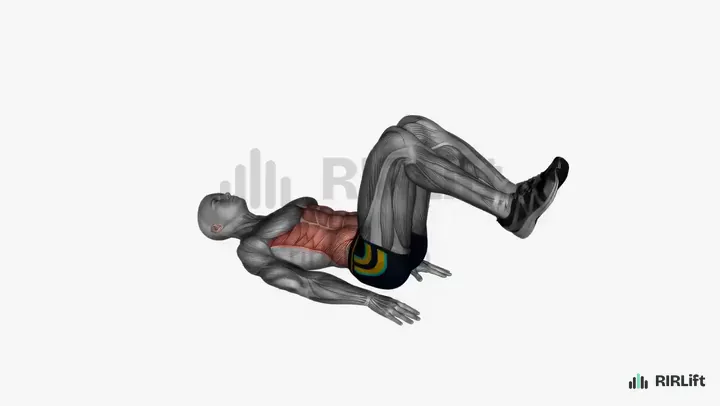
Reverse Crunch

Abs

You curl your hips up toward your ribs instead of your ribs down to your hips, which keeps your neck out of it and is harder than a crunch. Lifting your hips higher off the floor makes each rep harder.

How to do it

  1. Lie face up on a mat, arms flat along the floor beside you, and bring your knees up so your thighs point at the ceiling and your knees are bent about square.
  2. Press your lower back gently into the floor and breathe out.
  3. Use your abs to roll your tailbone and then your lower back off the mat, bringing your knees in toward your chest without changing the bend in them.
  4. Stop when your hips are fully curled and your weight sits on your upper back, pausing for a beat.
  5. Unroll one vertebra at a time until your tailbone touches down, keeping your thighs vertical before the next rep.

Cues

  • Curl the tailbone, not the knees
  • Knee angle stays fixed
  • Slow on the way down

Common mistakes

  • Swinging the legs to throw the hips up: if you need momentum, shorten the range and pause at the bottom of each rep.
  • Pushing hard through your hands to lift: keep your arms relaxed so the abs do the lifting.
  • Dropping the legs toward the floor between reps: stop with your thighs vertical, where the abs still hold tension.

RIRLift's swap in a home gym

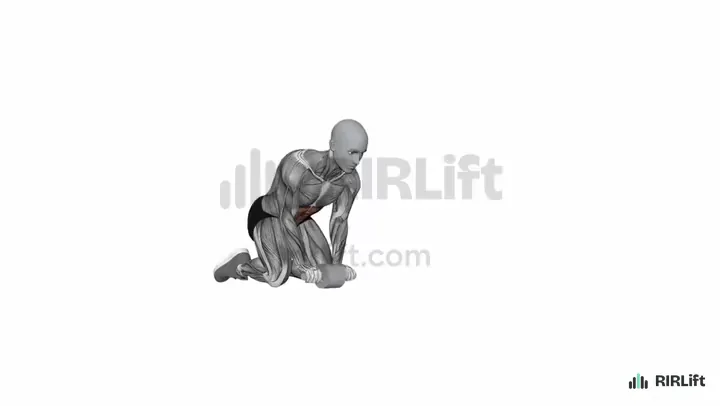
Ab Wheel Rollout

Abs

The rollout makes your abs stop your back from arching as you reach out, which makes it hard without any added weight. This is what RIRLift puts in the cable crunch's place with a home gym.

How to do it

  1. Kneel on a pad with the wheel under your shoulders and arms straight.
  2. Tuck your pelvis so your lower back rounds slightly, then roll the wheel forward as your hips follow.
  3. Go as far as you can while keeping that tuck, ideally until your arms are near overhead.
  4. Pull the wheel back to your knees by squeezing your abs, not by sitting your hips back.

Cues

  • Tuck first, then roll
  • Hips move with the wheel
  • Stop before the back arches

Common mistakes

  • Letting the lower back sag at the far end: roll toward a wall so it stops you at a range you control.
  • Pulling back by bending at the hips: drag the wheel back with your abs and keep the hips forward.

Example sessions without the cable crunch

Session 1

Gym, cable station taken

Open in the session builder
  • Workouts2× a week
  • Working sets20 a week
  • Per workout~20 min
  • EquipmentAb Crunch Machine, Decline Bench, Dip Bar

You train in a gym with machines and benches, but the cable column is always busy or the rope is missing.

The machine crunch takes the cable crunch's place at the same rep range, then a plate-loaded decline crunch adds a second loaded curl and the captain's chair works your abs from the hips up. 10 working sets.

Abs
ExerciseSets × repsRIRRest
Machine Crunch1 warm-up set firstPause at the full curl. 4 × 10–15 1 75 s
Decline CrunchPlate at your chest. 3 × 8–12 2 90 s
Captain's Chair Knee Raise 3 × 10–15 1 75 s
How to run it
Run it at the end of two training days a week, with at least a day between.
How to progress
When every set of a lift reaches the top of its range at the RIR shown, add the smallest weight jump next session, or for the captain's chair, slow the lowering to three seconds.

Session 2

Home with one dumbbell

Open in the session builder
  • Workouts3× a week
  • Working sets30 a week
  • Per workout~15 min
  • EquipmentDumbbells

You train at home with a single dumbbell and a mat, nothing to hang from.

The dumbbell suitcase crunch is the loaded curl, then the reverse crunch works your abs from the hips and paused crunches finish them. Loads are light, so reps run higher and sets go closer to failure. 10 working sets.

Abs
ExerciseSets × repsRIRRest
Dumbbell Suitcase Crunch 4 × 12–20 1 1 min
Reverse CrunchHips leave the floor every rep. 3 × 12–20 1 1 min
CrunchPause one second at the top. 3 × 20–30 1 45 s
How to run it
Two or three times a week, after your main workout or on its own.
How to progress
Add reps until every set hits the top of the range, then move up a dumbbell on the suitcase crunch and add a two-second pause at the top of the reverse crunch.

Session 3

Home, pull-up bar and an ab wheel

Open in the session builder
  • Workouts2× a week
  • Working sets20 a week
  • Per workout~20 min
  • EquipmentPull-Up Bar, Ab Wheel

You have a doorway pull-up bar and an ab wheel, and you want something harder than floor crunches.

Hanging knee raises curl your pelvis up, the ab wheel makes your abs hold your spine as you reach out, and a slow crunch finishes the front of your trunk. 10 working sets.

Abs
ExerciseSets × repsRIRRest
Hanging Knee RaiseStill hang before each rep. 4 × 10–15 1 75 s
Ab Wheel RolloutRoll only as far as you control. 3 × 6–12 2 90 s
CrunchThree seconds down. 3 × 15–25 0 45 s
How to run it
Twice a week on non-consecutive days; rest a full minute or more between rollout sets so each rep stays clean.
How to progress
On the knee raise and crunch, add reps to the top of the range, then move to hanging leg raises or a three-second lowering. On the rollout, roll a little further each week before adding reps.

Make it fit you

Questions

What can I do instead of cable crunches?

The machine crunch is the closest swap because it is the same loaded curl. Without one, a decline crunch with a plate, a hanging knee raise or an ab wheel rollout train the same muscle hard.

What is a good cable crunch alternative at home?

With one dumbbell, do the dumbbell suitcase crunch. With no equipment, do reverse crunches and slow crunches close to failure; an ab wheel or doorway pull-up bar makes home ab work much harder.

Is the cable crunch the best exercise for abs?

It is one of the best because you can load it and add weight in small steps. Any ab exercise you can make harder over time, like a weighted decline crunch or hanging leg raise, works just as well.

Are hanging leg raises better than cable crunches?

Neither is better; they train the same muscle from opposite ends. Cable crunches curl your ribs down, hanging leg raises curl your pelvis up, and doing one of each covers both.

Are hanging crunches effective?

Yes, if you curl your pelvis up at the top instead of just lifting your knees to hip height. Without that curl, your hip flexors do most of the work.

What should I replace crunches with?

A reverse crunch is the simplest swap and is harder than a crunch. For more load, use a machine crunch, cable crunch or plate-loaded decline crunch.