
Hanging knee raise: how to do it, what it works, and how to progress it
Published October 19, 2026
A hanging knee raise is an ab exercise where you hang from an overhead bar and pull your knees up toward your chest, then lower them under control. Grab the bar about shoulder-width, hang still, then bend your knees and bring them until your thighs pass parallel, curling your pelvis up at the top. The work comes from your abs rolling your hips up, not from swinging, so every rep starts from a dead hang.
- WorksAbs
- EquipmentPull-Up Bar
- Start with3 × 10–15, 1 in reserve, 90 s rest
How to do the hanging knee raise
Hanging lets your lower body move against gravity through a long range, and curling the pelvis up at the top makes the abs do real work rather than just the hip flexors. Bent knees shorten the lever, so it is the step before the straight-leg version and a solid ab builder on its own.
Steps
- Take hold of the bar with an overhand grip about shoulder-width apart and hang with your arms straight and your feet clear of the floor.
- Pull your shoulders slightly down away from your ears and let your body go still before the first rep.
- Bend your knees and bring them toward your chest, keeping your legs together.
- As your thighs pass parallel to the floor, tuck your tailbone and roll your hips up so your knees climb toward your chest.
- Lower your legs slowly until they hang straight below you again, and stop any swing before the next rep.
Cues
- Roll the hips, don't just lift the knees
- Lower slower than you lift
- Start each rep from stillness
Common mistakes
- Swinging back and forth to get the knees up: pause at the bottom of each rep, and if you can't stop the swing, shorten the set.
- Stopping when the thighs reach parallel: that is mostly hip flexors; keep going and curl the pelvis up so the abs finish the rep.
- Letting go of the shoulders and hanging loosely: keep a little tension pulling the shoulders down so you stay steady on the bar.
Swap for: Captain's Chair Knee Raise, Reverse Crunch, Hanging Leg Raise
Muscles the hanging knee raise works
Hanging knee raises work the rectus abdominis, especially when you curl the pelvis up at the top, along with the hip flexors that lift the thighs. The obliques help keep you from twisting, and your grip, forearms and lats work to keep you on the bar.
Sets, reps and reps in reserve for the hanging knee raise
| Goal | Sets × reps | RIR | Rest |
|---|---|---|---|
| Build your abs | 3 × 10–15 | 1–2 | 60–90 s |
| Add a light dumbbell between your feet once 15 strict reps feel easy. | |||
| Building up to it | 3 × 6–8 | 2–3 | 90 s |
| Do partial reps or use a captain's chair until you can hang for the whole set. | |||
| Progressing to leg raises | 3 × 8–12 | 1–2 | 90 s |
| Straighten your legs a little more each week as you control the bottom. | |||
Hanging knee raise variations
-
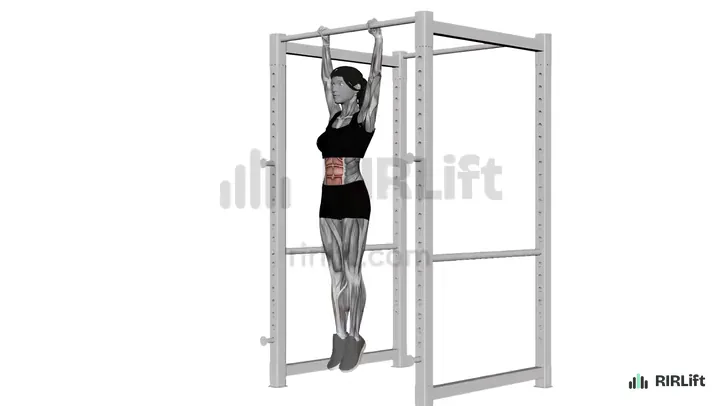
Hanging Leg Raise
Keep your legs straight when knee raises are easy for 15 strict reps; the longer lever makes it much harder.
Build a session with it -
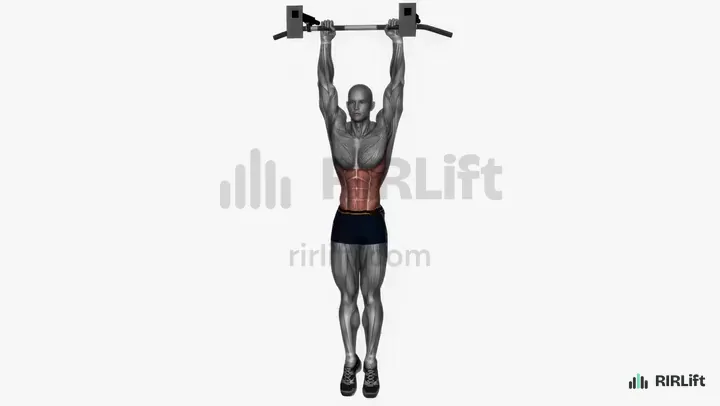
Hanging Oblique Crunch
Bring your knees up toward one side, then the other, when you want more work for the obliques.
Build a session with it -
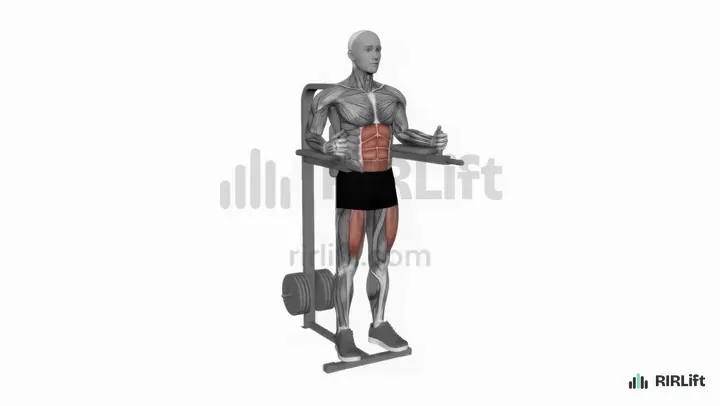
Captain's Chair Knee Raise
Support your forearms on a captain's chair when your grip gives out before your abs do.
Build a session with it
Hanging knee raise alternatives
Without a bar
-
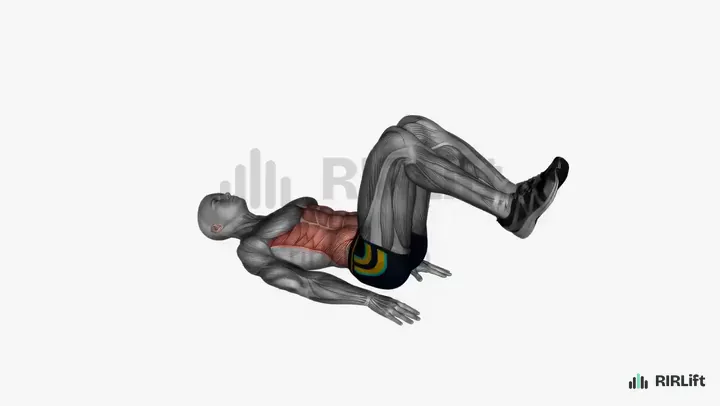
Reverse Crunch
Lie on your back and curl your hips off the floor when you want the same pelvic curl at home.
Build a session with it -
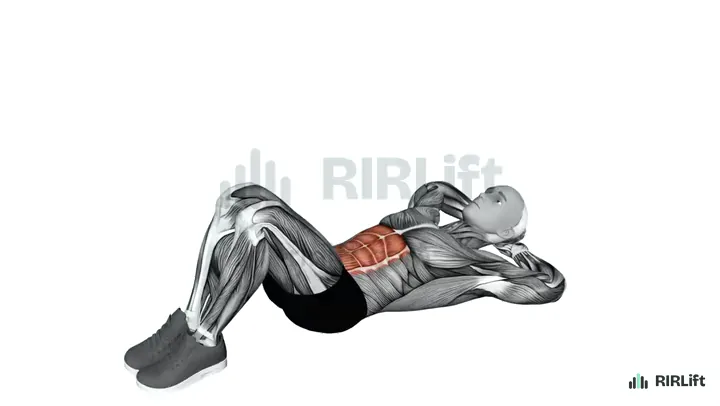
Lying Knee Raise
Pull your knees in while lying on the floor when you are building up to hanging.
Build a session with it
Harder ab work
-
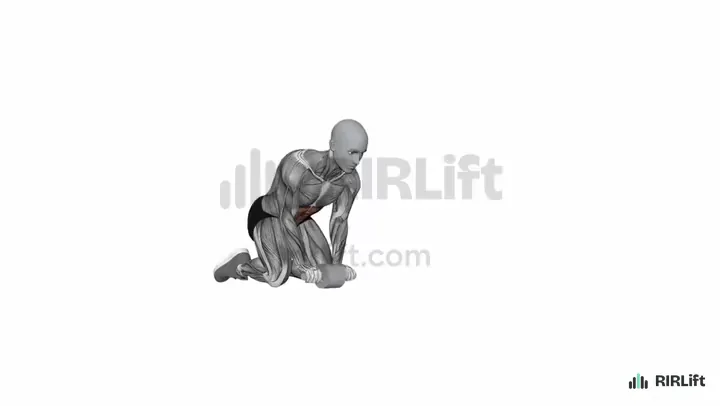
Ab Wheel Rollout
Roll out on an ab wheel when you want to train the abs resisting extension.
Build a session with it -
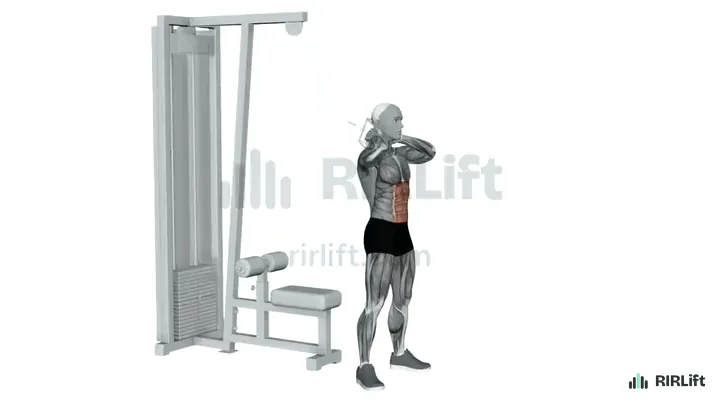
Cable Crunch
Kneel at a cable and crunch when you want to load the abs heavily and add weight in small steps.
Build a session with it
How to work up to hanging leg raises
Start with a captain's chair or lying knee raises until you can do 15 smooth reps. Then hang and do knee raises, building to three sets of 12 to 15 with no swing. From there, straighten your legs a little at a time: first legs partly bent, then straight legs to parallel, then straight legs higher. If your grip fails before your abs, use straps or the captain's chair so the abs get the work.
Hanging knee raise vs hanging leg raise
Both work the same muscles. Bent knees shorten the lever, so knee raises are easier and let you do more reps with better control. Straight legs make the load much heavier on the abs and hip flexors and demand more hamstring flexibility. Use knee raises until you can control them for 15 reps, then move to leg raises.
Questions
What muscles do hanging knee raises work?
The abs, especially the lower part of the rectus abdominis when you curl your hips up, plus the hip flexors. Grip, forearms and lats keep you on the bar.
Are hanging knee raises hard?
They are harder than most floor ab exercises because you have to hold your bodyweight and stop the swing. Most people can do a few strict reps right away and build from there.
Why can't I do a hanging leg raise?
Usually it is grip, swinging or tight hamstrings rather than weak abs. Master bent-knee raises first, then straighten your legs gradually.
What can I do instead of hanging leg raises?
Captain's chair knee raises, reverse crunches, lying knee raises and cable crunches all train the same ab action without hanging.
Are hanging knee raises good for abs?
Yes, as long as you curl the pelvis up at the top. Lifting the knees only to hip height mostly trains the hip flexors.
How many hanging knee raises should I do?
Three sets of 10 to 15 strict reps works for most people, stopping one or two reps before you would start swinging.
Related templates
-
Reverse crunch: how to do it right and what it works
The same hip curl on the floor when you have no bar.
-
Pull-up bar exercises for back, arms, grip and abs, with plans for your first rep to your first muscle-up
More exercises to do on the same bar.
-
Ab exercises at the gym: machines, cables and stations
Machines and cables to build an ab session around knee raises.
-
The best workout for abs, for your situation
A full ab session that uses hanging work.
-
How to use RIR
How to stop a set with good reps left in reserve.