
Cable curl: how to do it and which version to pick
Published October 19, 2026
A cable curl is a biceps curl done facing a low pulley with a bar or handle attached. Stand tall, keep your elbows by your sides, curl the handle up toward your shoulders, and lower it slowly. Because the cable keeps pulling all the way up, the biceps stay loaded at the top, where a dumbbell curl gets easy.
- WorksBiceps
- AlsoForearms
- EquipmentAdjustable Cable
- Start with3 × 10–15, 2 in reserve, 90 s rest
How to do the cable curl
The cable keeps tension on your biceps through the whole rep and lets you change the weight in small steps, so it is easy to progress and easy to take close to failure. It is a good main curl or a second curl after a barbell or dumbbell one.
Steps
- Set the pulley to its lowest position and clip on a straight bar or EZ bar.
- Take the bar with your palms up, hands about shoulder-width, and step back far enough that the stack lifts slightly with your arms straight.
- Stand tall with soft knees and your elbows just in front of your sides.
- Bend your elbows to curl the bar toward your shoulders, keeping your upper arms still and your torso upright.
- Squeeze at the top, then let the bar back down slowly until your arms are straight again.
Cues
- Elbows stay put
- No leaning back
- Slow on the way down
Common mistakes
- Swinging your body to start the rep: soften your knees, stay tall, and drop the weight if you need momentum.
- Elbows drifting forward at the top: keep them near your sides so the biceps, not the shoulders, finish the rep.
- Stopping short at the bottom: straighten your arms fully between reps so you train the whole range.
Swap for: EZ-Bar Curl, Dumbbell Curl, Preacher Curl
Muscles the cable curl works
The cable curl works the biceps, with the brachialis and brachioradialis helping bend the elbow. Your forearms grip the handle and your abs keep you upright. A palms-up grip puts the most work on the biceps; a rope or neutral grip shifts some to the brachialis and forearm.
Sets, reps and reps in reserve for the cable curl
| Goal | Sets × reps | RIR | Rest |
|---|---|---|---|
| Build muscle | 3–4 × 8–15 | 1–2 | 60–90 s |
| Go up one stack plate when you hit the top of the range on every set. | |||
| Finisher | 2–3 × 15–20 | 0–1 | 60 s |
| Works well as the last arm exercise of a session. | |||
| Second biceps exercise | 2–3 × 10–12 | 1 | 60–90 s |
| Do it after a heavier barbell or dumbbell curl. | |||
Cable curl variations
-
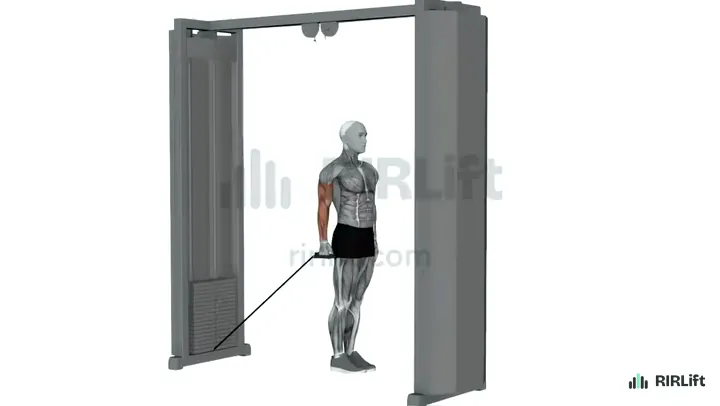
Cable Twisting Curl
Curl a single handle and turn your palm up as it rises when you want to train one arm at a time and finish each rep with a full twist.
Build a session with it -
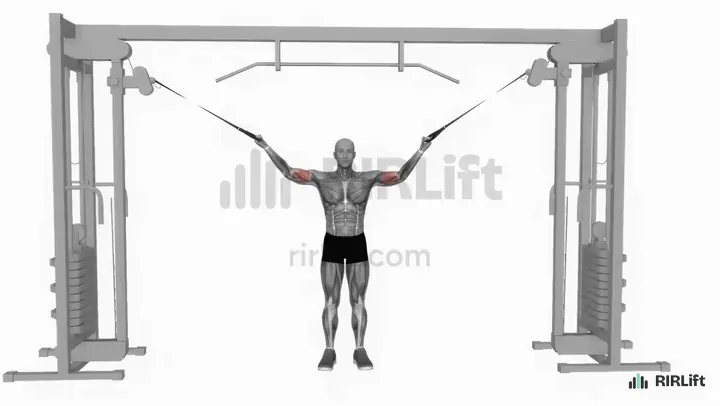
Overhead Cable Curl
Curl from high pulleys with both arms spread wide when you want a hard squeeze at the top.
Build a session with it -
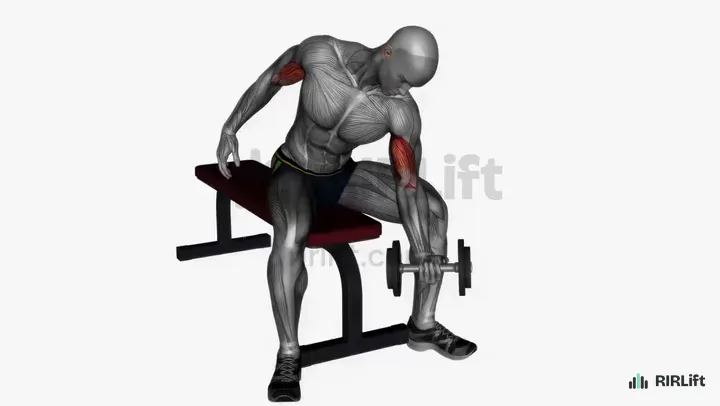
Concentration Curl
Brace one elbow on your inner thigh with a dumbbell when the cable station is busy and you want a strict one-arm curl.
Build a session with it
Cable curl alternatives
Free-weight curls
-
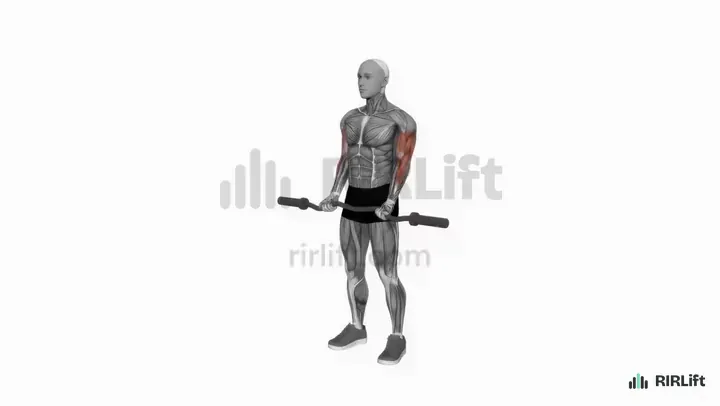
EZ-Bar Curl
Use an EZ bar when you want to curl heavier with less wrist strain.
Build a session with it -
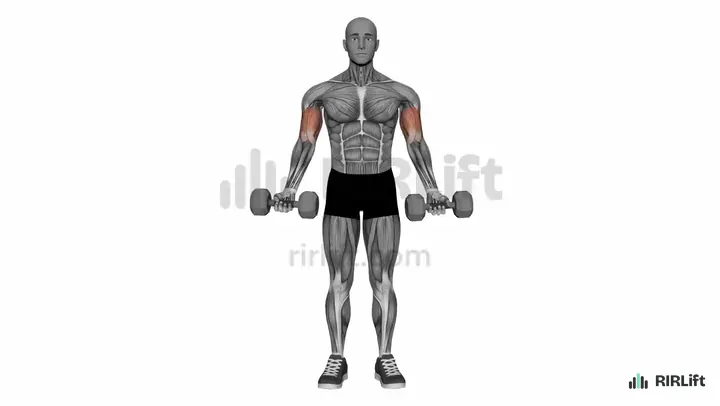
Dumbbell Curl
Use dumbbells when there is no cable, or to train one arm at a time.
Build a session with it -
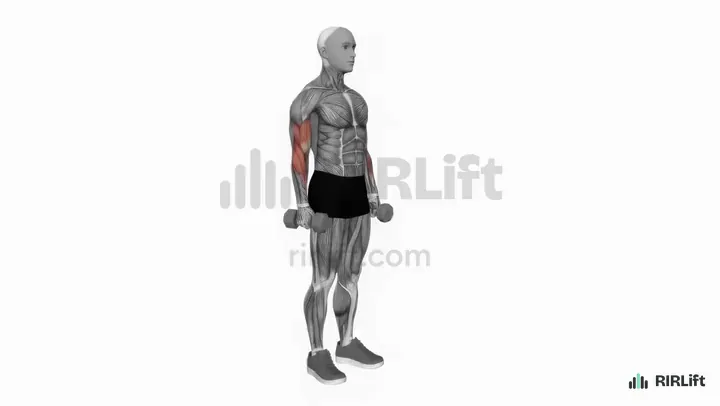
Hammer Curl
Use a neutral grip with dumbbells for more brachialis and forearm.
Build a session with it
Fixed-arm curls
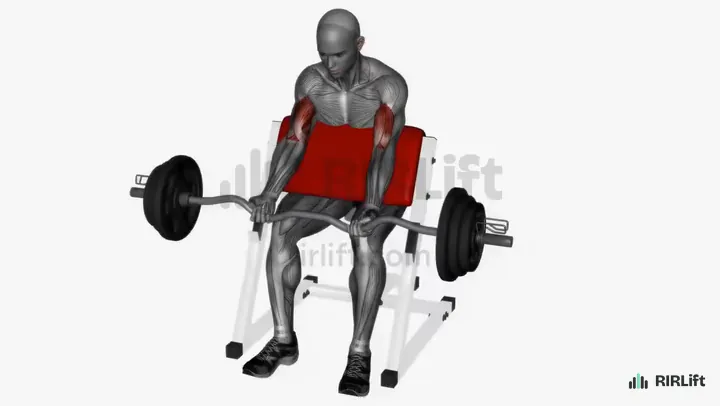
Cable curl vs barbell or EZ-bar curl
A barbell or EZ-bar curl is hardest in the middle and gets easy at the top, where your forearms point up. A low-pulley cable curl keeps pulling toward the pulley, so the top of the rep stays loaded. Free weights let you load heavier; cables give smoother tension and smaller weight jumps.
Neither is better for growth. Use a barbell or EZ bar for heavier sets, and cables for higher-rep or second curls.
Which attachment should you use?
A straight bar puts your palms fully up and loads the biceps most. An EZ bar angles your wrists slightly, which is easier on them. A rope or neutral handle shifts work toward the brachialis and forearm. Single handles let you train one arm at a time. Pick the one that feels best on your wrists and keep it the same within a training block.
Does the pulley height matter?
Yes. From the lowest setting, the cable curl feels a lot like a free-weight curl with extra tension at the top. Setting the pulley around hand height, or facing away from it, makes the start of the rep harder, which is what the Bayesian curl does.
Questions
How do you properly do bicep curls on a cable?
Face a low pulley, hold the bar palms up, keep your elbows by your sides, curl up without leaning back, and lower slowly to straight arms.
What's the difference between barbell curls and cable curls?
The barbell curl is hardest in the middle and lets you lift heavier. The cable curl keeps the top of the rep loaded and changes weight in smaller steps.
Which is better, EZ-bar curl or cable curl?
Neither builds more muscle on its own. Use an EZ bar for heavier sets and a cable for smooth higher-rep work, or do both in the same week.
What are some alternatives to cable bicep curls?
EZ-bar curls, dumbbell curls, hammer curls and preacher curls all train the same elbow bend.
How heavy should cable curls be?
Pick a weight you can curl for your target reps while stopping 1 to 2 reps before failure, with no swinging.
Related templates
-
EZ-bar curl: how to do it, which grip to use, and how it compares to a straight bar
The free-weight curl to pair with cables.
-
Hammer curl: how to do it, what it works, and what to swap it for
The neutral-grip curl for brachialis and forearms.
-
Preacher curl: how to do it, what it works, and what to swap it for
A supported curl that stops all swinging.
-
The best workout for biceps, matched to your setup
A full biceps session with cable options.
-
How to use RIR
How to judge reps in reserve on small lifts.