Cable fly alternatives: what to do when the crossover is busy or missing

The best cable fly alternative is the pec deck, because it keeps tension on your chest through the whole arc just like cables. If only one pulley is free, do single-arm cable flys. With dumbbells, a flat or incline dumbbell fly copies the motion; at home, a band chest fly is the closest match, and archer push-ups give your chest more load than any fly with no gear.

What a cable fly alternative has to replace

Chest isolation with constant tension

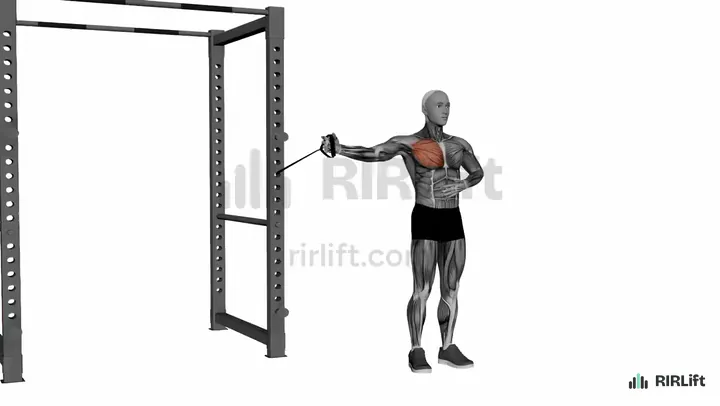
Cable Fly

Chest

Standing between two cables, you sweep your arms together while the cables keep pulling the whole way, so your chest stays loaded even where your hands meet. It is the movement every swap below is trying to replace.

How to do it

  1. Set both pulleys at the lowest notch and take a handle in each hand.
  2. Stand in the middle with your feet about shoulder width and knees soft, arms low and slightly behind your hips, elbows softly bent.
  3. Sweep both handles forward and up in a wide arc until they meet in front of your chest.
  4. Lower them back down and out along the same arc until your chest is stretched, then repeat.

Cues

  • Scoop up and in
  • Elbow bend never changes
  • Shoulders down, chest up

Common mistakes

  • Bending and straightening the elbows, which turns it into a press: lock the angle and move only at the shoulder.
  • Leaning back to heave the handles up: stand tall and take a plate off the stack.

Swap for: Pec Deck Fly, Dumbbell Chest Fly, Single-Arm Band Chest Fly

The cable fly brings your arms together in front of your body, the main job of your chest, while the cables keep pulling even where your hands meet. Your triceps barely help, so your chest takes the whole set.

A replacement has to keep that sweep with your elbows fixed. Dumbbells change where it gets hard: heavy at the bottom stretch, light at the top. Pick by what you have, and set the angle to match the pulley height you were using.

Machines and one free pulley

In a gym, a machine or a single cable gives you the same steady tension without the full crossover station.

Closest swap when the crossover is busy

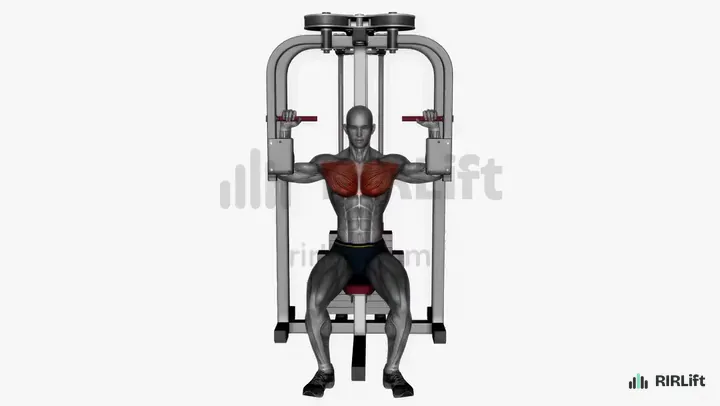
Pec Deck Fly

Chest

The pec deck keeps tension on your chest through the whole arc like cables do, and its fixed path takes balance out of it. Use the same sets and reps you ran on the cable fly.

How to do it

  1. Set the seat so your upper arms are level with your shoulders when your forearms rest on the pads.
  2. Sit tall with your back on the pad, elbows bent to about 90 degrees, forearms against the pads and hands on the handles.
  3. Drive your elbows forward and together until the pads nearly meet in front of your chest.
  4. Let the pads swing back slowly until your elbows are level with your shoulders, then repeat.

Cues

  • Push with your elbows, not your hands
  • Squeeze for a second
  • Chest up, shoulders down

Common mistakes

  • Letting the weight drag your elbows behind your shoulders: stop the return when they line up with your shoulders.
  • Hunching forward to close the pads: sit tall and use less weight.

Heavier machine swap

Machine Chest Press

Chest

A press loads your chest harder than any fly but adds your triceps. Pick it when you want the session's heavy chest work and can live without the squeeze.

How to do it

  1. Raise or lower the seat until the handles line up with the middle of your chest, then sit with your back on the pad.
  2. Take the handles with straight wrists and your shoulder blades pressed back.
  3. Push forward until your arms are nearly straight.
  4. Return slowly until your hands are level with your chest, then press again.

Cues

  • Handles at mid-chest
  • Back stays on the pad
  • Slow on the way back

Common mistakes

  • Seat too high, so your shoulders take over: lower it until the handles meet your mid-chest.
  • Stopping the handles short of your chest: let them come all the way back each rep.

Swap when only one pulley is free

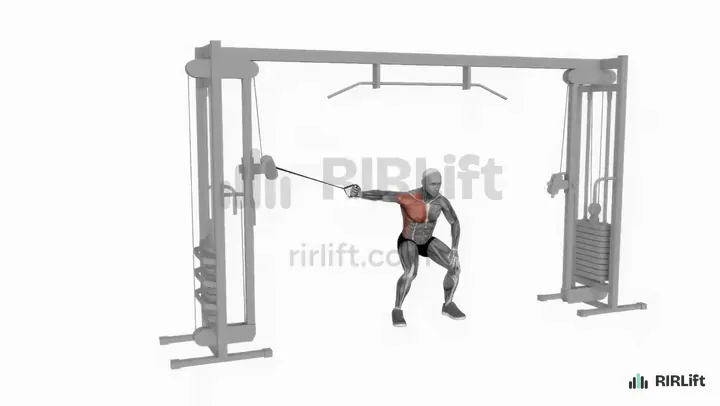
Single-Arm Cable Fly

Chest

Same cable tension, one side at a time, so it works when someone has the other tower. Leaning forward with a hand on your knee keeps your torso still.

How to do it

  1. Set one pulley at about chest height and stand beside the tower, feet a little wider than your shoulders.
  2. Sit your hips back, bend your knees and tip your chest forward, resting your free hand on your knee.
  3. Take the handle in the hand nearest the pulley, arm reaching wide toward it, elbow slightly bent.
  4. Sweep the handle across in a wide arc until it is in front of the opposite side of your chest.
  5. Let it travel back slowly to the stretch, finish your reps, then switch sides.

Cues

  • Free hand on your knee
  • Move only at the shoulder
  • Reach past the middle

Common mistakes

  • Twisting your torso to pull the handle across: keep your hips and shoulders still and use less weight.
  • Letting the cable yank your arm back: open as slowly as you close.

Dumbbells

Match the bench angle to the pulley height you used: incline for low-to-high flys, flat for mid-height, decline for high-to-low crossovers.

RIRLift's swap with dumbbells

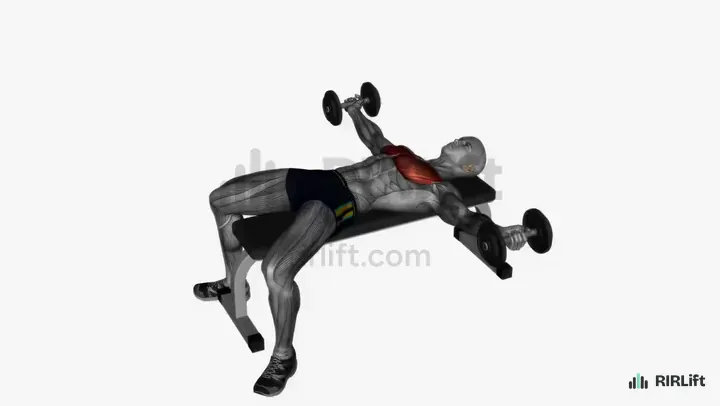
Dumbbell Chest Fly

Chest

The same arc lying on a bench. Dumbbells load your chest most at the bottom stretch and very little at the top, so use lighter weights than you would guess. This is what RIRLift puts in the cable fly's place with dumbbells or a home gym.

How to do it

  1. Lie on a flat bench with the dumbbells pressed up over your chest, palms facing each other.
  2. Bend your elbows slightly and keep that angle fixed for the whole set.
  3. Open your arms in a wide arc until you feel a deep stretch across your chest.
  4. Bring the weights back up along the same arc, as if hugging a big barrel, stopping a few inches apart.

Cues

  • Fixed elbows, moving shoulders
  • Wide arc down, hug up
  • Stretch, don't strain

Common mistakes

  • Bending the elbows more on the way down, which turns the fly into a press: go lighter and lock the elbow angle.
  • Going so deep your shoulders roll forward off the pad: stop where your chest is stretched and your shoulder blades still touch the bench.

Dumbbell swap for low-to-high flys

Incline Dumbbell Fly

Chest

A low incline makes your arms finish over your upper chest, the same target as a cable fly from low pulleys. It is the closest free-weight copy of the anchor.

How to do it

  1. Set the bench to a low incline and lie back with the dumbbells over your upper chest.
  2. Turn your palms to face each other and soften your elbows.
  3. Lower the weights out and down until your chest is fully stretched.
  4. Bring them back up and in along the same arc, pausing at the top without clanking them.

Cues

  • Low incline, same arc
  • Lead with your elbows
  • Slow the bottom inch

Common mistakes

  • Using your flat-fly weight: the incline is weaker, so start lighter.
  • Arching your lower back high off the pad: keep your hips and ribs down.

Dumbbell swap for high-to-low crossovers

Decline Dumbbell Fly

Chest

On a decline bench your arms sweep up over your lower chest, the same line as a crossover from high pulleys. Keep it light and controlled.

How to do it

  1. Hook your feet in on a decline bench and lie back, arms spread wide with the dumbbells and a slight bend in your elbows.
  2. Sweep both arms up and in until the dumbbells meet over your lower chest.
  3. Hold the squeeze for a second at the top.
  4. Let them travel back out slowly, keeping the elbow bend, until your upper arms line up with your torso.

Cues

  • Arc up over the lower chest
  • Slight elbow bend, fixed
  • Slow on the way out

Common mistakes

  • Letting the dumbbells drop fast at the bottom: control the stretch.
  • Going so heavy the arms bend into a press: keep it light and in higher reps.

Shoulder-friendly dumbbell fly

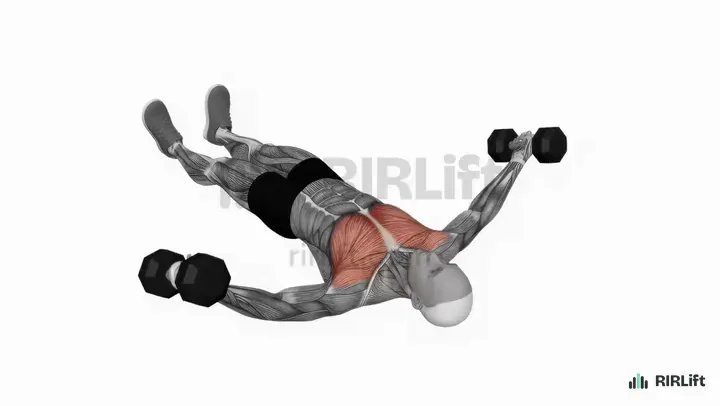
Dumbbell Floor Fly

Chest

The floor stops your elbows before the deepest stretch, which spares the front of your shoulders. Pick it if flys or cables bother your shoulder.

How to do it

  1. Lie on the floor with your knees bent and both dumbbells up over your chest, palms facing each other.
  2. Bend your elbows a little and keep that angle fixed.
  3. Open your arms out to the sides until your upper arms just touch the floor.
  4. Sweep them back up to meet over your chest along the same curve.

Cues

  • Open like a book
  • Elbows stay slightly bent
  • Light touch on the floor

Common mistakes

  • Bending the elbows more each rep until it becomes a press: lighten the dumbbells.
  • Resting your arms on the floor between reps: touch down and come straight back up.

Squeeze without the stretch

Dumbbell Hex Press

Chest

Pressing two dumbbells together keeps your chest squeezing for the whole set, the feel most people want from the end of a crossover. It is a press, so you can load it heavier than a fly.

How to do it

  1. Lie on a flat bench holding two dumbbells pressed together over your chest, palms facing each other.
  2. Squeeze them into each other hard enough that they stay touching every rep.
  3. Lower the pair to the middle of your chest with your elbows tucked.
  4. Press back to straight arms while keeping the squeeze.

Cues

  • Crush the dumbbells together
  • Elbows along the ribs
  • Slow down, drive up

Common mistakes

  • Letting the dumbbells drift apart at the bottom: that is where the squeeze stops working, so go lighter.
  • Lowering toward your neck: the handles belong at the middle of your breastbone.

Bands, straps and bodyweight

At home, a band gives you the cable's pull and push-ups give you the load.

Cable motion with a band at home

Single-Arm Band Chest Fly

Chest

A band anchored in a door gives you the same across-the-body sweep, and it pulls hardest where your hand crosses your chest. It is the closest home copy of the cable fly.

How to do it

  1. Anchor a band at chest height in a door or around a post, take the handle in one hand and stand with your back to the anchor.
  2. Step forward until the band is taut with your arm open wide and slightly bent.
  3. Sweep your hand across until it is in front of the middle of your chest.
  4. Let the band pull your arm back open slowly, finish your reps, then switch arms.

Cues

  • Reach across your body
  • Fixed elbow angle
  • Slow on the way back

Common mistakes

  • Standing so close the band goes slack at the stretch: step forward until it pulls the whole way.
  • Turning your torso to finish: brace and move only the arm.

Bodyweight fly on straps

TRX Chest Fly

Chest

Leaning into suspension straps turns the fly into a bodyweight exercise. Walk your feet back to make it harder.

How to do it

  1. Set the straps to about waist height, hold the handles and face away from the anchor.
  2. Lean forward with your arms straight out in front until your weight hangs on the handles, body in a straight line.
  3. Let your arms open out to the sides, elbows slightly bent, so your chest lowers between them.
  4. Squeeze your arms back together to return to the start. Walk your feet back to make it harder.

Cues

  • Body straight like a plank
  • Arms open into a wide T
  • Start with a small lean

Common mistakes

  • Leaning too far on your first sets: the angle gets hard fast, so start nearly upright.
  • Hips sagging as your arms open: brace your stomach and squeeze your glutes.

Hardest push-up with no equipment

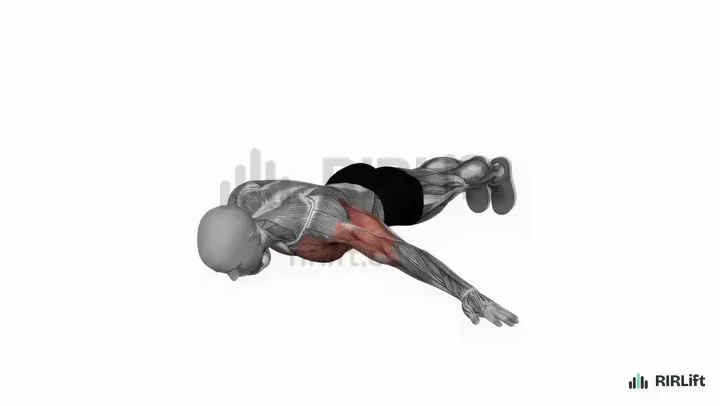
Archer Push-Up

Chest

With no gear, a press does more for your chest than any fly you can improvise, and the archer push-up loads one side at a time so it stays hard.

How to do it

  1. Set your hands about twice shoulder width apart in a plank, fingers turned slightly out.
  2. Lower toward your right hand, bending the right elbow while the left arm stays straight.
  3. Bring your chest close to your right hand, then press back to the middle.
  4. Repeat to the left and keep alternating, or finish one side first.

Cues

  • Bent arm does the work
  • Straight arm only balances
  • Hips stay square

Common mistakes

  • Bending both arms equally, which makes it a wide push-up: keep the helping arm straight.
  • Twisting your hips toward the floor: hold the plank level as you shift.

Example sessions without the cable fly

Session 1

Gym, crossover busy

Open in the session builder
  • Workouts2× a week
  • Working sets20 a week
  • Per workout~25 min
  • EquipmentChest Press, Fly Machine, Cable Crossover

You train in a busy gym where the cable station is always taken, but the chest machines are free.

The machine chest press does the heavy work first, the pec deck replaces the cable fly at the same reps, and single-arm cable flys on any open pulley finish the session. 10 working sets.

Chest
ExerciseSets × repsRIRRest
Machine Chest Press1 warm-up set first 4 × 8–12 2 2 min
Pec Deck Fly 3 × 10–15 1 75 s
Single-Arm Cable FlySets are per arm. 3 × 12–15 1 45 s
How to run it
Once or twice a week on your chest day, at least two days apart.
How to progress
When every set of a lift reaches the top of its range at the RIR shown, add the smallest weight jump on the stack and start again at the bottom of the range.

Session 2

Dumbbells and an adjustable bench

Open in the session builder
  • Workouts2× a week
  • Working sets20 a week
  • Per workout~20 min
  • EquipmentDumbbells, Flat Bench, Incline Bench

You train at home or in a gym with dumbbells and a bench that inclines, and no cables.

A hex press gives the session a heavier lift, the incline fly replaces low-to-high cable flys, and the flat fly covers the middle of your chest. Flys are hardest at the stretch, so control every bottom. 10 working sets.

Chest
ExerciseSets × repsRIRRest
Dumbbell Hex Press1 warm-up set first 4 × 8–12 2 90 s
Incline Dumbbell Fly 3 × 10–15 1 75 s
Dumbbell Chest Fly 3 × 10–15 1 75 s
How to run it
Twice a week on non-consecutive days. Lower each fly for two seconds.
How to progress
Add reps first. When every fly set reaches 15, move up one dumbbell size and drop back to 10 reps.

Session 3

Home, no bench, shoulders picky

Open in the session builder
  • Workouts3× a week
  • Working sets30 a week
  • Per workout~25 min
  • EquipmentDumbbells, Resistance Bands

You train on the floor at home with a pair of dumbbells and a band, and deep stretches bother your shoulders.

Archer push-ups give your chest load, the floor fly trains the fly with the stretch capped by the floor, and the band fly finishes with the cable's sweep one arm at a time. 10 working sets.

Chest
ExerciseSets × repsRIRRest
Archer Push-UpSets are per side. 3 × 5–8 2 90 s
Dumbbell Floor Fly 4 × 10–15 1 1 min
Single-Arm Band Chest FlySets are per arm. 3 × 15–20 1 45 s
How to run it
Two or three times a week. Take each set to about one rep short of failure, since light work only gets hard near the end.
How to progress
Add reps until you reach the top of each range, then make it harder: hands wider on the archers, a heavier pair on the floor fly, a thicker band or a bigger step from the anchor.

Make it fit you

Questions

What exercise can I do instead of cable crossover?

The pec deck is the closest, since it keeps tension through the whole arc. With dumbbells, use an incline or flat dumbbell fly; at home, a band chest fly anchored in a door.

What is the difference between cable fly and cable crossover?

Mostly the name. Both sweep your arms together between two pulleys; crossover usually means the hands cross or meet at the end, often from high pulleys. The swaps are the same.

Are cable flies better than dumbbell flies?

Neither is clearly better for growth. Cables keep tension where your hands meet, dumbbells load the stretch hardest, so use whichever your gym has free and take it close to failure.

What can replace a low to high cable fly?

An incline dumbbell fly on a low bench angle targets the same upper chest. A band fly with the anchor low near the floor also copies the upward sweep.

What can I do instead of flies?

Any press trains the same muscle: a dumbbell or machine chest press, dips or push-ups. If you want the squeeze, the dumbbell hex press (also called the squeeze press) is the closest without a fly.

What do chest flys work?

Mainly your chest, with the front of your shoulders helping. Your triceps barely work, which is why flys pair well after a press.