
Cable pec exercises: every fly angle for upper, middle and lower chest
Published October 19, 2026
The best cable pec exercises are the high-to-low cable fly for the lower and middle chest, the low-to-high crossover and the incline cable fly for the upper chest, the flat-bench cable fly for the middle, and the single-arm cable fly when you have one pulley. The pulley height decides which part of your chest works: hands traveling down train the lower chest, hands traveling up train the upper chest. Cables keep tension on your pecs through the whole arc, so use them next to your presses, not instead of them.
- High-to-Low Cable Fly Chest
- Cable Fly Chest
- Incline Cable Fly Chest
- Flat-Bench Cable Fly Chest
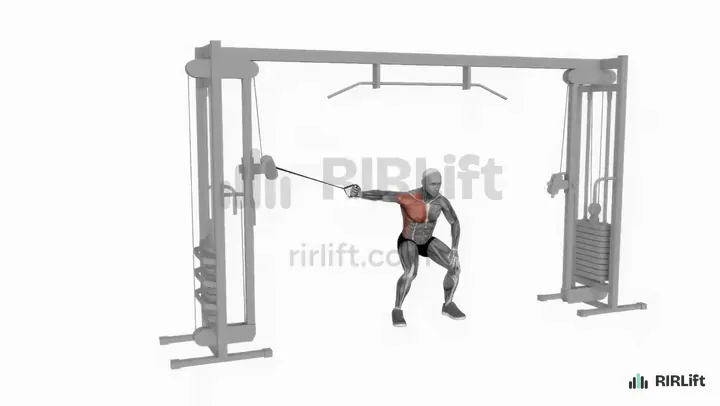
- Single-Arm Cable Fly Chest
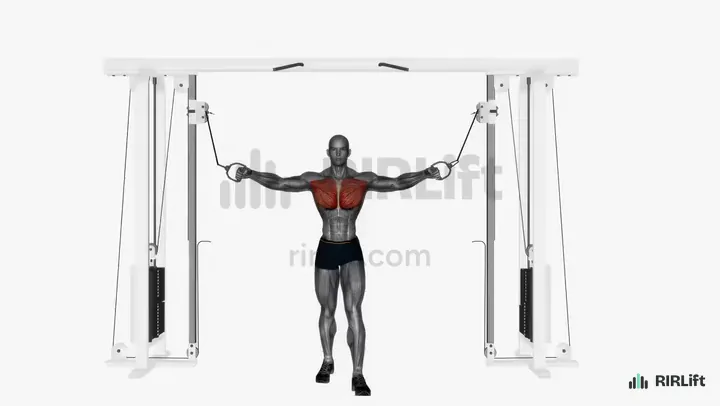
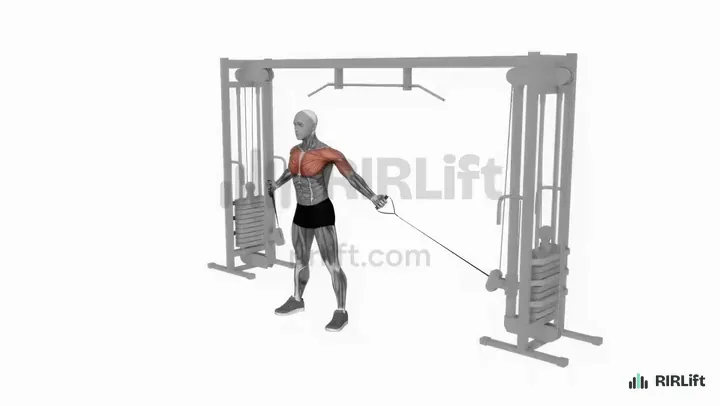
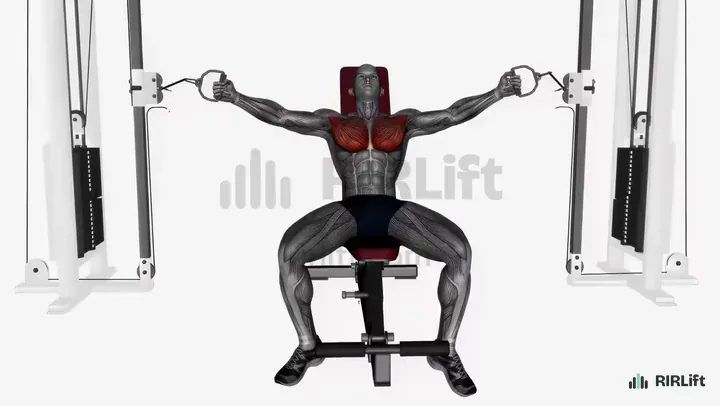
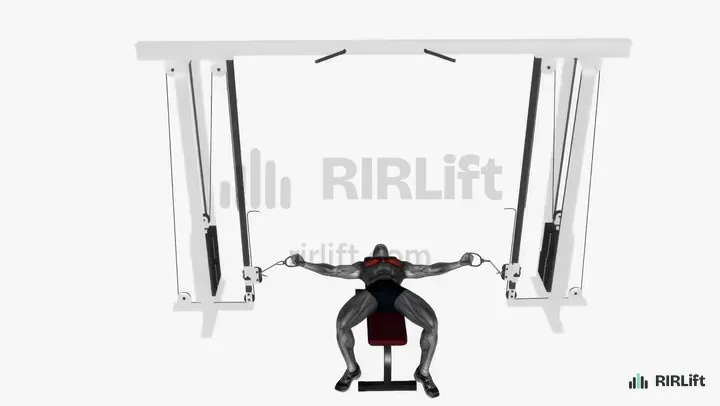
Put them together: example sessions
Each session below picks from the exercises above for one situation, with the sets, reps, rest and RIR filled in. Open one in the session builder to change a pick, price it from a recent set, and add it to RIRLift.
-
Session 1
Crossover station, no free bench
You train at a busy gym where you can claim the cable crossover for 20 minutes but the benches are taken.
2× a week · 20 sets a week · ~20 min
-
Session 2
Cable finisher after your presses
You already bench or dumbbell press on chest day and want the cables to finish the job in 10 to 12 minutes.
2× a week · 10 sets a week · ~10 min
-
Session 3
Crossover plus a free adjustable bench
You have the crossover and an adjustable bench to yourself, and cables are your main chest work for a training block, for example while a shoulder dislikes heavy pressing.
2× a week · 20 sets a week · ~25 min
Session 1
Crossover station, no free bench
- Workouts2× a week
- Working sets20 a week
- Per workout~20 min
- EquipmentCable Crossover
You train at a busy gym where you can claim the cable crossover for 20 minutes but the benches are taken.
Standing crossovers need nothing but the towers, so this session covers the lower chest first while you are freshest, then the upper chest, then a single-arm set that reaches across the midline. Flies are isolation work that recovers fast, so the sets end 1 rep short of failure and the last set of each goes to 0. It is 10 hard sets, a full chest day on its own if you skip presses, or half of one if you press first.
| Exercise | Sets × reps | RIR | Rest |
|---|---|---|---|
| High-to-Low Cable FlyPulleys at the top. Last set to 0 RIR. | 4 × 10–15 | 1 | 75 s |
| Cable FlyPulleys at the bottom. Stop at chin height. | 3 × 12–15 | 1 | 75 s |
| Single-Arm Cable FlyPer arm. Pulley at chest height. | 3 × 12–20 | 0 | 1 min |
- How to run it
- Do it twice a week, two or more days apart. Set the pulleys high for the first exercise, then drop them to the bottom for the second.
- How to progress
- Add reps until all sets reach 15 at the target RIR, then move the pin one plate down. Cable stacks jump in big steps, so expect the reps to fall back to 10 and climb again.
Session 2
Cable finisher after your presses
- Workouts2× a week
- Working sets10 a week
- Per workout~10 min
- EquipmentCable Crossover, Incline Bench
You already bench or dumbbell press on chest day and want the cables to finish the job in 10 to 12 minutes.
Presses train the chest well at the bottom of the rep, so the finisher picks two flies that keep tension high at full contraction and cover the angle your press missed: the incline fly for the upper chest after a flat press, and the high-to-low crossover for the lower chest. Five sets are enough after heavy pressing; they go to 0 to 1 reps in reserve because flies are safe to push and you have nothing left to save energy for.
| Exercise | Sets × reps | RIR | Rest |
|---|---|---|---|
| Incline Cable FlyBench at 30 degrees. Pulleys at the middle. | 3 × 10–15 | 1 | 1 min |
| High-to-Low Cable FlyPause 1 s at the bottom. | 2 × 12–15 | 0 | 1 min |
- How to run it
- Add it to the end of the chest or push day you already run, twice a week. Rest a minute between sets.
- How to progress
- Keep the weight until every set reaches 15 reps, then go one plate up. If your press stalls, cut the finisher to one set each before you cut a pressing set.
Session 3
Crossover plus a free adjustable bench
- Workouts2× a week
- Working sets20 a week
- Per workout~25 min
- EquipmentCable Crossover, Incline Bench, Flat Bench
You have the crossover and an adjustable bench to yourself, and cables are your main chest work for a training block, for example while a shoulder dislikes heavy pressing.
With cables as the main stimulus, each session leads with a lying fly you can load heavier, then a standing crossover from the opposite height, then the single-arm fly. Day A tilts toward the upper chest, day B toward the middle and lower. The first exercise warms up with one light set and stops at 2 reps in reserve so you can keep adding weight week to week; the rest go to 1, and the last single-arm set to 0. Each day has 10 sets, 20 a week.
| Exercise | Sets × reps | RIR | Rest |
|---|---|---|---|
| Incline Cable Fly1 warm-up set first30 degree incline. Heaviest fly of the day. | 4 × 8–12 | 2 | 90 s |
| High-to-Low Cable Fly | 3 × 10–15 | 1 | 75 s |
| Single-Arm Cable FlyPer arm. Last set to 0 RIR. | 3 × 12–15 | 1 | 1 min |
Open Cable Chest A in the session builder
| Exercise | Sets × reps | RIR | Rest |
|---|---|---|---|
| Flat-Bench Cable Fly1 warm-up set firstHands stop at bench level. | 4 × 8–12 | 2 | 90 s |
| Cable Fly | 3 × 10–15 | 1 | 75 s |
| Single-Arm Cable FlyPer arm. Pulley set high. | 3 × 12–15 | 1 | 1 min |
Open Cable Chest B in the session builder
- How to run it
- Do A and B once each per week with at least two days between them. Set the bench on the incline for A, flat for B.
- How to progress
- Use double progression on every block: reach the top of the rep range on all sets at the target RIR, then add the smallest weight jump the stack allows.
Make it fit you
-
Your gym has one pulley, not two
Run every session with the single-arm fly only, moving the pulley between sets: high for the lower chest, chest height for the middle, low for the upper chest. Do the same number of sets per side as the plan lists for the two-handed version.
-
Shoulders ache on presses
Use the bench-and-towers plan as your whole chest program for a few weeks. Keep the elbow bend fixed on every fly and stop the stretch where the front of your shoulder starts to complain, not where the cable would let you go.
-
Upper chest lags
Put the incline cable fly or the low-to-high crossover first in every chest session, before any press, and give it four sets. Keep the bench at a low incline; a steep one shifts the work to your front delts.
-
Weight stack jumps are too big
When the next plate is too heavy, stay on the current one and slow the return to three seconds, or add a one-second hold where the handles meet. Those make the same weight harder until you can handle the jump.
-
Log the RIR, not just the weight
Cable stacks differ between gyms and even between the two towers, so the plate number means less than how close you went to failure. If you log in RIRLift, write down the reps you had left on each set, and it suggests whether to add a plate next time based on that.
Questions
Which cable exercise works the lower chest?
The high-to-low cable fly. Set both pulleys at the top and bring your hands down to meet in front of your hips; that path follows the lower chest fibers. Keep a slight forward lean and stop the handles at belt height rather than pushing them down to your thighs.
What are the different variations of cable chest flies?
There are five worth doing: the high-to-low fly for the lower chest, the low-to-high crossover for the upper chest, the single-arm fly with the pulley at chest height, and the flat-bench and incline-bench cable flies, which put you on your back between the towers. The pulley height and the bench angle are the only things that change which part of the chest works hardest.
Are 4 exercises enough for chest day?
Yes, more than enough. Most people grow well on 10 to 20 hard sets of chest a week, which three or four exercises cover easily. If cables are your main chest work, two crossovers plus one bench fly is a complete session; if you press first, two cable flies are plenty.
What are the top 3 cable chest exercises?
The high-to-low cable fly, the incline cable fly and the single-arm cable fly. That trio covers the lower, upper and middle chest, and it still works if you only have one pulley, since all three can be done one arm at a time.
Can you build your chest with only cables?
Yes. Muscle grows from hard sets, and cable flies can be taken close to failure safely, set after set. The one thing cables lack is a heavy press, so if strength on the bench press matters to you, keep a pressing exercise; if size is the goal, cable flies alone will do the job.
How many reps should you do on cable flies?
Between 10 and 20 reps per set works best for most people. Flies feel unstable and lose form with very heavy weight, so let the reps run higher than on presses and finish each set 0 to 2 reps short of failure.
Should your arms be straight on a cable fly?
Almost straight. Keep a small, fixed bend in your elbows from the first rep to the last. If the bend grows as you tire, the fly turns into a press and your chest stops doing the work, which is the cue to end the set or lower the weight.
Related templates
-
Machine chest exercises: presses, dips and the pec deck
The presses and the pec deck that sit next to the cable towers, for a full chest day without free weights.
-
Chest exercises at the gym: barbells, machines, cables and dips
Where cable flies fit among barbell, dumbbell and machine presses on a full gym chest day.
-
Chest fly: how to do it, what it works, and what to swap it for
The dumbbell fly in detail, for when the cable station is taken.
-
The best workout for chest, matched to your setup
Complete chest programs that pair presses with the flies on this page.
-
How to use reps in reserve (RIR)
How to tell when a fly set is 1 rep short of failure.