Chest exercises at home, with or without equipment

The best chest exercises at home are the push-up and its harder versions, the decline and deep push-up, if you have no equipment; the dumbbell floor press and floor fly if you own a pair of dumbbells but no bench; and the incline and flat dumbbell press if you do have a bench. A band or suspension trainer adds a fly. Start from what you own: one press and one harder variation are enough, as long as each set ends close to failure.

  1. Push-Up Chest
  2. Decline Push-Up Chest
  3. Deep Push-Up Chest
  4. Dumbbell Floor Press Chest, Triceps
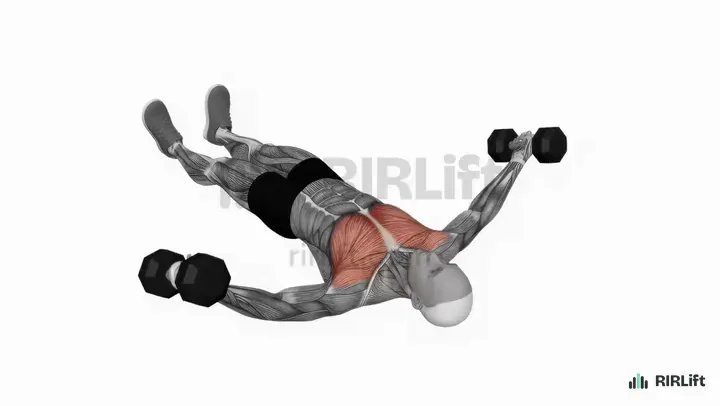
  5. Dumbbell Floor Fly Chest
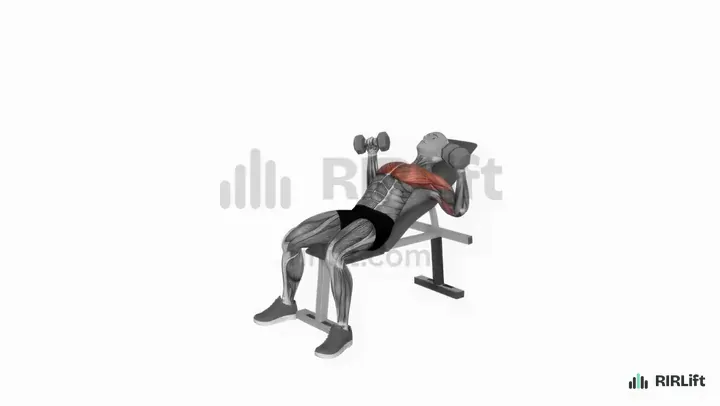
  6. Incline Dumbbell Press Chest
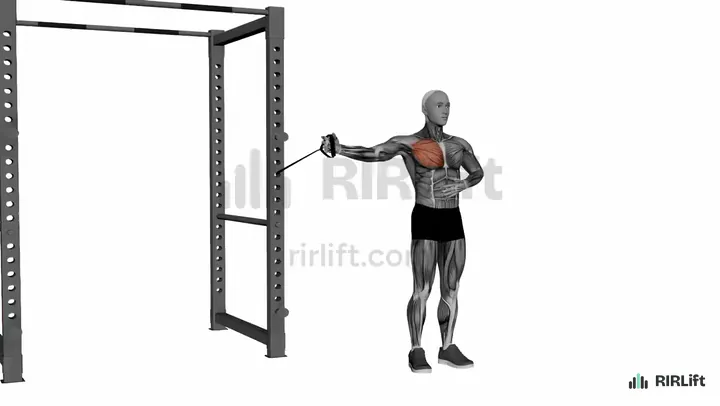
  7. Single-Arm Band Chest Fly Chest
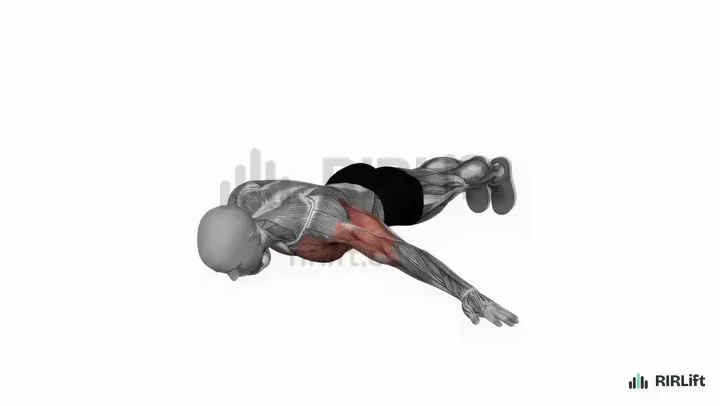
  8. Archer Push-Up Chest

Chest exercises at home with no equipment

With only your bodyweight, the push-up is the whole toolkit, and the variations are how you set the difficulty. Start at the version you can do for 8 to 20 good reps: on your knees, with your hands on a box, flat on the floor, feet raised, deeper between two handles, or shifted onto one arm.

Whole chest, easier push-up

Kneeling Push-Up

Chest

Dropping to your knees cuts the weight you push roughly in half, so you can do full-range reps with good form while you build up to the standard version. It trains the same muscles, just with less load.

How to do it

  1. Kneel on a mat, place your hands under your shoulders, and walk them forward until your body is straight from knees to head.
  2. Cross your ankles behind you if it helps you stay still, and brace your stomach.
  3. Lower your chest toward the floor between your hands, elbows angled back.
  4. Press back up to straight arms, keeping your hips in line with your back.

Cues

  • Straight line from knees to head
  • Hands under the chest
  • Full depth every rep

Common mistakes

  • Piking your hips up so only your arms move: keep the line from knees to shoulders straight.
  • Staying on your knees once you can do 20 clean reps: move to the incline push-up or the floor version.

Swap for: Incline Push-Up, Push-Up, Band-Assisted Push-Up

Lower chest emphasis, easier push-up

Incline Push-Up

Chest

Hands on a box, bench, couch arm or kitchen counter make the push-up lighter, and the higher the surface, the easier it gets. That gives you a smooth path from your first push-up to the floor version, and the slight angle puts a little more of the work on the lower chest.

How to do it

  1. Place your hands on a sturdy box, bench or counter edge, a bit wider than your shoulders.
  2. Walk your feet back until you are straight from head to heels, heels raised.
  3. Lower your chest to the edge of the surface with your elbows pointing back at an angle.
  4. Press back to straight arms and repeat. Use a lower surface as the reps get easy.

Cues

  • Chest to the edge
  • Lower the surface as you get stronger
  • Brace like a plank

Common mistakes

  • Using a chair that can slide away: push against a wall-backed or heavy surface.
  • Letting your head drop toward the box: keep your chin tucked and lead with your chest.

Swap for: Kneeling Push-Up, Push-Up, Decline Push-Up

Whole chest, bodyweight press

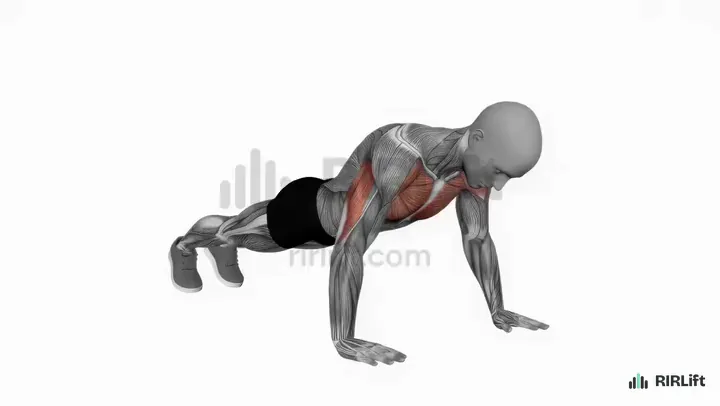
Push-Up

Chest

The push-up is the at-home bench press: chest, front shoulders and triceps in one move, with nothing but floor. It is hard enough to build a chest for months, and every other push-up on this page is a way to make it easier or harder.

How to do it

  1. Plant your hands a little wider than your shoulders and walk your feet back until your body is one straight line.
  2. Squeeze your glutes and brace your stomach so your hips stay level with your shoulders.
  3. Bend your elbows to drop until your chest is a fist's height from the floor, elbows angled back about 45 degrees.
  4. Push the floor away until your arms are straight, then lower again.

Cues

  • Body moves as one plank
  • Elbows back, not out to the sides
  • Chest leads, hips follow

Common mistakes

  • Hips sagging toward the floor on the last reps: end the set, because those reps no longer train the chest.
  • Stopping halfway down: count only reps where your chest gets close to the floor.

Swap for: Kneeling Push-Up, Incline Push-Up, Deep Push-Up

Build a session with Push-Up

Upper chest, harder push-up

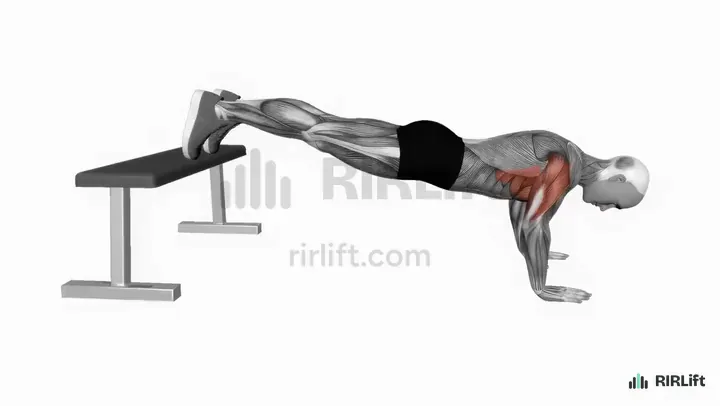
Decline Push-Up

Chest

Raising your feet onto a step, couch or bench tilts more of your bodyweight onto your hands and angles the press toward the upper chest. It is the main upgrade once regular push-ups go past 20 reps.

How to do it

  1. Put your feet on a sturdy surface about knee height, and your palms down just outside shoulder width.
  2. Brace so your hips stay in line with your shoulders and heels.
  3. Lower until your face is a few inches from the floor, elbows tracking back at an angle.
  4. Press up to straight arms and repeat. A higher surface makes it harder.

Cues

  • Hips level, not piked
  • Look slightly ahead of your hands
  • Push the floor away

Common mistakes

  • Piking your hips up to make it easier: that turns it into a shoulder press.
  • Feet so high that you cannot reach full depth: lower the surface until you can.

Swap for: Push-Up, Archer Push-Up, Deep Push-Up

Whole chest, extra range push-up

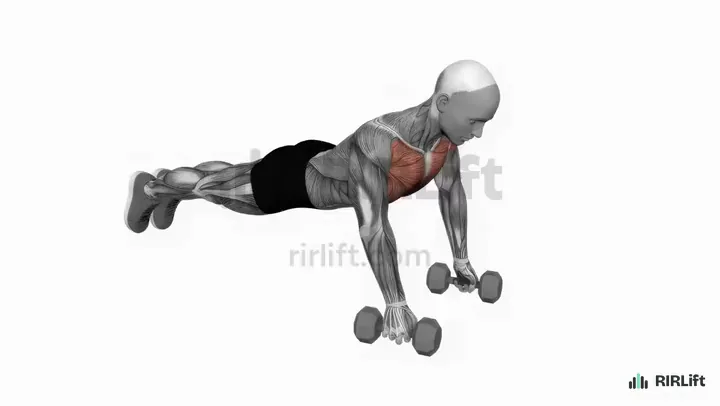
Deep Push-Up

Chest

Holding dumbbells, push-up handles or two stacks of books lets your chest sink below your hands, a deeper stretch than the floor allows. More range makes the same bodyweight harder and loads the chest where it is stretched longest.

How to do it

  1. Set two dumbbells, push-up handles or sturdy blocks down just outside shoulder width and grip them.
  2. Walk your feet back into a straight plank.
  3. Lower your chest between your hands, past the level of the handles, until you feel a strong stretch across your chest.
  4. Press back up to straight arms without letting your hips sag.

Cues

  • Sink between the handles
  • Pause in the stretch
  • Wrists straight over the handles

Common mistakes

  • Diving too deep on the first sets: go only as far as your shoulders feel comfortable, and add depth over weeks.
  • Using round dumbbells that roll: hexagonal dumbbells or fixed handles stay put.

Swap for: Push-Up, Decline Push-Up, Weighted Push-Up

One side of the chest, advanced push-up

Archer Push-Up

Chest

Shifting your body over one hand while the other arm stays straight to the side puts most of your weight on one side of your chest. It is the hardest push-up here and the way to keep progressing without any weight.

How to do it

  1. Set your hands much wider than a normal push-up, fingers turned slightly out, and get into a straight plank.
  2. Lower your body toward your right hand, bending the right elbow and keeping the left arm long and straight.
  3. Press back up to the middle.
  4. Repeat toward your left hand. One rep on each side counts as one.

Cues

  • Shift, then lower
  • Straight arm only helps a little
  • Hips stay square to the floor

Common mistakes

  • Twisting your hips toward the working hand: keep both hips facing the floor.
  • Trying it before you can do 20 clean push-ups: work up with decline push-ups first.

Swap for: Decline Push-Up, Push-Up, One-Arm Push-Up

Chest exercises with dumbbells and no bench

A pair of dumbbells and the floor give you a heavier press than any push-up, plus a fly. The floor limits how deep your elbows go, so these are kind to your shoulders and easy to push hard.

Whole chest, dumbbell press without a bench

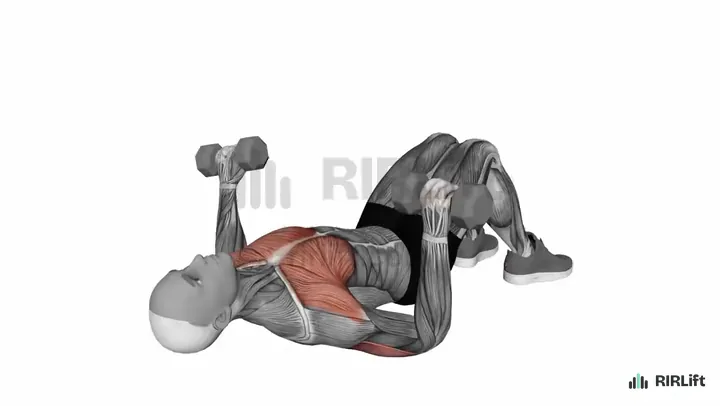
Dumbbell Floor Press

Chest, Triceps

Lying on the floor with a pair of dumbbells gives you a loaded press when you have no bench. The floor stops your elbows at the bottom, which protects your shoulders and makes heavy reps easy to control.

How to do it

  1. Sit on the floor with a dumbbell on each thigh, then lie back with your knees bent and feet flat, pulling the dumbbells in to your chest.
  2. Drive both dumbbells straight up over your chest until your arms are straight.
  3. Lower them until your upper arms touch the floor, elbows about 45 degrees from your sides.
  4. Pause for a moment with the arms resting, then press again.

Cues

  • Elbows kiss the floor, then press
  • Dumbbells over the chest at the top
  • Knees bent, feet flat

Common mistakes

  • Slamming the elbows into the floor: lower slowly and touch down softly.
  • Flaring the elbows straight out to the sides: keep them angled toward your hips.

Swap for: Single-Arm Dumbbell Floor Press, Flat Dumbbell Press, Push-Up

One side of the chest, floor press

Single-Arm Dumbbell Floor Press

Chest

Pressing one dumbbell at a time doubles the challenge of a light pair: all the weight goes through one side of your chest, and your core works to keep you from rolling. It is the go-to when your floor press stops being hard.

How to do it

  1. Lie down with knees bent and one dumbbell held over your chest, arm straight.
  2. Rest your free arm on the floor out to the side for balance.
  3. Lower the dumbbell until your upper arm meets the floor, elbow angled toward your hip.
  4. Press it back up over your chest. Do all reps on one side, then switch.

Cues

  • Don't let the weight roll you
  • Elbow lands softly
  • Press over the shoulder

Common mistakes

  • Letting your torso twist toward the working side: brace and keep both shoulders on the floor.
  • Rushing the lowering: take two seconds down so the light dumbbell feels heavy.

Swap for: Dumbbell Floor Press, Flat Dumbbell Press, Archer Push-Up

Whole chest, fly without a bench

Dumbbell Floor Fly

Chest

The floor fly adds the second chest movement, bringing your arms together, to a no-bench setup. The floor stops your elbows before the stretch gets too deep, so it is a safe fly to push close to failure.

How to do it

  1. Lie down with knees bent, both dumbbells held up over your chest, palms turned in.
  2. Bend your elbows a little and keep that angle fixed.
  3. Open your arms out to the sides until your upper arms just touch the floor.
  4. Sweep them up to meet over your chest along the same curve.

Cues

  • Open like a book
  • Elbows stay slightly bent
  • Light touch on the floor

Common mistakes

  • Turning it into a press by bending the elbows more each rep: lighten the dumbbells.
  • Resting the arms on the floor between reps: touch and come straight back up.

Swap for: Dumbbell Chest Fly, Single-Arm Band Chest Fly, TRX Chest Fly

Chest exercises with a home bench

A bench adds the range the floor takes away. If you have one, an incline and a flat press are the two most productive chest exercises you can do at home.

Upper chest, dumbbell press on a bench

Incline Dumbbell Press

Chest

If your home setup has an adjustable bench, the incline dumbbell press is the best chest exercise you can do with it. It loads the upper chest heavier than any push-up and lets you press with a full stretch.

How to do it

  1. Set the bench to a low incline, about 30 degrees, sit back and kick the dumbbells up to your shoulders.
  2. Press both dumbbells up over your upper chest until your arms are straight.
  3. Lower them to the sides of your upper chest, elbows angled about 45 degrees from your body.
  4. Press back up and repeat.

Cues

  • Low incline
  • Elbows under the wrists
  • Stretch at the bottom

Common mistakes

  • A bench set so steep that your shoulders take over: stay at about 30 degrees.
  • Bouncing the dumbbells off your chest: lower under control and pause briefly.

Swap for: Flat Dumbbell Press, Incline Dumbbell Fly, Decline Push-Up

Whole chest, dumbbell press on a bench

Flat Dumbbell Press

Chest

The flat dumbbell press is the bench press for a home gym: heavier loading than push-ups and a deeper range than the floor press. If you only have a flat bench, it is your main chest exercise.

How to do it

  1. Sit on the end of a flat bench with the dumbbells on your thighs, then lie back and bring them over your chest.
  2. Plant your feet and pull your shoulder blades back and down into the bench.
  3. Lower the dumbbells to the sides of your chest until you feel a stretch.
  4. Press them back up over your chest until your arms are straight.

Cues

  • Shoulder blades pinned
  • Forearms vertical
  • Stretch, then drive

Common mistakes

  • Lowering until the dumbbells point the elbows straight out: angle them back toward your hips.
  • Lifting your hips off the bench to push: keep your glutes down.

Swap for: Dumbbell Floor Press, Incline Dumbbell Press, Push-Up

Band and suspension trainer chest exercises

A band in a door or a suspension trainer gives you a fly with steady tension from start to finish, close to what a cable does in the gym. Use them at the end of a session to finish the chest after presses or push-ups.

Whole chest, band fly

Single-Arm Band Chest Fly

Chest

A band anchored in a door gives you a fly that pulls on the chest the whole way across, much like a cable. It is light, cheap and quiet, which makes it the best chest finisher for small spaces.

How to do it

  1. Anchor a band in a door or around a post at chest height, take the handle in one hand and stand with your back to the anchor.
  2. Step forward until the band is taut with your arm open wide and slightly bent.
  3. Sweep your hand across until it is in front of the middle of your chest.
  4. Let the band pull your arm back open slowly. Finish all reps, then switch arms.

Cues

  • Reach across the body
  • Fixed elbow angle
  • Slow on the way back

Common mistakes

  • Standing so close that the band goes slack at the end: step forward until it pulls the whole way.
  • Rotating your torso to finish: brace and move only the arm.

Swap for: TRX Chest Fly, Dumbbell Floor Fly, Dumbbell Chest Fly

Whole chest, suspension trainer fly

TRX Chest Fly

Chest

With a suspension trainer hanging from a door or rafter, you fly your bodyweight instead of a dumbbell, and you set the difficulty by how far you lean. It is one of the hardest fly variations you can do at home.

How to do it

  1. Set the straps to about waist height, hold the handles and face away from the anchor.
  2. Lean forward with your arms straight in front of you until your weight hangs on the handles, body in a straight line.
  3. Let your arms open out to the sides, elbows slightly bent, lowering your chest between them.
  4. Squeeze your arms back together to return to the start. Walk your feet back to make it harder.

Cues

  • Body stays straight like a plank
  • Arms open in a wide T
  • Start with a small lean

Common mistakes

  • Leaning too far on the first try: the angle gets hard fast, so start nearly upright.
  • Sagging at the hips as your arms open: brace your stomach and squeeze your glutes.

Swap for: Single-Arm Band Chest Fly, Dumbbell Floor Fly, Push-Up

Put them together: example sessions

Each session below picks from the exercises above for one situation, with the sets, reps, rest and RIR filled in. Open one in the session builder to change a pick, price it from a recent set, and add it to RIRLift.

Session 1

Bodyweight only, nothing else at home

Open in the session builder
  • Workouts3× a week
  • Working sets24 a week
  • Per workout~15 min
  • EquipmentBodyweight

You have a floor, a sturdy couch or step, and no weights at all.

Without load, the only way to make a push-up harder is the angle and the range, so session A uses decline push-ups for the upper chest and regular push-ups, and session B adds the archer push-up for one-sided loading and the incline push-up to squeeze out more chest reps when you are tired. Bodyweight sets need to go close to failure to count, so most sets stop 1 rep short and the last set of each exercise goes to 0. Each session is 8 sets.

Push-Up Day A
ExerciseSets × repsRIRRest
Decline Push-UpFeet on the couch. Last set to 0 RIR. 3 × 8–20 1 90 s
Push-Up 3 × 10–25 1 75 s
Incline Push-UpHands on the couch arm. 2 × 12–25 0 1 min

Open Push-Up Day A in the session builder

Push-Up Day B
ExerciseSets × repsRIRRest
Archer Push-UpReps per side. 3 × 5–12 1 90 s
Push-Up3 s on the way down. 3 × 10–25 1 75 s
Incline Push-Up 2 × 12–25 0 1 min

Open Push-Up Day B in the session builder

How to run it
Do A and B on alternating days, two or three times a week. Use your couch or a step for the decline and incline push-ups.
How to progress
When every set of an exercise passes 20 reps, move to the next harder version: incline to floor, floor to decline, decline to archer. Slowing the lowering to three seconds buys you a few more weeks on each one.

Session 2

A pair of dumbbells and a band, no bench

Open in the session builder
  • Workouts2× a week
  • Working sets18 a week
  • Per workout~20 min
  • EquipmentDumbbells, Resistance Bands

You own one pair of dumbbells, maybe a resistance band, and train on the living room floor.

The floor press is the heaviest thing you can do for your chest here, so it opens each session at 1 to 2 reps in reserve. The deep push-up on the dumbbell handles gets the stretch the floor press misses, and the floor fly and band fly add the movement presses leave out. A fixed pair stops getting heavier, so the one-arm floor press on day B doubles the load on each side. Each session is 9 sets.

Floor Chest A
ExerciseSets × repsRIRRest
Dumbbell Floor Press1 warm-up set firstPause 1 s on the floor. 3 × 8–15 1 2 min
Deep Push-UpHands on the dumbbells. 3 × 8–15 1 90 s
Dumbbell Floor Fly 3 × 10–20 0 1 min

Open Floor Chest A in the session builder

Floor Chest B
ExerciseSets × repsRIRRest
Single-Arm Dumbbell Floor PressPer arm. 3 × 8–15 1 90 s
Push-Up 3 × 10–25 1 75 s
Single-Arm Band Chest FlyPer arm. Band at chest height. 3 × 12–20 0 1 min

Open Floor Chest B in the session builder

How to run it
Do both sessions each week, two days apart. Anchor the band in a door at chest height for day B.
How to progress
Add reps until each set is at the top of its range; then on the floor press, slow the lowering, add a pause on the floor, or switch to the one-arm version. Buy the next dumbbell size when the one-arm press passes 15 reps.

Session 3

Adjustable dumbbells, a bench and a suspension trainer

Open in the session builder
  • Workouts2× a week
  • Working sets19 a week
  • Per workout~25 min
  • EquipmentDumbbells, Incline Bench, Suspension Trainer, Flat Bench

You have a home gym corner with adjustable dumbbells, an adjustable bench and straps hanging from a door or rack.

With a bench and dumbbells that go up in small steps, you can train your chest much like a gym would. Day A leads with the incline press for the upper chest and day B with the flat press, both at 2 reps in reserve after warm-up sets so you can add weight week after week. Decline push-ups and the suspension fly finish each day close to failure. That comes to 9 to 10 sets per session.

Home Chest A
ExerciseSets × repsRIRRest
Incline Dumbbell Press2 warm-up sets first30 degree bench. 4 × 6–12 2 2:30 min
Decline Push-UpFeet on the bench. 3 × 8–20 1 90 s
TRX Chest FlyStraps at waist height. 3 × 10–15 0 1 min

Open Home Chest A in the session builder

Home Chest B
ExerciseSets × repsRIRRest
Flat Dumbbell Press2 warm-up sets first 4 × 6–12 2 2:30 min
Incline Dumbbell Press 3 × 8–12 1 2 min
TRX Chest Fly 2 × 10–15 0 1 min

Open Home Chest B in the session builder

How to run it
Do A and B once each per week, as the chest part of upper body or push days, with at least two days between them.
How to progress
Once every set of the press reaches the top of its range at 2 RIR, go up one dumbbell step. On the suspension fly, walk your feet back a few inches instead of adding weight.

Make it fit you

Questions

Can you build your chest at home?

Yes. Your chest grows from sets taken close to failure, and push-ups, floor presses and flies all do that. The challenge at home is keeping the sets hard as you get stronger, which is why this page has harder push-ups and one-arm dumbbell versions to move to.

How many reps should I do for chest exercises?

Anywhere from 6 to 25 reps builds muscle, as long as the set ends within 0 to 2 reps of failure. With dumbbells, 8 to 15 is a good range. With push-ups, pick a variation hard enough that you reach that point before 20 to 25 reps.

What is a good push-up routine?

Three sets of a harder variation, like decline push-ups, and three of regular push-ups, two or three times a week, with each set ending one rep short of failure. When you pass 20 reps on every set, move to the next harder version.

Are there any standing chest exercises?

At home, the band chest fly is done standing: anchor a band at chest height and sweep your arm across your body. The suspension trainer fly is also done on your feet, leaning into the straps. Both make good finishers after push-ups or presses.

How do I tone my pecs at home?

Build the muscle and lose some body fat; that is what toned means. For the muscle part, do 10 to 20 hard sets of chest a week from this page, split over two or three sessions. Toning has no special high-rep version; train the same way you would to grow.

Is chest muscle hard to grow?

No harder than most muscles. It responds well to presses and flies, and most people notice changes within a couple of months of consistent, hard training. It feels slow when the sets are too easy, which is why tracking how many reps you have left matters.

How often should I train chest at home?

Two or three times a week. Push-ups recover fast, so the bodyweight plan can run three days a week; dumbbell sessions do well twice a week, with two days between them.