
Cheerleading warm up: a team routine for practice and competition
Published October 24, 2026
A cheerleading warm up takes about 12 minutes: 3 minutes of jogging drills and jumping jacks, 3 minutes of leg swings, walking lunges and arm circles, 2 minutes of activation for shoulders, wrists and trunk (push-up plus, plank shoulder taps, band pull-aparts), then 3 to 4 minutes of jump primers: star jumps, jump squats and jump turns that build toward full toe-touch height. Do it as a team so everyone starts stunting warm.
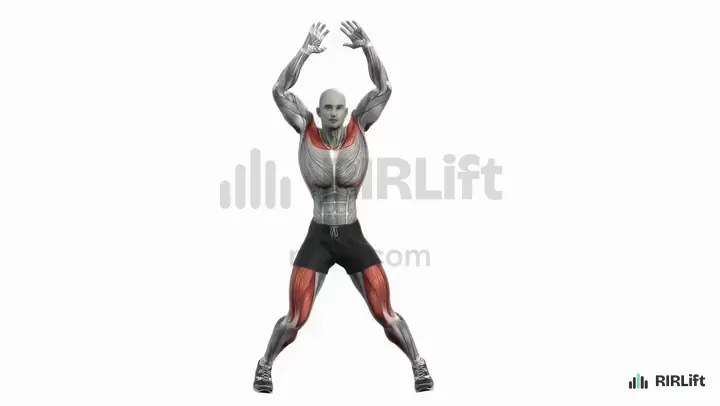
- Jumping Jack Calves, Quads
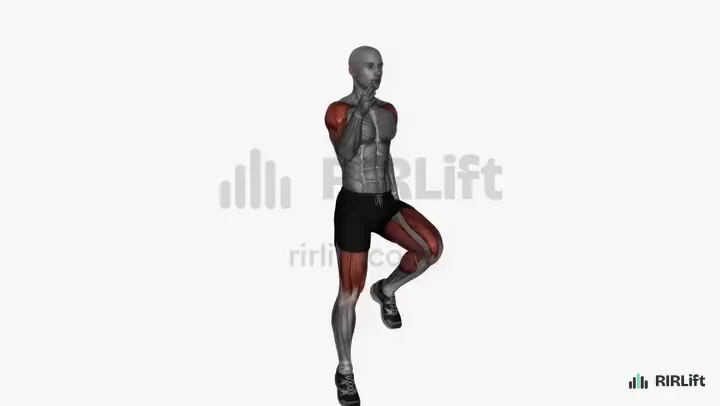
- High Knees Quads
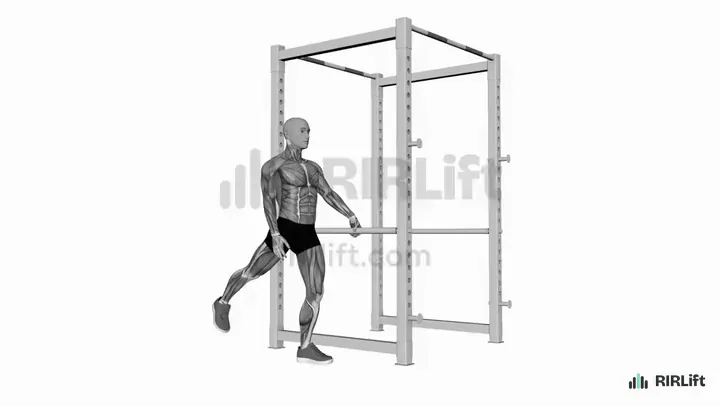
- Leg Swings Hamstrings, Glutes
- Walking Lunge Quads, Glutes
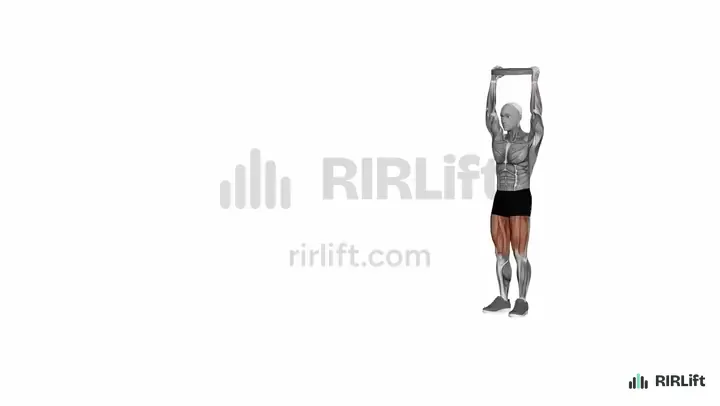
- Arm Circles Shoulders
- Push-Up Plus Chest
- Star Jump Quads, Hamstrings, Glutes
- 180 Jump Turn Quads, Glutes
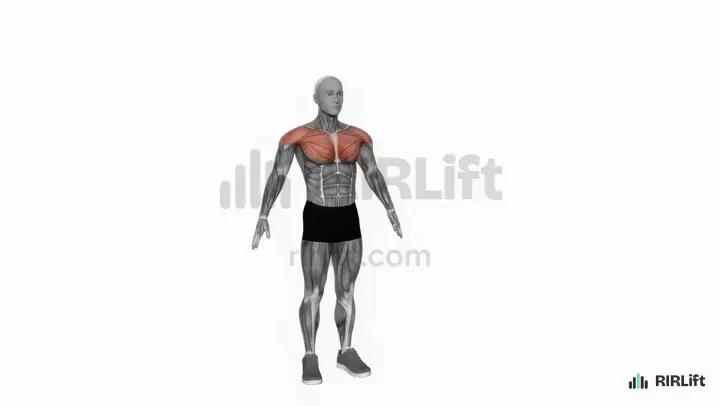
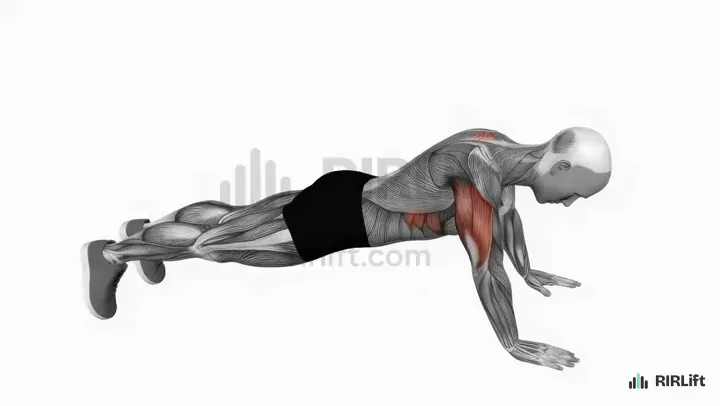
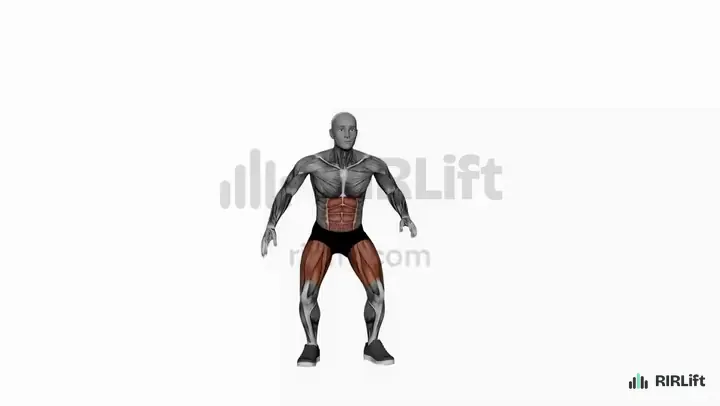
Put them together: example sessions
Each session below picks from the exercises above for one situation, with the sets, reps, rest and RIR filled in. Open one in the session builder to change a pick, price it from a recent set, and add it to RIRLift.
-
Session 1
Team practice
You lead or join a team warm-up before stunts and tumbling.
3× a week · 36 sets a week · ~15 min
-
Session 2
Competition warm-up room
Your team has a short slot in the warm-up area before taking the floor.
1× a week · 9 sets a week · ~10 min
-
Session 3
Tumbling-focused practice
Today is mostly tumbling, with handsprings and landings on the hands.
2× a week · 20 sets a week · ~10 min
Session 1
Team practice
- Workouts3× a week
- Working sets36 a week
- Per workout~15 min
- EquipmentDumbbells
You lead or join a team warm-up before stunts and tumbling.
Practice will include many jumps and stunts, so the warm-up keeps every block light, at 4 to 5 reps in reserve, and ends with a few jumps, not many.
| Exercise | Sets × reps | RIR | Rest |
|---|---|---|---|
| Jumping JackSeconds. | 2 × 45 | 5 | 0 s |
| High KneesSeconds. | 2 × 30 | 5 | 15 s |
| Leg SwingsPer leg. | 1 × 10–12 | 5 | 0 s |
| Walking LungePer leg. Hands on hips. | 1 × 8 | 4 | 15 s |
| Arm CirclesSeconds each direction. | 1 × 20 | 5 | 0 s |
| Push-Up Plus | 1 × 10 | 4 | 15 s |
| Plank Shoulder TapPer side. | 1 × 10 | 4 | 15 s |
| Star Jump | 2 × 5 | 3 | 20 s |
| 180 Jump Turn | 1 × 4 | 3 | 20 s |
- How to run it
- Run it as a group. Coaches call each drill and the team moves on together.
- How to progress
- Keep the length; add a second round of jump primers before competition season.
Session 2
Competition warm-up room
- Workouts1× a week
- Working sets9 a week
- Per workout~10 min
- EquipmentResistance Bands
Your team has a short slot in the warm-up area before taking the floor.
Warm-up rooms are short and crowded. This version drops the floor work and keeps raises, swings and jumps, so you hit the floor ready to perform.
| Exercise | Sets × reps | RIR | Rest |
|---|---|---|---|
| Jumping JackSeconds. | 2 × 30 | 5 | 0 s |
| Leg SwingsPer leg. | 1 × 10 | 5 | 0 s |
| Arm CirclesSeconds each direction. | 1 × 20 | 5 | 0 s |
| Band Pull-Apart | 1 × 12 | 4 | 15 s |
| Jump Squat | 2 × 4 | 3 | 20 s |
| Star Jump | 2 × 4 | 3 | 20 s |
- How to run it
- Do it at the start of your slot, then move into stunt run-throughs.
- How to progress
- Rehearse this exact version at practice so it feels routine on the day.
Session 3
Tumbling-focused practice
- Workouts2× a week
- Working sets20 a week
- Per workout~10 min
- EquipmentDumbbells
Today is mostly tumbling, with handsprings and landings on the hands.
Tumbling puts weight through the wrists and shoulders and hard landings through the legs, so this version doubles the shoulder and trunk work and adds jump squats for landing.
| Exercise | Sets × reps | RIR | Rest |
|---|---|---|---|
| High KneesSeconds. | 2 × 30 | 5 | 15 s |
| Arm CirclesSeconds each direction. | 1 × 30 | 5 | 0 s |
| Walking LungePer leg. | 1 × 8 | 4 | 15 s |
| Push-Up Plus | 2 × 10 | 4 | 15 s |
| Plank Shoulder TapPer side. | 2 × 10 | 4 | 15 s |
| Jump Squat | 2 × 5 | 3 | 20 s |
- How to run it
- Raise and mobility once, two rounds of the activation block, then jumps.
- How to progress
- Add a third round of the activation block before the first big pass of the day.
Make it fit you
-
Flyers
Spend more time on the plank shoulder taps and the leg swings; bases take an extra set of push-up plus.
-
No bands
Swap the pull-apart for slow arm circles held at shoulder height.
-
Strength training too
Log the reps you had left on each working set in RIRLift; it sets the next weight from that, so your lifting fits around heavy practice weeks.
-
Short slot
Cut each raise drill to 20 seconds and keep all the jumps.
-
Splits and flexibility
Work on held flexibility after practice, when you are warmest.
Questions
What is a good cheerleading warm up?
Jumping jacks, high knees, leg swings, walking lunges, arm circles, push-up plus, plank shoulder taps, band pull-aparts, then star jumps, jump squats and jump turns.
How long should a cheer warm up be?
About 10 to 15 minutes at practice and 5 to 8 in a competition warm-up room.
Should cheerleaders stretch before practice?
Use moving drills first. Longer flexibility work fits best at the end of practice.
What are warm-up techniques for cheer?
Raise your heart rate, move every joint through its range, switch on shoulders and trunk, then build up to your jumps.
How to workout like a cheerleader?
Mix jumping, tumbling skill and strength for the legs, shoulders and trunk. Our strength guides below cover the gym side.
Related templates
-
Gymnastics warm up exercises: a 12-minute routine before you train
Warm-up drills that overlap with tumbling.
-
Dynamic warm up: skips, crawls and jumps that build to game speed
The general moving warm-up behind this routine.
-
How to warm up for plyometrics
More jump preparation.
-
How to use reps in reserve (RIR)
How to judge the light RIR targets on the warm-up blocks and the harder ones on your lifts.