Chin-up alternatives: what to do if you can't do one or have no bar

The best chin-up alternative is the reverse-grip lat pulldown: the same palms-toward-you pull from overhead, with a weight you pick. To build up to chin-ups, use the assisted machine or a band on the bar; at home with no bar, underhand barbell or dumbbell rows train the same lats and biceps. If chin-ups hurt your wrists or elbows, switch to a neutral grip.

What a chin-up alternative has to replace

The chin-up trains your lats and your biceps together, with your upper back and grip helping. The underhand grip is what brings the biceps in, which is why most people can do more chin-ups than pull-ups. The load is your whole bodyweight, hardest at the bottom where your arms are straight.

A replacement should pull your elbows down or back to your sides with your palms facing you, against a load you can set.

How to do the chin-up

Gym machines and cables

In a gym, a pulldown or an assisted machine copies the chin-up most closely, and you can set the load lower than your bodyweight.

Closest gym swap

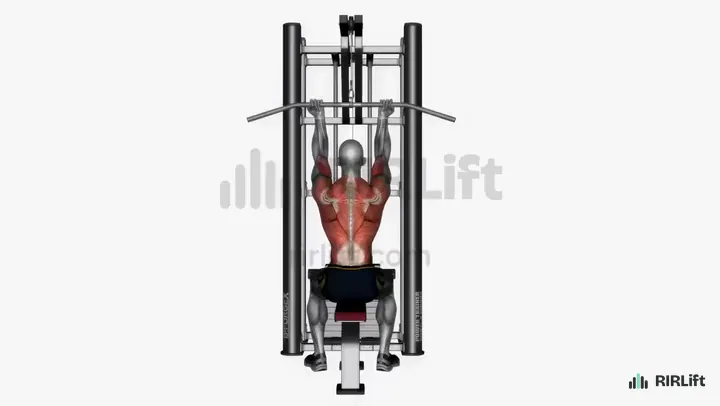
Reverse-Grip Lat Pulldown

Lats

Palms toward you on a pulldown bar is a chin-up where you choose the weight. It trains the same lats and biceps and lets you add load in small steps.

How to do it

  1. Sit at a pulldown station with your thighs under the pads.
  2. Take the bar with palms facing you, hands about shoulder width.
  3. Pull the bar to your upper chest, driving your elbows down toward your hips.
  4. Let the bar rise slowly until your arms are straight overhead.

Cues

  • Chest up to meet the bar
  • Elbows down and back
  • Full stretch at the top

Common mistakes

  • Leaning far back to row the bar down: stay only slightly reclined.
  • Stopping with bent arms at the top: let the bar pull your arms straight before each rep.

The bar movement, made lighter

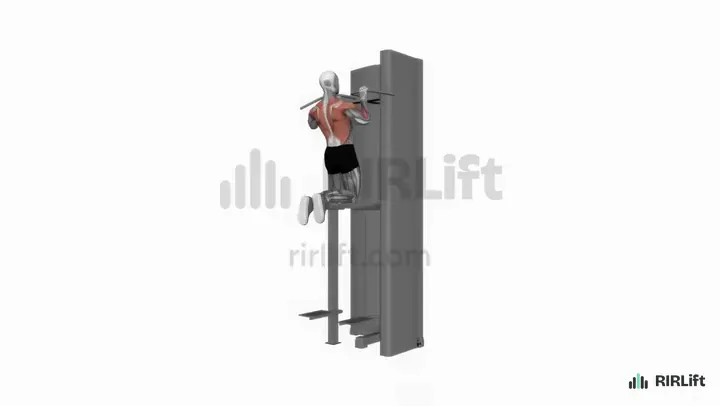
Assisted Pull-Up

Lats

The machine takes off part of your bodyweight, so you can practice pulling your chin over the handles for real reps. Lower the assistance as you get stronger.

How to do it

  1. Set the machine's assistance, step onto the platform or kneel on the pad, and take the handles overhead with your palms facing away.
  2. Hang with your arms straight and your shoulders pulled slightly down.
  3. Pull your chest toward the handles until your chin passes them, driving your elbows down to your sides.
  4. Lower all the way back to straight arms under control, then repeat.

Cues

  • Shoulders down before you pull
  • Chin over the handles
  • All the way down each rep

Common mistakes

  • Choosing so much assistance that you could do 20 easy reps: set it so 6 to 10 reps leaves 1 to 2 in reserve.
  • Stopping with bent arms at the bottom: a full hang between reps is what builds the strength for a real pull-up.

Underhand row on a cable

Reverse-Grip Cable Row

Lats

The same palms-up grip, but pulled to your waist instead of from overhead. Your elbows still drive to your hips, so the lats and biceps get much of the chin-up's work.

How to do it

  1. Hook a straight bar onto the row station's pulley, sit on the bench with feet braced, and hold the bar with palms up at shoulder width.
  2. Sit tall with arms straight and knees softly bent.
  3. Pull the bar to your lower stomach, elbows brushing your sides, until they pass your torso.
  4. Return slowly to straight arms without leaning forward.

Cues

  • Palms up, elbows in
  • Bar to your waistband
  • Two seconds forward

Common mistakes

  • Pulling the bar high to your chest: aim lower so the elbows travel to the hips.
  • Leaning back hard at the end: if you need to swing, the stack is too heavy.

On the bar or straps

Have a bar or straps? Change the help or the grip to get the reps you want.

Bar plus a band at home

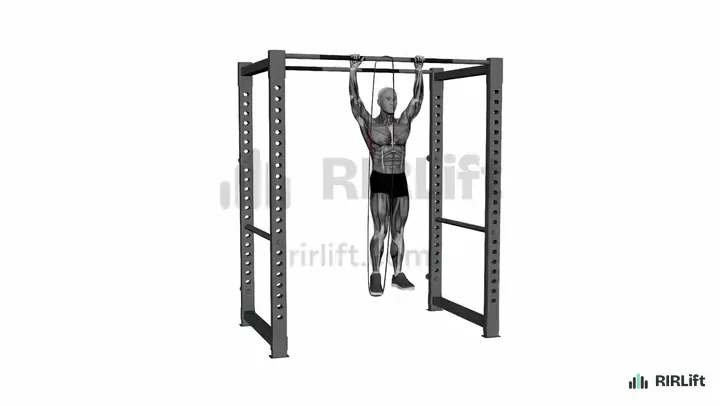
Band-Assisted Pull-Up

Lats

A loop band under your foot or knee helps you most at the bottom, where every pull from a hang is hardest. Banded reps build the back strength a chin-up needs, so you get real volume on the bar long before you can do one alone.

How to do it

  1. Wrap a loop band over the bar and feed it through itself so it is anchored.
  2. Grab the bar overhand, then place one foot or knee into the hanging loop.
  3. Hang with straight arms, band stretched under you.
  4. Pull until your chin passes the bar, then lower slowly back to straight arms.
  5. Step out of the band carefully after the last rep.

Cues

  • Band under one foot or knee
  • Same form as a real pull-up
  • Slow on the way down

Common mistakes

  • Bouncing out of the bottom on the band: the stretch shoots you up and your back does little. Pause for a second at the bottom.
  • Staying on the same band for months: move to a thinner band once you hit 10 clean reps.

More biceps on the same bar

Close-Grip Chin-Up

Lats, Biceps

Bringing your hands close together puts even more of the work on your biceps. Pick it if you do chin-ups mainly for your arms.

How to do it

  1. Grab the bar palms-up with your hands about a fist's width apart.
  2. From a straight-arm hang, pull until your upper chest nears the bar.
  3. Squeeze at the top with your elbows tight to your body.
  4. Lower slowly to a full hang.

Cues

  • Hands close
  • Chest to the bar
  • Three seconds down

Common mistakes

  • Shrugging your shoulders to your ears at the bottom: keep a little tension so the shoulders stay set.
  • Swinging between reps: pause in the hang until your body is still.

Swap when chin-ups hurt your wrists or elbows

Neutral-Grip Pull-Up

Lats

Palms facing each other takes the twist out of your forearms that an underhand grip forces, and keeps your biceps working almost as hard.

How to do it

  1. Take the narrow parallel handles, palms turned in and hands close together, and hang with your arms straight.
  2. Draw your shoulder blades down, then pull your elbows straight down beside your body.
  3. Rise until your chin passes the handles and your upper chest nearly touches them.
  4. Lower slowly to a full hang and repeat.

Cues

  • Elbows close to your ribs
  • Lead with the chest
  • Full hang at the bottom

Common mistakes

  • Pulling your knees up toward your chest to help: keep your legs still, slightly bent or crossed behind you.
  • Rushing the lowering: take two seconds down so the lats work on every inch of the rep.

Overhand grip on the same bar

Pull-Up

Lats

Turning your palms away shifts some work from your biceps to your back. Most people get a few fewer reps than with chin-ups.

How to do it

  1. Take the bar overhand with your hands a little wider than your shoulders and your thumbs wrapped around it.
  2. Hang with your arms fully straight, legs together and slightly in front of you, and squeeze your glutes so your body stays still.
  3. Before your elbows bend, draw your shoulders down and away from your ears.
  4. Drive your elbows down toward your ribs until your chin is over the bar and your chest is close to it.
  5. Lower yourself over about two seconds until your arms are straight again, then start the next rep from a dead stop.

Cues

  • Shoulders down, then elbows down
  • Chest to the bar, not chin poking up
  • Dead stop at the bottom, every rep

Common mistakes

  • Stopping short of straight arms at the bottom: half reps hide how many you can really do, so count only reps that start from a full hang.
  • Kicking or swinging to finish a rep: keep your legs together and still, and end the set when you need momentum.
  • Craning your neck to reach the bar with your chin: keep your head neutral and pull your chest up instead.
  • Dropping fast on the way down: the lowering half trains your lats too, so take about two seconds on every rep.
Build a session with Pull-Up

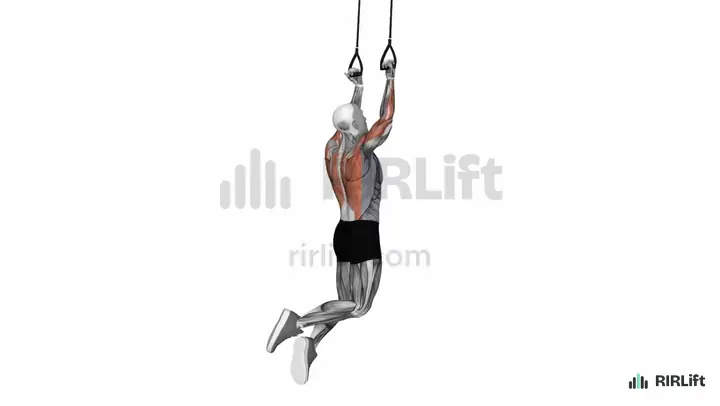
Chin-up on suspension straps

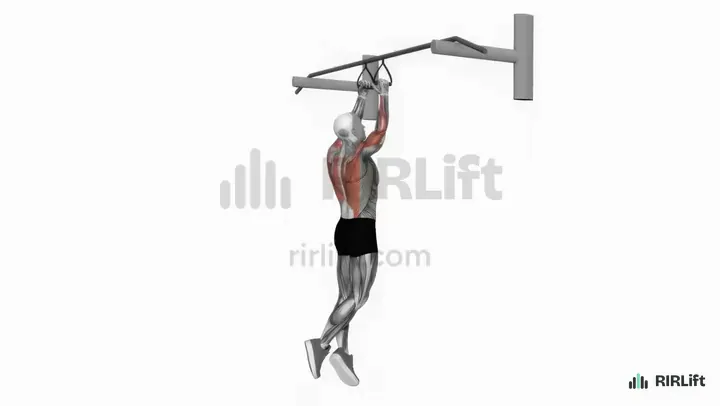
TRX Chin-Up

Lats, Biceps

Straps let your hands turn freely, which many lifters find easier on the wrists and elbows than a fixed bar. Hang them from a beam or a sturdy anchor high enough to pull your chin over the handles.

How to do it

  1. Hang the straps from a high anchor and stand under the handles.
  2. Take a handle in each hand with your palms toward you, about shoulder-width apart, and hang with straight arms.
  3. Pull your shoulders down, then drive your elbows to your sides until your chin rises above the handles.
  4. Lower yourself slowly back to straight arms before the next rep.

Cues

  • Palms face you
  • Elbows to your ribs
  • Slow on the way down

Common mistakes

  • Letting the handles drift wide as you pull: keep them in line with your shoulders so both arms work evenly.
  • Dropping fast out of the top: take two seconds to lower, since that half builds strength too.

Underhand rows, no bar to hang from

Rows with your palms facing forward train the lats and biceps the chin-up does, with weights or your bodyweight.

Bodyweight swap you can do now

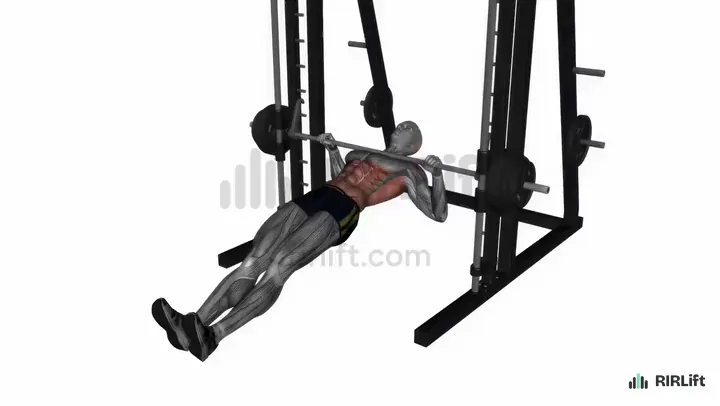
Inverted Row

Upper Back, Lats

Hanging under a bar at hip height and pulling your chest up lifts only part of your bodyweight, so you can do sets of 8 to 12 before you can do a single chin-up.

How to do it

  1. Set a bar in a rack or Smith machine at about hip height and lock it in place.
  2. Sit under it, take an overhand grip a little wider than your shoulders, and hang with straight arms.
  3. Walk your feet out until your heels rest on the floor, then squeeze your glutes so your body forms one straight line.
  4. Pull your shoulder blades back, then drive your elbows past your ribs until your lower chest touches the bar.
  5. Lower under control until your arms are fully straight, keeping your hips level the whole way.

Cues

  • Body straight from heels to head
  • Chest to the bar
  • Shoulder blades squeeze at the top

Common mistakes

  • Letting your hips sag: squeeze your glutes and brace so your body stays straight.
  • Stopping short of the bar: raise the bar or bend your knees until you can touch it on every rep.
  • Reaching your chin toward the bar: keep your neck long and lead with your chest, or the last inches come from your head instead of your back.
  • Dropping out of the bottom: lower yourself slowly to straight arms, since a bounce takes the stretch out of your upper back.

Barbell swap with the same grip

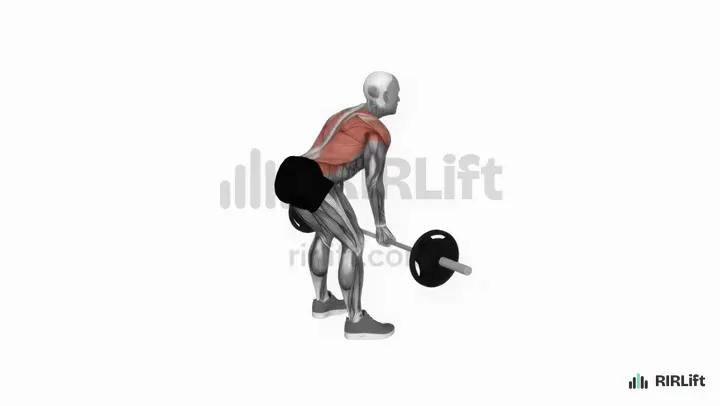
Underhand Barbell Row

Upper Back, Lats

Bent over with palms facing forward, you row to your lower ribs with your elbows close. The grip and elbow path match the chin-up, and you can load it well past your bodyweight.

How to do it

  1. Hold the bar with your palms facing forward and hands a little wider than your shoulders.
  2. Hinge forward with soft knees until your torso is just above level with the floor and the bar hangs straight below your shoulders.
  3. Row the bar toward your lower ribs with your elbows brushing your sides.
  4. Return to straight arms slowly, keeping your torso still.

Cues

  • Elbows skim your sides
  • Bar to your lower ribs
  • Wrists straight

Common mistakes

  • Curling the bar with your forearms: think about the elbows going back, not the hands coming up.
  • Taking a narrow grip that strains the wrists: keep your hands just outside shoulder width and the bar in the heel of your palm.

Dumbbell swap with the same grip

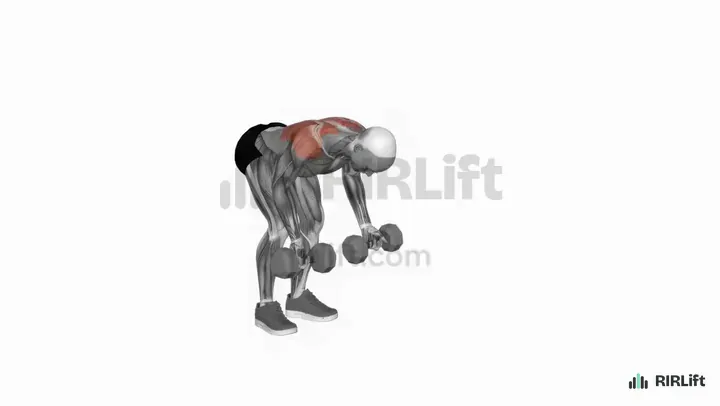
Reverse-Grip Dumbbell Row

Lats

Two dumbbells, palms forward, rowed toward your hips: the dumbbell version of an underhand row. Good at home when there is no bar to hang from.

How to do it

  1. Take a dumbbell in each hand, palms turned forward, and hinge at your hips until your torso is near parallel to the floor.
  2. Let the dumbbells hang under your shoulders with straight arms.
  3. Row them toward your hips, elbows close to your body, and finish each rep with a hard squeeze between the shoulder blades.
  4. Lower slowly to straight arms and repeat without standing up between reps.

Cues

  • Elbows brush your sides
  • Dumbbells travel to your hips, not your chest
  • Hold the hinge

Common mistakes

  • Curling the dumbbells instead of rowing them: keep your wrists straight and start the pull from the elbow.
  • Rounding your lower back as you tire: end the set when the hinge starts to fold.

Overhead lat work with one dumbbell

Dumbbell Lat Pullover

Lats

The only dumbbell lift that trains your lats from arms overhead, the position a chin-up starts from.

How to do it

  1. Lie lengthwise on a flat bench with your head near one end and your feet flat on the floor, or lie flat on the floor with your knees bent.
  2. Cup one dumbbell with both hands under the top plate and hold it straight over your chest.
  3. Soften your elbows, lock that bend in place, and pull your ribs down toward your hips.
  4. Let the dumbbell travel back behind your head in a wide arc until your upper arms are level with your torso, or until it nears the floor if you are lying down.
  5. Drive your upper arms back toward your hips along the same arc until the dumbbell is over your chest again, then start the next rep.

Cues

  • Ribs down, no arching
  • Pull with your armpits
  • Stop when upper arms line up with your torso

Common mistakes

  • Bending the elbows more as the dumbbell goes back, which turns it into a triceps extension: fix the elbow angle and lighten the load.
  • Letting your ribcage flare to go deeper: brace your abs and stop at the point where your back wants to arch.
  • Bringing the dumbbell all the way up until it sits over your face: stop when it reaches your chest line, where the lats still have work to do, and go straight into the next rep.

Example sessions without the chin-up

Session 1

Gym, can't do a chin-up yet

Open in the session builder
  • Workouts2× a week
  • Working sets24 a week
  • Per workout~30 min
  • EquipmentAssisted Machine, Lat Pulldown, Barbells, Cable Row

You train in a gym and cannot do a full chin-up, or only one or two.

The assisted machine trains the exact movement at a weight you can lift, and the underhand pulldown builds the same muscles in small steps. Inverted rows and an underhand cable row add back and biceps work at higher reps. 12 working sets.

Back
ExerciseSets × repsRIRRest
Assisted Pull-Up1 warm-up set first 4 × 6–10 2 2 min
Reverse-Grip Lat Pulldown 3 × 8–12 2 90 s
Inverted Row 3 × 8–12 1 75 s
Reverse-Grip Cable Row 2 × 10–12 1 75 s
How to run it
Twice a week on non-consecutive days. Once a week, try one unassisted chin-up after your warm-up.
How to progress
On the assisted machine, when all four sets reach 10 reps, take off one step of assistance. On the other lifts, add weight or raise your feet when every set reaches the top of its range.

Session 2

Home gym, barbell and dumbbells, no bar

Open in the session builder
  • Workouts2× a week
  • Working sets20 a week
  • Per workout~30 min
  • EquipmentBarbells, Dumbbells

You lift in a garage or basement with a barbell and dumbbells but have nowhere to hang a bar.

The underhand barbell row is the heavy lift, at low reps and long rests, with the chin-up's grip. Underhand dumbbell rows add volume, and a pullover trains the lats from overhead. 10 working sets.

Back
ExerciseSets × repsRIRRest
Underhand Barbell Row2 warm-up sets first 4 × 6–10 2 2:30 min
Reverse-Grip Dumbbell Row 3 × 10–12 2 90 s
Dumbbell Lat Pullover 3 × 12–15 1 1 min
How to run it
Twice a week, at least two days apart.
How to progress
Add the smallest plates to the barbell row when all four sets reach 10 reps. On the dumbbell lifts, add reps first, then go up a dumbbell.

Session 3

Home, a bar, a band and straps

Open in the session builder
  • Workouts3× a week
  • Working sets30 a week
  • Per workout~30 min
  • EquipmentPull-Up Bar, Resistance Bands, Suspension Trainer

You have a doorway bar, a loop band and suspension straps, and are building up to chin-ups.

Band-assisted pull-ups give you real volume on the bar, strap chin-ups add reps with a freer grip, and a few unassisted close-grip chin-ups test where you are. Rests are long because every rep lifts most of your bodyweight. 10 working sets.

Back
ExerciseSets × repsRIRRest
Band-Assisted Pull-Up 4 × 6–10 2 2 min
TRX Chin-Up 3 × 6–12 1 90 s
Close-Grip Chin-UpStop each set one rep short. 3 × 2–5 1 2:30 min
How to run it
Two or three times a week, never on back-to-back days.
How to progress
When you get 10 band-assisted reps on every set, switch to a thinner band. Add one unassisted chin-up per set each week; at 5 per set, drop the band work and do chin-ups for all sets.

Make it fit you

Questions

What can I replace chin-ups with?

The reverse-grip lat pulldown is the closest. The assisted machine and band-assisted pull-ups train nearly the same movement, and underhand barbell or dumbbell rows work the same lats and biceps without a bar.

What can I do if I can't do chin-ups?

Do assisted pull-ups on a machine or with a band, plus underhand pulldowns and inverted rows, twice a week. Lower the assistance each time you reach 10 reps.

How do I build the strength to do chin-ups?

Train the movement often with help you can reduce: a band or the assisted machine for 6 to 10 reps, then less help every time you reach the top. Add one row and test one unassisted rep a week.

How can I do chin-ups at home without equipment?

You need something to hang from: a doorway bar or suspension straps over a beam. With no way to hang, do underhand rows with dumbbells or a band.

Are chin-ups easier than pull-ups?

For most people, yes. The palms-toward-you grip lets your biceps help more, so you usually get a few more reps.

What exercise can replace a pull-up?

The lat pulldown, the assisted pull-up machine and band-assisted pull-ups. Rows with a bar, dumbbells or straps work the same back muscles if you have no bar.