
Pull-up bar exercises for back, arms, grip and abs, with plans for your first rep to your first muscle-up
Published October 19, 2026
The pull-up bar exercises worth doing are the pull-up, chin-up and neutral-grip pull-up for your back and arms, the dead hang for grip, and hanging knee and leg raises for your abs. If you cannot do a pull-up yet, start with band-assisted pull-ups and dead hangs. Once you can do 8 to 10 strict reps, add the wide-grip, archer and commando pull-ups, and work toward skills like the muscle-up and front lever.
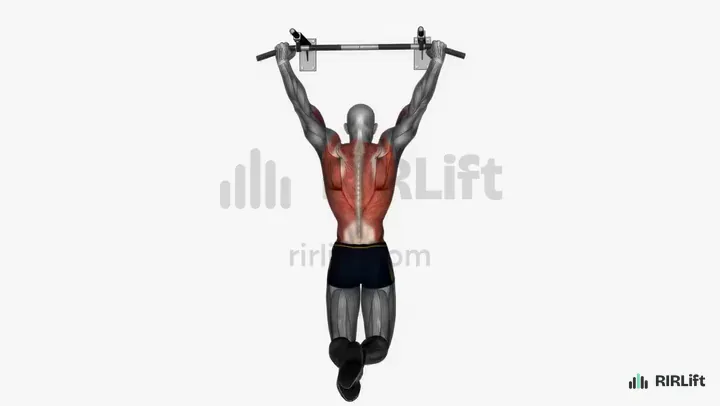
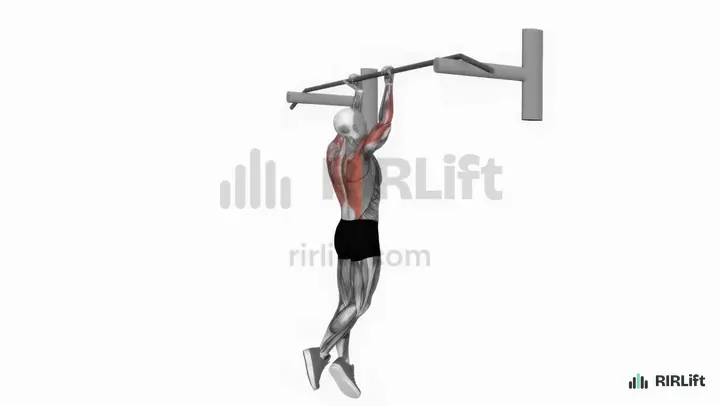
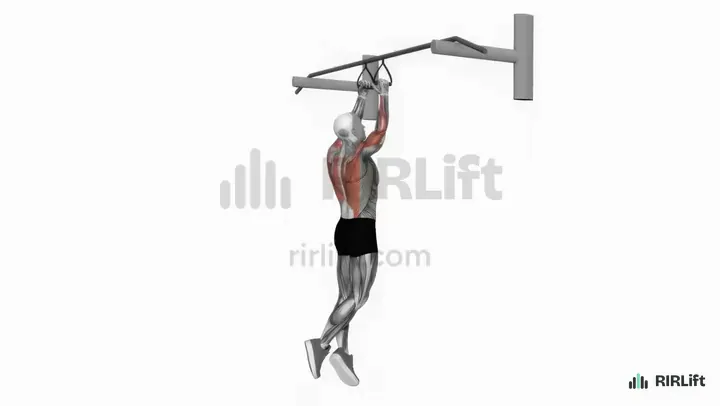
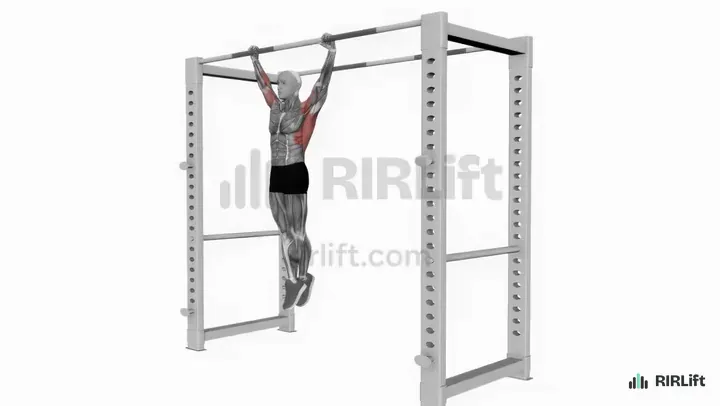
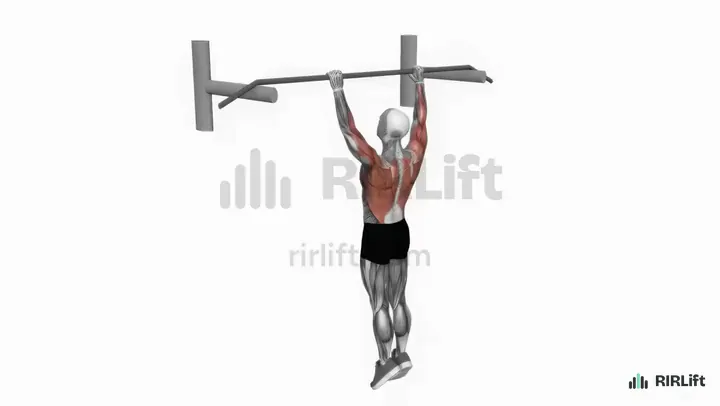
- Pull-Up Lats
- Chin-Up Lats
- Neutral-Grip Pull-Up Lats
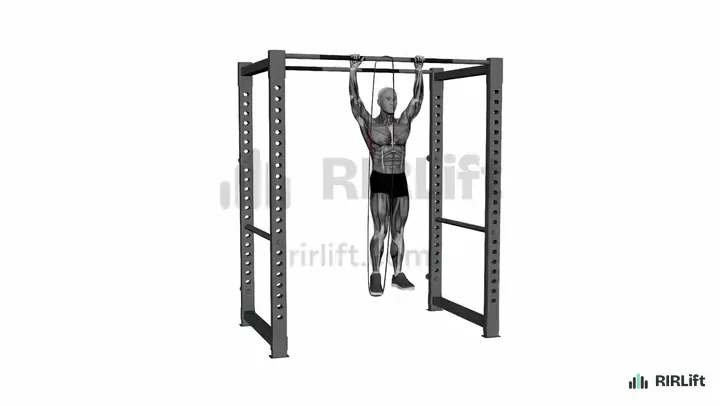
- Band-Assisted Pull-Up Lats
- Dead Hang Forearms
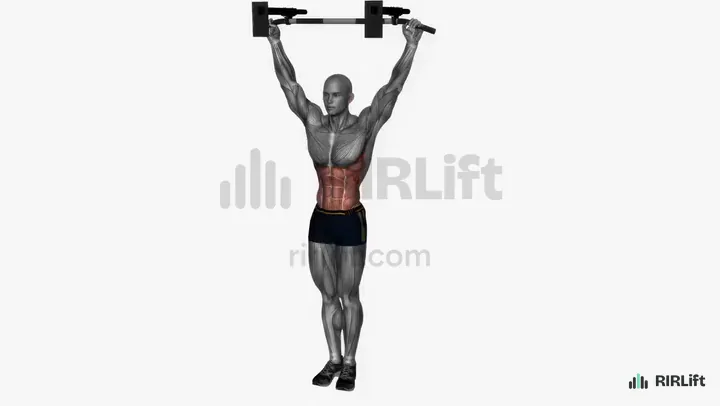
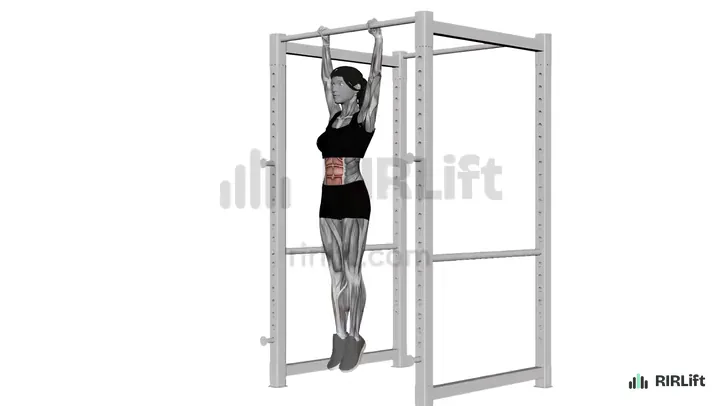
- Hanging Knee Raise Abs
- Hanging Leg Raise Abs
- Archer Pull-Up Lats, Upper Back
Put them together: example sessions
Each session below picks from the exercises above for one situation, with the sets, reps, rest and RIR filled in. Open one in the session builder to change a pick, price it from a recent set, and add it to RIRLift.
-
Session 1
You cannot do a pull-up yet
You have a doorway or wall-mounted bar, a loop band, and zero to two strict pull-ups.
3× a week · 33 sets a week · ~30 min
-
Session 2
A bar at home and 5 to 10 strict pull-ups
You can do several clean pull-ups and want your bar to be the backbone of your upper-body pulling and your ab work.
3× a week · 30 sets a week · ~30 min
-
Session 3
Strong on the bar, chasing skills
You can do 12 or more strict pull-ups and want harder bar work, including your first muscle-up or front lever.
2× a week · 30 sets a week · ~50 min
Session 1
You cannot do a pull-up yet
- Workouts3× a week
- Working sets33 a week
- Per workout~30 min
- EquipmentPull-Up Bar, Resistance Bands
You have a doorway or wall-mounted bar, a loop band, and zero to two strict pull-ups.
The band-assisted pull-up gives you full sets of the real movement, and the chin-up is there as slow lowering only, where you are strongest. Assisted sets stay at 2 reps in reserve so your form stays clean; the dead hang and knee raises go close to the end of your grip, at 1 RIR, because grip is what most often ends a first pull-up attempt.
| Exercise | Sets × reps | RIR | Rest |
|---|---|---|---|
| Band-Assisted Pull-Up1 warm-up set firstThinnest band that allows 5. | 3 × 5–10 | 2 | 2 min |
| Chin-UpLowering only. 3-5 seconds down. | 3 × 3–5 | 1 | 2 min |
| Dead HangReps are seconds. | 3 × 20–45 | 1 | 90 s |
| Hanging Knee RaisePause at the bottom. | 2 × 8–12 | 2 | 1 min |
- How to run it
- Train three days a week with a day between. For the chin-up block, jump or step up to the top position and take three to five seconds to lower; each lowering is one rep. Once a week, after warming up, test a single strict pull-up.
- How to progress
- When the assisted pull-up hits 10 reps at 2 RIR, use a thinner band. When the thinnest band is easy for 8, replace the assisted block with chin-ups, one strict rep at a time.
Session 2
A bar at home and 5 to 10 strict pull-ups
- Workouts3× a week
- Working sets30 a week
- Per workout~30 min
- EquipmentPull-Up Bar
You can do several clean pull-ups and want your bar to be the backbone of your upper-body pulling and your ab work.
Two days alternate overhand and underhand grips, so your back works twice a week from two angles and your biceps get the chin-up and close-grip work. Pull-ups stay at 1 to 2 reps in reserve because sloppy last reps turn into kips. Hanging leg raises replace the knee raise because you have the grip for them now.
| Exercise | Sets × reps | RIR | Rest |
|---|---|---|---|
| Pull-Up1 warm-up set firstFull hang each rep. | 4 × 5–10 | 2 | 2:30 min |
| Neutral-Grip Pull-UpParallel handles. | 3 × 6–10 | 1 | 2 min |
| Hanging Leg RaiseLegs straight. | 3 × 8–12 | 1 | 1 min |
Open Day A in the session builder
| Exercise | Sets × reps | RIR | Rest |
|---|---|---|---|
| Chin-Up1 warm-up set firstChest to bar. | 4 × 6–12 | 2 | 2:30 min |
| Close-Grip Chin-UpElbows tight. | 3 × 6–10 | 1 | 2 min |
| Hanging Oblique CrunchPer side. | 3 × 8–12 | 1 | 1 min |
Open Day B in the session builder
- How to run it
- Alternate A and B with at least a day between, two to four times a week. Rest fully between pull-up sets: two to three minutes is normal for bodyweight sets this hard.
- How to progress
- Add a rep per set until each set hits the top of its range, then wear a backpack with books or a weight belt with a 5 pound plate and start again at the bottom of the range.
Session 3
Strong on the bar, chasing skills
- Workouts2× a week
- Working sets30 a week
- Per workout~50 min
- EquipmentPull-Up Bar
You can do 12 or more strict pull-ups and want harder bar work, including your first muscle-up or front lever.
Skills come first while you are fresh: muscle-ups in low reps at 2 RIR, because a bad rep under fatigue teaches a bad transition. Archer and commando pull-ups load one side more, so they build strength without a belt. Front lever raises are your hanging core work now, and the wide-grip pull-up finishes with higher reps.
| Exercise | Sets × reps | RIR | Rest |
|---|---|---|---|
| Muscle-Up1 warm-up set firstPull to the lower chest. | 4 × 1–5 | 2 | 3 min |
| Archer Pull-UpPer side. | 3 × 3–6 | 1 | 2:30 min |
| Commando Pull-UpAlternate sides. | 3 × 6–10 | 1 | 2 min |
| Front Lever RaiseTuck if needed. | 3 × 5–8 | 1 | 90 s |
| Wide-Grip Pull-Up | 2 × 8–12 | 1 | 2 min |
- How to run it
- Two sessions a week, with a regular pull-up day between if you want more volume. Rest three minutes between muscle-up sets. If you cannot do a muscle-up yet, replace each one with 3 explosive pull-ups to the lower chest.
- How to progress
- Muscle-ups: add a rep to one set at a time. Archer pull-ups: hold the guide arm straighter. Front lever raises: move from tucked knees to one leg straight, then both.
Make it fit you
-
A doorway bar with no parallel handles
Skip the neutral-grip and commando pull-ups and use the chin-up on both days. Check that the bar stays put when you pull your chest toward it before you try muscle-ups; most doorway bars are not made for them.
-
Elbow or shoulder ache from pull-ups
Move to the neutral grip if you have handles, or a shoulder-width chin-up, and keep the hang relaxed at the bottom rather than pulled tight. Drop wide-grip and archer pull-ups until the ache settles.
-
You only have a few minutes
Pair a pull-up set with a hanging core set and rest after both. Three rounds take about ten minutes and still give your back and abs work.
-
Adding legs and push work
The bar does not train legs or pushing. Push-ups, dips and squats cover those without equipment; pair two bar days with two push-and-legs days.
-
Grip giving out first
Add two sets of dead hangs at the end of each session. If grip still fails, use straps for the last set of pull-ups so your back does not stop early.
-
Log reps in reserve on bodyweight sets
Body weight changes slowly, so reps and reps in reserve are your load. Import a plan into RIRLift, log each set's reps and RIR, and add a weight belt or switch to a harder grip when every set hits the top of its range at its RIR target.
Questions
What exercises can you do on a pull-up bar?
Pull-ups, chin-ups and their grip variations for your back and arms, band-assisted pull-ups and dead hangs to build up to them, hanging knee and leg raises for your abs, and skills like the muscle-up, front lever and back lever once you are strong.
How should I hold the bar for pull-ups?
Overhand, hands a little outside your shoulders, the bar in the base of your fingers with your thumb wrapped around it. For chin-ups, flip to underhand at shoulder width. Squeeze the bar hard; a tighter grip makes the rest of your upper body brace.
What happens if I do 100 pull-ups a day?
If you can, your back and arms will grow and your reps will rise for a while, but the elbows often complain before the muscles stop adapting. You will usually do better with 3 to 4 hard sets near failure a few days a week than with a daily quota you grind through.
What can I do instead of chin-ups?
A neutral-grip pull-up if your bar has handles, or a regular pull-up. If you cannot do either yet, use band-assisted pull-ups or slow lowering from the top of the bar.
Can you build muscle with only a pull-up bar?
Your back, biceps, forearms and abs, yes. Chest, triceps and legs need something else: push-ups, dips and squats are enough to start.
How many times a week should I train on a pull-up bar?
Two to three times, with a day between. The home bar plan alternates two days so your back gets two sessions, each from a different grip.
How do I do my first pull-up?
Practice the movement with a band, practice the lowering on its own, and build grip with dead hangs. The first-pull-up plan above runs all three, three times a week.
Related templates
-
Pull ups: form, your first rep and the best alternatives
Form, programming and variations for the pull-up on its own.
-
Chin ups: form, muscles worked and the best alternatives
The underhand version in detail, with rep targets.
-
Bodyweight back exercises, with and without a pull-up bar
Rows and pulls without a bar for the days you are not at it.
-
Bodyweight exercises: the 18 that build muscle, by muscle group
Push and leg moves to pair with your bar days.
-
Hanging knee raise: how to do it, what it works, and how to progress it
The first hanging ab exercise, step by step.