
Bodyweight bicep exercises: no equipment, then a bar
Published October 19, 2026
The best bodyweight bicep exercises are the chin-up and the close-grip chin-up, because pulling your whole body with your palms facing you is the heaviest load your biceps can get without weights. With no equipment at all, the doorway curl is the one direct biceps exercise: hold a door frame, lean back and curl yourself in. Add a neutral-grip pull-up for the brachialis, then progress to commando and archer pull-ups once chin-ups get easy. Take the sets to 0 to 2 reps in reserve.
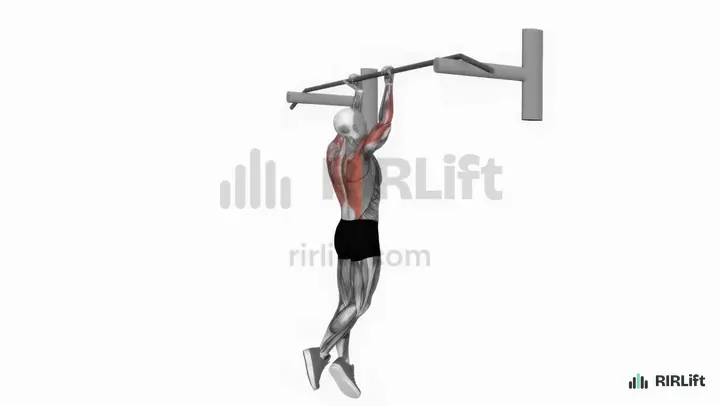
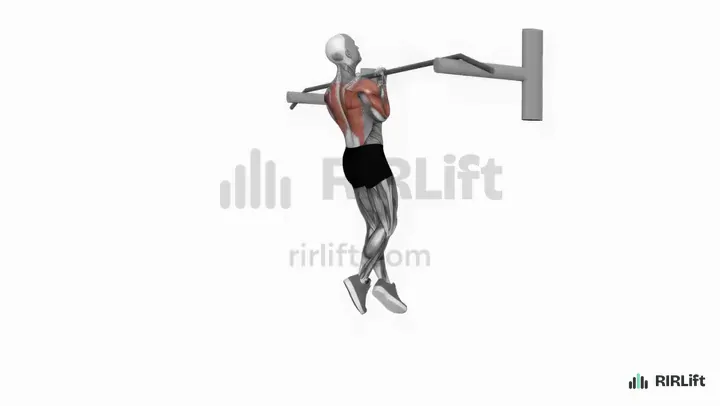
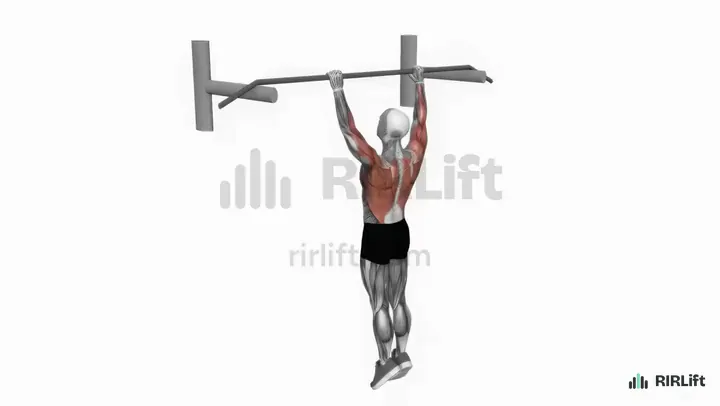
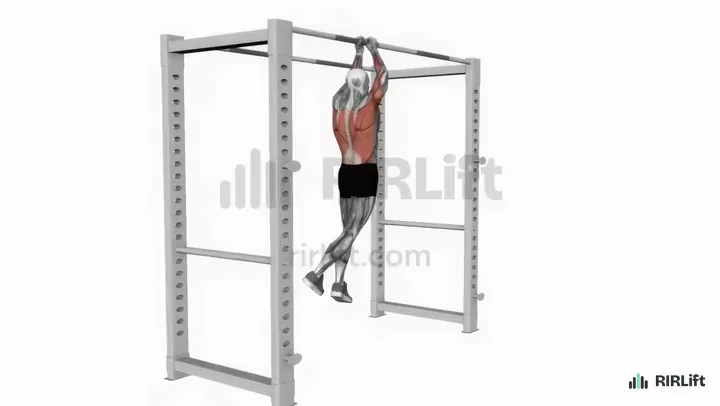
- Chin-Up Lats
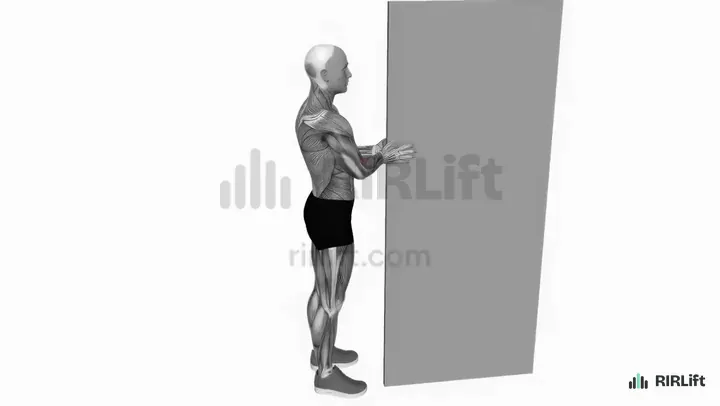
- Bodyweight Bicep Curl Biceps
- Close-Grip Chin-Up Lats, Biceps
- Neutral-Grip Pull-Up Lats
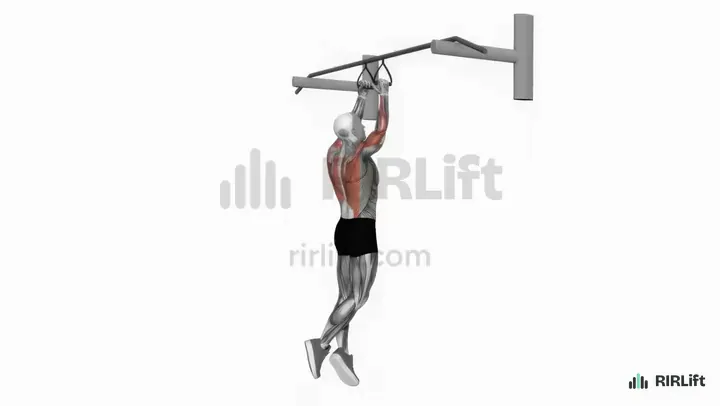
- Archer Pull-Up Lats, Upper Back
- Commando Pull-Up Lats, Upper Back
Put them together: example sessions
Each session below picks from the exercises above for one situation, with the sets, reps, rest and RIR filled in. Open one in the session builder to change a pick, price it from a recent set, and add it to RIRLift.
-
Session 1
No equipment, just a door frame
You have no bar, no bands and no weights, and want to train your biceps at home today.
3× a week · 15 sets a week · ~10 min
-
Session 2
A pull-up bar, fewer than 8 chin-ups
You have a bar in a doorway or at the park and can do a few chin-ups, but not many yet.
3× a week · 21 sets a week · ~20 min
-
Session 3
Pull-up bar, 12+ chin-ups already
Chin-ups are easy for you, and you want the bar to keep building your arms without buying weights.
2× a week · 20 sets a week · ~25 min
Session 1
No equipment, just a door frame
- Workouts3× a week
- Working sets15 a week
- Per workout~10 min
- EquipmentBodyweight
You have no bar, no bands and no weights, and want to train your biceps at home today.
The doorway curl is the only direct biceps exercise that needs nothing, so this plan uses it alone and gets its variety from foot position and tempo instead of from more exercises. One arm at a time lets each biceps carry more of your weight. The first block uses a steeper lean for 8 to 12 hard reps at 1 RIR; the second is a lighter lean with a 3-second lowering for 15 to 20 reps at 0 RIR, which is how you make a fixed load feel heavier.
| Exercise | Sets × reps | RIR | Rest |
|---|---|---|---|
| Bodyweight Bicep CurlPer arm. Feet close to the frame. | 3 × 8–12 | 1 | 45 s |
| Bodyweight Bicep CurlPer arm. Lighter lean, 3 s down. | 2 × 15–20 | 0 | 45 s |
- How to run it
- Do the session two or three times a week on non-consecutive days. Rest only as long as the other arm takes to do its set.
- How to progress
- When you reach the top of the rep range on every set, walk your feet a few inches closer to the frame. When you are close to standing under it, it is time for a pull-up bar.
Session 2
A pull-up bar, fewer than 8 chin-ups
- Workouts3× a week
- Working sets21 a week
- Per workout~20 min
- EquipmentPull-Up Bar
You have a bar in a doorway or at the park and can do a few chin-ups, but not many yet.
Low-rep chin-ups at 2 RIR build the strength to do more of them without grinding every set into failure, so you can repeat them often. The close-grip chin-up comes next because it keeps the work in the arms with a slightly different elbow path. The doorway curl finishes the session as the direct biceps work with a load you can adjust, which the chin-up cannot do.
| Exercise | Sets × reps | RIR | Rest |
|---|---|---|---|
| Chin-UpJump up and lower in 4 s if you can't pull yet. | 4 × 3–8 | 2 | 2:30 min |
| Bodyweight Bicep CurlPer arm. | 3 × 10–15 | 1 | 45 s |
Open Pull A in the session builder
| Exercise | Sets × reps | RIR | Rest |
|---|---|---|---|
| Close-Grip Chin-Up | 3 × 3–8 | 2 | 2:30 min |
| Neutral-Grip Pull-Up | 2 × 3–8 | 2 | 2 min |
| Bodyweight Bicep CurlPer arm. 3 s down. | 2 × 12–20 | 0 | 45 s |
Open Pull B in the session builder
- How to run it
- Do Pull A and Pull B on alternate days, two to three sessions a week. If you can do fewer than 3 chin-ups, jump to the top and lower yourself over 4 seconds for each rep instead.
- How to progress
- Add one rep per set each week. When you hit 8 reps on every chin-up set at 2 RIR, move to the bar-and-belt plan's harder variations.
Session 3
Pull-up bar, 12+ chin-ups already
- Workouts2× a week
- Working sets20 a week
- Per workout~25 min
- EquipmentPull-Up Bar
Chin-ups are easy for you, and you want the bar to keep building your arms without buying weights.
When straight chin-ups go past 12 reps, they turn into endurance work. Commando and archer pull-ups load one arm more than the other, which brings the reps back into the 5 to 10 range where each set is heavy. Close-grip chin-ups stay in as the high-volume biceps work at 1 RIR, and the neutral grip and overhand pull-up round out the brachialis and back. Biceps get 9 to 10 hard sets per session.
| Exercise | Sets × reps | RIR | Rest |
|---|---|---|---|
| Archer Pull-UpAlternate sides. Reps count both sides. | 4 × 4–8 | 1 | 2:30 min |
| Commando Pull-UpAlternate sides. | 3 × 6–10 | 1 | 2 min |
| Close-Grip Chin-Up | 3 × 8–15 | 1 | 90 s |
Open Arms Heavy in the session builder
| Exercise | Sets × reps | RIR | Rest |
|---|---|---|---|
| Close-Grip Chin-Up3 s down. | 3 × 8–15 | 1 | 90 s |
| Neutral-Grip Pull-Up | 3 × 8–15 | 1 | 90 s |
| Pull-Up | 2 × 6–12 | 2 | 2 min |
| Bodyweight Bicep CurlPer arm. Feet right at the frame. | 2 × 12–20 | 0 | 45 s |
Open Arms Volume in the session builder
- How to run it
- Run Arms Heavy and Arms Volume on two days each week with at least a day between them.
- How to progress
- Add reps to the archer and commando sets until you reach the top of the range, then slow the lowering to 4 seconds before adding more reps.
Make it fit you
-
Can't do a single chin-up
Jump or step up to the top, then lower yourself over 4 to 5 seconds. Five of those per set builds the pulling strength faster than hanging and trying. Keep the doorway curl in every session meanwhile.
-
Elbows ache after chin-ups
Swap one underhand day for the neutral-grip pull-up and keep chin-ups at 2 RIR instead of 0. Lower every rep slowly instead of dropping out of the top.
-
Your back gets tired before your arms
Use the close grip, keep your elbows pointing forward and stop the rep with your chin just over the bar. Pulling your chest all the way up hands the work back to your lats.
-
You also train back on the bar
Chin-ups count toward both. On days you already did pull-ups for your back, do only the doorway curl block for biceps.
-
Log the RIR, not just the reps
Bodyweight never changes on paper, so the reps you had left are the record of progress. In RIRLift you log the RIR on each set and it tells you when to move to a harder lean or a harder pull-up variation.
Questions
Can you build biceps with bodyweight?
Yes, if you pull. Chin-ups load your biceps with most of your bodyweight, which is heavy enough to build muscle in the 5 to 15 rep range when the sets end 0 to 2 reps short of failure. Push-ups and other no-pull bodyweight moves do almost nothing for the biceps.
How can I build my biceps without weights?
Buy a doorway bar and make the chin-up and close-grip chin-up your main exercises, with a doorway curl for direct work. Train biceps two or three times a week, 6 to 10 hard sets in total, and progress by adding reps and then moving to harder variations.
What bicep exercises can you do without equipment?
The doorway curl is the reliable one: grip a door frame, lean back and curl yourself toward it, one arm at a time. Any sturdy fixed edge you can hold while leaning back works the same way. Without something to pull on, there is no way to load the biceps directly.
Are chin-ups or pull-ups better for biceps?
Chin-ups. With your palms facing you, the biceps is in a stronger pulling position and works harder through the whole rep. Pull-ups still involve the biceps, but they hand more of the work to the lats.
Are 3 exercises enough for biceps?
Yes. Three exercises at 2 to 4 hard sets each is 6 to 12 sets, which is plenty for one session. With bodyweight, a chin-up, a second grip and the doorway curl cover the biceps from different angles.
How many chin-ups should I do for bigger biceps?
Aim for 3 to 4 sets that each end 1 to 2 reps short of failure, two or three times a week. If you can do more than 12 per set, switch to a harder variation rather than doing more reps.
Related templates
-
Bodyweight arm exercises: triceps, biceps and grip without weights
Add triceps and forearm work to these biceps moves.
-
Bicep exercises at home: chin-ups, bands and curls with one weight
Biceps with dumbbells, bands and kettlebells you keep at home.
-
Pull-up bar exercises for back, arms, grip and abs, with plans for your first rep to your first muscle-up
Everything else the bar trains, from lats to abs.
-
Chin ups: form, muscles worked and the best alternatives
Chin-up programs from your first rep to weighted sets.
-
How to use RIR
How to judge reps in reserve on bodyweight sets.