Close-grip bench press alternatives for triceps and pressing strength

The best close-grip bench press alternative is the dip: it loads your triceps heavily with your bodyweight and needs no bench or spotter. With a barbell and no spotter, the floor press keeps the heavy close-grip lockout safely. With dumbbells, a neutral-grip floor press or a hex press with your elbows tucked does the job, and with nothing at all, close-grip push-ups are the bodyweight version.

What a close-grip bench press alternative has to replace

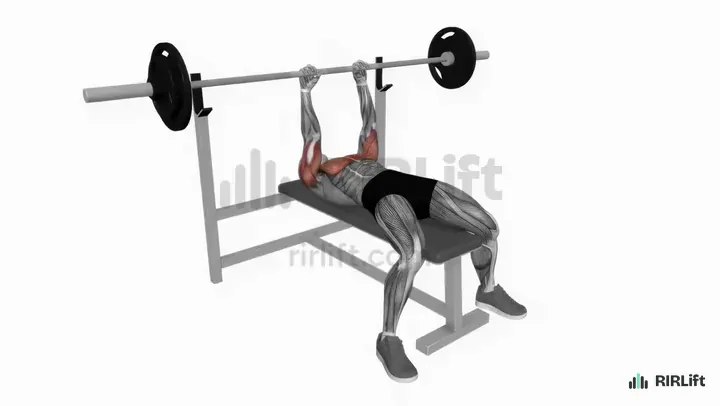
The close-grip bench press is a heavy press that puts more of the load on your triceps than a normal bench press, with your chest and front shoulders helping. Your triceps do most of their work in the top half, where your elbows straighten to lock the bar out.

A good swap is still a press, with your elbows tucked close to your sides and a heavy load through the lockout.

How to do the close-grip bench press

Dips and machines

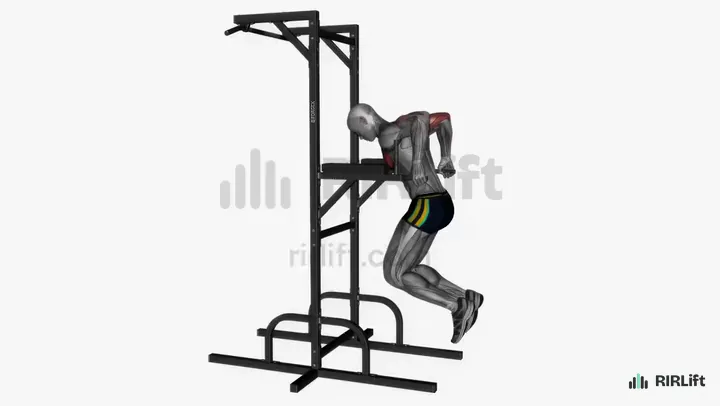
If the bench is taken, a dip is the most direct swap: a heavy press for the same muscles, with your bodyweight as the load.

Closest bodyweight press

Chest Dip

Chest, Triceps

Dips load your triceps, chest and front shoulders together, the same trio the close-grip bench trains, and you can add weight with a belt.

How to do it

  1. Stand between the bars, grip them with your palms facing each other and jump or step up until your arms are straight.
  2. Bend your knees, cross your ankles behind you and tip your chest forward about 30 degrees.
  3. Pull your shoulders down away from your ears before the first rep.
  4. Bend your elbows and sink until your upper arms are about parallel to the floor and your chest feels stretched.
  5. Drive the bars down and away from you until your elbows are straight, then start the next rep without swinging.

Cues

  • Chest over the bars
  • Upper arms to parallel
  • Shoulders down, neck long

Common mistakes

  • Sinking well past parallel to chase a bigger stretch: parallel is the depth; stop there and make it the same every rep.
  • Shrugging your shoulders up toward your ears at the bottom: press them down and drop the set when you can't hold that.
  • Kicking your legs to get out of the bottom: keep your ankles crossed and still, and count only the reps you press without momentum.
  • Cutting reps to half depth as the set gets hard: once you can't reach parallel, the set is over.
Build a session with Chest Dip

Machine swap

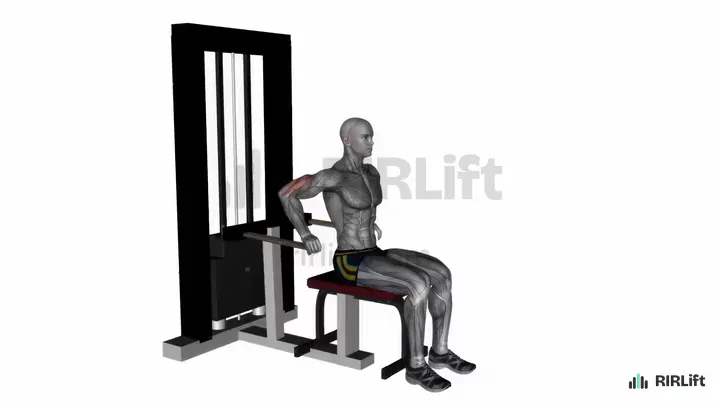
Machine Triceps Dip

Triceps

Pressing the handles down from your sides copies the dip with a fixed path and a stack. Pick it when the bench and the dip bars are both busy.

How to do it

  1. Sit on the machine and set the handles beside your lower ribs.
  2. Take the handles with your chest up and elbows pointing back.
  3. Press down until your arms are straight.
  4. Let the handles rise until your elbows are at about 90 degrees, then press again.

Cues

  • Elbows point behind you
  • Hips stay on the seat
  • Full lockout

Common mistakes

  • Elbows flaring out: keep them tucked so the triceps does the work.
  • Coming off the seat to move the stack: lower the pin.

Barbell

With a bar but no spotter, or a bench press that bothers you, change the position instead of the lift.

Best swap with no spotter

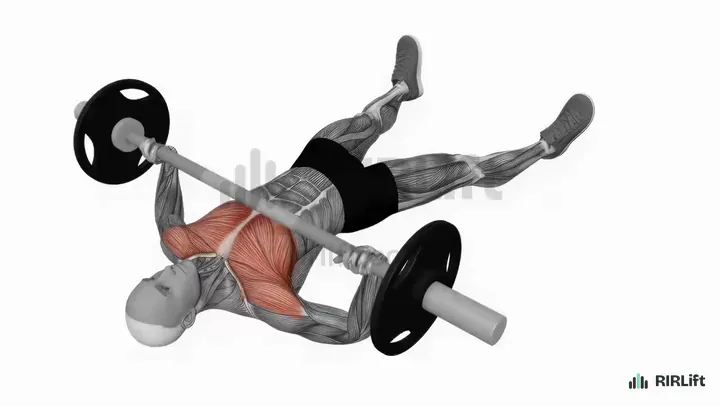
Floor Press

Chest, Triceps

Lying on the floor, your upper arms touch down before the bar reaches your chest, so each rep starts from a dead stop in the top half, where the triceps do most of the work. Use a grip just outside shoulder width and keep your elbows tucked.

How to do it

  1. Lie on the floor under a bar set in a rack at low height, knees bent or legs straight.
  2. Take a grip a little outside your shoulders and unrack it over your chest.
  3. Lower it until the backs of your upper arms rest on the floor, pausing for a moment.
  4. Press it back up until your arms lock out.

Cues

  • Pause on the floor
  • Triceps drive the lockout
  • Shoulder blades pinned back

Common mistakes

  • Bouncing the elbows off the floor: a short pause keeps the press honest.
  • Setting up with no safety: use a rack or pins so you can roll out of a stuck rep.

Most triceps-focused barbell swap

JM Press

Triceps

The bar travels toward your chin while your elbows drift forward, so it is part press, part skull crusher. It puts more of the work on your triceps than the close-grip bench, with less help from your chest.

How to do it

  1. Lie back on a flat bench, unrack the bar with a grip about shoulder-width apart, and hold it over your upper chest with straight arms.
  2. Bend your elbows and let the bar travel down and slightly back toward your chin while your elbows drift forward toward your feet a little.
  3. Stop when the bar is a few inches above your throat and your forearms are close to your upper arms.
  4. Press the bar back up and slightly forward by straightening your elbows, returning it over your upper chest.
  5. Lock out fully and squeeze the triceps before the next rep; rack the bar when you finish.

Cues

  • Bar toward the chin
  • Elbows a little forward
  • Straighten, don't press

Common mistakes

  • Turning it into a close-grip bench: if the bar lands on your chest with elbows tucked at your sides, you lose the extension part; let the elbows travel forward.
  • Turning it into a skull crusher: if the bar goes behind your head with the upper arms still, you lose the load; keep the bar over your chin and throat.
  • Rushing the bottom: the bar is near your face, so lower slowly, use collars, and set safety pins in a rack or use a Smith machine.
Build a session with JM Press

Barbell swap, underhand grip

Reverse-Grip Bench Press

Chest

An underhand grip forces your elbows close to your ribs, which keeps the triceps doing much of the work. Start well under your normal bench weight and always wrap your thumbs.

How to do it

  1. Lie back on a flat bench and take an underhand grip a little wider than shoulder width, thumbs wrapped around the bar.
  2. Unrack the bar with straight arms and hold it over your shoulders.
  3. Bring it down to the bottom of your chest with your elbows tucked near your ribs.
  4. Press up and slightly back toward your face until your arms lock out.

Cues

  • Thumbs wrapped, always
  • Elbows brush your ribs
  • Start lighter than your normal bench

Common mistakes

  • Using a thumbless grip: the bar can roll out of an underhand grip, so wrap your thumbs.
  • Loading it like your regular bench in week one: the groove takes a few sessions to learn.

Dumbbells

Dumbbells can't match the barbell's load, so keep your elbows tucked and your palms facing each other to put as much of the work on your triceps as you can.

Best dumbbell swap at home

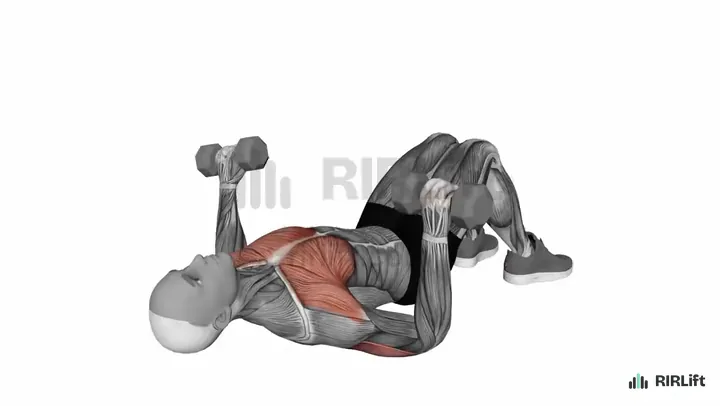
Dumbbell Floor Press

Chest, Triceps

Pressing from the floor with your palms facing each other keeps your elbows tucked and stops each rep in the top half. It needs no bench.

How to do it

  1. Sit down with knees bent and a dumbbell standing on each thigh, then roll onto your back and bring the dumbbells to your chest as you lie down.
  2. Plant your feet, pull your shoulder blades together into the floor, and hold the dumbbells over your chest with palms facing your feet or each other.
  3. Lower the dumbbells with your elbows about 45 degrees from your sides until the backs of your arms rest on the ground.
  4. Pause for a moment with your arms on the floor, staying tight.
  5. Press the dumbbells straight up over your chest to full lockout, without knocking them together.

Cues

  • Elbows land softly
  • Pause, then press
  • Shoulder blades pinned to the floor

Common mistakes

  • Bouncing the elbows off the floor: touch down, stop for a beat, then press.
  • Flaring the elbows straight out to the sides: keep them angled in at about 45 degrees.
  • Struggling to get heavy dumbbells into place: rest them on your thighs and roll back with them, and reverse the same way at the end of the set.

Dumbbell swap with a bench

Dumbbell Hex Press

Chest

Squeezing two dumbbells together over your chest keeps your elbows in close, so your triceps share more of the press. Use lighter dumbbells than for a normal dumbbell press.

How to do it

  1. Lie on a flat bench holding two dumbbells pressed together over your chest, palms facing each other.
  2. Squeeze the dumbbells into each other so hard they stay in contact for every rep.
  3. Lower the pair to the middle of your chest with your elbows tucked.
  4. Press back to straight arms while keeping the squeeze.

Cues

  • Crush the dumbbells together
  • Elbows along the ribs
  • Slow down, drive up

Common mistakes

  • Letting the dumbbells drift apart at the bottom: your elbows flare and it turns into a normal dumbbell press. Go lighter.
  • Lowering to your neck instead of your chest: the handles belong at the middle of your sternum.

Decline dumbbell swap

Decline Dumbbell Neutral-Grip Press

Chest

A neutral grip on a decline bench, elbows tucked, is a triceps-heavy press with less strain on the front of the shoulder. Pick it if flat pressing bothers your shoulders.

How to do it

  1. Hook your feet under the pad of a decline bench and lie back with the dumbbells at your lower chest, palms turned in.
  2. Keep your elbows tucked by your sides and your shoulder blades pulled down.
  3. Drive both dumbbells up above your lower chest until your arms are straight.
  4. Lower them under control to the sides of your lower ribs and repeat.

Cues

  • Palms face each other
  • Elbows close
  • Press toward your hips slightly

Common mistakes

  • Letting the dumbbells crash down on the descent: lower for two seconds.
  • Flaring into a wide press: keep the neutral grip and tucked elbows that make this a triceps press.

Bodyweight

No weights: push-ups and dips with your elbows tucked.

No-equipment swap

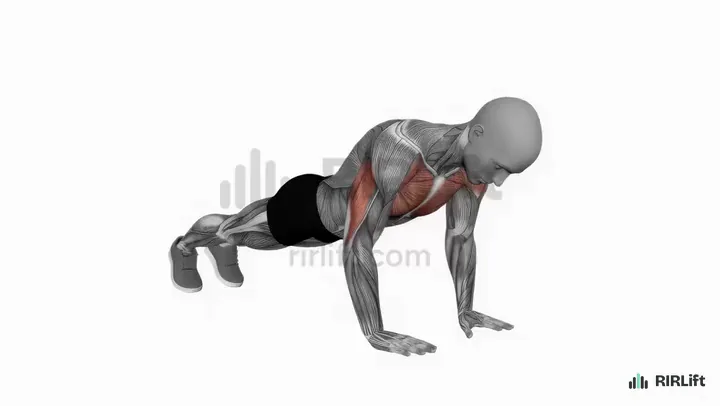
Close-Grip Push-Up

Triceps, Chest

Hands under your shoulders and elbows sliding back make a push-up the bodyweight close-grip press. Put your feet on a step, or a backpack on, to make it harder.

How to do it

  1. Get into a high plank with your hands directly below your shoulders.
  2. Lower yourself with your elbows sliding back past your ribs.
  3. Stop just above the floor, then push up to locked elbows.
  4. Drop to your knees for the last reps if your hips start to sag.

Cues

  • Hands under shoulders
  • Elbows travel back
  • Full lockout

Common mistakes

  • Flaring the elbows into a T: that moves the work to your chest.
  • Half reps near the top: lower until your chest is close to the floor.

Bodyweight swap with a bench or chair

Bench Dip

Triceps

Hands on a bench behind you, you lower and press your bodyweight with your triceps. Stop with your upper arms level with the floor.

How to do it

  1. Sit on the side of the bench and set your palms on the edge beside your hips, fingers forward.
  2. Walk your feet out with your legs straight and slide your hips forward off the bench.
  3. Bend your elbows to lower your hips toward the floor.
  4. Stop when your upper arms are about parallel with the floor.
  5. Straighten your arms to push back up.

Cues

  • Hips close to the bench
  • Elbows point back
  • Stop at parallel

Common mistakes

  • Dropping too low: going past parallel loads the front of the shoulder, not the triceps.
  • Pushing with your legs: keep them straight and let them rest on your heels.
Build a session with Bench Dip

Triceps exercises to pair with them

The example sessions add one or two triceps isolation exercises after the press.

Triceps, to pair in the gym

Cable Triceps Pressdown

Triceps

The gym session adds a pressdown to finish the triceps after the dips.

How to do it

  1. Clip a rope, straight bar or V-bar to a pulley set above head height and pick a weight you could move for about 15 reps.
  2. Grab the attachment, take a small step back and lean your chest slightly forward with your knees soft, so the cable runs just in front of your face.
  3. Pull your upper arms against your sides with your elbows bent and your hands around chest height. This is where every rep starts.
  4. Press the attachment down by straightening your elbows until your arms are fully locked out by your thighs. With a rope, spread the ends apart as your hands pass your hips.
  5. Let your hands rise back to chest height over about two seconds, keeping your elbows in the same spot, then press again.

Cues

  • Elbows glued to your ribs
  • Lock out hard at the bottom
  • Only your forearms move

Common mistakes

  • Leaning over the stack and pushing with your body weight: if your shoulders roll forward to finish a rep, drop the weight until your torso stays still for the whole set.
  • Letting the elbows drift forward on the way up: your shoulders take over and the rep turns into a press. Stop your hands at chest height and keep your upper arms vertical.
  • Cutting the bottom short: the last few inches before lockout are where the triceps work hardest, so finish every rep with straight arms.
  • Letting the stack yank your hands back up: control the return, since a dropped weight gives you half a rep.

Triceps stretch, to pair in the gym

Overhead Cable Triceps Extension

Triceps

An overhead extension trains the long head of your triceps in the stretched position no press reaches.

How to do it

  1. Attach a rope to a high pulley, grab both ends with your palms facing each other, and turn so your back faces the stack.
  2. Step forward into a split stance so the cable is pulled tight, and lean your torso slightly forward with the rope ends behind your neck and elbows pointing ahead.
  3. Keep your upper arms close to your head and straighten your elbows, pushing the rope forward and up until your arms are straight out in front of your forehead.
  4. Spread the rope ends slightly at the end and hold for a moment.
  5. Let your hands travel back behind your head slowly until your forearms touch your biceps or you feel a strong stretch, then extend again.

Cues

  • Elbows point forward, not out
  • Only the forearms move
  • Deep stretch, every rep

Common mistakes

  • Letting the elbows flare wide: keep them about shoulder-width so the triceps, not your shoulders, extend the arm.
  • Moving the upper arm to help the weight: if your elbows drop and rise with each rep, the lats and shoulders are pressing, so lighten the stack.
  • Cutting the stretch short: the bottom of the rep is the point of the exercise, so lower until your hands are well behind your head.

Triceps, to pair at home

Triceps Kickback

Triceps

One dumbbell finishes the triceps at full lockout.

How to do it

  1. Put one knee and the same hand on a flat bench and lean forward until your back is close to flat, holding a dumbbell in the other hand.
  2. Lift your upper arm until it is level with your torso and tight to your side, with the elbow bent about 90 degrees and the dumbbell hanging below it.
  3. Straighten your elbow and push the dumbbell back until your whole arm is in a straight line.
  4. Hold the straight arm for a second and squeeze the back of your arm.
  5. Bend the elbow slowly back to 90 degrees without letting the upper arm drop, then finish all reps before switching arms.

Cues

  • Upper arm stays parked
  • Lock out and pause
  • Only the forearm moves

Common mistakes

  • Swinging the dumbbell up: use a lighter weight so you can stop it at the top for a second.
  • Letting the upper arm drop toward the floor: keep the elbow level with your back; if it sinks, the weight is too heavy.
  • Bending only partway: straighten the arm fully, since the top is where the triceps work hardest.

Triceps stretch, to pair at home

Seated Dumbbell Overhead Triceps Extension

Triceps

One dumbbell held overhead covers the stretched position at home.

How to do it

  1. Sit tall on a bench or chair with your feet planted and your back upright.
  2. Wrap both hands around the handle of one dumbbell and press it straight overhead.
  3. Bend your elbows so the weight sinks behind your neck, keeping your upper arms close to your ears.
  4. Stop when your forearms are about level with the floor and you feel a deep stretch in the backs of your arms.
  5. Straighten your elbows to bring the dumbbell back overhead, then start the next rep.

Cues

  • Elbows point up
  • Only the elbows bend
  • Deep stretch, every rep

Common mistakes

  • Flaring the elbows wide: keep them about shoulder width so the triceps, not the shoulders, move the weight.
  • Arching your lower back as the dumbbell drops: brace your stomach, or sit against a backrest.
  • Cutting the stretch short: lower until your forearms reach level, since the bottom is the point of the exercise.

Example sessions without the close-grip bench press

Session 1

Gym, every bench taken

Open in the session builder
  • Workouts1× a week
  • Working sets13 a week
  • Per workout~30 min
  • EquipmentDip Bar, Dip Machine, Adjustable Cable

You train in a busy gym and can't get a bench and a bar for your close-grip work.

Dips take the close-grip bench's place as the heavy press, the machine dip adds more pressing volume, and two cable exercises finish the triceps at lockout and in the stretch. 13 working sets.

Triceps
ExerciseSets × repsRIRRest
Chest Dip1 warm-up set first 4 × 6–10 2 2:30 min
Machine Triceps Dip 3 × 8–12 2 90 s
Cable Triceps Pressdown 3 × 10–15 1 1 min
Overhead Cable Triceps Extension 3 × 10–15 1 1 min
How to run it
Use it as your triceps session once a week, or put the dips into your push day where the close-grip bench was.
How to progress
On dips, add reps until every set reaches 10, then add weight with a belt or a dumbbell between your feet. On the rest, add a plate when every set reaches the top of the range.

Session 2

Barbell, training alone

Open in the session builder
  • Workouts2× a week
  • Working sets20 a week
  • Per workout~35 min
  • EquipmentBarbells, Flat Bench

You have a barbell and a rack, often train alone, and want the close-grip bench's strength work without risking a stuck rep.

The floor press keeps the heavy, low-rep close-grip lockout with a safe bottom, so it goes first with long rest. The JM press adds heavy triceps work, and close-grip push-ups finish with your bodyweight. 10 working sets.

Triceps
ExerciseSets × repsRIRRest
Floor Press2 warm-up sets firstPause with arms on the floor. 4 × 4–6 2 3:30 min
JM Press 3 × 6–10 2 2:30 min
Close-Grip Push-Up 3 × 10–20 1 75 s
How to run it
Once or twice a week, with at least two days between. On the floor press, set the rack's safety arms just above your chest as you lie on the floor, so a missed rep lands on them.
How to progress
When all sets of a press reach the top of the range at 2 RIR, add the smallest jump next session. On push-ups, add reps, then raise your feet.

Session 3

Home, dumbbells and a bench

Open in the session builder
  • Workouts2× a week
  • Working sets26 a week
  • Per workout~30 min
  • EquipmentDumbbells, Flat Bench

You train at home with adjustable dumbbells and a flat bench, and no barbell.

The dumbbell floor press goes first because it carries the most load, the hex press keeps your elbows tight, and kickbacks and an overhead extension finish the triceps. Dumbbells are lighter than a barbell, so reps are higher and rest is shorter. 13 working sets.

Triceps
ExerciseSets × repsRIRRest
Dumbbell Floor Press1 warm-up set firstPalms facing each other. 4 × 8–12 2 2 min
Dumbbell Hex Press 3 × 10–15 1 90 s
Triceps KickbackSets are per arm. 3 × 12–20 1 45 s
Seated Dumbbell Overhead Triceps Extension 3 × 12–15 1 1 min
How to run it
Twice a week on non-consecutive days, or once a week alongside your chest work.
How to progress
Add reps until every set reaches the top of its range, then move up one dumbbell. At your heaviest pair, pause two seconds at the bottom of the floor press.

Make it fit you

Questions

What are some alternatives to the close-grip bench press?

Dips, the floor press, the JM press and the reverse-grip bench press with a barbell. With dumbbells, a neutral-grip floor press or a hex press; with nothing, close-grip push-ups.

How do you do a close-grip bench with dumbbells?

Hold the dumbbells with your palms facing each other, keep your elbows close to your sides and press. Squeezing the two dumbbells together, as in a hex press, keeps your elbows tucked even more.

Is there any benefit to a reverse-grip bench press?

Yes. The underhand grip keeps your elbows close to your ribs, which shifts work toward your triceps and upper chest. Start much lighter than your normal bench, since the groove takes a few sessions to learn.

Is there a better alternative to the bench press?

Not better, but dips, the floor press and dumbbell presses train the same muscles and suit a busy gym, a home setup or a cranky shoulder.

What is a good close-grip bench press alternative at home?

With dumbbells, a dumbbell floor press with palms facing in. With no equipment, close-grip push-ups and bench dips on a sturdy chair.

How close should a close-grip bench grip be?

About shoulder width or a little inside it, so your forearms stay close to vertical with the bar on your chest. Going much narrower bends your wrists back.