
Dips: how to do them, chest vs triceps, and what to do instead
Published October 17, 2026
Dips are a bodyweight press where you hold yourself up on two parallel bars, lower until your upper arms reach about parallel to the floor, and press back to straight arms. They train your chest, triceps and the front of your shoulders with your whole bodyweight as the load. The lean decides the target: tip your chest forward to bias your chest, stay upright to bias your triceps.
- WorksChest, Triceps
- AlsoShoulders
- EquipmentDip Bar
- Start with3 × 8–15, 2 in reserve, 2 min rest
How to do the chest dip
Your bodyweight is the load, so two bars are all you need for hard chest and triceps sets. Once bodyweight reps get easy, a dip belt keeps the same movement progressing.
Steps
- Stand between the bars, grip them with your palms facing each other and jump or step up until your arms are straight.
- Bend your knees, cross your ankles behind you and tip your chest forward about 30 degrees.
- Pull your shoulders down away from your ears before the first rep.
- Bend your elbows and sink until your upper arms are about parallel to the floor and your chest feels stretched.
- Drive the bars down and away from you until your elbows are straight, then start the next rep without swinging.
Cues
- Chest over the bars
- Upper arms to parallel
- Shoulders down, neck long
Common mistakes
- Sinking well past parallel to chase a bigger stretch: parallel is the depth; stop there and make it the same every rep.
- Shrugging your shoulders up toward your ears at the bottom: press them down and drop the set when you can't hold that.
- Kicking your legs to get out of the bottom: keep your ankles crossed and still, and count only the reps you press without momentum.
- Cutting reps to half depth as the set gets hard: once you can't reach parallel, the set is over.
Swap for: Decline Push-Up, Close-Grip Push-Up, Bench Dip
Muscles the chest dip works
Dips train your lower chest, your triceps and the front of your shoulders together. The chest works hardest near the bottom, where it is stretched, and the triceps take over as your elbows straighten at the top. Leaning forward shifts the work toward your chest; an upright torso with elbows tucked shifts it toward your triceps.
Sets, reps and reps in reserve for the chest dip
| Goal | Sets × reps | RIR | Rest |
|---|---|---|---|
| Build muscle | 3 × 8–15 | 2 | 2 min |
| This matches the session builder. Add reps until every set reaches 15, then add weight with a dip belt. | |||
| Strength | 3–5 × 5–8 | 1–2 | 2–3 min |
| Weighted dips only: hang plates from a belt so your sets end inside this rep range. | |||
| End of a push day | 2–3 × 10–20 | 0–1 | 90 s |
| Use bodyweight after your heavy presses and take the last set to failure. | |||
| Beginners | 2–3 × 5–10 | 2–3 | 2 min |
| If you can't do five clean reps, use the machine chest dip or band-assisted reps until you can. | |||
Chest dip variations
-
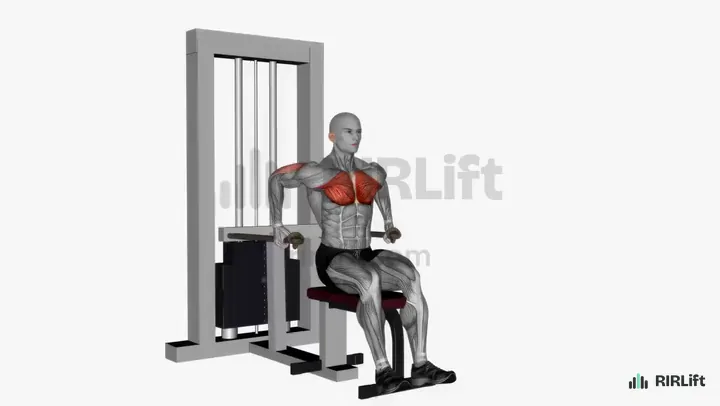
Machine Chest Dip
Pick this when you can't yet press your full bodyweight or want to add load in small steps without a belt.
Build a session with it -
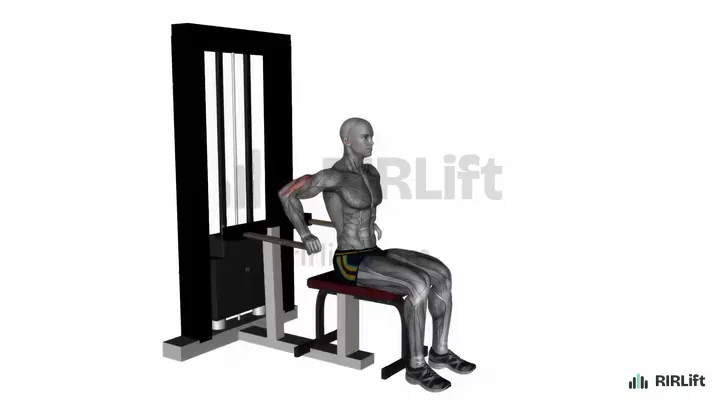
Machine Triceps Dip
Pick this when you want the triceps version seated and loaded from a stack, with nothing to balance.
Build a session with it -
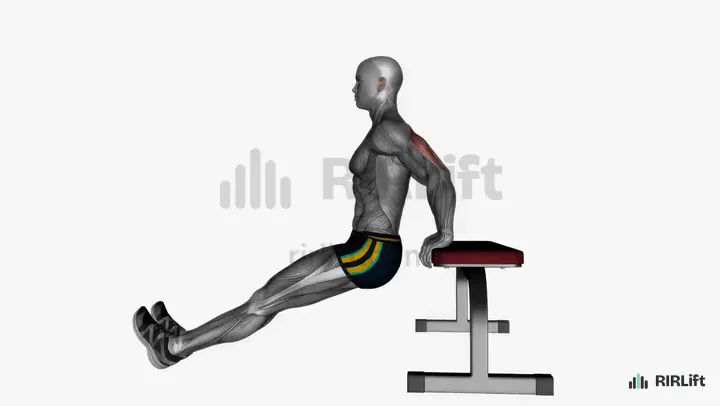
Bench Dip
Pick this at home or as a lighter triceps dip: hands on a bench behind you, bend your knees to make it easier or raise your feet to make it harder.
Build a session with it -
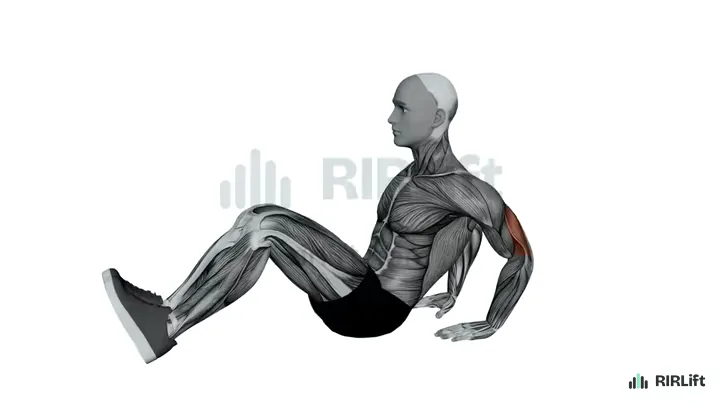
Floor Triceps Dip
Pick this when you have no bench or bars at all and want a short-range triceps dip from the floor.
Build a session with it
Chest dip alternatives
No dip bars
-
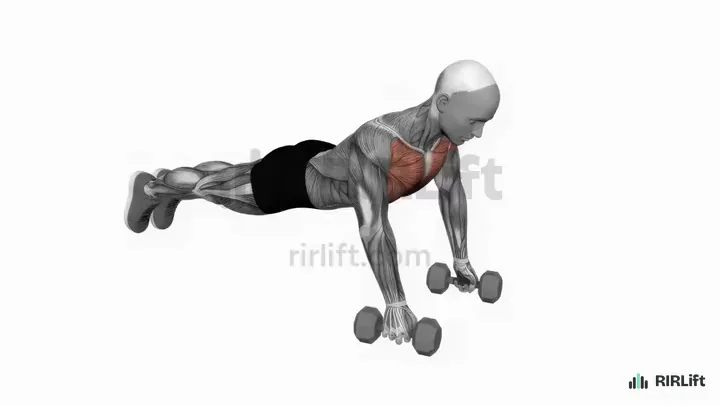
Deep Push-Up
Put your hands on blocks or dumbbells so your chest sinks below your hands, the closest floor match to the stretch at the bottom of a dip.
Build a session with it -
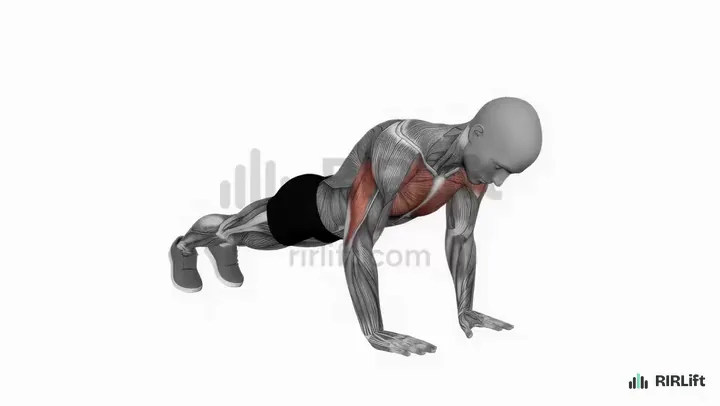
Close-Grip Push-Up
Keep your hands under your shoulders and your elbows close when you want the triceps side of the dip with only the floor.
Build a session with it -
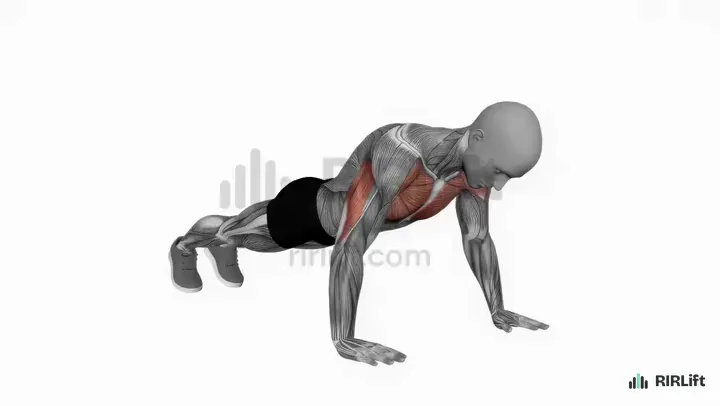
Push-Up
Use this as the starting point when dips are still out of reach; raise your feet or add a backpack once you pass 20 reps.
Build a session with it
Barbell or dumbbells
-
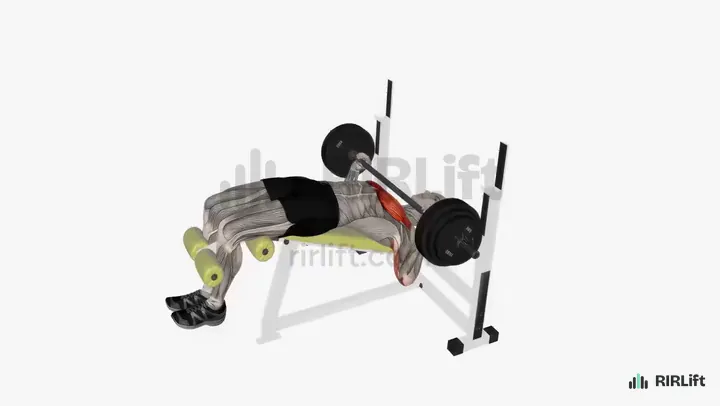
Decline Barbell Bench Press
Press on a decline bench when you want the dip's lower-chest angle with a load you can raise in small jumps.
Build a session with it -
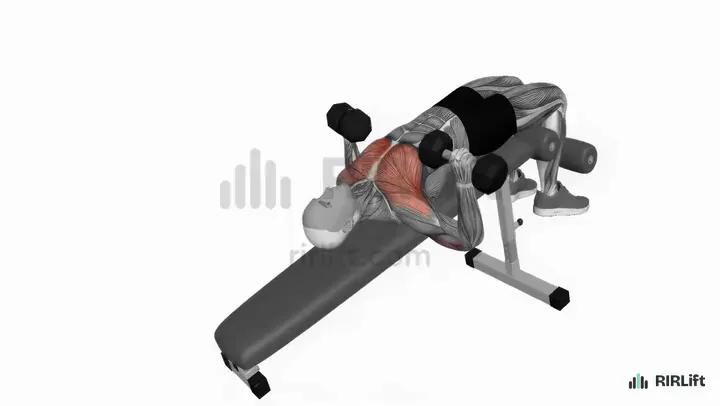
Decline Dumbbell Press
Take dumbbells to a decline bench when you want that angle with a deeper stretch at the bottom than a barbell allows.
Build a session with it -
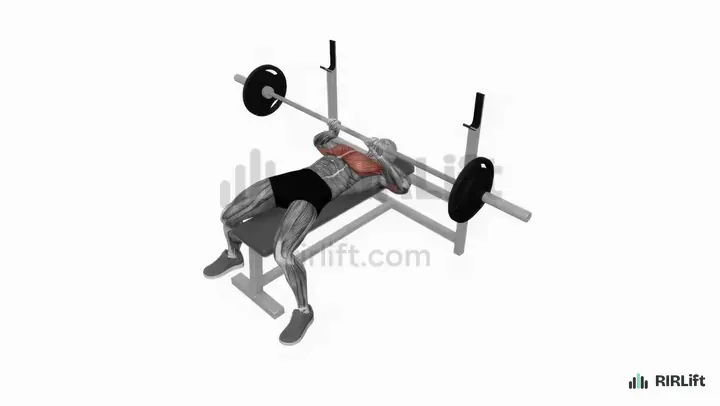
Close-Grip Bench Press
Use this when you want a heavy compound press for your triceps and chest that replaces upright dips.
Build a session with it
Cable or machine
-
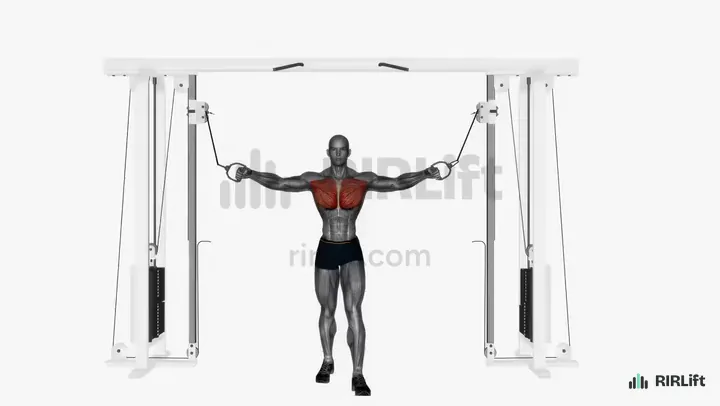
High-to-Low Cable Fly
Sweep the handles down and across your body when you want to train the lower chest without pressing your bodyweight.
Build a session with it -
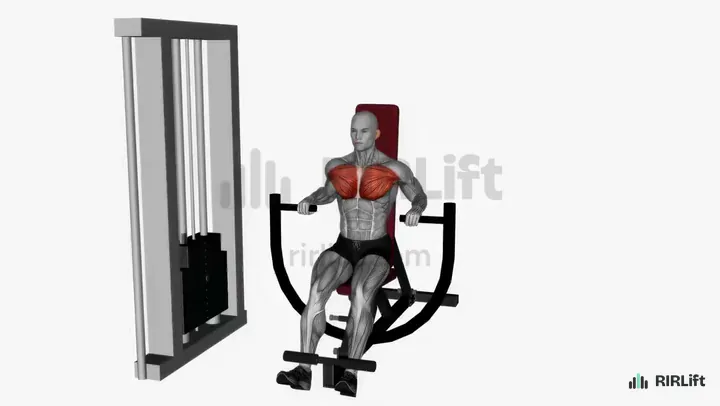
Machine Decline Press
Use this when you want the decline press path fixed by the machine so you can push hard sets close to failure.
Build a session with it -
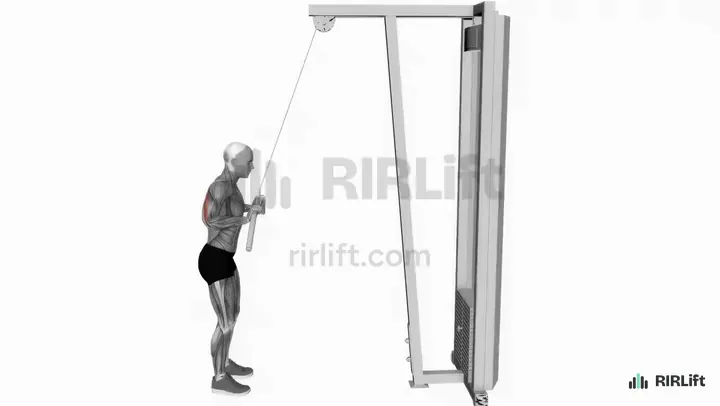
Cable Triceps Pressdown
Replace triceps dips with this when you want the triceps loaded hardest at lockout without moving your bodyweight.
Build a session with it
Chest dips vs tricep dips
Both are the same movement on the same bars; the angle of your torso decides which muscle does more. For chest dips, cross your ankles behind you, tip your chest forward about 30 degrees and let your elbows travel slightly out. For tricep dips, keep your body upright, legs under you, and your elbows pointing straight back.
If your goal is chest, lean and treat dips as a press. If you already press heavy for your chest, stay upright and count dips toward your triceps. Either way the depth is the same: upper arms about parallel to the floor.
Can't do a dip yet, or can do 20?
Below five clean reps, train the machine chest dip with a stack weight you can press for 8 or more, or loop a band under your knees on the bars and use a lighter band as your reps climb. You can also do slow negatives: jump to the top and take three to five seconds to lower.
Above 15 to 20 bodyweight reps, add weight with a dip belt or a dumbbell held between your feet, and go back down to 8 to 15 reps. Log the added weight so you can tell when it is time to add more.
Questions
What muscles do dips work?
Dips work your chest, triceps and the front of your shoulders. Leaning forward puts more of the work on your lower chest; staying upright puts more on your triceps.
Are dips better for chest or triceps?
Both, depending on your lean. Tip your chest forward and let your elbows flare slightly for a chest dip; keep your body upright and your elbows tucked for a tricep dip.
How many dips should I do?
For muscle, do 3 sets of 8 to 15 reps with about two reps left in the tank, twice a week if you like. Count them toward 10 to 20 hard sets per week for your chest or triceps.
What are assisted dips?
Assisted dips take part of your bodyweight off the movement, either with a machine that pushes up under your knees or a band looped over the bars. Use them until you can do five clean bodyweight reps.
Are dips harder than pull-ups?
They are different skills, so it varies by person: dips press your bodyweight up with your chest and triceps, pull-ups pull it up with your back and biceps. Train both and track the reps of each separately.
What is the best dips alternative?
Without bars, deep push-ups on blocks or dumbbells are the closest match. With a barbell or dumbbells, the decline bench press keeps the lower-chest angle, and the close-grip bench press replaces tricep dips. On cables, a high-to-low cable fly trains the lower chest.
Can I do dips at home?
Yes. Two sturdy chairs or kitchen counter corners can work as bars, and bench dips need only a bench or step. With no furniture to use, deep push-ups and close-grip push-ups train the same muscles.
Related templates
-
The best workout for chest, matched to your setup
See where dips fit with your presses and flyes in a full chest session.
-
Tricep pushdown: how to do it, which attachment to use, and what to do instead
The cable pick when you want to train triceps without your bodyweight.
-
Bodyweight exercises: the 18 that build muscle, by muscle group
More presses, pulls and leg work you can do with dip bars and a floor.
-
Skull crushers: how to do them, what they work, and what to swap them for
Pair them with upright dips for a triceps day that covers stretch and lockout.