
Close-grip bench press: grip width, form, and how to program it for triceps
Published October 19, 2026
The close-grip bench press is a barbell bench press with your hands about shoulder-width apart instead of wider. The narrower grip keeps your elbows closer to your body, which makes the triceps do more of the pressing while your chest and front shoulders still help. Grip at shoulder width, not with your hands touching, lower the bar to the bottom of your chest with your elbows tucked, and press it back up over your shoulders.
- WorksTriceps, Chest
- AlsoShoulders
- EquipmentBarbells, Flat Bench
- Start with3 × 8–12, 2 in reserve, 2 min rest
How to do the close-grip bench press
It is the heaviest way to load the triceps, since your chest and shoulders still help move the bar. That makes it a strong first exercise on triceps day and a useful bench variation for anyone whose press stalls near lockout.
Steps
- Lie back on the bench, eyes under the bar, feet planted, and squeeze your shoulder blades together and down into the bench.
- Take the bar with your hands about shoulder width apart, so your forearms are vertical when the bar is on your chest.
- Lift the bar out of the rack and hold it over your shoulders with your arms locked.
- Lower it to the lower part of your chest, letting your elbows travel down close to your sides at roughly a 30 to 45 degree angle from your torso.
- Press the bar back up and slightly toward your face until your arms lock out over your shoulders.
Cues
- Hands at shoulder width
- Elbows tucked, not pinned
- Bar to the base of the chest
Common mistakes
- Gripping so narrow your hands nearly touch: that bends the wrists and loads them, not the triceps. Shoulder width is close enough.
- Flaring the elbows out wide: that turns it back into a regular bench press. Keep them pointing down toward your hips.
- Bouncing the bar off your chest: touch lightly and press, so the triceps start the rep instead of momentum.
Swap for: JM Press, Close-Grip Push-Up, Machine Triceps Dip
Muscles the close-grip bench press works
The close-grip bench press works the triceps, chest and front deltoids. Compared with a regular grip it shifts more of the work to the triceps and the inner part of the chest movement, but the chest still contributes a lot. Your upper back and legs hold your position on the bench.
Sets, reps and reps in reserve for the close-grip bench press
| Goal | Sets × reps | RIR | Rest |
|---|---|---|---|
| Build triceps | 3–4 × 6–10 | 1–2 | 2 min |
| Do it first on triceps day and follow with an isolation exercise. | |||
| Bench press support | 3–5 × 4–6 | 2 | 2–3 min |
| Use it after your main bench to build lockout strength. | |||
| Higher reps | 2–3 × 10–15 | 1–2 | 90 s |
| Good with a lighter bar when your elbows prefer fewer heavy sets. | |||
Close-grip bench press variations
-
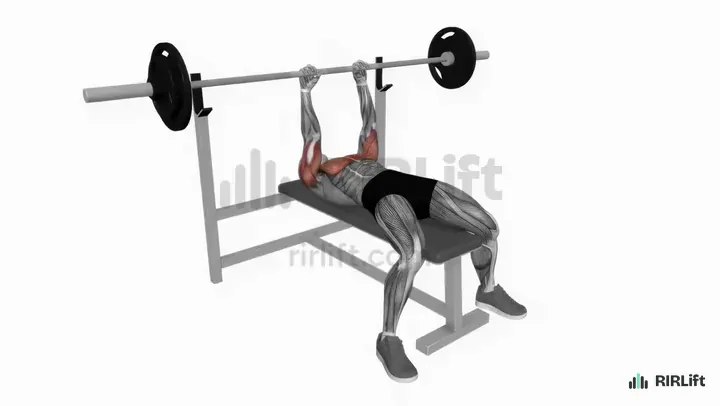
JM Press
Lower the bar toward your chin with your elbows forward when you want a press that is even more triceps.
Build a session with it -
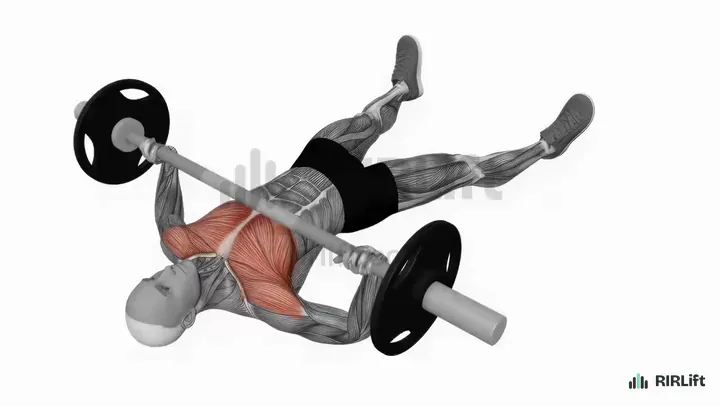
Floor Press
Press from the floor when you have no bench or want to cut the range and focus on lockout.
Build a session with it -
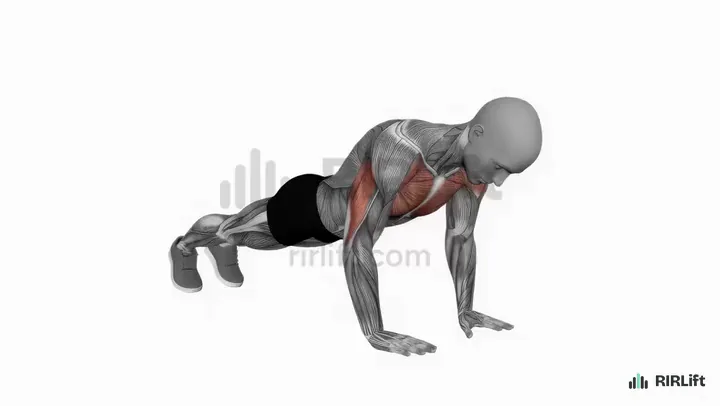
Close-Grip Push-Up
Do close-hand push-ups when you have no barbell; raise your feet to make them harder.
Build a session with it
Close-grip bench press alternatives
Other triceps presses
-
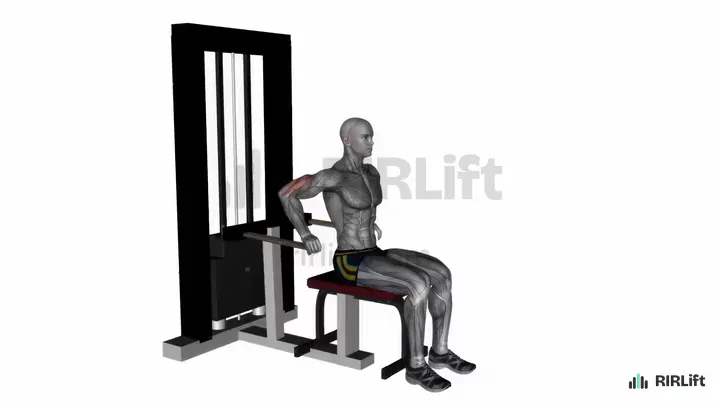
Machine Triceps Dip
Use the dip machine when you want heavy triceps pressing without balancing a bar.
Build a session with it -
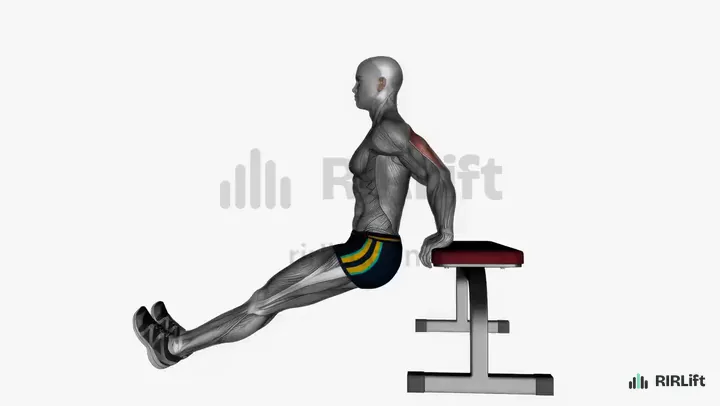
Bench Dip
Dip off a bench with your hands behind you when you only have bodyweight.
Build a session with it
Triceps isolation
-
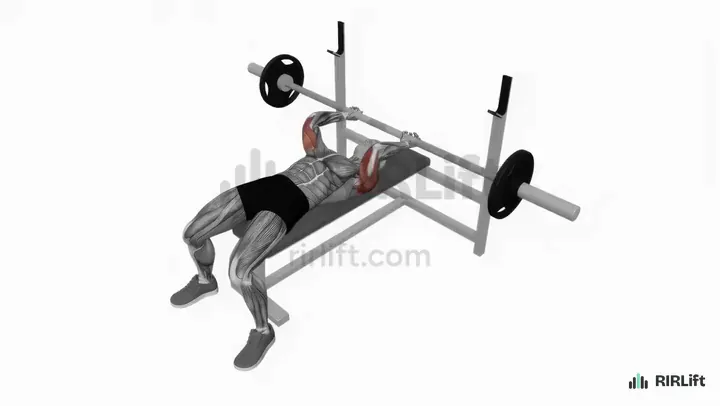
EZ-Bar Skullcrusher
Lower an EZ bar toward your forehead when you want triceps work without the chest helping.
Build a session with it -
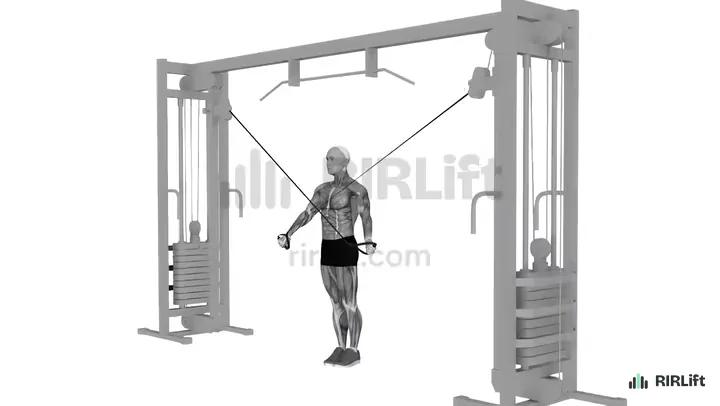
Cable Cross Pushdown
Use the cables for pushdowns when you want light, steady tension after your presses.
Build a session with it
Regular grip
-
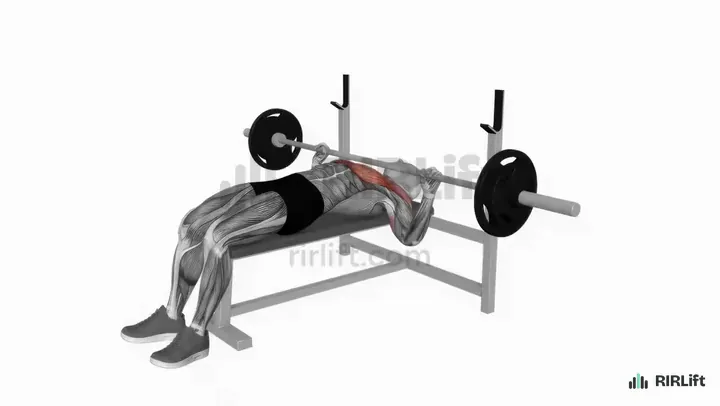
Barbell Bench Press
Take a wider grip when your goal is the chest or the most weight on the bar.
Build a session with it
How close should your grip be?
Shoulder width is the usual answer: your index fingers at about the edge of your shoulders, or roughly a hand's width inside your normal bench grip. That is already narrow enough to bring the triceps in. Going narrower adds wrist strain without adding much triceps work. If your wrists or elbows complain, widen your grip by a finger at a time until they do not.
Why is the close-grip bench harder?
With your hands in, the bar travels a little farther and the chest has less leverage, so the smaller triceps do a bigger share. Most people close-grip around 10 to 20 percent less than their regular bench. That gap is normal and is part of why the lift builds the triceps.
Questions
How close should a close-grip bench press be?
About shoulder width. Your forearms should be vertical with the bar on your chest. Hands touching or a few inches apart only strain the wrists.
Why is a close-grip bench so much harder?
The bar travels farther and the chest has less leverage, so the triceps carry more of the load. Expect to use somewhat less weight than on your regular bench.
What muscles does the close-grip bench press work?
The triceps, chest and front shoulders, with more triceps than a regular-grip bench press.
Is the close-grip bench press good for triceps?
Yes. It is one of the few triceps exercises you can load heavy, so it works well as the first exercise on triceps or arm day.
How do you do a close-grip dumbbell press?
Hold two dumbbells with palms facing each other and the dumbbells touching over your chest, then press with your elbows tucked. It is a lighter way to get a similar triceps emphasis.
Should elbows be tucked on close-grip bench?
Tucked toward your sides, not pinned against them. An angle of roughly 30 to 45 degrees from your body is comfortable for most people.
Related templates
-
Bench press: how to do it, and what to swap it for
The regular-grip bench press and how the two lifts fit together.
-
Skull crushers: how to do them, what they work, and what to swap them for
A triceps isolation exercise to pair with close-grip pressing.
-
Dips: how to do them, chest vs triceps, and what to do instead
Another heavy compound exercise for the triceps and chest.
-
The best workout for triceps, for every setup
A full triceps session that starts with a press.
-
How to use RIR
How to judge the reps you leave in reserve on every set.