Cycling strength training: exercises and plans for cyclists

The best strength exercises for cyclists are the back squat or leg press for the pedal push, the Bulgarian split squat or single-leg leg press to even out each leg, the Romanian deadlift for hamstrings and glutes, single-leg calf raises, and back extensions and side planks for a back and trunk that hold up on long rides. Lift twice a week in the off-season with heavy sets of 4 to 8 reps, and once a week in race season. Stop each set 2 to 3 reps short of failure so the gym builds strength without leaving your legs dead on the bike.

  1. Barbell Back Squat Quads, Glutes, Adductors
  2. Leg Press Quads, Glutes
  3. Bulgarian Split Squat Quads, Glutes
  4. Romanian Deadlift Hamstrings, Glutes
  5. Single-Leg RDL Hamstrings, Glutes
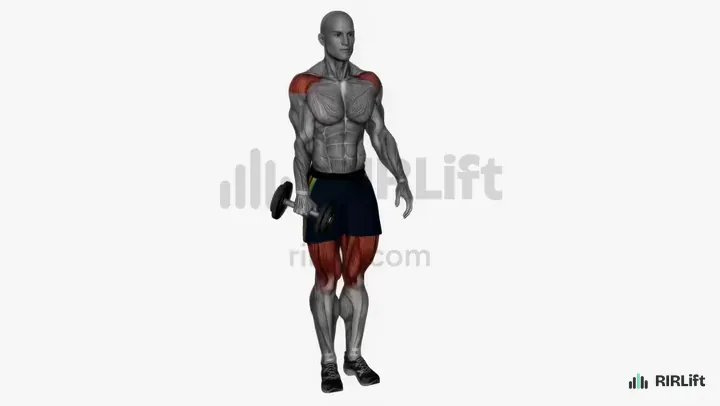
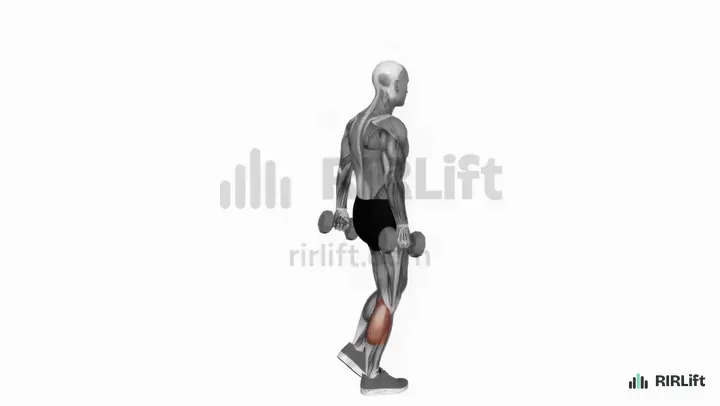
  6. Single-Leg Calf Raise Calves
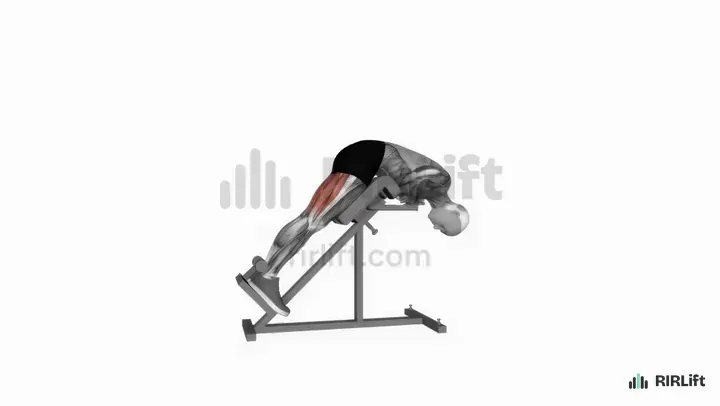
  7. 45-Degree Back Extension Glutes, Hamstrings
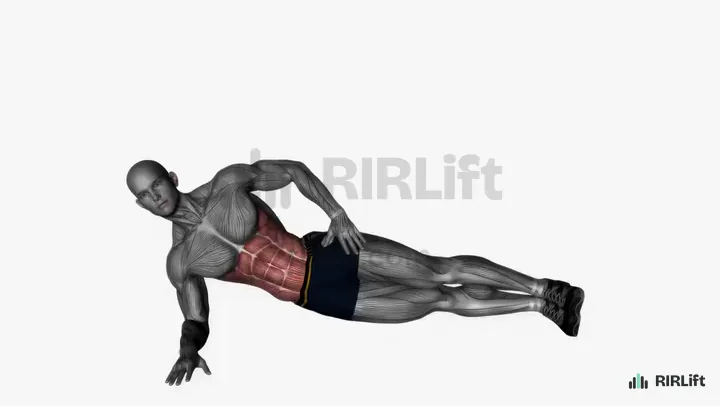
  8. Side Plank Abs

Quads and glutes: the pedal push

The downstroke is mostly quads and glutes, so most of a cyclist's gym time goes here. Lift heavy for 4 to 8 reps and stop 2 or 3 reps short of failure, and pick one two-leg and one single-leg exercise per session.

Leg strength, quads and glutes

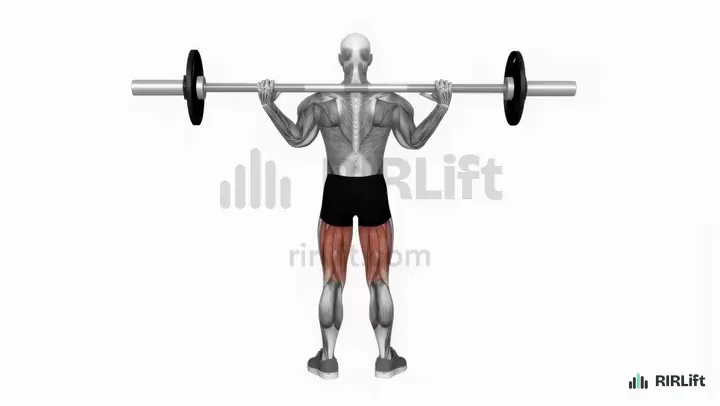
Barbell Back Squat

Quads, Glutes, Adductors

Each pedal stroke is a partial squat repeated thousands of times at a light load. Squatting heavy raises the ceiling on how much force each of those strokes can draw from, which shows up most in sprints, steep climbs and standing efforts.

How to do it

  1. Rest the bar on your upper back, grip it just outside your shoulders, and step back from the rack.
  2. Set your feet about shoulder-width, toes slightly out, and take a big breath into your belly.
  3. Bend at the hips and knees together and sit down until your thighs reach parallel.
  4. Drive back up, keeping your chest proud and your knees pushed out.

Cues

  • Big breath, then descend
  • Knees follow the toes
  • Drive the floor away

Common mistakes

  • Squatting high and heavy: a squat cut short trains less of the range you need. Lower the load and reach parallel.
  • Letting the knees cave in on the way up: push them out over your middle toes.

Swap for: Goblet Squat, Front Squat, Leg Press

Leg strength with less back fatigue

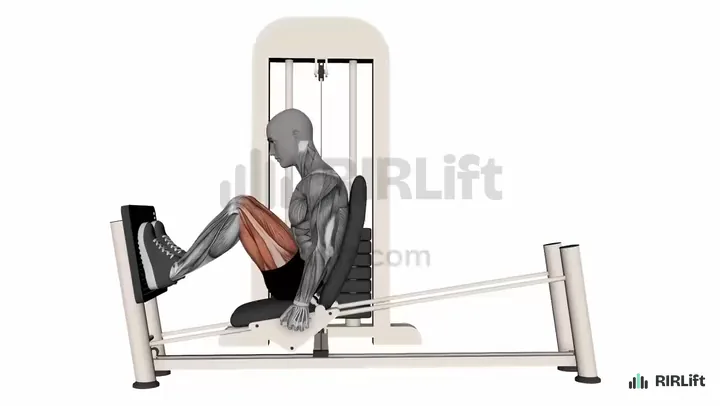
Leg Press

Quads, Glutes

The leg press loads the quads and glutes heavily while your back rests against a pad, so a cyclist with a tired lower back after long rides can still train the legs hard. The knee angle at the bottom is close to the top of a pedal stroke.

How to do it

  1. Sit in the machine with your whole back against the pad and your feet hip-width on the platform.
  2. Release the safety handles and bend your knees, bringing the platform toward you under control.
  3. Lower until your knees are bent to about 90 degrees or a little deeper, without your lower back curling off the pad.
  4. Press the platform away until your legs are nearly straight, and repeat.

Cues

  • Lower back stays on the pad
  • Whole foot pushes
  • Stop just short of locking out

Common mistakes

  • Going so deep that your hips roll up off the seat: stop where your back stays flat.
  • Snapping the knees straight at the top: keep a soft bend.

Swap for: 45-Degree Leg Press, Hack Squat, Barbell Back Squat

Build a session with Leg Press

Single-leg strength

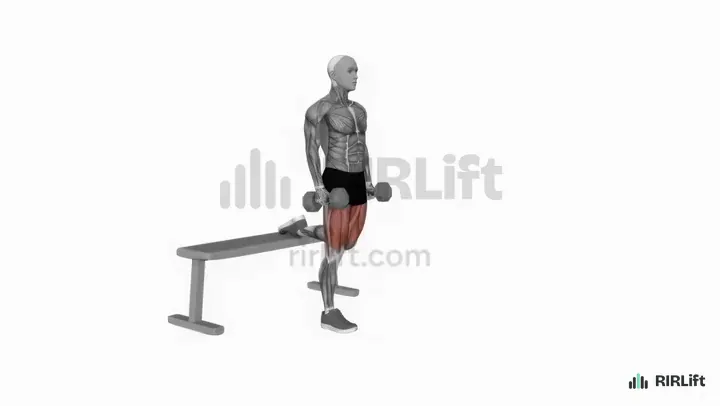
Bulgarian Split Squat

Quads, Glutes

Pedaling is one leg at a time, and most riders push harder with one side. The split squat trains each leg alone and needs only a bench and dumbbells, so it works in any gym or at home.

How to do it

  1. Rest the laces of your rear foot on a bench behind you and hold the dumbbells at your sides.
  2. Lower your back knee toward the floor, keeping most of your weight on the front foot.
  3. Stop with the back knee an inch or two off the ground.
  4. Drive the front heel and midfoot down to rise, finish the reps, then switch legs.

Cues

  • Front leg does the work
  • Drop the back knee straight down
  • Slight forward lean is fine

Common mistakes

  • Wobbling because the feet are on one line: set them a little wider, as if on train tracks.
  • Rushing the reps: lower in two seconds so the front leg works all the way down.

Swap for: Dumbbell Split Squat, Step-Up, Single-Leg Leg Press

Single-leg strength, machine version

Single-Leg Leg Press

Quads

Pressing with one leg isolates each side without any balance demand, so you can load it heavier than a split squat. It is the cleanest way to even out a weak leg.

How to do it

  1. Sit in the horizontal leg press and place one foot in the middle of the platform.
  2. Bend the working knee until it reaches about 90 degrees.
  3. Press the platform away through your whole foot.
  4. Finish the set and switch legs, starting with your weaker side.

Cues

  • Knee tracks over the middle toes
  • Hips stay down
  • Weaker leg first

Common mistakes

  • Using a load you can only move with a half rep: drop the weight and get to 90 degrees.
  • Letting the knee drift in as you push: aim it over your second toe.

Swap for: Single-Leg 45-Degree Leg Press, Bulgarian Split Squat, Step-Up

Hamstrings and hips

The hamstrings and glutes finish the downstroke and keep the hips steady. One hinge per session, plus a glute bridge if you want extra glute work, covers them.

Hip extension, hamstrings and glutes

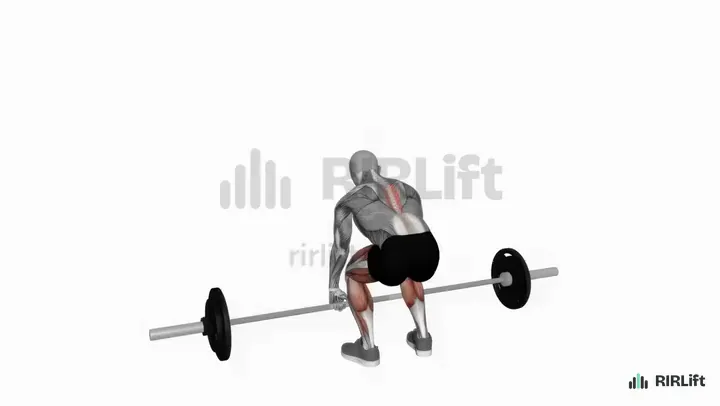
Romanian Deadlift

Hamstrings, Glutes

Hamstrings and glutes push the pedal through the bottom of the stroke, and the Romanian deadlift trains them without the load of a full deadlift from the floor. It also strengthens the back that holds you in a bent-over riding position.

How to do it

  1. Hold the bar against your thighs, feet hip-width, knees with a slight bend.
  2. Hinge at the hips and lower the bar along your thighs, keeping your back flat.
  3. Go until your hamstrings are fully stretched, near mid-shin for most people.
  4. Stand back up by pushing your hips forward and squeezing your glutes.

Cues

  • Reach the hips back
  • Bar stays close
  • Long spine

Common mistakes

  • Rounding the upper back to get the bar lower: stop where you can keep your back flat.
  • Bending the knees more as you go down: the knee angle stays fixed.

Swap for: Dumbbell Romanian Deadlift, Trap Bar Deadlift, Good Morning

Hip strength and balance, one leg

Single-Leg RDL

Hamstrings, Glutes

Standing on one leg while you hinge trains the glutes and hamstrings of each side and the small hip muscles that keep your knee tracking straight over the pedal. One dumbbell is enough.

How to do it

  1. Hold a dumbbell in the hand opposite your standing leg and stand tall with a soft knee.
  2. Hinge forward from the hip while your free leg reaches back behind you.
  3. Lower until your torso and back leg are close to level with the floor, hips square.
  4. Push the standing heel down and return to upright, then repeat.

Cues

  • Hips square to the floor
  • Back leg reaches long
  • Soft standing knee

Common mistakes

  • Opening the hip so the back leg turns out: point the back toes at the floor.
  • Losing balance and rushing: touch a wall or bench with your free hand until the hinge is steady.

Swap for: Romanian Deadlift, Dumbbell B-Stance RDL, Kettlebell Deadlift

Glutes, hip extension

Glute Bridge

Glutes

Many cyclists spend hours with their hips flexed, and the barbell glute bridge trains the glutes at full hip extension, the opposite position. It loads them heavily with almost no fatigue for the lower back.

How to do it

  1. Lie on the floor with a padded bar over your hips, knees bent, soles on the floor.
  2. Brace your ribs down and press your heels into the floor.
  3. Lift your hips until your thighs and torso line up, and squeeze your glutes.
  4. Lower your hips to the floor and repeat.

Cues

  • Heels down
  • Squeeze at the top
  • No arching

Common mistakes

  • Pushing the hips higher by arching the lower back: stop at a straight line.
  • Feet too close so the quads take over: move them out until your shins are vertical at the top.

Swap for: Hip Thrust, Dumbbell Glute Bridge, Single-Leg Glute Bridge

Calves and ankles

Strong calves pass more of your leg force into the pedal. A few sets of single-leg raises at the end of a session are enough.

Calves, force transfer to the pedal

Single-Leg Calf Raise

Calves

Your calves and ankles pass leg force into the pedal, and a weak ankle leaks it. Single-leg calf raises with a dumbbell build each side without needing a machine.

How to do it

  1. Hold a dumbbell at your side and balance on one foot, touching a wall with the other hand.
  2. Rise as high as you can onto the ball of the foot.
  3. Hold the top for a moment.
  4. Lower slowly until the heel touches the floor, then repeat. Switch sides.

Cues

  • Rise straight up
  • Pause at the top
  • Slow down

Common mistakes

  • Bending the knee to help: keep the leg straight so the calf does the lifting.
  • Bouncing off the floor: control each rep down.

Swap for: Standing Calf Raise, Seated Calf Raise, Leg Press Calf Raise

Lower back and trunk for long rides

Hours in a forward lean tire the lower back, and a stable trunk keeps your hips still when you push hard. These are done for higher reps or holds and cost little recovery.

Lower-back endurance

45-Degree Back Extension

Glutes, Hamstrings

Holding a low position on the bike for hours asks a lot of the lower back. Back extensions build its endurance in sets of 12 to 15 reps.

How to do it

  1. Adjust the pad so it sits below your hips and lock your heels under the rollers.
  2. Fold forward at the hips with your arms crossed over your chest.
  3. Lift your torso until your body is straight from head to heels.
  4. Lower slowly and repeat.

Cues

  • Move at the hips
  • Stop at straight
  • Slow lowering

Common mistakes

  • Hyperextending at the top: finish level with your legs, no further.
  • Pad too high, so only your back bends: lower it so the hips can fold.

Swap for: Back Extension, Weighted Back Extension, Superman

Trunk stability, side to side

Side Plank

Abs

A stable trunk keeps your hips still on the saddle while your legs push, especially out of the saddle. The side plank trains the side of the trunk, which most riders neglect.

How to do it

  1. Lie on your side and prop yourself on your forearm, elbow under your shoulder, legs stacked.
  2. Lift your hips so your body forms one straight line.
  3. Hold, breathing normally, without letting the hips sag.
  4. Lower, then switch sides.

Cues

  • Elbow under shoulder
  • Hips high
  • Breathe

Common mistakes

  • Hips drifting back so the body folds: push them forward into line.
  • Holding long after form is gone: stop when the hips start to drop.

Swap for: Dumbbell Side Plank, Copenhagen Plank, Pallof Press

Trunk stability, front

Dead Bug

Abs

The dead bug teaches you to keep the pelvis still while the legs move, which is exactly what a smooth pedal stroke needs. It is gentle enough to do after a ride.

How to do it

  1. Lie face-up, arms reaching to the ceiling, knees bent over your hips.
  2. Flatten your lower back against the floor.
  3. Extend one leg and the opposite arm slowly, stopping before the back lifts.
  4. Return and switch sides.

Cues

  • Back pinned down
  • Exhale as you reach
  • Slow

Common mistakes

  • Rushing the reps: take three seconds for each reach.
  • Letting the back arch: shorten the leg reach.

Swap for: Plank, Pallof Press, Ab Wheel Rollout

Build a session with Dead Bug

Upper body

Cycling leaves the chest and upper back untrained. One row and one push are enough to keep them strong and balanced.

Upper-back strength

One-Arm Dumbbell Row

Lats, Upper Back

Your arms and upper back pull on the bars when you climb or sprint out of the saddle, and they hold your posture on long rides. One row covers the pulling side of the upper body.

How to do it

  1. Brace a hand and knee on a bench, back flat, dumbbell hanging in the other hand.
  2. Row the dumbbell to your hip, elbow close to your body.
  3. Pause briefly at the top.
  4. Lower to a full stretch and repeat. Switch sides.

Cues

  • Elbow to your hip
  • Flat back
  • Full stretch

Common mistakes

  • Twisting to lift heavier: keep shoulders level.
  • Shrugging the dumbbell up: pull with the elbow, not the shoulder.

Swap for: Seated Cable Row, Incline Dumbbell Row, Kettlebell Row

Upper-body pushing

Push-Up

Chest

Cycling barely uses the chest and arms, and push-ups keep them strong with no equipment. They pair with the row for a balanced upper body.

How to do it

  1. Place your hands a little wider than your shoulders and step your feet back into a straight plank.
  2. Lower your chest toward the floor with your elbows at about 45 degrees from your body.
  3. Stop with your chest an inch or two from the ground.
  4. Press back up to straight arms, keeping the body rigid.

Cues

  • Body in one line
  • Elbows back at 45 degrees
  • Chest to just above the floor

Common mistakes

  • Hips sagging: squeeze your glutes and brace your trunk.
  • Short reps: lower until your chest nearly touches the floor, or elevate your hands until you can.

Swap for: Incline Push-Up, Kneeling Push-Up, Flat Dumbbell Press

Build a session with Push-Up

Put them together: example sessions

Each session below picks from the exercises above for one situation, with the sets, reps, rest and RIR filled in. Open one in the session builder to change a pick, price it from a recent set, and add it to RIRLift.

Session 1

Off-season: two heavy leg days

Open in the session builder
  • Workouts2× a week
  • Working sets30 a week
  • Per workout~45 min
  • EquipmentBarbells, Dumbbells, Leg Press, Hyperextension

It is winter or your base period, you ride three to five times a week at mostly easy intensity, and you can lift twice.

With fewer hard rides, the off-season is the time to build leg strength. Each day has one heavy two-leg lift at 4 to 6 reps, one single-leg or hinge lift, calves and trunk. Two reps in reserve on the main lifts builds force without the soreness that ruins the next day's ride. Day A is 15 hard sets and day B is 15.

Day A
ExerciseSets × repsRIRRest
Barbell Back Squat2 warm-up sets first 4 × 4–6 2 3 min
Single-Leg RDLReps per leg. 3 × 6–8 2 90 s
Single-Leg Calf RaiseReps per leg. 3 × 10–12 1 1 min
One-Arm Dumbbell RowReps per arm. 3 × 8–10 2 1 min
Side PlankSeconds per side. 2 × 20–40 2 45 s

Open Day A in the session builder

Day B
ExerciseSets × repsRIRRest
Leg Press2 warm-up sets first 4 × 5–8 2 2:30 min
Romanian Deadlift 3 × 5–8 2 2:30 min
Bulgarian Split SquatReps per leg. 3 × 6–8 2 90 s
45-Degree Back Extension 2 × 12–15 2 1 min
Push-Up 3 × 8–15 2 1 min

Open Day B in the session builder

How to run it
Lift on the same day as a harder ride, after it, or on an easy day, and keep at least one day between the two sessions. Never lift the day before your key interval session.
How to progress
Add 5 to 10 pounds to the squat and leg press when every set reaches the top of its range at 2 reps in reserve. After eight to ten weeks, move to the in-season plan.

Session 2

Race season: one session to keep your strength

Open in the session builder
  • Workouts1× a week
  • Working sets10 a week
  • Per workout~30 min
  • EquipmentLeg Press, Barbells

You are racing, doing big rides or a heavy block of intervals, and you still want to keep the strength you built.

Once riding volume and intensity go up, one session a week is enough to hold strength. Sets drop to two or three, reps stay low, and every set stops 3 reps short of failure, so your legs feel normal on the bike the next day. Single-leg pressing replaces the squat because it is easier to recover from. The session totals 10 hard sets.

Maintenance
ExerciseSets × repsRIRRest
Single-Leg Leg Press1 warm-up set firstReps per leg. 3 × 5–6 3 2 min
Romanian Deadlift 3 × 5–6 3 2:30 min
Single-Leg Calf RaiseReps per leg. 2 × 10–12 2 1 min
Dead BugReps per side. 2 × 6–8 3 45 s
How to run it
Do it right after an easy ride or on a rest day at least two days before a race or your hardest session of the week.
How to progress
Hold the weights you finished the off-season with. Add weight only if every set feels clearly easy at 3 reps in reserve.

Session 3

New to lifting: a time-crunched or older rider

Open in the session builder
  • Workouts2× a week
  • Working sets30 a week
  • Per workout~35 min
  • EquipmentLeg Press, Dumbbells, Barbells

You ride for fitness or ride a lot, but you have never lifted weights and have little time.

Starting with heavy barbell work is a poor bet when the movements are new. This plan uses the leg press, split squats, glute bridges and bodyweight upper-body work, all easy to learn, for moderate reps at 3 reps in reserve. It also trains the upper body and trunk that riding ignores. The session is 15 hard sets and takes about 45 minutes.

Full Body
ExerciseSets × repsRIRRest
Leg Press 3 × 8–12 3 2 min
Bulgarian Split SquatReps per leg. Bodyweight first. 2 × 8–10 3 90 s
Glute Bridge 3 × 10–12 3 90 s
One-Arm Dumbbell RowReps per arm. 3 × 10–12 3 1 min
Push-UpHands on a bench if needed. 2 × 6–12 3 1 min
Dead BugReps per side. 2 × 6–10 3 45 s
How to run it
Do it twice a week on days with an easy ride or no ride. Leave a day between sessions.
How to progress
Add reps until you reach the top of every range, then add weight and start again at the bottom. After eight weeks, try the off-season plan.

Make it fit you

Questions

Is strength training good for cyclists?

Yes. Heavy lifting raises the maximum force your legs can produce, which helps sprints, climbs and standing efforts, and it trains the upper body and trunk that riding leaves out. Done at 2 to 3 reps in reserve and twice a week, it fits next to a full riding schedule.

Can biking be strength training?

Not really. Each pedal stroke uses a small fraction of your leg strength, so riding builds endurance, not maximal strength. Hill repeats in a big gear come closest, but they do not replace squats or leg presses.

How many times a week should cyclists lift?

Twice a week in the off-season and once a week during race season. More than that tends to cut into the quality of your rides.

Will lifting make me bulky and slow on the bike?

Heavy sets of 3 to 8 reps with only a few sets per muscle build strength far more than size. Combined with a lot of riding, very little extra weight comes with it.

Should I lift before or after riding?

After, or on a separate day. Lifting first leaves your legs tired for the ride. If you lift and ride on the same day, ride first and lift later.

What are the best exercises for cyclists at home?

Bulgarian split squats, single-leg Romanian deadlifts with one dumbbell, glute bridges, single-leg calf raises, push-ups and dead bugs. Those six cover the legs, hips, upper body and trunk with a bench and a pair of dumbbells.