Dumbbell bench press alternatives: no bench, bench taken, or no dumbbells

With dumbbells but no bench, the best dumbbell bench press alternative is the dumbbell floor press: same weights, same muscles, with the floor as your bench. In the gym with the bench taken, the machine chest press keeps the same sets and reps on a fixed path. With no equipment, archer push-ups load each side close to a one-arm push-up, and deep push-ups between two blocks bring back the bottom stretch.

What a flat dumbbell press alternative has to replace

The dumbbell bench press trains your chest, front shoulders and triceps. Because each hand moves on its own, the dumbbells can travel lower than a barbell, so your chest works hardest at the bottom, under a deep stretch.

A swap has to let you press and, ideally, reach that stretch.

How to do the flat dumbbell press

Machines

When the bench or dumbbells are taken, a machine keeps the press simple: no balancing, so the set ends when your chest gives out.

Closest swap when the bench is taken

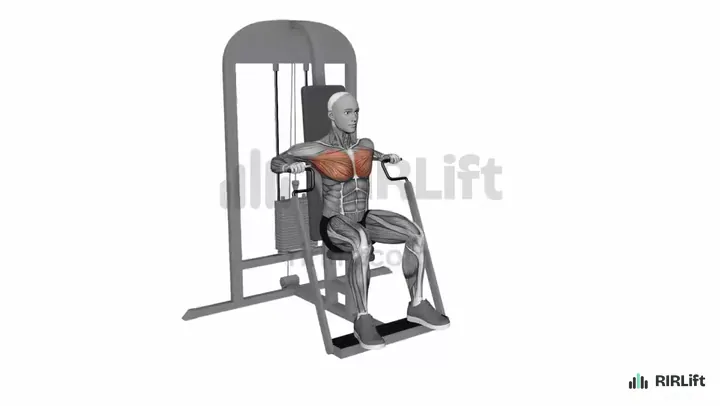
Machine Chest Press

Chest

A seated press on a fixed path, so you can push your chest close to failure without balancing two dumbbells. Use the same sets and reps you ran on the dumbbell bench press.

How to do it

  1. Adjust the seat so the handles sit level with the middle of your chest, about nipple height, when you sit back.
  2. Sit with your back against the pad, feet flat, and pull your shoulder blades back and down before you grab the handles.
  3. Take the handles with your wrists straight and your elbows a little below your shoulders.
  4. Push the handles forward until your arms are almost locked, keeping your shoulders back on the pad.
  5. Let the handles return slowly until your hands are just ahead of your chest and you feel the stretch, then press again without letting the stack touch down.

Cues

  • Handles at mid-chest
  • Shoulders stay on the pad
  • Slow return, no rest at the bottom

Common mistakes

  • Seat too low so the handles sit at your shoulders: raise it until the handles meet the middle of the chest.
  • Shoulders rolling forward at the end of each press: stop just before your shoulder blades leave the pad.
  • Short reps that never reach the stretch: use the full range the machine gives, or lower the weight.

Bench press on rails

Smith Machine Bench Press

Chest

The same flat press with the bar on a track, so you can go heavy without a spotter. Your hands are locked to one bar, so you lose a little of the dumbbells' range at the bottom.

How to do it

  1. Roll a flat bench into the rack so the bar lines up over your lower chest when you lie down.
  2. Set the safety stops a couple of inches above your chest at the bottom of the rep.
  3. Lie back, grip a bit wider than your shoulders, pull your shoulder blades together and plant your feet.
  4. Twist the bar off the hooks and lower it under control to your lower chest.
  5. Press it straight up the rail until your elbows are just short of lockout.

Cues

  • Bar over your lower chest
  • Shoulder blades pinned
  • Elbows about 45 degrees from your sides

Common mistakes

  • Bench set so the bar lands on your neck or upper chest: the shoulders take the load. Slide the bench until the bar touches just below your nipples.
  • Bouncing off the safeties: the stops are for a failed rep, not for every rep. Touch your chest lightly and press.

Barbell

A bar lets you go heavier than dumbbells, at the cost of a slightly shorter bottom position.

Heaviest swap

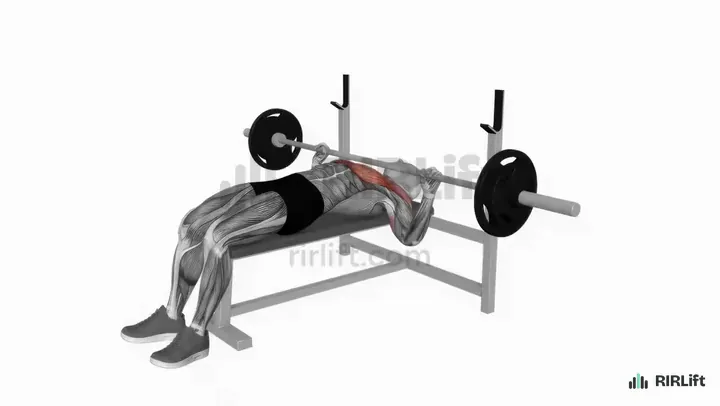
Barbell Bench Press

Chest

With a rack and a bar, you can load more than any pair of dumbbells and add weight in small plates. Your hands stay fixed on the bar, so the bottom of the rep is a little shorter.

How to do it

  1. Lie on the bench with your eyes just under the bar and plant your feet flat, a little wider than your hips.
  2. Pull your shoulder blades together and down into the bench, keeping a small arch in your lower back with your glutes still touching the pad.
  3. Grip the bar a little wider than shoulder width, wrists stacked over your forearms, and lift it out of the hooks so it sits over your shoulders.
  4. Lower the bar under control to your lower chest, elbows tucked about 45 degrees from your sides.
  5. Touch your chest without bouncing, then press up and slightly back toward the hooks until your arms are straight.

Cues

  • Shoulder blades pinned to the bench
  • Elbows at 45 degrees, not flared
  • Touch, then press

Common mistakes

  • Losing your upper back as you unrack: if your shoulders roll forward when you lift the bar out, set your shoulder blades again before the first rep.
  • Elbows flared straight out, landing the bar near your collarbones: bring them in toward 45 degrees and aim for your lower chest.
  • Bouncing the bar off your ribs: lower it to a light touch, and pause for a count if heavy reps start to bounce.

One-arm press with a barbell

Landmine Chest Press

Chest

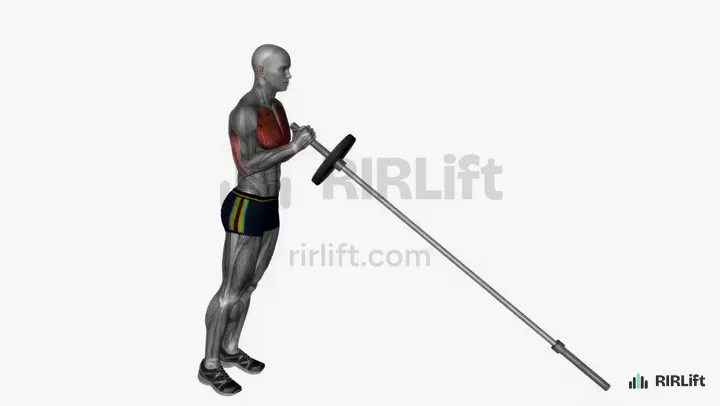
Pressing one end of a bar up and forward in an arc trains your chest with your shoulder blade free to move. It suits lifters whose shoulders dislike flat pressing, and works one side at a time like a dumbbell.

How to do it

  1. Wedge one end of the bar into a landmine or a padded corner and load the other end.
  2. Stand with your feet about shoulder-width apart and hold the loaded end in one hand at your chest.
  3. Press it up and forward until your arm is straight, reaching your shoulder blade forward at the top.
  4. Lower it back to your chest under control. Finish the set, then switch hands.

Cues

  • Press up and out
  • Ribs stay down
  • Reach at the top

Common mistakes

  • Leaning back to press: stay tall or slightly forward so your chest, not your lower back, does the pushing.
  • Letting the bar crash into your chest: lower it slowly to the same start every rep.

Dumbbells without a flat bench

Press from the floor, or use whatever bench is free at an incline.

Best swap with no bench

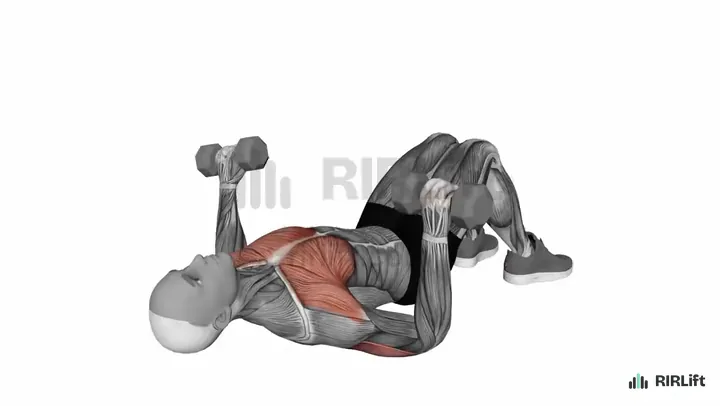
Dumbbell Floor Press

Chest, Triceps

Lying on the floor with your dumbbells, your upper arms stop on the ground, which shortens the bottom of the rep. You still train the same chest and triceps with the weights you already own.

How to do it

  1. Sit down with knees bent and a dumbbell standing on each thigh, then roll onto your back and bring the dumbbells to your chest as you lie down.
  2. Plant your feet, pull your shoulder blades together into the floor, and hold the dumbbells over your chest with palms facing your feet or each other.
  3. Lower the dumbbells with your elbows about 45 degrees from your sides until the backs of your arms rest on the ground.
  4. Pause for a moment with your arms on the floor, staying tight.
  5. Press the dumbbells straight up over your chest to full lockout, without knocking them together.

Cues

  • Elbows land softly
  • Pause, then press
  • Shoulder blades pinned to the floor

Common mistakes

  • Bouncing the elbows off the floor: touch down, stop for a beat, then press.
  • Flaring the elbows straight out to the sides: keep them angled in at about 45 degrees.
  • Struggling to get heavy dumbbells into place: rest them on your thighs and roll back with them, and reverse the same way at the end of the set.

Best with one dumbbell

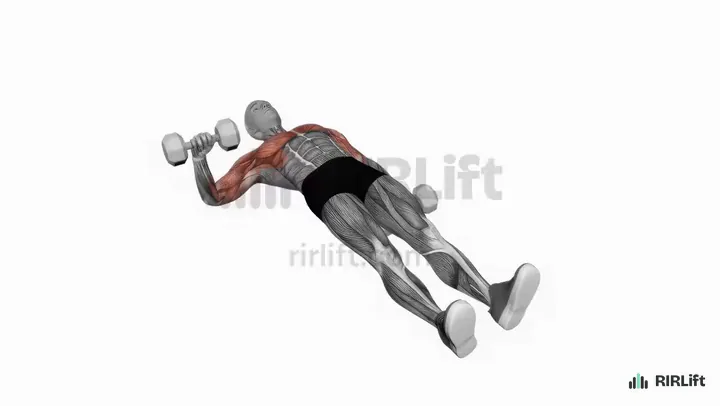
Single-Arm Dumbbell Floor Press

Chest

One dumbbell on the floor, one arm at a time: your chest works and your trunk keeps you from rolling. Pick it when you only have a single dumbbell.

How to do it

  1. Lie face up, legs long on the floor, holding one dumbbell over your chest at arm's length.
  2. Rest your free arm on the floor out to the side for balance.
  3. Lower the dumbbell until your upper arm meets the floor, elbow angled toward your hip.
  4. Press it back up over your chest. Do all reps on one side, then switch.

Cues

  • Don't let the weight roll you
  • Elbow lands softly
  • Press over the shoulder

Common mistakes

  • Letting your torso twist toward the working side: brace and keep both shoulders on the floor.
  • Rushing the lowering: take two seconds down so the light dumbbell feels heavy.

Same dumbbells, more upper chest

Incline Dumbbell Press

Chest

If the flat bench is taken but an adjustable one is free, set it to a low incline. It is the same press with more of the work on your upper chest and front shoulders.

How to do it

  1. Set an adjustable bench to 30-45 degrees, sit with a dumbbell standing on each thigh, and plant your feet flat on the floor.
  2. Drive one knee up at a time to pop the dumbbells to your shoulders as you lie back, then pull your shoulder blades down and together into the bench.
  3. Start with the dumbbells over your upper chest, arms straight, palms facing forward or turned slightly in.
  4. Lower the dumbbells under control until they sit just outside your upper chest and you feel a stretch across the front of your shoulders, with your elbows angled about 45 degrees from your sides.
  5. Press up and slightly together until your arms are straight over your collarbones, without clanking the dumbbells at the top.

Cues

  • Shoulder blades in your back pockets
  • Elbows at 45, not 90
  • Butt stays on the seat

Common mistakes

  • Lifting your hips or arching hard to move the weight: that flattens the angle and turns it into a flat press, so keep your glutes down and take a lighter pair.
  • Flaring the elbows straight out to the sides: tuck them to about 45 degrees so the chest, not the front of the shoulder joint, takes the bottom of the rep.
  • Setting the bench too steep: past about 45 degrees the front delts take over, so drop it a notch or two if you mostly feel shoulders.

No equipment

Push-ups grow your chest as well as presses if you make them hard enough: go deep, raise your feet, or shift onto one arm.

Simplest bodyweight swap

Push-Up

Chest

The same press with your body as the weight. Raise your feet or add reps to make it harder, and take sets close to failure.

How to do it

  1. Place your hands slightly wider than shoulder width with your fingers pointing ahead, then walk your feet back until your head, hips and heels line up.
  2. Tighten your glutes and pull your ribs down so your hips stay level with your shoulders.
  3. Bend your elbows back at roughly 45 degrees to your body and lower until your chest is about a fist above the floor.
  4. Push the floor away to straight arms and go straight into the next rep.

Cues

  • Body one straight line
  • Elbows at 45 degrees, not flared
  • Chest to the floor, not chin

Common mistakes

  • Letting your hips drop or rise late in the set: once your body stops being one line, end the set there.
  • Stopping well above the floor: bring your chest almost to the ground on every rep, and use the incline push-up if you can't yet.
  • Reaching for the floor with your chin while your chest stays high: lead with your chest and keep your head in line with your body.
Build a session with Push-Up

Push-up with the dumbbell press's stretch

Deep Push-Up

Chest

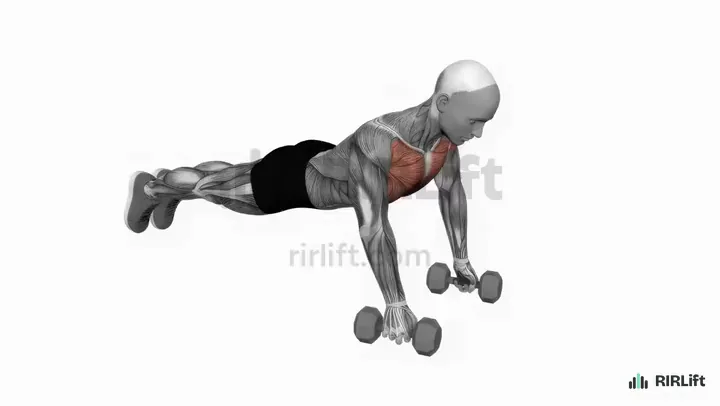
Hands on two dumbbells or blocks lets your chest sink below your hands, giving you the deep stretch a dumbbell press has and a regular push-up lacks.

How to do it

  1. Set two dumbbells, handles or solid blocks on the floor a little wider than your shoulders and grip them.
  2. Walk your feet back into a plank, body rigid.
  3. Lower your chest between your hands until it sinks below the level of your grips.
  4. Press back up to straight arms, keeping the body as one piece.

Cues

  • Sink the chest between the hands
  • Slow in the hole
  • Straight body throughout

Common mistakes

  • Rolling dumbbells under your hands: use hex dumbbells or blocks that cannot roll.
  • Dropping fast into the deep bottom: lower over two seconds and go only as deep as your shoulders allow.

Harder push-up, more upper chest

Decline Push-Up

Chest

Feet on a bench or step shift more of your weight onto your hands and more of the work onto your upper chest. It is the next step after regular push-ups.

How to do it

  1. Kneel with your back to a bench or a sturdy step, plant your palms a little wider than your shoulders, then set your toes up on it one foot at a time.
  2. Push up until your arms are straight and squeeze your glutes so your heels, hips and shoulders line up like a plank.
  3. Sink your chest toward the gap between your hands, with your elbows angled back about halfway between your ribs and straight out.
  4. Go down until your chest is a fist's height from the floor or your nose would touch first, keeping your hips in line.
  5. Press the floor away until your arms are straight again, and spread your shoulder blades at the top before the next rep.

Cues

  • Glutes tight, body one plank
  • Chest, not chin, leads the way down
  • Push the floor away

Common mistakes

  • Letting your hips sag toward the floor: squeeze your glutes and brace your stomach before every set, and lower the box if the plank keeps breaking.
  • Piking your hips up to make the rep easier: keep your heels, hips and shoulders level; if you can't, your feet are set too high for now.
  • Cutting the rep short a few inches down: lower until your chest is close to the floor, and if your face hits first, put your hands on push-up handles or a pair of dumbbells.

Hardest push-up with no equipment

Archer Push-Up

Chest

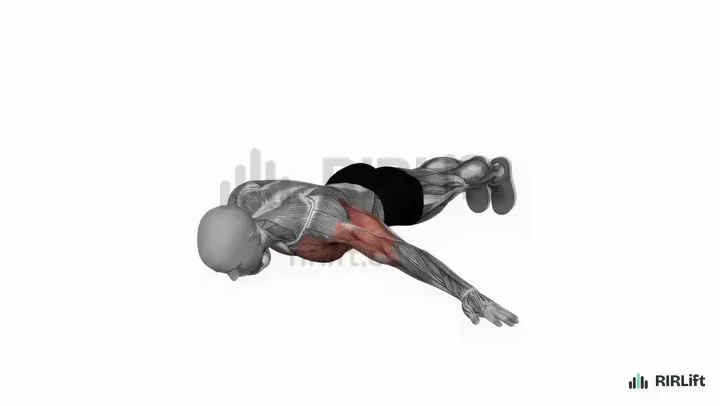
Shifting your weight onto one arm while the other stays straight makes each side work close to a one-arm push-up. Pick it once regular and decline push-ups go past 20 reps.

How to do it

  1. Set your hands about twice shoulder width apart in a plank, fingers turned slightly out.
  2. Lower toward your right hand, bending the right elbow while the left arm stays straight and slides out.
  3. Bring your chest close to your right hand, then press back to the middle.
  4. Repeat to the left side and keep alternating, or do all reps on one side first.

Cues

  • Bent arm does the work
  • Straight arm only balances
  • Hips stay square

Common mistakes

  • Bending both arms equally, which makes it a wide push-up: keep the assisting arm straight.
  • Twisting the hips toward the floor: hold the plank level as you shift side to side.

Bodyweight swap on dip bars

Chest Dip

Chest, Triceps

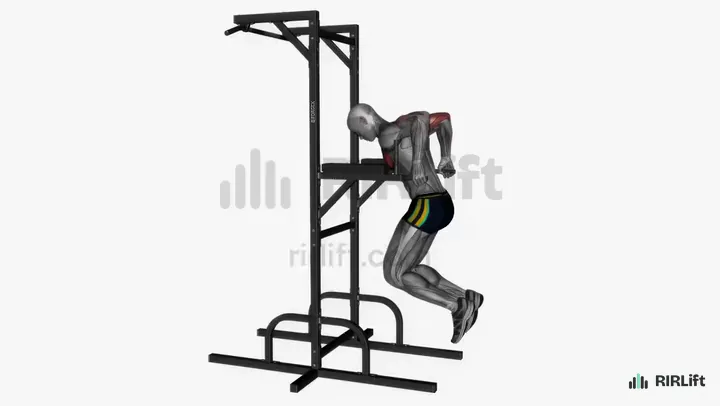
Leaning forward on dip bars puts your chest under a deep stretch with your whole bodyweight, and you can add a weight belt later. Stop at upper arms parallel.

How to do it

  1. Stand between the bars, grip them with your palms facing each other and jump or step up until your arms are straight.
  2. Bend your knees, cross your ankles behind you and tip your chest forward about 30 degrees.
  3. Pull your shoulders down away from your ears before the first rep.
  4. Bend your elbows and sink until your upper arms are about parallel to the floor and your chest feels stretched.
  5. Drive the bars down and away from you until your elbows are straight, then start the next rep without swinging.

Cues

  • Chest over the bars
  • Upper arms to parallel
  • Shoulders down, neck long

Common mistakes

  • Sinking well past parallel to chase a bigger stretch: parallel is the depth; stop there and make it the same every rep.
  • Shrugging your shoulders up toward your ears at the bottom: press them down and drop the set when you can't hold that.
  • Kicking your legs to get out of the bottom: keep your ankles crossed and still, and count only the reps you press without momentum.
Build a session with Chest Dip

To pair with them

A cable fly is not a press, so it doesn't replace one. Add it after your main press to finish your chest with the cables pulling the whole way.

Chest finisher after the press

Cable Fly

Chest

No pressing: your arms sweep together against the cables, which keep pulling the whole way. Add it after a press to finish your chest, not instead of one.

How to do it

  1. Set both pulleys at the bottom of the frame and grab a handle in each hand, palms turned to the front.
  2. Step into the middle with your feet about shoulder-width apart and your knees soft.
  3. Keep a slight bend in your elbows and sweep your hands upward and inward in a wide arc.
  4. Bring your hands together in front of your upper chest and squeeze for a second.
  5. Lower them slowly back down and out until you feel the stretch across your chest.

Cues

  • Hug a big tree
  • Elbows stay soft and fixed
  • Squeeze for a second where the hands meet

Common mistakes

  • Bending and straightening your elbows each rep: that turns the fly into a press. Lock the elbow angle and move only at the shoulder.
  • Standing so close that the weight stack rests at the open position: step forward until the cables pull back on you at full stretch.
Build a session with Cable Fly

Example sessions without the flat dumbbell press

Session 1

Gym, bench or dumbbells taken

Open in the session builder
  • Workouts2× a week
  • Working sets20 a week
  • Per workout~25 min
  • EquipmentChest Press, Dip Bar, Cable Crossover

You train in a gym, but the flat benches and dumbbells are busy when you want them.

The machine chest press takes the dumbbell press's place at the same rep range, dips add a deep stretch under bodyweight, and the low cable fly finishes your chest. 10 working sets.

Chest
ExerciseSets × repsRIRRest
Machine Chest Press1 warm-up set firstSame seat height every time. 4 × 8–12 2 2 min
Chest DipStop at upper arms parallel. 3 × 6–12 2 2 min
Cable Fly 3 × 12–15 1 1 min
How to run it
Once or twice a week as your chest day, with at least two days between.
How to progress
When every set of a lift reaches the top of its range at the RIR shown, add the smallest weight jump next session and start again at the bottom of the range.

Session 2

Home, dumbbells but no bench

Open in the session builder
  • Workouts2× a week
  • Working sets20 a week
  • Per workout~25 min
  • EquipmentDumbbells

You have a pair of adjustable dumbbells at home and no bench.

The floor press replaces the bench press with your own dumbbells, the one-arm floor press adds work with your trunk bracing, and deep push-ups on the dumbbells bring back the stretch the floor takes away. 10 working sets.

Chest
ExerciseSets × repsRIRRest
Dumbbell Floor Press1 warm-up set firstPause with arms on the floor. 4 × 8–12 2 2 min
Single-Arm Dumbbell Floor PressSets are per arm. 3 × 10–15 1 75 s
Deep Push-UpHands on the dumbbells. 3 × 10–20 1 75 s
How to run it
Twice a week on non-consecutive days.
How to progress
Add reps until every set hits the top of the range, then move up a dumbbell size. On deep push-ups, raise your feet on a step once you reach 20 reps.

Session 3

No equipment

Open in the session builder
  • Workouts3× a week
  • Working sets30 a week
  • Per workout~25 min
  • EquipmentBodyweight

You train at home with your bodyweight and a step or couch to put your feet on.

Archer push-ups load one arm at a time, decline push-ups add upper chest, and regular push-ups finish close to failure. Bodyweight is lighter than dumbbells, so reps run higher on the last exercise and sets end within a rep or two of failure. 10 working sets.

Chest
ExerciseSets × repsRIRRest
Archer Push-UpReps per side. 4 × 5–10 2 90 s
Decline Push-UpFeet on a step or bench. 3 × 8–15 1 90 s
Push-Up 3 × 15–30 0 1 min
How to run it
Two or three times a week.
How to progress
Add reps to the top of each range, then slow the lowering to three seconds. On archers, shift more weight onto the working arm each week.

Make it fit you

Questions

What is the best alternative to the dumbbell bench press?

With no bench, the dumbbell floor press. In the gym, the machine chest press or barbell bench press; with no equipment, deep push-ups or archer push-ups.

What chest exercises can I do without a bench?

The dumbbell floor press, one-arm floor press, cable fly, chest dips and any push-up. Deep push-ups on two dumbbells give you the closest stretch to a bench press.

Can you build a chest with only dumbbells?

Yes. Floor presses, incline presses on whatever bench you have, and push-ups on the dumbbells cover your chest, as long as you take sets close to failure and add weight or reps over time.

Can push-ups replace the dumbbell bench press?

Yes, if you make them hard enough to reach failure in roughly 5 to 30 reps. Deep, decline and archer push-ups get you there once regular push-ups are easy.

Is the barbell bench press better than the dumbbell bench press?

Neither is better for growing your chest. The barbell lets you load more; dumbbells let you go deeper and work each side on its own.

What is the difference between incline and decline press?

An incline press puts more work on your upper chest and front shoulders; a decline press puts more on your lower chest. A flat press sits between them.