Push-up alternatives: what to do instead, with weights or without

The best push-up alternative is the flat dumbbell press: it is the same press on your back, and you can pick any weight instead of your bodyweight. No bench? Do the dumbbell floor press; in a gym, the machine chest press. If you can't do a push-up yet, start with incline push-ups on a bench or counter, and if push-ups got too easy, add weight or switch to archer push-ups.

What a push-up alternative has to replace

A push-up trains your chest, the front of your shoulders and your triceps, with your abs holding your body straight. It loads your chest hardest at the bottom, when it is stretched just above the floor, so a good replacement presses away from your chest through a full range.

How to do the push-up

With dumbbells, a barbell or machines

If you have weights, these replace the push-up outright. Each lets you choose the load, so you can train in any rep range and add weight as you get stronger.

Best swap with dumbbells

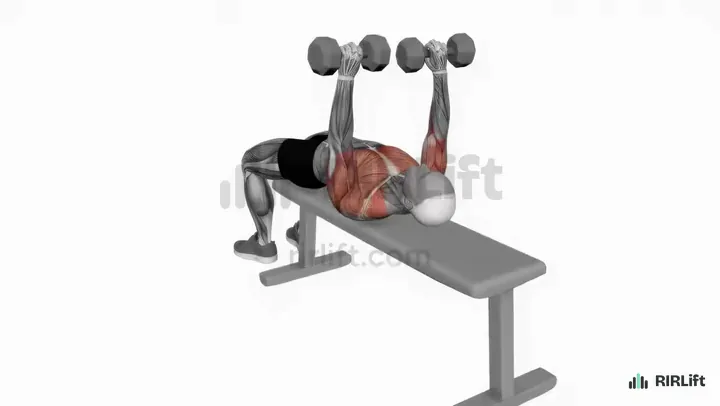
Flat Dumbbell Press

Chest

The same press as a push-up, flipped onto your back, so you can load your chest with whatever weight you need instead of your bodyweight. Pick it if you have dumbbells and a bench and simply dislike push-ups.

How to do it

  1. Sit on the end of a flat bench with the dumbbells standing on your thighs.
  2. Lie back and use your knees to help the weights up to straight arms over your chest.
  3. Pull your shoulder blades together and down, and plant your feet.
  4. Lower both dumbbells until they sit just outside your chest, elbows about 45 degrees from your sides.
  5. Press back up along a slight arc until the weights nearly touch over your chest.

Cues

  • Shoulder blades pinned
  • Forearms vertical at the bottom
  • Feet drive into the floor

Common mistakes

  • Flaring the elbows straight out: tuck them a little toward your ribs, like the bottom of a good push-up.
  • Dropping the dumbbells to the floor at the end of a set: bring them back to your chest and sit up with them on your thighs.

Dumbbell swap with no bench

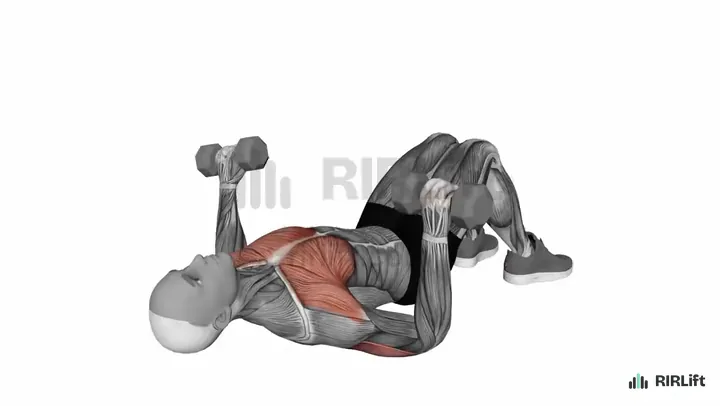
Dumbbell Floor Press

Chest, Triceps

Lying on the floor stops your elbows at the same depth every rep, which keeps the press easy on the shoulders and needs nothing but a pair of dumbbells. The range is a little shorter than a push-up, so use it for heavier sets.

How to do it

  1. Sit on the floor with a dumbbell on each thigh, then lie back with your knees bent and pull the weights in to your chest.
  2. Press both dumbbells straight up over your chest until your arms are straight.
  3. Lower them until your upper arms touch the floor, elbows angled about 45 degrees from your sides.
  4. Let the arms rest for a moment on the floor, then press again.

Cues

  • Elbows touch down softly
  • Weights over your chest at the top
  • Knees bent, feet flat

Common mistakes

  • Dropping the elbows hard into the floor: lower slowly and land them gently.
  • Elbows flared straight out to the sides: point them toward your hips a little.

Gym swap you can load in small steps

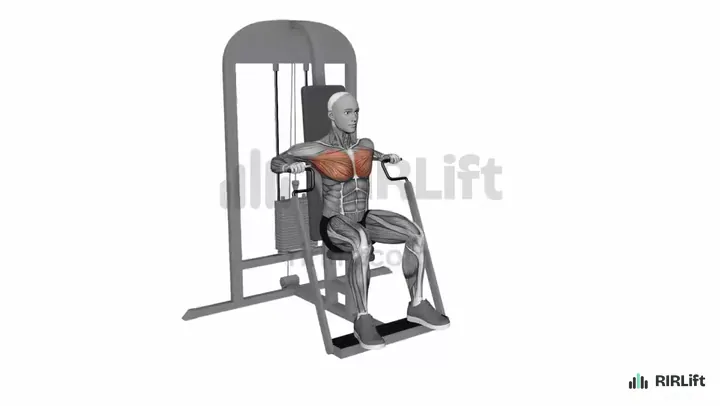
Machine Chest Press

Chest

The machine guides the path, so the set ends when your chest gives out, not your balance or your core. It is the easiest way to add weight in small jumps, which push-ups cannot do.

How to do it

  1. Raise or lower the seat until the handles line up with the middle of your chest, then sit with your back on the pad.
  2. Take the handles with straight wrists and your shoulder blades pressed back.
  3. Push forward until your arms are nearly straight.
  4. Return slowly until your hands are level with your chest, then press again.

Cues

  • Handles at mid-chest
  • Back stays on the pad
  • Slow on the way back

Common mistakes

  • Seat too high, so your shoulders take over: lower it until the handles meet your mid-chest.
  • Stopping the handles short of your chest: let them come all the way back each rep.

Heaviest swap in the gym

Barbell Bench Press

Chest

The barbell bench press trains the same chest, shoulders and triceps as a push-up with far more load, so it is the pick when strength is the goal. It needs a rack, a bench and a spotter or safeties.

How to do it

  1. Lie on the bench with your eyes under the bar, feet planted, and squeeze your shoulder blades back and down.
  2. Grip the bar a little wider than shoulder width, unrack it and hold it over your shoulders.
  3. Lower it to your lower chest, around nipple height, with your elbows angled 45 to 70 degrees from your sides.
  4. Touch your chest without bouncing, then press up and slightly back until the bar is over your shoulders.

Cues

  • Shoulder blades stay pinned
  • Bar to the nipple line
  • Drive your feet down

Common mistakes

  • Elbows flared straight out: let them sit a bit closer to your ribs.
  • Hips lifting off the bench to finish a rep: keep your glutes down and count that rep as your last.

Bodyweight swap that gets heavier

Chest Dip

Chest, Triceps

Dips press your whole bodyweight, not the part a push-up lifts, so they work as the next step once push-ups get easy. Lean forward to keep the chest doing most of the work.

How to do it

  1. Grip parallel bars and step or jump up until your arms are straight and you are holding yourself above the bars.
  2. Lean your chest slightly forward with your legs under you or a little behind.
  3. Bend your elbows to sink down until your upper arms are about level with the bars.
  4. Press back up to straight arms and lock out.

Cues

  • Shoulders down, chest proud
  • Slight forward lean
  • Lock out every rep

Common mistakes

  • Sinking so deep your shoulders ache: stop when your upper arms reach the level of the bars.
  • Swinging your legs to get up: keep them still and end the set when you need momentum.
Build a session with Chest Dip

Easier versions if you can't do one yet

Each of these takes part of your bodyweight off your hands while you keep the push-up's path. Do full-range reps here instead of half reps on the floor.

Easiest way in if you cannot do one yet

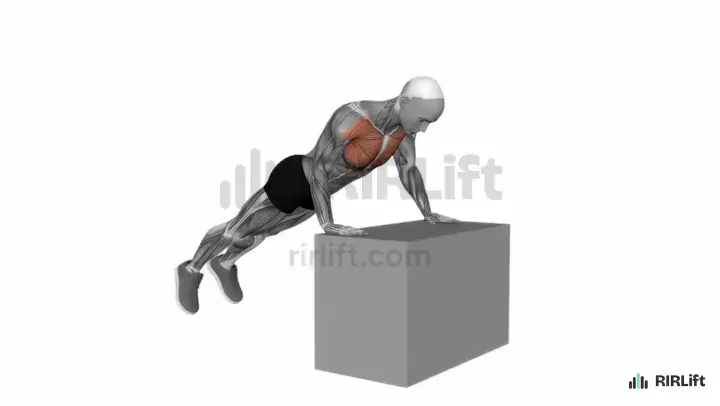
Incline Push-Up

Chest

Hands on a bench, box or counter take part of your bodyweight off, so you can do full-range reps with good form today. Lower the surface over the weeks until you reach the floor.

How to do it

  1. Put your hands on a bench, box or counter, a little wider than shoulder width.
  2. Walk your feet back until your body is straight from head to heels.
  3. Lower your chest to the edge with your elbows angled about 45 degrees from your sides.
  4. Press back up until your arms are straight.

Cues

  • Body like a plank
  • Elbows at about 45 degrees
  • Lower surface, harder rep

Common mistakes

  • Hips sagging toward the floor: squeeze your glutes and brace your stomach before each rep.
  • Elbows flared straight out: tuck them back to about 45 degrees.

Floor version with less bodyweight

Kneeling Push-Up

Chest

Pivoting from the knees cuts the load while keeping your hands on the floor, so you practice the exact push-up path. Use it between the incline push-up and the full version.

How to do it

  1. Kneel on a mat with your hands on the floor a little wider than your shoulders, then walk them forward until your body is straight from knees to head.
  2. Brace your abs and tuck your hips so your back stays flat.
  3. Lower your chest toward the floor between your hands, elbows angled back.
  4. Push back up to straight arms and repeat.

Cues

  • Straight line from knees to head
  • Chest leads, hips follow
  • Full lockout at the top

Common mistakes

  • Bending at the hips so your bottom sticks up: keep the line from knees to shoulders.
  • Dropping your head before your chest: look slightly ahead of your hands.

Full push-up with help at the bottom

Band-Assisted Push-Up

Chest

Bands hung from a bar take some weight off at the bottom, where most people fail, while your feet stay on the floor like a real push-up. Switch to a thinner band as you get stronger.

How to do it

  1. Loop two bands over a bar set a little above head height in a rack and pull one over each shoulder so they run under your armpits.
  2. Get into a push-up below the bar, hands just wider than your shoulders, body in one straight line.
  3. Lower until your chest is a fist from the floor; the bands take some of your weight near the bottom.
  4. Push the floor away until your arms are straight.

Cues

  • Hips in line with shoulders and heels
  • Elbows angled back
  • Chest low every rep

Common mistakes

  • Staying on the same bands for months: once every set reaches the top of the rep range, move to a thinner band.
  • Letting the hips sag because the bands hold your chest up: squeeze your glutes before each rep.

If your wrists hurt

Flat-hand push-ups bend your wrists back under your full weight. Holding a handle keeps them straight, and a dumbbell press removes the problem entirely.

Wrist-friendly push-up on handles

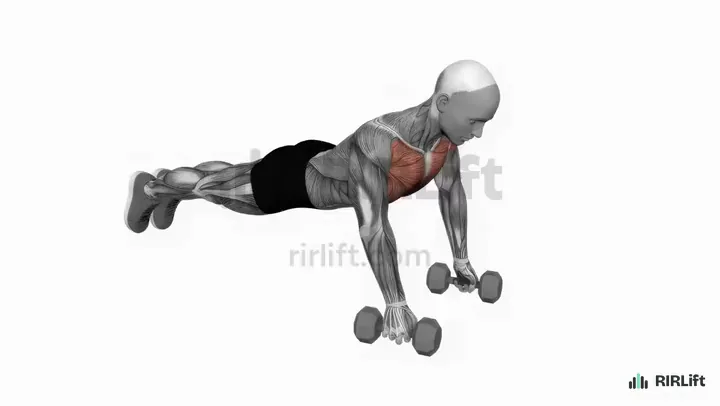
Deep Push-Up

Chest

Gripping dumbbell handles keeps your wrists straight instead of bent back, and lets your chest sink lower than the floor allows. Pick it if your wrists hurt on flat-hand push-ups.

How to do it

  1. Set two hex dumbbells or solid blocks on the floor a little wider than your shoulders and grip them.
  2. Walk your feet back into a plank with your body rigid.
  3. Lower your chest between your hands until it drops below the level of your grip.
  4. Press back up to straight arms, moving as one piece.

Cues

  • Wrists straight on the handles
  • Slow at the bottom
  • Straight body all set

Common mistakes

  • Using round dumbbells that roll: use hex dumbbells or blocks that stay put.
  • Dropping fast into the deep bottom: take two seconds down and go only as deep as your shoulders allow.

Harder versions with no equipment

Once a set of push-ups runs past 20 reps, it takes a long time to get hard. These make each rep heavier, so your sets end in a lower rep range again.

Harder push-up, more upper chest

Decline Push-Up

Chest

Raising your feet puts more of your bodyweight on your hands and tilts the work toward your upper chest and shoulders. The higher the feet, the harder each rep.

How to do it

  1. Put your feet on a chair or bench and your hands on the floor under your shoulders.
  2. Brace so your body is straight from heels to head.
  3. Lower until your forehead is just above the floor, elbows about 45 degrees from your sides.
  4. Press back to straight arms without letting your hips rise first.

Cues

  • Higher feet, harder rep
  • Forehead toward the floor
  • Press the floor away

Common mistakes

  • Piking your hips to make the press easier: if the straight line goes, use a lower chair.
  • Shoulders riding up to your ears at the bottom: keep them pulled down and back.

Push-up with added load

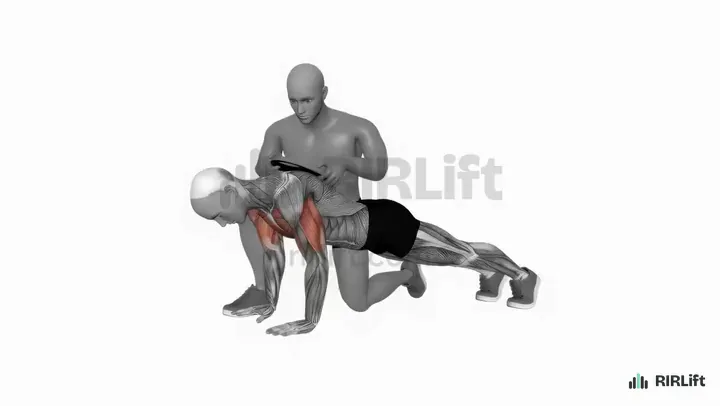
Weighted Push-Up

Chest

A plate or loaded backpack on your back lets you keep the push-up but train in a lower rep range. Pick it when you can already do 20 or more clean reps.

How to do it

  1. Get into the top of a push-up with your hands a bit outside your shoulders.
  2. Have a partner set a plate flat across your upper back, between your shoulder blades, or wear a loaded backpack.
  3. Lower your chest close to the floor without letting the load slide.
  4. Press up to straight arms with your body rigid.

Cues

  • Load between the shoulder blades
  • Same depth as unloaded reps
  • Brace before every rep

Common mistakes

  • Letting the plate slide toward your neck: keep your back flat and the plate centered.
  • Adding so much weight that depth gets shorter: lighten it until your chest reaches the floor again.

One arm at a time, no equipment

Archer Push-Up

Chest

Shifting most of your weight onto one arm makes each rep far harder for that side, so it stays hard with no gear at all. It is the step before a one-arm push-up.

How to do it

  1. Set your hands about twice shoulder width apart in a plank, fingers turned slightly out.
  2. Lower toward your right hand, bending the right elbow while the left arm stays straight.
  3. Bring your chest close to your right hand, then press back to the middle.
  4. Repeat to the left and keep alternating, or finish one side first.

Cues

  • Bent arm does the work
  • Straight arm only balances
  • Hips stay square

Common mistakes

  • Bending both arms equally, which makes it a wide push-up: keep the helping arm straight.
  • Twisting your hips toward the floor: hold the plank level as you shift.

Example sessions without the push-up

Session 1

Gym, done with push-ups

Open in the session builder
  • Workouts2× a week
  • Working sets20 a week
  • Per workout~30 min
  • EquipmentDumbbells, Flat Bench, Chest Press, Dip Bar

You train in a gym, have weights, and would rather press than do push-ups.

The flat dumbbell press takes the push-up's place as the main lift, the machine chest press adds volume you can push close to failure safely, and dips finish with bodyweight that gets heavier than a push-up. 10 working sets.

Chest
ExerciseSets × repsRIRRest
Flat Dumbbell Press2 warm-up sets first 4 × 6–10 2 2:30 min
Machine Chest Press 3 × 10–12 1 90 s
Chest DipLean forward slightly. 3 × 6–12 2 2 min
How to run it
Run it once or twice a week on your chest or upper-body day, with at least two days between sessions.
How to progress
When every set of a lift hits the top of its range at the RIR shown, go up to the next dumbbell or the next pin on the stack and start again at the bottom of the range. Add a weight belt to dips once you reach 12 reps.

Session 2

Home, can't do a push-up yet

Open in the session builder
  • Workouts3× a week
  • Working sets30 a week
  • Per workout~20 min
  • EquipmentDumbbells

You train at home, can't do a full push-up from the floor, and have a sturdy surface and maybe light dumbbells.

Incline push-ups build the push-up path at a load you can handle, kneeling push-ups move you toward the floor, and a light dumbbell floor press adds pressing strength without your bodyweight. 10 working sets.

Chest
ExerciseSets × repsRIRRest
Incline Push-Up 4 × 8–15 2 90 s
Kneeling Push-Up 3 × 8–15 1 75 s
Dumbbell Floor PressLight dumbbells are fine. 3 × 10–15 2 90 s
How to run it
Two or three times a week on non-consecutive days. Pick the incline height where you can do at least 8 clean reps.
How to progress
When you reach 15 reps on every incline set, lower the surface one step (counter to table to bench to a low step). Once kneeling sets reach 15, try a set of full push-ups first each session and log how many you get.

Session 3

No equipment, push-ups are too easy

Open in the session builder
  • Workouts2× a week
  • Working sets22 a week
  • Per workout~30 min
  • EquipmentBodyweight

You can already do 20 or more push-ups and train with bodyweight, a backpack and a couple of chairs.

The weighted push-up keeps the movement and brings your reps back down, archer push-ups load one arm at a time, and decline push-ups shift more of your weight onto your hands and toward your upper chest. 11 working sets.

Chest
ExerciseSets × repsRIRRest
Weighted Push-Up1 warm-up set firstA loaded backpack works. 4 × 6–10 2 2 min
Archer Push-UpSets are per side. 3 × 5–8 2 90 s
Decline Push-Up 4 × 10–15 1 75 s
How to run it
Two or three times a week. Take each set to one or two reps short of failure, because bodyweight work only gets hard near the end.
How to progress
Add a book or water bottle to the backpack when you reach 10 weighted reps. On archers, move your hands wider; on declines, raise your feet.

Make it fit you

Questions

What dumbbell exercise can replace push-ups?

The flat dumbbell press is the closest replacement, since it is the same pressing motion on your back with a load you choose. Without a bench, the dumbbell floor press works the same muscles.

Is there another way to do push-ups?

Yes. Put your hands on a bench for an easier incline push-up, your knees on the floor for a kneeling push-up, or your feet on a chair for a harder decline push-up. Holding dumbbell handles is an option if your wrists hurt.

How do I build strength to do push-ups?

Do incline push-ups on a surface where you can get 8 to 15 clean reps, and lower that surface every time you reach 15. A light dumbbell floor press two or three times a week builds the same pressing muscles.

What dumbbell exercise can I do to improve my push-ups?

The flat dumbbell press and dumbbell floor press build the chest, shoulders and triceps that push you off the floor. Add them to your week and keep doing push-ups to practice holding the plank.

Will 100 push-ups a day get you ripped?

Not on their own. Push-ups build muscle when the sets are hard, but how lean you look depends on your diet. Once 100 is easy, a harder version in fewer reps does more for muscle.

What is a push-up alternative for weak wrists?

Do push-ups holding hex dumbbells or push-up handles so your wrists stay straight, or swap to a dumbbell press, where your wrists only hold the weight instead of bending back under it.