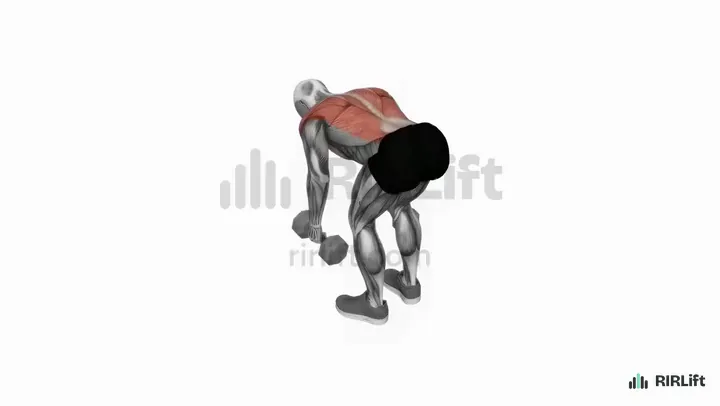
Dumbbell exercises for weight loss: a full-body plan with one pair or a full rack

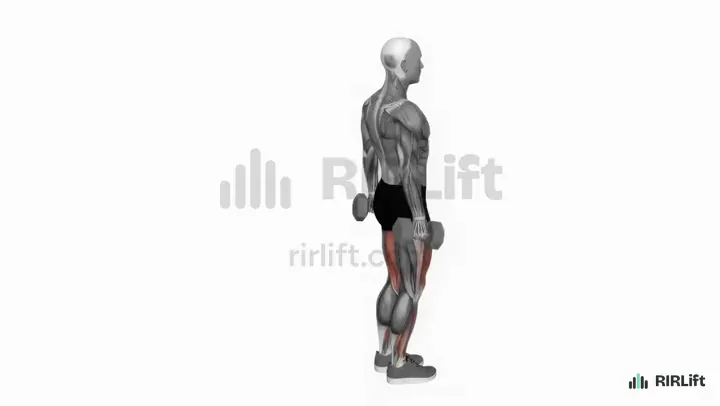
The best dumbbell exercises for weight loss train a lot of muscle per rep: the goblet squat, reverse lunge, step-up, Romanian deadlift, dumbbell swing and one-arm snatch for your lower body, and the floor or bench press, push press, bent-over row and renegade row for your upper body. Do three full-body sessions a week of 4 to 6 moves, 3 sets of 8 to 15 reps (up to 20 with light dumbbells), finishing each set 1 to 2 reps short of failure. Pair moves back to back to keep your heart rate up, and eat in a calorie deficit; that is what takes the weight off.

  1. Goblet Squat Quads, Glutes
  2. Dumbbell Romanian Deadlift Hamstrings, Glutes
  3. Dumbbell Reverse Lunge Quads, Glutes
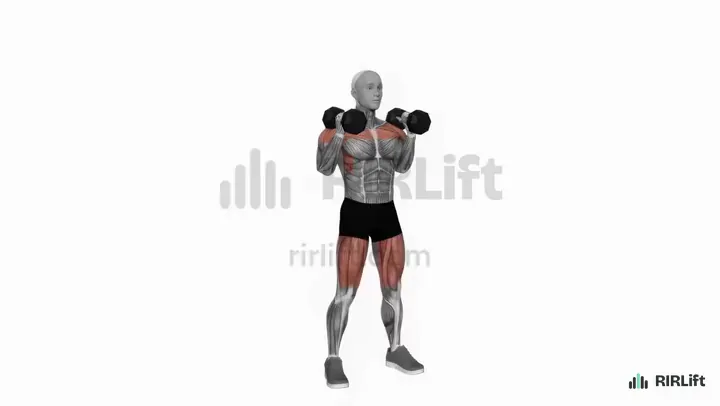
  4. Dumbbell Push Press Shoulders
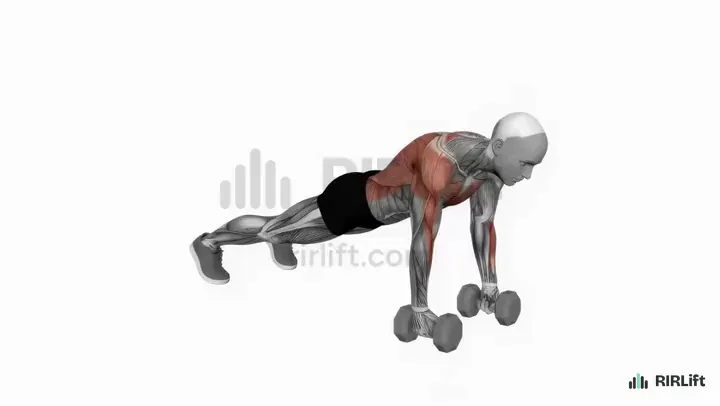
  5. Renegade Row Lats, Upper Back
  6. Dumbbell Swing Glutes, Hamstrings
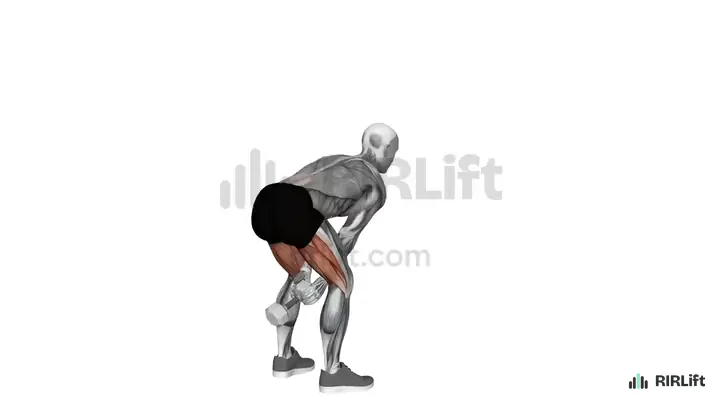
  7. Dumbbell Bent-Over Row Upper Back, Lats
Squats, lunges and step-ups

A pair of dumbbells runs out of weight for two-leg squats quickly, so the plans use the goblet squat first and lean on one-leg moves after that. Lunges and step-ups double the load on each leg without heavier dumbbells.

Quads and glutes, front-loaded squat

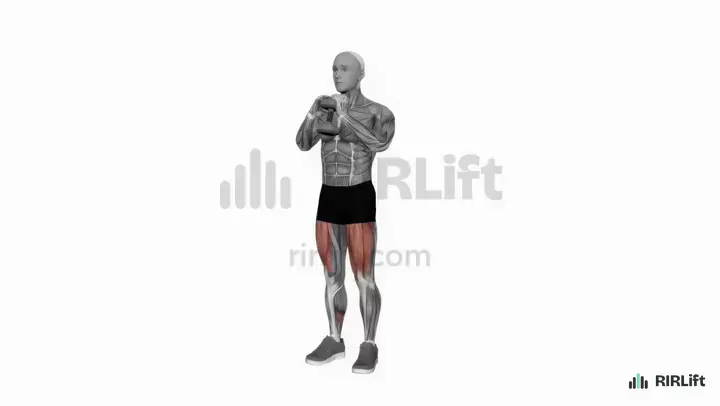
Goblet Squat

Quads, Glutes

Holding one dumbbell at your chest makes this the easiest squat to learn and the best use of a single heavy dumbbell. With a light pair, hold both together at your chest.

How to do it

  1. Hold a dumbbell or kettlebell vertically against your chest.
  2. Sit down between your knees, elbows inside them at the bottom.
  3. Stand up tall.

Cues

  • Elbows nudge the knees out at the bottom.
  • Chest stays up behind the weight.

Common mistakes

  • Letting the weight pull you forward.

Swap for: Bodyweight Squat, Barbell Back Squat

Quads and glutes, one leg at a time

Dumbbell Reverse Lunge

Quads, Glutes

Each leg carries the dumbbells on its own, so a pair that is too light for squats is still hard here. Stepping back keeps your front knee steady and balance simple.

How to do it

  1. Start tall with a dumbbell hanging from each hand and your feet under your hips.
  2. Step one foot back and lower until your back knee is just above the floor and your front thigh is near parallel.
  3. Keep your front heel flat and your chest tall.
  4. Push through your front foot to bring the back foot forward to the start, then alternate or finish all reps on one side.

Cues

  • Front shin stays vertical
  • Back knee kisses the floor
  • Drive through the front heel

Common mistakes

  • Taking a short step so the front knee shoots forward and the heel lifts: step farther back.
  • Letting the torso twist or lean to the side as you tire; keep both dumbbells hanging straight down.

Swap for: Reverse Lunge, Step-Up, Dumbbell Split Squat

Quads and glutes, step onto a bench

Step-Up

Quads, Glutes

Driving up onto a bench is a lunge with a target, and the climb raises your heart rate more than a squat with the same dumbbells. A stair works if you have no bench at home.

How to do it

  1. Stand facing the bench with two dumbbells.
  2. Place one whole foot on the bench.
  3. Lean forward a little and push through the top foot to stand up on the bench.
  4. Bring the other foot up only to touch, then lower it back to the floor.
  5. Finish all reps on one leg before switching.

Cues

  • Whole foot on the bench
  • Push through the top heel
  • Lower slowly, do not drop

Common mistakes

  • Pushing off the floor with the back foot: that halves the work. Keep the trailing foot light.
  • Using a bench so high that your knee is far above your hip: you will rock instead of step.

Swap for: Barbell Step-Up

Hinges, swings and snatches

The Romanian deadlift builds your hamstrings and glutes with a slow, heavy stretch. The swing and the one-arm snatch use the same hip hinge at speed, which makes them the dumbbell moves that push your heart rate highest.

Hamstrings and glutes, hip hinge

Dumbbell Romanian Deadlift

Hamstrings, Glutes

Hips back, dumbbells sliding down your thighs, a deep hamstring stretch, then stand. It is the strength hinge of every plan here and the base for the swing and snatch.

How to do it

  1. Stand hip-width apart with a dumbbell in each hand resting against the front of your thighs, palms facing you.
  2. Push your hips straight back and let your torso fold forward, knees softly bent, the dumbbells brushing your legs.
  3. Lower until the dumbbells pass your knees and you feel a strong stretch in your hamstrings, with your back still flat.
  4. Drive your hips forward to stand back up, squeezing your glutes at the top, and repeat.

Cues

  • Hips back, not down
  • Dumbbells slide down your legs
  • Flat back, chin tucked

Common mistakes

  • Bending the knees into a squat so the dumbbells go lower: the depth comes from the hips, and most people stop just past the knees.
  • Rounding the lower back at the bottom: end the rep where your back stays flat, and lighten the load if that is high.

Swap for: Single-Leg RDL, Dumbbell Good Morning, Kettlebell Deadlift

Glutes and hamstrings, explosive hinge

Dumbbell Swing

Glutes, Hamstrings

Swinging one dumbbell between your legs and up to chest height turns the hinge into a burst of hip power. Sets of 15 to 20 work as a finisher that trains muscle and conditioning together.

How to do it

  1. Hold one dumbbell by one end with both hands, feet a little wider than your hips.
  2. Hike the dumbbell back between your legs by hinging at the hips.
  3. Snap your hips forward so the dumbbell floats up to chest height on its own.
  4. Let it fall back between your legs and hinge into the next rep.

Cues

  • Hinge, do not squat
  • Hips drive, arms just hold
  • Stand fully tall at the top

Common mistakes

  • Lifting the dumbbell with your shoulders instead of driving it with your hips.
  • Letting the dumbbell drop toward your knees on the backswing; keep it high between your thighs.

Swap for: Kettlebell Swing, Dumbbell Romanian Deadlift, One-Arm Dumbbell Snatch

Glutes, back and shoulders, floor to overhead

One-Arm Dumbbell Snatch

Shoulders, Glutes

One fast pull from the floor to an overhead lockout uses almost every muscle you own. Keep reps to 6 to 10 per arm so each one stays crisp.

How to do it

  1. Stand over one dumbbell with feet a bit wider than your hips and grab it with one hand.
  2. Hinge with a flat back, then explode upward through the hips and knees.
  3. Pull the dumbbell up close to your body and punch it overhead as you stand tall, arm locked out.
  4. Lower it to your shoulder, then to the floor, and repeat.

Cues

  • Hips do the lifting
  • Keep it close to the body
  • Punch through at the top

Common mistakes

  • Pulling with the arm from the floor instead of exploding with the hips.
  • Swinging the dumbbell out in an arc away from the body.

Swap for: Dumbbell Swing, Dumbbell Push Press, Kettlebell Snatch

Floor, bench and push presses

Press on the floor if you have no bench; the floor stops your elbows at a range most shoulders like. Use the bench press in a gym, and the push press to get more weight overhead with a dip from the legs.

Chest and triceps, press from the floor

Dumbbell Floor Press

Chest, Triceps

Lying on the floor replaces the bench, so this is the home press. The floor stops your elbows at the bottom, which keeps the range shoulder-friendly and lets you press a little heavier.

How to do it

  1. Sit on the floor with a dumbbell on each thigh, then lie back with your knees bent and pull the weights in to your chest.
  2. Press both dumbbells straight up over your chest until your arms are straight.
  3. Lower them until your upper arms touch the floor, elbows angled about 45 degrees from your sides.
  4. Let the arms rest for a moment on the floor, then press again.

Cues

  • Elbows touch down softly
  • Weights over your chest at the top
  • Knees bent, feet flat

Common mistakes

  • Dropping the elbows hard into the floor: lower slowly and land them gently.
  • Elbows flared straight out to the sides: point them toward your hips a little.

Swap for: Flat Dumbbell Press, Push-Up, Machine Chest Press

Chest, shoulders and triceps, bench press

Flat Dumbbell Press

Chest

With a bench, your elbows can travel lower for a longer stretch on the chest. It is the main press for the gym plan, where heavier dumbbells are available.

How to do it

  1. Lying on a flat bench, hold two dumbbells above your chest.
  2. Lower the bells to the sides of your chest with elbows at about 45 degrees.
  3. Press them back up over your shoulders.

Cues

  • Shoulder blades pinched.
  • Control the lowering.

Common mistakes

  • Flaring the elbows straight out.

Swap for: Push-Up, Barbell Bench Press

Shoulders, triceps and legs, dip-and-drive press

Dumbbell Push Press

Shoulders

A short knee dip and leg drive help the dumbbells overhead, so you can press more than a strict press and work your legs in the same rep. It fits circuits well because it trains a lot of muscle quickly.

How to do it

  1. Stand with the dumbbells resting at your shoulders and feet about hip-width apart.
  2. Dip by bending your knees a few inches, keeping your torso upright.
  3. Straighten your legs explosively and use that drive to push the dumbbells overhead.
  4. Lower them under control back to your shoulders.

Cues

  • Short dip, straight down
  • Legs start it, arms finish it
  • Biceps by the ears at the top

Common mistakes

  • Dipping so deep it turns into a squat, which wastes the drive.
  • Leaning back to finish the press instead of pushing your head through.

Swap for: Dumbbell Shoulder Press, Alternating Dumbbell Shoulder Press, One-Arm Dumbbell Snatch

Rows and a core move

Rows train the back that holds your posture, and the renegade row adds a plank on top, so your trunk works the whole set. The woodchop rotates your trunk under load, the one direction the rest of the plan does not cover.

Upper back and lats, two-dumbbell row

Dumbbell Bent-Over Row

Upper Back, Lats
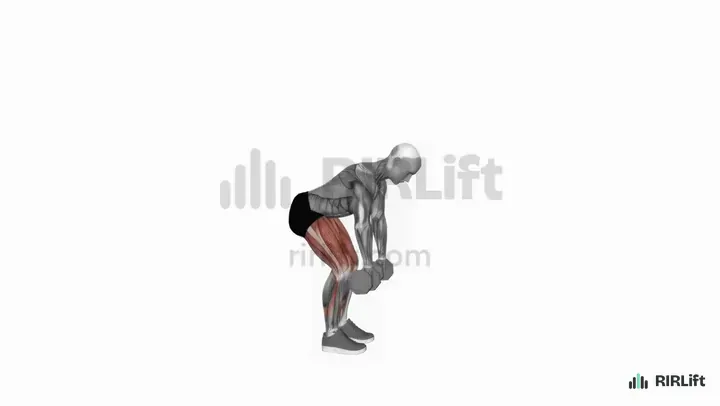
Hinging forward and rowing both dumbbells trains your back and holds your hinge at the same time. It needs no bench, which makes it the home row.

How to do it

  1. Take one dumbbell per hand, feet about hip-width apart, and hinge forward from the hips with soft knees until your torso is nearly level with the floor.
  2. Let the dumbbells hang straight down under your shoulders, palms turned in.
  3. Pull both dumbbells up to your lower ribs, keeping the elbows close, and hold the top for a beat.
  4. Lower to straight arms without letting your torso rise and repeat.

Cues

  • Torso angle stays locked
  • Pull to the ribs
  • Squeeze, then lower

Common mistakes

  • Letting the hinge rise until you are rowing upright: keep a mirror or phone camera to the side and stop the set when your chest climbs.
  • Yanking the dumbbells with your hips: the legs stay still and the elbows do the work.

Swap for: One-Arm Dumbbell Row, Kettlebell Gorilla Row, Band Bent-Over Row

Lats and core, row from a plank

Renegade Row

Lats, Upper Back

Rowing one dumbbell while you balance on the other in a plank trains your back and makes your trunk resist twisting. It is a row and a core exercise in one, which saves time in a circuit.

How to do it

  1. Set up in a high plank with each hand on a dumbbell and your feet about hip-width apart.
  2. Shift your weight onto one hand and row the other dumbbell toward your hip.
  3. Lower it to the floor and repeat on the other side.

Cues

  • Hips stay square
  • Feet hip-width
  • Row to the hip

Common mistakes

  • Rotating the hips up on the rowing side.
  • Using dumbbells so heavy you have to twist to lift them.

Swap for: Plank Shoulder Tap, One-Arm Dumbbell Row

Obliques, kneeling diagonal chop

Dumbbell Woodchop

Abs

Kneeling and lifting one dumbbell diagonally across your body trains the muscles at the side of your waist through rotation. It builds them; losing the fat over them is the job of the whole plan.

How to do it

  1. Kneel tall on both knees on a mat and hold one dumbbell with both hands beside one hip.
  2. Lift it diagonally up and across your body to above the opposite shoulder, turning your ribs with it.
  3. Bring it back down the same line to your hip under control.
  4. Finish all reps on that side, then switch sides.

Cues

  • Chest turns
  • Hips square
  • Diagonal line

Common mistakes

  • Bending the elbows to move the weight instead of turning the trunk: keep your arms long.
  • Going too heavy to control the way back down: if the dumbbell pulls you off balance at the top, go lighter.

Swap for: Med Ball Woodchop, Cable Woodchop

Put them together: example sessions

Each session below picks from the exercises above for one situation, with the sets, reps, rest and RIR filled in.

Session 1

A light pair of dumbbells at home

  • Workouts3× a week
  • Working sets42 a week
  • Per workout~30 min
  • EquipmentDumbbells

You have one pair of light dumbbells, around 5 to 15 lb, a mat and some floor space, and you want to lose weight training at home three times a week.

Light dumbbells only build muscle when the set gets close to failure, so reps run to 15 or 20, lowering takes three seconds, and most sets stop at 1 rep in reserve. Two routines of about 14 sets give each muscle 8 to 10 hard sets a week.

Home A
ExerciseSets × repsRIRRest
Goblet Squat1 warm-up set firstBoth dumbbells at your chest. 3 s down. 3 × 12–20 1 75 s
Dumbbell Floor Press 3 × 12–20 1 75 s
Dumbbell Romanian Deadlift3 s down. 3 × 12–20 1 75 s
Dumbbell Bent-Over Row 3 × 12–20 1 75 s
Dumbbell WoodchopPer side. 2 × 10–15 1 1 min
Home B
ExerciseSets × repsRIRRest
Dumbbell Reverse LungePer leg. 3 × 10–15 1 75 s
Dumbbell Push Press 3 × 10–15 1 75 s
Dumbbell Romanian Deadlift 3 × 12–20 1 75 s
Dumbbell Bent-Over RowPause 1 s at the top. 3 × 12–20 1 75 s
Dumbbell Floor Press 2 × 12–20 1 1 min
How to run it
Alternate Home A and Home B on three days a week with a day off between. Walk on the off days.
How to progress
Add reps until you reach the top of every range, then add a one-second pause at the bottom of squats and lunges. When even that is easy, move up to a heavier pair and drop back to the bottom of the ranges.

Session 2

A medium pair, full-body circuits

  • Workouts3× a week
  • Working sets45 a week
  • Per workout~25 min
  • EquipmentDumbbells, Flat Bench

You have a pair of dumbbells heavy enough for 10 to 15 goblet squats, you can train three times a week, and you like sessions that keep you moving.

Each session pairs a lower-body move with an upper-body move, so one recovers while the other works, then ends with swings or snatches. About 15 hard sets per session keeps every major muscle at 8 to 12 sets a week while your heart rate stays up.

Circuit A
ExerciseSets × repsRIRRest
A1 Goblet Squat1 warm-up set first 3 × 10–15 2 1 min
A2 Dumbbell Push Press 3 × 8–12 2 1 min
B1 Dumbbell Romanian Deadlift 3 × 10–12 2 1 min
B2 Renegade RowPer arm. 3 × 6–10 2 1 min
Dumbbell Swing 3 × 15–20 2 1 min
Circuit B
ExerciseSets × repsRIRRest
A1 Step-UpPer leg. 3 × 8–12 2 1 min
A2 Dumbbell Floor Press 3 × 8–12 2 1 min
B1 Dumbbell Reverse LungePer leg. 3 × 8–12 2 1 min
B2 Dumbbell Bent-Over Row 3 × 8–12 1 1 min
One-Arm Dumbbell SnatchPer arm. 3 × 6–10 2 75 s
How to run it
Run Circuit A and Circuit B on alternate training days, three days a week.
How to progress
Keep the rest fixed and add reps. When every set hits the top of its range, move to heavier dumbbells, or cut the rest by 15 seconds if you have no heavier pair. RIRLift suggests the next weight from the reps in reserve you log.

Session 3

A full dumbbell rack, four days

  • Workouts4× a week
  • Working sets50 a week
  • Per workout~35 min
  • EquipmentDumbbells, Flat Bench

You train at a gym or own an adjustable set, so you can pick any weight, and you want four shorter sessions a week split into lower and upper days.

With a full rack the weights can stay heavy, 6 to 12 reps at 1 to 2 reps in reserve, which keeps the most muscle on a diet. Running Lower and Upper twice each gives every major muscle about 10 hard sets a week.

Lower
ExerciseSets × repsRIRRest
Goblet Squat2 warm-up sets first 3 × 6–10 2 2 min
Dumbbell Romanian Deadlift 3 × 8–10 2 2 min
Step-UpPer leg. Knee-height bench. 3 × 8–10 1 90 s
Dumbbell Swing 3 × 12–15 2 75 s
Dumbbell WoodchopPer side. 2 × 10–12 1 1 min
Upper
ExerciseSets × repsRIRRest
Flat Dumbbell Press2 warm-up sets first 3 × 6–10 2 2 min
Dumbbell Bent-Over Row 3 × 8–12 1 90 s
Dumbbell Push Press 3 × 6–10 2 90 s
Renegade RowPer arm. 2 × 6–10 2 75 s
How to run it
Lower on Monday and Thursday, Upper on Tuesday and Friday, or any four days with Lower and Upper alternating.
How to progress
Double progression on every exercise: reach the top of the range on all sets, then go up one dumbbell size. On the Romanian deadlift and goblet squat, expect to move up every one to three weeks early on.

Make it fit you

Questions

Do dumbbell workouts help you lose weight?

Yes, when you also eat in a calorie deficit. Dumbbell training burns calories and, more importantly, keeps your muscle while you lose weight, so what comes off is mostly fat. Three full-body sessions a week is enough.

What are the best dumbbell exercises for weight loss?

The ones that move the most muscle: goblet squats, lunges, Romanian deadlifts, swings, snatches, presses and rows. Curls and raises are fine extras, but they train small muscles and burn little.

Is lifting weights better than cardio for weight loss?

Cardio burns more calories per session; lifting keeps more muscle. The best results come from both: lift two to four times a week and walk or do cardio on other days, with a calorie deficit on top.

What weight dumbbells should I use to lose weight?

Heavy enough that each set ends 1 to 2 reps short of failure within the rep range. For many beginners that is 10 to 25 lb per hand for lunges and rows and a heavier single dumbbell for goblet squats.

How long should a dumbbell workout for weight loss be?

Thirty to forty-five minutes is plenty. That fits 12 to 15 hard sets with short rests, which is enough per session to keep and build muscle.