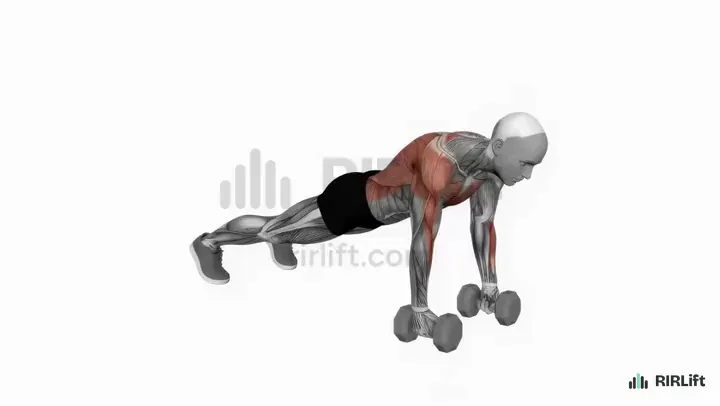
Dumbbell full body exercises, by movement pattern

A full body dumbbell workout needs one exercise from each movement pattern: a squat (front or goblet squat), a hinge (Romanian deadlift or swing), a single-leg move (reverse lunge or step-up), a push (incline or floor press), a pull (bent-over row or renegade row) and a carry. Five or six of these done for 2 to 4 sets each covers every major muscle in about 45 minutes. Stop each set with 1 to 3 reps left, and do the session two or three times a week.

  1. Dumbbell Front Squat Quads, Glutes
  2. Dumbbell Romanian Deadlift Hamstrings, Glutes
  3. Dumbbell Reverse Lunge Quads, Glutes
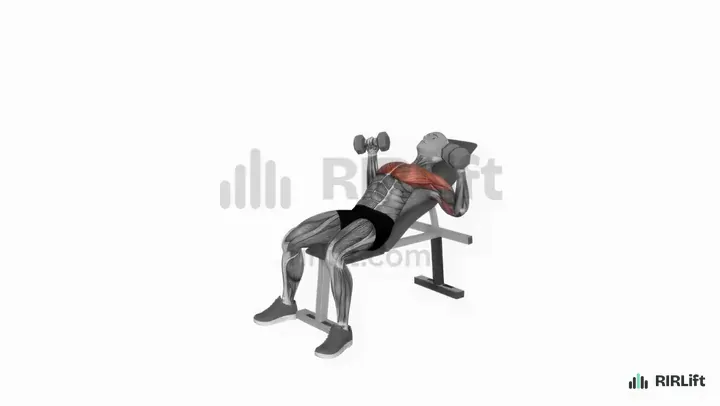
  4. Incline Dumbbell Press Chest
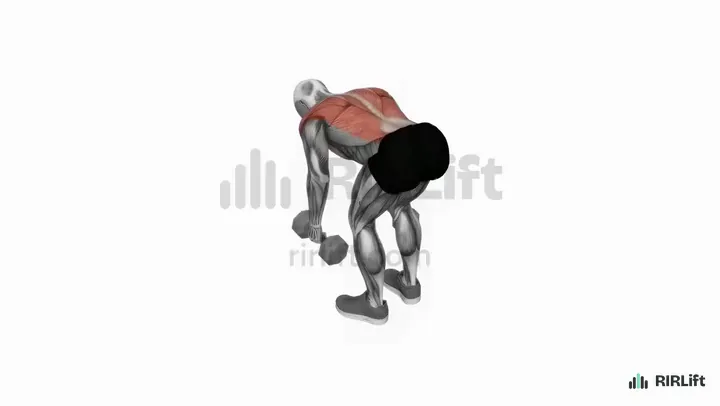
  5. Dumbbell Bent-Over Row Upper Back, Lats
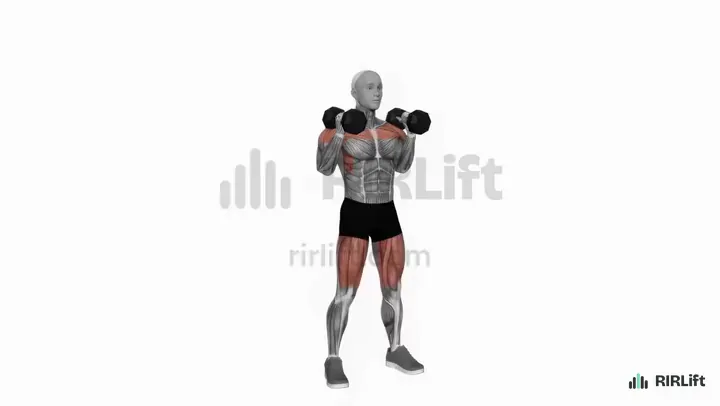
  6. Dumbbell Push Press Shoulders
  7. Renegade Row Lats, Upper Back
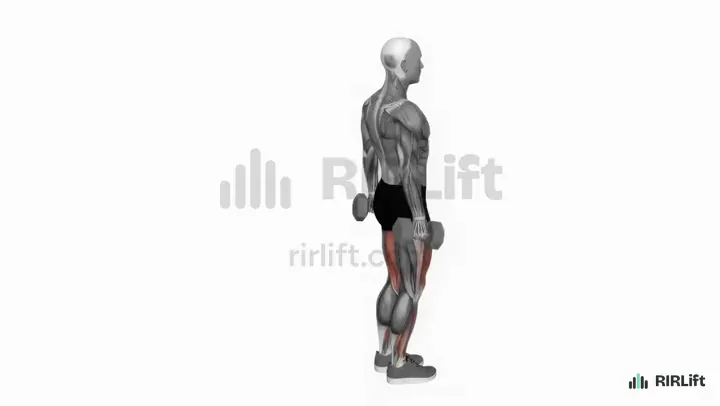
  8. Farmer's Walk Forearms, Traps, Shoulders
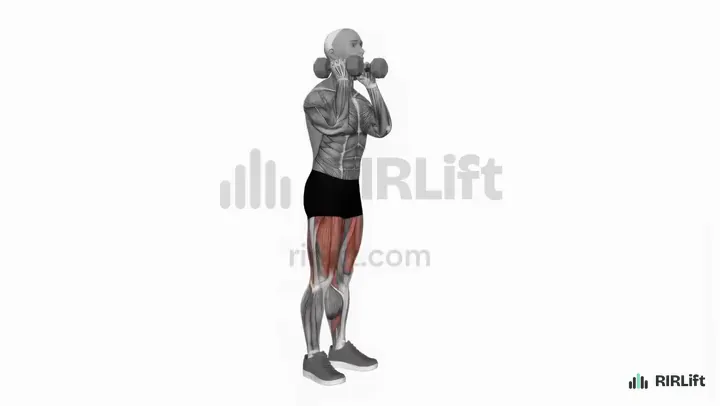
Squat: quads and glutes

Every full-body session starts with a squat because it uses the most muscle and needs you fresh. Use the goblet squat while you learn and for one-dumbbell days, then move to the front squat when one dumbbell no longer makes 10 to 12 reps hard.

Quads and glutes, two-dumbbell squat

Dumbbell Front Squat

Quads, Glutes

Resting a dumbbell on each shoulder lets you squat with twice the load a goblet squat allows, and the upright torso keeps the quads doing most of the work. It is the main squat once a single dumbbell gets too light.

How to do it

  1. Clean or lift both dumbbells onto the front of your shoulders, one end of each resting there, elbows pointing forward.
  2. Stand with your feet a bit wider than your hips and toes turned out slightly.
  3. Sit down between your heels until your hip crease drops to knee height or lower.
  4. Drive the floor away and stand up without letting your elbows drop.

Cues

  • Elbows high, chest proud
  • Knees track over the toes
  • Whole foot on the floor

Common mistakes

  • Letting the elbows sink so the dumbbells pull your chest forward and turn the squat into a lean.
  • Stopping short of parallel because the dumbbells feel awkward. Go lighter until you can reach depth.

Swap for: Goblet Squat, Dumbbell Squat, Heels-Elevated Goblet Squat

Quads, glutes and upper back, one-dumbbell squat

Goblet Squat

Quads, Glutes

Holding one dumbbell at your chest teaches a clean squat pattern and needs only one weight. It is the squat to start with and the one to use for higher-rep sets later.

How to do it

  1. Hold one dumbbell vertically at your chest, cupping the top end with both hands.
  2. Set your feet a little wider than your hips.
  3. Squat down until your elbows reach the inside of your knees.
  4. Stand back up, keeping the dumbbell tight to your chest.

Cues

  • Weight close to the sternum
  • Elbows inside the knees at the bottom
  • Brace before each rep

Common mistakes

  • Holding the dumbbell away from the body, which tips you forward.
  • Letting the heels lift at the bottom. Widen your stance or raise your heels on a plate.

Swap for: Dumbbell Front Squat, Heels-Elevated Goblet Squat, Dumbbell Kneeling Squat

Hinge: hamstrings, glutes, lower back

A hinge trains the back of the body that squats miss. The Romanian deadlift is the strength builder, the hip thrust isolates the glutes, and the swing adds speed and gets your heart rate up. Pick one per session.

Hamstrings and glutes, hip hinge

Dumbbell Romanian Deadlift

Hamstrings, Glutes

The Romanian deadlift loads your hamstrings in a long stretch, which a squat never does. It is the hinge every dumbbell full-body session needs, and dumbbells let you keep them close to your legs the whole way.

How to do it

  1. Stand tall holding the dumbbells in front of your thighs.
  2. Unlock your knees and push your hips back, sliding the weights down your legs.
  3. Stop when you feel a strong pull in your hamstrings, usually around mid-shin.
  4. Push your hips forward to stand back up, finishing tall with glutes tight.

Cues

  • Hips go back, not down
  • Dumbbells brush the legs
  • Flat back from neck to tailbone

Common mistakes

  • Bending the knees more and more until it becomes a squat. Keep the bend you started with.
  • Reaching for the floor by rounding the back once the hamstrings run out of stretch.

Swap for: Single-Leg RDL, Dumbbell B-Stance RDL, Dumbbell Good Morning

Glutes, bridge from a bench

Dumbbell Hip Thrust

Glutes

The hip thrust loads your glutes hardest when your hips are fully extended, the part of the motion squats and deadlifts barely load. It is the hinge to add if your glutes are a priority.

How to do it

  1. Sit down with your shoulder blades resting on the long edge of a bench and a dumbbell across your hips.
  2. Plant your feet so your shins are vertical at the top.
  3. Push your heels down and raise your hips until your torso and thighs are level.
  4. Lower your hips toward the floor and repeat.

Cues

  • Chin tucked, eyes forward
  • Ribs down at the top
  • Shins vertical at lockout

Common mistakes

  • Arching the lower back to get higher instead of squeezing the glutes.
  • Feet too close to the bench, which shifts the work to the quads.

Swap for: Dumbbell Glute Bridge, Single-Leg Hip Thrust, Dumbbell Staggered Hip Thrust

Glutes and hamstrings, explosive hinge

Dumbbell Swing

Glutes, Hamstrings

A swing trains the hinge fast and for many reps, which raises your heart rate and works the back of the legs in the same set. It is the move that turns a dumbbell session into conditioning too.

How to do it

  1. Hold one dumbbell by one end with both hands, feet a little wider than your hips.
  2. Hike the dumbbell back between your legs by hinging at the hips.
  3. Snap your hips forward so the dumbbell floats up to chest height on its own.
  4. Let it fall back between your legs and hinge into the next rep.

Cues

  • Hinge, do not squat
  • Hips drive, arms just hold
  • Stand fully tall at the top

Common mistakes

  • Lifting the dumbbell with your shoulders instead of driving it with your hips.
  • Letting the dumbbell drop toward your knees on the backswing; keep it high between your thighs.

Swap for: Kettlebell Swing, Dumbbell Romanian Deadlift, One-Arm Dumbbell Snatch

Single leg: lunges, steps and split squats

Single-leg moves fix side-to-side differences and make light dumbbells feel heavy, because each leg carries the full load on its own. Do one in sessions where you have already squatted, or use one in place of the squat when your dumbbells are light.

Quads and glutes, one leg at a time

Dumbbell Reverse Lunge

Quads, Glutes

Stepping backward keeps your front knee steadier than a forward lunge and trains each leg on its own, so a weaker side cannot hide. It is the easiest single-leg move to load with dumbbells.

How to do it

  1. Stand tall holding a dumbbell by each thigh.
  2. Take a long step back and lower your back knee toward the floor.
  3. Stop just above the floor with your front shin close to vertical.
  4. Push through the front foot to return to standing, then switch legs or finish one side.

Cues

  • Long step, upright chest
  • Front heel stays planted
  • Back knee kisses the floor

Common mistakes

  • Stepping straight back on a tightrope, which makes balance the limiter. Keep the feet hip-width apart.
  • Pushing off the back foot to stand, which takes work away from the front leg.

Swap for: Dumbbell Split Squat, Bulgarian Split Squat, Dumbbell Forward Lunge

Quads and glutes, single-leg climb

Step-Up

Quads, Glutes

Step-ups load one leg through a large range and you can control how hard they are with the box height. They also build the kind of strength you use on stairs and hills.

How to do it

  1. Face a sturdy bench or box holding both dumbbells.
  2. Plant one whole foot on the box.
  3. Drive through that foot to stand up on the box without pushing off the floor leg.
  4. Lower yourself slowly back down with the same leg doing the work.

Cues

  • Whole foot on the box
  • Lead leg does it all
  • Slow on the way down

Common mistakes

  • Bouncing off the bottom leg, which turns it into a jump.
  • Using a box so high that the hip has to shift sideways to get up.

Swap for: Bulgarian Split Squat, Dumbbell Reverse Lunge, Kettlebell Step-Up

Build a session with Step-Up

Quads and glutes, rear foot elevated

Bulgarian Split Squat

Quads, Glutes

Raising the back foot on a bench puts nearly all your weight on the front leg, so light dumbbells still make a hard set. It is the leg move that keeps progressing when your dumbbells stop.

How to do it

  1. Face away from a bench, about a stride from it, and lay one instep on the pad behind you.
  2. Hold the dumbbells at your sides.
  3. Sink straight down until the front thigh is nearly flat with the floor.
  4. Drive through the front heel to stand back up.

Cues

  • Most weight on the front foot
  • Torso leans slightly forward
  • Lower straight down

Common mistakes

  • Standing too close to the bench so the front knee runs far past the toes and the heel lifts.
  • Bouncing out of the bottom. Pause for a beat when the set gets hard.

Swap for: Dumbbell Split Squat, Dumbbell Goblet Split Squat, Step-Up

Push: chest, shoulders and triceps

One horizontal press and one overhead press cover all the pushing muscles. The incline press needs a bench, the floor press needs only a mat, and the push press uses your legs so you can handle heavier dumbbells overhead.

Chest, shoulders and triceps

Incline Dumbbell Press

Chest

A low incline press works the upper chest, front delts and triceps together, so one exercise covers most of your pushing muscles in a full-body day.

How to do it

  1. Set a bench to a low incline and sit with the dumbbells resting on your thighs.
  2. Lie back and press them up over your upper chest.
  3. Lower until they are beside your chest with your forearms vertical.
  4. Press back up until your elbows are straight.

Cues

  • Shoulder blades pinned
  • Forearms vertical
  • Control the bottom

Common mistakes

  • Raising the bench so high it becomes a shoulder press.
  • Lowering only halfway to protect a weight that is too heavy.

Swap for: Flat Dumbbell Press, Dumbbell Floor Press, Single-Arm Incline Dumbbell Press

Chest and triceps, floor-based press

Dumbbell Floor Press

Chest, Triceps

With no bench, the floor press gives you a heavy horizontal press and limits the bottom of the rep, which is easier on cranky shoulders. It is the push for any full-body session done on a mat.

How to do it

  1. Lie on your back, knees bent, with the dumbbells held over your chest.
  2. Lower them until the backs of your upper arms rest on the floor.
  3. Pause there for a second.
  4. Press the weights back up until your arms lock out.

Cues

  • Upper arms at 45 degrees
  • Pause, then press
  • Lock out over the chest

Common mistakes

  • Slamming the elbows into the floor and bouncing up.
  • Letting the wrists bend back; keep the knuckles pointing at the ceiling.

Swap for: Single-Arm Dumbbell Floor Press, Push-Up, Flat Dumbbell Press

Shoulders, triceps and legs, overhead drive

Dumbbell Push Press

Shoulders

A short dip and drive with the legs lets you press more overhead than a strict press, and it brings your legs and trunk into the lift. It suits full-body sessions where every exercise should earn its time.

How to do it

  1. Stand with the dumbbells resting at your shoulders and feet about hip-width apart.
  2. Dip by bending your knees a few inches, keeping your torso upright.
  3. Straighten your legs explosively and use that drive to push the dumbbells overhead.
  4. Lower them under control back to your shoulders.

Cues

  • Short dip, straight down
  • Legs start it, arms finish it
  • Biceps by the ears at the top

Common mistakes

  • Dipping so deep it turns into a squat, which wastes the drive.
  • Leaning back to finish the press instead of pushing your head through.

Swap for: Dumbbell Shoulder Press, Alternating Dumbbell Shoulder Press, One-Arm Dumbbell Snatch

Pull: back and biceps

Full-body routines often run short on pulling, so give rows the same number of sets as presses. The bent-over row is the heavier option; the renegade row trains the core as well and fits short sessions.

Back and biceps, two-arm row

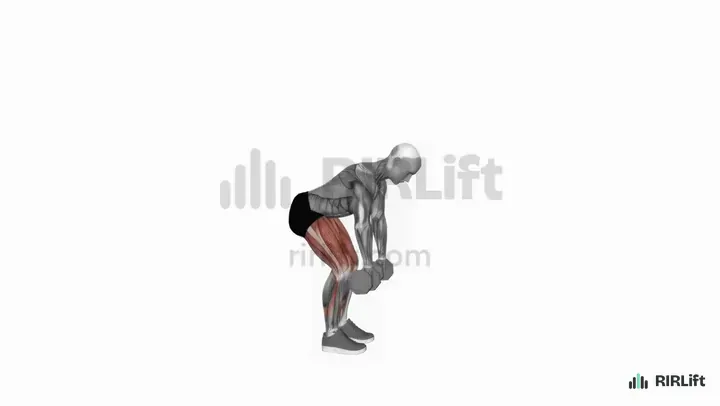
Dumbbell Bent-Over Row

Upper Back, Lats

Rowing both dumbbells while holding a hinge works your back and adds time under load for the hamstrings and spinal muscles. It is the pull that needs nothing but the weights.

How to do it

  1. Hold the dumbbells, soften your knees and hinge until your torso is about 45 degrees to the floor.
  2. Let the weights hang under your shoulders.
  3. Row them up to your lower ribs, elbows going back.
  4. Lower until your arms are straight while holding the same hinge.

Cues

  • Flat back, fixed angle
  • Elbows drive back
  • Pause at the top

Common mistakes

  • Standing taller with every rep until the row turns into a shrug.
  • Jerking the weight up with a hip bounce.

Swap for: One-Arm Dumbbell Row, Dumbbell Pendlay Row, Incline Dumbbell Row

Back, shoulders and core, row from a plank

Renegade Row

Lats, Upper Back

Rowing from a plank makes your trunk resist twisting on every rep, so one exercise trains your back and your core together. It is a good pick when a session has to be short.

How to do it

  1. Set up in a high plank with your hands on two dumbbells and feet wider than your hips.
  2. Brace and row one dumbbell to your ribs while the other arm holds you up.
  3. Set it back down softly.
  4. Row the other side; one row per arm counts as one rep.

Cues

  • Hips stay level
  • Wide feet for balance
  • Push the floor away with the support hand

Common mistakes

  • Rotating the hips toward the ceiling on each row.
  • Using hex dumbbells too light to row, so the core is the only thing working. If the row is easy, use a separate row instead.

Swap for: One-Arm Dumbbell Row, Dumbbell Bent-Over Row, Plank Shoulder Tap

Total-body lifts and carries

These moves use the whole body in one rep. The snatch adds power at the start of a session, and the farmer's walk is a finisher for grip, traps and posture. Add one of them when the main patterns are covered.

Total body, floor to overhead in one move

One-Arm Dumbbell Snatch

Shoulders, Glutes

The snatch moves a dumbbell from the floor to overhead in one pull, using the hips, legs, back and shoulders together. A few sets of low reps make a fast, powerful start to a session.

How to do it

  1. Stand over one dumbbell with feet a bit wider than your hips and grab it with one hand.
  2. Hinge with a flat back, then explode upward through the hips and knees.
  3. Pull the dumbbell up close to your body and punch it overhead as it rises.
  4. Lower it to your shoulder, then to the floor, and repeat.

Cues

  • Hips do the lifting
  • Keep it close to the body
  • Punch through at the top

Common mistakes

  • Pulling with the arm from the floor instead of exploding with the hips.
  • Swinging the dumbbell out in an arc away from the body.

Swap for: Dumbbell Swing, Dumbbell Push Press, Kettlebell Snatch

Grip, traps and core, loaded carry

Farmer's Walk

Forearms, Traps, Shoulders
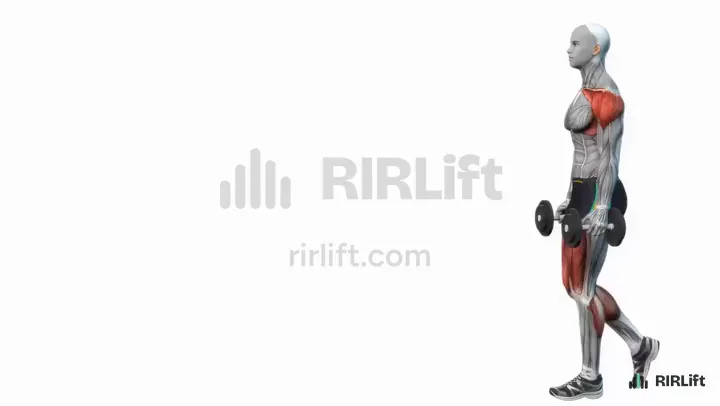
Walking with heavy dumbbells trains grip, traps and the trunk muscles that keep you upright, and it is a simple finisher that needs no skill. Use your heaviest pair.

How to do it

  1. Pick up your heaviest pair of dumbbells with a deadlift.
  2. Stand tall with your shoulders back and the dumbbells at your sides.
  3. Walk with short, quick steps for the set distance or time.
  4. Set the dumbbells down with a flat back.

Cues

  • Tall as a tree
  • Short, quick steps
  • Crush the handles

Common mistakes

  • Letting the shoulders round forward as the grip fatigues.
  • Leaning back and shuffling, which means the weight is too heavy for your posture.

Swap for: Dumbbell Suitcase Carry, Dumbbell Single-Arm Overhead Carry, Dumbbell Shrug

Put them together: example sessions

Each session below picks from the exercises above for one situation, with the sets, reps, rest and RIR filled in. Open one in the session builder to change a pick, price it from a recent set, and add it to RIRLift.

Session 1

Three days a week, a bench and several pairs

Open in the session builder
  • Workouts3× a week
  • Working sets42 a week
  • Per workout~40 min
  • EquipmentDumbbells, Incline Bench

You can train three times a week, own or have access to an adjustable bench and a range of dumbbells, and want to build muscle across your whole body.

Two alternating sessions let each pattern show up three times every two weeks from two angles: A squats and presses on the incline, B lunges and hip thrusts and presses overhead. The heavy compound lifts stop at 2 reps in reserve, because you will train again in 48 hours; the carries and swings go to 1 since they recover fast.

Full Body A
ExerciseSets × repsRIRRest
Dumbbell Front Squat2 warm-up sets firstElbows high 3 × 8–12 2 2 min
Dumbbell Romanian Deadlift 3 × 8–12 2 2 min
Incline Dumbbell Press1 warm-up set first 3 × 8–12 2 2 min
Dumbbell Bent-Over Row 3 × 8–12 2 90 s
Farmer's WalkSeconds, heaviest pair 2 × 30–45 1 90 s

Open Full Body A in the session builder

Full Body B
ExerciseSets × repsRIRRest
Bulgarian Split Squat1 warm-up set firstReps per leg 3 × 8–12 2 90 s
Dumbbell Hip Thrust 3 × 10–15 2 90 s
Dumbbell Push Press1 warm-up set first 3 × 6–10 2 2 min
Renegade RowReps per arm 3 × 8–12 2 90 s
Dumbbell Swing 2 × 15–20 1 1 min

Open Full Body B in the session builder

How to run it
Alternate A and B on three non-consecutive days: A, B, A one week, then B, A, B the next. Do the exercises in order.
How to progress
Work up within each rep range, then go to the next dumbbell. If a lift stalls for two sessions in a row, keep the weight and add one set for a week before trying the jump again.

Session 2

25 minutes, one pair, no bench

Open in the session builder
  • Workouts3× a week
  • Working sets42 a week
  • Per workout~20 min
  • EquipmentDumbbells

You have one pair of dumbbells, floor space and about 25 minutes, three times a week.

Everything here works from the floor or standing, and the lower and upper moves are paired so your legs rest while your arms work. One pair of dumbbells is light for legs, so the lower-body moves are single-leg or goblet-style with higher reps, and every set runs to 1 rep in reserve to stay hard enough.

Full Body 25
ExerciseSets × repsRIRRest
A1 Goblet SquatPair with the press 3 × 12–20 1 75 s
A2 Dumbbell Floor Press 3 × 10–20 1 75 s
B1 Dumbbell Reverse LungeReps per leg 3 × 10–15 1 75 s
B2 Dumbbell Bent-Over Row 3 × 10–20 1 75 s
Farmer's WalkSeconds 2 × 30–50 1 1 min
How to run it
Do the paired moves back to back, rest 60 to 75 seconds, and repeat for the listed sets. Finish with the carry. Train on non-consecutive days.
How to progress
Add reps until you reach the top of every range. Then slow the lowering to 3 seconds. When even the slow version reaches the top of the range, it is time for a heavier pair.

Session 3

Only two days a week, longer sessions

Open in the session builder
  • Workouts2× a week
  • Working sets37 a week
  • Per workout~50 min
  • EquipmentDumbbells, Incline Bench, Flat Bench

Work or family leaves you two training days a week, but you can spend an hour each time and have a bench and heavier dumbbells.

With only two sessions, each one has to cover every pattern with more sets, so both days include a squat or lunge, a hinge, a push and a pull for 3 to 4 sets. The power lifts, snatch and push press, open the day while you are fresh and stay at 3 reps in reserve so speed stays high; the rest of the lifts sit at 1 to 2.

Day 1
ExerciseSets × repsRIRRest
One-Arm Dumbbell Snatch1 warm-up set firstReps per arm. Fast every rep 3 × 4–6 3 90 s
Dumbbell Front Squat1 warm-up set first 4 × 6–10 2 2:30 min
Dumbbell Romanian Deadlift 3 × 8–12 2 2 min
Incline Dumbbell Press 4 × 8–12 2 2 min
Dumbbell Bent-Over Row 4 × 8–12 2 90 s

Open Day 1 in the session builder

Day 2
ExerciseSets × repsRIRRest
Dumbbell Push Press1 warm-up set first 3 × 5–8 3 2 min
Step-UpReps per leg 3 × 8–12 2 90 s
Dumbbell Hip Thrust 4 × 8–12 1 90 s
Dumbbell Floor Press 3 × 10–15 1 90 s
Renegade RowReps per arm 3 × 8–12 2 90 s
Farmer's WalkSeconds 3 × 30–45 1 90 s

Open Day 2 in the session builder

How to run it
Train on two days at least two days apart, for example Tuesday and Saturday. Warm up with a couple of light sets of the first lift.
How to progress
Track the top-set reps on the squat, hinge and press each week. When all sets of a lift hit the top of the range, add weight next session. Keep the snatch light enough that every rep is fast.

Make it fit you

Questions

Can you do a full body workout with just dumbbells?

Yes. Dumbbells cover every movement pattern: squats, hinges, lunges, presses, rows and carries. With a bench you get more press and row variations, but a pair of dumbbells and a floor are enough for a complete full-body session.

Are dumbbells enough to build muscle all over?

They are, as long as the sets are hard enough. The usual limit is the legs, which outgrow light dumbbells first. Single-leg exercises, slower reps and higher rep ranges keep leg sets close to failure until you can get heavier weights.

What are the best five dumbbell exercises for a full-body workout?

A front or goblet squat, a Romanian deadlift, an incline or floor press, a bent-over row and a reverse lunge cover the main patterns. Add a farmer's walk if you have five more minutes.

How many times a week should I do a full body dumbbell workout?

Two to three times a week on non-consecutive days. Three sessions give each muscle frequent practice with moderate sets per session; two sessions work if each one carries a few more sets.

How many exercises should a full body dumbbell workout have?

Five to seven: one per movement pattern plus an optional carry or arm move. More than that usually means the later exercises are done tired and add little.

What order should I do full body dumbbell exercises in?

Power moves like the snatch or push press first, then the squat, hinge, press and row, then single-leg work, and carries or small muscles last. Put whatever you most want to improve before the rest.

Can I lose fat with a full body dumbbell workout?

Strength training helps you keep muscle while you lose fat, and full-body sessions with short rest raise your heart rate. Fat loss itself comes from eating fewer calories than you burn, so the workout supports the diet rather than replacing it.