
Farmer's walk: how to do it, what it works, and what to swap it for
Published October 17, 2026
A farmer's walk is a loaded carry: you pick up a heavy dumbbell in each hand and walk a set number of steps with them hanging at your sides. It trains your grip and forearms, your traps and the muscles around your trunk that keep you standing tall under the load. It works when the dumbbells are heavy enough that your grip is the limit, and you set them down while your torso is still upright and your hands are still closed.
- WorksForearms, Traps, Shoulders
- AlsoAbs, Quads
- EquipmentDumbbells
- Start with3 × 20–30, 1 in reserve, 2 min rest
How to do the farmer's walk
Holding heavy weight while you walk makes your grip the limit of the set, and your traps and trunk work the whole time to keep you upright. It needs a pair of dumbbells and a few metres of clear floor, so it fits at the end of a back or leg day.
Steps
- Set two heavy dumbbells on the floor, one beside each foot, with a clear lane in front of you.
- Squat down with a flat back, grab each handle in the middle and stand up as you would from a deadlift.
- Stand tall with your arms long, shoulders pulled down away from your ears and ribs stacked over your hips.
- Walk forward with short, quick steps, heel to toe, counting each foot that lands as one step.
- At the turn, slow down and take small steps around instead of pivoting on one foot.
- When you reach your step count, stop, squat down with the same flat back and put the dumbbells on the floor before your grip opens.
Cues
- Crush the handles
- Tall and braced
- Short, quick steps
Common mistakes
- Picking dumbbells you could walk with all day: if your grip is fine at the end of the set, go heavier until the last few steps are a fight to hold on.
- Letting your shoulders round forward or creep up toward your ears as you tire: pull them back down, and end the set the moment you cannot.
- Taking long strides so the dumbbells swing and bang your legs: shorten your steps until the weights hang still.
- Dropping the dumbbells from standing at the end: lower them with the same squat you used to lift them, so your last rep of effort is controlled too.
Swap for: Dumbbell Suitcase Carry, Dead Hang, Dumbbell Shrug
Muscles the farmer's walk works
The farmer's walk trains the finger and wrist flexors that close your hands around the handles, and the traps and shoulders that keep the dumbbells from pulling your arms down. Your abs, obliques and quads work on every step to keep your torso upright and your knees steady. The load is constant from the first step to the last, so the grip and traps work hardest at the end of the set, when they are most tired.
Sets, reps and reps in reserve for the farmer's walk
| Goal | Sets × reps | RIR | Rest |
|---|---|---|---|
| Grip strength | 3 × 20–30 steps | 1 | 2 min |
| Use the heaviest pair you can hold for the whole walk, and set it down before your grip opens. | |||
| End of a back or leg day | 2–3 × 30–40 steps | 1 | 90 s |
| Go slightly lighter and longer here, since your grip is already tired from the pulls before it. | |||
Farmer's walk variations
-
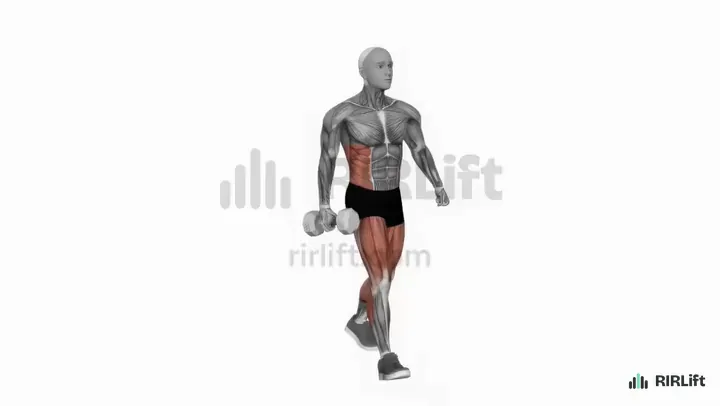
Dumbbell Suitcase Carry
Pick this when you have only one heavy dumbbell, or want your obliques to work harder by refusing to lean toward the weight.
Build a session with it -
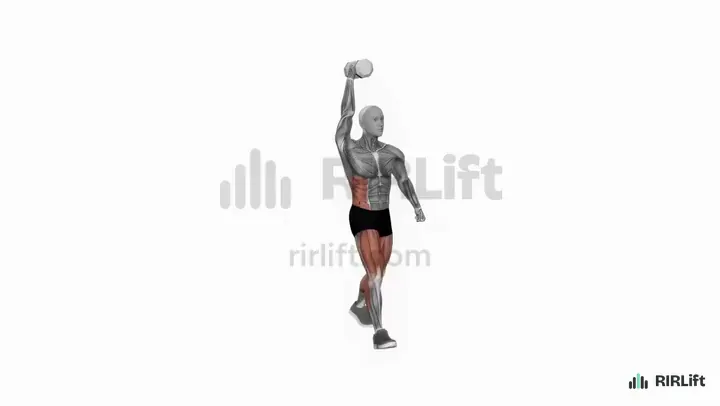
Dumbbell Single-Arm Overhead Carry
Pick this when you want your shoulder and upper back to hold a weight locked out overhead as you walk, and switch hands every set.
Build a session with it -
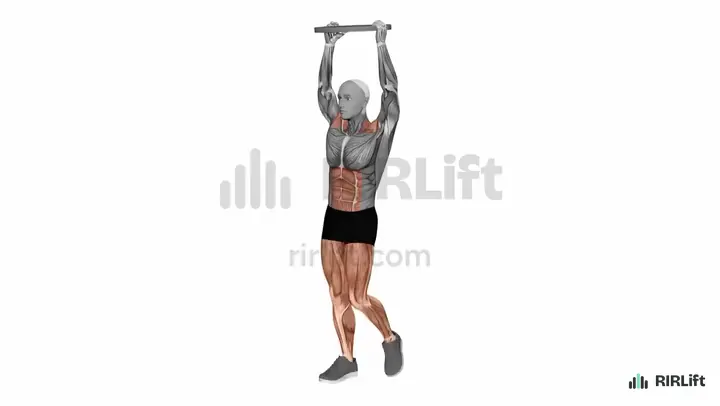
Plate Overhead Carry
Pick this when you have plates but no dumbbells, and press a plate overhead with both hands before you start walking.
Build a session with it
Farmer's walk alternatives
No room to walk
-
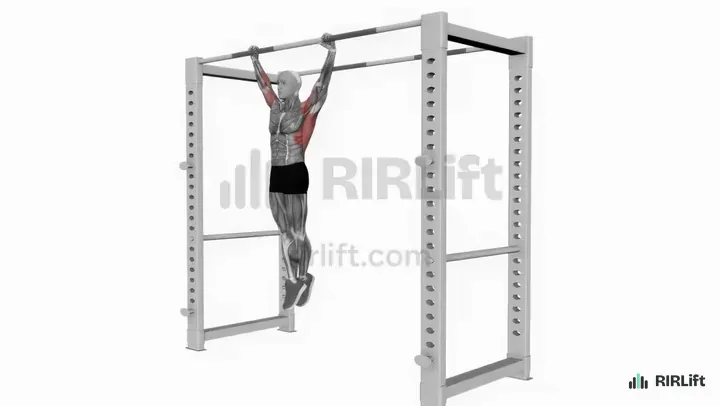
Dead Hang
Hang from a pull-up bar with straight arms when you want the same grip work in one spot.
Build a session with it -
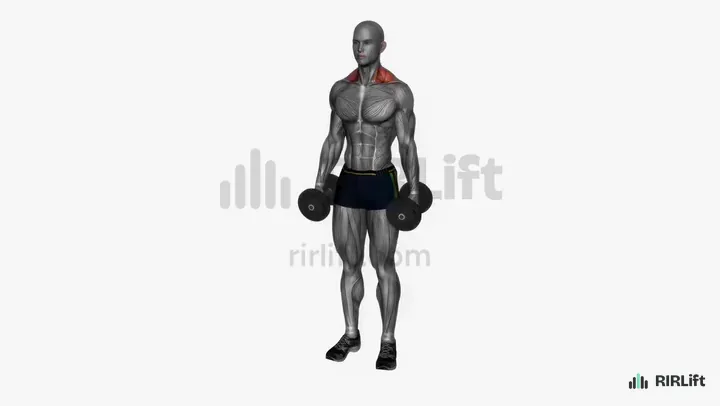
Dumbbell Shrug
Shrug the same heavy dumbbells in place when your gym floor is too busy to walk on and your traps are the goal.
Build a session with it -
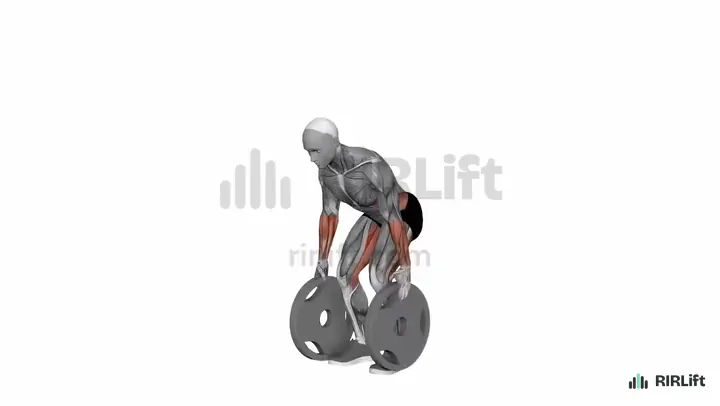
Plate Pinch Deadlift
Pinch two plates together and lift them when you want to train your fingers and thumb harder than a handle allows.
Build a session with it
More traps
-
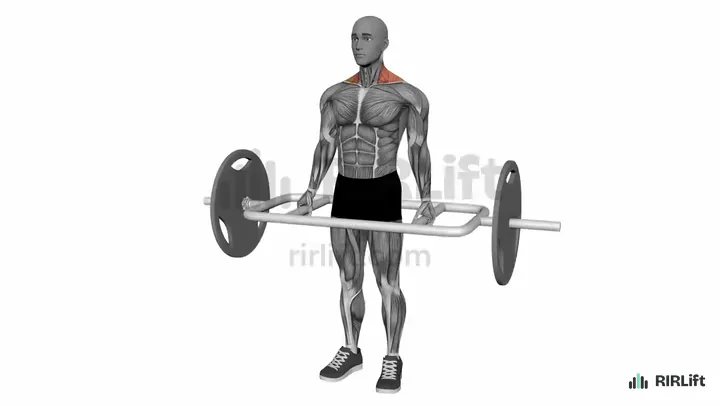
Trap Bar Shrug
Stand inside a trap bar when you want to load your traps heavier than two dumbbells allow.
Build a session with it -
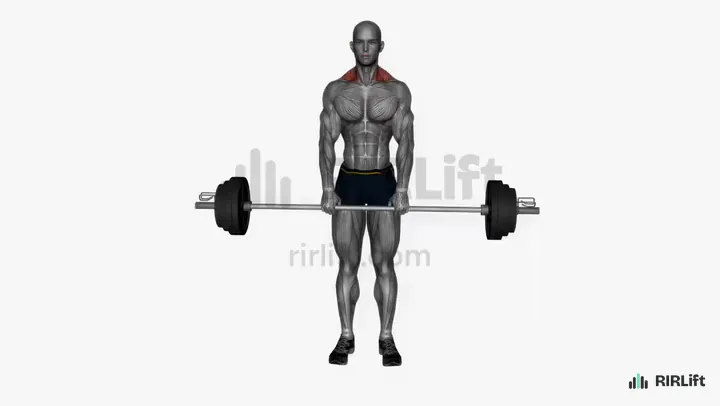
Barbell Shrug
Use a barbell when it is the heaviest thing you have and you want your traps to do the work without walking.
Build a session with it
More trunk, less grip
-
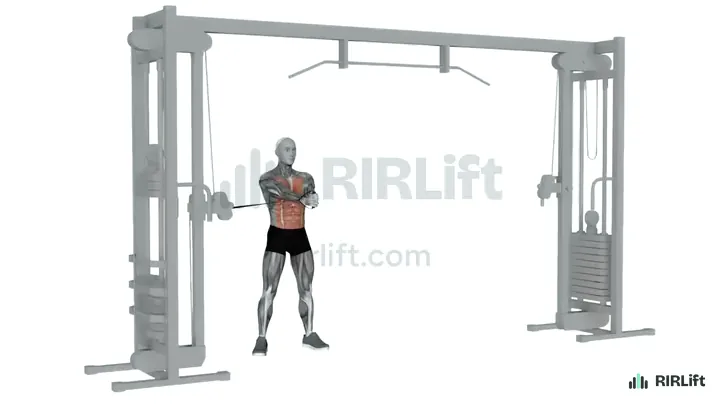
Pallof Press
Press a cable or band handle straight out when your grip gives out before your trunk has done any work.
Build a session with it -
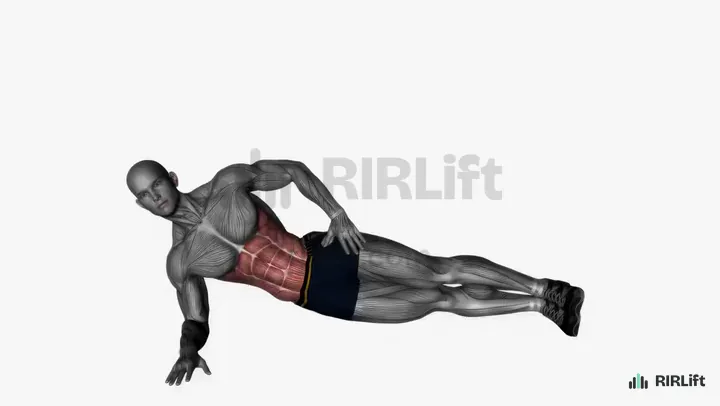
Side Plank
Hold a side plank when you want your obliques to resist bending sideways with no weight in your hands at all.
Build a session with it
How heavy should a farmer's walk be?
Heavy enough that your grip, not your legs or your breath, ends the set. Pick a pair you can hold for your planned steps with one or two steps left before your hands would open.
When you finish every set at your step count with your grip still closed, use the next pair up next session. Log the weight and steps, so you know which pair to pick up next time.
Farmer's carry vs farmer's walk
They are the same exercise under two names. Farmer's carry is the more common name in coaching and strongman, farmer's walk in most gyms. A suitcase carry is the one-handed version, with a single dumbbell on one side.
Questions
What muscles does a farmer's walk work?
A farmer's walk works your forearms and grip, your traps and shoulders, and your abs, obliques and quads. Your hands hold the weight, your traps keep your arms from being pulled down, and your trunk and legs keep you upright as you walk.
How heavy should a farmer's walk be?
Heavy enough that your grip is close to giving out by the last few steps. Go up when you finish every set at your step count with your grip still closed.
Can I use dumbbells for a farmer's walk?
Yes, dumbbells are the most common way to do it. Kettlebells, a trap bar or farmer's walk handles work too, as long as you can hold one heavy weight on each side of your body.
How far should you walk on a farmer's walk?
Count steps instead of guessing distance: 20 to 30 steps with a very heavy pair for grip strength, 30 to 40 steps with a slightly lighter pair at the end of a session. Turn around with small steps if your lane is short.
What is a loaded carry exercise?
A loaded carry is any exercise where you hold a weight and walk with it. The farmer's walk holds one weight in each hand, the suitcase carry holds one in a single hand, and the overhead carry holds the weight locked out above your head.
What happens if I do farmer's walks every day?
Your grip will get tired, and tired grip means lighter carries. Two or three heavy sessions a week, with a rest day between them, lets you keep adding weight; on the other days, do the rest of your training.
What is the best farmer's walk alternative?
With one dumbbell, do a suitcase carry. With no room to walk, a dead hang trains the same grip and a heavy dumbbell shrug trains the same traps. If you want trunk work without grip, use a Pallof press.
Related templates
-
The best workout for forearms, for your situation
A full forearm session that uses the farmer's walk for grip strength.
-
Pallof press: how to do it, what it trains, and what to do instead
The trunk exercise to use when your grip ends a carry before your core does.
-
Dumbbell exercises for every muscle, and how to put them together
More exercises for the same pair of dumbbells you carry.
-
How to use RIR
How to judge how many steps you have left before your grip opens.