Figure skating warm up: a 10-minute off-ice routine before you step on

Off the ice, jump rope or skip for 3 minutes, then spend 3 minutes on mobility: 10 leg swings each way per leg, 10 ankle circles per foot, 10 arm circles each direction and 5 cossack squats per side. Activate with 10 clamshells and 10 side leg raises per side and 8 dead bugs per side, then finish with 2 minutes of jump primers: single-leg hops and half-turn jumps, each set a little sharper. About ten minutes, then start on the ice with easy stroking.

  1. Jump Rope Calves, Quads
  2. Skipping in Place Calves, Quads, Hamstrings
  3. Leg Swings Hamstrings, Glutes
  4. Ankle Circles Calves
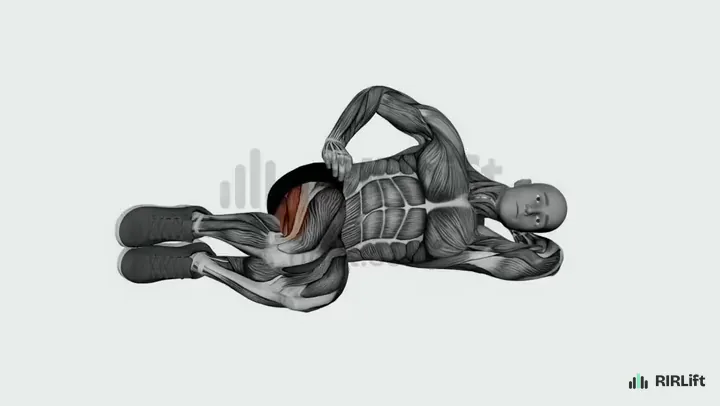
  5. Clamshell Abductors
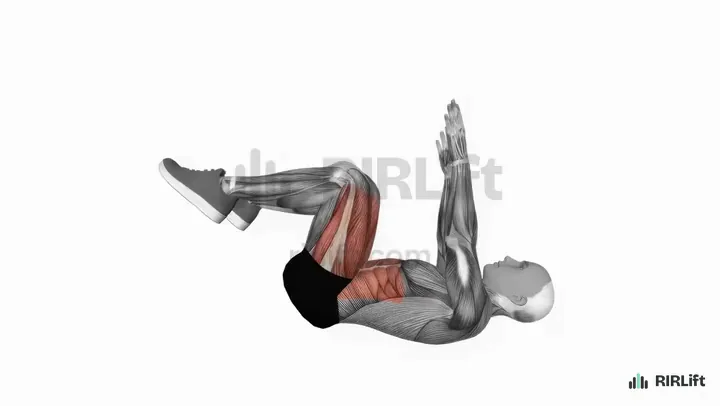
  6. Dead Bug Abs
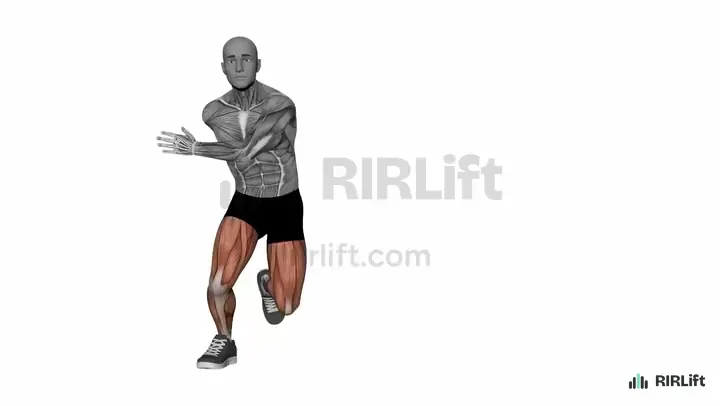
  7. Single-Leg Jump Quads, Glutes, Calves
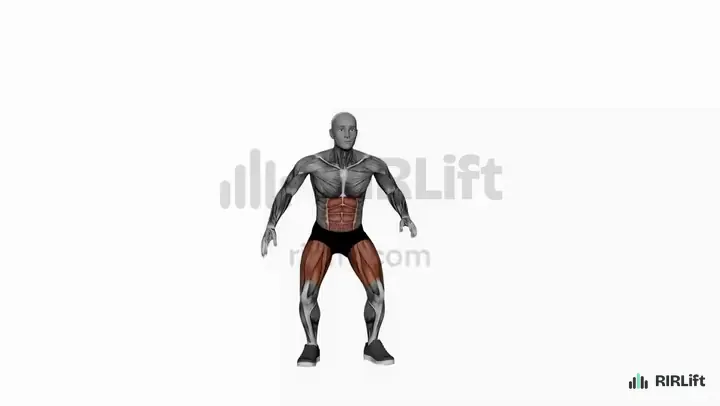
  8. 180 Jump Turn Quads, Glutes

Get warm off the ice: 3 minutes

Rinks are cold, so warm up in sneakers before you lace your skates. Jump rope, skips and high knees raise your temperature and get your feet quick.

Raise, quick feet

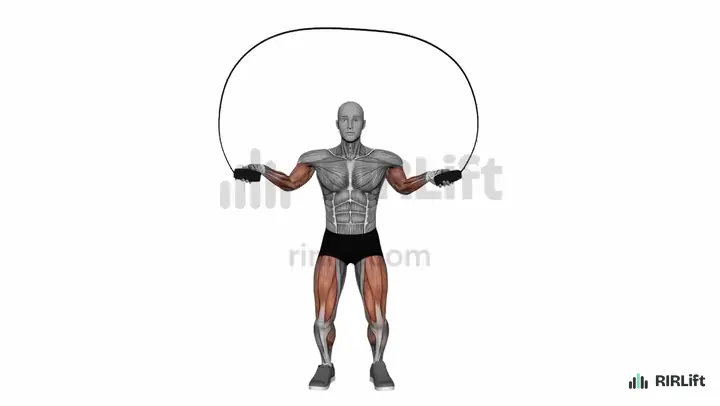
Jump Rope

Calves, Quads

It warms you quickly next to the boards and trains light, quick feet.

How to do it

  1. Hold the handles at hip height with your elbows close to your ribs.
  2. Turn the rope with your wrists and hop just high enough to clear it.
  3. Keep the hops small and even, landing on the balls of your feet.

Cues

  • Wrists turn, not shoulders
  • Small, quiet hops

Common mistakes

  • Jumping high and tucking the knees: an inch of clearance is plenty.

Swap for: Jumping Jack, Skipping in Place

Build a session with Jump Rope

Raise, coordination

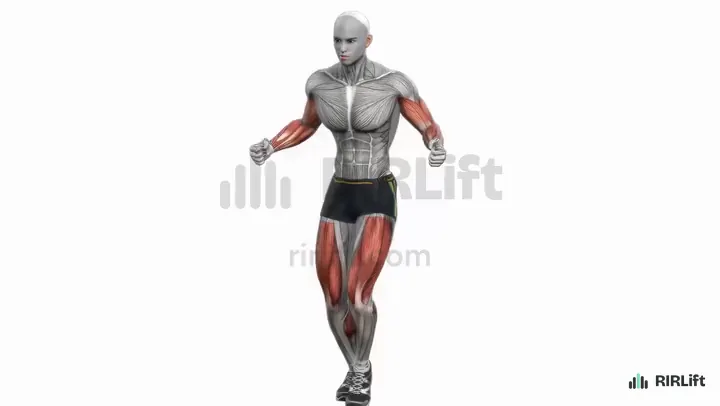
Skipping in Place

Calves, Quads, Hamstrings

Rope-free skipping gets the feet springy and the pulse up, a softer start than the rope.

How to do it

  1. Stand tall with your fists beside your hips as if holding rope handles.
  2. Circle your hands and bounce lightly from one foot to the other, as if skipping over a turning rope.
  3. Keep the bounces low and springy for the whole interval.

Cues

  • Bounce off the balls of your feet
  • Hands circle, elbows close
  • Relaxed shoulders

Common mistakes

  • Stomping on the heels: stay on the front of your feet.
  • Hopping high: a small bounce clears an imaginary rope.

Swap for: High Knees, Jump Rope

Raise, hip flexors

High Knees

Quads

High knees warm the hip flexors you use for free-leg swings.

How to do it

  1. Stand with your feet under your hips and your elbows bent.
  2. Jog in place, driving one knee up toward hip height while the other foot stays under you.
  3. Swap legs quickly and pump your arms in time with your knees.

Cues

  • Tall chest, quick feet
  • Knee to hip height

Common mistakes

  • Leaning back to lift the knees: stay upright and lower the knee height until you can keep it.

Swap for: Butt Kicks, Skipping in Place, Jumping Jack

Hips, ankles and shoulders: 3 minutes

Spirals, spins and jump take-offs need the hips to move freely, and the ankle works hard inside the boot. Keep these moving; deep held splits and stretches belong after skating.

Hip mobility

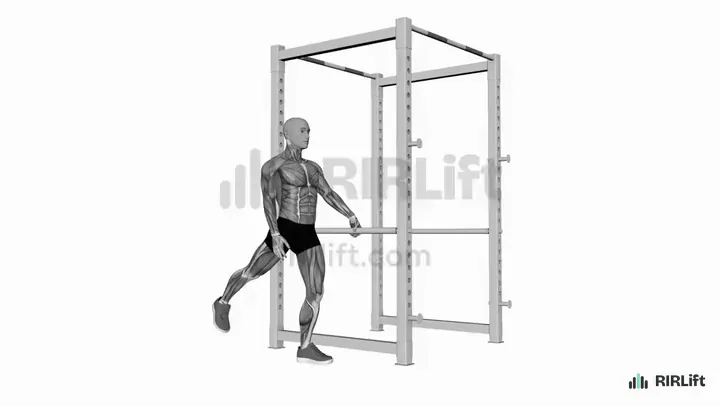
Leg Swings

Hamstrings, Glutes

Front-to-back swings loosen the hips for spirals and free-leg positions.

How to do it

  1. Stand side-on to a wall or post and rest one hand on it.
  2. Swing your outside leg forward and back like a pendulum, letting the range grow each rep.
  3. Do all reps on one leg, then turn around and switch.

Cues

  • Loose leg, still torso
  • Let the range grow

Common mistakes

  • Rounding your back to kick higher: only go as high as your torso can stay upright.

Swap for: Walkout, Cossack Squat

Ankle mobility

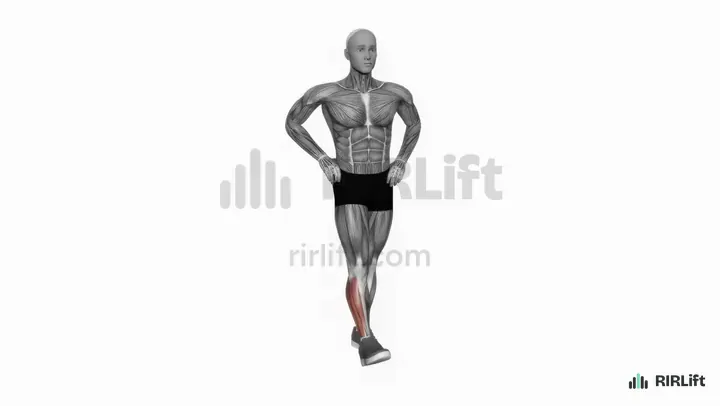
Ankle Circles

Calves

Do them before lacing up: they loosen the ankle that bends into the boot on every edge.

How to do it

  1. Stand on one leg with a hand on a wall, or sit, and lift the other foot.
  2. Trace slow, full circles with your toes in one direction.
  3. Reverse the direction, then switch feet.

Cues

  • Move only at the ankle
  • Full, slow circles

Common mistakes

  • Rushing small circles: make each one as wide as the ankle allows.

Swap for: Standing Calf Raise, Jump Rope

Shoulder mobility

Arm Circles

Shoulders

Arms set the rotation in jumps and spins. Circles loosen the shoulders first.

How to do it

  1. Stand with your arms straight out to your sides at shoulder height.
  2. Draw small forward circles, then let them grow larger over the set.
  3. Reverse the direction for the second half.

Cues

  • Small to big
  • Ribs stay down

Common mistakes

  • Shrugging up into your ears: keep the shoulders low while the arms circle.

Swap for: Band Pull-Apart, Plate Halo

Deep hip and knee bend

Cossack Squat

Quads, Adductors

It moves the hips and knees through the low positions of sit spins and deep edges.

How to do it

  1. Stand with your feet about twice shoulder width, toes turned slightly out.
  2. Shift your weight to one side and sit down into that knee while the other leg straightens, toes up.
  3. Push back to center and sink to the other side.

Cues

  • Heel of the bent leg stays down
  • Chest proud

Common mistakes

  • Dropping deeper than your hips allow: stop where your heel starts to lift, and go a little lower each rep.

Swap for: Dumbbell Lateral Lunge, Kettlebell Lateral Lunge

Hips and trunk activation: 2 minutes

The outer hips hold your skating knee steady on landings and edges, and a braced trunk keeps you tight in the air. These floor drills wake both up.

Glute activation

Clamshell

Abductors

It switches on the outer hip that keeps your skating knee aligned on landings.

How to do it

  1. Lie on one side, hips and knees bent, and your feet stacked.
  2. Keeping your feet together, lift your top knee as far as you can without rolling your hips back.
  3. Lower slowly and finish the set before switching sides.

Cues

  • Hips stacked
  • Lift from the side of the hip

Common mistakes

  • Rolling backward to raise the knee higher: a smaller range with stacked hips works better.

Swap for: Standing Side Leg Raise, Lateral Band Walk

Build a session with Clamshell

Side-of-hip activation, standing

Standing Side Leg Raise

Abductors

Lifting a straight leg sideways works the outside of the hip, which keeps the pelvis level and the knee in line when you land on one foot or cut.

How to do it

  1. Stand tall, hands resting at your waist.
  2. Keep the leg straight and the toes facing forward as you lift it sideways.
  3. Lower it with control, finish the reps, then switch legs.

Cues

  • Toes point forward
  • Torso stays upright

Common mistakes

  • Leaning away from the lifting leg: a lower lift with a still torso works better.

Swap for: Clamshell, Lateral Band Walk

Trunk brace

Dead Bug

Abs

A braced trunk helps you hold a tight position in the air and stay centered in spins.

How to do it

  1. Lie face up, arms pointing at the ceiling and your knees bent at 90 degrees over your hips.
  2. Press your lower back into the floor, then slowly reach one arm overhead and the opposite leg out long.
  3. Return and switch sides.

Cues

  • Lower back stays down
  • Exhale as you reach

Common mistakes

  • Arching away from the floor as the leg goes out: shorten the reach until your back stays flat.

Swap for: Plank, Plate Hollow Hold

Build a session with Dead Bug

Jump primers: 2 minutes

Finish with jumps that look like skating: single-leg hops for landing and half turns for rotation, each set a little sharper.

Landing primer

Single-Leg Jump

Quads, Glutes, Calves

Every jump lands on one leg. A few hops rehearse a quiet, steady landing.

How to do it

  1. Stand on one foot with your knee slightly bent.
  2. Hop up off that foot and land on the same foot.
  3. Stabilize, then hop again; switch legs after the set.

Cues

  • Land quiet
  • Knee over toes

Common mistakes

  • Knee folding inward on landing: hop lower until it stays in line with your foot.

Swap for: Skater Hop, Single-Leg Box Jump

Rotation primer

180 Jump Turn

Quads, Glutes

Half turns in the air rehearse the take-off, quick rotation and checked landing of skating jumps.

How to do it

  1. Set your feet hip-distance apart and your arms ready.
  2. Jump up and turn half a circle in the air.
  3. Land softly facing the other way, then jump and turn back.

Cues

  • Turn with your shoulders and hips together
  • Land balanced

Common mistakes

  • Opening the arms wide and losing the landing: keep the arms close for a tight turn.

Swap for: Jump Squat, Skater Hop

Put them together: example sessions

Each session below picks from the exercises above for one situation, with the sets, reps, rest and RIR filled in. Open one in the session builder to change a pick, price it from a recent set, and add it to RIRLift.

Session 1

Before a freestyle session

Open in the session builder
  • Workouts4× a week
  • Working sets48 a week
  • Per workout~15 min
  • EquipmentJump Rope

You skate several times a week and practice jumps and spins.

The full off-ice routine, ending with jump primers, so your first jumps on the ice are not the first jumps of the day.

Off-Ice Warm-Up
ExerciseSets × repsRIRRest
Jump RopeSeconds. 3 × 30–45 4 15 s
Leg SwingsPer leg, both directions. 1 × 10 4 0 s
Ankle CirclesPer foot. 1 × 10 4 0 s
Arm CirclesEach direction. 1 × 10 4 0 s
ClamshellPer side. 1 × 10 3 15 s
Dead BugPer side. 1 × 8 3 15 s
Single-Leg JumpPer leg. 2 × 5 3 30 s
180 Jump Turn 2 × 4–6 3 30 s
How to run it
Do it in the lobby or by the boards before lacing up.
How to progress
Make the half turns sharper before adding more.

Session 2

Before a competition

Open in the session builder
  • Workouts1× a week
  • Working sets13 a week
  • Per workout~20 min
  • EquipmentBodyweight

You compete and have a short on-ice warm-up before your program.

More time on the jump primers and a repeat of activation, so you arrive at the on-ice warm-up ready to jump.

Competition Warm-Up
ExerciseSets × repsRIRRest
Skipping in PlaceSeconds. 2 × 30 4 15 s
High KneesSeconds. 2 × 20–30 4 15 s
Leg SwingsPer leg. 1 × 12 4 0 s
Cossack SquatPer side. 1 × 5 4 15 s
Standing Side Leg RaisePer side. 1 × 10 3 15 s
ClamshellPer side. 1 × 10 3 15 s
Single-Leg JumpPer leg. 2 × 4–5 3 30 s
180 Jump TurnSharp and checked. 3 × 4 2 45 s
How to run it
Start about 30 minutes before your group's warm-up.
How to progress
Keep the counts the same; aim for crisper, not more.

Session 3

Adult or learn-to-skate lessons

Open in the session builder
  • Workouts2× a week
  • Working sets16 a week
  • Per workout~10 min
  • EquipmentBodyweight

You are new to skating or returning as an adult, and lessons feel stiff at the start.

No jumps; more mobility and gentle activation, so your legs and ankles are loose for stroking and edges.

Lesson Warm-Up
ExerciseSets × repsRIRRest
Skipping in PlaceSeconds. 2 × 30 4 15 s
High KneesSeconds. 1 × 30 4 15 s
Ankle CirclesPer foot. 2 × 10 4 0 s
Leg SwingsPer leg. 1 × 10 4 0 s
Arm CirclesEach direction. 1 × 10 4 0 s
ClamshellPer side. 1 × 10 3 15 s
How to run it
Do it before every lesson.
How to progress
Add single-leg hops once you start learning jumps.

Make it fit you

Questions

How do figure skaters warm up?

Off the ice first: a few minutes of rope or skipping, dynamic moves for the hips and ankles, hip and trunk activation, and a few jumps. Then easy stroking on the ice.

How long should a figure skating warm-up be?

About ten minutes off the ice before practice, and longer before a competition.

Should skaters stretch before going on the ice?

Keep it dynamic before skating. Long held stretches and splits fit better after the session.

How do ice skaters work out?

On the ice they practice; off the ice they do jump training, leg and hip strength and core work. The figure skating exercises page has a full program.

Why warm up off the ice?

Rinks are cold and ice time is short. Warming up off the ice lets you use the ice for skating instead of loosening up.