Figure skating exercises: off-ice strength for jumps, edges and spins

The best figure skating exercises off the ice are the goblet squat, Bulgarian split squat and single-leg Romanian deadlift for knee bend and landings, jump squats, single-leg box jumps and 180 jump turns for take-off and rotation, skater hops, Cossack squats and single-leg calf raises for edges and ankles, and side planks, Copenhagen planks and the Pallof press for a tight core in spins. Two sessions a week at 2 to 3 reps in reserve fit next to regular ice time.

  1. Goblet Squat Quads, Glutes
  2. Bulgarian Split Squat Quads, Glutes
  3. Single-Leg RDL Hamstrings, Glutes
  4. Jump Squat Quads, Glutes
  5. Skater Hop Glutes, Quads, Abductors
  6. Single-Leg Calf Raise Calves
  7. Copenhagen Plank Adductors, Abs
  8. Pallof Press Abs

Leg strength for knee bend and landings

Skating spends most of its time in a deep knee, then lands with several times your bodyweight on one leg. A goblet squat builds strength in that depth, and the split squat and single-leg Romanian deadlift train each leg alone, so your landing leg and your other leg both get strong.

Quads and glutes, deep knee bend

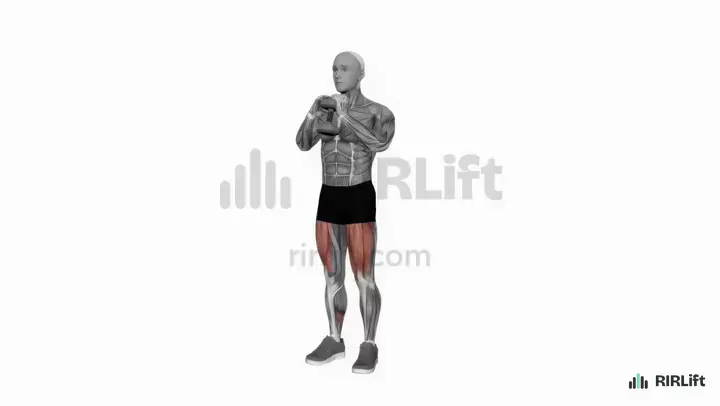
Goblet Squat

Quads, Glutes

Skating lives in a bent knee: stroking, sit spins and every landing ask your thighs to hold a deep position under control. The goblet squat trains that depth with an upright torso and a load you can raise week by week.

How to do it

  1. Hold a dumbbell upright at your chest, both hands under the top head.
  2. Set your feet slightly wider than your hips, toes turned out a touch.
  3. Lower your hips between your heels as deep as you can with a flat back, elbows brushing the inside of your knees.
  4. Stand back up by pressing through mid-foot, keeping the weight tight to your body.

Cues

  • Sit between the heels
  • Elbows inside the knees
  • Slow down, strong up

Common mistakes

  • Collapsing the chest toward the thighs: hold the dumbbell higher and stay tall.
  • Heels peeling up: stop slightly higher or widen the feet.

Swap for: Dumbbell Squat, Heels-Elevated Goblet Squat, Wall Sit

Single-leg strength for push-offs and landings

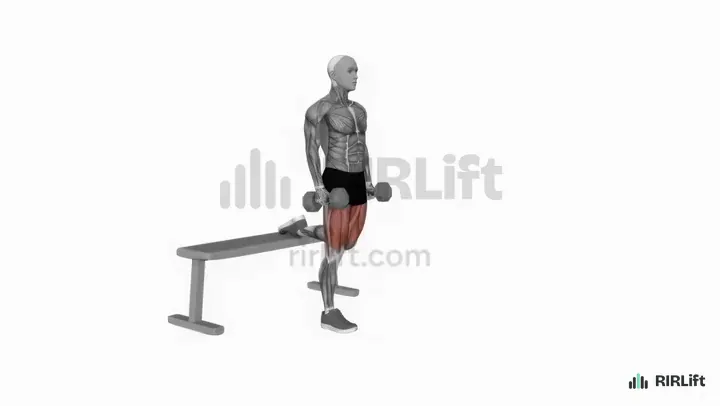
Bulgarian Split Squat

Quads, Glutes

Every jump takes off from one foot and lands on one foot, so leg strength has to be built side by side. The rear-foot-elevated split squat loads one leg through a long range and quickly shows if your landing leg is stronger than your other one.

How to do it

  1. With dumbbells hanging by your sides, put the laces of your back foot on a bench and step the front foot well forward.
  2. Drop your hips straight down until the back knee hovers just above the floor.
  3. Keep the front knee steady over the toes, not drifting in.
  4. Rise by driving through the whole front foot; do every rep on one side, then switch.

Cues

  • Drop straight down
  • Front knee steady
  • Equal reps both legs

Common mistakes

  • Letting the front knee drift inward: slow down and keep it over the second toe.
  • Doing more reps on your stronger leg: match the reps of the weaker side.

Swap for: Dumbbell Split Squat, Dumbbell Reverse Lunge, Step-Up

Hamstrings, glutes and one-leg balance

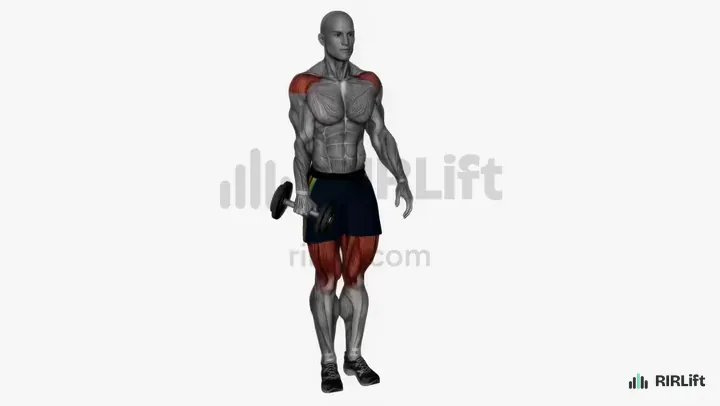
Single-Leg RDL

Hamstrings, Glutes

Spirals, landings and edge work all need a stable hip on a single leg. The single-leg Romanian deadlift strengthens the back of the leg while training the balance and hip control to hold your free leg in line.

How to do it

  1. Stand on one foot, knee unlocked, holding a dumbbell on the side of the lifted leg.
  2. Tip your torso forward from the hip as your free leg extends behind you.
  3. Reach the dumbbell down until your body and rear leg are close to a straight line.
  4. Squeeze the standing glute to come back up, keeping both hips facing the floor.

Cues

  • Body moves as one plank
  • Hips stay level
  • Long free leg like a spiral

Common mistakes

  • Letting the free hip open toward the ceiling: point the back toes at the floor.
  • Hunching to reach the floor: stop where the back stays straight.

Swap for: Dumbbell Romanian Deadlift, Dumbbell B-Stance RDL, Kettlebell Deadlift

Jump power and rotation

Height and rotation start off the ice with fast legs. Jump squats and single-leg box jumps train take-off power, and the 180 jump turn practices turning in the air and landing aligned. Keep these sets short, since you already jump a lot on the ice.

Vertical jump power

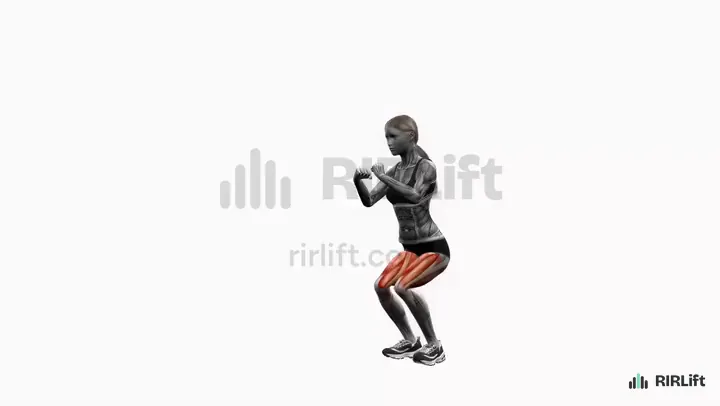
Jump Squat

Quads, Glutes

Height on jumps comes from how fast your legs can extend, and the jump squat trains that with nothing but bodyweight. A few explosive sets with long rests improve take-off power without the fatigue of more practice jumps.

How to do it

  1. Stand with feet about hip-width and arms by your sides.
  2. Dip into a squat to about half depth, arms swinging back.
  3. Jump straight up as high as you can, arms driving overhead.
  4. Land softly, sinking back into the half squat, then reset before the next rep.

Cues

  • Fast dip, faster jump
  • Arms drive up
  • Quiet landing

Common mistakes

  • Rebounding straight into the next jump with a stiff landing: pause and reset each rep.
  • Squatting too deep before take-off: a half squat is quicker.

Swap for: Box Jump, Frog Jump, Single-Leg Box Jump

One-leg take-off power

Single-Leg Box Jump

Quads, Glutes

Most jumps leave the ice from one foot, so single-leg box jumps train a one-foot take-off with a landing on a raised surface, which keeps the landing force low. Low box, crisp reps.

How to do it

  1. Stand on one foot facing a low box.
  2. Swing your arms back as you bend the standing knee.
  3. Jump off that foot and land on the box on the same foot.
  4. Stand tall, step down carefully and reset before the next rep.

Cues

  • Low box, high effort
  • Land soft and balanced
  • Step down every time

Common mistakes

  • Using a box so high you scramble onto it: pick one you can land on cleanly.
  • Jumping down off the box: always step down.

Swap for: Box Jump, Skater Hop, Step-Up

Rotational jump and landing

180 Jump Turn

Quads, Glutes

Jumping and turning half a rotation in the air trains you to rotate tight and land facing a new direction in balance. It is a simple off-ice way to practice rotation and landing alignment.

How to do it

  1. Stand with feet about hip-width, knees soft.
  2. Jump straight up and turn your hips and shoulders together to spin 180 degrees.
  3. Land softly facing the opposite way, knees bent and balanced.
  4. Pause, then jump back the other way.

Cues

  • Tall in the air
  • Turn as one unit
  • Land balanced and still

Common mistakes

  • Landing with the knees caving in: slow the turn until the landing is clean.
  • Leaning in the air: jump straight up first, then turn.

Swap for: Jump Squat, Skater Hop, Med Ball Rotational Throw

Edges, hips and ankles

Crossovers, footwork and holding an edge come from the hips and ankles. Skater hops train the sideways push and single-leg catch, Cossack squats build hip range and inner-thigh strength, and calf raises strengthen the ankles that work inside the boot.

Lateral push and one-leg landing

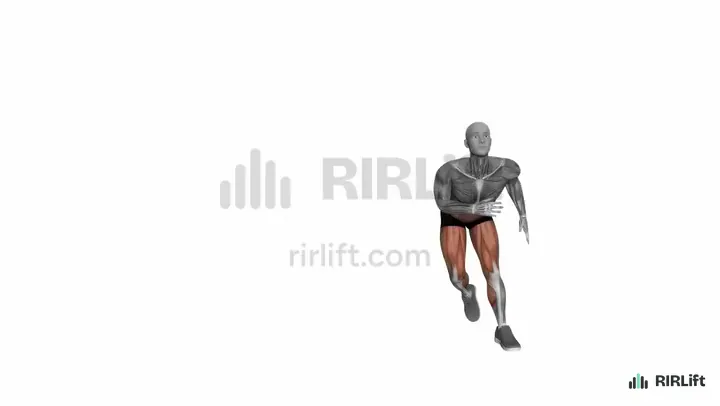
Skater Hop

Glutes, Quads, Abductors

The skater hop copies the push and catch of a crossover on land: you drive sideways off one leg and land balanced on the other. It is a low-cost way to train edge pushes and single-leg landing control.

How to do it

  1. Start balanced on one leg, knee soft.
  2. Bound sideways to the other foot, pushing hard off the standing leg.
  3. Land on the ball of the foot and settle onto the whole foot, knee bent, free leg behind.
  4. Hold the landing for a count, then bound back.

Cues

  • Drive sideways
  • Freeze each landing
  • Knee over the toes

Common mistakes

  • Landing with a straight leg: absorb with the hip and knee.
  • Hopping on before you are balanced: hold each landing still first.

Swap for: Lateral Box Jump, Cossack Squat, Jump Squat

Adductors and hips, lateral range

Cossack Squat

Quads, Adductors

Deep side-to-side squats open the hips and strengthen the inner thighs through a long range, which helps with spread eagles, footwork and holding a low edge. It is a strength move and a mobility drill at once.

How to do it

  1. Stand with your feet very wide, toes slightly out.
  2. Bend one knee and shift your hips over that foot while the other leg stays straight with toes lifting up.
  3. Sink as low as you can with the bent-leg heel flat.
  4. Push back through the middle and shift to the other side.

Cues

  • Bent-leg heel stays flat
  • Chest up
  • Shift through the middle

Common mistakes

  • Lifting the heel of the bent leg: go only as deep as the heel stays down.
  • Bouncing at the bottom: pause for a second instead.

Swap for: Dumbbell Lateral Lunge, Kettlebell Lateral Lunge, Copenhagen Plank

Calves and ankle strength

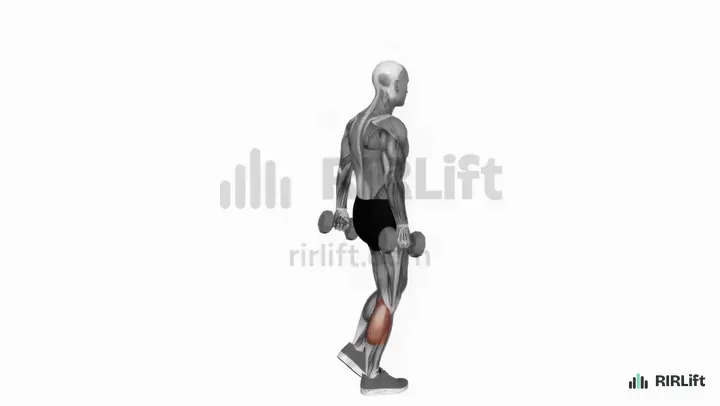
Single-Leg Calf Raise

Calves

Your ankles hold your edges and absorb every landing inside a stiff boot. Slow, full-range single-leg calf raises build the lower leg strength to do both.

How to do it

  1. Stand on one foot with a dumbbell in the hand on that side, fingertips of the free hand on a wall.
  2. Rise onto the ball of the foot as high as possible.
  3. Pause at the top for a second.
  4. Lower slowly all the way, then repeat and switch legs.

Cues

  • Highest point, pause
  • Slow down
  • Pressure through the big toe

Common mistakes

  • Bouncing through short reps: count two seconds down.
  • Rolling to the outside of the foot: keep the big toe pressed down.

Swap for: Dumbbell Standing Calf Raise, Standing Calf Raise, Seated Calf Raise

Core for spins and air position

A tight, aligned body spins faster and lands cleaner. Side planks and Copenhagen planks build side strength and inner thighs, and the Pallof press trains the trunk to stop rotation on a landing.

Adductors and trunk, side plank

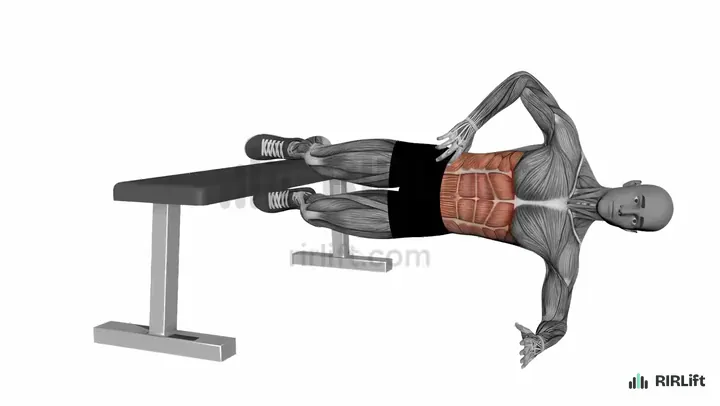
Copenhagen Plank

Adductors, Abs

The inner thighs pull your legs together in the air during rotation and hold your feet on edges in footwork. The Copenhagen plank trains them hard with a side plank where your top leg rests on a bench.

How to do it

  1. Lie on your side next to a bench and place your top leg on it, inner thigh or ankle on the pad.
  2. Prop yourself on your forearm, elbow under your shoulder.
  3. Lift your hips until your body is straight, with the bottom leg hanging below or lifted toward the bench.
  4. Hold for the target time, then switch sides.

Cues

  • Straight line, head to foot
  • Top leg presses into the bench
  • Breathe through it

Common mistakes

  • Letting the hips sag: shorten the hold or put the knee, not the ankle, on the bench.
  • Twisting forward: stack the hips.

Swap for: Side Plank, Hip Adduction Machine, Cossack Squat

Obliques and hips, side stability

Side Plank

Abs

Holding your body tight in a straight line from the side carries over to staying tall and aligned in spins and in the air. A plain side plank is the base for harder versions.

How to do it

  1. Lie on your side with your forearm on the floor, elbow under the shoulder, legs straight and stacked.
  2. Raise your hips so your body forms a straight line from head to feet.
  3. Keep the top hip stacked over the bottom one.
  4. Hold, then lower and switch sides.

Cues

  • Hips high and stacked
  • Long line head to heel
  • Push the floor away with the forearm

Common mistakes

  • Hips drifting back: line them up with your shoulders and feet.
  • Shoulder sinking: press up through the forearm.

Swap for: Copenhagen Plank, Dumbbell Side Plank, Pallof Press

Trunk anti-rotation

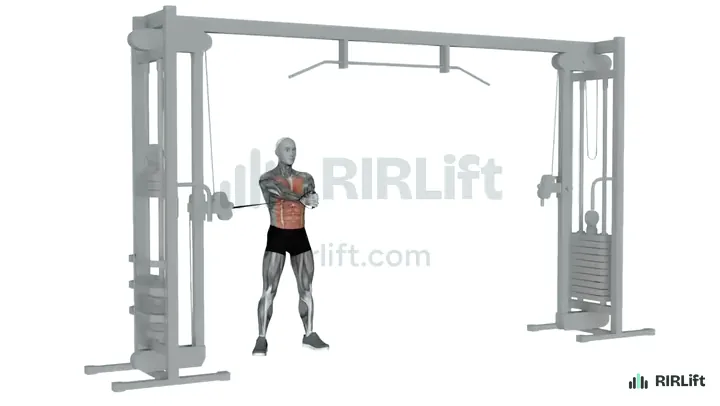
Pallof Press

Abs

Landing a jump means stopping rotation instantly, and your trunk has to resist twisting to do it. The Pallof press trains exactly that: you push a cable straight out while it tries to turn you.

How to do it

  1. Stand side-on to a cable set at chest height, holding the handle at your sternum.
  2. Step out until there is tension and set your feet about hip-width.
  3. Push the handle straight out until your arms lock, not letting it pull you around.
  4. Bring it back to the chest and repeat, then face the other way.

Cues

  • Hips and shoulders face forward
  • Straight line out and back
  • Brace like a landing

Common mistakes

  • Letting your body turn toward the machine: use less weight.
  • Leaning away: stay tall.

Swap for: Side Plank, Dead Bug, Cable Woodchop

Put them together: example sessions

Each session below picks from the exercises above for one situation, with the sets, reps, rest and RIR filled in. Open one in the session builder to change a pick, price it from a recent set, and add it to RIRLift.

Session 1

Competitive skater in season

Open in the session builder
  • Workouts2× a week
  • Working sets23 a week
  • Per workout~30 min
  • EquipmentDumbbells, Adjustable Cable

You skate five or more sessions a week and are working toward competitions, with two off-ice strength windows.

Your legs already handle a lot of jumping on the ice, so these two sessions keep jump work tiny and strength sets at 2 to 3 reps in reserve with 11 to 12 working sets each. Session A is leg strength with one jump exercise; session B pairs single-leg and lateral work with core. Ending well short of failure keeps your legs fresh for jump practice.

A: Legs
ExerciseSets × repsRIRRest
Jump SquatMax height, stick each landing. 3 × 3–5 3 90 s
Goblet Squat 3 × 6–10 2 90 s
Bulgarian Split SquatPer leg. 3 × 6–10 2 90 s
Pallof PressPer side. 2 × 8–12 2 1 min

Open A: Legs in the session builder

B: Single leg and core
ExerciseSets × repsRIRRest
Skater HopPer side. Freeze each landing. 3 × 4–6 3 1 min
Single-Leg RDLPer leg. 3 × 6–10 2 90 s
Single-Leg Calf RaisePer leg. 2 × 10–15 2 1 min
Copenhagen PlankSeconds per side. 2 × 15–30 2 1 min
Side PlankSeconds per side. 2 × 20–40 2 1 min

Open B: Single leg and core in the session builder

How to run it
Do A and B on days with lighter ice sessions or after skating. Avoid session A the day before a jump-heavy practice or a competition.
How to progress
Add a rep per set each week at the same reps in reserve, then the next dumbbell. Keep jump reps the same and focus on height and landing quality.

Session 2

Off-season or summer build

Open in the session builder
  • Workouts3× a week
  • Working sets39 a week
  • Per workout~35 min
  • EquipmentPlyo Box, Dumbbells, Adjustable Cable

You are between seasons, ice time is lower, and you want to build strength and jump power for the next season with three sessions a week.

Less ice time means more room for strength: sets move to 1 to 2 reps in reserve and sessions run 13 to 15 working sets. Each day starts with one jump exercise while fresh. Lower body is spread across all three days with a different main exercise each time, so no one area gets hammered twice in a row.

Day 1
ExerciseSets × repsRIRRest
Single-Leg Box JumpPer leg. Low box. 3 × 3–5 3 90 s
Goblet Squat 4 × 6–10 1 2 min
Cossack SquatPer side. 3 × 6–8 2 90 s
Pallof PressPer side. 3 × 8–12 1 1 min

Open Day 1 in the session builder

Day 2
ExerciseSets × repsRIRRest
180 Jump TurnEach direction. 3 × 4–6 3 90 s
Single-Leg RDLPer leg. 4 × 6–10 1 90 s
Single-Leg Calf RaisePer leg. 3 × 10–15 1 1 min
Side PlankSeconds per side. 3 × 30–45 1 1 min

Open Day 2 in the session builder

Day 3
ExerciseSets × repsRIRRest
Jump Squat 3 × 3–5 3 90 s
Bulgarian Split SquatPer leg. 4 × 6–10 1 2 min
Skater HopPer side. 3 × 5–6 2 1 min
Copenhagen PlankSeconds per side. 3 × 20–30 1 1 min

Open Day 3 in the session builder

How to run it
Lift on non-consecutive days and skate on the others. Keep jumps fast and stop a set if the height drops.
How to progress
Add load each week while you stay at the target reps in reserve. Every fourth week, drop one set from each exercise.

Session 3

Adult skater new to off-ice training

Open in the session builder
  • Workouts1× a week
  • Working sets12 a week
  • Per workout~30 min
  • EquipmentDumbbells

You took up skating as an adult, skate once or twice a week, and want to feel steadier on your edges and more confident on jumps.

Balance and leg strength improve fastest when you start with controlled exercises, so this plan skips the harder jumps and uses 2 to 3 reps in reserve throughout. One session of 12 working sets fits easily next to a couple of skating sessions and leaves your legs fresh for the ice.

Full body
ExerciseSets × repsRIRRest
Goblet Squat 3 × 8–12 3 90 s
Single-Leg RDLPer leg. Fingertips on a wall if needed. 2 × 6–8 3 90 s
Cossack SquatPer side. Bodyweight. 2 × 5–8 2 90 s
Single-Leg Calf RaisePer leg. 2 × 10–15 2 1 min
Side PlankSeconds per side. 3 × 15–30 2 1 min
How to run it
Do it once a week, on a day you are not skating, or twice if you recover well.
How to progress
Add reps each week and a little weight once you reach the top of each range at the target reps in reserve. Add skater hops when single-leg exercises feel steady.

Make it fit you

Questions

What workouts do figure skaters do?

Off-ice, skaters do strength work for the legs, jump training, balance and single-leg exercises, core work, and flexibility. A typical session starts with a few jumps, moves to squats and single-leg exercises, and ends with core.

What exercises can I do to improve my ice skating?

Single-leg exercises like split squats and single-leg Romanian deadlifts help balance and landings, skater hops help crossovers and edges, calf raises strengthen ankles, and planks and the Pallof press help you stay tight in spins.

Should figure skaters lift weights?

Yes. Moderate weights build leg strength for landings and take-offs faster than bodyweight alone. Keep sets short of failure and lift two or three times a week depending on how much you skate.

How many days a week should a skater do off-ice training?

Two strength sessions in season and three in the off-season works for most competitive skaters. Adult skaters who skate once or twice a week can start with one session.

Can I do figure skating exercises at home?

Most of them, yes. Squats, split squats, single-leg Romanian deadlifts, jumps, skater hops, calf raises and planks need only bodyweight or a dumbbell. Only the Pallof press needs a cable or band.