
Dumbbell front raise: how to do it, and whether you need it
Published November 5, 2026
A dumbbell front raise lifts two dumbbells straight out in front of you, from your thighs up to shoulder height, with your arms almost straight. It trains the front delts, the front of the shoulder, with the upper chest helping. Pick a weight you can stop and hold at shoulder height for a beat; if you need a hip swing to start the rep, it is too heavy. Because every bench press, push-up and overhead press also works the front delts hard, 2 to 3 sets a week is plenty for most lifters, and many need none at all.
- WorksShoulders
- EquipmentDumbbells
- Start with3 × 10–15, 1 in reserve, 90 s rest
How to do the dumbbell front raise
It is the simplest way to load the front delt on its own, with nothing but a pair of light dumbbells. Use it when pressing alone has not brought the front of your shoulders along, or as a short finisher on an upper-body day.
Steps
- Take a light dumbbell in each hand and stand tall, knees soft, the weights resting against the front of your thighs with your palms facing you.
- Brace your stomach, draw your shoulders away from your ears and set a small bend in your elbows that stays the same for the whole set.
- Raise both dumbbells together straight ahead of you, knuckles leading, until your arms point forward level with the floor.
- Stop there for a one-count, keeping your torso upright and your neck relaxed.
- Lower them over a slow count of three back to your thighs, then start the next rep without a bounce.
Cues
- Knuckles lead the way up
- Stop at shoulder height
- Ribs down, torso still
Common mistakes
- Leaning back to get the weights moving: that turns the lift into a hip swing. Go lighter until you can start every rep with your body perfectly still.
- Swinging up past shoulder height on the dumbbell version: the extra range adds little for the front delt. Stop when your arms are level with the floor.
- Letting the elbows bend more as the set gets hard: a bent arm is a shorter lever and an easier rep. Hold the same small bend from rep one to the last.
- Dropping the weights on the way down: the lowering half trains the muscle too, so control it all the way to your thighs.
Swap for: Plate Front Raise, Band Front Raise, Arnold Press
Muscles the dumbbell front raise works
The front raise works the front (anterior) delt, with the upper fibers of the chest helping and the side delts, traps and the muscles around the shoulder blade holding the shoulder steady. The load is heaviest when your arms are level with the floor, because that is where the dumbbell sits furthest from your shoulder, and close to nothing at the bottom. That is why the top of the rep, not the first few inches, is where the set gets hard.
Sets, reps and reps in reserve for the dumbbell front raise
| Goal | Sets × reps | RIR | Rest |
|---|---|---|---|
| Build muscle | 2–3 × 10–15 | 1–2 | 60–90 s |
| Enough on top of your pressing. Add a rep each session before you move up a dumbbell size. | |||
| Front delts lagging | 3–4 × 12–20 | 0–2 | 60–90 s |
| Split them over two days of the week rather than stacking them in one session, and keep counting your presses as front-delt work. | |||
| Beginners | 2 × 12–15 | 2–3 | 90 s |
| Leave 2 to 3 reps in the tank until standing still is automatic. Most beginners get enough front-delt work from pressing alone. | |||
| Finisher after presses | 1–2 × 15–20 | 1 | 60 s |
| Your front delts are already tired from pressing, so a lighter pair than you expect will do. | |||
Dumbbell front raise variations
-
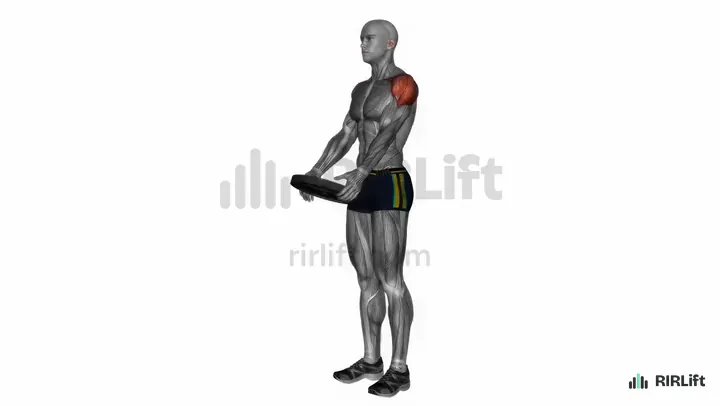
Plate Front Raise
Both hands grip one plate at its sides, and you raise it to shoulder height, the plate standing upright in front of you. Good when the dumbbell rack is busy.
-
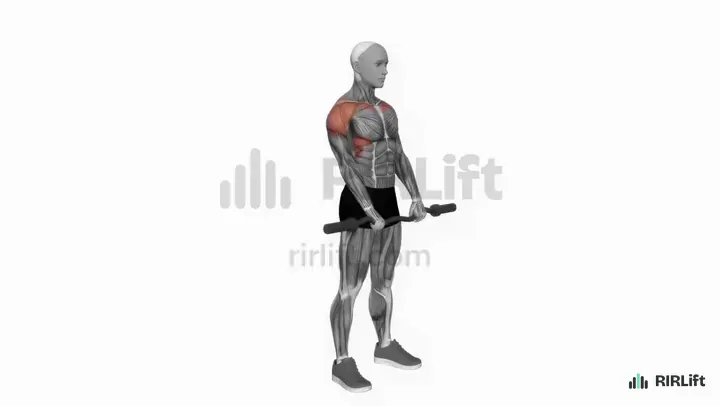
EZ-Bar Front Raise
Hands overhand on the angled grips of an EZ bar. One bar for both arms lets you load a little heavier, and the angled grip suits sore wrists.
-
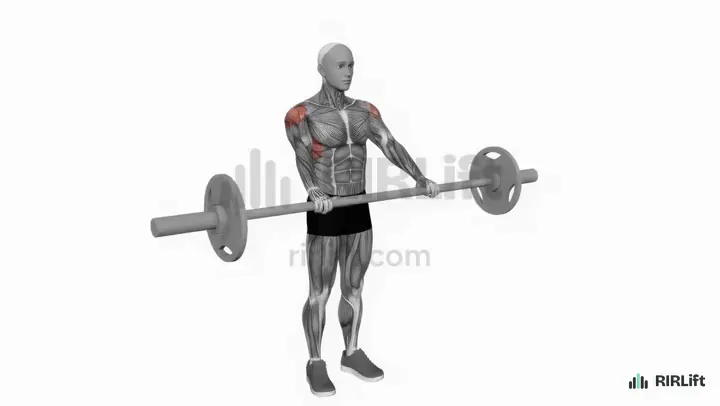
Barbell Front Raise
A light straight bar held overhand at shoulder width. The same job as the EZ bar when that is taken; keep the plates small.
-
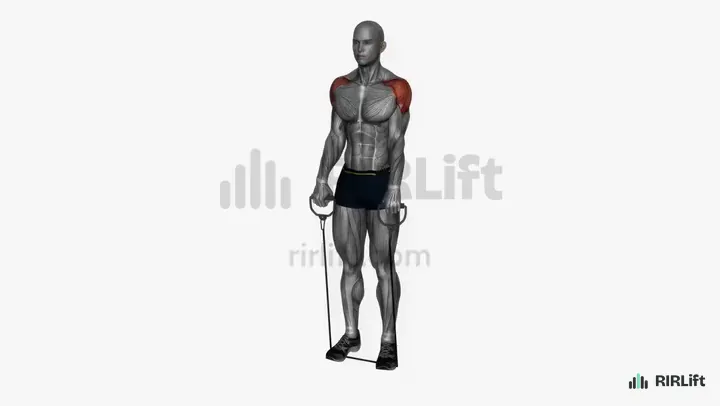
Band Front Raise
Stand on the middle of a band, a handle in each hand, and raise both together. The band pulls hardest at the top, so it suits home training and travel.
-
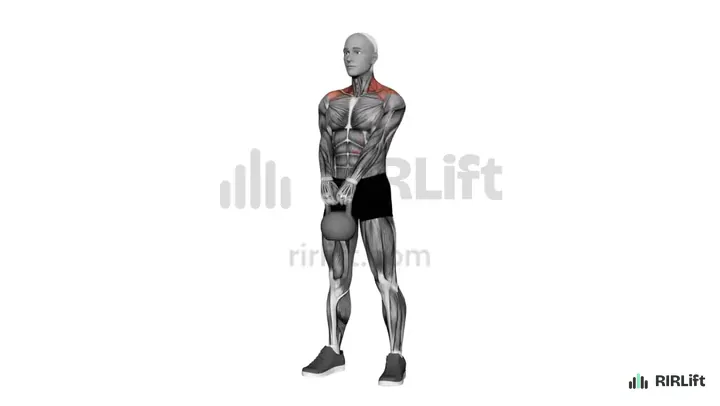
Kettlebell Front Raise
One kettlebell held by the handle in both hands, bell hanging down, raised with bent elbows toward eye level. Works with a single bell at home.
Dumbbell front raise alternatives
Presses that load the front delts heavier
-
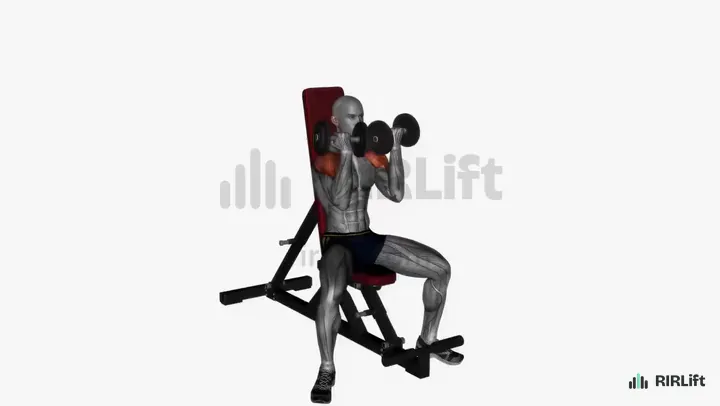
Arnold Press
Seated, start with your palms facing you and turn them out as you press. The low start puts the front delts in charge, with far more weight than any raise.
-
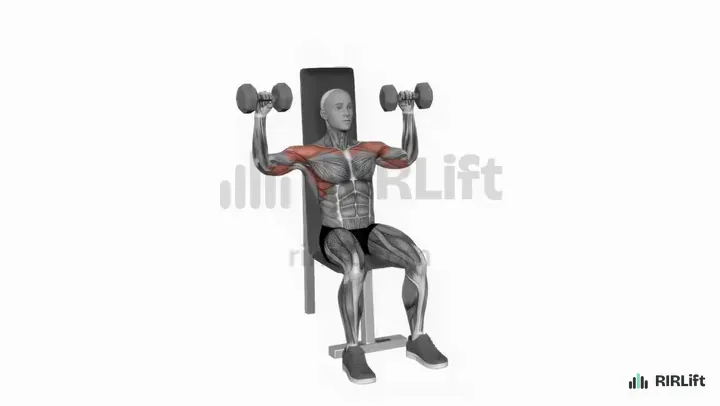
Dumbbell Shoulder Press
The plain seated dumbbell press overhead. If you already do it, your front delts are getting most of the work a front raise would add.
-
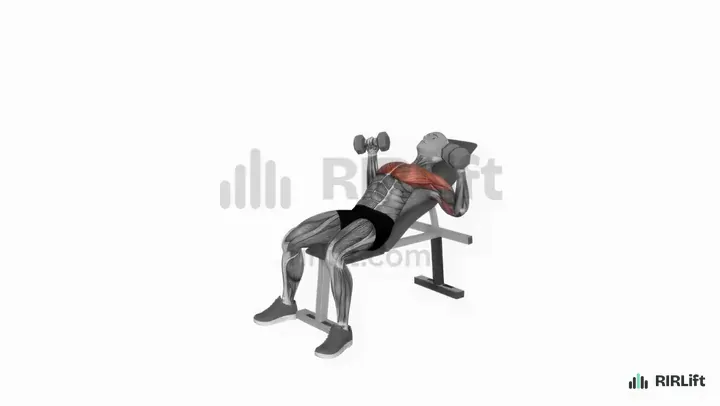
Incline Dumbbell Press
Upper chest and front delts together. A steeper bench shifts more of the press onto the shoulders.
If the shoulder pinches or the raise turns into a swing
-
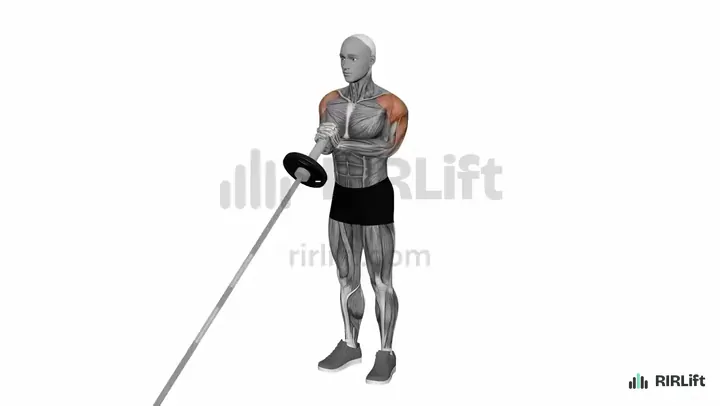
Landmine Press
Both hands on the end of a bar in a landmine, pressed up and forward from your chest. The angled path is often comfortable for a cranky shoulder.
-
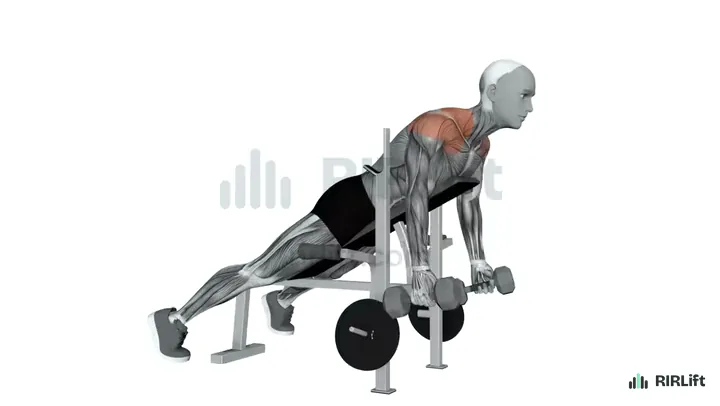
Dumbbell Chest-Supported Y Raise
Lie chest down on an incline bench and raise the dumbbells forward and out in a Y. The bench makes swinging impossible.
No equipment, or the side delts instead
-
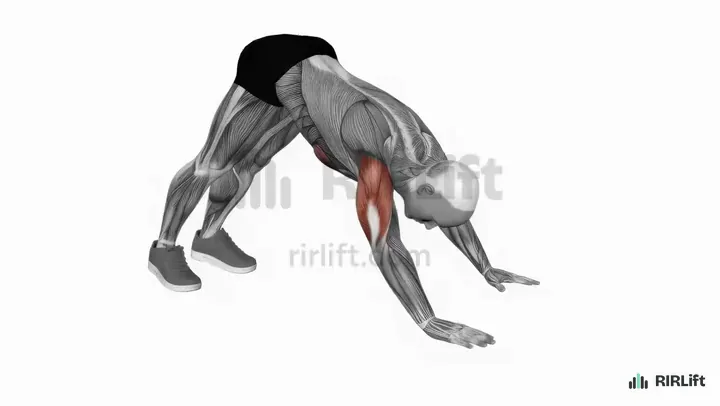
Pike Push-Up
Hips high, head toward the floor between your hands. Your bodyweight loads the front delts with no gear at all.
-
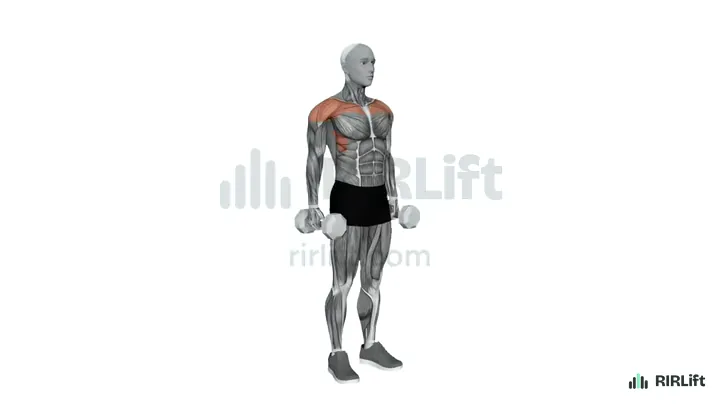
Dumbbell Lateral Raise
Raise the dumbbells out to your sides instead. Pick it when your front delts are covered by pressing and you want wider-looking shoulders.
Do you need front raises?
Often not. The front delt is one of the main movers in every horizontal and overhead press, so a program with bench press, incline press, push-ups or overhead presses already trains it several times a week.
Add front raises when the front of your shoulders is clearly behind the rest of your upper body, when an injury or a missing bench rules out pressing, or when you simply enjoy them as a short finisher. If you have limited time for isolation work, lateral raises and rear-delt work usually pay off more, because presses train those parts of the shoulder far less.
Front raises vs lateral raises
They train different parts of the shoulder. A front raise moves the arm forward and works the front delt; a lateral raise moves it out to the side and works the side delt, the part that makes your shoulders look wider from the front.
Presses already hit the front delt hard and the side delt much less, so if you only have room for one raise, lateral raises are usually the better use of the time. Do both if the front of your shoulders is lagging too.
How heavy should front raises be?
Light, and lighter than you expect. The dumbbell sits at the end of a long, almost straight arm, so a weight that feels easy to press feels heavy at shoulder height in a raise. Start with one of the lightest pairs on the rack.
Check yourself at shoulder height: a pair you can hold there for a one-count, with no lean back, is the right one. Add reps until you reach the top of your rep range, then move up the smallest step you have. On a lift this small, one jump on the dumbbell rack can cost you several reps.
Questions
What muscles do front raises work?
Mainly the front delts, the front of the shoulder. The upper chest helps lift the arm, and the side delts, traps and the muscles around the shoulder blade work to keep the shoulder steady.
Are front raises worth doing?
They work, but most lifters who press regularly already give their front delts plenty of work. Front raises are worth adding when the front delts lag, when you cannot press, or as 1 to 2 short sets after your presses.
Should front raises go above shoulder height?
Stopping at shoulder height keeps the work on the front delt and makes the top of the rep the hardest part. Going higher brings in the traps; it is not harmful for most people, but it adds little for the front delt.
Should you do front raises with palms down or palms in?
Both train the front delt. Palms down is the standard version and what the demo here shows. Palms facing each other, like a hammer grip, feels more comfortable for some shoulders, so use it if palms down pinches.
Is it better to do front raises one arm at a time?
Alternating arms lets you focus on one side and makes it harder to swing the torso, but the set takes twice as long. Raising both together, as shown here, is fine as long as your body stays still.
Can front raises replace the overhead press?
No. A front raise isolates the front delt with light weight, while an overhead press trains the whole shoulder and triceps with much heavier loads. Use raises to add to pressing, not to stand in for it.
Related templates
-
Front raise alternatives: other ways to train your front delts
Plate, band, cable and press swaps, with ready-made sessions.
-
Lateral raises: how to do them, and what to do instead
The side-delt raise that most lifters need more than the front raise.
-
Exercises for front delts: overhead, incline and landmine presses
Presses and raises for the front of the shoulder, grouped by gear.
-
The best workout for shoulders, for your situation
Where a front raise fits next to presses, lateral raises and rear-delt work.
-
How to use RIR
Judging reps left when a light raise falls apart before true failure.