
Goblet squat: how to do it, what it works and what to swap in
Published October 17, 2026
The goblet squat is a squat with one dumbbell or kettlebell held upright against your chest. It trains your quads and glutes, with your adductors helping at the bottom. The weight in front acts as a counterbalance, so you can sit deep with a tall torso, which is what makes it an easy squat to learn and a solid leg builder until you can no longer hold a heavy enough weight.
- WorksQuads, Glutes
- AlsoAdductors
- EquipmentDumbbells
- Start with3 × 10–15, 2 in reserve, 90 s rest
How to do the goblet squat
Holding the weight at your chest pulls your torso upright and lets you sit straight down between your knees, so you get a deep squat with one dumbbell and no rack. It is the squat to learn first and a strong high-rep leg exercise after that.
Steps
- Pick up one dumbbell, stand it on end and cup the top plate in both palms so it rests against your breastbone.
- Set your feet a little wider than your hips with your toes turned out slightly, and point your elbows at the floor.
- Take a breath and brace, then sit straight down between your heels, letting your knees travel forward over your toes.
- Go as deep as you can while your heels stay down and the dumbbell stays against your chest; your elbows should finish just inside your knees.
- Drive your whole foot into the floor and stand up tall, then breathe and brace again before the next rep.
Cues
- Dumbbell glued to your breastbone
- Sit down between your heels
- Elbows inside your knees at the bottom
Common mistakes
- Letting the dumbbell drift away from your chest: your arms tire before your legs and you tip forward, so keep it pinned and pick a weight you can hold for the whole set.
- Heels lifting at the bottom: stop the rep a little higher or put a small plate under each heel.
- Knees falling inward on the way up: push them out toward your little toes and use your elbows as a guide at the bottom.
Swap for: Heels-Elevated Goblet Squat, Dumbbell Front Squat, Front Squat
Muscles the goblet squat works
The goblet squat works your quads and glutes, with your adductors helping out of the bottom. Your quads take the most work in the deepest part of the squat, which is why sitting all the way down matters more than the weight. Your upper back and arms hold the dumbbell, and on heavy sets they often give out before your legs do.
Sets, reps and reps in reserve for the goblet squat
| Goal | Sets × reps | RIR | Rest |
|---|---|---|---|
| Build muscle | 3 × 10–15 | 2 | 90 s |
| This matches the session builder below; add a rep each week and move to a heavier dumbbell once every set reaches 15. | |||
| Last leg exercise of the session | 2–3 × 15–20 | 0–1 | 90 s |
| Use it after a heavier squat or leg press to add quad volume with a load your arms can still hold. | |||
| Learning to squat | 3 × 8–10 | 3 | 2 min |
| Stop each set with three good reps left and spend the effort on hitting the same depth every rep. | |||
Goblet squat variations
-
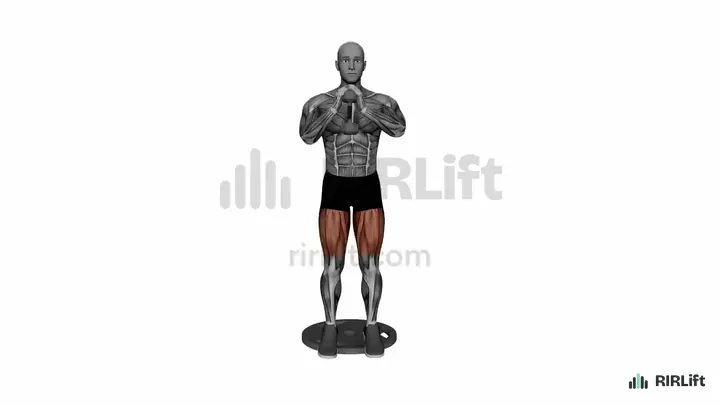
Heels-Elevated Goblet Squat
Pick this if your heels lift before you reach depth or you want more of the work on your quads.
Build a session with it -
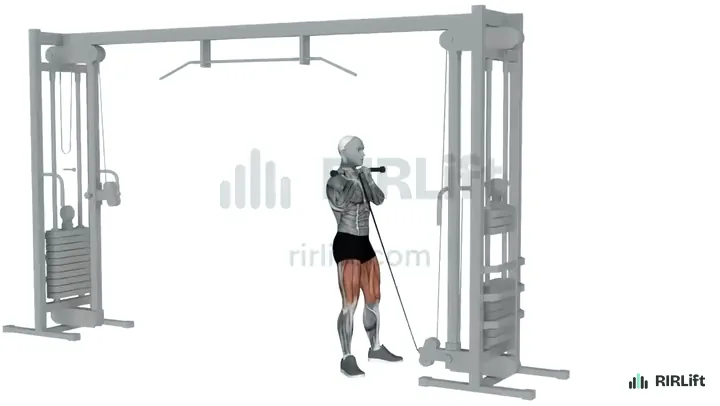
Cable Goblet Squat
Pick this when the dumbbells you need are taken or too heavy to carry to a spot, since the cable keeps tension the whole way.
Build a session with it -
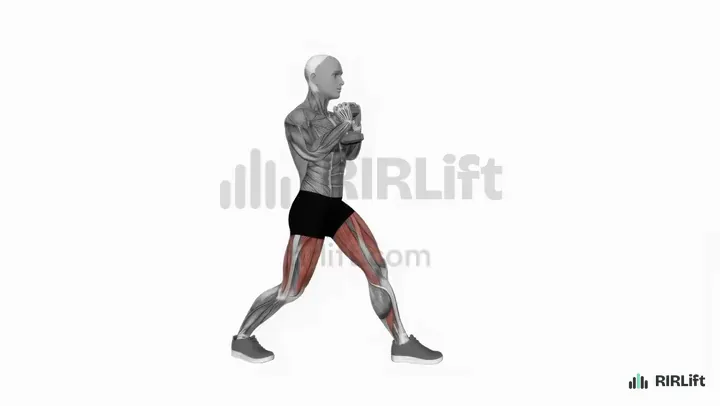
Dumbbell Goblet Split Squat
Pick this to train one leg at a time with the same chest hold, which makes a light dumbbell feel much heavier.
Build a session with it -
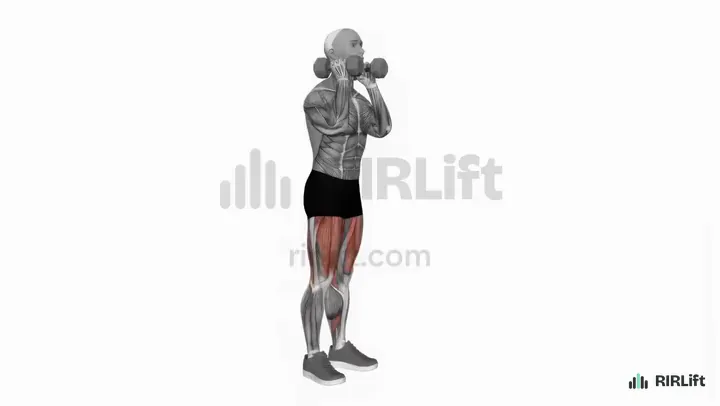
Dumbbell Front Squat
Pick this once one dumbbell at your chest is too light, because two dumbbells on your shoulders let you load more.
Build a session with it
Goblet squat alternatives
Only dumbbells
-
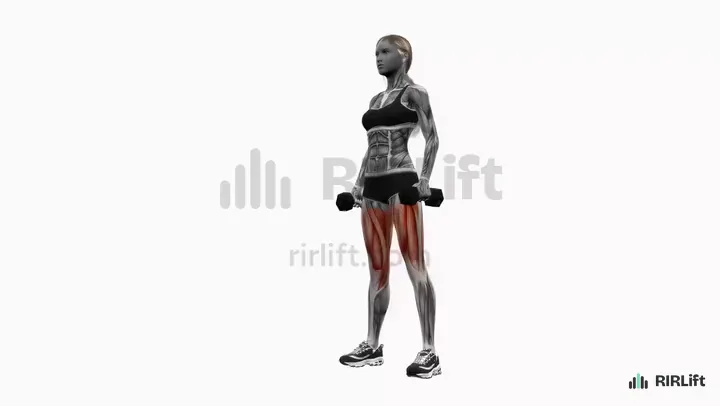
Dumbbell Squat
Hold two dumbbells at your sides when your arms give out before your legs on the goblet squat.
Build a session with it -
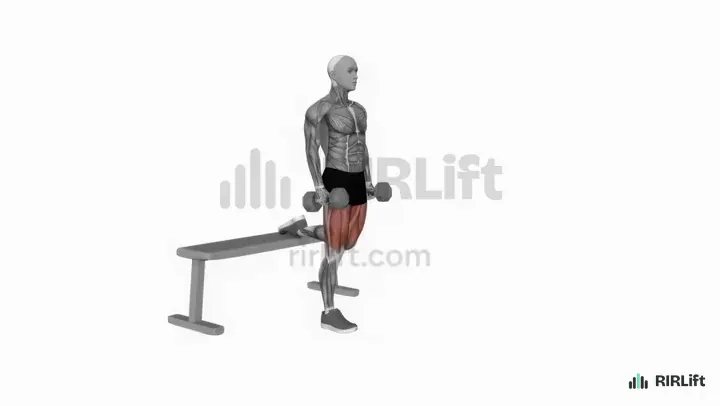
Bulgarian Split Squat
Choose this when your heaviest dumbbell is too light, since one leg at a time does the work of two.
Build a session with it -
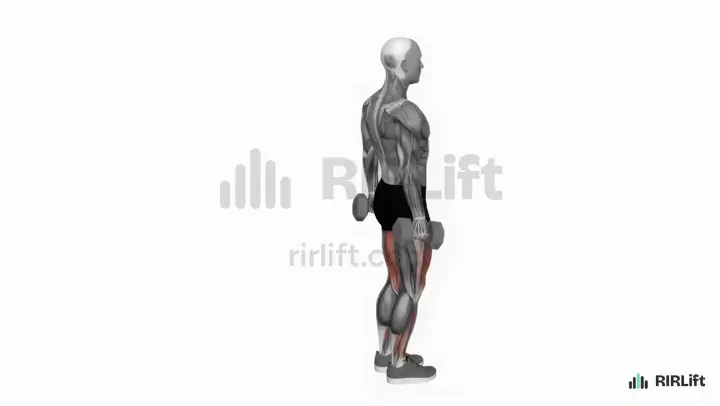
Dumbbell Reverse Lunge
Choose this if you want a single-leg option that is easier to balance than a split squat.
Build a session with it
Barbell or machine
-
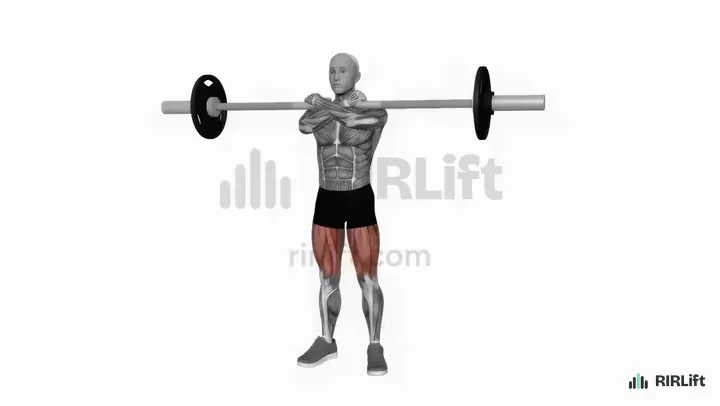
Front Squat
Choose this when you have a rack and want the same upright position with far more weight.
Build a session with it -
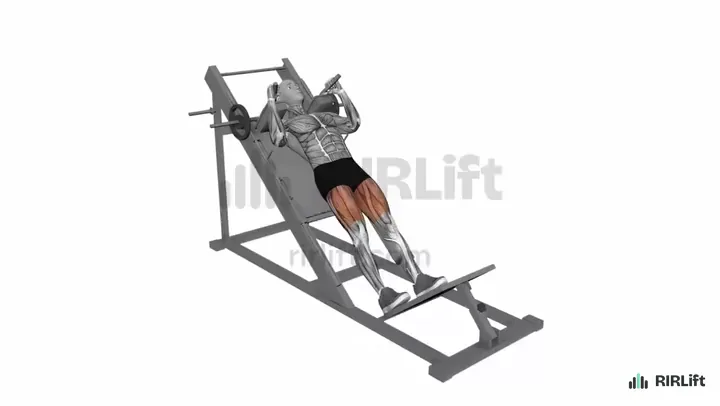
Hack Squat
Choose this to push your quads close to failure without your grip or balance stopping the set.
Build a session with it -
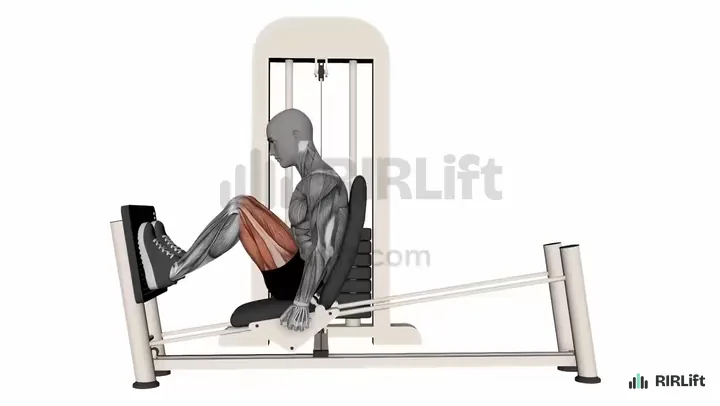
Leg Press
Choose this when you want to load your legs heavily while sitting down.
Build a session with it
No weights
-
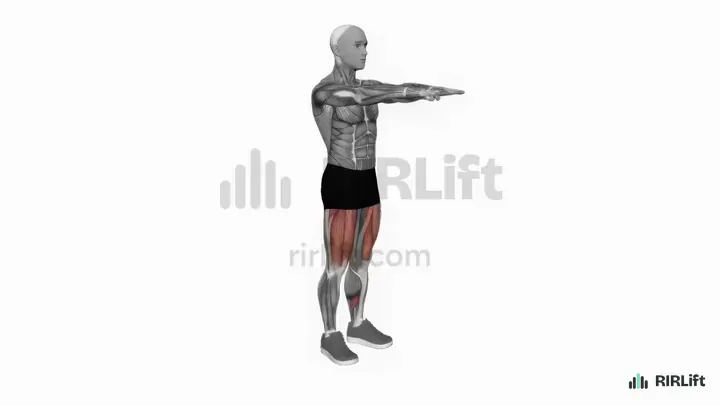
Bodyweight Squat
Use this to practise the pattern when you have nothing to hold, then add reps until it gets hard.
Build a session with it -
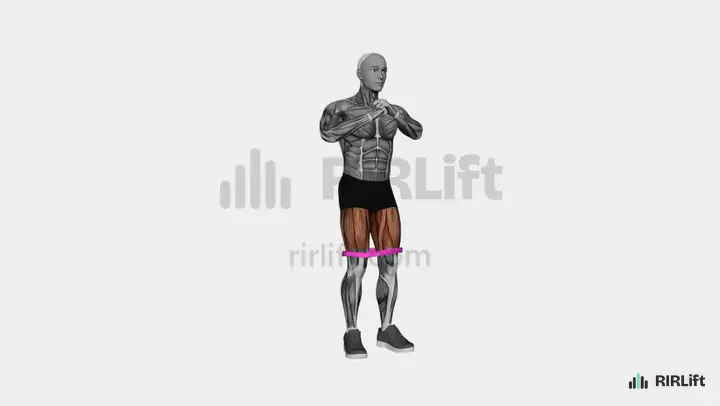
Band Squat
Use this at home with a band when you need more resistance than bodyweight alone.
Build a session with it
Kettlebell goblet squat
With a kettlebell, hold it by the horns with the bell resting against your chest, or upside down by the handle if you want your forearms to work harder. Everything else is the same: feet a little wider than your hips, sit between your heels, elbows inside your knees at the bottom.
Kettlebells jump in bigger steps than dumbbells, often 4 kg at a time, so add reps before you add weight. Once the top of your rep range comes easily, move up a bell and start again at the bottom of the range.
Goblet squat vs back squat
Both train your quads and glutes, but the back squat lets you load far more weight, and the goblet squat stops progressing when you can no longer hold a heavier dumbbell at your chest. The goblet squat needs no rack and keeps your torso more upright, which makes it the easier one to learn.
If you can only goblet squat, push your sets close to failure and use higher reps. When a set of 20 with your heaviest dumbbell is no longer hard, switch to a Bulgarian split squat or a barbell squat if you have one.
Questions
Are goblet squats good for building legs?
Yes. They train your quads and glutes through a deep range of motion, and with sets taken within one or two reps of failure they build muscle. Their limit is how heavy a dumbbell you can hold at your chest, so once that becomes the problem, move to a front squat, a hack squat or a split squat.
What muscles does the goblet squat work?
Mostly your quads and glutes, with your adductors helping at the bottom. Your upper back, arms and core work to hold the weight in place.
What is the difference between a goblet squat and a back squat?
The goblet squat holds one weight at your chest, so you stay more upright and need no rack. The back squat puts a barbell on your upper back, which lets you lift far more and keep progressing for longer.
Is a 20 kg goblet squat good?
For sets of 10 to 15 reps with full depth, 20 kg is a solid working weight for many lifters. What matters more is that you add reps or weight over time while finishing each set close to failure.
Should I use a dumbbell or a kettlebell?
Either works. A dumbbell is easier to hold flat against your chest and comes in smaller jumps; a kettlebell sits well in your hands by the horns. Use whichever your gym has in the weight you need.
How deep should a goblet squat be?
Go as low as you can with your heels down and the weight against your chest, ideally until your thighs are below parallel. If your heels lift first, raise them on small plates rather than cutting the rep short.
What can I do instead of goblet squats?
With dumbbells, hold two at your sides or do Bulgarian split squats. With a rack, front squats keep the same upright position with more weight. On machines, a hack squat or leg press lets your legs work without your grip giving out first.
Related templates
-
Bulgarian split squat: form, foot position and alternatives
The next step once your heaviest dumbbell is too light for goblet squats.
-
Leg exercises with dumbbells: quads, hamstrings, glutes and calves
More ways to train your legs with the same dumbbells.
-
The best workout for legs, built for your situation
A full leg session you can drop the goblet squat into.
-
How to use RIR
How to judge how many reps you had left on each set.