Hamstring exercises for runners: curls, hinges and the slow lowering speed asks for

The best hamstring exercises for runners train both jobs the muscle does: bending the knee and extending the hip. For the knee, use Nordic hamstring curls, stability ball curls and seated or lying leg curls. For the hip, use Romanian deadlifts, single-leg and B-stance RDLs and 45-degree back extensions. Add kettlebell swings and single-leg bridges for fast and single-leg hip extension. Train hamstrings twice a week, about 10 hard sets a session, cut to one shorter session during speed or race blocks, and lower every rep slowly, since the hamstrings work hardest while lengthening at speed.

  1. Nordic Hamstring Curl Hamstrings
  2. Single-Leg RDL Hamstrings, Glutes
  3. Stability Ball Leg Curl Hamstrings
  4. Romanian Deadlift Hamstrings, Glutes
  5. Seated Leg Curl Hamstrings
  6. Kettlebell Swing Glutes, Hamstrings
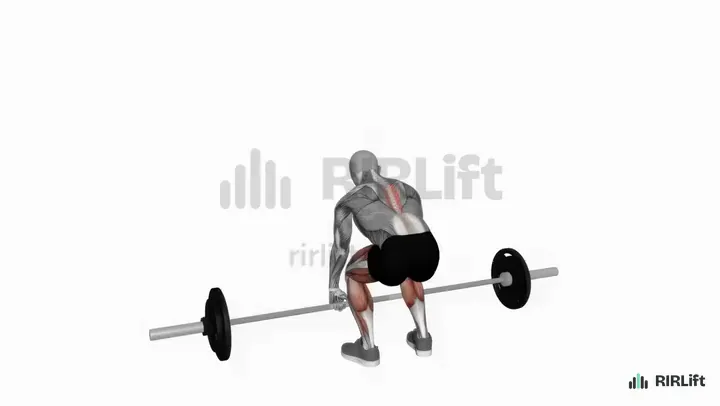
Curls: the knee end of the hamstring

At the end of each leg swing, the hamstrings brake the lower leg as it straightens. Curls train that knee action, and the Nordic curl does it while the muscle lengthens, the way running loads it.

Hamstrings, slow lowering at the knee

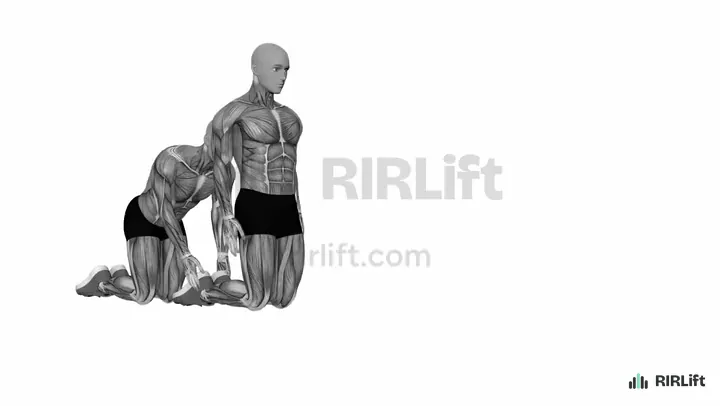
Nordic Hamstring Curl

Hamstrings

No other hamstring exercise loads the muscle as hard while it lengthens, which is exactly the work it does as your foot reaches forward before landing at speed. Start with a partial range and only a few slow reps.

How to do it

  1. Kneel on a cushion with your ankles pinned under a couch, or held by a partner, and your body upright from knees to head.
  2. Squeeze your glutes and lower your torso forward as slowly as you can, bending only at the knees.
  3. When your hamstrings can't hold you, catch yourself with your hands on the floor.
  4. Push off the floor lightly and pull with your hamstrings to come back up to kneeling.

Cues

  • Hips stay open, no folding
  • Lower as slowly as possible
  • Hands catch, then help up

Common mistakes

  • Bending at the hips to make the lowering easier: keep a straight line from knees to shoulders.
  • Flopping to the floor after a few inches: fight it the whole way down; the slow lowering is the rep.

Swap for: Single-Leg RDL, Band Good Morning, Superman

Hamstrings, curl with the hips up

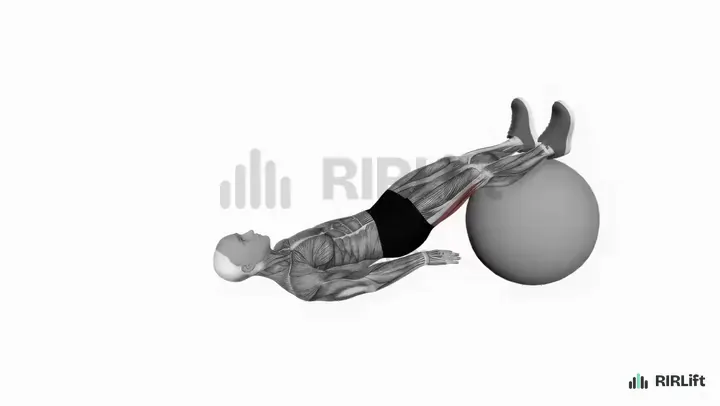
Stability Ball Leg Curl

Hamstrings

Curling a ball in with your hips held up trains both ends of the hamstring at once at home. Once two legs is easy, curl with one.

How to do it

  1. Lie face up with your heels and lower calves on a stability ball and your arms flat on the floor beside you.
  2. Dig your heels into the ball and raise your hips until shoulders, hips and feet line up.
  3. Keeping your hips high, pull the ball in toward your glutes until your feet are flat on top of it.
  4. Roll the ball back out slowly until your legs are straight again, without letting your hips sag.

Cues

  • Hips up before you curl
  • Heels dig into the ball
  • Slow on the way out

Common mistakes

  • Letting your hips drop as the ball rolls in: the curl gets easier because your hamstrings stop holding the bridge.
  • Rushing the roll-out: take two to three seconds on it.

Swap for: TRX Leg Curl, Band Leg Curl, Nordic Hamstring Curl

Hamstrings, curl at long length

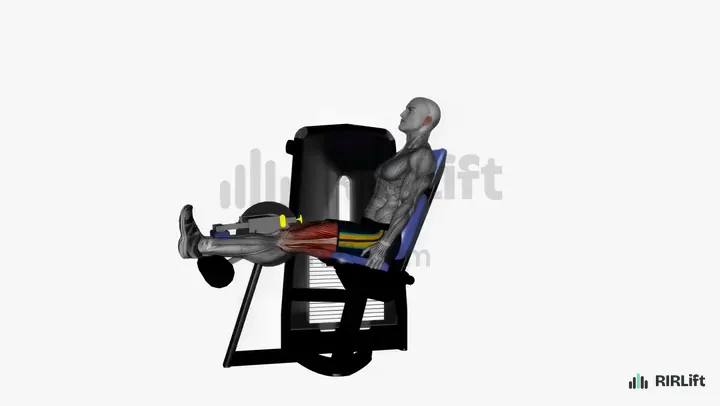
Seated Leg Curl

Hamstrings

With the hips bent, the seated curl trains the hamstrings at a longer length than the lying version, and the machine lets you add load in small steps. Lower slowly on every rep.

How to do it

  1. Set the backrest so your knees line up with the machine's pivot, and lock the thigh pad down firmly.
  2. Rest the lower pad just above your heels with legs straight.
  3. Curl your heels down and back under the seat as far as they go.
  4. Let the pad rise slowly until your legs are straight again, and repeat.

Cues

  • Thigh pad snug
  • Pull heels under the seat
  • Two seconds on the way up

Common mistakes

  • Lifting your hips off the seat to finish the rep: tighten the thigh pad and lighten the stack.
  • Letting the stack crash between reps: control it all the way to straight legs.

Swap for: Lying Leg Curl, Romanian Deadlift, Nordic Hamstring Curl

Hamstrings, machine curl

Lying Leg Curl

Hamstrings

The lying curl isolates the knee action with a stable setup, a good choice when your back or hips are tired from running. Keep the hips pressed into the pad.

How to do it

  1. Set the machine so your knees line up with the pivot point when you lie face down, and move the ankle pad to sit on your lower calves, just above your heels.
  2. Lie flat with your kneecaps hanging just past the end of the bench, hold the handles and press your hips into the pad.
  3. Bend your knees and pull the pad up in a smooth arc until your heels are as close to your glutes as the machine allows.
  4. Pause for a moment at the top without letting your hips lift off the bench.
  5. Lower the pad over about two seconds until your legs are almost straight, and start the next rep before the stack touches down.

Cues

  • Hips glued to the pad
  • Heels to glutes
  • Slow on the way down

Common mistakes

  • Lifting your hips as the weight gets heavy: your lower back takes over and the hamstrings do less. Drop the load until your hips stay down on every rep.
  • Stopping short at the bottom: that cuts out the part of the rep where your hamstrings are longest. Let your legs come back to almost straight before you curl again.
  • Swinging the pad up: a kick from the bottom hands the hardest part of the rep to momentum. Count two seconds down and start each rep from a dead stop.

Swap for: Seated Leg Curl, Single-Leg Leg Curl, Stability Ball Leg Curl

Hinges: the hip end of the hamstring

Hinges load the hamstrings as hip extensors, the action that pulls your foot back under you on each landing. Two legs lets you go heavy; one leg adds the balance of a stride.

Hamstrings and glutes, heavy hinge

Romanian Deadlift

Hamstrings, Glutes

The Romanian deadlift loads the hamstrings heavy through a long stretch with both legs, so it builds strength fastest of the hinges. Use it in off-season blocks when you have time to recover.

How to do it

  1. Stand with a barbell at your thighs, hands just outside your legs, feet under your hips.
  2. Soften your knees and push your hips back, sliding the bar down your thighs.
  3. Stop when your hamstrings are fully stretched, usually just below the knee, with your back flat.
  4. Push your hips forward to stand up, glutes tight at the top.

Cues

  • Hips back
  • Bar stays on your legs
  • Back flat

Common mistakes

  • Bending the knees into a squat: keep them soft and still.
  • Reaching for the floor: stop where your back would round.

Swap for: Weighted Back Extension

Hamstrings and glutes, dumbbell hinge

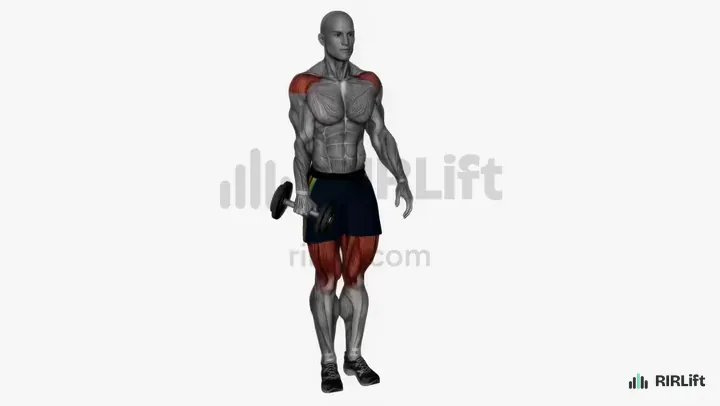
Dumbbell Romanian Deadlift

Hamstrings, Glutes

Dumbbells hang beside the legs, which makes the hinge easier to learn and fine for home training. Push the hips back until the hamstrings stop you.

How to do it

  1. Stand hip-width apart with a dumbbell in each hand resting against the front of your thighs, palms facing you.
  2. Push your hips straight back and let your torso fold forward, knees softly bent, the dumbbells brushing your legs.
  3. Lower until the dumbbells pass your knees and you feel a strong stretch in your hamstrings, with your back still flat.
  4. Drive your hips forward to stand back up, squeezing your glutes at the top, and repeat.

Cues

  • Hips back, not down
  • Dumbbells slide down your legs
  • Flat back, chin tucked

Common mistakes

  • Bending the knees into a squat so the dumbbells go lower: the depth comes from the hips, and most people stop just past the knees.
  • Rounding the lower back at the bottom: end the rep where your back stays flat, and lighten the load if that is high.

Swap for: Single-Leg RDL, Dumbbell Good Morning, Kettlebell Deadlift

Hamstrings and glutes, one leg

Single-Leg RDL

Hamstrings, Glutes

Running loads the hamstrings one leg at a time, and the single-leg RDL does too, with the hip and foot holding your balance. Light weight and slow reps are plenty.

How to do it

  1. Stand on your left leg with a dumbbell in your left hand and the standing knee softly bent.
  2. Hinge forward at the left hip while your right leg extends straight behind you, keeping your hips level.
  3. Lower until your torso and back leg are close to parallel to the floor or the standing hamstring stops you.
  4. Drive the left hip forward to come back up, then finish the set before switching sides.

Cues

  • Back leg and torso move as one
  • Hips level, back toes down
  • Slow on the way down

Common mistakes

  • Opening the hip so the back leg rotates out: point the back toes at the floor the whole time.
  • Touching the free foot down between reps to rebalance: slow down and hold a wall with your free hand if needed.

Swap for: Dumbbell B-Stance RDL, Dumbbell Romanian Deadlift, Kettlebell Deadlift

Hamstrings, staggered stance

Dumbbell B-Stance RDL

Hamstrings, Glutes

The B-stance RDL puts most of the load on the front leg while the back toe steadies you, so you can go heavier than a full single-leg RDL. A good middle step between the two.

How to do it

  1. Stand with dumbbells in both hands and slide one foot back so its toes sit level with the heel of the front foot.
  2. Put about four fifths of your weight on the front leg with a soft knee.
  3. Hinge forward by sending your hips back, lowering the dumbbells along the front leg until the back of that thigh is stretched.
  4. Drive the front hip forward to stand up and repeat, then switch legs.

Cues

  • Front leg holds the weight
  • Back foot is only a kickstand
  • Hips square to the floor

Common mistakes

  • Sharing the load evenly between both feet: lift the back heel and keep only the toes down.
  • Twisting the hips open as you lower: keep both hip bones pointing at the floor.

Swap for: Single-Leg RDL, Dumbbell Romanian Deadlift, Dumbbell Good Morning

Hamstrings, glutes and back extensors

45-Degree Back Extension

Glutes, Hamstrings

On a 45-degree bench, hinging at the hips trains the hamstrings and glutes against body weight with no spinal load from a bar. Hold a plate at your chest when it gets easy.

How to do it

  1. Set the pad so it sits just below your hip bones, then hook your heels under the foot rollers.
  2. Fold your arms over your chest and stand straight in line with the bench.
  3. Bend forward at the hips until you feel a stretch in your hamstrings.
  4. Lift your torso back to a straight line with your legs, squeezing your glutes, and stop there.

Cues

  • Hinge at the hips
  • Stop at a straight line
  • Squeeze your glutes at the top

Common mistakes

  • Arching back past a straight line at the top: the rep ends when your body is straight.
  • Setting the pad too high so it blocks your hips: you should be able to fold freely over it.

Swap for: Back Extension, Superman, Weighted Back Extension

Fast and single-leg hip extension

Swings move the hips fast, and the single-leg bridge loads one hamstring and glute at short length. Both fill gaps the slower lifts leave.

Hamstrings and glutes, fast hinge

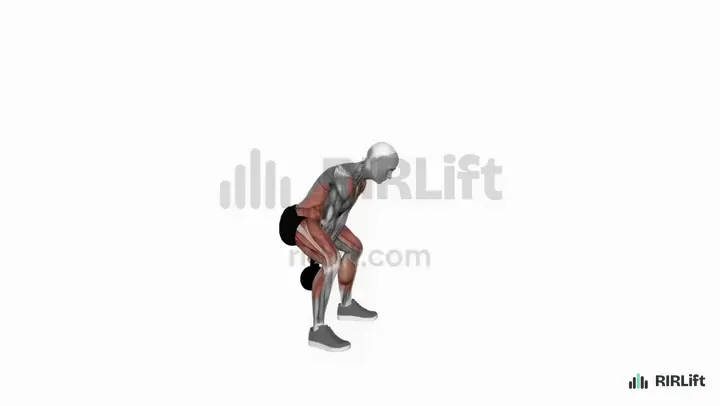
Kettlebell Swing

Glutes, Hamstrings
The swing loads the hamstrings as the bell pulls you into the hinge and then drives the hips through fast. Speed work asks for fast hip extension, and slower lifts alone do not train it.

How to do it

  1. Stand with your feet a little wider than your hips, the bell set about a foot in front of you.
  2. Hinge down, grip the handle with both hands, and hike the bell back between your thighs.
  3. Snap your hips forward to stand tall, letting the bell float up to about shoulder height on straight arms.
  4. Let it fall back between your legs as you hinge again, and go straight into the next rep.

Cues

  • Hips snap, arms just hold on
  • Stand tall at the top
  • Bell passes high between the thighs

Common mistakes

  • Squatting the swing by bending the knees deeply: push your hips back and keep the shins nearly vertical.
  • Lifting the bell with your shoulders: if your arms are working, the hips are not driving it.

Swap for: Dumbbell Romanian Deadlift, Kettlebell Deadlift, Superman

Hamstrings and glutes, single-leg bridge

Single-Leg Glute Bridge

Glutes

With one foot on the floor and a two-second hold at the top, the bridge loads the hamstring at short length alongside the glute. A simple warm-up for heavier hamstring work too.

How to do it

  1. On your back, plant one foot flat and the other leg lifted; rest a light kettlebell on the working hip if you have one.
  2. Press the planted heel down and raise your hips until your body is straight from knee to shoulder.
  3. Lower slowly and finish the set before switching.

Cues

  • Push through the heel
  • Hips level
  • Pause at the top

Common mistakes

  • Letting one hip drop: lower the height until both stay level.

Swap for: Donkey Kick, Dumbbell Glute Bridge, Clamshell

Put them together: example sessions

Each session below picks from the exercises above for one situation, with the sets, reps, rest and RIR filled in.

Session 1

Home, no machines

  • Workouts2× a week
  • Working sets20 a week
  • Per workout~25 min
  • EquipmentDumbbells, Exercise Ball

You train at home with a dumbbell, a stability ball and a couch to anchor your heels, and want stronger hamstrings for running.

Each session has 10 sets, 20 a week, split between knee curls and hip hinges. The Nordic sets are short and hard, 1 rep in reserve, while the rest stay at 2 so you are not sore for runs.

Hamstrings at home
ExerciseSets × repsRIRRest
Single-Leg Glute BridgePer leg. Warm-up. 2 × 10–12 2 45 s
Nordic Hamstring CurlLower as slowly as you can. 3 × 3–6 1 2 min
Dumbbell Romanian Deadlift 3 × 8–12 2 90 s
Stability Ball Leg Curl 2 × 8–12 2 1 min
How to run it
Do it twice a week after easy runs. Keep at least two days between a session and your next speed workout, since Nordics can leave the hamstrings sore at first.
How to progress
On Nordics, add range before reps: lower a little further each week before you catch yourself. On the other lifts, reach the top of the rep range with 2 reps left, then add weight or move the ball curl to one leg.

Session 2

Gym, curls and hinges

  • Workouts2× a week
  • Working sets21 a week
  • Per workout~25 min
  • EquipmentBarbells, Seated Leg Curl, Hyperextension, Kettlebells +2

You lift at a gym twice a week and want heavier hamstring work in your off-season or base block.

Day A has 10 sets and Day B has 11, about 21 a week, with a heavy hinge at 1 to 2 reps in reserve and machine curls close to failure. Machine curls can be taken near failure without your form breaking down, so they carry most of the volume.

Day A: Heavy hinge
ExerciseSets × repsRIRRest
Romanian Deadlift2 warm-up sets first 4 × 6–8 2 2:30 min
Seated Leg Curl3 s lowering. 3 × 8–12 1 75 s
45-Degree Back Extension 3 × 10–15 1 1 min
Day B: Single leg and speed
ExerciseSets × repsRIRRest
Kettlebell Swing 3 × 10–12 2 75 s
Dumbbell B-Stance RDLPer leg. 3 × 8–10 2 90 s
Lying Leg Curl3 s lowering. 3 × 8–12 1 75 s
Nordic Hamstring CurlLower as slowly as you can. 2 × 3–5 1 2 min
How to run it
Do Day A after an easy run and Day B two or three days later, both at least 48 hours before the long run.
How to progress
Use double progression: once every set of a lift hits the top of its range at the target reps in reserve, add the smallest weight step. On curls, keep the 3-second lowering as the load goes up.

Session 3

Track or speed season: one short session

  • Workouts1× a week
  • Working sets8 a week
  • Per workout~20 min
  • EquipmentDumbbells, Kettlebells, Lying Leg Curl

You are doing weekly intervals or track work, the hamstrings are working hard at speed, and you want to keep them strong with little added fatigue.

Eight sets once a week is enough to hold hamstring strength through a speed block. Low reps with 2 to 3 in reserve keep the load meaningful without leaving the muscle sore for the next session.

Hamstring maintenance
ExerciseSets × repsRIRRest
Nordic Hamstring CurlLower as slowly as you can. 2 × 3–5 2 2 min
Single-Leg RDLPer leg. 2 × 6–8 2 75 s
Kettlebell Swing 2 × 10 3 75 s
Lying Leg Curl3 s lowering. 2 × 8–10 2 1 min
How to run it
Do it right after a hard session or the day after, never the day before intervals.
How to progress
Hold the weights and reps steady through the season. If the Nordics feel easy, lower a little further before catching yourself, but add no extra sets.

Make it fit you

Questions

What are the top 3 hamstring exercises for runners?

The Nordic hamstring curl, the single-leg Romanian deadlift and a leg curl, either on a stability ball or a machine. Together they train the knee and hip ends of the hamstring, slow lowering and single-leg control.

What are signs of weak hamstrings?

The useful signs are ones you can test: a Nordic curl that drops fast early in the range, or one leg clearly weaker than the other on single-leg RDLs or bridges. Both give you a baseline to retest every few weeks.

How do athletes train hamstrings?

Most sports programs combine a hinge like the Romanian deadlift, a knee curl, and the Nordic curl, then add fast work like swings or sprints. Volume is kept low enough to stay fresh for practice, and drops further in season.

How often should runners train hamstrings?

Twice a week in base season, once a week during race or speed blocks. About 10 hard sets per session across curls and hinges in base season, and around 8 in a single weekly session when speed work takes over.

Can runners train hamstrings at home with no equipment?

Yes. Nordic curls with your heels under a couch, single-leg glute bridges, and towel or ball curls cover it. Add a single dumbbell for RDLs when you can.