Leg exercises for runners: single-leg strength, heavy hinges, calves and spring

The best leg exercises for runners are Bulgarian split squats, reverse lunges and step-ups for single-leg strength; trap bar deadlifts, goblet squats and Romanian deadlifts for heavy whole-leg work; single-leg RDLs for hamstrings and balance; single-leg and seated calf raises for the calves; and box jumps for spring. Lift legs twice a week on easy days, 3 to 4 sets of 5 to 10 reps stopping 1 to 3 reps short of failure, and drop to one short session when race season starts.

  1. Bulgarian Split Squat Quads, Glutes
  2. Dumbbell Reverse Lunge Quads, Glutes
  3. Step-Up Quads, Glutes
  4. Trap Bar Deadlift Quads, Glutes
  5. Single-Leg RDL Hamstrings, Glutes
  6. Single-Leg Calf Raise Calves
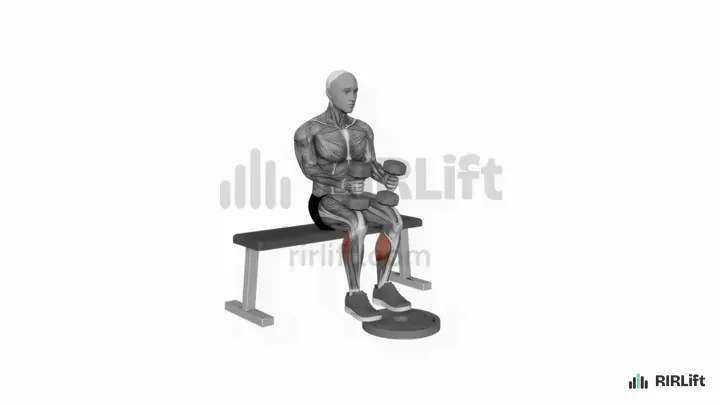
  7. Dumbbell Seated Calf Raise Calves
  8. Box Jump Quads, Glutes, Hamstrings
Single-leg strength

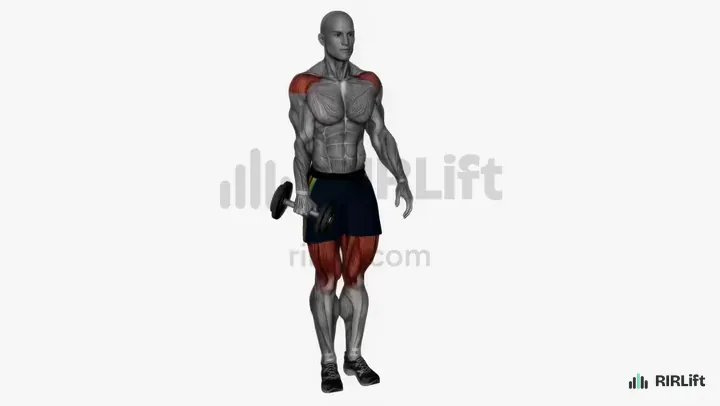
You run one leg at a time, and each landing loads that leg on its own. Split squats, lunges and step-ups build the quads and glutes on each side alone, and show you quickly if one leg lags.

Quads and glutes, single leg

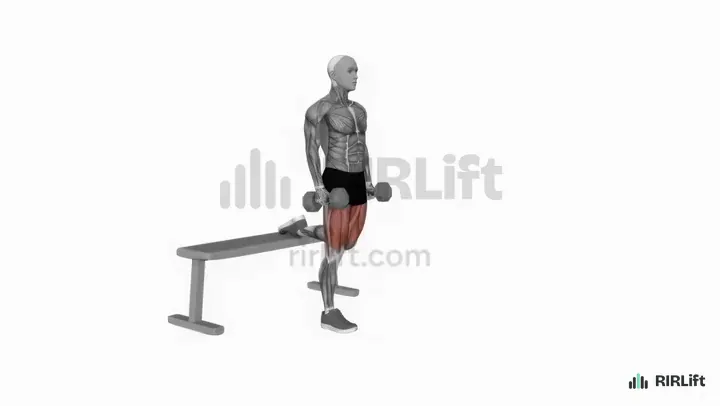
Bulgarian Split Squat

Quads, Glutes

With the back foot on a bench, nearly all the load goes through the front leg, so it builds stride strength with half the weight of a squat. It also shows any left-right difference within a few sets.

How to do it

  1. Set the top of your back foot on a bench and place your front foot a long stride ahead.
  2. Hold a dumbbell in each hand at your sides, and keep your front foot flat.
  3. Drop your back knee straight toward the floor until the front thigh is close to level.
  4. Press through the front foot to rise, then finish all reps before switching legs.

Cues

  • Go deep for the inner thigh
  • Front foot flat
  • Rear foot is just a kickstand

Common mistakes

  • Pushing up with the back leg: let it relax and make the front leg do the work.
  • Front knee collapsing inward: keep it pointed the same way as your toes.

Swap for: Dumbbell Split Squat, Step-Up, Reverse Lunge

Quads and glutes, stepping back

Dumbbell Reverse Lunge

Quads, Glutes

Stepping back is easier on the knee than a forward lunge and still trains each leg alone through a long range. It suits runners new to lifting who are not ready for the split squat.

How to do it

  1. Start tall with a dumbbell hanging from each hand and your feet under your hips.
  2. Step one foot back and lower until your back knee is just above the floor and your front thigh is near parallel.
  3. Keep your front heel flat and your chest tall.
  4. Push through your front foot to bring the back foot forward to the start, then alternate or finish all reps on one side.

Cues

  • Front shin stays vertical
  • Back knee kisses the floor
  • Drive through the front heel

Common mistakes

  • Taking a short step so the front knee shoots forward and the heel lifts: step farther back.
  • Letting the torso twist or lean to the side as you tire; keep both dumbbells hanging straight down.

Swap for: Reverse Lunge, Dumbbell Split Squat, Bulgarian Split Squat

Quads and glutes, drive up

Step-Up

Quads, Glutes

Pushing your body up onto a bench copies the drive phase of hill running. Bring the back foot up only to touch so the top leg does all the lifting.

How to do it

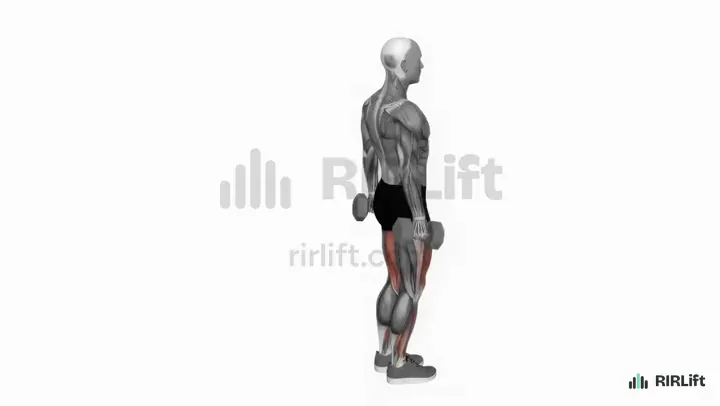
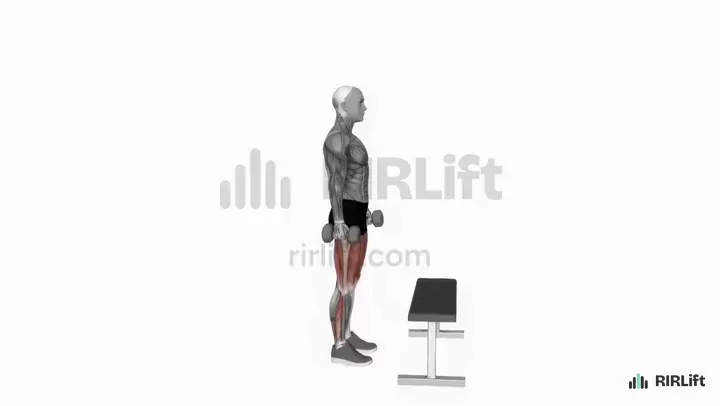
  1. Stand facing the bench with two dumbbells.
  2. Place one whole foot on the bench.
  3. Lean forward a little and push through the top foot to stand up on the bench.
  4. Bring the other foot up only to touch, then lower it back to the floor.
  5. Finish all reps on one leg before switching.

Cues

  • Whole foot on the bench
  • Push through the top heel
  • Lower slowly, do not drop

Common mistakes

  • Pushing off the floor with the back foot: that halves the work. Keep the trailing foot light.
  • Using a bench so high that your knee is far above your hip: you will rock instead of step.

Swap for: Barbell Step-Up

Quads and glutes, single leg without weights

Skater Squat

Quads, Glutes

The skater squat loads one leg through a deep bend with no equipment, and the balance demand trains the hip and foot together. It is the travel version of the split squat.

How to do it

  1. Stand on one foot and bend the other knee so that foot is behind you, arms straight out in front as a counterweight.
  2. Push your hips back and lean your chest forward as you bend the standing knee.
  3. Lower until the back knee is just above the floor.
  4. Drive through your standing foot to stand tall; sets are per leg.

Cues

  • Arms forward as the counterweight
  • Chest leans, back stays flat
  • Back knee to a folded towel

Common mistakes

  • Only going down a few inches: put a folded towel or cushion where your knee should land and touch it every rep.
  • Letting the standing knee collapse inward: track it over your toes, and slow the lowering if it wobbles.

Swap for: Pistol Squat, Reverse Lunge, Cossack Squat

Heavy whole-leg lifts

Two-legged lifts let you use far more weight than single-leg work, which builds raw strength in the quads, glutes and back with few reps. One of these per session is plenty for a runner.

Whole leg and back, heavy

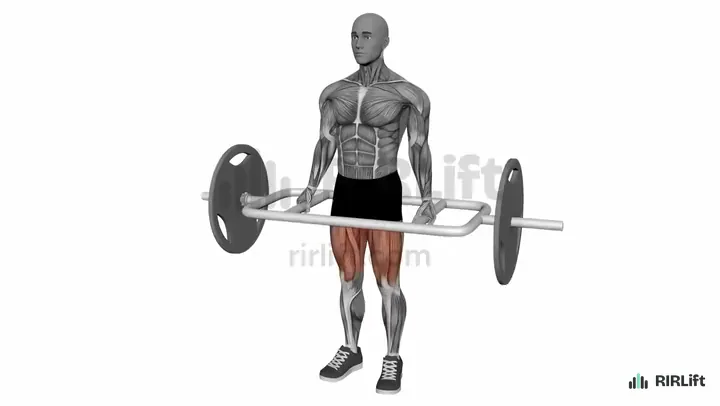
Trap Bar Deadlift

Quads, Glutes

The trap bar lets you lift heavy with an upright trunk, so you build leg and hip strength in a few hard sets without wrecking your back for the next run. It is the best single heavy lift for most runners.

How to do it

  1. Step inside the trap bar with the handles beside your feet.
  2. Push your hips back, bend your knees, and grip the handles.
  3. Flatten your back, take the slack out, and stand up by pushing the floor away.
  4. Lower under control. Each warm-up set adds weight toward your working sets.

Cues

  • Push the floor away
  • Flat back
  • Slack out before you pull

Common mistakes

  • Yanking the bar off the floor: pull the slack out first.
  • Rounding the back as the weight climbs: hold the ramp until the setup is solid.

Swap for: Barbell Deadlift, Romanian Deadlift, Kettlebell Deadlift

Quads and glutes, squat pattern

Goblet Squat

Quads, Glutes

Holding the weight at your chest keeps you upright and makes a deep squat easy to learn. It builds the quads that absorb landing forces, especially on downhills.

How to do it

  1. Hold a dumbbell or kettlebell vertically against your chest.
  2. Sit down between your knees, elbows inside them at the bottom.
  3. Stand up tall.

Cues

  • Elbows nudge the knees out at the bottom.
  • Chest stays up behind the weight.

Common mistakes

  • Letting the weight pull you forward.

Swap for: Bodyweight Squat, Barbell Back Squat

Hamstrings and hip hinge

The hamstrings pull the leg back under you and slow the shin at the end of each swing. Hinges load them through a long stretch, the range where they work hardest at speed.

Hamstrings and glutes, heavy hinge

Romanian Deadlift

Hamstrings, Glutes

The Romanian deadlift loads the hamstrings and glutes heavy at long length, the range they work through just before your foot lands. Use it in the off-season when you have time to recover from heavier work.

How to do it

  1. Stand with a barbell at your thighs, hands just outside your legs, feet under your hips.
  2. Soften your knees and push your hips back, sliding the bar down your thighs.
  3. Stop when your hamstrings are fully stretched, usually just below the knee, with your back flat.
  4. Push your hips forward to stand up, glutes tight at the top.

Cues

  • Hips back
  • Bar stays on your legs
  • Back flat

Common mistakes

  • Bending the knees into a squat: keep them soft and still.
  • Reaching for the floor: stop where your back would round.

Swap for: Weighted Back Extension

Hamstrings and glutes, single-leg balance

Single-Leg RDL

Hamstrings, Glutes

Hinging on one leg trains the hamstring, the glute that keeps the hip level and the foot that balances you, all at once. A light dumbbell is enough to start.

How to do it

  1. Stand on your left leg with a dumbbell in your left hand and the standing knee softly bent.
  2. Hinge forward at the left hip while your right leg extends straight behind you, keeping your hips level.
  3. Lower until your torso and back leg are close to parallel to the floor or the standing hamstring stops you.
  4. Drive the left hip forward to come back up, then finish the set before switching sides.

Cues

  • Back leg and torso move as one
  • Hips level, back toes down
  • Slow on the way down

Common mistakes

  • Opening the hip so the back leg rotates out: point the back toes at the floor the whole time.
  • Touching the free foot down between reps to rebalance: slow down and hold a wall with your free hand if needed.

Swap for: Dumbbell B-Stance RDL, Dumbbell Romanian Deadlift, Kettlebell Deadlift

Calves and ankles

The calves and Achilles push off and absorb the landing on every stride. Train the straight-knee calf with single-leg raises and the bent-knee soleus with seated raises; most runners only do the first.

Calves and Achilles, single leg

Single-Leg Calf Raise

Calves

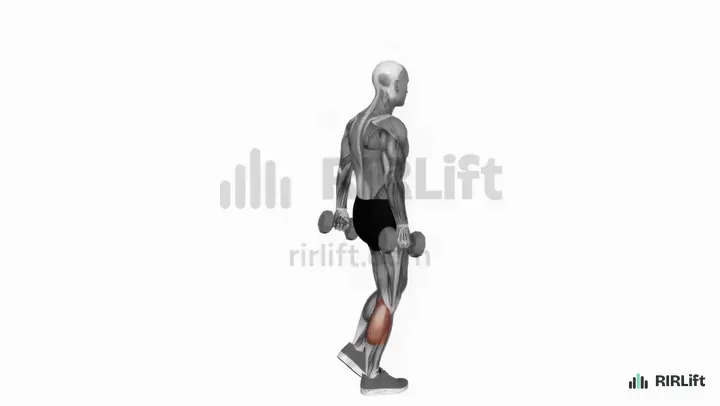
Running loads one calf at a time, so this is the calf raise that matches it. Use the full range off a step and lower over two seconds to load the Achilles too.

How to do it

  1. Stand on one foot with the other lifted just off the floor, arms by your sides; hold a dumbbell in each hand once body weight is easy.
  2. Rise onto the ball of your foot as high as you can and hold for a second.
  3. Lower your heel to the floor over two seconds.
  4. Finish all reps on one leg, then switch; sets are per leg.

Cues

  • Rise as high as you can
  • Pause at the top
  • Two seconds down

Common mistakes

  • Bouncing through the reps: pause for a beat at the top of each one.
  • Rolling onto the outside of the foot: keep your weight over the big toe.

Swap for: Dumbbell Standing Calf Raise, Kettlebell Calf Raise, Standing Calf Raise

Soleus, bent-knee calf

Dumbbell Seated Calf Raise

Calves

With the knee bent, the soleus does most of the work, and it carries a large share of the load in each stride. A pair of heavy dumbbells on your thighs is enough to train it.

How to do it

  1. Sit on a chair or bench with your knees bent to about 90 degrees and the balls of your feet on a book or weight plate, heels free.
  2. Set a dumbbell upright on each thigh just above the knee and hold them steady with your hands.
  3. Let your heels drop to the floor for a stretch, then push up through the balls of your feet as high as you can.
  4. Hold the top for a second, lower slowly, and repeat.

Cues

  • Weight sits on the knees, not the hands
  • Full drop, full lift
  • Squeeze and hold at the top

Common mistakes

  • Pushing the dumbbells up with your arms: rest your hands on top only to stop them sliding.
  • Using a block too thin to drop the heels: if your heels touch the floor before the calf stretches, stack another book.

Swap for: Kettlebell Seated Calf Raise

Spring and power

Short jumps teach the legs to produce force fast and return it off the ground, the springy quality you use at faster paces. Keep reps low and landings quiet.

Explosive leg drive

Box Jump

Quads, Glutes, Hamstrings
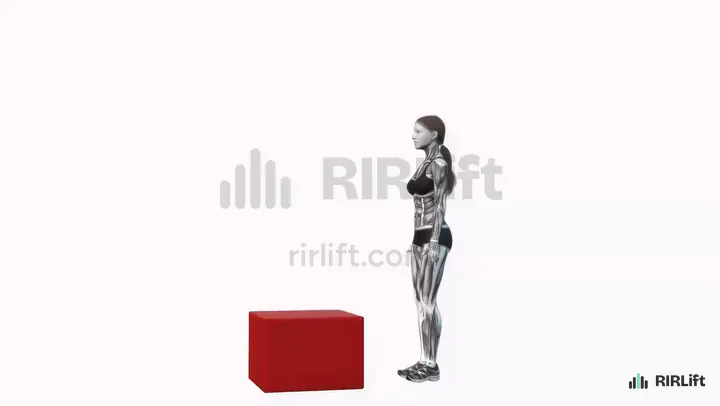
Box jumps train fast force through the hips, knees and ankles with a soft landing, so you get the power without the pounding of jumping down. Three to five crisp reps per set is the job.

How to do it

  1. Stand a short step from a sturdy box.
  2. Dip into a quarter squat and swing the arms back.
  3. Spring onto the box and absorb the landing quietly.
  4. Straighten up on top, then step back down.

Cues

  • Quick dip
  • Soft landing
  • Step down

Common mistakes

  • Using a box so tall you land in a deep squat: lower the box.
  • Jumping tired: keep sets short.

Swap for: Jump Squat, Lateral Box Jump, Single-Leg Box Jump

Elastic stiffness, single leg

Single-Leg Jump

Quads, Glutes, Calves

Hopping in place on one foot trains the calf and ankle to work like a spring, the way they do at faster paces. Keep contacts short and stop the set when they get heavy.

How to do it

  1. Stand on one foot with your knee slightly bent.
  2. Hop up off that foot and land on the same foot.
  3. Stabilize, then hop again; switch legs after the set.

Cues

  • Land quiet
  • Knee over toes

Common mistakes

  • Knee folding inward on landing: hop lower until it stays in line with your foot.

Swap for: Skater Hop, Single-Leg Box Jump

Put them together: example sessions

Each session below picks from the exercises above for one situation, with the sets, reps, rest and RIR filled in.

Session 1

First leg strength routine at home

  • Workouts2× a week
  • Working sets24 a week
  • Per workout~30 min
  • EquipmentDumbbells, Flat Bench

You run three or four days a week, have a pair of dumbbells and a step or bench, and have not lifted before.

One 12-set routine done twice gives 24 sets for the legs per week, split across squats, lunges, hinges and calves. At 2 to 3 reps in reserve that is enough to get stronger for months without dead legs on your runs.

Legs at home
ExerciseSets × repsRIRRest
Goblet Squat1 warm-up set first 3 × 8–12 2 90 s
Dumbbell Reverse LungePer leg. 2 × 8–10 2 75 s
Single-Leg RDLPer leg. 2 × 8–10 3 75 s
Step-UpPer leg. 2 × 8–10 2 75 s
Single-Leg Calf RaisePer leg. 3 × 10–15 2 1 min
How to run it
Do it on two easy-run days, after the run or later that day, with at least two days between sessions. Avoid the day before your long run.
How to progress
Use double progression: stay with a weight until every set hits the top of the rep range with 2 reps left, then go up to the next dumbbell and start again at the bottom of the range. For calf raises, hold a dumbbell in the free hand, as the demo does, once you reach 15 reps.

Session 2

Off-season or base building: two gym days

  • Workouts2× a week
  • Working sets26 a week
  • Per workout~40 min
  • EquipmentPlyo Box, Trap Bar, Dumbbells, Barbells +1

You have a gym, it is base season or the off-season, and you want the legs as strong as you can get them before race-specific training starts.

Each day has 13 working sets, 26 a week, with the heavy lifts at 1 to 2 reps in reserve and lower reps. Base season is when your running can absorb that much lifting; heavier sets build more strength per set.

Day A: Deadlift and split squat
ExerciseSets × repsRIRRest
Box Jump 3 × 3–5 3 90 s
Trap Bar Deadlift2 warm-up sets first 4 × 4–6 2 3 min
Bulgarian Split SquatPer leg. 3 × 6–10 2 2 min
Dumbbell Seated Calf Raise 3 × 10–15 1 1 min
Day B: Hinge and step
ExerciseSets × repsRIRRest
Single-Leg JumpHops per leg. 3 × 6–8 3 75 s
Romanian Deadlift2 warm-up sets first 4 × 6–8 2 2:30 min
Step-UpPer leg. 3 × 8–10 2 90 s
Single-Leg Calf RaisePer leg. 3 × 10–15 1 1 min
How to run it
Put Day A after a hard workout or on an easy day, and Day B at least two days later. Keep both at least 48 hours before the long run.
How to progress
Add weight to the trap bar and Romanian deadlifts when all sets reach the top of the range at 2 reps in reserve. Add reps first on single-leg work, then load. Keep jumps at the same height and focus on landing quieter.

Session 3

Race season: one short session

  • Workouts1× a week
  • Working sets11 a week
  • Per workout~35 min
  • EquipmentPlyo Box, Trap Bar, Dumbbells

You are in the final 8 to 12 weeks before a goal race, running more and harder, and want to keep leg strength without tired legs.

One session of 11 sets is enough to hold strength through a race block. Lower reps with more reps in reserve keep the weights heavy enough to matter but leave little soreness.

Leg maintenance
ExerciseSets × repsRIRRest
Box Jump 2 × 3–4 3 90 s
Trap Bar Deadlift2 warm-up sets first 3 × 3–5 3 3 min
Skater SquatPer leg. 2 × 6–8 3 75 s
Single-Leg RDLPer leg. 2 × 6–8 3 75 s
Single-Leg Calf RaisePer leg. 2 × 10–12 2 1 min
How to run it
Do it once a week after your hardest workout, so the hard day stays hard and the easy days stay easy. Skip it in race week.
How to progress
Keep the same weights from the off-season and do not chase new numbers. If a set feels easy at 3 reps in reserve, add one rep, not more weight.

Make it fit you

Questions

How do I make my legs strong for running?

Lift twice a week with a mix of single-leg work, one heavy hinge or squat, and calf raises, stopping each set 1 to 3 reps short of failure. Move up in weight once you reach the top of the rep range. Running alone keeps legs fit but does not load them heavily enough to build much strength.

Is 3 leg days a week overkill for runners?

For most runners, yes. Running already loads the legs every day, so two strength sessions a week is the useful maximum, and one is enough in race season. A third day mostly adds fatigue that shows up in your runs.

Should runners do heavy or light leg weights?

Mostly heavy enough that 5 to 10 reps leaves you 1 to 3 reps from failure. Light weights for 20 reps train the same endurance running already gives you. Heavier sets build more strength for the time they take.

What are the best lower leg exercises for runners?

Single-leg calf raises off a step for the gastrocnemius and Achilles, seated calf raises for the soleus, and short single-leg hops for ankle stiffness. Do the raises slowly through the full range.

Should I lift legs before or after running?

After, or later the same day. Running on legs that just lifted heavy feels flat and makes the run worse. Easy runs before lifting work well as a warm-up.